SUBSCRIBE TO OUR FREE NEWSLETTER
Daily news & progressive opinion—funded by the people, not the corporations—delivered straight to your inbox.
5
#000000
#FFFFFF
To donate by check, phone, or other method, see our More Ways to Give page.
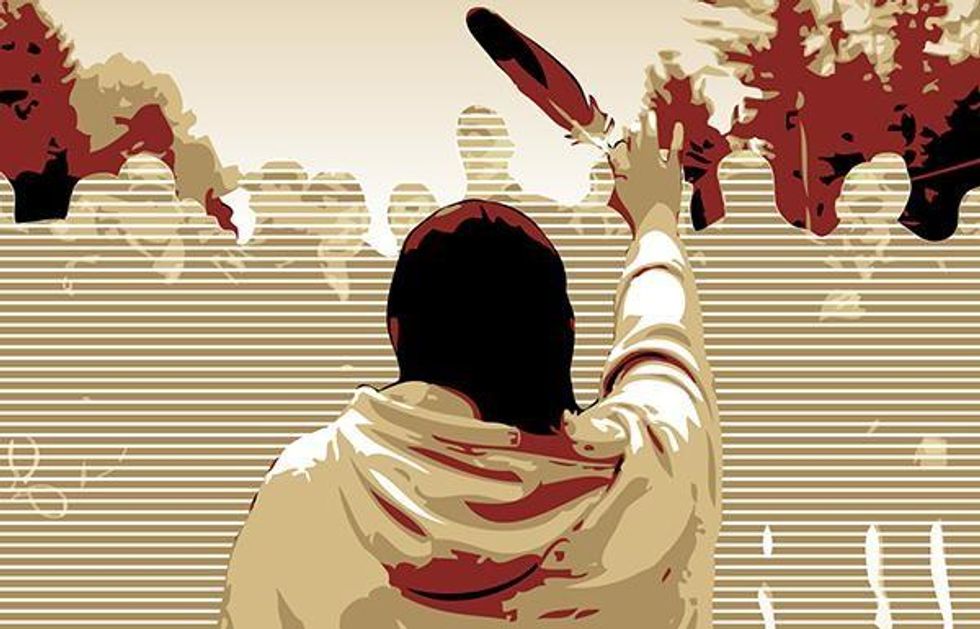
The United States government has negotiated some 600 treaties with Native people, most of which it has violated. As just one example, were it to have adhered to its own agreement, the Lakota Nation would have encompassed much of the western Midwest (and some of the easternmost region of what we now call the West), with the vast resources offered by the land and water in that region. Instead, many Lakota live on reservations (or prisoner of war camps, as they might be called) like Pine Ridge, which is annually one of the most impoverished places in the United States. Unemployment rates run around 70 percent, and as of 2011, almost 50 percent of Pine Ridge residents live below the federal poverty line. Like a third-world country, life expectancy rates hover in the later 40s and early 50s, in stark contrast to the rest of the U.S, where the average women lives to be 81 and the average man to 76. But, when Native peoples have organized, like the American Indian Movement did in the 1960s and 1970s, they are presented as a threat, not as part of the solution.
Canada has done no better. Instead of honoring its agreements to indigenous groups, the Canadian government has stolen the land and poisoned the water, soil, and air in which many from the First Nations live. On October 15, 2013, United Nations special rapporteur on the rights of indigenous peoples James Anaya issued a scathing report, noting that 20 percent of aboriginal peoples in Canada live in homes in need of serious repairs and that the suicide rate among aboriginal youth is five times greater than that of all Canadians. Anaya called the situation a "crisis," and, among other factors, traced it back to Canadian government policies that broke up homes and destroyed indigenous cultures by sending indigenous youth to horrific boarding schools where they were forced to become as White as possible.
But, instead of critically reflecting on Anaya's report, the Canadian government elected to further oppress this already marginalized group. Just days ago, when indigenous peoples and their allies organized to protest fracking in New Brunswick (a natural gas extraction process that devastates the land and groundwater) the RCMP responded with force. Instead of listening to the voices of indigenous peoples about the Tar Sands pipelines, the Canadian government has criminalized their voices and continues to plunder on.
So, while the U.S. and Canada are two of the wealthiest nations in the world, both should bear the responsibility and pay the price for becoming so through the extraction of resources and land that did not and does not belong to them.
Indigenous people and their supporters have not and will not be silent about these issues. Groups like Idle No More have organized, taken to the streets, and used traditional indigenous dance and culture as well as teach-ins and other nonviolent direct action to organize communities to speak out about the repressive policies. I was fortunate to hear from representatives from Idle No More recently and to participate in one of their rallies. To call it a humbling experience is an understatement.
For readers who are not familiar with these histories, I implore you to educate yourself. There is far more to the story than I have presented here. When you do, you too will be outraged, and hopefully called to act, to support indigenous peoples as they fight to regain that which is lawfully theirs and to ensure they can raise their children in non-toxic environments. It is the least we can do.
The United States government has negotiated some 600 treaties with Native people, most of which it has violated. As just one example, were it to have adhered to its own agreement, the Lakota Nation would have encompassed much of the western Midwest (and some of the easternmost region of what we now call the West), with the vast resources offered by the land and water in that region. Instead, many Lakota live on reservations (or prisoner of war camps, as they might be called) like Pine Ridge, which is annually one of the most impoverished places in the United States. Unemployment rates run around 70 percent, and as of 2011, almost 50 percent of Pine Ridge residents live below the federal poverty line. Like a third-world country, life expectancy rates hover in the later 40s and early 50s, in stark contrast to the rest of the U.S, where the average women lives to be 81 and the average man to 76. But, when Native peoples have organized, like the American Indian Movement did in the 1960s and 1970s, they are presented as a threat, not as part of the solution.
Canada has done no better. Instead of honoring its agreements to indigenous groups, the Canadian government has stolen the land and poisoned the water, soil, and air in which many from the First Nations live. On October 15, 2013, United Nations special rapporteur on the rights of indigenous peoples James Anaya issued a scathing report, noting that 20 percent of aboriginal peoples in Canada live in homes in need of serious repairs and that the suicide rate among aboriginal youth is five times greater than that of all Canadians. Anaya called the situation a "crisis," and, among other factors, traced it back to Canadian government policies that broke up homes and destroyed indigenous cultures by sending indigenous youth to horrific boarding schools where they were forced to become as White as possible.
But, instead of critically reflecting on Anaya's report, the Canadian government elected to further oppress this already marginalized group. Just days ago, when indigenous peoples and their allies organized to protest fracking in New Brunswick (a natural gas extraction process that devastates the land and groundwater) the RCMP responded with force. Instead of listening to the voices of indigenous peoples about the Tar Sands pipelines, the Canadian government has criminalized their voices and continues to plunder on.
So, while the U.S. and Canada are two of the wealthiest nations in the world, both should bear the responsibility and pay the price for becoming so through the extraction of resources and land that did not and does not belong to them.
Indigenous people and their supporters have not and will not be silent about these issues. Groups like Idle No More have organized, taken to the streets, and used traditional indigenous dance and culture as well as teach-ins and other nonviolent direct action to organize communities to speak out about the repressive policies. I was fortunate to hear from representatives from Idle No More recently and to participate in one of their rallies. To call it a humbling experience is an understatement.
For readers who are not familiar with these histories, I implore you to educate yourself. There is far more to the story than I have presented here. When you do, you too will be outraged, and hopefully called to act, to support indigenous peoples as they fight to regain that which is lawfully theirs and to ensure they can raise their children in non-toxic environments. It is the least we can do.
The United States government has negotiated some 600 treaties with Native people, most of which it has violated. As just one example, were it to have adhered to its own agreement, the Lakota Nation would have encompassed much of the western Midwest (and some of the easternmost region of what we now call the West), with the vast resources offered by the land and water in that region. Instead, many Lakota live on reservations (or prisoner of war camps, as they might be called) like Pine Ridge, which is annually one of the most impoverished places in the United States. Unemployment rates run around 70 percent, and as of 2011, almost 50 percent of Pine Ridge residents live below the federal poverty line. Like a third-world country, life expectancy rates hover in the later 40s and early 50s, in stark contrast to the rest of the U.S, where the average women lives to be 81 and the average man to 76. But, when Native peoples have organized, like the American Indian Movement did in the 1960s and 1970s, they are presented as a threat, not as part of the solution.
Canada has done no better. Instead of honoring its agreements to indigenous groups, the Canadian government has stolen the land and poisoned the water, soil, and air in which many from the First Nations live. On October 15, 2013, United Nations special rapporteur on the rights of indigenous peoples James Anaya issued a scathing report, noting that 20 percent of aboriginal peoples in Canada live in homes in need of serious repairs and that the suicide rate among aboriginal youth is five times greater than that of all Canadians. Anaya called the situation a "crisis," and, among other factors, traced it back to Canadian government policies that broke up homes and destroyed indigenous cultures by sending indigenous youth to horrific boarding schools where they were forced to become as White as possible.
But, instead of critically reflecting on Anaya's report, the Canadian government elected to further oppress this already marginalized group. Just days ago, when indigenous peoples and their allies organized to protest fracking in New Brunswick (a natural gas extraction process that devastates the land and groundwater) the RCMP responded with force. Instead of listening to the voices of indigenous peoples about the Tar Sands pipelines, the Canadian government has criminalized their voices and continues to plunder on.
So, while the U.S. and Canada are two of the wealthiest nations in the world, both should bear the responsibility and pay the price for becoming so through the extraction of resources and land that did not and does not belong to them.
Indigenous people and their supporters have not and will not be silent about these issues. Groups like Idle No More have organized, taken to the streets, and used traditional indigenous dance and culture as well as teach-ins and other nonviolent direct action to organize communities to speak out about the repressive policies. I was fortunate to hear from representatives from Idle No More recently and to participate in one of their rallies. To call it a humbling experience is an understatement.
For readers who are not familiar with these histories, I implore you to educate yourself. There is far more to the story than I have presented here. When you do, you too will be outraged, and hopefully called to act, to support indigenous peoples as they fight to regain that which is lawfully theirs and to ensure they can raise their children in non-toxic environments. It is the least we can do.