Former Secretary of State Madeleine Albright should be a happy camper: Another campaign of sanctions and embargoes by the US is about to start killing children, this time in Iran.
Albright, as President Bill Clinton's Secretary of State, when interviewed on CBS's news magazine program "60 Minutes" back in 2000, was asked by reporter Lesley Stahl about reports that US sanctions on Iraq had led to the deaths of some 500,000 Iraqi children because of shortages of medicine and things like chlorine for treating water supplies. Stahl asked Albright if such a dreadful toll was "worth it." Albright famously responded, "I think this is a very hard choice, but the price--we think the price is worth it."
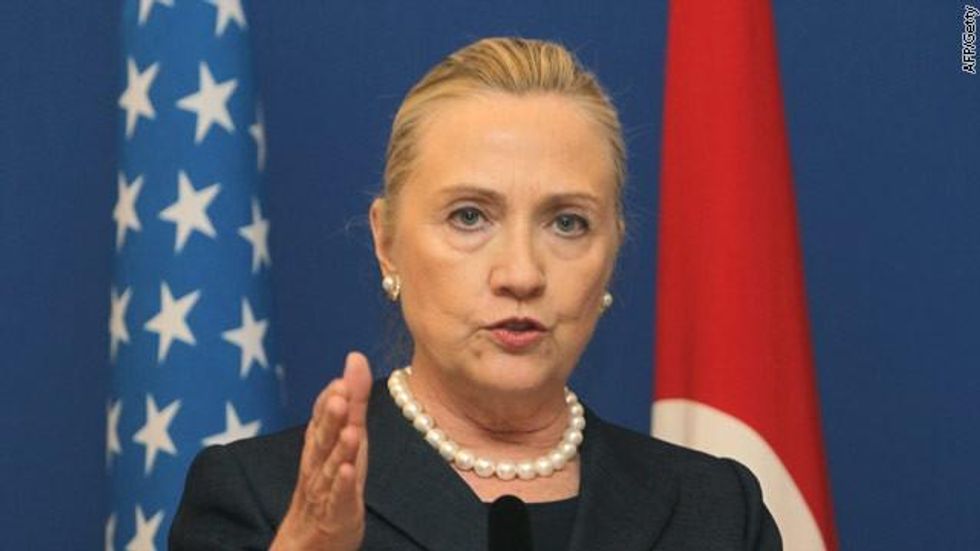
Albright must be happy then that apparently the same kind of heartless logic is at work once more, this time orchestrated by the Obama administration and the current Secretary of State, It Takes a Village author and self-styled child advocate Hillary Clinton.
According to a letter sent to UN Secretary General Ban Ki Moon by the head of Iran's Charity Foundation for Special Diseases, the current US-led sanctions campaign against Iranian financial institutions and efforts to prevent western banks from doing business with Iran have made it next to impossible for Iranian doctors and hospitals to obtain medicines from abroad for such relatively rare but serious diseases as hemophilia, Multiple sclerosis (MS), various cancers, kidney failure and thalassemia.
The tightening of international screws on Iranian financial transactions has also made it hard for domestic makers of some of these medicines in Iran to obtain the raw materials needed to manufacture needed medicines locally, according to the letter.
Fatemeh Hashemi Rafsanjani, the author of the letter, called on the secretary general to act to prevent the sanctions campaign from harming an estimated 6 million Iranians who suffer from these diseases. She said that the sanctions had already "directly affected the lives and well-being of thousands of patients."
The US-led campaign to squeeze Iran economically is an effort to pressure the Iranian public to make their country's leaders shut down a completely legal effort to develop a domestic nuclear fuel enrichment program. Iranians suffering from cancer, MS, kidney disease or other diseases -- many of them children -- are reportedly being prevented from getting needed medicines because of a fear by Israel and its backer, the US, that Iran's nuclear program might lead in the future to Iran's developing a nuclear bomb capability, becoming the second nuclear nation in the Middle East, ending Israel's nuclear monopoly. Although US intelligence services concede that there is no evidence that Iran is currently trying to develop a nuclear bomb, the possibility that this might happen in the future is apparently justification enough for threatening the lives of critically ill Iranian citizens.
The US sanctions on Iran will no doubt also create problems for victims of Iran's latest disaster -- a pair of earthquakes, 6.4 and 6.3 on the Richter Scale, which struck in the country's northwestern region Saturday, killing several hundred people and leaving over 16,000 homeless. Hospitals, some of them damaged, were reportedly overcrowded and were struggling to obtain medicines. The US, through its USAID program, sent in a planeload of supplies--bottled water, blankets "personal hygiene kids" -- to Tehran, which Washington valued at $350,000, and also provided another $50,000 through the Red Cross and Red Crescent Societies, but that aid is a pittance compared to the supplies that are being deliberately blocked by sanctions-related constraints on Iranian international payments.
No one should be surprised by this ruthless victimization of children and the sick by Washington in the name of realpolitik. In Cuba, following the collapse of the Soviet Union in the early 1990s, there was an epidemic of blindness and vision damage among children because of the inability of Cuba, the subject of a decades-long US trade embargo, to obtain necessary food and especially vitamin A.
Secretary Albright probably thinks that disaster was also "worth it."
Former Secretary of State Madeleine Albright should be a happy camper: Another campaign of sanctions and embargoes by the US is about to start killing children, this time in Iran.
Albright, as President Bill Clinton's Secretary of State, when interviewed on CBS's news magazine program "60 Minutes" back in 2000, was asked by reporter Lesley Stahl about reports that US sanctions on Iraq had led to the deaths of some 500,000 Iraqi children because of shortages of medicine and things like chlorine for treating water supplies. Stahl asked Albright if such a dreadful toll was "worth it." Albright famously responded, "I think this is a very hard choice, but the price--we think the price is worth it."
Albright must be happy then that apparently the same kind of heartless logic is at work once more, this time orchestrated by the Obama administration and the current Secretary of State, It Takes a Village author and self-styled child advocate Hillary Clinton.
According to a letter sent to UN Secretary General Ban Ki Moon by the head of Iran's Charity Foundation for Special Diseases, the current US-led sanctions campaign against Iranian financial institutions and efforts to prevent western banks from doing business with Iran have made it next to impossible for Iranian doctors and hospitals to obtain medicines from abroad for such relatively rare but serious diseases as hemophilia, Multiple sclerosis (MS), various cancers, kidney failure and thalassemia.
The tightening of international screws on Iranian financial transactions has also made it hard for domestic makers of some of these medicines in Iran to obtain the raw materials needed to manufacture needed medicines locally, according to the letter.
Fatemeh Hashemi Rafsanjani, the author of the letter, called on the secretary general to act to prevent the sanctions campaign from harming an estimated 6 million Iranians who suffer from these diseases. She said that the sanctions had already "directly affected the lives and well-being of thousands of patients."
The US-led campaign to squeeze Iran economically is an effort to pressure the Iranian public to make their country's leaders shut down a completely legal effort to develop a domestic nuclear fuel enrichment program. Iranians suffering from cancer, MS, kidney disease or other diseases -- many of them children -- are reportedly being prevented from getting needed medicines because of a fear by Israel and its backer, the US, that Iran's nuclear program might lead in the future to Iran's developing a nuclear bomb capability, becoming the second nuclear nation in the Middle East, ending Israel's nuclear monopoly. Although US intelligence services concede that there is no evidence that Iran is currently trying to develop a nuclear bomb, the possibility that this might happen in the future is apparently justification enough for threatening the lives of critically ill Iranian citizens.
The US sanctions on Iran will no doubt also create problems for victims of Iran's latest disaster -- a pair of earthquakes, 6.4 and 6.3 on the Richter Scale, which struck in the country's northwestern region Saturday, killing several hundred people and leaving over 16,000 homeless. Hospitals, some of them damaged, were reportedly overcrowded and were struggling to obtain medicines. The US, through its USAID program, sent in a planeload of supplies--bottled water, blankets "personal hygiene kids" -- to Tehran, which Washington valued at $350,000, and also provided another $50,000 through the Red Cross and Red Crescent Societies, but that aid is a pittance compared to the supplies that are being deliberately blocked by sanctions-related constraints on Iranian international payments.
No one should be surprised by this ruthless victimization of children and the sick by Washington in the name of realpolitik. In Cuba, following the collapse of the Soviet Union in the early 1990s, there was an epidemic of blindness and vision damage among children because of the inability of Cuba, the subject of a decades-long US trade embargo, to obtain necessary food and especially vitamin A.
Secretary Albright probably thinks that disaster was also "worth it."
Former Secretary of State Madeleine Albright should be a happy camper: Another campaign of sanctions and embargoes by the US is about to start killing children, this time in Iran.
Albright, as President Bill Clinton's Secretary of State, when interviewed on CBS's news magazine program "60 Minutes" back in 2000, was asked by reporter Lesley Stahl about reports that US sanctions on Iraq had led to the deaths of some 500,000 Iraqi children because of shortages of medicine and things like chlorine for treating water supplies. Stahl asked Albright if such a dreadful toll was "worth it." Albright famously responded, "I think this is a very hard choice, but the price--we think the price is worth it."
Albright must be happy then that apparently the same kind of heartless logic is at work once more, this time orchestrated by the Obama administration and the current Secretary of State, It Takes a Village author and self-styled child advocate Hillary Clinton.
According to a letter sent to UN Secretary General Ban Ki Moon by the head of Iran's Charity Foundation for Special Diseases, the current US-led sanctions campaign against Iranian financial institutions and efforts to prevent western banks from doing business with Iran have made it next to impossible for Iranian doctors and hospitals to obtain medicines from abroad for such relatively rare but serious diseases as hemophilia, Multiple sclerosis (MS), various cancers, kidney failure and thalassemia.
The tightening of international screws on Iranian financial transactions has also made it hard for domestic makers of some of these medicines in Iran to obtain the raw materials needed to manufacture needed medicines locally, according to the letter.
Fatemeh Hashemi Rafsanjani, the author of the letter, called on the secretary general to act to prevent the sanctions campaign from harming an estimated 6 million Iranians who suffer from these diseases. She said that the sanctions had already "directly affected the lives and well-being of thousands of patients."
The US-led campaign to squeeze Iran economically is an effort to pressure the Iranian public to make their country's leaders shut down a completely legal effort to develop a domestic nuclear fuel enrichment program. Iranians suffering from cancer, MS, kidney disease or other diseases -- many of them children -- are reportedly being prevented from getting needed medicines because of a fear by Israel and its backer, the US, that Iran's nuclear program might lead in the future to Iran's developing a nuclear bomb capability, becoming the second nuclear nation in the Middle East, ending Israel's nuclear monopoly. Although US intelligence services concede that there is no evidence that Iran is currently trying to develop a nuclear bomb, the possibility that this might happen in the future is apparently justification enough for threatening the lives of critically ill Iranian citizens.
The US sanctions on Iran will no doubt also create problems for victims of Iran's latest disaster -- a pair of earthquakes, 6.4 and 6.3 on the Richter Scale, which struck in the country's northwestern region Saturday, killing several hundred people and leaving over 16,000 homeless. Hospitals, some of them damaged, were reportedly overcrowded and were struggling to obtain medicines. The US, through its USAID program, sent in a planeload of supplies--bottled water, blankets "personal hygiene kids" -- to Tehran, which Washington valued at $350,000, and also provided another $50,000 through the Red Cross and Red Crescent Societies, but that aid is a pittance compared to the supplies that are being deliberately blocked by sanctions-related constraints on Iranian international payments.
No one should be surprised by this ruthless victimization of children and the sick by Washington in the name of realpolitik. In Cuba, following the collapse of the Soviet Union in the early 1990s, there was an epidemic of blindness and vision damage among children because of the inability of Cuba, the subject of a decades-long US trade embargo, to obtain necessary food and especially vitamin A.
Secretary Albright probably thinks that disaster was also "worth it."