SUBSCRIBE TO OUR FREE NEWSLETTER
Daily news & progressive opinion—funded by the people, not the corporations—delivered straight to your inbox.
5
#000000
#FFFFFF
To donate by check, phone, or other method, see our More Ways to Give page.
Daily news & progressive opinion—funded by the people, not the corporations—delivered straight to your inbox.
Where are the anti-tax activists when you need them?
They should be protesting outside of the Commodity Futures Trading Commission, denouncing the agency for failing to take action. And they should be applauding a new legislative proposal by Senator Bernie Sanders.
Right now, Wall Street speculators are imposing an enormous tax on consumers, and the overall economy.
Where are the anti-tax activists?
There's no question that illegal, collusive activity is far too frequent in energy markets. But the much bigger problem is legal speculation.
Wall Street speculation in oil and energy markets is jacking up the price of oil, and thereby siphoning money from the pockets and pocketbooks of consumers.
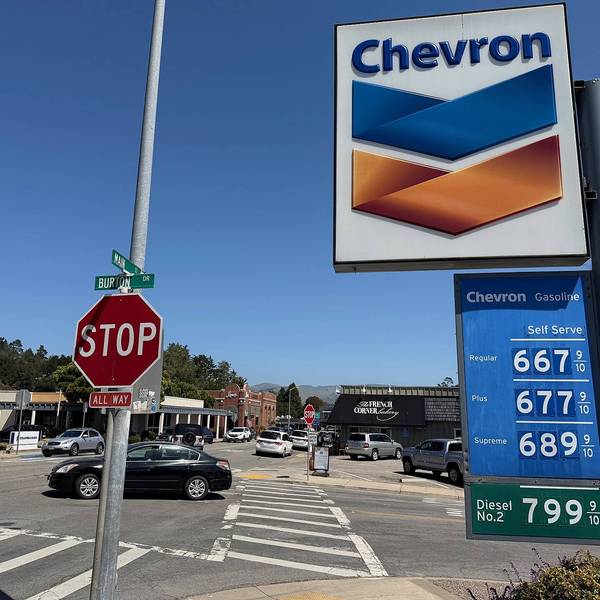
Even Goldman Sachs suggests that legal speculation may be adding 65-70 cents to the price of a gallon of gasoline. Exxon CEO Rex Tillerson says supply-and-demand fundamentals suggest the price of oil should be $65-$70 a barrel, about a third less than the current price. Experts from the home heating oil industry believe even the $65 figure is too high.
The speculation component of the price of gasoline is exactly like a tax on consumers.
Except that it is the worst kind of tax imaginable.
A government imposed-tax on oil or carbon would go to the U.S. Treasury, for use to advance public purposes, such as investing in renewable energy and energy efficiency. By contrast, the proceeds of this Wall Street-imposed tax are going to Wall Street interests, giant oil companies and foreign oil interests. Wall Street gamblers are benefiting from the higher prices in oil markets. The higher prices of oil -- which have nothing to do with the cost of drilling or refining -- are driving Big Oil's profits to the stratosphere. The formula for success for Exxon, Chevron, BP and the rest is simple: keep costs constant and reap the profits from prices driven higher by oil speculators. Foreign oil interests get the same benefits -- at the expense of worsening the U.S. trade deficit.
The Wall Street-imposed tax is regressive, with working families hit the hardest.
And the unpredictability and impermanence of this Wall Street-imposed tax means that -- while it imposes costs on consumers and the economy -- it does not do much to shift consumer and business decisions. There is a strong case to be made for putting a price on carbon, to encourage consumer and business investments in efficiency and renewable energy technologies. But the Wall Street-imposed tax does little to achieve these objectives. The tax is temporary -- at some point, speculators will race out of the market, driving prices back down -- so it does not send a clear price signal to consumers and businesses to redirect investments to efficiency and renewables.
We, the People are not helpless in the face of this legalized rip-off. We can crack down on out-of-control legal speculation.
The Wall Street Reform and Consumer Protection Act -- the Dodd-Frank Act -- directed the Commodity Futures Trading Commission (CFTC) to enact "position limits" to eliminate excessive speculation in energy markets. Such a rule would limit the amount of oil that Wall Street speculators could trade in the energy futures market, taking control over the oil futures market away from speculators and returning it to those who actually use and supply oil. But under pressure from Wall Street and its allies, the CFTC has failed to act by the mid-January deadline it was given.
To force immediate action, Senator Bernie Sanders -- along with Senators Blumenthal, Merkley, Franken, Whitehouse and Bill Nelson -- earlier this week introduced the End Excessive Oil Speculation Now Act. It would mandate immediate action by the CFTC to end the Wall Street-imposed oil tax. The legislation would end Wall Street's authority to rip off consumers via a privately imposed tax.
Ending the Wall Street-imposed tax would save Americans tens of billions of dollars. But for political opposition from obvious sources, this legislation would win immediate passage.
Where are the anti-tax activists?
Dear Common Dreams reader, It’s been nearly 30 years since I co-founded Common Dreams with my late wife, Lina Newhouser. We had the radical notion that journalism should serve the public good, not corporate profits. It was clear to us from the outset what it would take to build such a project. No paid advertisements. No corporate sponsors. No millionaire publisher telling us what to think or do. Many people said we wouldn't last a year, but we proved those doubters wrong. Together with a tremendous team of journalists and dedicated staff, we built an independent media outlet free from the constraints of profits and corporate control. Our mission has always been simple: To inform. To inspire. To ignite change for the common good. Building Common Dreams was not easy. Our survival was never guaranteed. When you take on the most powerful forces—Wall Street greed, fossil fuel industry destruction, Big Tech lobbyists, and uber-rich oligarchs who have spent billions upon billions rigging the economy and democracy in their favor—the only bulwark you have is supporters who believe in your work. But here’s the urgent message from me today. It's never been this bad out there. And it's never been this hard to keep us going. At the very moment Common Dreams is most needed, the threats we face are intensifying. We need your support now more than ever. We don't accept corporate advertising and never will. We don't have a paywall because we don't think people should be blocked from critical news based on their ability to pay. Everything we do is funded by the donations of readers like you. When everyone does the little they can afford, we are strong. But if that support retreats or dries up, so do we. Will you donate now to make sure Common Dreams not only survives but thrives? —Craig Brown, Co-founder |
Where are the anti-tax activists when you need them?
They should be protesting outside of the Commodity Futures Trading Commission, denouncing the agency for failing to take action. And they should be applauding a new legislative proposal by Senator Bernie Sanders.
Right now, Wall Street speculators are imposing an enormous tax on consumers, and the overall economy.
Where are the anti-tax activists?
There's no question that illegal, collusive activity is far too frequent in energy markets. But the much bigger problem is legal speculation.
Wall Street speculation in oil and energy markets is jacking up the price of oil, and thereby siphoning money from the pockets and pocketbooks of consumers.
Even Goldman Sachs suggests that legal speculation may be adding 65-70 cents to the price of a gallon of gasoline. Exxon CEO Rex Tillerson says supply-and-demand fundamentals suggest the price of oil should be $65-$70 a barrel, about a third less than the current price. Experts from the home heating oil industry believe even the $65 figure is too high.
The speculation component of the price of gasoline is exactly like a tax on consumers.
Except that it is the worst kind of tax imaginable.
A government imposed-tax on oil or carbon would go to the U.S. Treasury, for use to advance public purposes, such as investing in renewable energy and energy efficiency. By contrast, the proceeds of this Wall Street-imposed tax are going to Wall Street interests, giant oil companies and foreign oil interests. Wall Street gamblers are benefiting from the higher prices in oil markets. The higher prices of oil -- which have nothing to do with the cost of drilling or refining -- are driving Big Oil's profits to the stratosphere. The formula for success for Exxon, Chevron, BP and the rest is simple: keep costs constant and reap the profits from prices driven higher by oil speculators. Foreign oil interests get the same benefits -- at the expense of worsening the U.S. trade deficit.
The Wall Street-imposed tax is regressive, with working families hit the hardest.
And the unpredictability and impermanence of this Wall Street-imposed tax means that -- while it imposes costs on consumers and the economy -- it does not do much to shift consumer and business decisions. There is a strong case to be made for putting a price on carbon, to encourage consumer and business investments in efficiency and renewable energy technologies. But the Wall Street-imposed tax does little to achieve these objectives. The tax is temporary -- at some point, speculators will race out of the market, driving prices back down -- so it does not send a clear price signal to consumers and businesses to redirect investments to efficiency and renewables.
We, the People are not helpless in the face of this legalized rip-off. We can crack down on out-of-control legal speculation.
The Wall Street Reform and Consumer Protection Act -- the Dodd-Frank Act -- directed the Commodity Futures Trading Commission (CFTC) to enact "position limits" to eliminate excessive speculation in energy markets. Such a rule would limit the amount of oil that Wall Street speculators could trade in the energy futures market, taking control over the oil futures market away from speculators and returning it to those who actually use and supply oil. But under pressure from Wall Street and its allies, the CFTC has failed to act by the mid-January deadline it was given.
To force immediate action, Senator Bernie Sanders -- along with Senators Blumenthal, Merkley, Franken, Whitehouse and Bill Nelson -- earlier this week introduced the End Excessive Oil Speculation Now Act. It would mandate immediate action by the CFTC to end the Wall Street-imposed oil tax. The legislation would end Wall Street's authority to rip off consumers via a privately imposed tax.
Ending the Wall Street-imposed tax would save Americans tens of billions of dollars. But for political opposition from obvious sources, this legislation would win immediate passage.
Where are the anti-tax activists?
Where are the anti-tax activists when you need them?
They should be protesting outside of the Commodity Futures Trading Commission, denouncing the agency for failing to take action. And they should be applauding a new legislative proposal by Senator Bernie Sanders.
Right now, Wall Street speculators are imposing an enormous tax on consumers, and the overall economy.
Where are the anti-tax activists?
There's no question that illegal, collusive activity is far too frequent in energy markets. But the much bigger problem is legal speculation.
Wall Street speculation in oil and energy markets is jacking up the price of oil, and thereby siphoning money from the pockets and pocketbooks of consumers.
Even Goldman Sachs suggests that legal speculation may be adding 65-70 cents to the price of a gallon of gasoline. Exxon CEO Rex Tillerson says supply-and-demand fundamentals suggest the price of oil should be $65-$70 a barrel, about a third less than the current price. Experts from the home heating oil industry believe even the $65 figure is too high.
The speculation component of the price of gasoline is exactly like a tax on consumers.
Except that it is the worst kind of tax imaginable.
A government imposed-tax on oil or carbon would go to the U.S. Treasury, for use to advance public purposes, such as investing in renewable energy and energy efficiency. By contrast, the proceeds of this Wall Street-imposed tax are going to Wall Street interests, giant oil companies and foreign oil interests. Wall Street gamblers are benefiting from the higher prices in oil markets. The higher prices of oil -- which have nothing to do with the cost of drilling or refining -- are driving Big Oil's profits to the stratosphere. The formula for success for Exxon, Chevron, BP and the rest is simple: keep costs constant and reap the profits from prices driven higher by oil speculators. Foreign oil interests get the same benefits -- at the expense of worsening the U.S. trade deficit.
The Wall Street-imposed tax is regressive, with working families hit the hardest.
And the unpredictability and impermanence of this Wall Street-imposed tax means that -- while it imposes costs on consumers and the economy -- it does not do much to shift consumer and business decisions. There is a strong case to be made for putting a price on carbon, to encourage consumer and business investments in efficiency and renewable energy technologies. But the Wall Street-imposed tax does little to achieve these objectives. The tax is temporary -- at some point, speculators will race out of the market, driving prices back down -- so it does not send a clear price signal to consumers and businesses to redirect investments to efficiency and renewables.
We, the People are not helpless in the face of this legalized rip-off. We can crack down on out-of-control legal speculation.
The Wall Street Reform and Consumer Protection Act -- the Dodd-Frank Act -- directed the Commodity Futures Trading Commission (CFTC) to enact "position limits" to eliminate excessive speculation in energy markets. Such a rule would limit the amount of oil that Wall Street speculators could trade in the energy futures market, taking control over the oil futures market away from speculators and returning it to those who actually use and supply oil. But under pressure from Wall Street and its allies, the CFTC has failed to act by the mid-January deadline it was given.
To force immediate action, Senator Bernie Sanders -- along with Senators Blumenthal, Merkley, Franken, Whitehouse and Bill Nelson -- earlier this week introduced the End Excessive Oil Speculation Now Act. It would mandate immediate action by the CFTC to end the Wall Street-imposed oil tax. The legislation would end Wall Street's authority to rip off consumers via a privately imposed tax.
Ending the Wall Street-imposed tax would save Americans tens of billions of dollars. But for political opposition from obvious sources, this legislation would win immediate passage.
Where are the anti-tax activists?