

SUBSCRIBE TO OUR FREE NEWSLETTER
Daily news & progressive opinion—funded by the people, not the corporations—delivered straight to your inbox.
5
#000000
#FFFFFF
To donate by check, phone, or other method, see our More Ways to Give page.
Daily news & progressive opinion—funded by the people, not the corporations—delivered straight to your inbox.
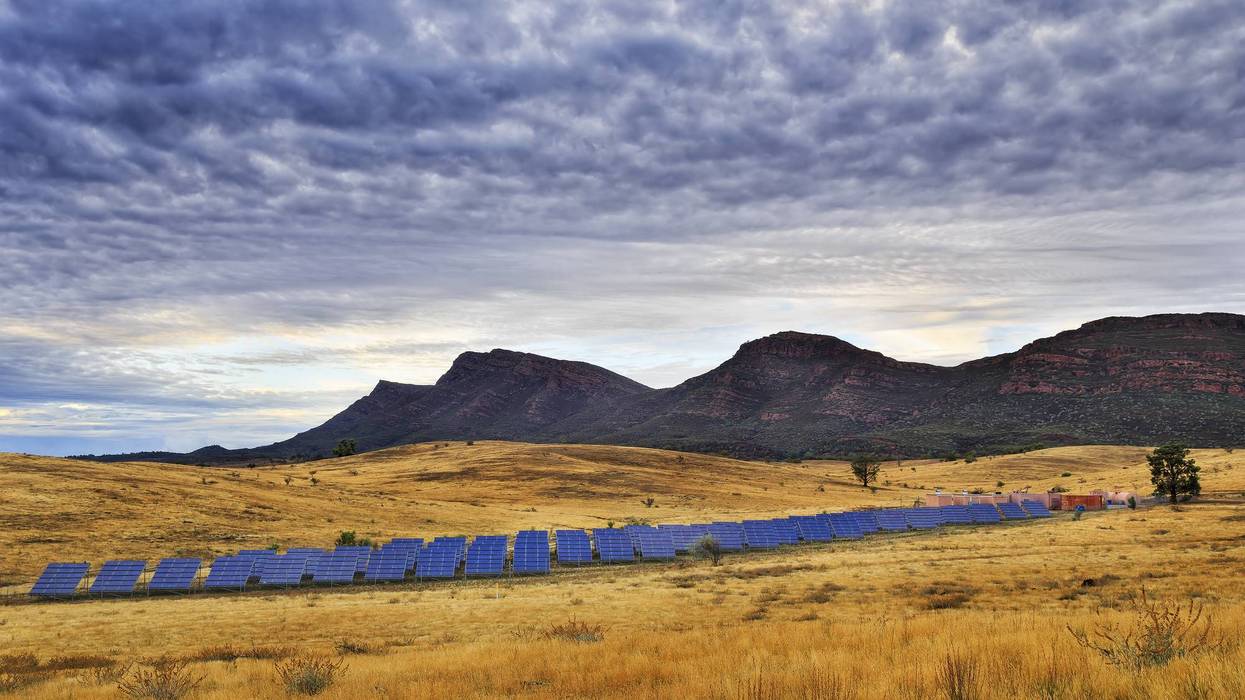
Despite its small population of about 2 million, the state of South Australia is widely seen as a demonstration project for what the renewables revolution can mean for the lives of people in the industrialized democracies.
The government of the state of South Australia announced recently that its wholesale electricity price fell in Q4 ’25 to $37 AU per megawatt hour ( / MWh) (that would be $26.22 US). That’s the lowest wholesale electricity price in all of the continent of Australia. The reason the price is so low is because South Australia has a lot of wind, solar and battery power, and output was high late last year. Remember, October – December in Australia is spring into summer.
That’s 2.6 US cents per kilowatt hour. The average cost of electricity in the United States is roughly 17 cents per kilowatt hour, because it is mostly generated by expensive, dirty, planet-wrecking fossil fuels.
So here’s the thing: in Q3 of last year, the price of wholesale electricity was $104 AU / MWh.
That’s right. In one three-month period, the price fell by a third.
Since South Australia is demonstrating that wind, solar and battery can cause the wholesale price of electricity to plummet, it is also pulling the curtain from the Trump administration’s con game in the US.
It was not a matter of usage falling off. The government says, “underlying demand in South Australia ticked up by 1.2 per cent to a fourth quarter record high of 1,624 MW.”
Of course, how the fall in the price of wholesale electricity gets translated into consumers’ home electricity bills is politics, not engineering.
Some 74% of South Australia’s electricity consumption is provided by renewables, and the state plans to make that 100% by 2027, in only two years. Wind, solar and battery generated 100% of the state’s electricity for 99 days (27% of the time) in 2024, the last year for which full data are available as yet.
50% of homes in the state have rooftop solar. South Australia has been a pioneer in mega-batteries combined with its solar generation. The country as a whole has 3 gigawatts of battery storage capacity. South Australian needs more battery build-out, so as to smooth out the excess generation from rooftop solar at noon and during early afternoon, which has been producing negative energy pricing, forcing utilities to pay people to take their electricity.
South Australia, despite its small population of about 2 million, is widely seen as a demonstration project for what the renewables revolution can mean for the lives of people in the industrialized democracies. Its Labor government has been committed to the project. Only a decade ago, most of its electricity was coal-generated. Alas, its Liberals (i.e. conservatives) are now campaigning on more fossil fuels. Since so much of the progress was grassroots, with people just installing solar panels, the transformation seems difficult to halt or even slow substantially.
What the state is showing us is that wind, solar and battery power, when combined, are extremely inexpensive. Moreover, there is every prospect of solar panels becoming cheaper, more efficient, and less bulky over the next decade as scientific research burgeons. Renewables are already much less expensive than fossil fuels.
What the state is showing us is that wind, solar and battery power, when combined, are extremely inexpensive.
It is true that because they are a new source of energy, they are attended by construction costs, whereas old coal and gas plants built years ago have already sunk that cost. But wind and solar are now so cheep that in many localities it is less expensive to build a new solar farm and operate it than just to keep an old gas or coal plant in operation.
Since South Australia is demonstrating that wind, solar and battery can cause the wholesale price of electricity to plummet, it is also pulling the curtain from the Trump administration’s con game in the US. By using the might of the federal government to bolster coal and gas, Trump and his minions can keep expensive and dangerous sources of power in place, making you pay more for your electricity and arranging for your money to line the pockets of his Big Carbon campaign donors. If fossil fuels were competitive, Trump wouldn’t have to try so hard to stall permitting for new wind and solar projects.
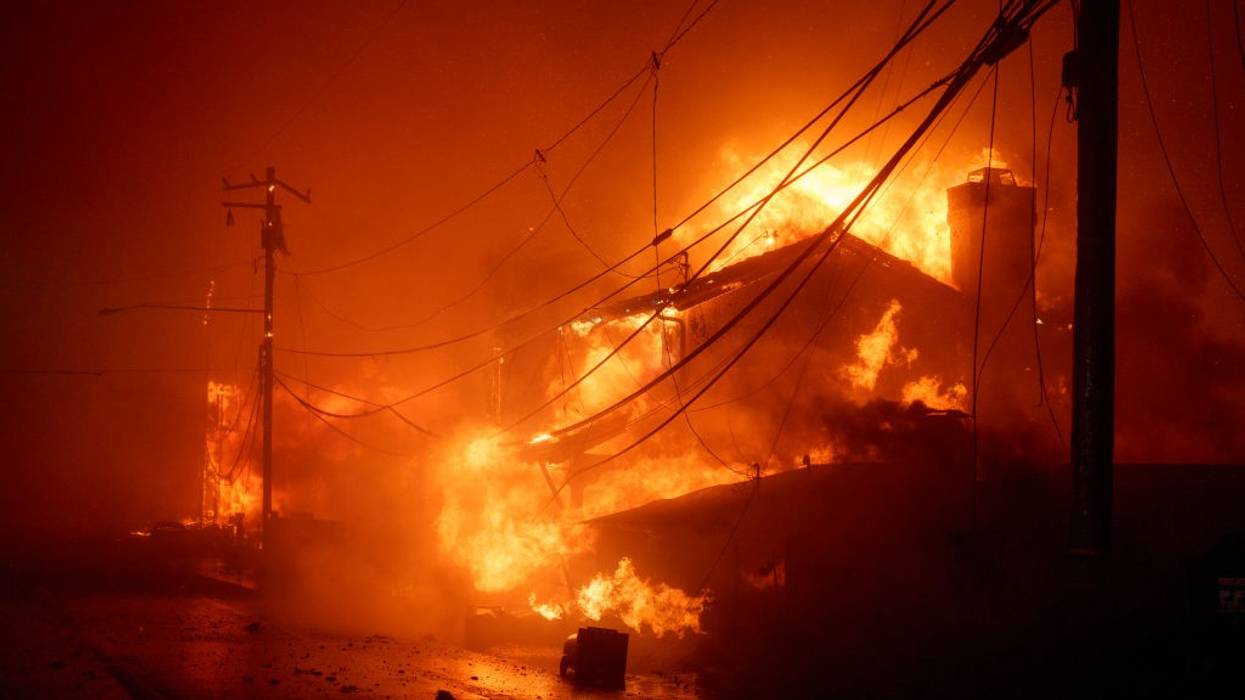
"There is no 'firefighting' in these kinds of conditions," said one meteorologist. "There is only saving as many lives as possible and getting the heck out of the fire's way."
Several major wildfires burned out of control in California's Los Angeles County on Wednesday as roaring winds fueled the rapid spread of the blazes, forcing tens of thousands to evacuate as state, local, and federal officials mobilized resources to confront the emergency.
Los Angeles Mayor Karen Bass wrote on social media late Tuesday that the city is "working aggressively" to stem the wildfires, which scientists and government officials characterized as uniquely devastating.
"Emergency officials, firefighters, and first responders are all hands on deck through the night to do everything possible to protect lives," California Gov. Gavin Newsom said early Wednesday. The governor noted that more than 1,400 firefighting personnel have been deployed to "combat these unprecedented fires."
The Palisades, Eaton, and Hurst fires broke out on Tuesday. It quickly exploded amid what the National Weather Service described as "extremely critical fire weather," with wind gusts up to 99 mph propelling the devastating blazes. The extreme winds forced emergency crews to ground aircraft that were working to contain the fires.
"For some context, fire crews are up against near hurricane-force winds occurring mid-winter in rugged terrain during a drought at night," wrote meteorologist Eric Holthaus. "There is no 'firefighting' in these kinds of conditions. There is only saving as many lives as possible and getting the heck out of the fire's way."
"The emergence of extreme wintertime wildfires in California presents one of those classic 'this is climate change' moments."
The Eaton fire, which broke out Tuesday evening in the Pasadena area, "spread so rapidly that staff at a senior living center had to push dozens of residents in wheelchairs and hospital beds down the street to a parking lot," The Los Angeles Times reported.
"The residents waited there in their bedclothes as embers fell around them until ambulances, buses, and even construction vans arrived to take them to safety," the newspaper added.
The three fires have together burned thousands of acres so far and destroyed or endangered tens of thousands of homes and buildings, according to Newsom's office. So far, at least 19 school districts have announced complete or partial closures due to the fires.
Video footage posted to social media showed residents watching in horror as flames surrounded their homes:
This is by far the craziest video from the fire in Los Angeles. This guy is filming huge walls of fire surrounding a house they're in, and there's another person and a dog. I have no idea why they didn't evacuate or what happened to them. Let's hope they're okay. #PalisadesFire pic.twitter.com/QYtsBSKvdl
— Sia Kordestani (@SiaKordestani) January 8, 2025
Another video shows residents attempting to salvage as many belongings as possible before fleeing:
Video of the moment my friend and I abandoned his house after we tried to save what we could. Please be praying for him and his family @orlylistens
Location: North of Rustic Canyon#cawx #PalisadesFire #fire #California pic.twitter.com/fie6Ywkmz3
— Tanner Charles 🌪 (@TannerCharlesMN) January 8, 2025
"There has been a recent massive increase in wildfires in California but really, a fire this big in January? This is unprecedented," scientist Hayley Fowler wrote on social media. "One of many extreme events fueled by the climate crisis."
Holthaus wrote Tuesday that Southern California is "facing a rare and dangerous juxtaposition of extreme winds and midwinter drought," the meteorologist described as "a worrying example of the state's expanding wildfire threat as climate change worsens."
"The National Weather Service defines 'extremely critical' fire weather as sustained winds over 30 mph and relative humidity of less than 10% in drought conditions and temperatures warmer than 70 degrees," Holthaus observed. "This is the first time in history these criteria have been met anywhere in the United States during January."
"The emergence of extreme wintertime wildfires in California," he added, "presents one of those classic 'this is climate change' moments: A specific set of weather conditions are now occurring in such a way to produce the potential for rare disasters to become much more common."
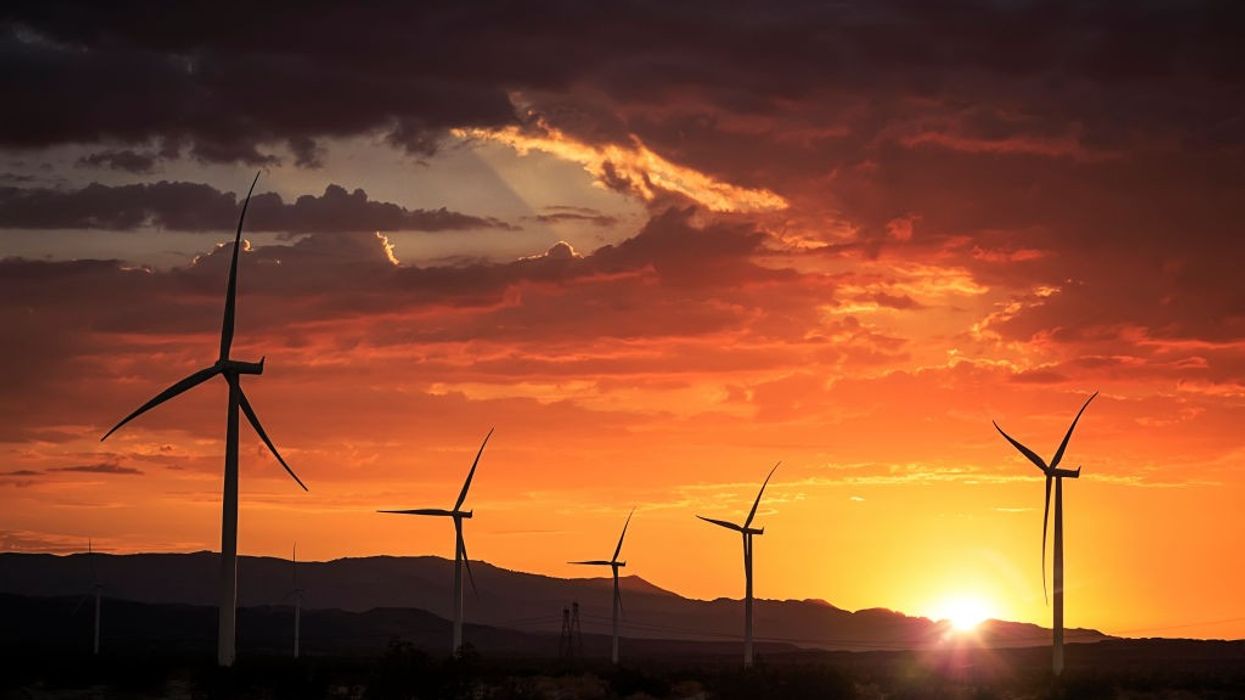
"This historic milestone marks a significant win for clean energy advocates, for ratepayers, and for people and communities across the country," said one climate leader.
U.S. climate advocates this week are celebrating new federal data that show wind and solar have generated more power than coal during the first seven months of 2024 and are on track to do so for the entire calendar year.
"This is the kind of news we like to see!" Food & Water Watch said of the data on social media Tuesday. "Ensuring a livable climate for all depends on us making a swift and just transition to clean energy like wind and solar."'
The group shared reporting from E&E News, which noted that "the milestone had been long expected due to a steady stream of coal plant retirements and the rapid growth of wind and solar. Last year, wind and solar outpaced coal through May before the fossil fuel eventually overtook the pair when power demand surged in the summer."
"Renewables' growth has been driven by a surge in solar production over the last year," the news outlet continued. "The 118 terawatt-hours generated by utility-scale solar facilities through the end of July represented a 36% increase from the same time period last year, according to preliminary U.S. Energy Information Administration figures. Wind production was 275 TWh, up 8% over 2023 levels. Renewables' combined production of 393 TWh outpaced coal generation of 388 TWh."
Sierra Club executive director Ben Jealous said in a statement Wednesday that "wind and solar energy has long been the most cost-effective choice for utilities, but now it has also outpaced coal generation as the top source of energy, further demonstrating that clean energy is critical to a reliable and affordable grid."
"This historic milestone marks a significant win for clean energy advocates, for ratepayers, and for people and communities across the country that simply want to breathe clean air, drink safe water, and worry less about climate disasters like floods and wildfires," Jealous continued.
"For decades, the Sierra Club has fought to move America Beyond Coal and onto a clean, reliable, and affordable grid," he added. "To date, the Beyond Coal campaign has secured the retirement of 385 coal plants and counting, and on August 16th, we celebrate the two-year anniversary of the Inflation Reduction Act, which made historic investments in clean energy and clean energy jobs. Together, families across the country are saving money, enjoying good paying jobs, breathing clean air, and drinking safe water."
Along with celebrating the federal legislation signed in 2022 by President Joe Biden, Sierra Club highlighted a state law signed the previous year by Democratic Illinois Gov. JB Pritzker.
"Illinoisans should be proud of the work we've done to close our largest coal plants and leverage the power of clean energy to drive economic growth while reducing pollution that's harmful to public health and our planet," said Jack Darin, director of the Sierra Club's state chapter. "Thanks to the Climate and Equitable Jobs Act of 2021, Illinois workers are now building the clean energy that is replacing old, dirty fossil fuels and bringing a brighter future to communities across our state."
Celebrations over the "major power milestone" come as Americans prepare for a November presidential election in which Democratic Vice President Kamala Harris and Minnesota Gov. Tim Walz—who are endorsed by a range of climate groups—are set to face former Big Oil-backed former Republican President Donald Trump and U.S. Sen. JD Vance (R-Ohio).
During an April event in Florida, Trump told fossil fuel executives that if they invested just $1 billion into his campaign, he would gut the Biden-Harris administration's climate regulations. The Washington Post reported Tuesday that billionaire Continental Resources founder then "called other oil executives and encouraged them to attend fundraisers and open their wallets."
While Hamm is reportedly sharing Big Oil's priorities with the Trump-Vance team, their approach can be summed up by a phrase they've said on the campaign trail: "drill, baby, drill."
Although the Republican candidates have tried to distance themselves by the Heritage Foundation-led Project 2025, the right-wing policy agenda—crafted by many Trump allies—has also alarmed climate campaigners.
Noting the new energy data, Antonia Juhasz, a senior researcher on fossil fuels at Human Rights Watch, said Tuesday: "This transformation is due in large part to federal government policy which has specifically incentivized renewable energy development and deployment and increased regulation on the harms of fossil fuels. All of which are specifically targeted for removal in Project 2025."
As Common Dreams reported earlier Wednesday, an analysis from the think tank Energy Innovation shows that a GOP administration implementing the Project 2025 plan would increase U.S. greenhouse gas emissions by 2.7 billion metric tons by 2030 compared to the current trajectory.
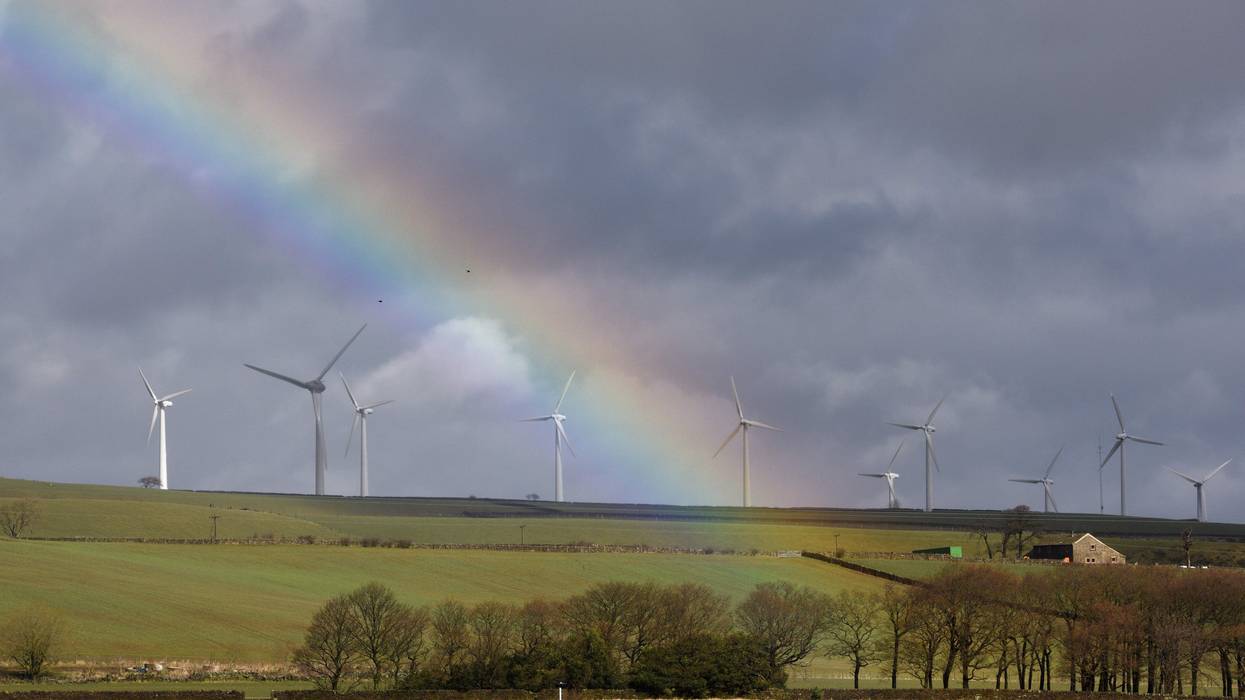
Although there are up front costs of building solar and wind farms, these new energy plants will pay for themselves over time, and by the 2040s energy will be much cheaper.
Last week, the International Energy Agency put out a new report that turns conventional wisdom regarding the clean energy transition on its head.
It is cheaper for everyone to adopt solar, wind, batteries, and other renewables as soon as possible than to go on depending on coal, fossil gas, and petroleum. And we’re just talking about energy costs in a vacuum here, not factoring in the climate change damage that fossil fuels do to the planet, which costs billions of dollars a year and will cost ever more as time goes on.
The report’s authors write that in China in 2023, “more than 95% of new utility-scale solar photovoltaic (PV) installations and new onshore wind capacity had lower generation costs than new coal and natural gas plants. Where electric cars and two- and three-wheelers have higher upfront costs, which is not always the case, they typically result in substantial savings because of lower operating expenses.”
Since the cost of producing electricity by solar is falling so fast, whereas petroleum prices are either stable or slated to rise, if we shift from oil to electricity we obviously are saving a lot of money.
I repeat, solar and wind had lower generation costs. And no wonder, since the cost of solar panels plummeted an astonishing 30% in 2023. And we’re only at the beginning of the transition. Between 2009 and 2019, the price of solar electricity dropped 89%. Think about the last 10 years of gasoline prices in the U.S. The average price of gasoline in 2014 was about $3 per gallon. In 2023 it was $3.52. In real terms, accounting for inflation, the price was probably about flat or down just a wee bit. Fossil fuels are remaining just as expensive as they always were, but renewables are rapidly declining in price. These declines will continue as new technologies are invented and implemented.
Although there are up front costs of building solar and wind farms, these new energy plants will pay for themselves over time, and by the 2040s energy will be much cheaper. The IEA says, “Today, around 50% of total consumer energy expenditure is on oil products, and another 35% is on electricity. In rapid energy transitions these swap places, making the price of electricity the key measure of affordability for most consumers.”
Since the cost of producing electricity by solar is falling so fast, whereas petroleum prices are either stable or slated to rise, if we shift from oil to electricity we obviously are saving a lot of money.
But, we’re going to need some major investments up front to unlock these lower prices. The report says: “As things stand, around $3 trillion is invested each year into the energy sector, of which $1.9 trillion is in a range of clean energy technologies and infrastructure. By 2035, total investments need to rise to $5.3 trillion in the NZE Scenario, with $5 trillion going to clean energy.”
The bottom line is the bill you get from your energy utility every month, and your monthly cost for transpiration fuel. The IEA observes, “Our projections highlight that rapid clean energy transitions result in lower consumer bills compared with a trajectory based on today’s policy settings.”
If we stop subsidizing fossil fuels and put the money instead into a Manhattan Project-style full-court press for renewables, in 11 years consumers could be paying 20% less for their energy, especially in the developing world.
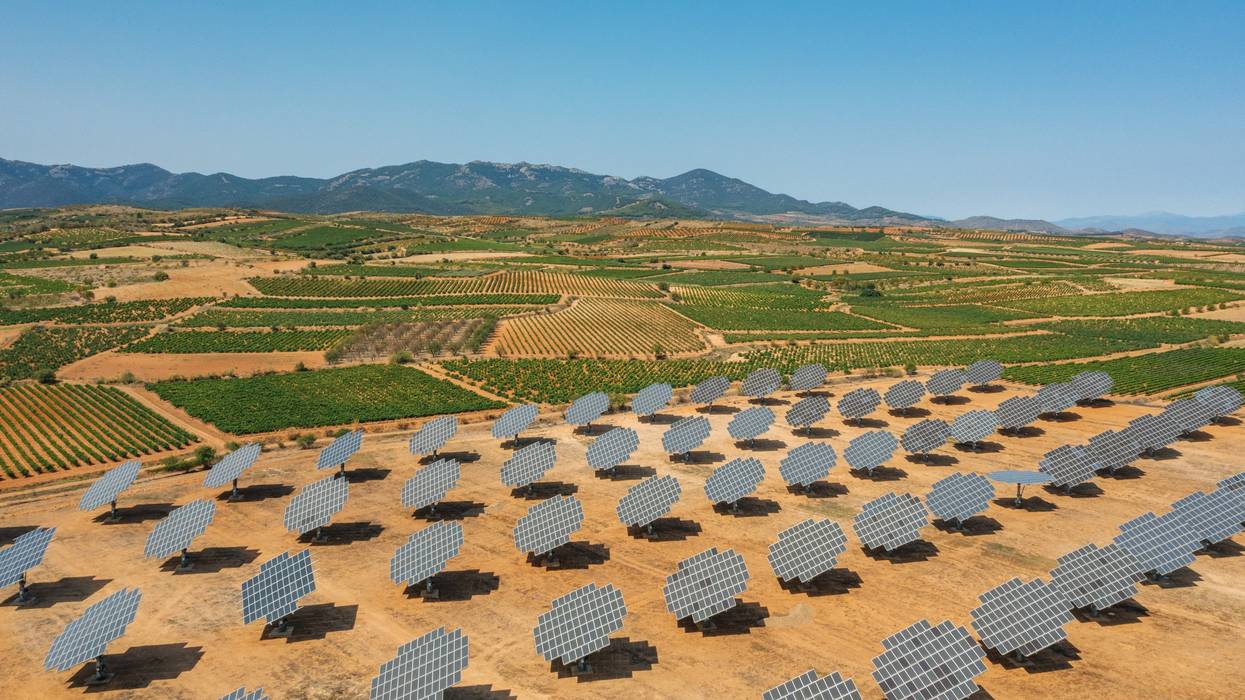
Spaniards have been rushing to put solar panels on their roofs, now helped by E.U. subsidies and by a plummeting in the cost of the systems.
Spain, the world’s 15th-largest economy and the fourth-largest in Europe, recently ran for nine hours entirely on wind, solar, and hydro. It is not the first time the renewables supplied all of the country’s domestic electricity needs on the peninsula, but it is the first time they did so for so many hours in a row, on a weekday when demand is heavier than on the weekends, and when three of the country’s nuclear power plants were shut down for various reasons. So reports Ignacio Fariza at El Pais.
Spain, with a nominal GDP of about $1.427 trillion and a population of 47 million, is a major industrialized democracy, so this achievement is highly significant for what it tells us about the future.
Spain’s prime minister, Pedro Sánchez of the Socialist Workers’ Party, has been a booster of green energy. The Spanish right-wing had actually put punitive taxes on people with solar panels, at the behest of Big Carbon, but Sánchez’s government repealed them. Since the February 2022 Russian invasion of Ukraine and the consequent spike in fossil gas prices, Spaniards have been rushing to put solar panels on their roofs, now helped by E.U. subsidies and by a plummeting in the cost of the systems.
Spain now has one of Europe’s largest solar plants.
In 2022, the country put in 4.28 gigawatts of utility-scale solar, 2.64 gigs of distributed PV, and 1.38 gigs of wind power. That is nearly seven gigawatts of new solar in one year, and the country is not slowing down.
Spain’s total power capacity is 118 gigawatts, with wind making up 29 gigawatts or 22% of the whole. Wind is the biggest installed source of electricity now in Spain. Solar only provides about 10% of electricity, but has enormous potential for growth.
In April, though, solar supplied 22% of Spain’s electricity, and solar and wind together made up 46% of electricity production. It has been especially hot and sunny in Spain this spring, which has created water shortages and problems for farmers. Hydroelectric generation is way down. But solar is doing great business.
Spain has lots more wind and solar in the pipeline. By 2026 the country expects to have 10-15 more gigawatts of solar, and five new gigawatts of wind capacity. Although the country is planning to phase out its nuclear plants, which currently supply over a fifth of its electricity, by 2030, Spanish scientists are confident that wind, solar, hydro, and battery can take up that slack and more.
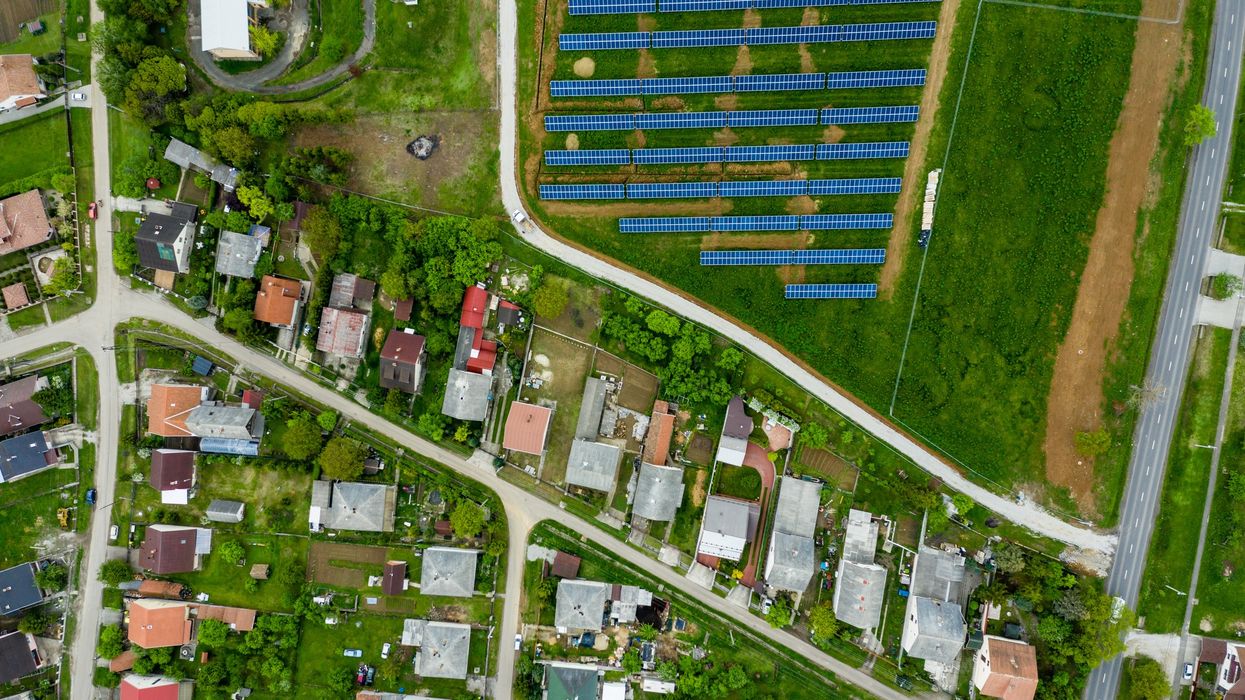
A just transition away from fossil fuels and into community-centered renewable energy is the only path forward.
The IPCC’s 6th Assessment Synthesis Report released this week summarizes what we already knew: that the climate crisis, whose visibility has grown more pronounced over every season, is unequivocally happening.
Its root cause? Humanity’s addiction to fossil fuels. Every year that we put off a swift, just transition into a decarbonized economy is a year that we will never get back.
But a better world is possible, and in fact it’s already here.
Over the last decade, renewable energy has become more affordable and more accessible. The global energy crisis is driving a sharp acceleration in installations of renewable power, with total capacity growth worldwide set to almost double in the next five years to account for over 90% of global electricity expansion.
This increase is 30% higher than the amount of growth that was forecast just a year ago, and would see renewables overtake coal as the largest source of electricity generation. This keeps the possibility of limiting global warming to 1.5 °C alive, and highlights how quickly change is possible when accompanied by political will.
This leap towards decarbonization is also being taken by grassroots communities worldwide — the ones who are on the frontlines of the crisis. They have had enough, and they have had the courage to take power into their own hands.
Reflecting on some of the key projects that have been the building blocks for our irresistible world, I think of the Solar XL action.
The Keystone XL Pipeline is a partially built pipeline running from the polluting tar sands in Canada across the breadth of the United States. Its construction has been fiercely resisted by local residents, farmers, and Indigenous people, whose livelihoods have been impacted by the pipeline.
In resisting Keystone XL, they did not just say no — they harnessed their agency, and built solar arrays directly on the proposed path of the pipeline. They disrupted the problem with a solution, creating their own energy in place of a pipeline, one of the world’s biggest carbon bombs.
In Fiji and the Philippines, organizations have delivered training for communities, teaching them how to set up portable solar energy devices called Tek Paks. The program, called Solar Scholars, involves training volunteers who then commit to passing on the training to others, and are provided with the tools and resources needed to do so.
These devices are used as emergency response when climate disasters impact the accessibility and availability of electricity.
The Philippines is a country that has experienced grave climate impacts — most recently, super-Typhoon Odette whose torrential rains and violent winds destroyed hundreds of thousands of homes and impacted millions across the country when it made landfall in late 2021.
Solar Scholars is the kind of solution that creates regenerative positive impacts down the line beyond just energy generation. One anecdote that comes to mind is of a woman in the Philippines who, after undertaking her Tek Pak training, was able to power a refrigerator to keep her and her husband’s daily fish catch fresh for longer, increasing their household income.
Above Machynlleth, a market town in Mid-Wales, two community turbines, 75kw and 500 kw respectively, stand on the surrounding hills.
The turbines are owned by around 200 shareholders and have been generating electricity since 2003, with profits given back to shareholders and funneled into local community schemes.
Amid the financial hardship brought on by the cost-of-living crisis, the scheme has been a vital source of funding for a community hub, food, and outdoor play equipment for local schools.
Community renewable energy projects bring more than just clean power and heat – they create more jobs, build support for change, and help create more resilient local economies and energy systems, reducing carbon emissions and contributing to the national grid while reducing pressures on it in other ways.
While investment into renewable energy is at an all-time high, the reality is that powering up renewables will only have an impact if we power down fossil fuels. We can add as much renewable energy capacity as we like to the mix, but if we’re not eliminating emissions that come from fossil fuel use, we’re not getting anywhere.
A just transition away from fossil fuels and into community-centered renewable energy is the only path forward.
Solutions are a form of resistance, and resistance is a tool for remediation. The rallying cries for a livable, fossil-free future are louder than ever, and the calls for change are getting louder and louder.
While the business-as-usual few remain stuck in the past, the collective imaginations, agency, and creativity of the many are launching us into the irresistible world we deserve.
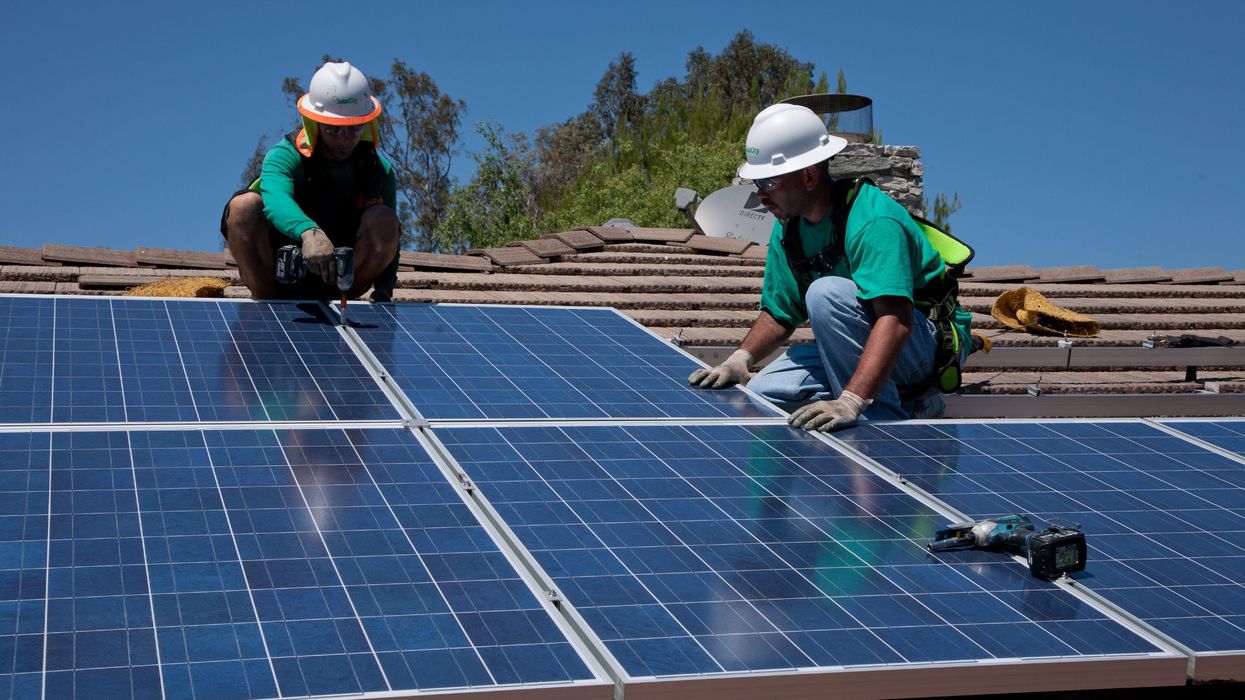
"Thanks to President Biden's affordable clean energy plan, businesses are investing in manufacturing like never before, and planning to create good-paying jobs in every corner of the country," said one climate campaigner.
A leading climate action group on Monday published a report revealing that the 94 clean energy projects announced since U.S. President Joe Biden signed the Inflation Reduction Act into law last August are set to create more than 100,000 green jobs.
Climate Power—which published the report as part of a new six-figure national ad campaign touting the growing green economy—said that since the IRA became law without any Republican support last year, "companies are racing forward with massive investments to build our clean energy future."
"New manufacturing in wind, solar, batteries, and electric vehicles—along with storage projects across the country—mean new, good-paying jobs for hard-working Americans," the group continued. "In the six months since the landmark climate and clean energy investments became law, clean energy companies have announced more than 100,000 new clean energy jobs for electricians, mechanics, construction workers, technicians, support staff, and many others."
"As the largest U.S. investment in clean energy and climate in history, this national clean energy plan will continue to reshape and recharge our economy for many decades to come," Climate Power added.
While green groups have generally praised the IRA's historic $369 billion investment in renewable energy production and innovation, activists have condemned provisions including fossil fuel tax credits and mandatory lease sales on public lands and at sea.
The 94 new clean energy projects in the Climate Power report—which are spread across 31 states and have a combined investment value of $89.5 billion—include:
Forty new battery manufacturing sites in places like Van Buren Township, Michigan; Tucson, Arizona; and Florence County, South Carolina. So far, 22 companies have announced plans for new or expanded electric vehicle manufacturing in Pryor, Oklahoma; Montgomery, Alabama; Highland Park, Michigan—and more. A further 24 companies shared plans to expand wind and solar manufacturing in cities including Pueblo, Colorado; Perrysburg, Ohio; and Georgetown, Texas. The majority of the projects are in seven states—Arizona, Georgia, Michigan, Ohio, South Carolina, Tennessee, and Texas.
"Thanks to President Biden's affordable clean energy plan, businesses are investing in manufacturing like never before, and planning to create good-paying jobs in every corner of the country," Climate Power executive director Lori Lodes said in a statement.
"This is only the beginning—we're months after the passage of the Inflation Reduction Act and we're already at the precipice of a renewed manufacturing, made-in-America boom that will create opportunities for millions of Americans, all while reducing toxic emissions that harm the health and wellbeing of our communities," Lodes added.
Last month, the International Energy Agency said in a report that "the world is at the dawn of a new industrial age—the age of clean energy technology manufacturing," and that green manufacturing jobs will more than double by the end of the decade if countries worldwide live up to their climate and energy pledges—a huge "if" given that global emissions remain at record levels.

"As we begin 2023, it seems very likely that renewables will provide nearly a quarter—if not more—of the nation's electricity during the coming year," said Ken Bossong of the SUN DAY Campaign.
A new analysis of federal data shows that wind and solar alone could generate more electricity in the United States than nuclear and coal over the coming year, critical progress toward reducing the country's reliance on dirty energy.
The SUN DAY Campaign, a nonprofit that promotes sustainable energy development, highlighted a recently released U.S. Energy Information Administration (EIA) review finding that renewable sources as a whole—including solar, wind, biomass, and others—provided 22.6% of U.S. electricity over the first 10 months of 2022, a pace set to beat the agency's projection for the full year.
"Taken together, during the first ten months of 2022, renewable energy sources comfortably out-produced both coal and nuclear power by 16.62% and 27.39% respectively," the SUN DAY Campaign noted Tuesday. "However, natural gas continues to dominate with a 39.4% share of total generation."
The new EIA figures show that electricity output from solar alone jumped by more than 26% in the first 10 months of last year. In just October, the SUN DAY Campaign observed, "solar's output was 31.68% greater than a year earlier, a rate of growth that strongly eclipsed that of every other energy source."
Ken Bossong, the campaign's executive director, said that "as we begin 2023, it seems very likely that renewables will provide nearly a quarter—if not more—of the nation's electricity during the coming year."
"And it is entirely possible that the combination of just wind and solar will outpace nuclear power and maybe even that of coal during the next twelve months," Bossong added.
"It is entirely possible that the combination of just wind and solar will outpace nuclear power and maybe even that of coal during the next twelve months."
The encouraging data comes amid the broader context of U.S. failures to sufficiently accelerate renewable energy production and phase out fossil fuel use, which is helping push greenhouse gas emissions to record-shattering levels globally.
Gas production, a major contributor to highly potent methane pollution, likely broke an annual record in the U.S. last year, according to the latest federal data. One recent analysis found that the U.S. is currently pursuing more new oil pipeline capacity by length than any other country.
The Climate Action Tracker (CAT), a site created by a group of scientists to analyze nations' emissions targets and progress, rates the U.S. as "insufficient" overall, arguing the country's "climate policies and action in 2030 need substantial improvements to be consistent with the 1.5°C temperature limit."
On the positive side, CAT welcomes the recent passage of the Inflation Reduction Act (IRA), a law that's set to boost the U.S. build-out of renewable energy infrastructure.
"However, while the largest share of the IRA is directed to clean technologies, it also includes several concessions for the fossil fuel industry such as requiring minimum acreages of public lands for drilling leases," CAT notes. "These concessions contradict President Biden's promise on his first day in office to ban new oil and gas drilling on federal lands."