

SUBSCRIBE TO OUR FREE NEWSLETTER
Daily news & progressive opinion—funded by the people, not the corporations—delivered straight to your inbox.
5
#000000
#FFFFFF
To donate by check, phone, or other method, see our More Ways to Give page.
Daily news & progressive opinion—funded by the people, not the corporations—delivered straight to your inbox.
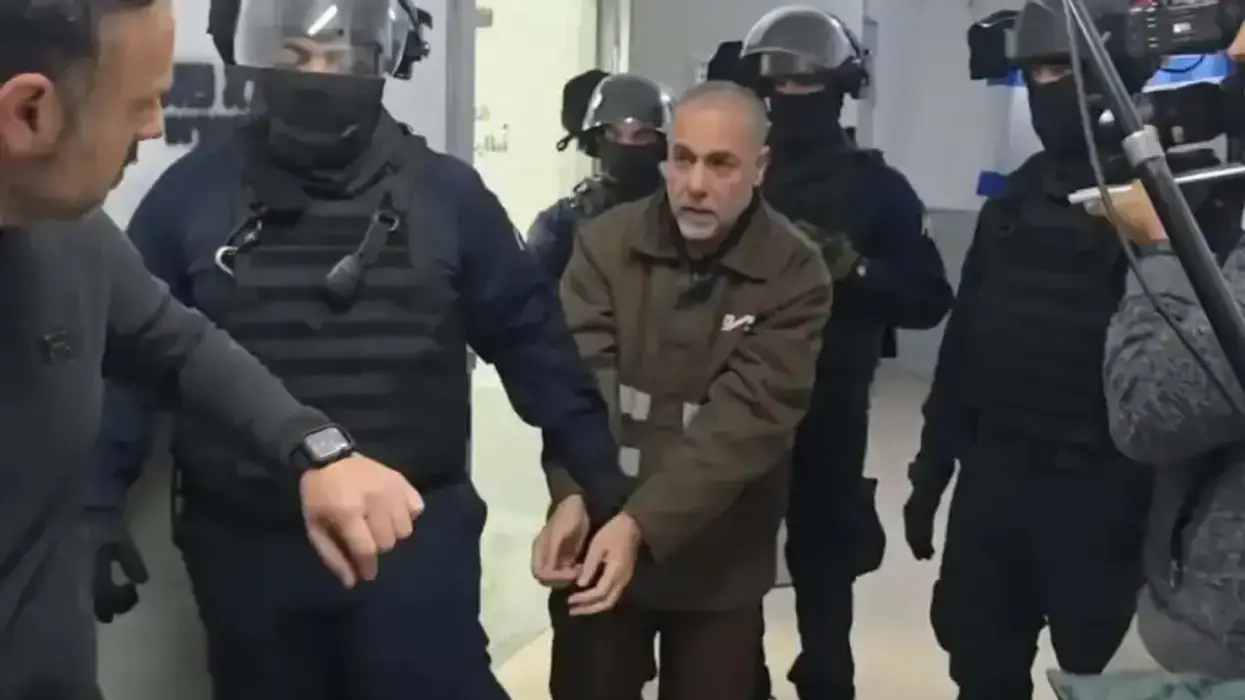
Dr. Hussam Abu Safiya has been held in brutal Israeli detention for over 500 days without charge; you would think these details would trigger some sympathy or at least curiosity in his American counterparts.
"We have nothing to do with that." An American Medical Association staff member said this to me with a look of disdain on her face. I was at the AMA's annual conference in Chicago, urging the doctors in attendance to speak up for their imprisoned Palestinian colleague, pediatrician and neonatologist Dr. Hussam Abu Safiya. My group posted up outside conference rooms and handed out informational flyers uplifting his story. Dr. Abu Safiya has been held in brutal Israeli detention for over 500 days without charge; you would think these details would trigger some sympathy or at least curiosity in his American counterparts, but the opposite happened. We were flocked by security guards, verbally harassed, and treated as if we were doing something much more nefarious than handing out harmless pieces of paper.
A male security guard was threatening to get physical with me when the AMA staffer walked past — but instead of intervening, she joined in with him, egging him on. I asked her, "Do you know why we're here, though? You guys need to speak up for your colleagues in a genocide." She shook her head snidely, showcasing an apathy that was almost laughable considering the irony of the situation: A staff member for the country's leading medical institution — one that prides itself on its ethics — couldn't even pretend to care about a Palestinian doctor being tortured by Israel.
It's quite maddening when you think of how much support the AMA gave Ukraine when the Russian invasion began. They quickly put out statements of condemnation that the healthcare sector was being impacted, and hundreds of thousands of dollars in aid were given almost instantly. It has been three years since Gaza's healthcare sector was completely reduced to rubble, and the AMA has yet to say a single word about it. A year and a half has passed since Dr. Hussam Abu Safiya was abducted from the hospital that Israel besieged.
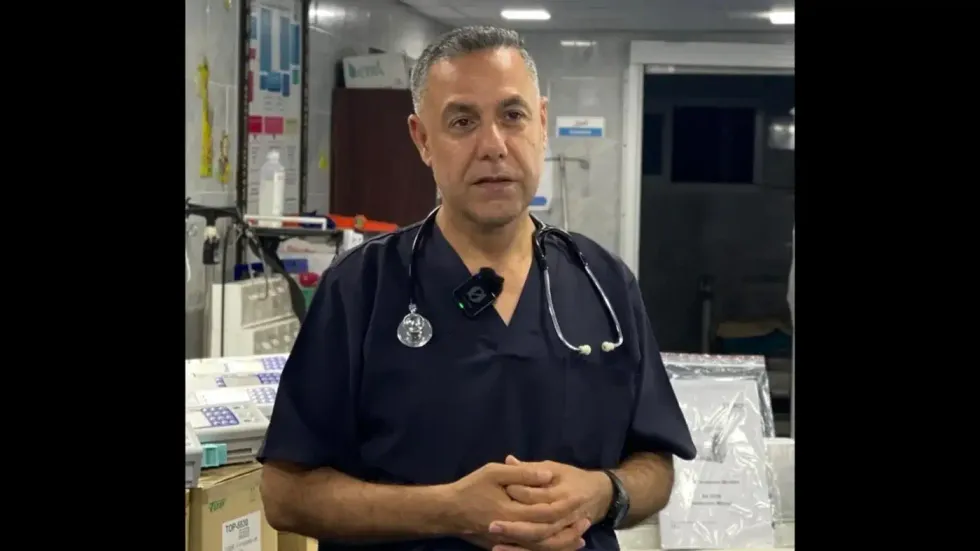 Dr. Abu Safiya before Israeli priso.
Coincidentally, the same week the AMA was meeting in Chicago, new photos of Dr. Abu Safiya emerged, the first in many months. He's shown handcuffed and alone in a sterile white room, apparently on a video call with the Israeli courts.
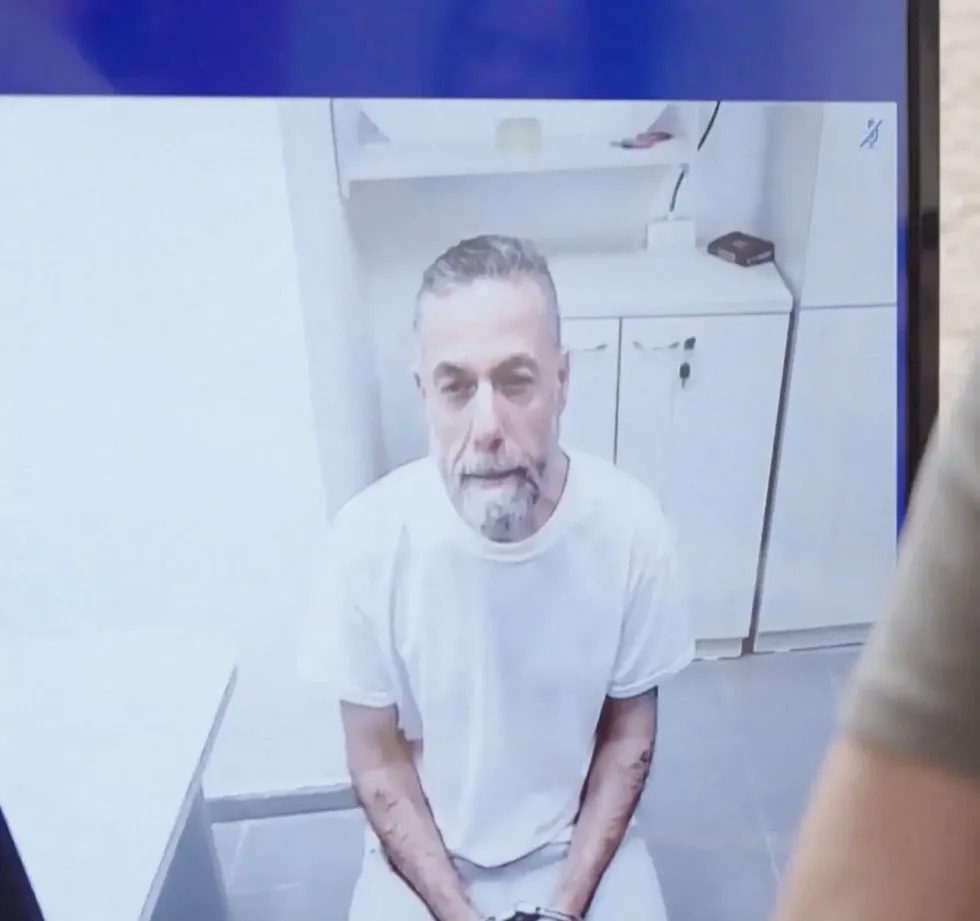 Dr. Abu Safiya after 1.5 years in Israeli prison
The new image of Dr. Abu Safiya breaks my heart. He's lost so much weight, and there's scarring and scabbing on his arms that weren't there before, obvious signs of torture. Israeli prisons are vile and dangerous; they are places where military personnel can go rogue with no fear of punishment and enact their most atrocious desires. After all, these prisons are run by the likes of Ben Gvir, a racist, sadist, and war criminal. I just don't understand how physicians in the AMA can consciously look at this photo of Dr. Abu Safiya and have nothing to say.
When Israelis are permitted to commit war crime after war crime, including holding medical professionals hostage, it sets a precedent. They're not only killing and kidnapping healthcare workers in Gaza, but in Lebanon and Iran, too. Is it just because these are brown Muslim people that the AMA refuses to speak out? For an organization that claims a commitment to human rights and dignity, its racism is loud, and its participation in the white supremacist attitudes of Western imperialism is staggering.
This conference was a place for the AMA to discuss policy, especially around advocacy. CODEPINK staff, volunteers, and coalition partners were outside and inside the conference every single day. Our presence sparked awareness and conversation among the members, and we learned that there were debates inside on an issue the organization could no longer ignore: Palestinian healthcare workers.
Although they didn't mention Dr. Abu Safiya by name, it's clear that the AMA heard our collective message and that the friends of the movement inside the AMA were emboldened by our consistent energy. During the conference's scheduled time to amend, remove, and propose new policies, a handful of resolutions were introduced about Palestine and the blatant attacks on its healthcare workers and infrastructure. There was one resolution in particular that was proof that our work was changing hearts and minds. It reads as follows:
RESOLVED, that our AMA supports efforts to protect, release, and provide restitution to detained noncombatant healthcare workers in all areas of conflict, including Gaza.
Ultimately, this specific resolution was not passed. But the mere inclusion and debate of the topic means that our persistence illuminated the issue of Palestine to every single person at the conference. And, because of that, the AMA delegates managed to pass 2 resolutions about the general "protection of healthcare workers and facilities in conflict areas."
The AMA staff member and security guards knew what we were talking about; they knew the story of Dr. Hussam Abu Safiya. Whether they feel a moral obligation to do anything about it is beyond me, but we got confirmation that they knew exactly what we are organizing for. And even if the people in positions of power at the AMA don't feel inclined to do anything about genocide, it is very clear that the general body does care.
The AMA was founded, in part, to lay out a strict code of ethics for medical professionals in the United States. These principles explicitly highlight the responsibility of physicians to advocate for human dignity, human rights, public health, and medical access for all. What has happened in Gaza over the past three years has been nothing short of an abomination of human dignity and rights. Israel and the U.S. have bombed Gaza's public health system to the ground, and now the one million Palestinians in Gaza have been left without access to proper medical care for three years. If the AMA were run by individuals who actually practiced their own code, they would have been the first to advocate against medicide in Gaza. Unfortunately, the organization seems to favor quiet comfort over the actual embodiment of its values.
I am reminded of the photo that came out of Gaza just a few weeks after the genocide began. At a press conference outside an exhausted hospital, dead bodies of children in bags surrounded the podium, traumatized men stared at the camera, and some of the most courageous healthcare workers I have ever seen spoke out, pleading for the world to do something.
 Press conference outside of Al-Ahli Hospital on October 18th, 2023.
I see the photo above, and the photo of Dr. Abu Safiya — these are just a handful of Palestinian healthcare workers making tremendous sacrifices to protect human life and dignity. They physically put themselves in the line of fire; meanwhile, the AMA doctors can't even put out a statement. It is well past time that they break their silence. If the AMA chooses to advocate for the release of Dr. Hussam Abu Safiya, they very well might save his life.
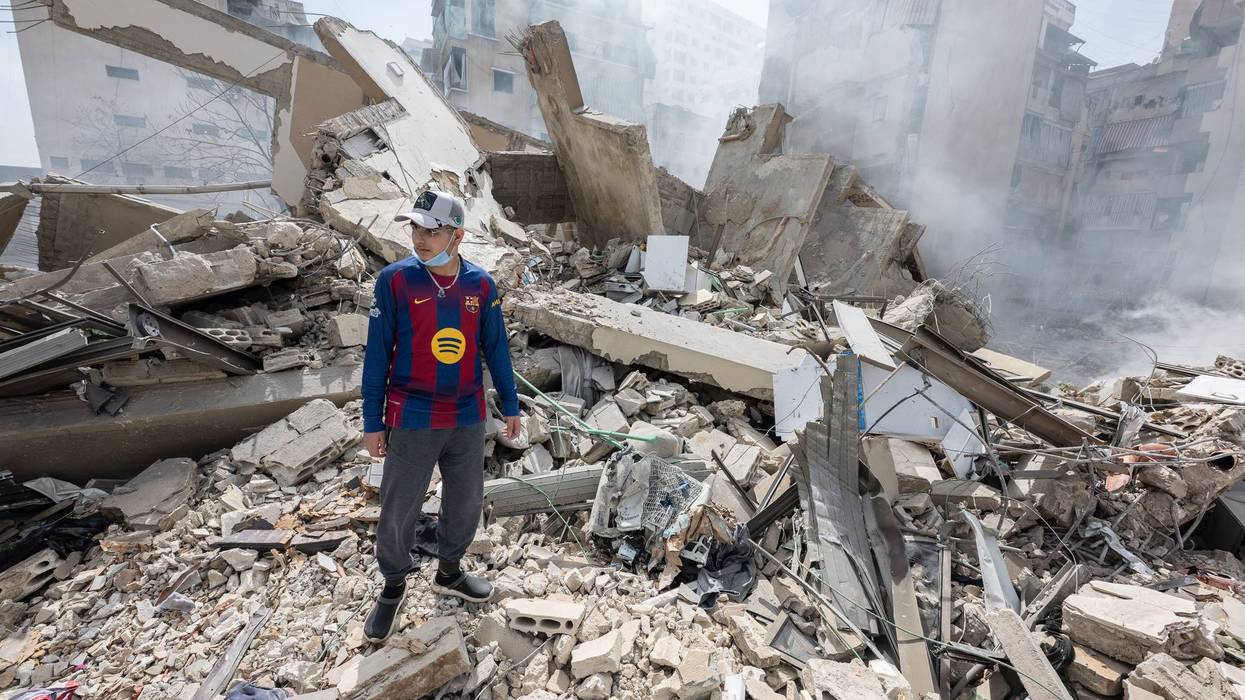
"All of Beirut shook," said one resident who was forced to take shelter in the city after an Israeli displacement order forced her from her home in the suburbs.
An Israeli airstrike totally demolished a large apartment building in central Beirut on Wednesday, following a night of attacks on densely populated residential areas, several of which reportedly came without warning.
Videos shared to social media and by local media outlets show the 10-story building, located in the Bachoura neighbourhood in central Beirut, suddenly collapsing into rubble in the early hours of the morning after being struck with a missile.
Israeli authorities issued a forced displacement order to residents of the building over social media around 4 am local time, roughly an hour before the strike. It warned residents of buildings in the Bachoura area that they were "located near Hezbollah facilities" and needed to move at least 300 meters away.
Israel has claimed the building was used by the militant group Hezbollah to stash large sums of money, but has provided no evidence publicly.
Citing Lebanon's Health Ministry, the Associated Press reported that at least four people were wounded in the attack, which sent emergency teams rushing to the scene through a plume of black smoke.
Residents of the collapsed apartment building have taken to social media to describe their horror at seeing their home suddenly destroyed.
"I am a US citizen and surgeon who took care of the Boston Marathon bombing victims in 2013," said Haytham Kaafarani, a professor of surgery at Harvard Medical School. "I paid for seven years to own a small apartment in downtown Beirut for my three kids to enjoy summers there. Today, Israel reduced my dream home to rubble, with American weapons, paid by my taxes."
Another professor, Bilal R. Kaafarani, who teaches chemistry at the American University of Beirut, said something similar.
"Israel demolished the building I have an apartment in. It took 22 years of my work here and 20 years of my wife’s work to own this apartment," he said. "This madness has to stop."
The attack came after a night of intense airstrikes upon civilian areas in Lebanon's capital, which reportedly came without warning in the middle of the night and into the early morning.
According to Lebanese authorities, at least 20 people were killed in a series of attacks on Beirut and the southern and eastern parts of the country, while dozens more were injured.
Lebanon's health ministry reported that more than 900 people have been killed and 2,200 injured in Israel's latest round of attacks in Lebanon, which began on March 2 after Hezbollah retaliated against the US-Israeli war in Iran.
The attacks beginning Tuesday night came less than a day after Volker Türk, the United Nations High Commissioner for Human Rights, warned that "deliberately attacking civilians or civilian objects amounts to a war crime,” noting that hundreds of homes and other civilian infrastructure, including health facilities, had been destroyed by prior Israeli attacks in Beirut.
Israel has issued evacuation orders that have forced more than 1 million Lebanese people from their homes as part of an expanding ground invasion into southern Lebanon.
Sara Saleh, a 29-year-old taking shelter in a nearby school after being forced from her home in Beirut's southern suburbs, told the Agence France-Presse that she and her family "were asleep" when Israel's warning came down early Wednesday morning. She said they were left to flee for safety in their pajamas.
She said the attack on the apartment "was terrifying... all of Beirut shook." Speaking with a face mask to protect herself from dust kicked up by the demolished building, she said her sister's children "started crying and panicking, it was heartbreaking."
The mass displacement of civilians in Lebanon and Iran has been met with increasing criticism from UN experts and human rights organizations.
As reports of the apartment bombing rolled in, Philippe Lazzarini, the commissioner-general of the UN agency for Palestinian Refugees (UNRWA), said that "international law is being openly ignored" and that "impunity reigns and disproportionate actions are being normalized amid the escalating conflicts in the Middle East."
"It is a vicious circle," he said. "The more violations, the stronger the culture of impunity becomes."

Critics blasted Trump as "sadistic" for justifying attack on unarmed Iranian ship, which killed over 100 sailors, because it was "more fun" for US forces than capturing it.
President Donald Trump said the US Navy chose to sink an Iranian frigate, killing more than 100 sailors last week, because it was "more fun" than capturing the vessel, even though the ship posed no threat.
Though death tolls vary, Iran's state media organization, the Islamic Republic News Organization, reported on Sunday that 104 crew members were killed in the attack and that 32 others were injured when a US submarine torpedoed the Iranian warship IRIS Dena in the Indian Ocean on March 4 as it departed from the Milan Peace 2026 naval drills hosted in India.
The Dena was more than 2,000 miles away from the Persian Gulf when it was attacked, far from the hostilities unleashed last weekend when the US and Israel launched a war against Iran. Contradicting US claims, Iranian and Indian officials have said it was not armed.
In what political commentator Adam Schwarz described as "the most blasé admission of a war crime by a US president in history," Trump on Monday casually recounted the US Navy's decision to attack the ship before a gathering of Republicans at a Congressional Institute event, a GOP-aligned nonprofit retreat organizer.
He suggested that the Navy blew the boat up not to neutralize a threat, but purely for its own sake.
After making the exaggerated boast that Iran's navy is "gone" following aggressive US bombing, Trump said at first he "got a little upset" with the military brass who ordered the sinking of the Dena, which he said they described as a "top-of-the-line" vessel.
Trump said he asked: "Why don't we just capture the ship? We could have used it. Why did we sink them?"
He said that an unspecified official told him, "It's more fun to sink them."
As the crowd laughed, Trump went on, chuckling himself: "They like sinking them better. They say it's safer to sink them. I guess it's probably true."
Iran's deputy foreign minister, Saeed Khatibzadeh, described the ship as operating in a purely "ceremonial" role and said it was "unloaded" and "unarmed" at the time of the attack last week.
Rahul Bedi, an independent defense analyst in India, told the Associated Press that while the ship may have used some limited non-offensive ammunition during naval exercises, drill protocol requires “the participating platforms to be unarmed.”
US Defense Secretary Pete Hegseth has claimed the vessel was a "predator ship," while the US Indo-Pacific Command has said claims that the ship was unarmed are "false." However, it has provided no evidence that it posed a threat at the time of the attack.
The attack itself was likely legal under the rules of naval warfare, even if the ship was unarmed, though its ethical and tactical justification has been called into question.
"A military ship might be a lawful target," Phyllis Bennis, the co-director of the Institute for Policy Studies' New Internationalism Project told Common Dreams. "But firing on any ship—any people, anywhere—for 'fun' represents the kind of immoral depravity that this White House is infamous for."
Bennis added that "failing to do everything possible to rescue those aboard is certainly a war crime," as the Second Geneva Convention requires militaries to take all possible measures to search for and collect the shipwrecked, wounded, and sick.
The Dena's 32 survivors, as well as dozens of dead bodies, had to be pulled from the water by a Sri Lankan joint rescue operation following a distress call. The survivors were quickly rushed to a local hospital in Galle City.
Hegseth has previously come under fire for reportedly ordering a second strike on shipwrecked sailors who survived the bombing of an alleged drug trafficking boat in the Caribbean.
Many have described that attack on September 2 as an exceptionally blatant war crime in a broadly illegal campaign that has extrajudicially killed at least 156 people.
In carrying out its war against Iran, Hegseth has emphasized that the US would not abide by what he called "stupid rules of engagement."
Thousands of civilian targets, including schools, hospitals, and residential areas, have reportedly been attacked by US and Israeli strikes, according to the Iranian Red Crescent.
As of Monday, Iranian Deputy Health Minister Ali Jafarian said at least 1,255 people have been killed, including 200 children and 11 healthcare workers.
Though it may have still technically been legal, journalist Mark Ames, the co-host of the geopolitics podcast Radio War Nerd, argued that attacking a ship that posed no threat shows that Trump is "cowardly scum" who "gets his kicks killing those who can’t fight back."
"The ship was unarmed. That’s why Trump and Hegseth chose to murder them," Ames wrote on social media. "Tormenting those who can’t fight back is its own sadistic pleasure."
Bennis added that even if attacking the ship itself was lawful in a vacuum, it took place before a backdrop of brazen "illegality."
"This entire shocking episode represents a clear US violation of what the Nuremberg trials identified as the 'supreme international crime': the crime of aggression," she said. "The US had no legal right to go to war against Iran. The [United Nations] Security Council had not authorized the use of force, and there was no 'armed attack' from Iran against the US that required immediate self-defense.
"Without either of those, the UN Charter is very clear that no country may attack another country," she continued. "To do so, as the Nuremberg judges found, constitutes the crime of aggression—the ultimate crime."
NOTE: This piece has been updated following publication to include additional comments.
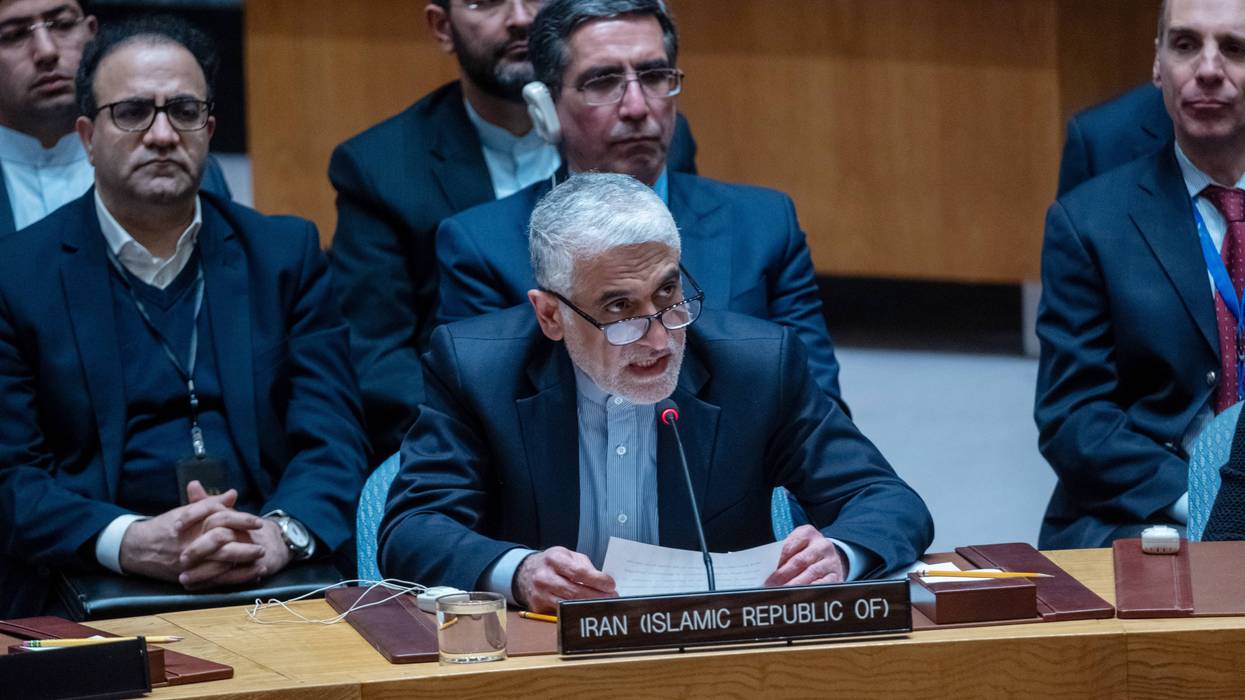
Let us be clear about what the United States and Israel are pursuing. The US objective is not the security of the American people. The objective is global hegemony. The attempt is to destroy the UN and the international rule of law—an attempt that will fail.
On February 16, 2026, one of us (Jeffrey Sachs) sent a letter to the UN Security Council warning that the United States was on the verge of tearing up the United Nations Charter. That warning has now come to pass. The United States and Israel have launched an unprovoked war against Iran in flagrant violation of Article 2(4) of the Charter, without authorization from the Security Council, and without any legitimate claim of self-defense under Article 51. They are trying to kill the UN Charter and the international rule of law, but they will fail.
At the Security Council on February 28, 2026, the US and its allies directed their condemnation not at the American and Israeli aggression, but at Iran. One US ally after the next condemned Iran for its retaliatory attacks yet absurdly failed to condemn the illegal and unprovoked US-Israeli attack on Iran. This performance by these countries was disgraceful and turned reality completely upside down.
The joint US-Israeli attacks were described by Trump as necessary because Iran “rejected every opportunity to renounce their nuclear ambitions, and we can't take it anymore.” This is of course a flat lie. As the letter of February 16 recounted, Iran agreed a decade ago to a nuclear deal, the Joint Comprehensive Plan of Action (JCPOA) that was adopted by the UN Security Council in Resolution 2231. It was Trump who ripped up the agreement in 2018. In June 2025, Israel bombed Iran in the midst of US-Iran negotiations. This time too, the Israel-US war plans were set weeks ago when Netanyahu met with Trump, and the negotiations underway between the US and Iran were a charade. This seems to be the new modus operandi of the US: start negotiations and then aim to murder the counterparts.
It is easy to understand why the US allies behave in the embarrassing and self-abasing way they did at the UN Security Council. In addition to the United States, eight of the other fourteen Council members host US military bases or grant the US military access to local bases: Bahrain, Colombia, Denmark, France, Greece, Latvia, Panama, and the United Kingdom. These countries are not fully sovereign. They are partially governed by the US. The US military bases house CIA operations, and the host countries constantly look over their shoulder to try to avoid US subversion in their own countries.
As Henry Kissinger famously said, “It may be dangerous to be America’s enemy, but to be its friend is fatal.” We can add that to host US military bases and CIA operations is to turn your country into a vassal state.
As an absurd but telling example, the Danish ambassador parroted every US talking point, pointing her finger at Iran for its aggression as if Iran had not been attacked by the US and Israel. She completely forgot that such humiliating vassalage to the US will not play well for Denmark if the US occupies Greenland.
The truthful voices at the Security Council came from the countries not occupied by the United States. Russia explained correctly that the so-called West (that is, the countries occupied by the US) is engaged in victim-blaming when it points its finger at Iran. China reminded the Council that the crisis began with the US and Israeli attacks on Iran, not with Iran’s retaliation. Somalia’s ambassador, speaking on behalf of several African member states, truthfully portrayed the source of this recent escalation. The UN Representative of the League of Arab States spoke brilliantly about the root cause of Israel’s mad aggression: the denial of rights to Palestinian people, and Israel’s use of mass murder and regional war to prevent the emergence of a State of Palestine.
When Iran retaliates against US military bases in the Gulf, it is exercising its inherent right of self-defense under Article 51 of the Charter. We must remember that the US and Israel are openly and repeatedly assassinating Iran’s leaders, with the aim of overthrowing its government. When states murder a foreign head of state and attempt to destroy the government, the target of those threats is entitled under international law to defend itself.
The US-Israeli bombing murdered not only Iran’s Supreme Leader and several top government officials, but also more than 140 young girls in their school in Minab. These young children are the victims of a horrific war crime. The countries today that gave a pass to the United States and Israel for these killings—notably Denmark, France, Latvia, the United Kingdom, and of course the US —are also complicit in this war crime.
This UN Security Council emergency meeting will likely be remembered as the day the United Nations ceased to function from its headquarters on American soil. An international organization dedicated to the peaceful settlement of disputes cannot credibly operate from a country that wages illegal wars, threatens member states with annihilation, and treats UN Security Council resolutions as disposable instruments of convenience. For the UN to survive, and we need it to survive, it will need several homes around the world—in Brazil, China, India, South Africa, and others—honoring the true multipolarity of our world.
Let us be clear about what the United States and Israel are pursuing. The US objective is not the security of the American people. The objective is global hegemony. The attempt is to destroy the UN and the international rule of law—an attempt that will fail. Israel’s objective is to establish a Greater Israel, destroy the Palestinian people, and assert its hegemony over hundreds of millions of Arabs across the Middle East (from the Nile to the Euphrates, as US Ambassador Mike Huckabee recently asserted).
The United States’ delusional efforts at global hegemony are proceeding region by region. The US has recently claimed, in a wholly twisted supposed revival of the Monroe Doctrine, that it controls the Western Hemisphere and can dictate how Latin American countries conduct their economic and political affairs. The US kidnapped the sitting Venezuelan president to prove the point, and it now threatens to overthrow the Cuban government as well.
Today’s war against Iran aims to prove that the US similarly owns the Middle East. The war is part of a 30-year campaign, initiated by the Clean Break doctrine, to overthrow all governments that oppose US and Israeli hegemony in the region. Those joint Israel-US wars have included the genocide in Gaza, the occupation of the West Bank and the decades of wars and regime-change operations in Iran, Iraq, Lebanon, Libya, Somalia, Sudan, Syria, and Yemen.
One part of the US global plan is to commandeer the world’s oil exports and to weaken China and Russia in the process. The US seizure of Venezuela was designed to ensure American control of that country’s oil exports, especially to control the flow of oil to China. US sanctions on Russia aim to prevent Russian oil from reaching India and China. Now the US aims to stop the flow of Iran’s oil to China. More broadly, the US aims to control the entire Gulf region plus Iran to maintain its imperial dominance.
The international order that Franklin and Eleanor Roosevelt helped to build after the catastrophe of WWII was founded on a simple and profound idea – that law and respect, not force, should govern relations among states. That idea is now being destroyed by the very nation that did most to promote it in founding the UN. The irony is bitter beyond measure.
The truth is that the devastation of the war will not directly affect the so-called West: their children will not suffer traumas or death, and their countries will not be set ablaze. The victims of this attack are the people of the Middle East. They are the expendable ones who suffer from Western arrogance, abuse of power, and addiction to war.
We close with two observations. First, the United States will not achieve global hegemony or kill the UN. The world is too large, too diverse, and too determined to resist domination by any single power, much less one with 4 percent of the world’s population. The world outside of the US and the countries it occupies want the UN to live and thrive. The US attempt will surely fail, but it may cause immense suffering before it does.
Second, if Israel continues its addiction to war and occupation, it too will not survive. That addiction represents a mix of theocracy and post-traumatic stress. Part of Israel believes that it is the biblical kingdom of the 5th century BC. The other part lives in the traumatic memory of the Holocaust, and so is determined to kill any perceived adversary rather than learn to live together with it in peace. The Israeli Ambassador’s twisted defense of Israel’s brazen attack on Iran, as usual, cited the Bible and Auschwitz as the two justifications. These are Israel’s two perennial references, but not the real world of today.
A state that depends on permanent war, permanent occupation and slaughter of the Palestinians, and the indefinite subjugation of millions of people has no viable future, and the policies that the United States is now pursuing on Israel’s behalf will accelerate rather than prevent that outcome.
The two-state solution, which the Council has endorsed repeatedly, offers Israel a path to peace. Tragically Israel rejects that. The result, eventually, will be the end of Israel itself in its current form, especially as the US population is rapidly turning against Israel’s violent theocracy and towards the cause of Palestine. Perhaps there will be one democratic state for both Arabs and Jews living in peace, together, with an end of apartheid rule.
These are harsh truths, but emergencies demand honesty. The UN is being murdered by Israel and the United States. The Security Council must rouse itself from their military occupation by the US, and remember that they are the stewards of the UN Charter’s promise to maintain international peace and security.
"There can be no war crime if there is no war," said one human rights scholar this week. "But there can still be murder, which these attacks were."
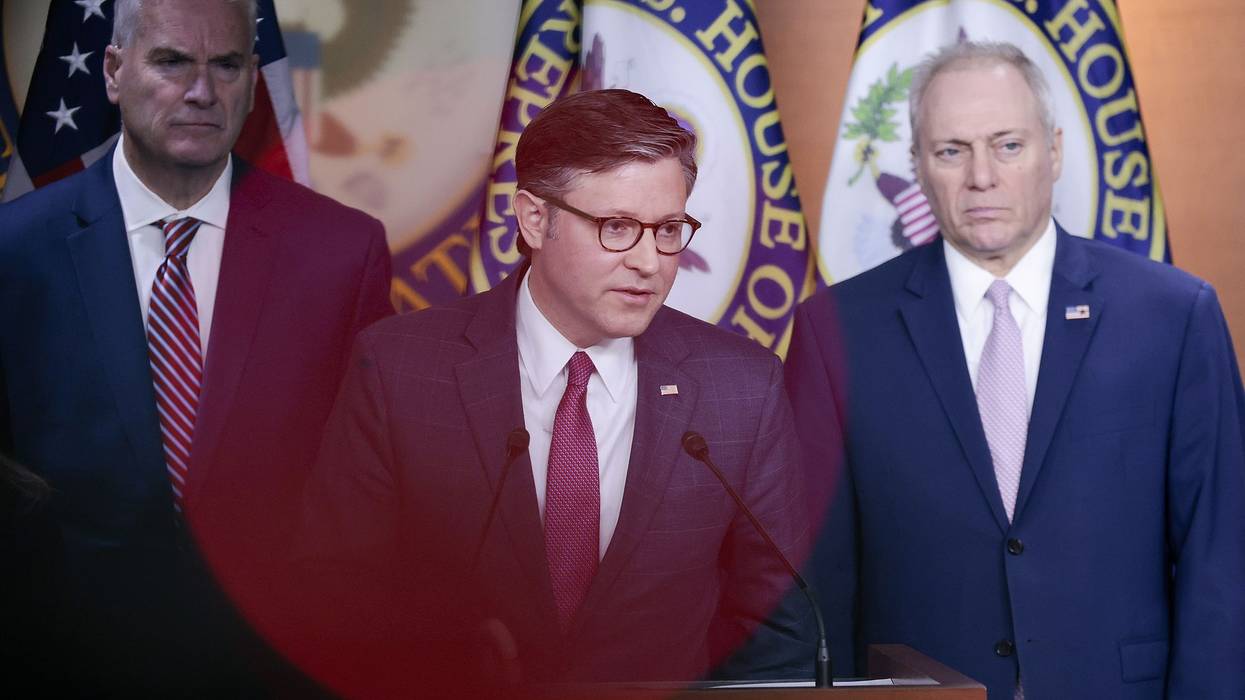
What human rights experts and scholars of international law have described as nothing short of calculated and cold-blooded "murder," Republican Speaker of the House Mike Johnson on Thursday claimed was "entirely appropriate"—the extrajudicial killing of two shipwrecked sailors clinging to the side of their exploded boat after it was bombed in the middle of the Caribbean Sea by the US military.
The murder of the two men on Sept 2., which followed approximately 45 minutes after all the others on the boat were already killed in an initial strike that shattered the boat in a ball of fire, has become the center of controversy in terms of the legality of such attacks on nearly two dozen boats that have left at least 87 people dead over recent months.
Following a Thursday briefing, Johnson emerged to say that we was convinced the killings were justified despite the chorus of expert voices who have said—even if you accept the Trump administration's dubious claims about the justifications and authority to eviscerate alleged drug boats and everyone on board them with no due process—that killing people so clearly defenseless and unable to harm anyone, let alone the United States, would be a textbook war crime in the context of war and a murder on the high seas in the context of international maritime law.
In his remarks, Johnson said the killings of the two men was "entirely appropriate," though he has not yet called for the full video of the killing to be released, unlike others among the small handful of lawmakers who have seen it.
"They were able-bodied, they were not injured," Johnson said of the two victims, "and they were attempting to recover the contents of the boat, which was full of narcotics."
"The individuals on that vessel were not helpless castaways," he added. "They were drug runners on a capsized drug boat, and by all indications, attempting to recover it so they could continue pushing drugs to kill Americans."
According to experts, however, the claim—which numerous Republicans and high-ranking Trump officials have now made—that two men who have just survived a massive missile strike on their boat, clinging to life on bits of debris in the middle of the ocean were in the act of "pushing drugs to kill Americans," defies belief.
Kenneth Roth, former executive director of Human Rights Watch and now a visiting professor at Princeton’s School of Public and International Affairs, argued this week in The Guardian that such claims must be resolutely countered and these 87 killings at sea—ordered by President Donald Trump and Secretary of Defense Pete Hegseth—condemned for what they are: murder.
"The Pentagon has also fallen back on the claim that the two were trying to right the remains of the boat that might have still contained cocaine," wrote Roth. "But the stricken boat was clearly going nowhere and could easily have been intercepted. There was no need to kill the two men clinging to its wreckage."
"In an armed conflict, it is a war crime to attack people who have been shipwrecked at sea, as some in Congress have alleged happened. They are considered hors de combat—outside the fight—and hence no longer combatants who can be shot on sight. They are akin to wounded or surrendering combatants. Opposing forces have a duty to receive and care for them, not kill them."
Going beyond the "war crime" narrative, Roth echoes in his column what many other rights experts have said, that there can be no "war crimes," in fact, when there is no declared armed conflict that constitutes a war.
"There can be no war crime if there is no war," argues Roth. "But there can still be murder, which these attacks were. So were every one of the other killings at sea that Trump and Hegseth have ordered."
Baher Azmy, legal director of the Center for Constitutional Rights, which earlier this week filed a lawsuit demanding release of the internal Office of Legal Counsel (OLC) memo justifying the killings, accused the administration of warping the law beyond recognition in defense of what people should recognize as a murder spree, not legal military operations.
“The Trump administration is displacing the fundamental mandates of international law with the phony wartime rhetoric of a basic autocrat,” Azmy said. “If the OLC opinion seeks to dress up legalese in order to provide cover for the obvious illegality of these serial homicides, the public needs to see this analysis and ultimately hold accountable all those who facilitate murder in the United States’ name.”
"Secretary Hegseth is basically convening everyone to think... this is the kind of thing that happens in war," said retired Lt. Gen. Mark Hertling. "It's not."
A retired general suggested Monday that the Trump administration’s strike on shipwrecked survivors on September 2 may have been a war crime.
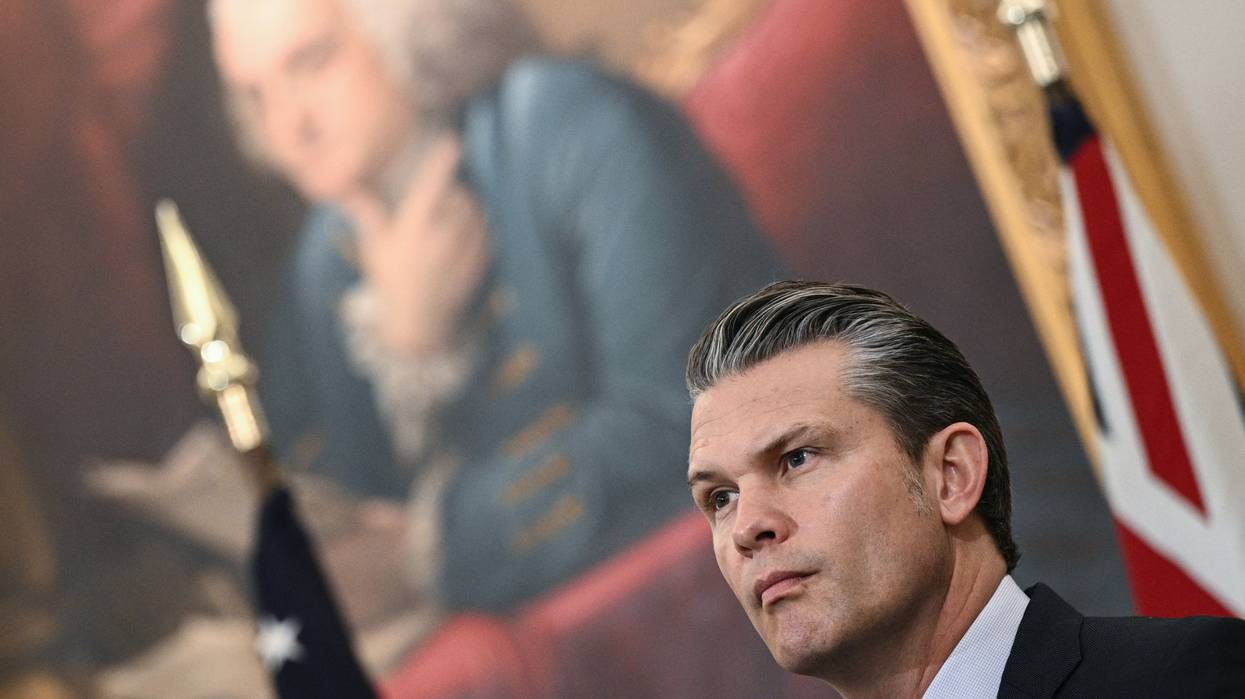
In the face of mounting scrutiny, Secretary of Defense Pete Hegseth has continued to defend what has been described as a "double-tap" strike off the coast of Trinidad, alleging that the two survivors were drug traffickers bound for America who could have still theoretically harmed it in some way despite clinging to the wreckage for their lives following the first strike.
NBC reported this weekend that Adm. Frank "Mitch" Bradley, who oversaw the strikes, told lawmakers that Hegseth had given direct orders for all 11 men aboard the vessel to be killed because "they were on an internal list of narco-terrorists who US intelligence and military officials determined could be lethally targeted.”
Last week, when reports first emerged of a second strike, Hegseth denied that it had taken place, calling it “fake news” before the White House later confirmed and defended the killing of the survivors.
Lt. Gen. Mark Hertling, who served as the commanding general of the US Army Europe from 2011 to 2012, discussed the strikes on Monday in an appearance on MS NOW's (formerly MSNBC's) "Morning Joe."
"It is, in fact, in my view, a war crime," Hertling said.
"Imagine yourself falling off a cruise ship and being asked to hang on to a piece of wood after you've just been struck with a large kinetic round that has killed nine of your 11 copilots on this boat," Hertling said. "It doesn't matter what they're doing at that point."
Hertling suggested that the frequent use of the term "double-tap" to refer to the strike was a misnomer, as was Hegseth's invocation of the phrase "fog of war" to defend the military's actions.
“That’s a term that special operators use when there are two successive rounds at a target to eliminate it, and to get rid of someone who is attacking them,” the general explained regarding the claims of a "double-tap" strike. “This was a restrike, with time between the first strike and the second. That gives you time to figure out what you’re going to do and clear that so-called ‘fog of war.'”
He cited the definition from Carl von Clausewitz, the 18th-century Prussian general and military theorist who coined the term to describe the “uncertainty” of battle.
"Secretary Hegseth is basically convening everyone to think he has been in war for 20 years, and this is the kind of thing that happens in war. It's not," Hertling continued. "What I'll tell you, having been involved in strikes like this on the ground, the only time you consider a restrike is when the enemy continues to fight, and you're continuing to either strike them with artillery or some type of faraway missile. So a restrike like this occurs when you realize the individuals on the ground or in the water are trying to fight back."
Hegseth and Bradley’s defense of the strikes has centered around the idea that even as they floated helplessly on a piece of debris, the victims still posed a “continuing threat” as they could have theoretically called in other traffickers as backup to retrieve them and their cargo.
As of yet, the administration has presented no evidence that the men were calling for backup, and videos of the incident viewed by members of Congress during a closed-door hearing reportedly suggest they lacked any means of communication. Bradley, meanwhile, acknowledged in his Senate testimony that the survivors did not appear to have any radio or communication devices.
Further undermining the Trump administration's argument that the boat posed an immediate threat, Bradley also reportedly told Congress that the ship was not even bound for the US, but for the South American nation of Suriname.
Hertling emphasized that the two men were shipwrecked on "a piece of debris floating in the middle of the Caribbean," adding that "these individuals are not going to go anywhere, which will become clear with the film," though Hertling acknowledged that he had not personally seen it.
In recent days, leading Democrats, as well as some Republicans in Congress, have called for the release of the video, which House Permanent Select Committee on Intelligence Ranking Member Jim Himes (D-Conn.) described last week as “one of the most troubling things I’ve seen in my time in public service.” Himes said that while the video showed the men were carrying drugs, “they were not in a position to continue their mission in any way.”
The strike was the first in a months-long campaign of extrajudicial bombings by the Trump administration on boats that they have claimed without evidence have contained drug traffickers bound for the US. At least 87 people have been killed in the two dozen strikes since September. Some of those killed in the strikes were later reported to have been ordinary fishermen, and others who had nothing to do with the drug trade.
While focus has been centered on the details of the September 2 strike in recent days and Hegseth's role, experts have emphasized that the entire boat-bombing campaign is illegal.
"The initial attack was illegal too,” said Kenneth Roth, the former longtime director of the advocacy group Human Rights Watch, on social media last week. "Whether Hegseth ordered survivors killed after a US attack on a supposed drug boat is not the heart of the matter. It is blatantly illegal to order criminal suspects to be murdered rather than detained. There is no 'armed conflict' despite Trump's claim."
While the "Morning Joe" segment focused on the question of whether the second September 2 strike was a war crime, some legal experts have said those involved in ordering and carrying out that attack and the other bombings could actually be liable for murder under US law, since Congress has not authorized an armed conflict in the Caribbean.
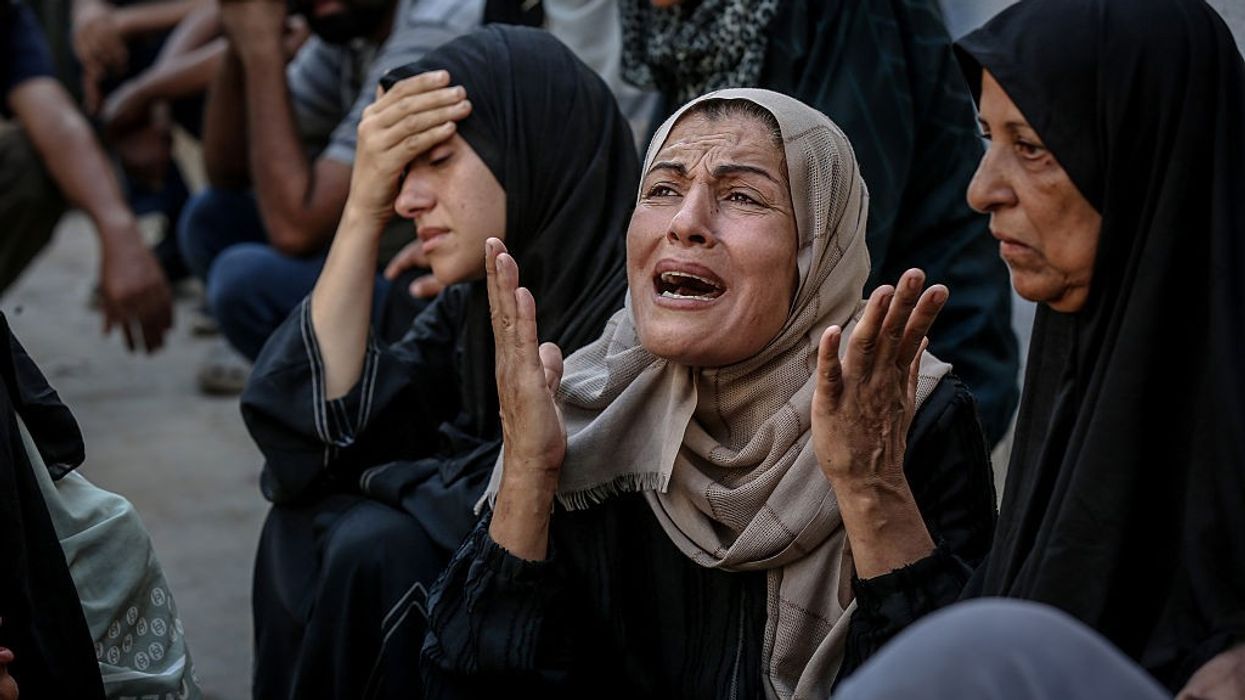
At 28, Reham Khaled has lived through eight wars of varying intensity. The current war has been the most brutal she's known.
So begin the words of a Gaza teacher's recent post after being forced to flee her home in the Al-Daraj neighborhood of Gaza City and the school she'd set up in a tent. A bomb tore apart the tent next to the one where Reham Khaled taught her students. Two were killed:
Pain is not a passing sensation, but a being that resides within. It has fangs and fingers. It presses on the heart, weighs down the chest, and makes the breath hesitate like a hole in the air. There is a moment, just one moment, when all the internal walls we have tried to build crumble and we reach what is called the threshold of pain. At this threshold, pain is no longer just an echo or a tremor. It turns into a howl.
Skilled at weaving the horror that is war-torn Gaza with evocative imagery of far sweeter things, Khaled says that before the bomb tore apart the tent, she and her father-in-law were dreaming of eating mangoes and chicken. “And then the rocket exploded. One moment. A collective scream. A small lake of blood begins with two children whose greatest ambition was to eat chicken and mango. It is a moment, but inside me it is years.”
Born in Gaza's Jabalia refugee camp, her grandparents were displaced from the Palestinian village of Najd which was ethnically cleansed in 1948 when the state of Israel was created. The Israeli town of Sderot was later constructed over the site of the village, as well as the nearby village of Huj, according to Working Class History.com.
Her goal, other than giving as many students as possible the right to education, is to instill one idea in the children of Gaza “so that they may travel the world and spread peace one day."
In Gaza, Khaled studied in UNRWA schools, the United Nations Relief and Works Agency for Palestine Refugees in the Near East, established by the UN in December 1949, to provide relief and humanitarian assistance to Palestine refugees displaced by the 1948 Arab-Israeli war.
At 28, she has lived through eight wars of varying intensity. The current war has been the most brutal she's known. She and her extended family have been displaced 15 times.
The howl is “not a loud, audible scream”, explains Khaled, “but the howl of the soul, that subtle sound that the ear cannot pick up but shakes the entire body from within. It's like the wind sweeping through an empty house, or the emptiness exploding in the head. In Gaza, this howl has become the secret language of everyone. The child who smiles so as not to cry in front of his mother, the mother who hides her tears from her child, the man who stands silently before the corpse of his son. They all howl from within, with a voice the world does not hear.”
A teacher of language and literature, Khaled is not overtly political and shies away from assigning blame for what is happening to her people once again. All she knows, she tells me when we exchange more messages, is that “the language of killing and violence is the biggest mistake that my people have been paying the price for two years or more.... The world is mean, cruel, and dull to the point of melting the nerves. I try to keep up with it, but I break. I try to look at it, but I find its eyes devoid of any glimmer of humanity.”
At this writing, Israeli forces have destroyed an estimated 70% of Gaza City. Airstrikes have turned entire apartment blocks and tent encampments into rubble. The Israel Defense Forces claim, without evidence, that Hamas has been using the buildings for surveillance; justifying collective punishment of Gaza City's entire population. While collective punishment is a war crime and prohibited under the 1949 Geneva Conventions, this has done nothing to protect innocent civilians throughout Gaza from October 2023 to the present. An estimated 65,000 have been killed to date, with upwards of ten thousand trapped under the rubble.
“Howling,' writes Khaled, “doesn't always manifest in screams or tears. Sometimes it manifests as cold dullness. Evacuation notices drop on doors like inane announcements, read by people with blank eyes and then go on with their lives: a man arguing with his neighbor over a gallon of water, women fighting over a turn at the oven, a young man fixing a crack in the wall. It's as if the announcement of the city's destruction means nothing, as if the preordained mass exodus is just another rumor.”
“This isn't true indifference,” she believes, “but another form of howling: a hidden protection against total collapse. When a person is unable to face the naked truth, they hide in the small details, clinging to crumbs to prevent their souls from disintegrating. Politics isn't content with killing bodies; it seeks to break the inside, to make people treat their end as secondary news. It wants evacuation itself to become a habit, a weightless piece of paper, part of the daily noise.”
Israel has ordered everyone in Gaza City to evacuate to the al-Mawasi tent encampment in the south. But the camp is severely overcrowded with hundreds of thousands of displaced people from Rafah, Khan Younis, and other areas and there is no available land. Nor is it rent free, as others I am in touch with tell me. The entirety of Gaza's most southern city, Rafah, once home to 250,000 people, was razed to the ground earlier this year. Khan Younis was razed in part, but some neighborhoods remain.
As for Khaled and her family, refusing to be broken or adhere exactly to Israeli orders, they moved to Deir al-Balah, a city about 10 miles south of Gaza City. They're not safe there, but at least they found land to set up tents. Khaled has already started looking for a new place to establish a school. This morning she reposted a link for the school, which is backed by the Chuffed Project, a nonprofit whose goal is to support children's education in Gaza
Her goal, other than giving as many students as possible the right to education, is to instill one idea in the children of Gaza “so that they may travel the world and spread peace one day. Plant a rose on the tip of every gun. Prevent killing. Spread love and peace and never allow war to continue for long.”
It doesn't mean she's not always hungry or trying to recover her voice or understand why such hell has been unleashed on her people. But that she refuses to surrender to the “twisted logic that turns life into a farce. My voice has been extinguished, not because it disappeared, but because the echo no longer returns. And my being? I've scattered like dust, like a ravening beast that isn't satisfied with flesh and bones, but burrows deep within me in search of something I no longer know the name of. Yes, I'm hungry, but not just for bread. I'm hungry for the security that has become a myth, for the meaning that has become a mirage, for a slice of life that resembles life, not this mockery I live.”
Why hasn’t the mainstream media pressed the administration on these strikes being illegal and dangerous (and unpopular)?
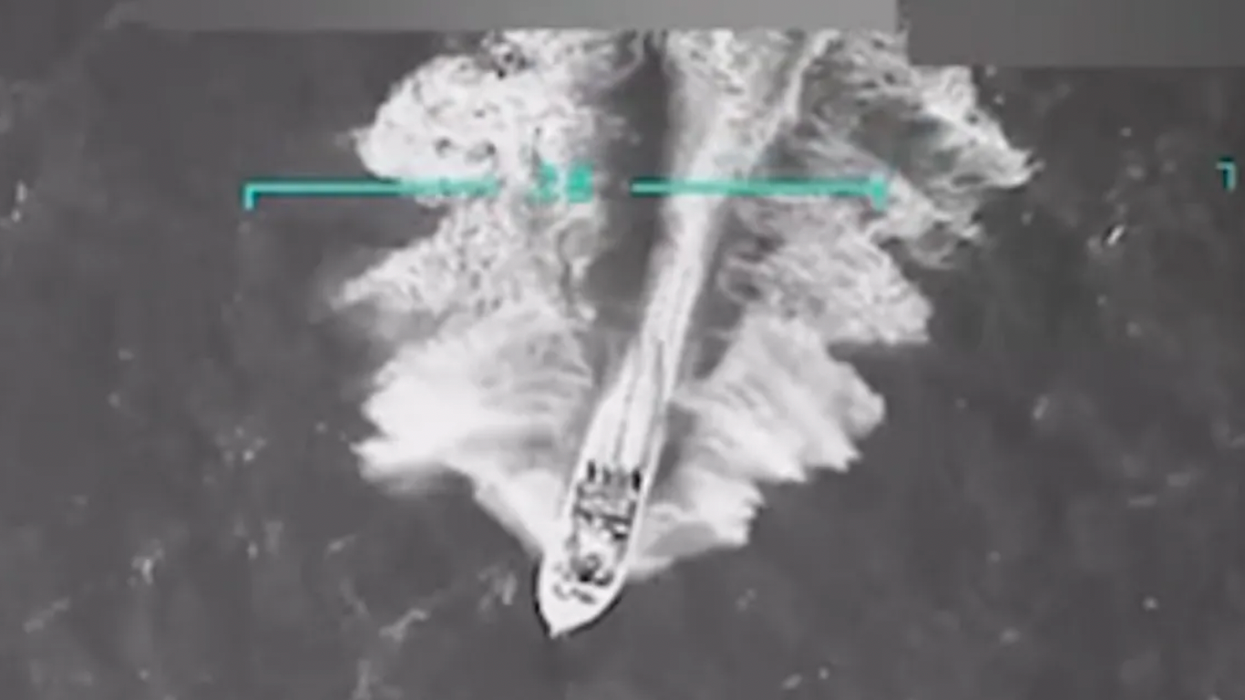
On September 2, the Trump administration shared footage purporting to show a US strike on a Venezuelan fishing boat. Even if we take the incident entirely at face value (and there are a lot of reasons to question the video itself)—the US Navy attacked a fishing boat off Venezuela, killing 11 people. On Monday, another strike was allegedly conducted on a boat, killing three people. The way the media has handled these strikes is an indictment of the state of American neoliberal reporting in a neofascist age.
Why hasn’t the mainstream media pressed the administration on these strikes being illegal and dangerous (and unpopular)? Why has no one in Washington considered the implications of calling a fishing boat carrying civilians a legitimate military target? Why isn’t the media calling the Venezuelan boat strike an abhorrent war crime at every turn?
It’s simple; they don’t care about defending the truth or holding the powerful accountable–they have no principles to stand on besides profit and access.
Within hours of these strikes breaking, major outlets were repeating the Trump administration’s line that this was a strike on a “drug boat.” According to this framing, the attacks were justified, necessary, and part of a broader war on drug trafficking. Virtually none of these outlets even entertained the obvious legal and ethical questions. Instead, they served as stenographers for the administration. This is not what an objective (not neutral) press in an advanced democracy does.
Would the Marines be greeted as liberators in Caracas?
This is reminiscent of the Iraq War era, when corporate media parroted the Bush administration’s ludicrous arguments, paving the way for invasion and occupation that would kill at least 200,000, maim millions, and destroy American democracy further.
Legal experts across the spectrum have already stood up to say the killings were illegal. Ilya Somin, a professor at George Mason University’s conservative Antonin Scalia Law School, called the strike “unjust and illegal.” Jeremy Wildeman, an adjunct professor of international Affairs at Carleton University and fellow at the Human Rights Research and Education Centre in Ottawa, described it as “part of the dangerous and ongoing erosion of due process and the very basic principles of how we interact with each other in domestic and foreign affairs, regulated by accepted norms, rules, and laws, that the Trump administration has been pointedly hostile toward following and specifically undermining.”
Wildeman added that “this is definitely about regime change and domination.” Even the Atlantic Council hedged, acknowledging that the legality was at best murky and in some cases advancing arguments to justify it. Meanwhile, US Vice President JD Vance bluntly stated that he does not care if the strikes are war crimes at all.
The available evidence does suggest this was an outright criminal massacre. The first boat was, we now know thanks to Sen. Rand Paul (R-Ky.), turning back to shore, not threatening US forces when it was fired upon. Those killed would be civilians. Even if they were transporting drugs, drug couriers are not lawful combatants. They are criminals under domestic law, not combatants in an armed conflict.
Due process was ignored. There was no trial, no arrest, no attempt at interdiction—just summary execution. And the strikes occurred in Venezuelan territorial waters, not in an international conflict zone. If another country did this, say Russia bombing a fishing boat in the Baltic, or China attacking smugglers near Taiwan, the Western media would have declared it a war crime the same day. Add this to the list of Western double standards in the international arena—we are seeing the destruction of the “liberal order” in real time.
These strikes are not a one-off. They fit into decades of US policy toward Venezuela, including economic sanctions, diplomatic isolation, and repeated regime change attempts. For 25 years, Washington has tried to topple the governments of Hugo Chávez and Nicolás Maduro through economic sabotage, coups, and support for far-right opposition. The humanitarian toll of those sanctions has been devastating. They have themselves emboldened the repression brought about by the Maduro government, which has used America as a scapegoat, with reason, for all its faults.
Now, with this attack, we see a dangerous escalation from economic to military means. If the precedent is set that the US can strike targets inside Venezuela (this was in Venezuela’s national waters) with impunity, it opens the door to a broader military campaign. That is exactly what think tanks like the Center for Strategic and International Studies have been preparing for. One CSIS report, now deleted, explicitly laid out “options for regime change” in Venezuela, against the “Maduro narco-terrorist regime.”
So why is the media so unwilling to call this what it is? Major outlets fear losing access to government sources if they challenge the official narrative. They also simply don’t want to admit that America is committing crimes, and may not be the moral actors in every major geopolitical event, as they were taught throughout their lives. Going back to Noam Chomsky’s Manufacturing Consent 101, corporate interests are also important, with companies like Exxon and Chevron having billions at stake in Venezuela’s oil fields (and a US-backed government running things in Caracas). US military action that destabilizes or topples Maduro could directly benefit those firms.
Many of the analysts quoted in media coverage are from think tanks funded by the defense industry or oil companies. They have an interest in exaggerating Venezuela’s threat and downplaying US abuses, to make the US intervention seem justified and good. And reporters too often repackage leaks from US intelligence agencies as fact, without independently verifying. A lot of the “analysis” on the strikes in mainstream news has been from the intelligence agencies, who have a direct incentive to lie and manipulate information in favor of regime change.
Even respected outlets have contributed to this dynamic. The New York Times and Wall Street Journal have both amplified the claim that Venezuela is a “narco-terrorist state.” That claim has been debunked by organizations like InSight Crime and the International Crisis Group, which show that while drugs transit Venezuela, it is hardly unique; Colombia and Mexico play a much larger role in global cocaine markets, yet they remain US allies.
Meanwhile, outlets like the Christian Science Monitor are pushing a narrative that “more Latin Americans welcome US intervention,” based on flimsy and cherry-picked anecdotes that, once again, helps the Trump administration lay the groundwork for more meddling and war. Would the Marines be greeted as liberators in Caracas? The hope is to expand the “War on Drugs” into the “War on Terror,” giving the US military more tools to intervene in Latin America, and then bringing repression to the home front (also called the Imperial Boomerang theory). In reality, the region is increasingly turning away from Washington’s militaristic and blusterous approach, seeking alternative frameworks to the failed War on Drugs.
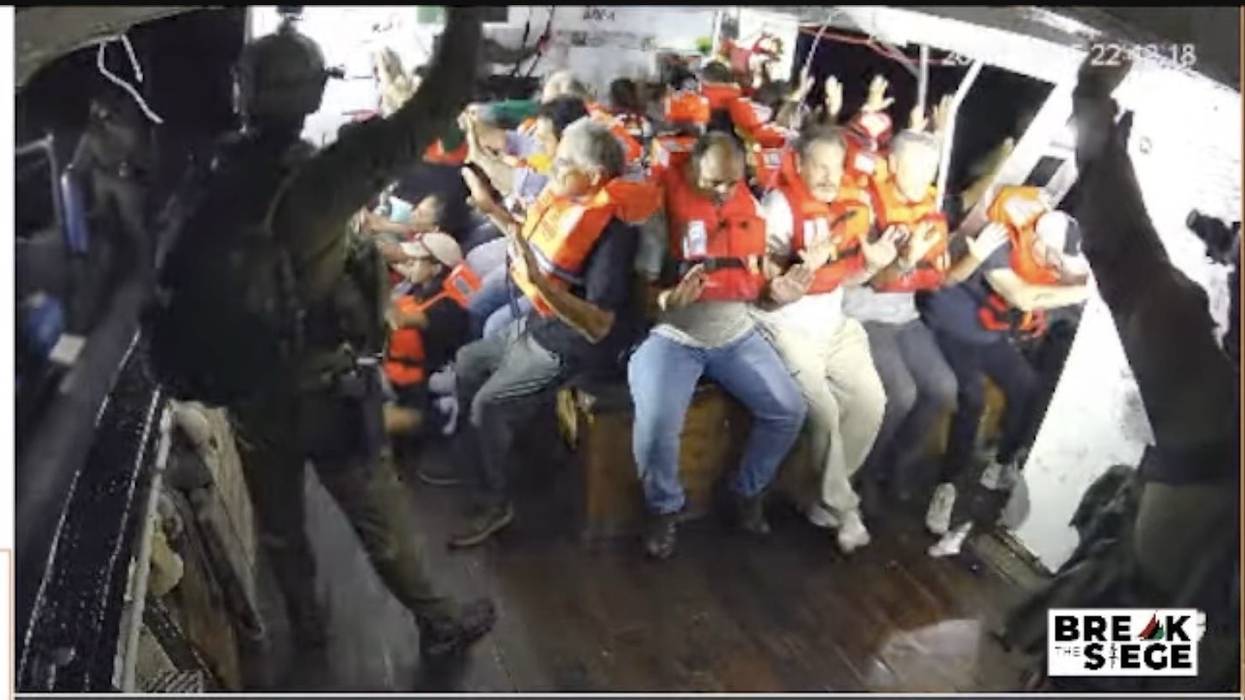
"The interception occurred in international waters outside Palestinian territorial waters off Gaza, in violation of international maritime law," the Freedom Flotilla Coalition said.
The Israeli military intercepted and seized the Gaza Freedom Flotilla vessel The Handala late Saturday night local time as it attempted to deliver desperately needed humanitarian aid to the besieged people of Gaza.
The Freedom Flotilla Coalition reported that Israeli forces cut the cameras on board the ship at 11:43 pm local time, when it was around 40 nautical miles from Gaza.
"The unarmed boat was carrying lifesaving supplies when it was boarded by Israeli forces, its passengers abducted, and its cargo seized," the coalition wrote. "The interception occurred in international waters outside Palestinian territorial waters off Gaza, in violation of international maritime law."
Israel's Foreign Ministry confirmed that its navy had intercepted the ship, as Al Jazeera reported.
"The vessel is safely making its way to the shores of Israel," the ministry said in a statement. "All passengers are safe."
"Our vessel does not constitute any threat to you. We carry only humanitarian aid, and therefore, you have no authority to intercept or otherwise attack our vessel."
The Handala set sail for Gaza on July 20 from Gallipoli, Italy. It is the second attempt by the Freedom Flotilla Coalition to break the siege on Gaza in under two months. An earlier attempt in June was also intercepted by the Israeli military and its crew members arrested and deported.
There are 21 crew members onboard The Handala from 12 countries: 19 human rights defenders and two journalists. The crew includes seven U.S. citizens, among them labor leader Christian Smalls.
The crew had promised to begin a hunger strike as soon as they were intercepted by the Israeli military.
"In captivity they can give their sandwiches and water to the starving people of Gaza," Smalls wrote on social media.
Another U.S. crew member, the Palestinian-American lawyer and activist Huwaida Arraf, rebuked the Israeli Navy as they boarded the ship, according to a video obtained by Al Jazeera:
"Let me give you a lesson in international law," Arraf said, adding:
Any blockade that deliberately starves a civilian population is a violation of international law. It is not only that—it is a war crime. You have no legal authority to enforce an unlawful blockade. And as such, you have no authority to use force to enforce an unlawful blockade.
Therefore, we demand that you stand down. You are responsible for the well-being of every civilian on board this vessel. As an occupying power in Gaza, you are responsible for the health and well-being of the civilian population there.
Not only have you disregarded that obligation, but you are actively exterminating the people. You have engineered a famine. You are deliberately starving civilians and children before the eyes of the world.
Our vessel does not constitute any threat to you. We carry only humanitarian aid, and therefore, you have no authority to intercept or otherwise attack our vessel. We demand again that you stand down.
The Handala's interception came at the close of a day that saw 71 people killed in Gaza due to Israeli attacks and five perish from hunger. This brings the total number of deaths from starvation in Gaza to over 127, among them more than 85 children. After 658 days of a U.S.-backed Israeli siege, at least 244,000 Palestinians in Gaza are now in the most dangerous Stage 5 of the Integrated Food Security Phase Classification to measure famine. One five-month-old child who died on Friday due to lack of baby formula weighed less at death than she did at birth, as The Associated Press reported. A growing number of human rights experts and advocates have characterized Israel's war and siege on Gaza as a genocide.
The ship was carrying diapers, baby formula, food, and medicine.
According to the Gaza Freedom Flotilla Coalition, Saturday's interception was the "third violent act by Israeli forces against Freedom Flotilla missions this year alone."
"It follows the drone bombing of the civilian aid ship Conscience in European waters in May, which injured four people and disabled the vessel, and the illegal seizure of The Madleen in June, where Israeli forces abducted 12 civilians, including a member of the European Parliament," the group wrote.
Ann Wright, a member of the Gaza Freedom Flotilla Coalition steering committee, called on the governments of the 21 crew members to advocate for their citizens.
"Protect innocent international people who are merely accompanying a small amount of aid—medical and food—as a symbol of the international outrage at what Israel is doing," she told Al Jazeera.
This article has been corrected to state that 244,000 Palestinians in Gaza were in Phase 5 of starvation in May 2025. A previous version incorrectly stated that 85% of the population was in Phase 5.

The attack on a crowded café has been described by international law experts as wildly disproportionate, following new reporting about the munitions used.
International law experts are describing Israel's Monday attack on a Gaza café as a potential war crime after an investigation in The Guardian revealed that the attack was carried out using a 500-lb bomb supplied by the U.S. government.
Reporters photographed fragments of the bomb left behind in the wreckage of the al-Baqa Café. Weapons experts identified them as parts of an MK-82 general purpose bomb, which it called "a US-made staple of many bombing campaigns in recent decades."
The attack killed anywhere from 24 to 36 Palestinians and injured dozens more. Casualties included women, children, and the elderly. A prominent photojournalist and artist were also killed.
Experts have called the use of such a weapon on an area full of civilians wildly disproportionate and a likely violation of the Geneva Convention, which outlaws military operations that cause "incidental loss of civilian life" that is "excessive or disproportionate" to the military advantage to be gained.
"It is almost impossible to see how this use of that kind of munition can be justified," said Marc Schack, an associate professor of international law at the University of Copenhagen in comments to The Guardian. "If you are talking about 20, 30, 40 or more civilian casualties, usually that would have to be a target of very great importance."
After the attack drew heavy criticism, an army spokesperson for the Israel Defense Forces (IDF) said the strike had killed "several Hamas terrorists" and that "prior to the strike, steps were taken to mitigate the risk of harming civilians using aerial surveillance."
Gerry Simpson of Human Rights Watch criticized that defense.
"The Israeli military hasn't said exactly whom it was targeting, but it said it used aerial surveillance to minimize civilian casualties, which means it knew the café was teeming with customers at the time," Simpson told The Guardian. "The military would also have known that using a large guided air-dropped bomb would kill and maim many of the civilians there. The use of such a large weapon in an obviously crowded café risks that this was an unlawful disproportionate or indiscriminate attack and should be investigated as a war crime."
Since Monday's bombing, the attacks against civilians in Gaza have only intensified. According to a Thursday report from the Gaza Government Media Office, more than 300 Palestinians have been killed within the last 48 hours in "26 bloody massacres."
According to reporting Thursday from Al Jazeera, these have included attacks on "shelters and displacement centers overcrowded with tens of thousands of displaced people, public rest areas, Palestinian families inside their homes, popular markets and vital civilian facilities, and starving civilians searching for food."
At least 33 people were killed Thursday at a Gaza Humanitarian Fund (GHF) aid distribution site, adding to the hundreds of aid seekers who have been killed in recent weeks. In a Haaretz investigation last week, soldiers described these aid sites, administered by the U.S. and Israel, as a "killing field," where they have routinely been ordered to fire on unarmed civilians who posed no threat.
Two American contractors at a GHF site told The Associated Press on condition of anonymity that their colleagues fired their guns wildly, including in the direction of Palestinians. They provided a video which shows hundreds of aid-seekers crowded between metal gates, being assaulted with stun grenades and pepper spray, while gunshots echo in the background.
On Tuesday, Amnesty International and hundreds of other humanitarian NGOs called for an end to the Israeli government's blockade of food and other necessities entering the Gaza Strip. They also called for an end to the "deadly Israeli distribution scheme" and for a return of aid distribution to the United Nations and other international organizations.
"This devastating daily loss of life as desperate Palestinians try to collect aid is the consequence of their deliberate targeting by Israeli forces and the foreseeable consequence of irresponsible and lethal methods of distribution," said Agnès Callamard, the secretary general of Amnesty International, on Thursday.