

SUBSCRIBE TO OUR FREE NEWSLETTER
Daily news & progressive opinion—funded by the people, not the corporations—delivered straight to your inbox.
5
#000000
#FFFFFF
To donate by check, phone, or other method, see our More Ways to Give page.
Daily news & progressive opinion—funded by the people, not the corporations—delivered straight to your inbox.

"While working families struggle to afford groceries, housing, and gas," said Sen. Chris Van Hollen, the Trump administration "focuses on tax breaks for billionaires—including tax breaks for private jets."
A group of Democratic Caucus members in the US Senate on Thursday denounced the US Treasury Department under President Donald Trump over its refusal to close a gaping loophole in the federal tax code that allows some of the wealthiest people in the country to reap tax benefits from their ownership and use of private jets—even as working people and the middle class families struggle to make ends meet in Trump's economy.
In response to a previous request made in July by Sens. Sheldon Whitehouse (D-RI), Elizabeth Warren (D-Mass.), Chris Van Hollen (D-Md.), Ed Markey (D-Mass.), and Bernie Sanders (I-Vt.) to close a rule that allows the wealthy "to substantially undervalue the taxable cost of personal travel on a corporate private jet," a letter from a top Treasury official on Thursday said such an effort would be too "burdensome," including for the uber-rich taxpayers subject to it.
Known as the Standard Industry Fare Level (SIFL) loophole, the lawmakers have argued that it has been exploited by the extremely wealthy to lower their tax burden even as they travel the country—and the world—in the least energy efficient and most polluting way possible.
"President Trump’s 2017 tax law and Big, Beautiful-for-Billionaires bill handed billionaires and big corporations massive tax breaks on private jets," said Sen. Whitehouse in a statement. "The Trump administration now says it would be ‘burdensome’ to close the private jet tax loophole because this is an administration hell-bent on using the powers of government to make the ultra-rich even richer, and they don’t care if middle-class taxpayers get stuck with the tab."'
Alongside their July letter, the lawmakers shared analyses detailing the loss of the revenue made possible by the SIFL loophole. According to the Whitehouse's office,
analyses by the nonpartisan Joint Committee on Taxation detailing the boom in private jet sales after passage of Republicans’ tax cut for corporate jets and highlighting the extent of the tax revenue lost by the abuse of the SIFL loophole. One analysis responds to an inquiry from the senators on the tax consequences of the SIFL loophole, finding that a wealthy executive would pay roughly between $1,577 and $1,804 less in taxes for a flight from JFK airport in New York City to DCA airport in Washington, D.C. under the SIFL method. The fair market value of that flight could range from $4,500 to $5,112, but under SIFL, that executive would only have to report a value of $235.77.
Van Hollen on Thursday denounced the shamefulness of yet another Trump administration position that rewards the wealthy and powerful at the expense of working people.
"Trump’s priorities revolve around enriching himself and his billionaire friends. While working families struggle to afford groceries, housing, and gas, this Administration focuses on tax breaks for billionaires—including tax breaks for private jets," said Van Hollen.
"What a disgrace,” he added.

"There isn’t an AI company with a sustainable business model right now," said a tech insider. "It’s not a healthy industry."
While President Donald Trump's administration has regularly hyped up the development of artificial intelligence, a draft US Treasury Department report warns that the AI industry could be a financial bubble that will ultimately damage the American economy.
NOTUS, which obtained a copy of the Treasury Department analysis, reported on Monday that it "is a significant departure from the Trump administration’s public tone, which has focused on encouraging unrelenting investment to unlock exponential growth."
Career analysts at the department find that, while many AI firms are on firmer financial footing than the dotcom companies in the late 1990s, they are also much more deeply integrated with the US economy.
Because of this integration, these firms "pose significant risk to the entire system if financial conditions change, productivity goals are missed, or various chokepoints stymie growth," wrote NOTUS.
The report also says that the investments being made into AI infrastructure are so big that they risk damaging the entire financial system if they do not meet certain metrics for productivity growth and profitability.
"Fears of an AI bubble have grown over the last year, including on Capitol Hill, among some Wall Street observers and executives, inside think tanks and even within the ranks of top AI principals," the NOTUS report added. "Prominent economists and institutions... have also raised concerns about overvaluation of AI firms and the risks they pose to the broader economic system."
Dean Baker, co-founder and senior economist of the Center for Economic and Policy Research (CEPR), noted in an analysis published Friday that AI's long-promised boost to productivity isn't yet showing up in data.
Citing the most recent jobs report from the US Bureau of Labor Statistics (BLS), Baker found that AI's impact on productivity growth at the moment is "invisible."
"The index of aggregate hours grew at a 1.3% rate in the quarter. With [gross domestic product] growth likely coming in close to 2%, we are looking at productivity growth around 1%," Baker explained. "That follows growth of 0.3% in the first quarter and 1.6% in the fourth quarter of 2025. There is zero evidence of any sort of productivity uptick in these data."
Baker argued that this was a contrast with the dotcom era, when productivity growth averaged roughly 2.8% over a four-year period in the late 1990s before the bubble burst.
"We would need rates of productivity growth in the neighborhood of 4% to generate the sort of profits needed to make sense of current market levels," Baker wrote. "It is surprising that the continuing weakness of productivity doesn’t bother stock investors more."
There are also questions about AI's ability to turn a profit.
A Monday report in The New York Times highlighted the predicament of Chinese tech company Alibaba, whose open-source AI model has become extremely popular while at the same time being unprofitable.
"In the first three months of this year, Alibaba reported $1.3 billion in revenue from AI-related products—less than 4% of its total revenue," reported the Times. "That pales in comparison with the company’s plan to spend more than $55 billion by the end of next year to build out its AI infrastructure."
Richard Lin, a vice president at the Silicon Valley firm Datastrato, told the Times that concerns about AI profitability extend beyond Alibaba and to the industry as a whole.
"There isn’t an AI company with a sustainable business model right now," said Lin. "It’s not a healthy industry."
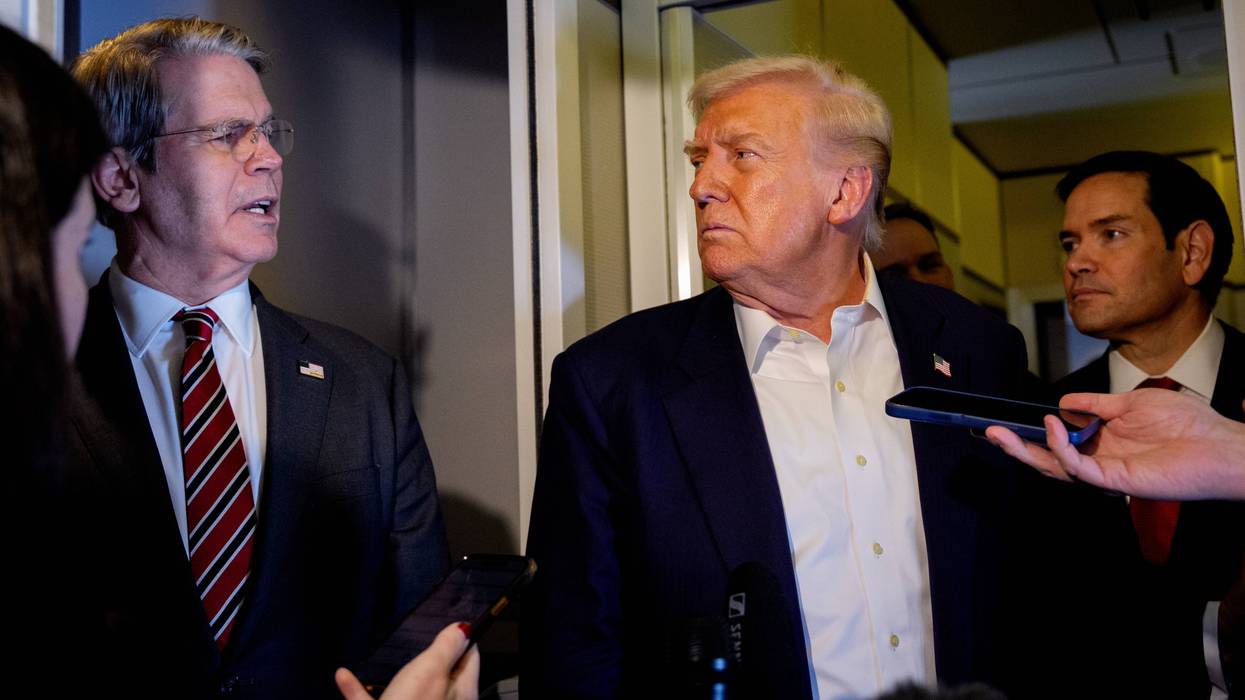
"While Trump is weaponizing taxpayer privacy laws for his own benefit, his Treasury Department is flouting those exact same laws to send tens of thousands of individual tax records to his anti-immigrant henchmen at ICE."
President Donald Trump has sued the US Treasury Department and Internal Revenue Service for $10 billion over the leak of his tax returns during his first term in the White House, when the president broke with decades of tradition by refusing to voluntarily divulge the records.
The lawsuit—joined by Trump's two eldest sons and his family business, the Trump Organization—was revealed Thursday in a filing with the Miami division of the US District Court for the Southern District of Florida. The suit alleges that the IRS and Treasury Department "caused Plaintiffs reputational and financial harm, public embarrassment, unfairly tarnished their business reputations, portrayed them in a false light, and negatively affected President Donald Trump and the other Plaintiffs' public standing."
Charles Littlejohn, a former IRS contractor who was employed by Booz Allen Hamilton, pleaded guilty in late 2023 to one count of unauthorized disclosure of tax return information and was later sentenced to up to five years in prison.
The US Treasury Department, led by Scott Bessent, announced earlier this week that it was canceling all of its contracts with Booz Allen Hamilton, accusing the company of failing to "implement adequate safeguards to protect sensitive data, including the confidential taxpayer information it had access to through its contracts with the Internal Revenue Service."
The leak included the tax records of Trump and other mega-rich Americans, including Amazon founder Jeff Bezos and Tesla CEO Elon Musk. The New York Times, which obtained the records along with ProPublica, reported in 2018 that the returns showed Trump engaged in "outright fraud" and other "dubious" schemes to avoid taxation.
Trump, according to the Times investigation, "paid $750 in federal income taxes in 2016, the year he was elected president, and... he had not paid any income taxes in 10 of the previous 15 years."
US Sen. Ron Wyden (D-Ore.), the top Democrat on the Senate Finance Committee, said in response to the president's lawsuit that “Donald Trump is a cheat and a grifter to his core, and for him to abuse his office in an attempt to steal $10 billion from the American taxpayer is a shameless, disgusting act of corruption."
"While Trump is weaponizing taxpayer privacy laws for his own benefit, his Treasury Department is flouting those exact same laws to send tens of thousands of individual tax records to his anti-immigrant henchmen at ICE," Wyden continued. "It is the height of hypocrisy for Trump to pretend he cares one bit about taxpayer privacy."
Journalist Tim O'Brien, who has covered Trump for decades, called the lawsuit "a flagrant and obvious conflict of interest."
"Trump oversees the IRS. He wants the IRS to pay him a big chunk of change," O'Brien wrote on social media. "He is, and always has been, in it for the money."
The lawsuit isn't the first time Trump has sought a large sum of taxpayer money from a federal agency during his second term in office. Last year, Trump demanded via an administrative claims process that the US Justice Department pay him roughly $230 million in compensation for federal investigations he has faced.
Trump launched his attempt to wring $10 billion in taxpayer money out of the Treasury Department and IRS as he and his allies worked to gut the tax agency, leaving it with inadequate staff and resources to audit wealthy individuals and large corporations. The IRS is currently headed by Frank Bisignano, who was named "chief executive officer" of the agency late last year.
In a letter to Bessent and Bisignano earlier this week, Wyden and a group of fellow Senate Democrats warned that "the administration’s plans for the IRS"—including painful budget cuts—"will shift the burden of audits more heavily onto working Americans while giving rich scofflaws and big businesses a green light to cheat on their taxes."
"The administration has failed to detail any serious plan to avoid that unfair outcome," the senators warned.
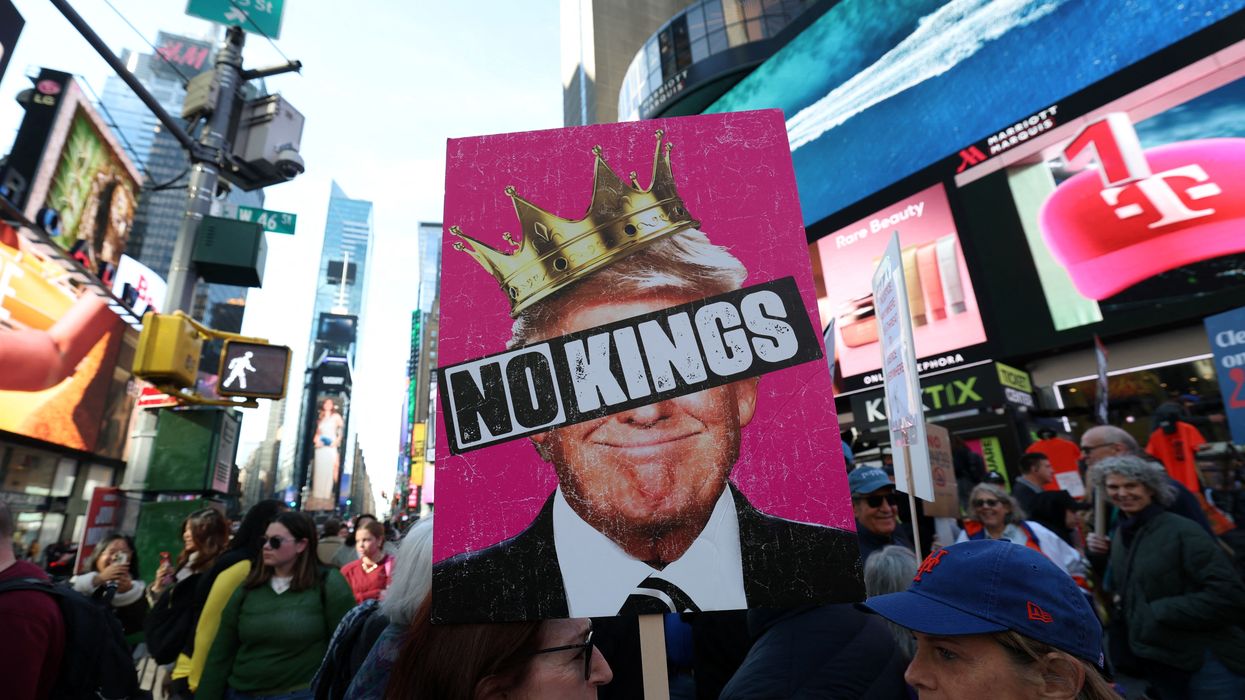
"If senior officials are processing this grift behind closed doors... that is not just bad optics, it is a direct threat to government integrity."
A democracy advocacy organization is stepping up pressure on the federal government to release more information on President Donald Trump's scheme to receive a $230 million payout from the US Department of Justice.
Democracy Forward on Monday filed a Freedom of Information Act (FOIA) complaint against the DOJ and the US Department of Treasury, alleging that both agencies have so far refused to turn over any records related to what the group describes as Trump's "stunning effort to obtain a $230 million taxpayer-funded payout for investigations into his own misconduct."
The group notes that it has already filed multiple FOIA requests over the last several weeks, and in response neither DOJ or Treasury has "produced a single substantial record or issued a legally required determination."
The complaint asks courts to compel DOJ and Treasury "to conduct searches for any and all responsive records" related to Democracy Forward's past FOIA requests, and also to force the government "to produce, by a date certain, any and all non-exempt responsive records," and to create an index "of any responsive records withheld under a claim of exemption."
Skye Perryman, president and CEO of Democracy Forward, said her organization's lawsuit was a simple demand for government transparency.
"People in America deserve to know whether the Department of Justice is entertaining the president’s request to cut himself a taxpayer-funded $230 million check," Perryman said. "If senior officials are processing this grift behind closed doors—including officials who used to represent him—that is not just bad optics, it is a direct threat to government integrity."
Democracy Forward's complaint stems from an October New York Times report that Trump was lobbying DOJ to fork over hundreds of millions of dollars to him as compensation for the purported hardships he endured throughout the multiple criminal investigations and indictments leveled against him.
Trump was indicted in 2023 on federal charges related to his mishandling of top-secret government documents that he'd stashed in his Mar-a-Lago resort, as well as his efforts to illegally remain in power after losing the 2020 presidential election. Both cases were dropped after Trump won the 2024 presidential election.
When asked about the DOJ payout scheme in the wake of the Times report, Trump insisted he would give any money paid out by the department to charity and asserted that he had been "damaged very greatly" by past criminal probes.
Perryman, however, insisted that Trump was not entitled to enrich himself off taxpayer funds.
"President Trump may think he can invoice people for the consequences of his own actions," she said, "but this country still has laws, and we demand they be enforced.”
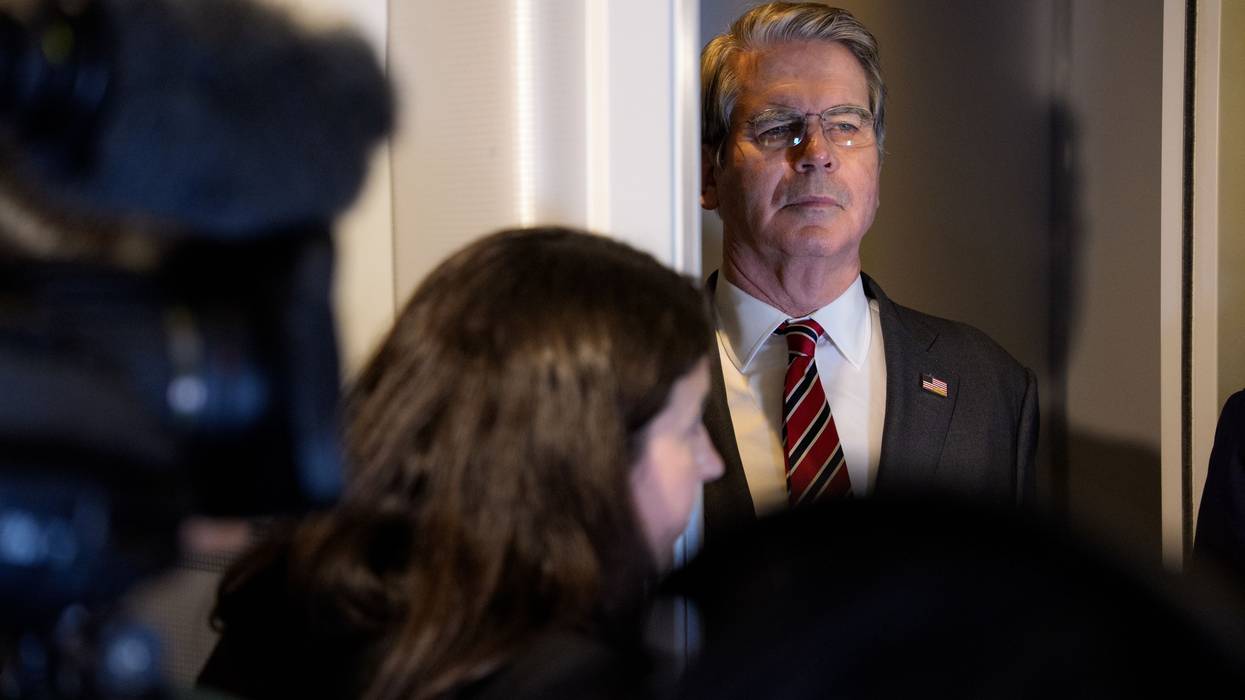
"Apparently the Trump administration thinks the trillions they spent on tax cuts for the wealthy wasn't enough."
The Trump administration's quiet effort to deliver billions more in tax breaks to some of the largest companies in the United States drew fresh scrutiny and outrage this week, with Democratic members of Congress warning that a series of obscure regulatory changes could further undermine efforts to rein in corporate tax dodging.
In a letter to the US Treasury Department unveiled Thursday, Sen. Elizabeth Warren (D-Mass.) and Rep. Don Beyer (D-Va.) led a group of lawmakers in denouncing the Trump administration's assault on the corporate alternative minimum tax (CAMT), a Biden-era measure that requires highly profitable US corporations to pay a tax of at least 15% on their book profits—the numbers reported to shareholders.
"The Trump administration has consistently chipped away at CAMT to further corporate interests," the lawmakers wrote, pointing to rules issued in recent months exempting many corporations from the tax.
"But these massive giveaways apparently aren’t enough for billionaire corporations and their lobbyists, which are trying to further undermine CAMT," the lawmakers continued.
The Democratic lawmakers, who were joined by Sen. Bernie Sanders (I-Vt.), specifically warned against an ongoing corporate push for a carveout to a research and experimentation (R&E) tax break included in the Trump-GOP budget law enacted over the summer.
Corporations supported the R&E tax break. But as the Wall Street Journal reported last month, the giveaway is driving some companies' "regular taxes down so far that they are pushed into CAMT."
"This is exactly what CAMT was designed to do, the tax’s defenders say," the Journal noted. "Companies are pressing the Treasury Department for relief, particularly on the way that CAMT limits the deduction for research expenses. The National Association of Manufacturers, the R&D Coalition, and the National Foreign Trade Council sent letters urging the administration to write rules that would be favorable to companies."
The Treasury Department and Internal Revenue Service are reportedly considering the corporate proposal.
Such a change, Democratic lawmakers warned in their new letter, "egregiously circumvents Congress' intent to set a floor on corporations’ tax liabilities regardless of deductions."
But the Trump administration's hostility to the CAMT, cozy relationship with powerful corporations, and willingness to trample existing law have fueled concerns that it will readily bow to industry demands.
"Apparently the Trump administration thinks the trillions they spent on tax cuts for the wealthy wasn't enough now they're planning another huge tax windfall for the biggest corporations in the country," Beyer said Thursday.
In a social media post, Warren wrote that "giant corporations are lobbying Donald Trump for yet another tax handout—this time for research they've ALREADY DONE."
"Give me a break," Warren added. "The last thing American families need is a tax code rigged even more for billionaires and billionaire corporations."
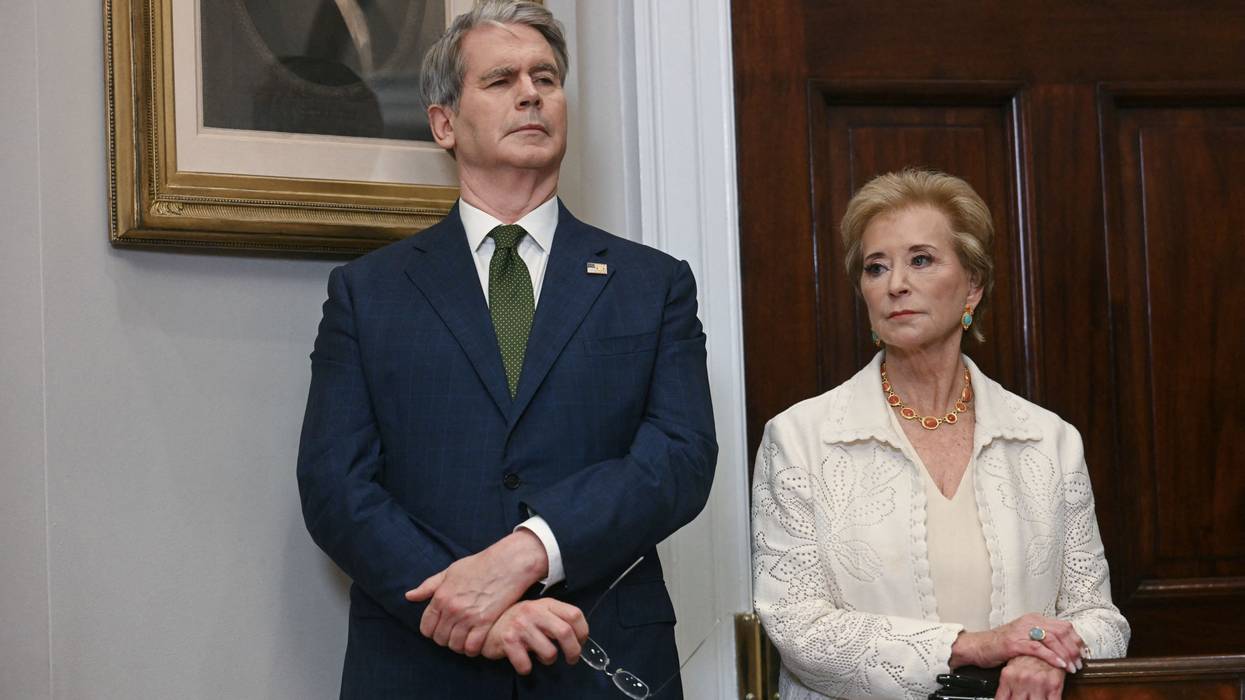
"By selling parts of the federal student loan portfolio, the Trump administration may seek to unlawfully strip borrowers of their legally guaranteed protections," wrote a group of more than 40 Democratic lawmakers.
Dozens of Democratic lawmakers in the US House and Senate warned Monday that the Trump administration's reported push to sell off the federal government's massive student portfolio to the private market would be disastrous for borrowers and a "lucrative giveaway" to predatory corporations.
The lawmakers, led by Sens. Elizabeth Warren (D-Mass.) and Bernie Sanders (I-Vt.) in the Senate and Rep. Ayanna Pressley (D-Mass.) in the House, pointed with alarm to recent reports indicating that Treasury and Education Department officials have met repeatedly with finance industry executives for the purpose of valuing the federal government's student loan portfolio, which is believed to be worth around $1.7 trillion.
"By selling parts of the federal student loan portfolio, the Trump administration may seek to unlawfully strip borrowers of their legally guaranteed protections," the lawmakers wrote in a letter to Education Secretary Linda McMahon and Treasury Secretary Scott Bessent. "As experts have explained, private investors' 'interest would likely be to squeeze as much profit from the repayment as they could.' Those profits would likely come at the expense of the borrower via fewer protections and less generous benefits."
Politico reported last month that the Trump administration is considering selling at least part of the federal government's student loan portfolio to private companies.
Though small relative to the federal portfolio, the private student loan market has an "outsized" impact on borrowers, the advocacy group Protect Borrowers explained earlier this year.
"While private student loans account for roughly 8% of all student loan debt, more than 40% of student-loan-related complaints submitted to the Consumer Financial Protection Bureau (CFPB) are about private loans," the group said. "Of these private student loan complaints, roughly one-third are from borrowers who are struggling and can’t afford their monthly payment. This is because, unlike federal student loans, private loans lack critical safeguards for students and parents."
In their letter to McMahon and Bessent, the Democratic lawmakers demanded that the Trump administration "immediately cease any efforts to privatize the federal student loan portfolio," arguing that "this sale would be a giveaway to wealthy insiders at the expense of working-class borrowers and taxpayers."
Warren echoed that sentiment in a statement, saying, "Any way you spin it, this sale would be a massive giveaway to giant companies."
"It'd be a tremendous mistake," the senator added.
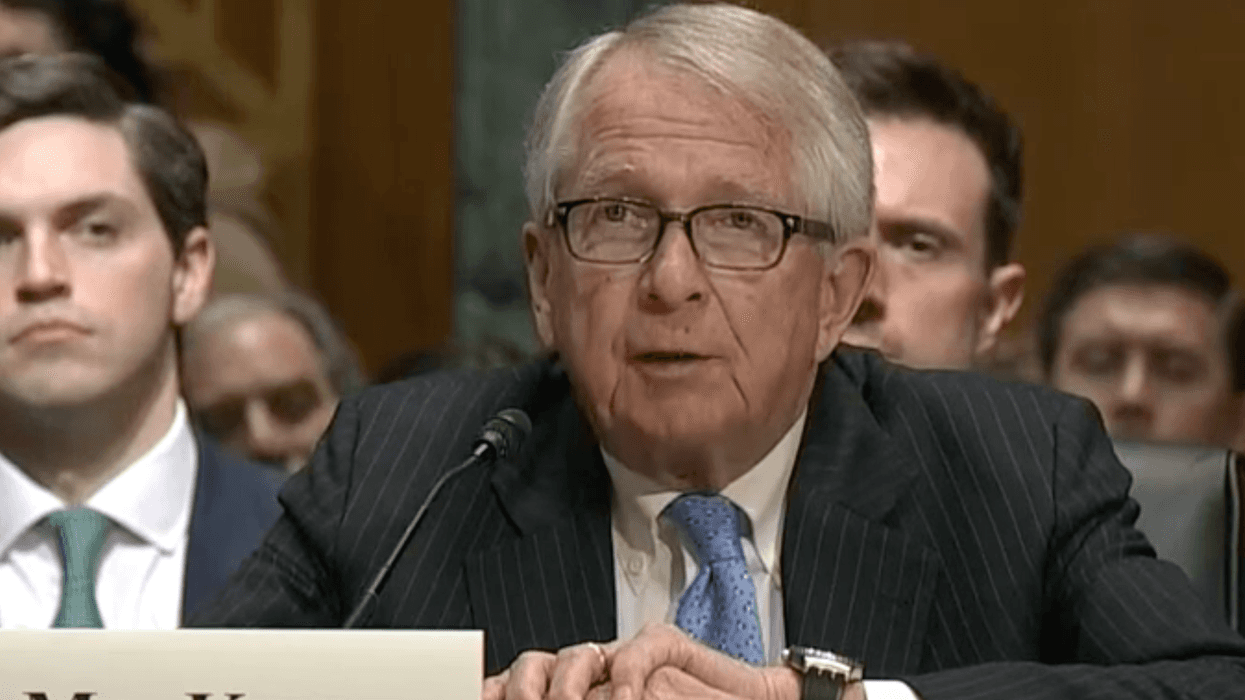
"By putting a professional tax dodging consultant in charge of their tax law, Republicans are continuing to make their intentions crystal clear—this law is a gift to billionaires and huge corporations."
A corporate lobbyist who for decades has helped major companies and rich Americans dodge taxes is now serving as the U.S. Treasury Department's top tax policy official, a position in which he will write rules implementing the newly passed Republican budget law.
That role is "enormously powerful," The New York Times' Jesse Drucker wrote in a Monday profile of Ken Kies, whom the GOP-controlled U.S. Senate confirmed as assistant treasury secretary for tax policy in a party-line vote last month. President Donald Trump selected Kies for the position in January.
The Republican budget measure, which President Donald Trump signed into law earlier this month, contains around $4.5 trillion in tax cuts that will flow disproportionately to the wealthiest Americans over the next decade, according to nonpartisan analysts.
"By putting a professional tax-dodging consultant in charge of their tax law, Republicans are continuing to make their intentions crystal clear—this law is a gift to billionaires and huge corporations like those Ken Kies has spent his career looking out for," Leor Tal, campaign director for the progressive advocacy group Unrig Our Economy, said in a statement Monday.
"As families struggle with rising prices from Trump's tariffs and face devastating cuts to Medicaid and SNAP," Tal added, "Republicans are doubling down on helping the richest of the rich, while working people pay the price."
In his role as a lobbyist whose client list has included Goldman Sachs, Pfizer, Microsoft, and other corporate behemoths, Kies has helped secure major tax giveaways for large companies and wealthy Americans—including in the 2017 Trump-GOP tax law that the new Republican budget package extends.
"In the George W. Bush administration, Mr. Kies successfully pushed for legislation to make such offshore tax dodges even easier to execute. During the Obama administration, he fended off another attempted crackdown on those strategies," Drucker wrote Monday. "In 2017, as part of a sweeping package of tax cuts signed by Mr. Trump, Mr. Kies lobbied for a new tax break that provides a 20% deduction to certain businesses, which overwhelmingly benefits the richest Americans."
Drucker noted that in his new position, Kies "will oversee about 100 attorneys and economists at the Treasury Department's Office of Tax Policy, a powerful corner of the federal government."
"The office issues regulations to help the government administer tax laws and provides guidance that can render the latest tax-dodging strategy a gold mine—or doom it," he added.
Kies previously served as managing director of the Federal Policy Group, a lobbying firm at which he "delivered significant legislative and regulatory results for his clients, which include major corporations, trade associations, and coalitions of companies with common objectives," according to a since-removed biography of Kies.
"Mr. Kies has led coalition efforts to enact legislation responding to the World Trade Organization's ruling against U.S. foreign sales corporation benefits, to avert enactment of broad 'corporate tax shelter' legislation that would have an adverse impact on legitimate business transactions, and to reverse Treasury regulations targeting 'hybrid' arrangements of U.S. multinational corporations, among other projects," the biography stated.
Highlighting the Times profile of Kies, Rep. Pramila Jayapal (D-Wash.) wrote Monday that the Trump administration is "wallowing in corruption."
"Five trillion dollars in tax cuts for the wealthiest, written and administered by the wealthiest," she wrote. "On the backs of stripping healthcare and food from working and poor people. Shame on you."
In addition to implementing the new Trump-GOP law, Kies could be positioned to help deliver another sizable tax break to the rich.
The Washington Post's Jeff Stein reported last week that on the heels of passage of the GOP budget law, right-wing organizations and Republican lawmakers are set to push the Trump administration to unilaterally "drastically reduce what investors pay on their capital gains."
"The plan rests on changing how the Treasury Department calculates those taxes," Stein wrote. "The highest-earning 1% of Americans would receive 86% of the benefits from indexing capital gains to inflation, while the bottom 80% of income earners would get just 1% of the benefits, Penn Wharton projected in 2018."
Rep. Brendan Boyle (D-Pa.), the top Democrat on the House Budget Committee, wrote in response to Stein's reporting that "after gutting health care for millions of Americans and passing massive tax breaks for billionaires, Republicans are now working on even MORE tax breaks for the ultra-rich."
"They aren't interested in fighting for working families—only their rich friends," Boyle added.
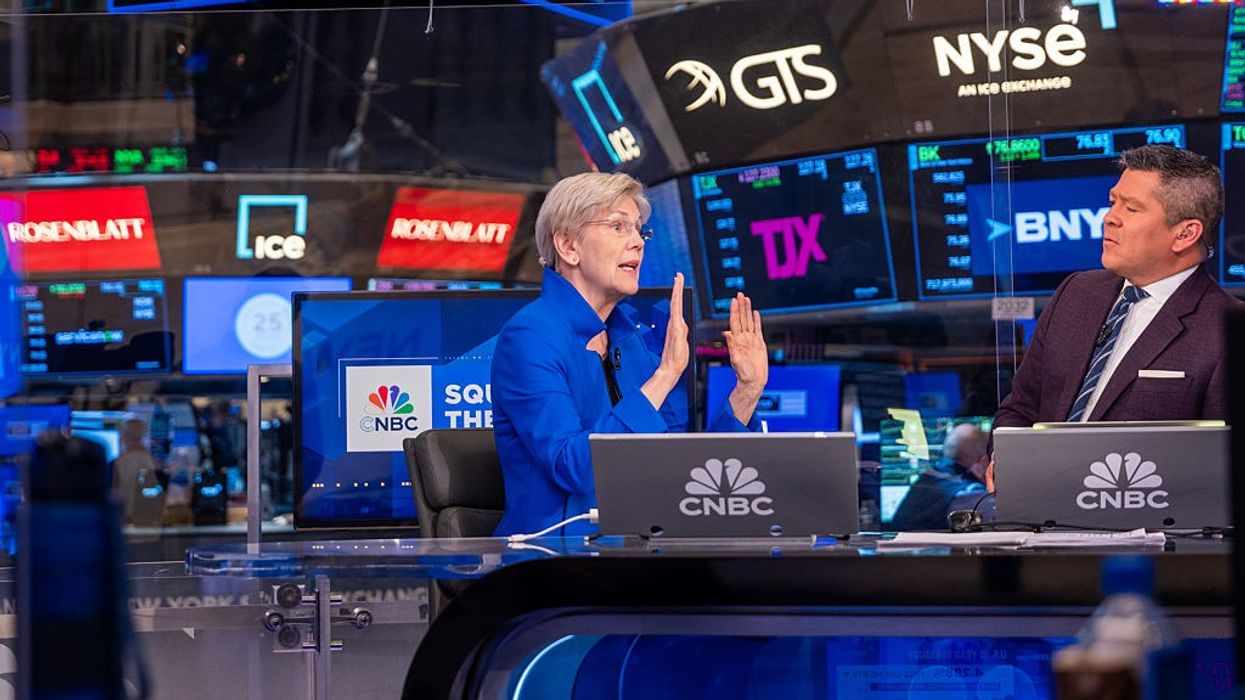
"You owe Congress and the public an explanation for why you and other White House officials appear to be providing Wall Street insiders secret information on the tariffs," wrote Democratic Sen. Elizabeth Warren.
Democratic U.S. Sen. Elizabeth Warren is pressing Treasury Secretary Scott Bessent for answers following reports that officials inside President Donald Trump's White House have been providing Wall Street executives with advance notice about potentially market-moving trade talks with other nations, including China and India.
In a letter to Bessent dated April 25, Warren points to a Bloomberg story noting that Bessent "told a closed-door investor summit" that the "tariff standoff with China cannot be sustained by both sides and that the world's two largest economies will have to find ways to de-escalate."
The summit, which took place last Tuesday, was hosted by the Wall Street behemoth JPMorgan Chase in Washington, D.C. Bloomberg observed that the S&P 500 rose nearly 3% after Bessent's comments were leaked.
CNN additionally reported that Bessent's private assessment of the U.S.-China standoff "gave a boost to a Wall Street rally that had taken shape earlier on Tuesday, with all three major U.S. stock indexes hitting their highest levels of the day after Bessent's remarks were made public."
"Chaos, confusion, economic damage, and opportunities for corruption have become the hallmark of President Trump's rollout of his tariff policies."
Warren wrote in her letter that the JPMorgan event "was not open to the public or media" and expressed concern that Bessent "provided a room full of wealthy investors and Wall Street executives exclusive, advance tips about the administration's trade policy, potentially creating the opportunity for insider trading or other financial profiteering by well-connected friends of the administration."
"Chaos, confusion, economic damage, and opportunities for corruption have become the hallmark of President Trump's rollout of his tariff policies," Warren continued. "President Trump's opaque decision-making on tariffs and frequent, seemingly random changes of course have created a scenario where wealthy investors and well-connected corporations can get special treatment, receiving inside information they can use to time the market, or obtaining tariff exemptions that are worth billions of dollars—while Main Street, small businesses, and America's families are left to clean up the damage."
"You owe Congress and the public an explanation for why you and other White House officials appear to be providing Wall Street insiders secret information on the tariffs, while withholding that information from the public," the senator added, demanding that Bessent answer a series of questions—including who attended the event and how much time passed between his private remarks and press reports on the event.
Warren sent the letter a day after Fox Business correspondent Charles Gasparino reported that unnamed officials inside the Trump White House have been "alerting Wall Street execs they are nearing an agreement in principle on trade with India," heightening concerns that the administration is effectively encouraging insider trading.
Trump told reporters Friday that he "can't imagine" anyone in his administration tipping off Wall Street executives about nonpublic trade developments.
"I have very honorable people, that I can say," the president said. "So I can't even imagine it."
On Monday, a group of congressional Democrats warned the White House of "potential violations of federal ethics and insider trading laws by individuals close to the president with access to nonpublic information."
The Democratic lawmakers pointed specifically to a spike in the volume of call options—essentially bets that a stock price will rise—shortly before Trump announced a partial tariff pause earlier this month.
"We therefore urgently request a full accounting of the periodic transaction reports for all senior White House and executive branch employees since the start of the administration, and we ask for your commitment to transmit all reports to the Office of Government Ethics (OGE) to be made public, as was done during the first Trump administration," the lawmakers wrote Monday. "By failing to take these steps, the administration would be withholding critical information from the American people regarding potential violations of federal ethics and insider trading laws."

"Donald Trump is a known tax cheat, and it's clear his core economic agenda is to turn the government into an ATM for his billionaire pals," said Democratic Sen. Ron Wyden.
The Trump administration quietly announced Thursday that it is abandoning a Biden-era effort to close a loophole that allows large business partnerships to repeatedly manipulate the value of their assets to minimize their tax obligations.
The Internal Revenue Service and Treasury Department announced the decision in a notice that received little attention in the mainstream press. The notice states that the administration, guided by an executive order President Donald Trump signed in February, intends to scrap so-called basis-shifting regulations that were finalized at the end of former President Joe Biden's White House term.
As the Biden Treasury Department explained last year, it was targeting a tactic whereby "a single business that operates through many different legal entities ('related parties') enters into a set of transactions that manipulate partnership tax rules to maximize tax deductions and minimize tax liability."
"These transactions defy congressional intent to avoid tax liability with little to no other economic consequences for the participating businesses," the department said. "For example, a partnership might shift tax basis from property that does not generate tax deductions (such as stock or land) to property that does (such as equipment). Taxpayers may also use these techniques to depreciate the same asset over and over."
The Biden administration estimated that the crackdown on basis-shifting would have raised $50 billion in federal revenue from wealthy taxpayers over a 10-year period.
Sen. Ron Wyden (D-Ore.), the top Democrat on the Senate Finance Committee, said in a statement Thursday that "this is a ridiculous loophole that allows the ultra-rich to dodge taxes by shifting assets around on paper while adding zero value to our economy whatsoever."
" Donald Trump is a known tax cheat, and it's clear his core economic agenda is to turn the government into an ATM for his billionaire pals, but that doesn't make it any less outrageous that his administration would reopen this kind of tax loophole for the rich while simultaneously wrecking Social Security and attacking Medicaid," Wyden added. "This is welfare for billionaire tax cheats and massive corporations, plain and simple."
The impending removal of IRS regulations targeting the rich comes as the administration is weaponizing the agency against nonprofits and immigrants and as congressional Republicans work on a legislative package that will likely call for massive tax breaks for the wealthy and large corporations.
A recent analysis by the nonpartisan Joint Committee on Taxation estimated that the GOP tax package could cost $7 trillion over the next decade, notwithstanding Republicans' misleading efforts to make the tax cuts appear free of cost.
While some congressional Republicans have floated the idea of allowing the marginal tax rate for the highest-earners to return to its previous level of 39.6% at the end of 2025, the proposal appears unlikely to garner enough support in both chambers.
"I think it is a mistake to raise taxes, and I don't believe Republicans are going to do that," Sen. Ted Cruz (R-Texas) told NBC News earlier this week.
According to Bloomberg, the GOP's tax plan "will almost certainly" reflect "the priorities of a small minority of high-earning constituents in a handful of districts in New York, New Jersey, and California" as Republicans work to raise the state and local tax (SALT) deduction cap.
Bloomberg noted that the SALT deduction "is a write-off that most Americans will never claim, even in the districts of the lawmakers fighting hardest to increase the tax break."
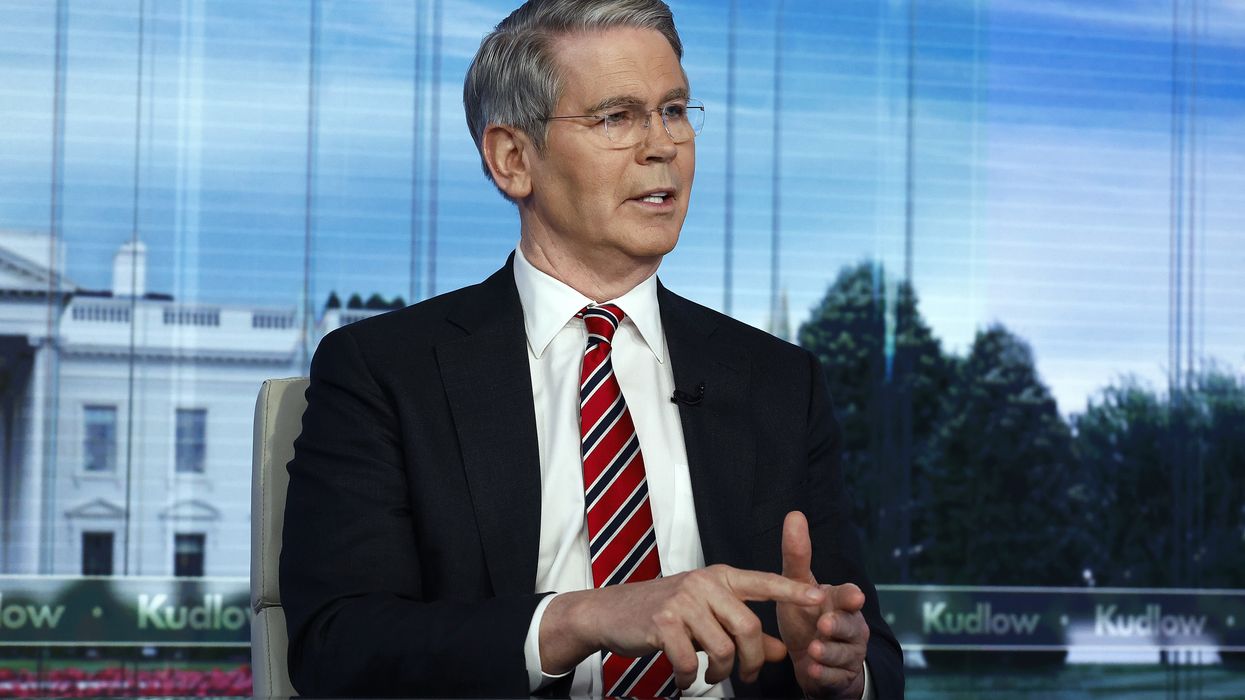
The U.S. Treasury Department will no longer enforce a "beneficial ownership" reporting requirements that are aimed at curbing money laundering and shell company formation.
The Trump administration announced Sunday it will cease to enforce penalties and fines on businesses that fail to adhere to beneficial ownership financial reporting requirements under the Corporate Transparency Act, an anti-money laundering law passed by Congress in 2021. The announcement was panned by advocates, economists, and other critics who called the move an on-ramp for corruption.
The Corporate Transparency Act, a bipartisan effort, includes a rule that requires many corporations and limited liability companies to disclose information on who owns and controls a business entity (also known as the beneficial owner) to the Financial Crimes Enforcement Network (FinCEN), a bureau of the U.S. Treasury Department.
"Exciting news!" wrote Trump on Truth Social when announcing that the Treasury Department would no longer enforce the reporting rule, which he called "invasive and outrageous."
Garbiel Zucman, a professor of economics, reposted Trump's message on X, and wrote: "Exciting news for tax evasion and money laundering!"
Economist and author Anders Åslund reacted to the update writing, "to oppose corporate transparency is to favor corruption."
Supporters of the Corporate Transparency Act, which has face court challenges, argue that the policy is an important step toward reining in anonymous companies, which are the preferred vehicle for moving around illicit funds.
"God, this is grim," weighed in author Oliver Bullough, who has written a book about global wealth and corruption. "The White House has killed the Corporate Transparency Act, which was itself a tiny first step in the marathon journey of stopping U.S. companies from being the most egregiously opaque shell structures on the planet."
In a Monday statement, Ian Gary, executive director of the Financial Accountability and Corporate Transparency Coalition, called the move a "hollowing out" of the Corporate Transparency Act that runs counter to years of bipartisan work to "end the scourge of anonymous shell companies."
Treasury Secretary Scott Bessent, for his part, said ceasing enforcement is a "victory for common sense," according to a Sunday statement. "Today's action is part of President Trump's bold agenda to unleash American prosperity by reining in burdensome regulations, in particular for small businesses that are the backbone of the American economy," he said. In response, Bullough, argued that Bessent doesn't recognize that fraud "suppresses prosperity, rather than enables it."
According to the announcement, the Treasury Department will issue a proposed rulemaking with the aim of narrowing the scope of the rule so that it solely applies to foreign reporting companies.