

SUBSCRIBE TO OUR FREE NEWSLETTER
Daily news & progressive opinion—funded by the people, not the corporations—delivered straight to your inbox.
5
#000000
#FFFFFF
To donate by check, phone, or other method, see our More Ways to Give page.
Daily news & progressive opinion—funded by the people, not the corporations—delivered straight to your inbox.

"The economic havoc wreaked by this war has damaged virtually every sector imaginable, and we need the BLS to factor in the full implications of what the war will mean for the American economy," the senator wrote.
As President Donald Trump's war in Iran fuels inflation across the US economy, Sen. Ed Markey wrote to the acting head of the US Bureau of Labor Statistics to demand updated consumer price data that accounts for these costs.
Markey (Mass.), the ranking Democrat on the Senate Committee on Small Business and Entrepreneurship, already wrote the acting commissioner of BLS, William Wiatrowski, once on March 9, to demand price updates back when the war was just over a week old. He said he received no response.
In a follow-up letter sent Friday, Markey said that in the intervening weeks, "the impact of the crisis has deepened considerably," with repeated blockages to the critical Strait of Hormuz disrupting the global trade of oil and other commodities.
Even with the strait reopened amid a tentative 10-day ceasefire between Israel and Lebanon, Iran has indicated it will not hesitate to close the waterway again if that agreement—which is already fraying after less than 24 hours—falls apart.
"The economic havoc wreaked by this war has damaged virtually every sector imaginable, and we need the BLS to factor in the full implications of what the war will mean for the American economy," Markey wrote.
He pointed out that since his last letter, average gas prices in the US had surpassed $4.00 per gallon, a 40% increase since the US and Israel launched the first attacks against Iran on February 28.
Citing data from the US Energy Information Administration, Markey wrote that "small businesses and individual car owners are struggling with the prospect of more than $540 per vehicle in added annual gas costs."
Beyond gas, he pointed to other steep price hikes: Fertilizer prices have shot up 30% since the war began, costs he warned would be pushed to consumers at grocery stores in the coming months. Where a month ago, grocery bills were predicted to rise 3% this year, the latest report from the Department of Agriculture now projects a more than 6% increase.
This is on top of rising transport costs due to higher jet fuel and diesel prices, which have led airlines to jack up baggage costs and shipping companies like UPS, Amazon, and FedEx to raise delivery fees.
"Increased transportation costs affect virtually every facet of the supply chains our economy relies on," Markey said. "And yet, we have yet to hear any concrete plan from the administration regarding an end to the conflict, a solution to alleviate these costs, or any attempt at providing relief for Americans.”
In recent days, Trump and his underlings have brushed aside concerns about sharp price hikes due to the war.
At an economic event in Las Vegas on Thursday, Trump described them as "fake inflation because of the fuel, the energy prices." He's previously suggested that price hikes from the war "didn’t matter" to him because they're "short-term" and that Americans concerned about their pocketbooks should care more about the threat of Iran.
Trump's approval rating on the economy hit its lowest point ever recorded this week, with just 40% approving of his handling of the economy compared to 59% disapproving in a Navigator Research poll published Thursday. In that same poll, more than two-thirds of Americans (68%) said the economy was in either "poor" or "not so good" shape.
When asked about these dismal polling numbers by a reporter on Thursday, Trump's top economic adviser, Scott Bessent, shrugged it off, saying that "in their heart of hearts," Americans "feel good" about the economy, and that he was "not sure what they're telling the survey people."
"Understandably, Americans remain skeptical that President Trump has a plan of any kind," Markey said. "They cannot afford to fly blind, as Trump apparently elects to."
The senator said: "Facing thousands of dollars in higher prices for gasoline, groceries, and utilities—not to mention the hundreds of billions of their taxpayer money that Trump is requesting to pay for the war itself—American families and small businesses must budget and plan for the future. BLS must put forward consumer price projections that reflect the disastrous consequences of Trump’s illegal war.”
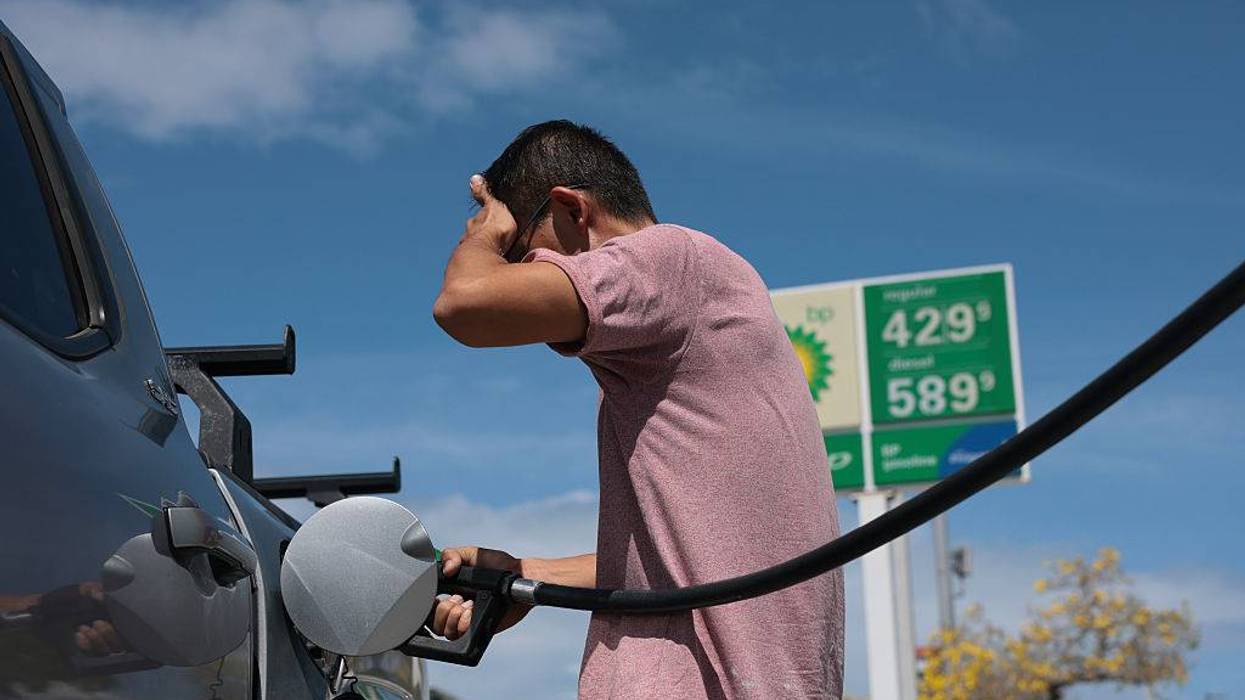
“The toll of Trump’s war in Iran won’t stop at the pump,” warned one expert. “Price hikes on summer vacations, groceries, and electronics are coming."
New data from the US Bureau of Labor Statistics showed that inflation soared in March thanks in large part to increased energy costs stemming from President Donald Trump's illegal war with Iran.
According to the BLS, the Consumer Price Index (CPI) posted a month-over-month gain of 0.9% in March, led by a 10.9% increase in energy prices including a massive 21.2% increase in gasoline.
On a yearly basis, total prices rose by 3.3% from where they were in March 2025—the highest annual inflation rate since April 2024.
University of Michigan economist Justin Wolfers commented in a social media post that inflation in March was "up sharply, and there's more to come," while describing the data as "the first numbers showing economic effects of the war in Iran."
New York Times economics reporter Ben Casselman observed that the 3.3% rise in inflation was "the fastest inflation rate of Trump's second term," and that "the jump was driven almost entirely by higher energy prices, the direct result of the war with Iran."
Heather Long, chief economist at Navy Federal Credit Union, flagged a particularly worrying aspect of the BLS report, which is that "wage growth is almost entirely eaten up by inflation now."
"Wage growth was +3.5% in March for the past 12 months. Inflation was +3.3% in March for the past 12 months," Long explained. "This is the squeeze many households are feeling. Their pay won't be able to keep up with this level of inflation. (And yes it was the same situtation in 2022)."
Elizabeth Pancotti, managing director for policy and advocacy at Groundwork Collaborative, said that the spike in inflation "comes as no shock to anyone who has filled up their gas tank in the past month," and predicted the damage wouldn't be limited to fuel prices.
"The toll of Trump’s war in Iran won’t stop at the pump," Pancotti said. "Price hikes on summer vacations, groceries, and electronics are coming down the pike as his war stokes chaos in supply chains around the world. By pursuing this illegal war, the president has made it clear that he’s putting American families last."
Sen. Chris Murphy (D-Conn.) stated that "between the war and tariffs and general incompetence, Trump is deliberately ruining the economy."
The Republican Party tried to put its best spin on the numbers by boasting that core inflation, which excludes the prices of food and energy, did not rise as much as anticipated.
"Core inflation just came in LOWER than expected for the month of March!" the GOP wrote in a social media post. "President Trump continues defying the 'experts' and beating expectations."
However, the GOP's post got several angry replies from followers who argued that core inflation mattered little when energy prices are spiking and gas prices are averaging $4.15 per gallon.
As Vox senior editor Benji Sarlin noted, former President Joe Biden's White House regularly pointed to core inflation numbers while trying to ease voters' anxiety about rising prices, but with little success.
"Congrats to all the Trump White House folks explaining the difference between topline inflation and core inflation during an oil shock today, I’m sure the Biden WH alums will be very sympathetic," Sarlin wrote. "People on social media also love it when you say inflation is actually pretty good if you just exclude gas, try it out."
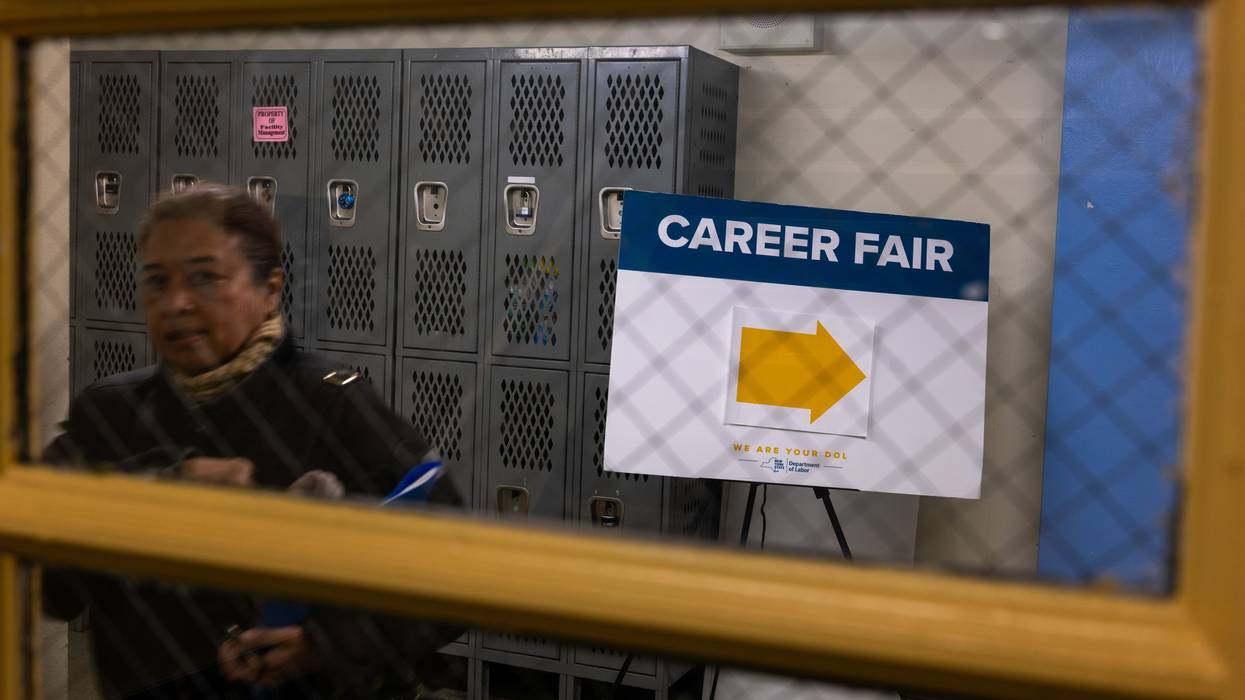
"Hiring was ice cold in February," said one economist.
New data from the US Bureau of Labor Statistics released on Tuesday continued to show weakness in the American jobs market.
The latest Job Openings and Labor Turnover Survey (JOLTS) shows that the number of new hires in February decreased to 4.8 million, which was roughly 400,000 fewer hires than were recorded in February 2025.
The report also shows that the US hiring rate in February fell to just 3.1%, which is the lowest rate since April 2020, when the economy was shut down due to the global Covid-19 pandemic.
The good news in the report is that the number of quits and layoffs remained relatively steady, meaning that people who already have jobs are retaining them at a healthy clip.
But Heather Long, chief economist at Navy Federal Credit Union, noted that these bad hiring numbers came before President Donald Trump launched an illegal war with Iran, which has since destabilized global energy markets and raised prices for oil, gasoline, and diesel fuel.
"This is a hiring recession," Long wrote in a social media post. "And Americans are feeling it. There were notable hiring pullbacks in February in hospitality and construction. Bottom line: The job market was already frozen before the war in Iran began. It's worrying that a 'no hire, no fire' situation could turn into a 'no hire, start to fire' job market quickly if there isn't a resolution soon."
Long's analysis was echoed by Laura Ullrich, director of economic research at hiring site Indeed, who wrote in a research note flagged by Axios that hiring in the US "was stuck in neutral going into this [Iran] conflict," and "getting it into gear just got harder" thanks to the war.
Guy Berger, director of economic research at the Burning Glass Institute, noted that hiring rates in the US hit 3.1% or lower the last two times the country was in a severe recession.
"3.1% is not only comparable to the Covid low point—it's also comparable to late 2009 and early 2010, when the unemployment rate was around 10%," Berger explained. "Hiring was ice cold in February."
Scott Lincicome, a senior fellow at the libertarian Cato Institute who has been a harsh critic of Trump's tariffs, found that the February JOLTS report wiped out an unexpected January increase in manufacturing job openings that the president's allies attributed to his trade policies.
"Alas, the perils of cherry-picking," Lincicome commented.
The new data on hiring in the US job market comes weeks after a BLS report estimated that the economy lost 92,000 jobs in February. On the whole, the American economy has posted a net loss of jobs since Trump announced his “liberation day” global tariffs in April 2025.

"Trump's reckless, aimless, and illegal war with Iran is driving our nation into yet another self-inflicted energy and inflation crisis."
While President Donald Trump on Monday made conflicting comments about ending the US-Israeli war on Iran, Sen. Ed Markey expressed "deep concerns about ongoing political interference in what should be nonpartisan offices, including the federal statistical system," and demanded urgent analyses of the bloody assault's economic consequences.
"History is repeating itself," the Massachusetts Democrat, who serves as ranking member of the Senate Committee on Small Business and Entrepreneurship, began his Monday letter to acting Commissioner of the US Bureau of Labor Statistics (BLS) William Wiatrowski.
"Crises spurred by American intervention in the Middle East in 1974, 1980, 1990, and 2003 led to price gouging at the gas pump and drains on American wallets, followed by broader economic effects as the price of energy skyrocketed," Markey noted. "President Trump's reckless, aimless, and illegal war with Iran is driving our nation into yet another self-inflicted energy and inflation crisis. American consumers should not be subjected to shakedowns every time they fill up their cars, just to pay for Donald Trump's Middle Eastern crusade."
"Unfortunately, at this moment we are flying blind," he wrote. "The president has neglected to provide coherent or consistent explanations for the scope and goals of his war, either to the Congress or the American people, and we have similarly received no information from the administration on the conflict’s expected duration or anticipated costs."
The senator asked the BLS to "immediately undertake and publish a comprehensive analysis of the likely consumer price impacts" over the next 6-12 months stemming from Trump's war on Iran.
Specifically, by March 24, he requested projections for:
Markey also requested answers about the agency's methodology, stressing that "the integrity and timeliness of BLS's work have never mattered more. American families making decisions about their budgets, their energy use, and their economic future deserve the best available government data and analysis."
The senator recalled Trump's August ouster of then-Commissioner Erika McEntarfer, which "appears to solely have been the result of BLS releasing factual jobs data that was viewed as unflattering to the administration."
"Baseless firings of ethical civil servants and manipulation of data reduce trust in what should be objective economic research grounded in data and evidence, rather than overt partisanship and blind allegiance," he wrote to the agency's new leader.
"In the face of this intimidation," the senator added, "I appreciate Dr. McEntarfer's assertions regarding the quality of your leadership and personal character, and I hope you will continue to ground economic analyses in objectivity and fact—no matter how many times the president inaccurately claims that BLS's statistics are 'rigged' and pressures officials to hide, alter, or otherwise change data to suit his political purposes."
Donald Trump is throwing gasoline on the flames of war in Iran, while at home, Americans are paying higher prices for gasoline at the pump. Take a walk with me to see how prices are skyrocketing as a result of this illegal war.
[image or embed]
— Senator Ed Markey (@markey.senate.gov) March 9, 2026 at 3:27 PM
As Common Dreams reported earlier Monday, Trump's war on Iran is having an obvious economic impact: The prices of both Brent crude oil and WTI crude oil futures soared past $100 per barrel, the Dow Jones Industrial Average opened trading down by more than 600 points, and the Nasdaq dropped by 300 points.
Then, Trump suggested in an interview with CBS News’ Weijia Jiang that the Iran war—which has already killed more than 1,300 Iranians, including hundreds of women and children—is "very complete, pretty much." After his remarks, Reuters reported, "Wall Street stocks clawed their way back from a steep selloff to close higher on Monday, notching a final-hour rebound."
However, Trump then seemed to walk back his comments about the war ending soon. According to the New York Times, during a speech to Republican lawmakers in Florida, he said that "we have won in many ways, but not enough. We go forward more determined than ever to achieve ultimate victory that will end this long-running danger once and for all."