
SUBSCRIBE TO OUR FREE NEWSLETTER
Daily news & progressive opinion—funded by the people, not the corporations—delivered straight to your inbox.
5
#000000
#FFFFFF
To donate by check, phone, or other method, see our More Ways to Give page.


Daily news & progressive opinion—funded by the people, not the corporations—delivered straight to your inbox.
"Two individuals in clear distress, without any means of locomotion, with a destroyed vessel, were killed by the United States."
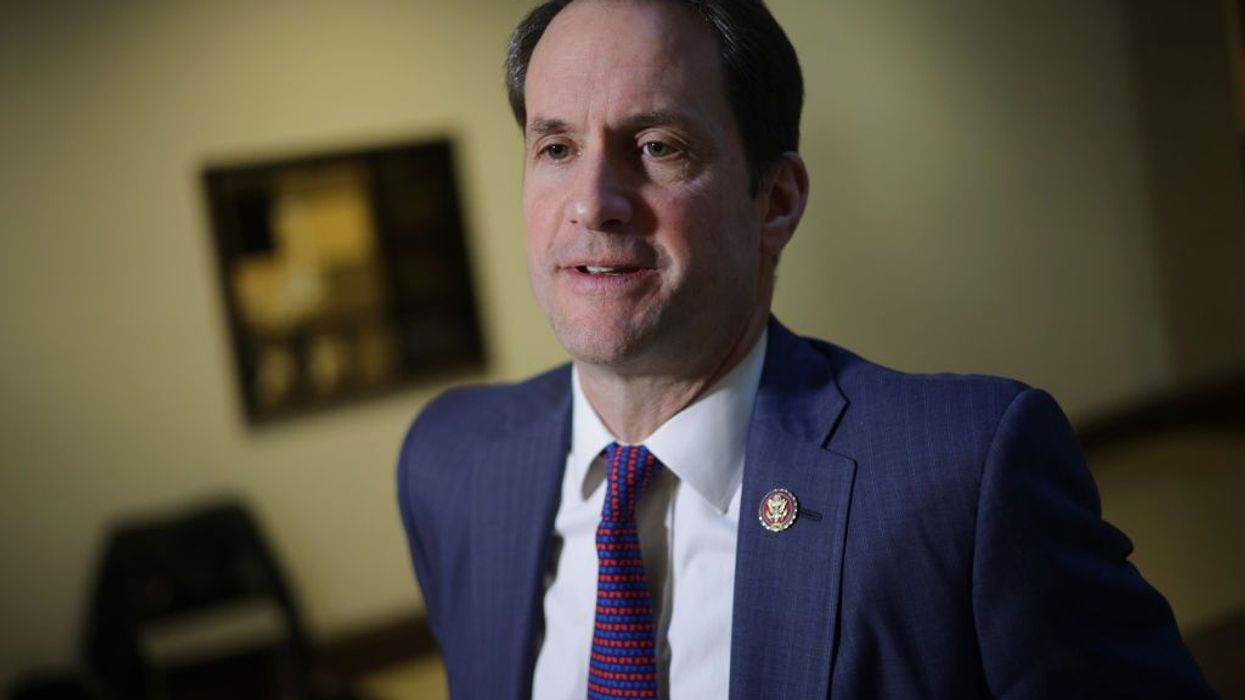
US Rep. Jim Himes, the ranking member of the House Permanent Select Committee on Intelligence, expressed horror on Thursday after watching a video of the September 2 double-tap strike on a suspected drug trafficking vessel off the coast of Trinidad and Tobago.
Speaking to reporters after a briefing on the strike delivered by Adm. Frank Bradley, Himes (D-Conn.) called the video he saw of the attack "one of the most troubling things I've seen in my time in public service."
Himes proceeded to describe the video, which showed the US military firing missiles at two men who had survived an initial attack on their vessel and who were floating in the water while clinging to debris.
"You have two individuals in clear distress, without any means of locomotion, with a destroyed vessel, [who] were killed by the United States," he said.
Himes then started to walk away before a reporter asked him to describe more of what he saw in the video. The Connecticut Democrat then said the video showed a clear "impermissible action," according to the laws of armed conflict.
"Any American who sees the video that I saw will see its military attacking shipwrecked sailors," he said. "Now, there's a whole set of contextual items that the admiral explained. Yes, they were carrying drugs. They were not in position to continue their mission in any way... People will someday see this video and they will see that that video shows, if you don't have the broader context, an attack on shipwrecked sailors."
Himes finished his talk with reporters by saying that Bradley told lawmakers there had not been a "kill them all" or “no quarter” order given to him by higher-ups. Asked by a reporter if he thought the full video should be released to the public, Himes said, "I do."
Himes' reaction to the video stood in stark contrast to the reaction of Sen. Tom Cotton (R-Ark.), the chairman of the Senate Intelligence Committee, who praised the military for its actions.
According to HuffPost reporter Jen Bendery, Cotton described the strikes on the two survivors as "righteous strikes" that were "entirely lawful."
Cotton also claimed that the video showed "two survivors trying to flip a boat, loaded with drugs, bound for the United States, back over, so they could stay in the fight."
Reports from the US government and the United Nations have not identified Venezuela as a significant source of drugs that enter the United States, and the country plays virtually no role in the trafficking of fentanyl, the primary cause of drug overdoses in the US.
Additionally, many legal scholars have said that a strike on the two men who survived the initial attack on the boat is very likely either an act of murder or a war crime, regardless of whether they were intending to traffic illegal drugs in the US.
"This is murder," said one legal expert.
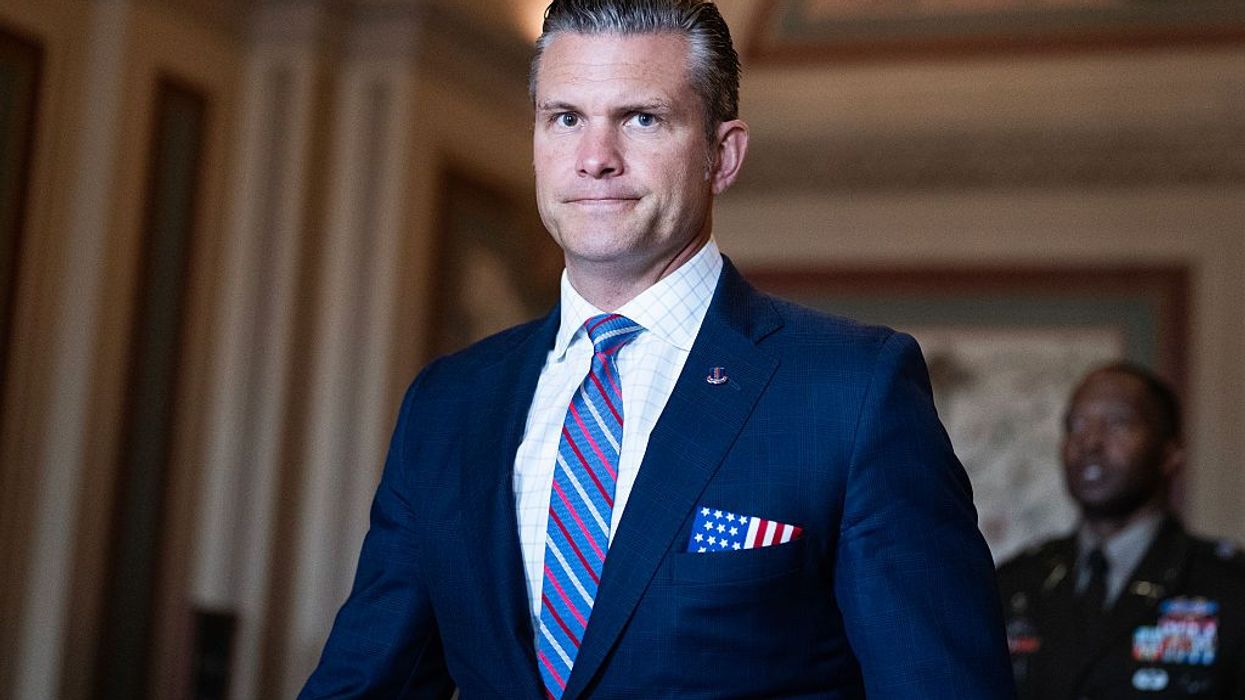
Finger-pointing has reportedly begun inside the Pentagon as the Trump White House has tried to shield US Defense Secretary Pete Hegseth from taking the blame for a double-tap strike on a purported narcotics smuggling vessel that many legal experts say was an obvious war crime.
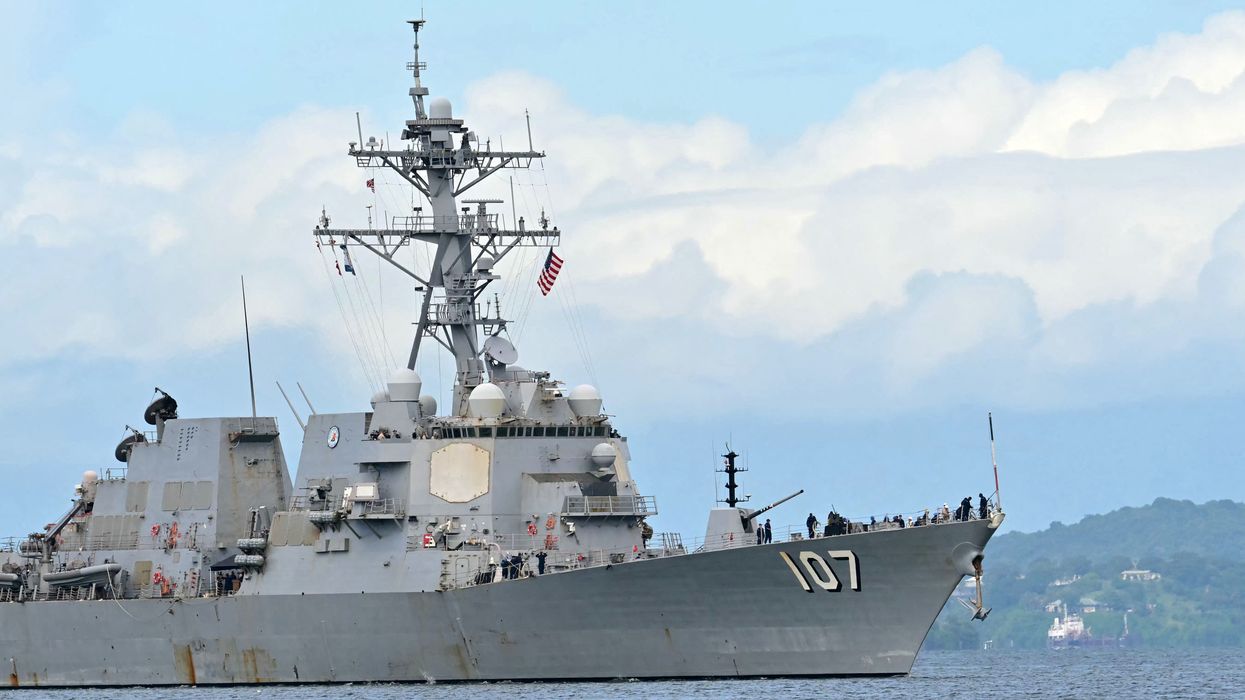
According to the Washington Post, White House Press Secretary Karoline Leavitt set off "a furious backlash within the Defense Department" on Monday after she declared that Adm. Frank Bradley, not Hegseth, made the decision to launch a second strike to kill two men who had survived an initial strike on a purported drug boat off the coast of Trinidad and Tobago on September 2.
One defense official told the Post that Leavitt's statement was "'protect Pete' bullshit," while another said that the administration appeared to be "throwing us, the service members, under the bus."
Hegseth on Monday praised Bradley in a post on X as "a true professional" who "has my 100% support." However, Hegseth also appeared to make clear that Bradley was the person in the chain of command who made the final decision to authorize a second strike on the survivors.
"I stand by him and the combat decisions he has made—on the September 2 mission and all others since," Hegseth wrote.
Even Fox News chief political analyst Brit Hume found Hegseth's praise for Bradley to be disingenuous, and he described it as "how to point the finger at someone while pretending to support him."
Bradley is set to give members of Congress a classified briefing on the strikes on Thursday amid bipartisan demands for more information.
The question of who authorized the second strike on the boat is crucial in determining who would face potential future war crimes charges. Earlier reporting from the Washington Post claimed that Hegseth gave a spoken order to "kill everybody" in the boat strikes, which was then interpreted as a justification for launching a second strike on the survivors.
Rachel VanLandingham, a military expert at Southwestern Law School, told Al-Jazeera that, regardless of who authorized the strike, it was clearly illegal.
"That second strike against individuals who are shipwrecked, clinging desperately to the side of their boat wreckage—that’s a war crime," she said. "It’s a war crime because those individuals who are shipwrecked have protected status under the law unless they were, for example, shooting a gun at somebody."
Todd Huntley, a former Staff Judge Advocate who served as a legal adviser on drone strikes carried out in Afghanistan and other nations by Joint Special Operations task forces, told The Intercept he had no doubt that the second strike on the survivors was a prosecutable offense under either federal law or the Uniform Code of Military Justice.
"This is about as clear of a case being patently illegal that subordinates would probably not be able to successfully use a following-orders defense," he explained.
Rebecca Ingber, professor at Cardozo Law School, told Time that authorizing the second strike violated "one of the most basic and longstanding rules" of the laws of armed conflict.
"It is absolutely unlawful to order that there will be no survivors,” she explained. "There is no actual armed conflict here, so this is murder."
"This is a colonial operation of military aggression that seeks to turn the Caribbean into a space for lethal violence and US imperial domination."
The government of Venezuelan President Nicolás Maduro said Sunday that his country's security forces captured a group of mercenaries aligned with the US Central Intelligence Agency, less than two weeks after President Donald Trump confirmed his authorization of covert CIA action against the South American nation.
Venezuela "reports that it has captured a mercenary group with direct information from the US intelligence agency, CIA, being able to determine that a false-flag attack is underway from waters bordering Trinidad and Tobago, or from Trinidad or Venezuelan territory itself," the Venezuelan government said in a statement.
“This planned action perfectly evokes the provocation of the Battleship Maine and the Gulf of Tonkin, which gave rise to the war against Spain to seize Cuba in 1898 and allowed the US Congress to authorize involvement in an eternal war against Vietnam in 1964, from which they emerged defeated by the Vietnamese people after facing incalculable destruction and regrettable human loss," the statement continues.
"The government of Prime Minister Kamla Persad-Bissessar has renounced the sovereignty of Trinidad and Tobago to act as a military colony subordinate to US hegemonic interests, turning its territory into a US aircraft carrier for war throughout the Caribbean against Venezuela, Colombia, and all of South America,” Caracas asserted.
The statement continues:
By folding to Washington’s militaristic agenda, Persad-Bissessar not only intends to attack Venezuela, a country that has always maintained a policy of energy cooperation, mutual respect, and Caribbean integration, and break our historic bonds of brotherhood; she also violates the United Nations Charter, the proclamation of Latin America and the Caribbean as a Zone of Peace approved by [the Community of Latin American and Caribbean States], and the principles of [the Caribbean Community], which protect all peoples of the Caribbean.
These are not defensive exercises: this is a colonial operation of military aggression that seeks to turn the Caribbean into a space for lethal violence and US imperial domination.
"Venezuela does not accept threats from any vassal government of the US. We are not intimidated by military exercises or war cries," the statement says, adding that the country "will always defend its sovereignty, its territorial integrity, and its right to live in peace against foreign enemies and [their] vassals."
Venezuela's accusation came amid joint military exercises between the US and Trinidad and Tobago in the Caribbean Sea and follows a string of deadly US attacks on vessels the Trump administration claimed—without evidence—were transporting drugs bound for the United States. According to the Trump administration, at least 43 people have been killed in the US boat strikes in the southern Caribbean and Pacific Ocean since early last month.
Trinidad and Tobago challenged Venezuela to provide proof of the alleged false-flag operation and said the joint military operation with the United States "aims to bolster the fight against transnational crime and build resilience through training, humanitarian activities, and security cooperation."
The Trump administration—which had already deployed an armada of warships and thousands of troops to the southern Caribbean—said Friday that it ordered the USS Gerald R. Ford carrier strike group off the coast of Venezuela, which possesses the world's largest oil reserves.
The US has been meddling in Venezuelan affairs since at least the late 19th century, going back to the 1895 border dispute between Venezuela and Britain. Since then, the United States has helped install and prop up brutal dictators and assisted in the subversion of democratic movements, including by training Venezuelan forces in torture and repression at the notorious US Army School of the Americas.
In the 21st century, successive US administrations beginning with George W. Bush have tried to thwart the Bolivarian Revolution that was launched by former President Hugo Chávez and continued under Maduro. During the first Trump administration, Venezuela foiled an attempt by a group of mercenaries, including two Americans, to invade the country and topple Maduro.
Tens of thousands of Venezuelans have also died as a result of US economic sanctions, according to research from the Center for Economic and Policy Research.
Taunting the Venezuelan president during a Sunday appearance on CBS "60 Minutes," Sen. Rick Scott (R-Fla.) said, “If I was Maduro, I'd head to Russia or China right now."
However, senior Venezuelan officials waxed defiant in the face of the latest US threat.
“Once again, the empire and its accomplices seek to bend the sovereign will of the Venezuelan people through a criminal economic siege that flagrantly violates the Charter of the United Nations and international humanitarian law," Venezuelan Foreign Minister Yván Gil Pinto said Monday.
"These actions are not only illegal," he added, "they are an unconventional act of war that we are determined to face and defeat in all scenarios."