

SUBSCRIBE TO OUR FREE NEWSLETTER
Daily news & progressive opinion—funded by the people, not the corporations—delivered straight to your inbox.
5
#000000
#FFFFFF
To donate by check, phone, or other method, see our More Ways to Give page.
Daily news & progressive opinion—funded by the people, not the corporations—delivered straight to your inbox.

Trump campaigned on fixing the affordability crisis but defends high gas prices as the cost of preventing Iran from building nuclear weapons that his own administration said Tehran is not trying to build.
The American Automobile Association reported Monday that drivers are paying more at the pump than ever before for this point in August as President Donald Trump's war on Iran continues to disrupt global energy supplies—and he says he won't apologize for the pain his illegal war of choice is inflicting upon consumers.
AAA said the national average price for a gallon of regular gasoline stood at $4.06 on Monday, more than 92 cents higher than a year ago and double the $1.85 recently promised by Trump. The price is the highest ever recorded for mid-August, according to GasBuddy petroleum analyst Patrick De Haan. In California and Hawaii, average prices are approaching—or exceeding—$5.40 per gallon.
The record gas prices come amid the protracted US-Israeli war on Iran that has killed thousands of people and severely disrupted shipping through the Strait of Hormuz, a crucial global energy artery through which roughly one-fifth of the world’s oil and liquefied natural gas supplies normally pass. According to Reuters, only five vessels traversed the strait Saturday, and none did so Sunday. Brent crude was trading near $89 per barrel on Monday, while West Texas Intermediate was above $82.
While Trump has said the war is "over" or nearly over dozens of times—The Guardian's Robert Tait recently called the recurrent spectacle his "own Groundhog Day"—Iran currently appears to have the upper hand, as shipping has overwhelmingly avoided the US-supported route through the Strait of Hormuz, with most vessels using a course set by Tehran or eschewing the waterway altogether.
The Guardian reported Monday that US households have collectively spent an additional $56.4 billion on gasoline over the past six months—an average of roughly $477 per home. Meanwhile, major oil companies raked in a combined $90 billion in profits during the second quarter.
Trump, who campaigned on promises to tackle the affordability crisis, has repeatedly defended high gas prices as the cost of preventing Iran from developing nuclear weapons that every administration since George W. Bush's—including his own—has said Tehran is not seeking to build.
"For you to pay a tiny little bit more for your gasoline, just remember, you're doing it so that a very evil country cannot have... a nuclear weapon," Trump said Friday during a speech to law enforcement officers in Garden City, New York.
"So remember that when you have to pay a little bit more, you're at $4; it's OK... I'll never apologize, I did the right thing," the president added to raucous applause.
Critics slammed Trump's remarks, with Congresswoman Shontel Brown (D-Ohio) noting on Monday that, while "Trump’s family got rich off of his failed war," the American people—including his own supporters—"got screwed."
"Now he wants to us to smile and accept the higher prices he caused," she added.
"This is an unprecedented attack on democracy," said US Rep. Shontel Brown.
A voting rights organization in Ohio is accusing the federal government of waging a large-scale intimidation campaign after the group was raided by the FBI on Thursday.
MS NOW reported on late Thursday that FBI agents searched the Cleveland offices of the Ohio Organizing Collaborative, an organization that helps register voters.
In addition to raiding the group's offices, sources tell MS NOW that "agents also fanned out across the state, showing up at the homes of the group’s leaders and staff members, carrying some subpoenas and seeking information and electronic devices."
MS NOW's sources also expressed concern that the raid was not a legitimate law enforcement operation but "part of the Trump administration’s efforts to sow doubt and distrust in voting integrity in key swing states ahead of the midterm elections."
In an interview with MS NOW, Ohio Organizing Collaborative board member Prentiss Haney accused the feds of using "straight-up intimidation tactics."
“They had agents all across the state going to civil rights leaders and community leaders’ doors intimidating them, coming and demanding that they talk about literally anything they would ask,” said Haney, who added that agents asked leaders "if they’re committing voter fraud, just on their doors, in front of their houses with their children, and just following them to work and school.”
In a separate interview with local public radio station WVXU, Haney described the FBI raid as a "full-on assault."
"This is not normal business," Haney said. "I mean there's no reason for over 100 agents to be knocking on the doors of everyday Ohioans, demanding and accusing people of voter fraud as if it was a witch hunt."
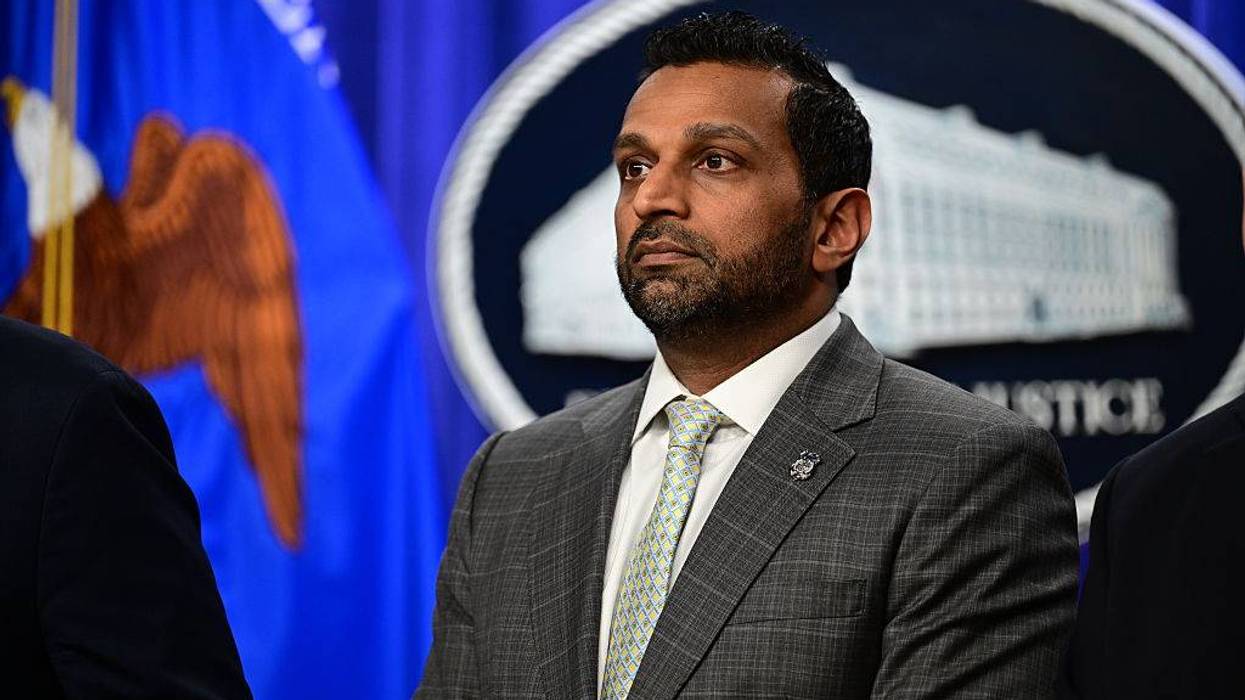
Rep. Shontel Brown (D-Ohio) said she was "alarmed and outraged" by the FBI raid, which she alleged was part of an effort by President Donald Trump and FBI Director Kash Patel to disrupt the 2026 midterm elections.
"This is an unprecedented attack on democracy: These raids must end immediately," Brown said. “Unfortunately, this appears to be part of a systematic effort by Trump and Kash Patel’s FBI to attack our elections and perpetuate more myths of voter fraud—all to undermine and challenge any election result that Trump does not agree with. It’s an attack on the people."
The Trump administration has waged a multi-faceted attack on voting rights ahead of the midterm elections.
In March, Trump signed an executive order instructing the United States Postal Service (USPS) to not deliver ballots in any states that have not given the federal government access to its voter lists, which critics have warned could lead to the "virtual elimination of mail-in voting."
A Tuesday court filing by the US Department of Justice, meanwhile, argued that states have the power to purge voter rolls at any time ahead of an election and do not have to abide by the 90-day “quiet period” established in the National Voter Registration Act (NVRA).
If adopted, this policy could result in states deeming voters ineligible without giving them sufficient time to challenge the decision.
Trump has also successfully lobbied Republicans in several states to engage in unprecedented mid-decade gerrymanders with the goal of creating more GOP seats in Congress.
"The reality is that 4.5 million people were kicked off the program to pay for tax cuts for the wealthy," said US Rep. Shontel Brown.
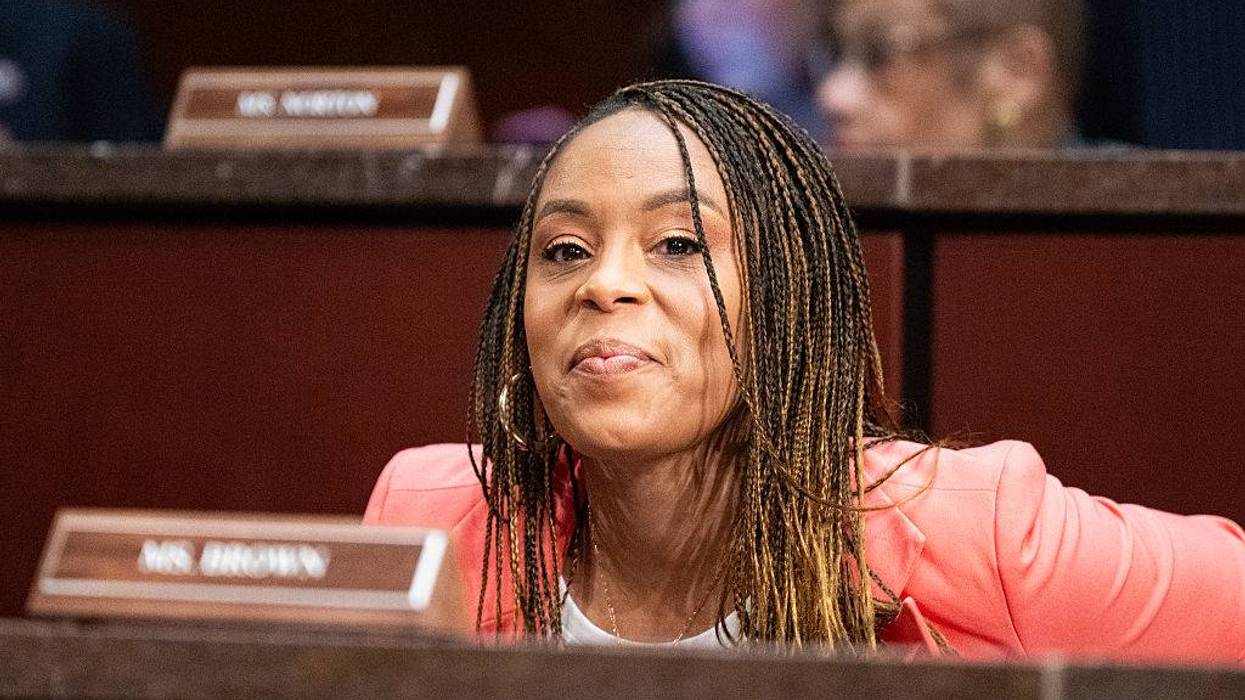
Rep. Shontel Brown on Thursday confronted US Secretary of Agriculture Brooke Rollins for her past boasts about kicking millions of Americans off food assistance.
During a House Agriculture Committee hearing, Brown grilled Rollins for saying it was "good news" that 4.5 million fewer people are now enrolled in the Supplemental Nutritional Assistance Program (SNAP) than before President Donald Trump took office last year.
"The reality is that 4.5 million people were kicked off the program to pay for tax cuts for the wealthy," said Brown. "Families and children are not leaving the SNAP program because they are doing better."
Rep. @ShontelMBrown: Recently, you described it as good news that roughly 4.5 million people have been moved off SNAP. The reality is that 4.5 million people were kicked off to pay for tax cuts for the wealthy. They are not doing better--
Rollins: They are. pic.twitter.com/qcB2WlAHLv
— Headquarters (@HQNewsNow) June 4, 2026
"They are," Rollins replied, without citing any evidence.
"They are being forced off because of eligibility changes, new administrative barriers, and states preparing for the enormous cost shift that they know is coming," Brown shot back. "And you know this. So I'm really struggling to understand why you think pulling the rug out from under children, seniors, veterans, and families that have fallen on hard times [is] good news."
Rollins then baselessly claimed that all of the people who had been removed from SNAP had been added to the program fraudulently, including "200,000 dead people."
The Associated Press last month published a fact check that examined a similar Rollins claim about the number of people removed from food assistance over the last year, and determined that the most likely culprit were changes made to the program by the One Big Beautiful Bill Act, a 2025 budget law that slashed funding to SNAP by $186 billion over a decade.
"What we’ve seen in terms of the data is that the trend in participation declines seems to be related to the program being harder to access,” Roger Figueroa, an assistant professor at Cornell University, explained to the AP.
"Kicking 4.3 million Americans off of SNAP is not a flex, it's a failure," said Democratic Rep. Shontel Brown.
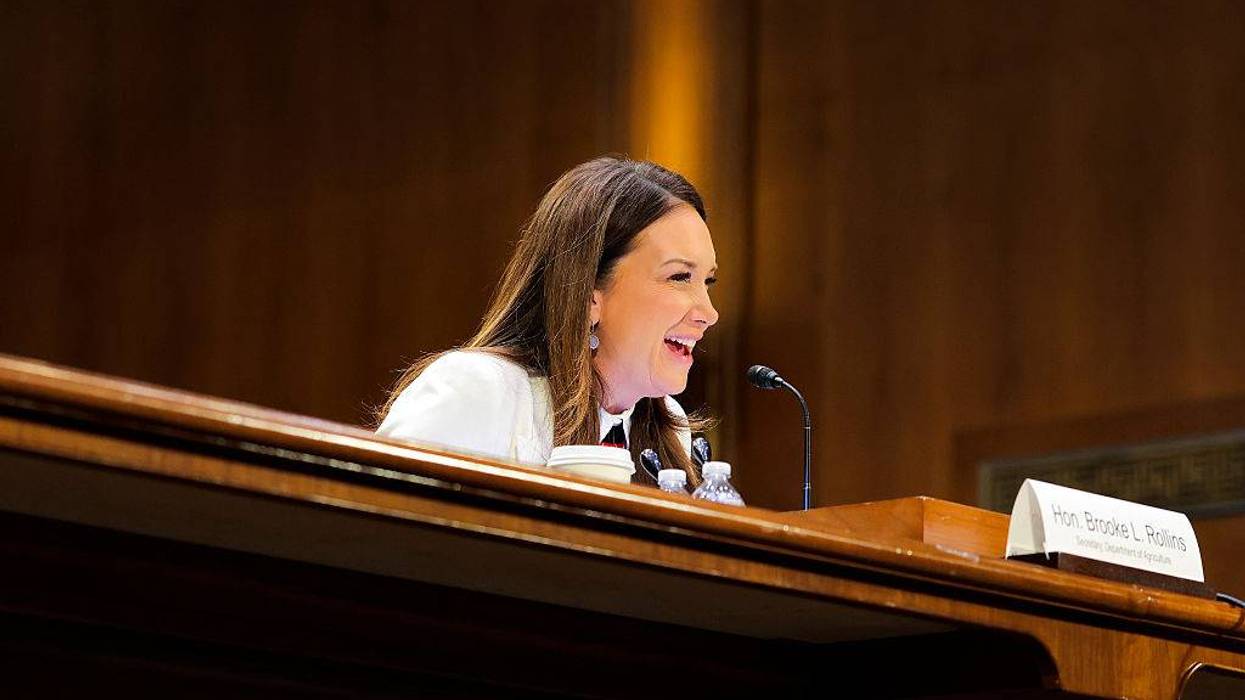
US Secretary of Agriculture Brooke Rollins on Saturday openly celebrated millions of people losing their food assistance, which experts say is a direct result of the Republicans' 2025 budget law that slashed funding to the Supplemental Nutrition Assistance Program by $186 billion over a decade.
In a social media post pointing to preliminary data from her department, Rollins boasted that there were now "4.3 million off SNAP and counting!"
"Under President Trump, Americans are getting back to work!" Rollins added. "Healthy employment numbers mean less reliance on government programs. Leaving benefits for those who truly need them. America is back in business!"
In reality, the unemployment rate is currently higher than when President Donald Trump took office in February 2025 and there has been almost no growth in net employment since the president announced his "Liberation Day" tariffs just over a year ago.
The Associated Press on Monday published a fact check of Rollins' claims about SNAP, finding that Republicans' cuts to the program were far more likely responsible for the historic drops in enrollment than any purported improvement in the economy.
Caitlin Caspi, an associate professor at the University of Connecticut who studies food insecurity, told the AP that current job creation numbers are nowhere near strong enough to explain the massive number of Americans losing access to SNAP.
"We’re not seeing a linear kind of drop-off,” Caspi said. “We are not seeing, if you look at the unemployment rates, things that might be an indicator that a strong economy was driving this change. We don't see, for example, a pattern of decline in unemployment that would match the pattern of decline in SNAP participation."
Caspi's analysis was echoed by the Center on Budget and Policy Priorities (CBPP), which last week published an analysis finding that "economic conditions haven’t been improving as the number of people receiving SNAP has plummeted in recent months, representing the sharpest decline in decades."
Instead, CBPP pointed the finger squarely at the GOP's budget law as the biggest culprit behind the decline.
"The deep cuts to federal funding for SNAP are shifting significant new costs to states," wrote CBPP, noting that the GOP law "also dramatically expands SNAP’s already harsh and ineffective provision taking away people’s benefits for not meeting the work requirement."
Rollins' claims about SNAP enrollment were also criticized by Rep. Shontel Brown (D-Ohio), who expressed disgust that the administration is bragging about kicking people off food assistance during a time when the price of groceries has continued to rise thanks in part to Trump's own policies.
"Better economy where?" Brown wrote on social media in response to Rollins. "You mean the one where Americans paid $300 more on their groceries to compensate for Trump's tariffs? Kicking 4.3 million Americans off of SNAP is not a flex, it's a failure. That's why I've authored legislation to reverse the Trump SNAP cuts."

"First they slashed food aid, and now they are canceling the USDA’s decades-old food insecurity survey so no one can measure the harm," said one critic.
Two months after President Donald Trump enacted the biggest-ever cut to federal food assistance, his administration ended a key yearly report on food insecurity, drawing widespread condemnation Monday from critics who accused the president of once again trying to hide the harms of his policies.
The US Department of Agriculture (USDA) announced Saturday that it will stop publishing its annual Household Food Security reports, claiming that the surveys—which are the federal government's primary means of gauging hunger—"failed to present anything more than subjective, liberal fodder."
"These redundant, costly, politicized, and extraneous studies do nothing more than fear-monger," USDA added.
Experts warned that the USDA's move will make it more difficult to track the harmful effects. Critics say that's exactly the point.
"Step 1: Increase hunger with massive SNAP cuts, increase food prices with tariffs," Congresswoman Shontel Brown (D-Ohio) said Monday on social media, referring to the Supplemental Nutrition Assistance Program, commonly known as food stamps. "Step 2: Abruptly end USDA hunger report."
"The Trump administration doesn’t solve problems, it hides them," Brown added.
Congresswoman Ayanna Pressley (D-Mass.) also posted about the matter Monday, calling the USDA move "shameful and cowardly."
"Trump wants the USDA to stop collecting data on food insecurity because he knows hunger will spike after his Big, Ugly Bill kicks millions of families off food assistance," she wrote, referring to the One Big Beautiful Bill Act the president signed on July 4.
The legislation approved the deepest cuts to Medicaid and SNAP in history while slashing billions from other essential social programs to fund massive tax breaks for billionaires and corporations. The law ends health coverage and food assistance for millions of Americans at a time when more than 47 million Americans—including 1 in 5 US children—are living in food insecure households.
"As grocery prices rise and Republicans’ cuts to food assistance drive more families into food insecurity, President Trump wants to disguise these devastating effects from the public," Sen. Michael Bennet (D-Colo.) said Monday on social media. "This report is critical to our fight against hunger in America, and Trump has abandoned it just as he’s abandoned working families."
As Common Dreams has reported, food banks and other lifelines—many of them severely underresourced—are bracing for a surge in hunger resulting from the Republican cuts.
The USDA's move follows Trump's August 1 firing of former Bureau of Labor Statistics (BLS) Commissioner Erika McEntarfer, baselessly accusing her of manipulating economic data to harm him politically after the agency published a report showing only 73,000 jobs added to the economy the previous month.
On Friday, the BLS announced that it is postponing publication of an annual report on consumer spending by more than one month.
"Trump promised transparency and life-changing prosperity for families, but instead of keeping his promise, his administration is burying economic data," the liberal super political action committee American Bridge 21st Century said on social media on Monday. "When housing, food, and utility costs are rising faster than paychecks, hiding economic reports is an act of deception."

Elon Musk's "dual position as the recipient of federal contracts and a White House adviser creates a troubling and obvious conflict of interest," wrote two Democratic members of the U.S. House Oversight Committee.
Two Democrats on the U.S. House Oversight Committee are seeking more information about the federal government's use of billionaire Elon Musk's Starlink, the satellite internet service operated by his company SpaceX, specifically at the White House complex and at the U.S. General Services Administration.
Reps. Gerry Connolly (D-Va.), the ranking member of the committee, and Shontel Brown (D-Ohio) are looking for proof that new usage of Starlink technologies is "secure and will not enrich Mr. Musk in violation of federal ethics rules," according to a letter they sent Monday to White House Chief of Staff Susie Wiles, White House Director of Office Administration Joshua Fisher, and Acting Administrator at GSA Stephen Ehikian.
The letter references March reporting from The New York Times, which stated that Starlink is now accessible across the White House campus, after Starlink "donated" the service. NBC News reported last month that GSA had adopted Starlink for its internet access at the request of Musk's staff, citing an unnamed source. Musk is also an adviser to U.S. President Donald Trump.
"Donations such as this raise considerable red flags as to whether Mr. Musk is using his position in the federal government to benefit his companies," wrote the two Democrats.
A journalist at ProPublica observed this reported donation of Starlink resembles a tactic used by another company, Microsoft, during the Biden administration: offering free trials to get government locked in to using their technology.
"It doesn't matter if it was Microsoft last year or Starlink today or another company tomorrow," Jessica Tillipman, associate dean for government procurement law studies at George Washington University Law School, told ProPublica. "Anytime you're doing this, it's a back door around the competition processes that ensure we have the best goods and services from the best vendors."
In their letter, the two Democrats also highlighted that Musk's dual role as head of Starlink and "apparent leader" of Trump's Department of Government Efficiency—which reporting indicates could soon come to a close—"raises significant ethical, security, and regulatory implications that warrant immediate attention."
What's more, his "dual position as the recipient of federal contracts and a White House adviser creates a troubling and obvious conflict of interest, raising the risk of undue influence and potential misuse of federal contracts for personal or corporate gain."
This is far from the first time that concerns around potential conflicts of interests regarding Musk's businesses and his role in the federal government have been raised.
Last month, a group of Democratic senators sent a letter to Attorney General Pam Bondi and acting Inspector General at the Transportation Department Mitch Behm demanding an investigation into whether Musk's activities at the U.S. Federal Aviation Administration (FAA) have violated the criminal conflict of interest statute, citing reporting that Musk's Starlink is involved in upgrading a crucial communication system at the FAA.
In their letter, Connolly and Brown said they are also concerned that the recent installation of Starlink at the White House raises potential cybersecurity and national security concerns.
The pair requested a list of information and documents from the White House and GSA, including all documents and communications relating to the legal or ethical implications of the White House and GSA using Starlink given Musk's role in the federal government, as well as documents and communications regarding any security assessments related to the use of Starlink.
"We are basically making demands that we have a livable wage, that we are able to live our lives outdoors, like REI's mission statement includes," said one sales associate at the Beachwood store.
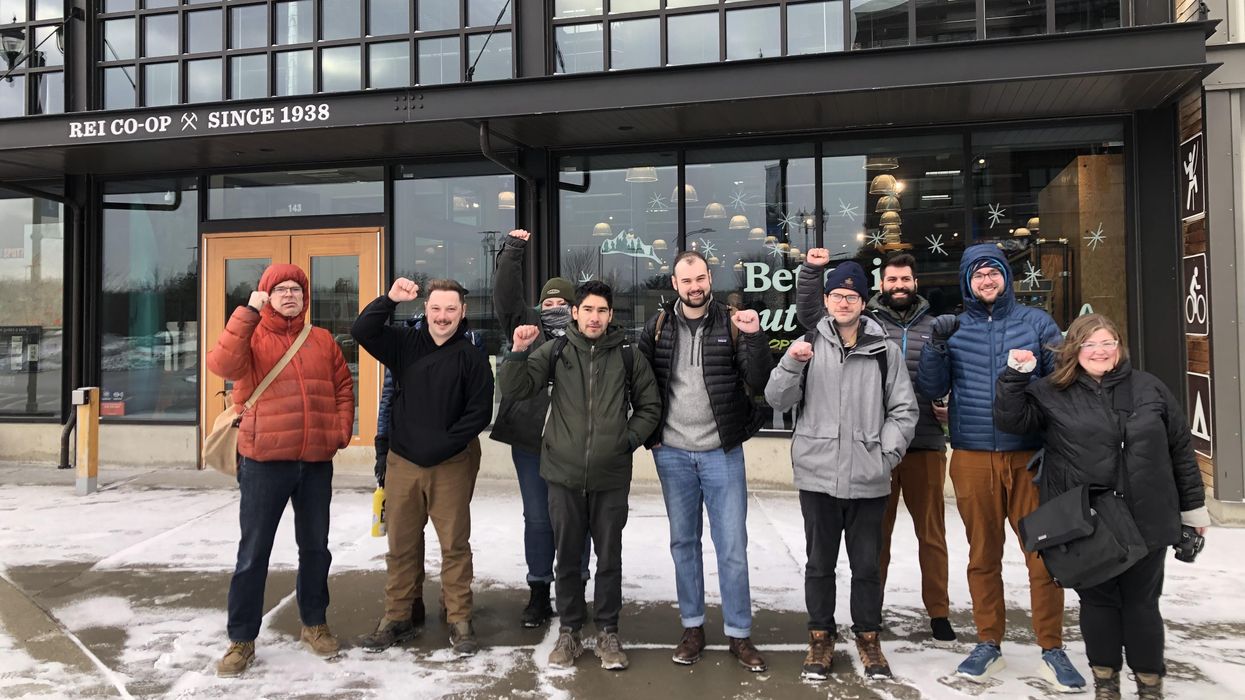
After REI employees in a suburb of Cleveland, Ohio walked off the job Friday morning, the recreational equipment retailer agreed to schedule a union election vote next month and stopped pushing to exclude certain workers.
Following successful union drives at two other REI stores, employees in Beachwood last month filed for a union election with National Labor Relations Board (NLRB) seeking representation with the Retail, Wholesale, and Department Store Union (RWDSU).
John Ginter, a sales associate at the Beachwood REI, told Cleveland-based Ideastream Public Media that he and his co-workers are seeking better working conditions.
"We are basically making demands that we have a livable wage, that we are able to live our lives outdoors, like REI's mission statement includes," he said. "So having a better work-life balance, being able to care for ourselves and to increase benefits for employees across the spectrum, whether or not they are part-time, full-time, whatever that situation would be."
According to the report: "Ginter alleged REI has some 'pretty rigid stipulations' with regard to which employees are eligible for benefits and accrual of sick time. He also said he believes his REI location is 'not living up to our diversity, equity, and inclusion statement.'"
Beachwood workers launched their brief unfair labor practice (ULP) strike Friday as an NLRB hearing got underway at the federal agency's Cleveland office.
In a ULP charge that RWDSU filed Thursday with the NLRB, the union claimed REI "engaged in the unlawful surveillance of workers and/or created an impression of surveillance of the workers at the Beachwood store."
RWDSU has also accused REI of putting forth "meritless assertions to delay the election" by claiming that sales leads, bike shop workers, and "casual" employees—or those who work part-time with irregular schedules—should not vote.
"RWDSU vehemently disagrees with REI's objections," the union said in a statement. "It is especially galling because, as the company unnecessarily fights RWDSU in Ohio, it is currently bargaining contracts with workers holding these same classifications at the SoHo, New York and Berkeley, California stores. REI's hypocrisy is union-busting plain and simple and is a meek attempt to exclude more than half of the proposed bargaining unit to be eligible to vote."
REI pushed back against RWDSU's characterization of its intentions in a Thursday statement to Axios, saying that the NLRB hearing was "to ensure that all employees who hold the right to vote are included in the voting process."
The agreement reached Friday includes all eligible workers at the location, "a reversal from REI's position last week," according to RWDSU. "The union election will take place on March 3, 2023 from 12:00 pm-6:00 pm ET at the Ohio store."
New York Times labor reporter Noam Scheiber tweeted Friday evening: "One thing I've learned covering labor over the past several years: Your labor rights are typically as robust as the power you and your co-workers can muster at the workplace. This case was a perfect example."
More Perfect Union similarly said, "Strikes work."
U.S. Sen. Sherrod Brown and Congresswoman Shontel Brown, Ohio Democrats who are not related, expressed solidarity with the REI workers in their state this week.
Others, from the REI union in SoHo to UNI Commerce to the AFL-CIO, have also publicly supported the Beachwood workers this week.
If the Ohio employees vote to form REI's third union nationwide, RWDSU would represent approximately 55 workers there—though RWDSU noted that "the store currently operates at a 60% staffing level of its full capacity, potentially increasing that number to over 70."
As the Beachwood workers prepare for next month's election, contract negotiations are underway in Berkeley, and 10 fired employees—including two bargaining team members—are accusing REI of retaliation, which the company denies.
Meanwhile, in Washington state on Tuesday, REI laid off 167 people, or 8% of headquarters workers. President and CEO Eric Artz said that "in the face of increasing uncertainty, we need to sharpen our focus on the most critical investments and areas of work to best serve our members and grow the co-op over the long term."
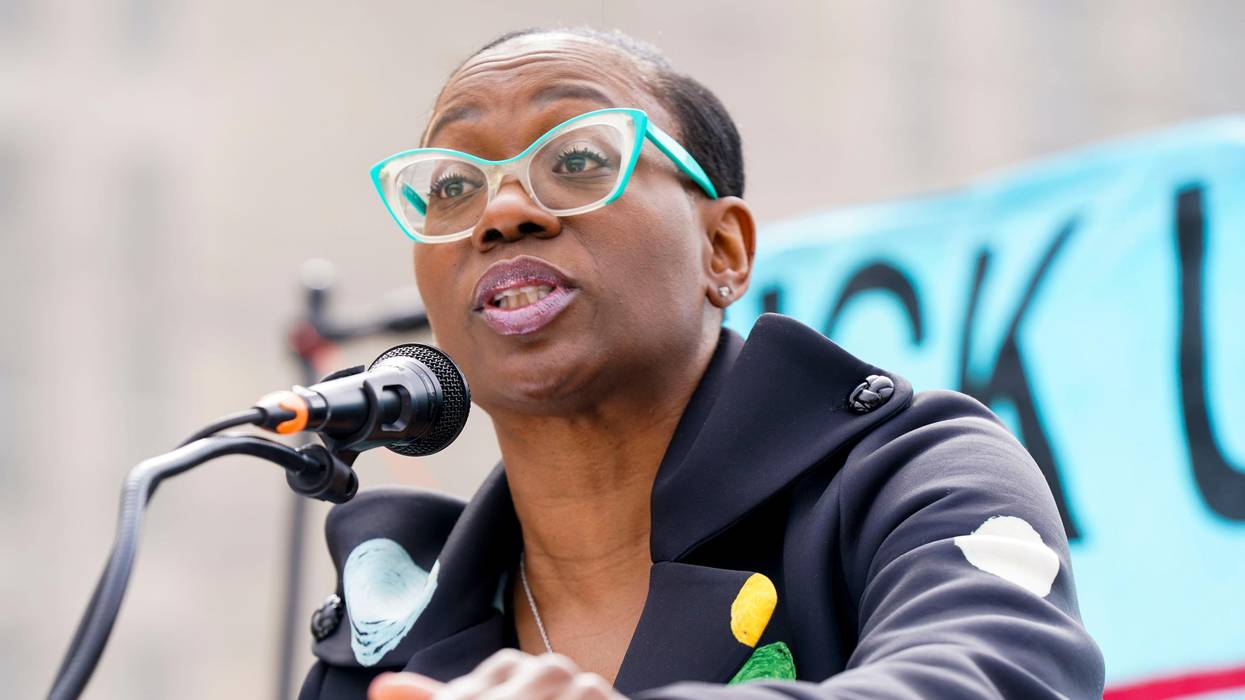
Rep. Shontel Brown, an establishment incumbent whose campaign was boosted by torrents of super PAC spending, handily defeated progressive champion Nina Turner on Tuesday in the Democratic primary for Ohio's 11th Congressional District.
Outside organizations spent heavily on Brown's behalf in the U.S. House race, a rematch of a heated special election that drew national attention less than a year ago. Tuesday's contest wasn't nearly as close as last year's: Brown prevailed this time around with just over 66% of the vote.
"This is another hard-fought victory," Brown said in a speech Tuesday night. "I'm going to continue to show up for you."
Turner's campaign, endorsed by Sen. Bernie Sanders (I-Vt.) and Rep. Alexandria Ocasio-Cortez (D-N.Y.), decried the influence of corporate money on the race, one of several contests nationwide in which special interests are spending heavily against progressive contenders.
"The reason special interests are committed to this election is because Shontel Brown relies on their money to stay in power," Kara Turrentine, Turner's campaign manager, said in a statement Tuesday.
Cleveland.com reported that the Democratic Majority for Israel's (DMFI) political action committee--which is bankrolled by an oil and gas heir--"spent more than $1 million to help Brown during this election, on top of [the] $2 million it spent during last year's special election."
Brown's campaign was also bolstered by more than $1 million in spending from Protect Our Future, a super PAC launched this year with the support of cryptocurrency billionaire Sam Bankman-Fried.
Additionally, as The Intercept's Akela Lacy noted late Tuesday, "United Democracy Project, an AIPAC political action committee, spent more than $280,000 on the race last month, including more than $198,800 on ads attacking Turner."
"How pathetic!" Sanders tweeted earlier this week. "AIPAC and their billionaire friends are spending some $10 million to defeat Nina Turner, Summer Lee, Nida Allam, and Jessica Cisneros. Why are they so afraid of strong, progressive women of color fighting for the working class?"
While Sanders and Ocasio-Cortez endorsed Turner in both the special election and Tuesday's rematch, other high-profile progressive lawmakers and advocacy groups stayed on the sidelines in the latter contest.
Rep. Pramila Jayapal (D-Wash.), the chair of the Congressional Progressive Caucus, endorsed Turner last year, as did the CPC's campaign arm--but the CPC's PAC supported Brown in the rematch, sparking backlash from progressives. Brown is a member of both the CPC and the corporate-friendly New Democrat Coalition.
"As a rule, [the CPC PAC] does not back primary challenges to its existing members of the caucus, which at 98 current members, including Brown, makes the body a formidable voting bloc," Politico reported Tuesday. "Jayapal... said there is a review underway for how the group considers endorsements, including a minimum length of service before determining if one is in good standing and signing onto a certain number of bills the group supports."
Justice Democrats, meanwhile, did not get involved in the rematch after endorsing Turner and raising money for her special election campaign last year.
"Nina is a giant in the progressive movement and we're proud to have gone all in for her campaign last year," the group said in a statement to The Intercept. "The reality is our organization has to be strategic about our priorities as we are getting massively outgunned by Republican donors funneling millions to super PACs like AIPAC and DMFI against our existing candidates."

Sometimes one decision speaks volumes. And so it was when the Congressional Progressive Caucus--with 98 members in the House--recently chose to have its PAC endorse a corporate "moderate" against the strong progressive candidate Nina Turner. In the process, the Progressive Caucus underscored its loyalty to establishment Democrats while damaging its credibility among progressives nationwide.
By siding with Brown against Turner, the Progressive Caucus appears to be operating like much of official Washington does--as an incumbent protection racket.
The endorsement of Congresswoman Shontel Brown against Turner in their upcoming May 3 rematch came just five months after Brown took office following last year's special election in a Cleveland area district. In last August's Democratic primary, Brown defeated Turner with the help of funding from big corporate, Republican and hawkishly pro-Israel donors--as well as support from Republicans who voted for Brown in Ohio's open primary. (Brown's two most notable national endorsers were Hillary Clinton and Rep. Jim Clyburn (D-S.C.).
Brown is such an establishment politician that she didn't just join the Progressive Caucus--she also quickly joined the rival New Democrat Coalition, an alliance of the most corporate Democrats in the House.
By siding with Brown against Turner, the Progressive Caucus appears to be operating like much of official Washington does--as an incumbent protection racket.
And the endorsement brought questions to the surface that have been festering for a long time. Such as:
Does the Progressive Caucus represent the interests of progressive constituencies to the establishment? Or does the Progressive Caucus represent the interests of the establishment to progressives? And if the answer is "both," then how does that work?
Unless such questions are answered with clarity, illusions will undermine the efforts of grassroots progressives to assess situations accurately and organize effectively.
While the endorsement of Brown is a bellwether event, it is not an isolated incident. After a long history of backing down rather than using its leverage (as when it abandoned its demand in 2009 that a "public option" be part of the Affordable Care Act), the Progressive Caucus appeared to wield some real clout during the early months of the Biden presidency. Most importantly, its leadership insisted that it would not back last year's bipartisan infrastructure bill unless it moved through Congress in tandem with the Build Back Better legislation proposed by President Biden with major input from Sen. Bernie Sanders.
Build Back Better was crucial for economic and social justice as well as for substantively addressing the climate emergency. And for a time, it seemed that the Progressive Caucus, under the leadership of Rep. Pramila Jayapal (D-Wash.), was holding firm onto the necessity of passing Build Back Better along with the infrastructure measure. Simultaneity was crucial because Senate obstructionist Joe Manchin of West Virginia badly wanted the infrastructure bill signed into law but was hostile to Build Back Better.
The Progressive Caucus leadership vowed to not back down. And then it caved, opting to wave the infrastructure bill through the House. Rep. Alexandria Ocasio-Cortez (D-N.Y.) was concise when she said: "I'm a No. This is bullshit."
Other members of the expanded Squad--including Reps. Ilhan Omar, Cori Bush, Rashida Tlaib, Jamaal Bowman, and Ayanna Pressley--also voted against the stand-alone infrastructure measure (and took plenty of abuse as a result).
Ocasio-Cortez, Omar, Bush, Tlaib, Bowman, and Pressley saw what was coming, as a result of the Progressive Caucus's surrender. The infrastructure bill got through Congress, and Biden signed it on November 15. Progressives immediately lost their leverage for Build Back Better. It died.
In December, RootsAction.org (which we co-founded) published an in-depth report on the Congressional Progressive Caucus, documenting that many of its members fail to support the CPC's main priorities (like Medicare for All and a Green New Deal) and that some in the caucus are just PINOs ("Progressive In Name Only"). Those lawmakers obviously believe the "progressive" label helps them with activists and constituents back in their districts, but in Washington they tend to legislate on behalf of the corporate status quo.
The PINO report found that "16 CPC members are also part of the ideologically corporatist New Democrat Coalition"--a "moderate" caucus that advocates "market-oriented" and "fiscally responsible" policies to solve the big economic and environmental crises of our time. Add Rep. Shontel Brown to this list of dual members. (When the CPC's PAC endorsed Brown this month, it also announced its endorsement of several of the worst PINOs running for re-election, including Rep. Jimmy Panetta of California.)
The report analyzed the lack of cohesion in the Progressive Caucus and cited that deficiency in asking how one of Congress' biggest caucuses did not muster the power to get Build Back Better across the finish line.
The Progressive Caucus leadership approach that gave up leverage for Build Back Better is akin to the one that just endorsed Shontel Brown against Nina Turner. Progressives around the country should take note and not forget: We can't depend on the Congressional Progressive Caucus to provide the kind of leadership we need. It must come from the grassroots.
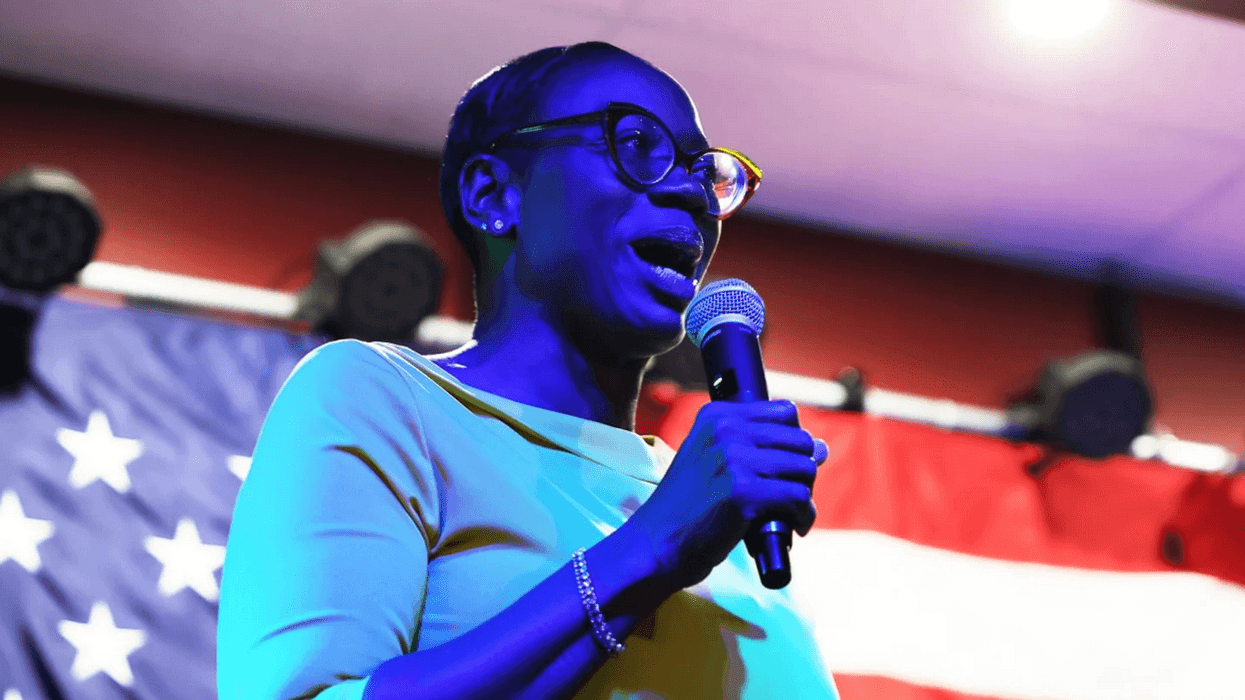
The race for a vacant congressional seat in northeast Ohio was a fierce battle between status quo politics and calls for social transformation. In the end, when votes were counted Tuesday night, transactional business-as-usual had won by almost 6 percent. But the victory of a corporate Democrat over a progressive firebrand did nothing to resolve the wide and deep disparity of visions at the Democratic Party's base nationwide.
One of the candidates--Shontel Brown, the victor--sounded much like Hillary Clinton, who endorsed her two months ago. Meanwhile, Nina Turner dwelled on the kind of themes we always hear from Bernie Sanders, whose 2020 presidential campaign she served as a national co-chair. And while Brown trumpeted her lockstep loyalty to Joe Biden, her progressive opponent was advocating remedies for vast income inequality and the dominance of inordinate wealth over the political system. Often, during the last days of the campaign, I heard Turner refer to structural injustices of what she called "class and caste."
If the Democratic Party establishment thinks the defeat of Turner has turned back the progressive upsurge, it's mistaken.
A major line of attack from Brown forces was that Turner had voted against the party platform as a delegate to the 2020 Democratic National Convention. Left unsaid was the fact that nearly one-quarter of all the convention delegates also voted 'no' on the platform, and for the same avowed reason--its failure to include a Medicare for All plank.
Scarcely mentioned in media coverage of this race is that Ohio has an "open primary," and Republicans received public encouragement to cross over and vote in the Democratic primary. We may never know how many GOP voters took the emphatic advice from the likes of right-winger William Kristol and voted for Brown to help beat Turner.
"Reminder: Tuesday's Democratic primary is effectively the general election, and all registered voters can vote in the Democratic primary," Kristol tweeted on July 29. "Just request a Democratic ballot." After sending out a similar tweet on Sunday, he got more explicit via Twitter at dawn on Election Day: "To Akron, Beachwood, Cleveland, Shaker Heights, etc.: Today's OH-11 primary is in effect the general election. The choice is a radical leftist or a Biden Democrat, @ShontelMBrown. Any registered voter--including independents & Republicans--can request a Democratic primary ballot."
Prominent Republicans didn't only pitch in with targeted messaging. Some GOP-aligned donors kicked in big bucks, such as Donald Trump's billionaire pal Robert Kraft, the owner of the New England Patriots in the NFL, who personally maxed out at $5,800 to Brown's campaign and whose family gave a total of more than $20,000.
Tacitly aligned with the Republican likes of Kristol and Kraft in zeal to boost Brown and defeat Turner was the leadership of the Congressional Black Caucus, augmented by House Majority Whip Jim Clyburn, the highest ranking African-American in Congress. Caucus leaders and Clyburn were busy traveling around Ohio's 11th Congressional District last weekend, singing Brown's praises and aiming darts at Turner.
President Biden is popular in the district, and Brown's forces were intent on framing the choice as pro-Biden or anti-Biden. Days ago, Cleveland's CBS affiliate reported that the race "has largely come down to Brown, who has positioned herself as the 'Biden candidate,' and Turner, who has enjoyed the support of Vermont Sen. Bernie Sanders." An NBC affiliate asserted that national media and outside groups had made the race "a contest between loyalty to President Biden's agenda and a more progressive wing of the party."
Turner's defeat is a victory for an array of wealthy individuals and corporations alarmed at her willingness to challenge such corporate powerhouses as Big Pharma, insurance firms and the fossil-fuel industry. The relentless and often defamatory advertising barrage against Turner was mainly funded by huge contributions from such vested interests to two outfits, Democratic Majority for Israel and Pro-Israel America, which placed the attack ads.
If the Democratic Party establishment thinks the defeat of Turner has turned back the progressive upsurge, it's mistaken. Just this week, successful organizing led by Congresswomen Cori Bush and Alexandria Ocasio-Cortez forced Biden's hand, pushing him to extend an eviction moratorium that otherwise would have expired. Bush, AOC and other strong progressives--including Jamaal Bowman, Ayanna Pressley, Rashida Tlaib, Ilhan Omar and Mondaire Jones--got to the House by winning Democratic primaries, often ousting entrenched corporate-friendly Democrats in the process. Next year, many Democratic incumbents will face potentially serious primary challenges from the left.
Turner's vigorous critiques of Biden, especially a crude one last summer, provided very useful fodder for ads attacking her. But foes didn't have much to say about the transformative policies that she champions.
A continuing political reality is that most voters are in favor of policy positions that progressives keep fighting for. In the Brown-Turner race, that reality was largely obscured as Turner's opponents relentlessly attacked her in personal terms, citing--and often twisting--her outspoken record of criticizing top Democratic Party leaders for failing to walk the walk of their platitudes.
Turner's vigorous critiques of Biden, especially a crude one last summer, provided very useful fodder for ads attacking her. But foes didn't have much to say about the transformative policies that she champions. Reporting on her defeat, Politico noted that "the moderate attacks against Turner did not take aim at the progressive proposals she supports, such as Medicare for All or a Green New Deal--an indication they are popular with the base."
In a statement released late Tuesday night, Turner looked ahead to the future of progressive populism, saying: "We will continue this journey until every working person earns a living wage, including passing a $15 minimum wage. We will continue this journey until every person has health care as a right and not a privilege. We will continue this journey until children's destinies are not determined by their zip code or the color of their skin. We will continue this journey until we have torn down racism, sexism, homophobia, religious bigotry and every kind of hatred and discrimination. We will continue this journey until justice is equal for every person in this country. And this journey will continue until we have ensured that this planet will be habitable for our children and our grandchildren. So, my friends, it is OK to be sad tonight. But tomorrow we must roll up our sleeves and continue the fight to which we are all committed."