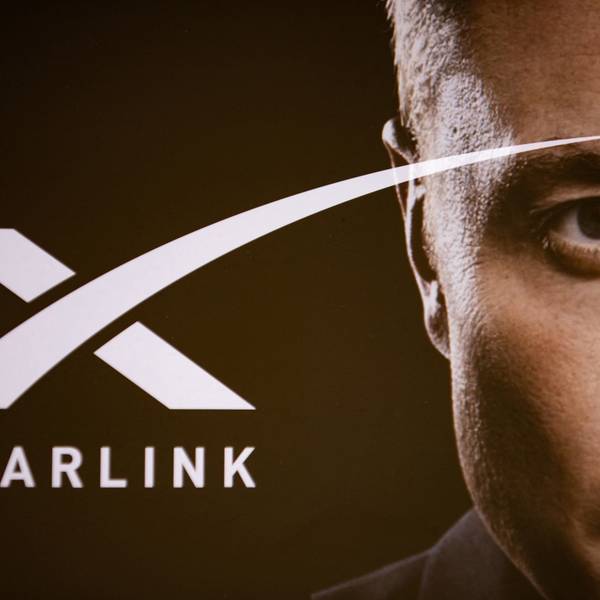

The Starlink logo is displayed on a mobile phone in this photo illustration in Brussels, Belgium on March 23, 2025.
Citing 'Considerable Red Flags,' Oversight Dems Probe White House Use of Musk's Starlink
Elon Musk's "dual position as the recipient of federal contracts and a White House adviser creates a troubling and obvious conflict of interest," wrote two Democratic members of the U.S. House Oversight Committee.
Two Democrats on the U.S. House Oversight Committee are seeking more information about the federal government's use of billionaire Elon Musk's Starlink, the satellite internet service operated by his company SpaceX, specifically at the White House complex and at the U.S. General Services Administration.
Reps. Gerry Connolly (D-Va.), the ranking member of the committee, and Shontel Brown (D-Ohio) are looking for proof that new usage of Starlink technologies is "secure and will not enrich Mr. Musk in violation of federal ethics rules," according to a letter they sent Monday to White House Chief of Staff Susie Wiles, White House Director of Office Administration Joshua Fisher, and Acting Administrator at GSA Stephen Ehikian.
The letter references March reporting from The New York Times, which stated that Starlink is now accessible across the White House campus, after Starlink "donated" the service. NBC News reported last month that GSA had adopted Starlink for its internet access at the request of Musk's staff, citing an unnamed source. Musk is also an adviser to U.S. President Donald Trump.
"Donations such as this raise considerable red flags as to whether Mr. Musk is using his position in the federal government to benefit his companies," wrote the two Democrats.
A journalist at ProPublica observed this reported donation of Starlink resembles a tactic used by another company, Microsoft, during the Biden administration: offering free trials to get government locked in to using their technology.
"It doesn't matter if it was Microsoft last year or Starlink today or another company tomorrow," Jessica Tillipman, associate dean for government procurement law studies at George Washington University Law School, told ProPublica. "Anytime you're doing this, it's a back door around the competition processes that ensure we have the best goods and services from the best vendors."
In their letter, the two Democrats also highlighted that Musk's dual role as head of Starlink and "apparent leader" of Trump's Department of Government Efficiency—which reporting indicates could soon come to a close—"raises significant ethical, security, and regulatory implications that warrant immediate attention."
What's more, his "dual position as the recipient of federal contracts and a White House adviser creates a troubling and obvious conflict of interest, raising the risk of undue influence and potential misuse of federal contracts for personal or corporate gain."
This is far from the first time that concerns around potential conflicts of interests regarding Musk's businesses and his role in the federal government have been raised.
Last month, a group of Democratic senators sent a letter to Attorney General Pam Bondi and acting Inspector General at the Transportation Department Mitch Behm demanding an investigation into whether Musk's activities at the U.S. Federal Aviation Administration (FAA) have violated the criminal conflict of interest statute, citing reporting that Musk's Starlink is involved in upgrading a crucial communication system at the FAA.
In their letter, Connolly and Brown said they are also concerned that the recent installation of Starlink at the White House raises potential cybersecurity and national security concerns.
The pair requested a list of information and documents from the White House and GSA, including all documents and communications relating to the legal or ethical implications of the White House and GSA using Starlink given Musk's role in the federal government, as well as documents and communications regarding any security assessments related to the use of Starlink.
We are at a crossroads
This country and this world are at a monumental crossroads. In a few short weeks, US voters will have an opportunity to beat back the forces of fascism and confront the billionaires who are rigging the economy, our media system, and our democracy, making it increasingly impossible for ordinary people to get by. We’re not just talking about the election. We’re talking about what must be done once these fascist elements are vanquished from power. We need a bolder set of solutions than what either major party has so far been willing to offer and a working-class movement ready to fight like hell for it. Trump didn't emerge from nowhere. The conditions that fueled MAGA authoritarianism were created by decades of radical neoliberal economic policies and a corrupt political system dominated by corporate interests. They slashed taxes on the super-rich, promising that the benefits would trickle down. They said giveaways to the corporate titans would make life more affordable for the rest of us. It was all bullshit. And when a bitter, betrayed populace searches for someone to blame, right-wing demagogues have little trouble finding scapegoats. People know when they're being lied to, but you won't hear any of this from the corporate media. Only independent journalism—powered and funded by people who believe in building a better world—can deliver truly trustworthy daily news. Our Fall Campaign is underway, and we need your help. To power our newsroom through the rest of the year, we need to raise $125,000 by midnight on October 31. So if you share our vision, please contribute whatever you can to sustain our work. |
Two Democrats on the U.S. House Oversight Committee are seeking more information about the federal government's use of billionaire Elon Musk's Starlink, the satellite internet service operated by his company SpaceX, specifically at the White House complex and at the U.S. General Services Administration.
Reps. Gerry Connolly (D-Va.), the ranking member of the committee, and Shontel Brown (D-Ohio) are looking for proof that new usage of Starlink technologies is "secure and will not enrich Mr. Musk in violation of federal ethics rules," according to a letter they sent Monday to White House Chief of Staff Susie Wiles, White House Director of Office Administration Joshua Fisher, and Acting Administrator at GSA Stephen Ehikian.
The letter references March reporting from The New York Times, which stated that Starlink is now accessible across the White House campus, after Starlink "donated" the service. NBC News reported last month that GSA had adopted Starlink for its internet access at the request of Musk's staff, citing an unnamed source. Musk is also an adviser to U.S. President Donald Trump.
"Donations such as this raise considerable red flags as to whether Mr. Musk is using his position in the federal government to benefit his companies," wrote the two Democrats.
A journalist at ProPublica observed this reported donation of Starlink resembles a tactic used by another company, Microsoft, during the Biden administration: offering free trials to get government locked in to using their technology.
"It doesn't matter if it was Microsoft last year or Starlink today or another company tomorrow," Jessica Tillipman, associate dean for government procurement law studies at George Washington University Law School, told ProPublica. "Anytime you're doing this, it's a back door around the competition processes that ensure we have the best goods and services from the best vendors."
In their letter, the two Democrats also highlighted that Musk's dual role as head of Starlink and "apparent leader" of Trump's Department of Government Efficiency—which reporting indicates could soon come to a close—"raises significant ethical, security, and regulatory implications that warrant immediate attention."
What's more, his "dual position as the recipient of federal contracts and a White House adviser creates a troubling and obvious conflict of interest, raising the risk of undue influence and potential misuse of federal contracts for personal or corporate gain."
This is far from the first time that concerns around potential conflicts of interests regarding Musk's businesses and his role in the federal government have been raised.
Last month, a group of Democratic senators sent a letter to Attorney General Pam Bondi and acting Inspector General at the Transportation Department Mitch Behm demanding an investigation into whether Musk's activities at the U.S. Federal Aviation Administration (FAA) have violated the criminal conflict of interest statute, citing reporting that Musk's Starlink is involved in upgrading a crucial communication system at the FAA.
In their letter, Connolly and Brown said they are also concerned that the recent installation of Starlink at the White House raises potential cybersecurity and national security concerns.
The pair requested a list of information and documents from the White House and GSA, including all documents and communications relating to the legal or ethical implications of the White House and GSA using Starlink given Musk's role in the federal government, as well as documents and communications regarding any security assessments related to the use of Starlink.
- How the GOP Spending Bill Would 'Hand a Blank Check to Elon Musk' ›
- House Dems: Musk Should Go Immediately But Must Exit Trump Post by May 30 | Common Dreams ›
- 'The Corruption Is Staggering': Trump Officials Push Tariffed Nations to Approve Musk's Starlink | Common Dreams ›
- Probe Demanded Into Trump's 'Crony Capitalism' in Favor of Musk | Common Dreams ›
Two Democrats on the U.S. House Oversight Committee are seeking more information about the federal government's use of billionaire Elon Musk's Starlink, the satellite internet service operated by his company SpaceX, specifically at the White House complex and at the U.S. General Services Administration.
Reps. Gerry Connolly (D-Va.), the ranking member of the committee, and Shontel Brown (D-Ohio) are looking for proof that new usage of Starlink technologies is "secure and will not enrich Mr. Musk in violation of federal ethics rules," according to a letter they sent Monday to White House Chief of Staff Susie Wiles, White House Director of Office Administration Joshua Fisher, and Acting Administrator at GSA Stephen Ehikian.
The letter references March reporting from The New York Times, which stated that Starlink is now accessible across the White House campus, after Starlink "donated" the service. NBC News reported last month that GSA had adopted Starlink for its internet access at the request of Musk's staff, citing an unnamed source. Musk is also an adviser to U.S. President Donald Trump.
"Donations such as this raise considerable red flags as to whether Mr. Musk is using his position in the federal government to benefit his companies," wrote the two Democrats.
A journalist at ProPublica observed this reported donation of Starlink resembles a tactic used by another company, Microsoft, during the Biden administration: offering free trials to get government locked in to using their technology.
"It doesn't matter if it was Microsoft last year or Starlink today or another company tomorrow," Jessica Tillipman, associate dean for government procurement law studies at George Washington University Law School, told ProPublica. "Anytime you're doing this, it's a back door around the competition processes that ensure we have the best goods and services from the best vendors."
In their letter, the two Democrats also highlighted that Musk's dual role as head of Starlink and "apparent leader" of Trump's Department of Government Efficiency—which reporting indicates could soon come to a close—"raises significant ethical, security, and regulatory implications that warrant immediate attention."
What's more, his "dual position as the recipient of federal contracts and a White House adviser creates a troubling and obvious conflict of interest, raising the risk of undue influence and potential misuse of federal contracts for personal or corporate gain."
This is far from the first time that concerns around potential conflicts of interests regarding Musk's businesses and his role in the federal government have been raised.
Last month, a group of Democratic senators sent a letter to Attorney General Pam Bondi and acting Inspector General at the Transportation Department Mitch Behm demanding an investigation into whether Musk's activities at the U.S. Federal Aviation Administration (FAA) have violated the criminal conflict of interest statute, citing reporting that Musk's Starlink is involved in upgrading a crucial communication system at the FAA.
In their letter, Connolly and Brown said they are also concerned that the recent installation of Starlink at the White House raises potential cybersecurity and national security concerns.
The pair requested a list of information and documents from the White House and GSA, including all documents and communications relating to the legal or ethical implications of the White House and GSA using Starlink given Musk's role in the federal government, as well as documents and communications regarding any security assessments related to the use of Starlink.
- How the GOP Spending Bill Would 'Hand a Blank Check to Elon Musk' ›
- House Dems: Musk Should Go Immediately But Must Exit Trump Post by May 30 | Common Dreams ›
- 'The Corruption Is Staggering': Trump Officials Push Tariffed Nations to Approve Musk's Starlink | Common Dreams ›
- Probe Demanded Into Trump's 'Crony Capitalism' in Favor of Musk | Common Dreams ›