

SUBSCRIBE TO OUR FREE NEWSLETTER
Daily news & progressive opinion—funded by the people, not the corporations—delivered straight to your inbox.
5
#000000
#FFFFFF
To donate by check, phone, or other method, see our More Ways to Give page.
Daily news & progressive opinion—funded by the people, not the corporations—delivered straight to your inbox.
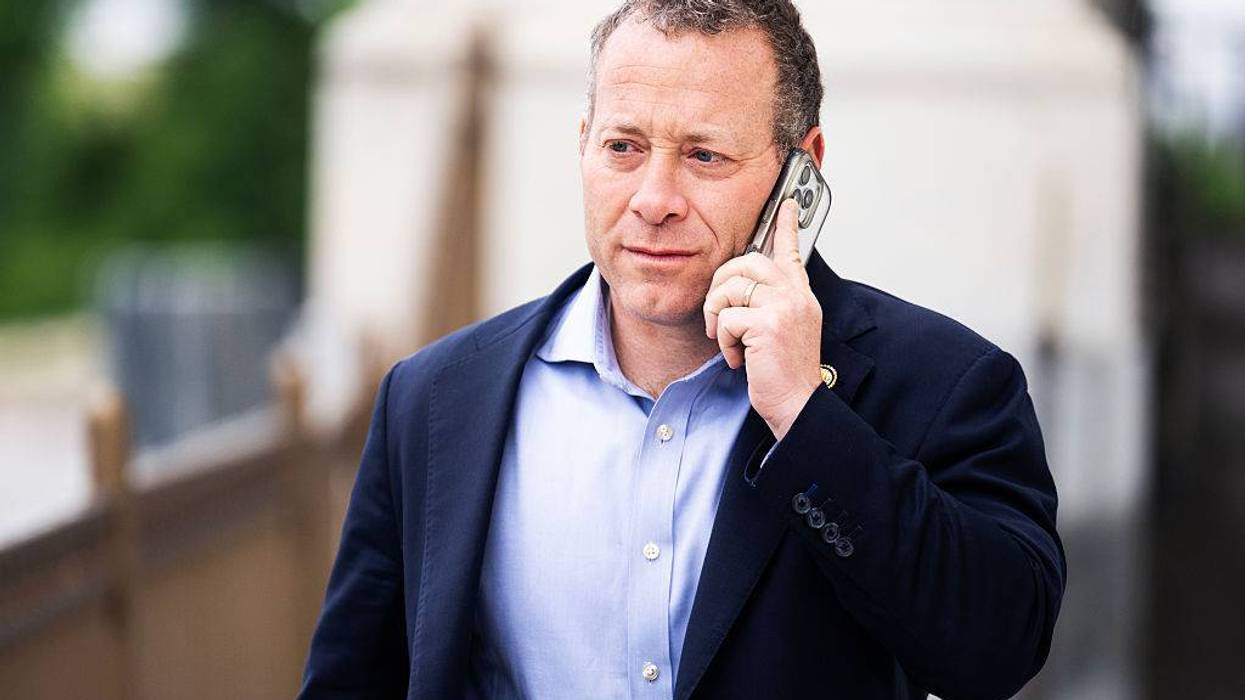
An investigation found that the anti-socialist group Promise to America has ties to a PAC funded by billionaires such as LinkedIn founder Reid Hoffman.
More than a dozen corporate Democrats last week responded to upstart progressive wins in primaries by pledging their support to a political manifesto called "Promise to America," which emphasizes support for capitalism, law enforcement, and "fiscal discipline."
A Thursday report published by Sludge about the Promise to America found that it "is closely tied to the Welcome Party, a group whose PAC has received more than half of its individual contributions from billionaires."
According to Sludge, the Promise to America appeared in public for the first time last month at Welcome Party's annual WelcomeFest conference, where it was signed by Reps. Tom Suozzi (D-NY) and Adam Gray (D-Calif.).
Other prominent Democrats who have signed the pledge include Reps. Josh Gottheimer (D-NJ), Vincente Gonzalez (D-Texas), and Don Davis (D-NC).
Although Sludge uncovered no evidence that Welcome Party is financially supporting the Promise to America, the manifesto's presence at the group's conference was notable given that billionaire donations account for more than 60% of the $10.8 million in donations that it has received over the last five years.
Major donors to the PAC include LinkedIn founder Reid Hoffman, who has donated a total of $1.8 million, and former 21st Century Fox CEO James Murdoch, who with his wife Kathryn has donated $2.5 million.
Other notable billionaires who have contributed to WelcomePAC include Bain Capital co-founder Joshua Bekenstein, former New York City Mayor Michael Bloomberg, and several members of the Walton family.
Sludge's investigation also found that "more billionaires may have donated to the Welcome Party’s two 'dark money' nonprofit arms, which do not disclose their donors publicly."
The Promise to America manifesto has drawn heavy criticism from progressives.
In a recent interview with political commentator Santita Jackson, Rep. Alexandria Ocasio-Cortez (D-NY) said that the corporate Democrats' pledge was a reactive document that lacked policy solutions to the problems facing Americans.
"Okay fine, if you’re against [democratic socialists], that’s okay. But what do you believe?" said Ocasio-Cortez. "And that I think is the core of the weaknesses from that wing at this moment. There’s no affirmative vision really coming from most places in the Democratic Party with the exception of democratic socialism."
Rep. Ro Khanna (D-Calif.) last week also challenged the corporate wing of the party in a speech on the floor of the US House of Representatives in which he defended the vision being laid out by progressive insurgents.
“The progressive movement is winning across the country, from the heart of New York to Michigan to Maine,” Khanna said. “The people are saying no to foreign wars and they’re saying no to genocide in Gaza. They’re saying no to the unfair and lopsided economy that has allowed a few people to hoard extreme wealth and power, and they’re saying yes to Medicare for All.”
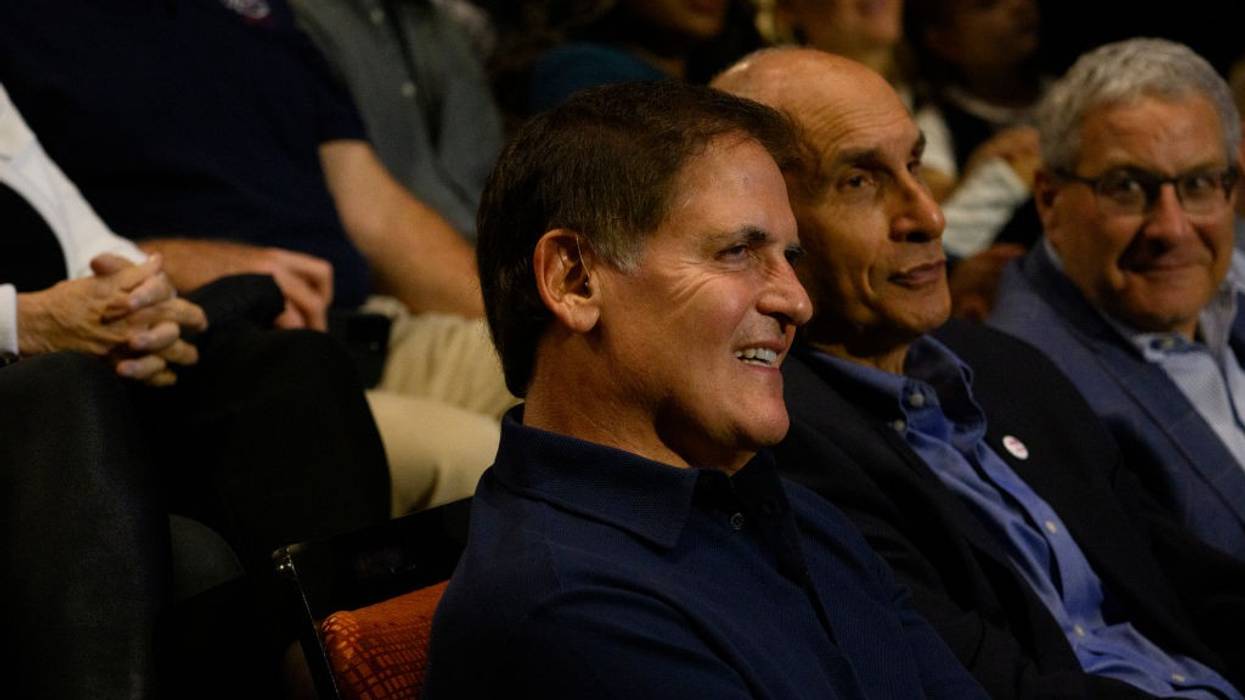
"By taking on corporate greed and illegal monopolies, [the FTC chair] is doing an exceptional job preventing large corporations from ripping-off consumers and exploiting workers," said the U.S. Senator from Vermont.
After billionaire entrepreneur and investor Mark Cuban this week said publicly that he would get rid of Federal Trade Commission chair Lina Khan if he had the chance, Sen. Bernie Sanders pushed back Tuesday by calling her the best person to hold the powerful regulatory post in a long time.
Speaking at a luncheon event hosted by the health policy news outlet KFF in California, Cuban—the outspoken billionaire known for his appearances on the television show Shark Tank and who has endorsed Democratic Vice President Kamala Harris for president—responded to a question about retaining Khan if Harris won November's election by saying, "If it was me, I wouldn't."
While Khan has been championed by progressives for her aggressive efforts to curb corporate greed and the relentless monopolistic consolidations that have harmed consumers and the broader economy, Cuban criticized her antitrust actions as counterproductive.
"By trying to break up the biggest tech companies, you risk our ability to be the best in artificial intelligence," Cuban claimed, according to reporting by Semafor. "The bigger picture," he added, is that Khan is "hurting more than she's helping."
Following Cuban's reported comments, Sanders—who recently traveled with Khan in Texas to talk with voters about the threat of corporate power and how the working class can better confront it—came to her defense.
"Mark Cuban is wrong," Sanders tweeted Tuesday night in response. "Lina Khan is the best FTC Chair in modern history."
"By taking on corporate greed and illegal monopolies," Sanders continued, the current FTC chair "is doing an exceptional job preventing large corporations from ripping-off consumers and exploiting workers."
Other progressives, including Rep. Alexandria Ocasio-Cortez (D-N.Y.) and Working Families Party national director Maurice Mitchell, also weighed in.
"Let me make this clear," Ocasio-Cortez declared Wednesday, "since billionaires have been trying to play footsie with the ticket: Anyone goes near Lina Khan and there will be an out and out brawl. And that is a promise. She proves this admin fights for working people. It would be terrible leadership to remove her."
Last month, Fortune reported that many "billionaire donors" of Harris' presidential campaign—including Cuban and Barry Diller, chairman of IAC—were lobbying behind the scenes to have Khan replaced if she takes the White House.
In July, Common Dreams noted the backlash many of these same billionaire donors—who also include LinkedIn founder Reid Hoffman and Netflix's Reed Hastings—received for going after Khan.
In an August column, progressive activist Jim Hightower warned about the billionaires within the Democratic coalition who had "knives out" for Khan.
"Khan is the first real antitrust champion America has had in years," wrote Hightower at the time. "But will leading Democrats have the guts and integrity to defend her? Or will the business-as-usual powers be ushered back in?"
In a statement from an unnamed spokesperson released to Semafor, the FTC responded to Cuban's remarks by saying Khan believes "extreme consolidation" of large companies is damaging to U.S. economic progress.
"Chair Khan believes choosing competition over centralized corporate control of markets is the path to letting the best ideas win," the spokesperson said.
Sanders concluded his Tuesday rebuke of Cuban by thanking Khan directly for "what you are doing."
Update: This piece has been updated from its original to include new public comment from Congresswoman Ocasio-Cortez.
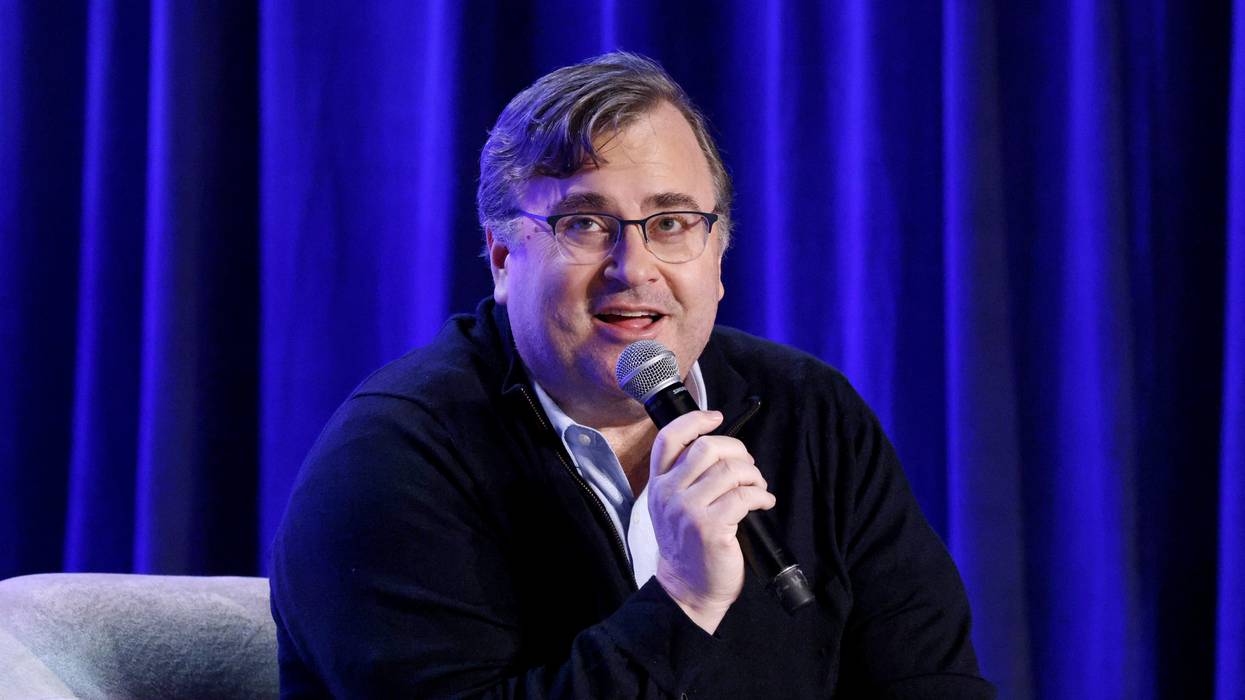
"I'm shocked, shocked, I tell you that Wall Street billionaires and Silicon Valley tech bros are trying to convince a presidential candidate to abandon her commitment to tax them," said the chair of the Patriotic Millionaires.
The United States' "paper of record" gave ultra-rich investors and corporate executives a platform on Thursday to sound off against Vice President Kamala Harris' support for a tax on unrealized capital gains, a popular proposal that has stirred howls of complaint from Silicon Valley elites whom Harris used to represent in the Senate.
The New York Times story—headlined "Donors Quietly Push Harris to Drop Tax on Ultrawealthy"—quotes billionaire investor Mark Cuban; Aaron Levie, CEO of the cloud storage firm Box; Charles Myers, the founder of Signum Global Advisors; and others who have backed Harris' presidential bid.
"In my interactions with them, the key is she focuses on her values and is not an ideologue about any particular program," Cuban told the Times, which described him as one of the donors close to Harris who doesn't "believe she is that committed" to taxing billionaire wealth.
"From what I've been told," said Cuban, "everything is on the table, nothing's been decided yet."
Levie, who has donated $30,000 to Harris' campaign, said Silicon Valley leaders he has spoken with about the proposed tax on unrealized capital gains see the idea as "quite punitive."
"There's optimism that this can't possibly be real," said Levie. "Most people are waiting to hear from the Harris campaign. Is this a real proposal that is actually being pushed for—or was this something that was inherited from Biden?"
"The only thing at stake here is the remarkably fragile egos of billionaires who are on the verge of realizing they might not be saving civilization for anyone, including themselves."
The Times noted Friday that a group of wealthy Harris supporters known as "VCs for Kamala" found in a survey of its members that "roughly 75% of respondents agreed with the statement 'taxing unrealized capital gains will stifle innovation.'" The group includes billionaire LinkedIn founder Reid Hoffman and billionaire investor Chris Sacca.
The Patriotic Millionaires, a group of rich Americans who support higher taxes on the wealthy, issued a statement Friday criticizing both the "whining" megadonors and the Times for handing them a megaphone to attack efforts to rein in billionaire tax dodging.
"I'm shocked, shocked, I tell you that Wall Street billionaires and Silicon Valley tech bros are trying to convince a presidential candidate to abandon her commitment to tax them, and using their own alleged brilliance to justify it," said Morris Pearl, the chair of the Patriotic Millionaires. "I admire their chutzpah in claiming that taxing unrealized capital gains will stifle innovation!"
"Claiming that making a billionaire pay taxes on their second billion will reduce innovation is as absurd as the rooster claiming the sun won't rise without his crowing," Pearl added. "The billionaires I know were all highly motivated to earn their first billion. The only thing at stake here is the remarkably fragile egos of billionaires who are on the verge of realizing they might not be saving civilization for anyone, including themselves."
The Patriotic Millionaires also suggested some adjustments to the Times headline:
Some (Silly/Misinformed) Donors Quietly (although not actually all that quietly; it was reported on the front page of the NYT after all) Push Harris to Drop (Modest Compared to What it Should Be) Tax on Ultra-Wealthy While Other (Much More Sensible and, yes, More Patriotic) Donors Loudly Push Billionaires to Drop Opposition to Common Sense.
The Harris campaign has voiced support for the tax proposals outlined in President Joe Biden's most recent budget blueprint, including a tax on the unrealized capital gains accumulated by individuals with net worths exceeding $100 million—a portion of the nation's upper class that contains fewer than 11,000 people.
Under the nation's current tax structure, billionaires are able to dodge taxes by never or rarely selling stock positions, which are not taxed until they are "realized."
Gabriel Zucman, an economics professor at the University of California, Berkeley and a leading advocate of a tax on billionaire wealth, has applauded the Harris campaign for embracing the proposed levy on the unrealized capital gains of the ultra-wealthy.
In a May op-ed in the Times, Zucman noted that U.S. billionaires paid a lower effective tax rate than working-class Americans for the first time in the nation's history in 2018.
"The idea that billionaires should pay a minimum amount of income tax is not a radical idea," Zucman wrote at the time. "What is radical is continuing to allow the wealthiest people in the world to pay a smaller percentage in income tax than nearly everybody else."
"In liberal democracies, a wave of political sentiment is building, focused on rooting out the inequality that corrodes societies," the economist added. "A coordinated minimum tax on the superrich will not fix capitalism. But it is a necessary first step."

"He's pushing her to go soft on corporate power, which is certainly not where voters are."
A billionaire megadonor's call for Vice President Kamala Harris to fire Federal Trade Commission Chair Lina Khan if the presumptive Democratic nominee wins in November drew swift backlash from progressives on Thursday, with Sen. Bernie Sanders citing the demand as yet another example of "why we have to overturn Citizens United and end big money in politics."
Reid Hoffman, the billionaire founder of LinkedIn and a major Democratic benefactor, told CNN that he believes Khan is "waging war on American business" and expressed hope that a President Harris would replace the FTC chair, who has used her position to aggressively fight corporate concentration that harms consumers and small businesses.
Watch Hoffman's interview:
Billionaire LinkedIn founder Reid Hoffman gave $7 million to the Harris campaign.
Then he went on TV demanding she fire FTC Chair Lina Khan, who leads the Biden admin in suing companies like Amazon, stopping megamergers, and protecting workers.
Harris must reject his demand. pic.twitter.com/gcw8bMA9us
— More Perfect Union (@MorePerfectUS) July 25, 2024
Faiz Shakir, an adviser to Sanders (I-Vt.) and founder of the progressive media outlet More Perfect Union, accused Hoffman of "purposefully trying to fracture and divide the Kamala Harris coalition that's needed to win."
"He's pushing her to go soft on corporate power, which is certainly not where voters are," Shakir wrote on social media. "But it is where the billionaire class is."
Nidhi Hegde of the American Economic Liberties Project added that Hoffman "clearly does not understand how Khan's work has been pro-worker and pro-business."
"The Biden-Harris record on competition speaks for itself," Hegde wrote. "Also, that's real arrogant to go on national TV and just tell a presidential nominee what to do. That's not how democracy works."
Hoffman had already given more than $8.6 million to organizations supporting President Joe Biden before he dropped out of the race over the weekend and endorsed Harris, who has swiftly taken over the campaign apparatus and consolidated support among Democratic lawmakers and donors as she prepares for a matchup against Republican nominee Donald Trump.
Trump is also backed by tech billionaires, including the richest man in the world.
Hoffman told CNN that he intends to continue injecting money into the presidential race in support of Harris, who is reportedly planning a "Silicon Valley fundraising swing" with the LinkedIn founder.
According to The Information, Hoffman convinced Netflix co-founder Reed Hastings to donate $7 million to a super PAC supporting Harris. CNBC reported Wednesday that efforts by Hoffman and other Silicon Valley moguls "are on track to raise over $100 million from major tech industry donors."
Progressives have raised concern about Harris' ties to and views about Big Tech. As The Financial Times noted Wednesday: "Harris has not yet articulated her antitrust policy. But in 2010, when Big Tech was not facing as fierce a pushback from Washington and the public over its alleged market abuses, she said: 'We cannot be shortsighted... We have to allow these [tech] businesses to develop and grow because that's where the models will be created."
Citing an unnamed "donor who has spoken privately" with Harris, The New York Times reported Wednesday that the vice president has "expressed skepticism of Ms. Khan's expansive view of antitrust powers."
Harris counts among her advisers attorney Karen Dunn, who helped defend Google earlier this year against an antitrust lawsuit brought by the U.S. Justice Department and a number of states—including Harris' home state of California.
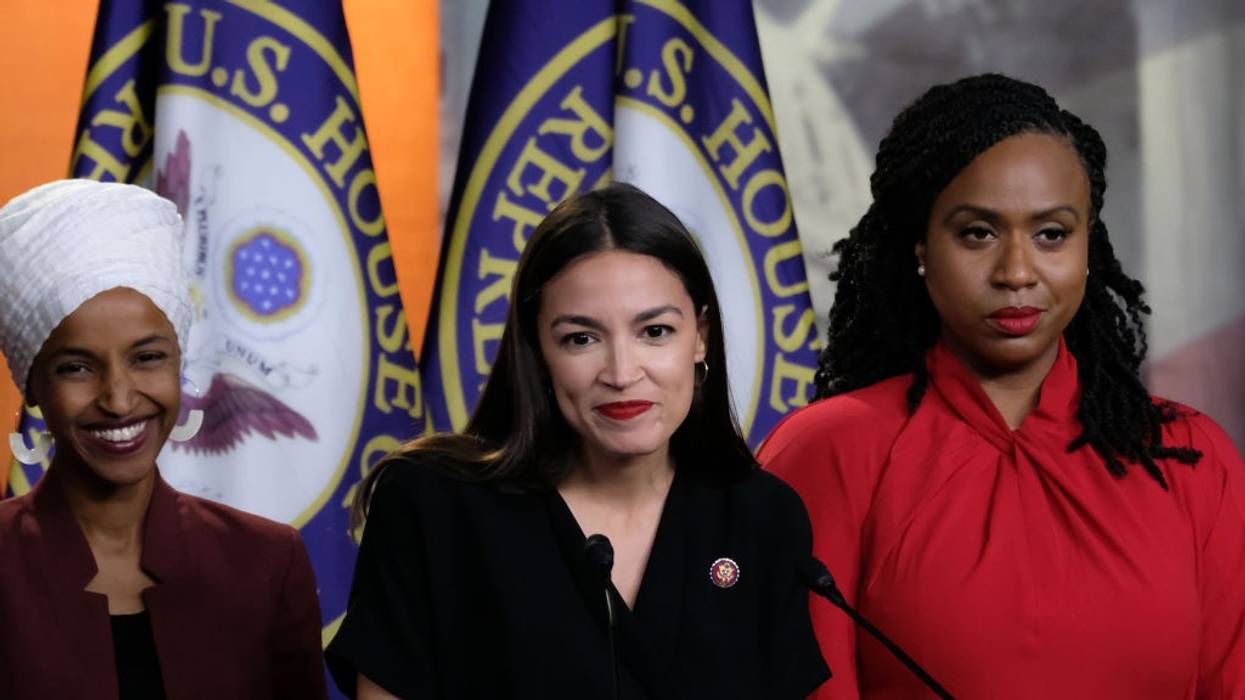
Several progressive members of Congress and organizations have endorsed U.S. Vice President Kamala Harris since President Joe Biden on Sunday exited the contest and expressed his support for her becoming the Democratic presidential nominee.
Three of the four original "Squad" members—Democratic Reps. Alexandria Ocasio-Cortez (N.Y.), Ilhan Omar (Minn.), and Ayanna Pressley (Mass.) swiftly backed the vice president to face former Republican President Donald Trump and his newly announced running mate, Sen. JD Vance (R-Ohio), in November.
" Kamala Harris will be the next president of the United States. I pledge my full support to ensure her victory in November," said Ocasio-Cortez, who had sounded the alarm about some Democrats' calls for Biden to step aside after his disastrous debate.
"Now more than ever, it is crucial that our party and country swiftly unite to defeat Donald Trump and the threat to American democracy," the congresswoman added. "Let's get to work."
Omar shared a pair of photos of her and the vice president on social media and said, "Thrilled to support Kamala Harris as our Democratic nominee and remain committed to working alongside her to defeat Donald Trump in November."
In addition to also posting a photo with Harris, Pressley spoke of her support for the vice president on MSNBC.
Unlike her colleagues, Rep. Rashida Tlaib (D-Mich.), the only Palestinian American in Congress and a leading critic of U.S. complicity in Israel's assault on the Gaza Strip, called for an open process at the Democratic National Convention (DNC) in Chicago, Illinois next month.
As The Detroit News reported:
Tlaib, who never endorsed Biden for president, in her statement said she looks forward to engaging with Harris as she tries to "inspire" the Democratic base in her district, saying she hopes this year's convention "makes the candidates move with their base."
"We are in unprecedented times but the demands of our constituents and people across the country remain the same: They want a president and government that is focused on saving lives, giving people the ability to thrive, and valuing the humanity of one another over bombs," Tlaib said.
"I support a transparent democratic process at an open convention next month, and hope there is a fair vote on the resolution at the DNC that calls for an arms embargo to stop the Israeli government's war crimes."
Rep. Jamaal Bowman's (D-N.Y.) criticism of the Israeli war made him a top target of the American Israel Public Affairs Committee (AIPAC), which helped Westchester County Executive George Latimer defeat the congressman in a democratic primary last month.
Although he is leaving Washington, D.C. at the end of his term, Bowman still weighed in on Harris, calling her "the most qualified and best choice to lead us forward."
Congresswoman Cori Bush (D-Mo.), who is facing an AIPAC-backed candidate in her primary next month, was the first Squad member to endorse Harris on Sunday, issuing a lengthy statement that said in part: "When we say trust Black women, we mean it. Black women are the backbone of the Democratic Party and it is past time for us to lead our country forward. Kamala Harris is more than ready to lead at this moment."
"As we look forward to November, it is clear to me that Vice President Kamala Harris has the vision to carry this legacy forward, defeat Donald Trump, and I unequivocally endorse her for president of the United States," added Bush. Harris would be the first Black and Asian woman on a major U.S. party presidential ticket.
Fellow Squad member Rep. Summer Lee (D-Pa.) also quickly backed Harris, saying: "We have no time to waste—what's at stake for communities like mine isn't abstract. We need to unify and move forward to defeat Trump and fascism in November. That's why I endorse and encourage unity behind Vice President Kamala Harris."
Harris also has support from Reps. Becca Balint (D-Vt.), Maxwell Alejandro Frost (D-Fla.), and Delia Ramirez (D-Ill.) as well as the Congressional Progressive Caucus (CPC) political action committee, which is co-chaired by Reps. Pramila Jayapal (D-Wash.), Mark Pocan (D-Wis.), and Jamie Raskin (D-Md.).
The three lawmakers all individually endorsed her and said in a joint statement:
A critical partner in the legislative wins of the last four years, Vice President Harris has demonstrated her ability to deliver on the urgent issues facing working people and marginalized communities. Under her leadership, this country has created a record number of jobs, boosted investments in housing and education, increased access to capital for underserved communities, erased medical debt, and forgiven more student loan debt than any administration in history. She has worked tirelessly to demonstrate her commitment to creating an economy in which every person has the freedom to thrive, traveling the country nonstop to hear directly from impacted communities.
Kamala Harris will defeat Donald Trump not only because she offers a stronger economic vision, but because she will defend the fundamental rights and freedoms that MAGA Republicans are attacking across the nation. As Republicans plot a right-wing takeover of our government with Project 2025, Kamala Harris is standing up for our nation's highest values of freedom, justice, and equality for all.
Other CPC leaders backing Harris include Democratic Reps. Greg Casar (Texas), Raúl Grijalva (Ariz.), and Barbara Lee (Calif.).
So far, more than 150 Democrats in the U.S. House of Representatives and over 30 in the Senate—including Democratic Sens. Ed Markey (Mass.), Jeff Merkley (Ore.), Alex Padilla (Calif.), Elizabeth Warren (Mass.), and Ron Wyden (Ore.)—have come out in support of Harris, according to a Newsweek tracker.
Notably missing from that list is Sen. Bernie Sanders (I-Vt.), who sought the Democratic presidential nomination in 2016 and 2000 and was in favor of Biden remaining in the race. After the president's Sunday announcement, Sanders released a short statement thanking him for his service.
Groups that have endorsed Harris include the American Federation of Teachers, End Citizens United, Gen-Z for Change, Human Rights Campaign, Indivisible, MoveOn, People's Action, Reproductive Freedom for All, Service Employees International Union, and United Farm Workers.
As of 9:00 pm ET Sunday, "grassroots supporters have raised $46.7 million through ActBlue following Vice President Kamala Harris' campaign launch," the Democratic fundraising platform said on social media. "This has been the biggest fundraising day of the 2024 cycle. Small-dollar donors are fired up and ready to take on this election."
Some deep-pocketed donors, including hedge fund billionaire George Soros and LinkedIn co-founder Reid Hoffman, are also behind Harris, according to Forbes. The outlet reported that the Biden-Harris—which amended its Federal Election Commission paperwork on Sunday—has $91 million.

In total, 9 out of the 25 donors who gave more than $900,000 to the Biden Victory Fund had either contributed funds to staunchly pro-Israel groups or made statements that showed a strong pro-Israel bias.
A New York Times poll released this week found that 13% of voters defecting from U.S. President Joe Biden, those who voted for him in 2020 but will not do so in November, cite his handling of foreign policy and Israel’s war in Gaza as the reason for pulling their support. But an investigation by Responsible Statecraft finds that those same policies likely benefit the president’s re-election campaign in a different way: his biggest funders happen to support them.
A review of campaign contributions, philanthropy, and public statements reveals that over one third of the president’s top tier funders—those giving in excess of $900,000 to the Biden Victory Fund—appear to see little nuance in the conflict and show overwhelming sympathy for Israel, at times verging into outright hostility to Palestinians and anti-Muslim bigotry.
That’s in sharp contrast with 13% of defecting 2020 Biden voters who say they won’t vote for the president’s reelection—a group that could tip the scales this November toward former President Donald Trump—only 17% of whom sympathize with Israel over the Palestinians.
Biden’s most important campaign funders appear to offer a very different coalition than those in the broader electorate: donors with a one-sided support for Israel even as it wages a brutal war in Gaza that’s incurring a steep political cost on Biden’s reelection effort.
“I think many Victory Fund members are in a bubble and out of touch with political reality, but they also seem indifferent to the suffering of over 1 million children in Gaza whose lives are treated by Netanyahu and Biden as worth far less than those of Israeli children,” said Amed Khan, a former Victory Fund donor who resigned in November over Biden’s handling of the war. “The American people see these policies as morally repugnant.”
Thus, Biden likely isn’t hearing those voices opposing Israel’s brutal war in Gaza at fundraisers with his top donors.
Take for example, billionaire Haim Saban, who contributed $929,599 to the Victory Fund. Saban also serves on the board of Friends of the Israel Defense Forces and contributed $1 million to the United Democracy Project, the independent expenditure arm of the American Israel Public Affairs Committee, or AIPAC, that runs ads supporting pro-Israel candidates and ads criticizing candidates deemed insufficiently supportive of Israel.
Last week, in an email to Biden apparently forwarded by an intermediary, Saban slammed the president’s decision to hold a weapons shipment to Israel, warning, “Let’s not forget that there are more Jewish voters, who care about Israel, than Muslims [sic] voters that care about Hamas,” suggesting that putting conditions on U.S. weapons transfers to Israel is akin to supporting Hamas.
Saban made his priorities clear in a 2004 New York Times interview, saying, "I'm a one-issue guy, and my issue is Israel.”
Saban’s wife, Cheryl Saban, also donated $929,600 to the Victory Fund, gave $2.18 million to Friends of the Israel Defense Forces in 2022 (a gift made alongside her husband), and cheered on pro-Israel provocateur Ben Shapiro’s statement that, “If Israel put down its guns tomorrow there would be a second holocaust. If the Palestinians put down their arms tomorrow there would be a Palestinian state.” “Bravo,” said Cheryl Saban last November.
Mobile gaming pioneer Mark Pincus offered even more blunt statements. Pincus, who contributed $929,600 to the Victory Fund, is outspoken on Israel on social media.
“Why do we only see pro palestinians [sic] in acts of violence? Why has this become an accepted form of protest,” he asked in a March 8 post on X.
“[T]heres [sic] no mention by nyt of baby beheading or Biden speech about it. [B]ut continued coverage of destruction in Gaza and Israeli military failures. [T]hey should rename as ‘the new hamas times,’” wrote Pincus in an October 11 post, referencing the claim, walked back by the White House on October 12, that Biden had seen photographic evidence of babies beheaded by Hamas on October 7.
LinkedIn co-founder and venture capitalist Reid Hoffman also has a history of praising elite Israel Defense Forces (IDF) units. At the 2022 Aspen Security Forum, Hoffman said the U.S. needed a “digital ROTC” and used the Israeli 8200 signal intelligence unit as an example of what was necessary. (As it turned out, the 8200 unit was not active on October 7 because it doesn’t operate on nights and weekends.)
Hoffman currently funds a “one-year full scholarship executive excellence program” that is “specially tailored for outstanding alumni of IDF Elite Units,” via the Hoffman Kofman Foundation.
Attorney and political pundit George Conway, who also contributed $929,600 to the Victory Fund, regularly posts pro-Israel commentary on X while expressing little concern for Palestinians and expresses skepticism about the organizing behind college protests against Israel’s actions.
Other donors were less vocal, but their recent philanthropy and political giving suggests a strong pro-Israel bent in their foreign policy views.
Real estate and casino magnate Neil Bluhm contributed $929,600 to the Victory Fund, $200,000 to the United Democracy Project, and $225,000 to the American Israel Education Foundation—the fundraising arms of AIPAC that arranges for congressional junkets to Israel, among other activities—via his family’s charitable foundation in 2022.
Entertainment and sports mogul Casey Wasserman donated $929,600 to the Victory Fund and $25,000 in 2022 to Israel Emergency Alliance (also known as Stand With Us), a pro-Israel group that works to oppose boycotts against Israel. Stand With Us, earlier this month in a press release, called for the resignation of Northwestern University president Michael Schill after he “announced a set of concessions to [student encampment protester] organizers Monday that included pledging to implement full-ride scholarships for Palestinian students and faculty positions for Palestinian academics.”
Pete Lowy, son of Australian-Israeli billionaire Frank Lowy, contributed $929,600 to the Victory Fund and maintains close ties to hawkish pro-Israel groups.
“Retail industry tycoon Peter Lowy inspired and delighted over 100 IAC Supporters at a donor reception toasting Israel’s 70th Independence Day on Tuesday, April 24,” read a 2018 press release from the Israeli-American Council, a group that describes itself as “wholeheartedly support[ing] the State of Israel.”
And until 2020, Lowy served as a senior vice president at the Washington Institute for Near East Policy (WINEP), a pro-Israel think tank formed by AIPAC.
Another Biden Victory Fund supporter, developer Eli Reinhard, who is listed as giving $1.84 million, also contributed $300,000 to WINEP and $50,000 to Friends of the IDF via his foundation in 2022.
In total, 9 out of the 25 donors who gave more than $900,000 to the Biden Victory Fund had either contributed funds to staunchly pro-Israel groups or made statements that showed a strong pro-Israel bias. Other donors were largely silent on the Israel-Gaza war or, like film director Steven Spielberg, have responded to the conflict by denouncing both antisemitism and anti-Muslim views.
The New York Times warned that, “yearning for change and discontent over the economy and the war in Gaza among young, Black, and Hispanic voters threaten to unravel the president’s Democratic coalition.” But Biden’s most important campaign funders appear to offer a very different coalition than those in the broader electorate: donors with a one-sided support for Israel even as it wages a brutal war in Gaza that’s incurring a steep political cost on Biden’s reelection effort.
The Sabans, Pincus, Hoffman, Conway, Bluhm, Wasserman, Lowy, and Reinhard did not respond to requests for comment.

Rashida Tlaib is pro-Palestinian. And that, apparently, is not okay.
Rashida Tlaib is a very controversial woman.
She is very outspoken—in her criticisms of Donald Trump (“Impeach the Motherfucker”) and her criticisms of U.S. foreign policy.
She is also very pro-Palestinian. Very.
This outrages many people, right-wing Republicans but also otherwise self-described liberal Democrats, many of whom are also Jewish-Americans.
Here’s the thing. Many of those Jewish-Americans are pro-Israeli. Very. They are indeed proud and outspoken Zionists. Some have children who serve in the IDF. Some are even admirers of Benjamin Netanyahu. They are now supporting Netanyahu’s government, which includes outspoken supporters of the violent expulsion of Palestinians and the seizure of their lands.
These Jewish-Americans are very pro-Israeli. And it seems like that’s okay. And it is. They have a right to their opinions.
But Rashida Tlaib is pro-Palestinian. And that, apparently, is not okay.
Did I mention that Tlaib is a Palestinian-American, indeed the only Palestinian-American in the 435-member House of Representatives?
Her mother was born on the West Bank and her father in East Jerusalem. Her elderly grandmother and other family members live in the West Bank village of Beit Ur al-Fauqa. This means that they experience Israeli Occupation and disenfranchisement daily. Let’s be frank: nothing about Zionism has been uplifting or empowering for her family and friends—nor was it intended to be.
Tlaib has denounced the Hamas killings of Israelis on October 7, but she also denounces the Israeli bombardment of Gaza that has killed perhaps nine thousand Palestinians. She says Palestinian lives matter too. She even says that the bombing campaign is “genocide”—a controversial and contested claim that is actually supported by a wide range of international lawyers and scholars of human rights, including Raz Segal, an Israeli Jewish expert on the Holocaust who thinks it is “a textbook case of genocide.”
Further, in a recent video that has received much hostile attention, she has committed the political sin of accusing President Biden of supporting genocide—every MAGA Republican says worse every day—and of including a scene of American pro-Palestinian protesters shouting “from the river to the sea.” The latter language is clearly incendiary. But it just as clearly has a range of meanings, as Yousef Mounayyer argued back in 2021 in Jewish Currents. And since there is no evidence that Tlaib advocates conquering Israeli Jews and driving them into the sea, her own explanation—that it is “an aspirational call for freedom, human rights, and peaceful coexistence”-- seems credible.
What Democratic Majority for Israel wants is not a Democratic majority but a Democratic Unanimity for Israel.
It is true, as Juliette Kayyem notes in The Atlantic, that “By amplifying a loaded slogan, the Michigan representative isn’t helping anyone’s cause.” Perhaps the posting of the video represents an instance of unwise rhetoric or poor political judgment—though Tlaib’s constituency is unique, and her outrage and passion at this moment is surely as valid as any supporter of Israel’s. I would agree that at this moment especially, she might do well—for her own sake and for the sake of her cause-- to avoid “loaded slogans” and focus more on the concrete injustices that she rightly challenges. But that is for her to decide. And Tlaib’s real “crime” is not the video; it is her consistent advocacy of Palestinian rights.
And so she is the object of derision, scorn, denunciation, and political attacks—and the recipient of regular death threats—that have now led to her being censured by a majority of her House colleagues.
MAGA Republicans like Marjorie Taylor-Greene call her a “terrorist.” (Florida Democratic Rep. Debbie Wasserman-Schultz said much the same thing last year.)
And liberal Democrats associated with a group called Democratic Majority for Israel, are running attack ads that say that she refuses to denounce Hamas murders and supports legislation to “rearm the terrorists,” and instructing Michigan voters to “tell Rashida Tlaib, she is on the wrong side of history and humanity.” The group’s leader, Mark Mellman, a major liberal Democratic pollster, has said that the group is not actively recruiting someone to run against Tlaib. But she is clearly facing calls to be “primaried,” and it has been reported by CNBC that a PAC funded by Linkedin co-founder Reid Hoffman is planning to fund a challenger.
None of these attacks are nefarious or illegal. People have the right to denounce politicians they don’t like and to oppose them or support candidates they do like.
At same time, the relentless and vitriolic attacks on Tlaib because of her stance on this one issue are deeply disturbing, and while they do not violate the letter of the law, they are in tension with its spirit, because they implicitly or explicitly attack two indispensable norms of pluralistic democracy that are often considered “guardrails” by supporters of democracy.
One norm is respect for the principled expression of differences of perspective and opinion when these are articulated openly as part of democratic public debate. The second is related—the principle of “representation” itself, the idea that a democracy requires the representation of constituent preferences and, broadly, the representation of diverse interests, and that competitive elections are good because they allow for broad representation.
Tlaib is a thrice-elected U.S. Congressperson who has been very clear about her views and quite obviously represents a constituency that contains a great many people—including many Arab-Americans—who either agree with her views or at least appreciate them and like that they are being given a hearing.
It is not simply that her views have “political validity” because her voters have affirmed them through democratic election and re-election.
It is also that her views represent a point of view that is the point of view of a great many American citizens, including but not limited to Arab-American or Muslim-American citizens, whether they live in Michigan or Minneapolis or Texas or North Carolina or Indiana or New York.
Democratic Majority for Israel, and other more explicitly hostile groups, such as AIPAC (American Israel Political Affairs Committee), are outraged that Tlaib cares as much about Palestinian people and their lives and freedoms—her people--as the many Jewish-American politicians who are supported by AIPAC care about Israeli Jews and their lives and freedoms.
Think about how arrogant that is.
And think about how anti-democratic in attitude it is.
The groups that are attacking Tlaib might claim to promote a “Democratic Majority for Israel.” But the obvious truth is that there is already a Democratic supermajority for Israel, a supermajority that includes every top Democratic leader including President Biden and his Secretary of State.
And then there is Rashida Tlaib, the lone Palestinian-American who, with Ilhan Omar and a handful of others, calls for a ceasefire and argues not that Hamas has anything to do with Palestinian freedom, but that Gazan lives are as important as Israeli lives, and Palestinian freedom is as important as Israeli freedom.
What Democratic Majority for Israel wants is not a Democratic majority but a Democratic Unanimity for Israel.
It considers even a few voices for Palestinians in Congress to be too “dangerous” to tolerate, and through its attacks it is trying to deny these few voices a hearing in the U.S. government and in the public sphere more broadly.
Back in 2016, when Donald Trump was elected president, the political philosopher Hannah Arendt, who passed away in 1975, became a best-selling author, because her 1951 classic, Origins of Totalitarianism, seemed to address exactly the situation facing liberal democrats in the U.S. and throughout Europe, explaining how and why disaffected individuals might be mobilized by leaders that prey on their fear and intensify their resentment.
Arendt argued that totalitarian politics was monologic, based on the idea that only one point of view was Correct and Acceptable. Totalitarianism brutally suppresses difference. But Arendt understood that monomania is dangerous even in its less brutal and oppressive forms. Indeed, she considered plurality the most important principle of a decent and free society, and dialogue and debate as the hallmarks of a decent politics.
What kind of liberal democracy can the United States be if there can be no room in Congress for the broadly Palestinian perspective that Rashida Tlaib, and she alone, represents?
“The power of judgment,” she wrote, “finds itself . . . in an anticipated communication with others with whom I know I must finally come to some agreement. From this potential agreement judgment derives its specific validity . . . It needs the special presence of others ‘in whose place’ it must think, whose perspectives it must take into consideration . . . . “
There is no question that Tlaib’s views, and her manner of expressing them, are challenging, alienating, even outrageous to a great many who consider themselves “pro-Israeli” and their friends.
But there is also no doubt that many “pro-Israeli” individuals hold and express views and use words (think “Judea and Samaria”) that are challenging, alienating, and outrageous to Tlaib and those for whom she speaks—and for many others as well.
What kind of liberal democracy can the United States be if there can be no room in Congress for the broadly Palestinian perspective that Rashida Tlaib, and she alone, represents? Must every single member of the House of Representatives be emphatically “pro-Israeli?”—and make no mistake, that is what is being demanded, that public figures approach the current Israel-Palestine conflict from the standpoint of Israel, and start and end every statement with an expression of solidarity with Israel.
If the answer is “yes,” than even those who believe themselves to be defenders of democracy do not know what they are doing—or they do know, and they are doing it anyway, which is worse.
We can only hope that some sense of political proportion and real political responsibility for democracy soon takes hold among the monomaniacs among us.
Groups like Democratic Majority for Israel have every legal right to do what they are doing.
But is it right?
Is it consistent with the need of U.S. foreign policy to truly understand a range of perspectives in the world?—and throughout the global South it is Rashida Tlaib’s views more than Debbie Wasserman Schultz’s that are respected, and with good reason.
And is it likely to strengthen American democracy, or to promote bitterness and recrimination, and weaken the broad Democratic coalition necessary to defeat Trumpism in 2024?
The answers to these questions seem pretty clear, and they are not heartening.
And we can only hope that some sense of political proportion and real political responsibility for democracy soon takes hold among the monomaniacs among us. For it surely is possible for people to advance their views without denouncing and politically defeating every individual who thinks otherwise.
Rashida Tlaib does not deserve to be demonized or censured. To shut her down is to silence an isolated and marginalized voice that deserves to be heard and that needs to be heard, especially now.

In a move already being denounced by progressives as "tone-deaf" and "literally the stupidest f------ idea" ever, tech billionaires Mark Pincus and Reid Hoffman have launched an initiative titled Win the Future (WTF) with the goal of bringing the Democratic Party back from the political wilderness.
"The weakness of the Democratic Party is not due to an underrepresentation of venture capitalists and tech company board members."
--Alex Lawson, Social Security Works
Recode's Tony Romm first reported on the billionaires' plans and lofty objectives, which include pushing Democrats to "rewire their philosophical core" and recruiting candidates to challenge Democratic incumbents. The recruits, according to Romm, will be called "WTF Democrats."
The tech moguls have "contributed $500,000 to their still-evolving project" so far, Romm notes, and they have been "aided by Jeffrey Katzenberg, a major Democratic donor and former chairman of Disney, as well as venture capitalists Fred Wilson and Sunil Paul."
Pincus, the co-founder of Zynga, signaled that the WTF platform will be "pro-social [and] pro-planet, but also pro-business and pro-economy."
"I'm fearful the Democratic Party is already moving too far to the left," Pincus said. "I want to push the Democratic Party to be more in touch with mainstream America, and on some issues, that's more left, and on some issues it might be more right."
Progressives reacted to the project--and to the comments of its founders--with a combination of scorn and dismay, portraying the effort as just the latest in a series of misguided attempts to push the Democratic Party rightward.
If the self-interested elites behind "Win the Future" want to be helpful, say critics, they should go save the Republican Party instead.
"It would be much more valuable for the world if sane, but conservative, self-protective rich people who are against bigotry and recognize that climate science is real became forces within the Republican Party and supported sane Republicans in primaries rather than water down the message of the Democratic Party and its commitment to economic equality and social justice," Jeff Hauser, director of the Revolving Door Project at the Center for Economic and Policy Research, told The Huffington Post.
Hauser concluded that the last thing the Democratic Party should be promoting is a coalition of candidates who are "regressive on corporate power."
Others similarly panned the billionaires' ambitions as yet another "centrist push" that runs counter to the prevailing agenda of the grassroots, which has of late ramped up calls for the Democratic Party to push aggressively for programs like Medicare for All and free public college tuition.
"Win the Future's technocratic bent seems to ignore the unexpected success of President Donald Trump and the competitive bid for the 2016 Democratic presidential nomination by Sen. Bernie Sanders (I-Vt.), both of whom ran populist campaigns against the reigning financial elite and the power it exerts in politics," noted The Huffington Post's Daniel Marans.
According to recent polls, most Americans believe that the Democratic Party is already out of touch, and many Democrats are not optimistic about their party's prospects. Tech billionaires, progressives argued, are the opposite of what the party needs.
"The weakness of the Democratic Party is not due to an underrepresentation of venture capitalists and tech company board members," concluded Alex Lawson, executive director of Social Security Works.