

SUBSCRIBE TO OUR FREE NEWSLETTER
Daily news & progressive opinion—funded by the people, not the corporations—delivered straight to your inbox.
5
#000000
#FFFFFF
To donate by check, phone, or other method, see our More Ways to Give page.
Daily news & progressive opinion—funded by the people, not the corporations—delivered straight to your inbox.
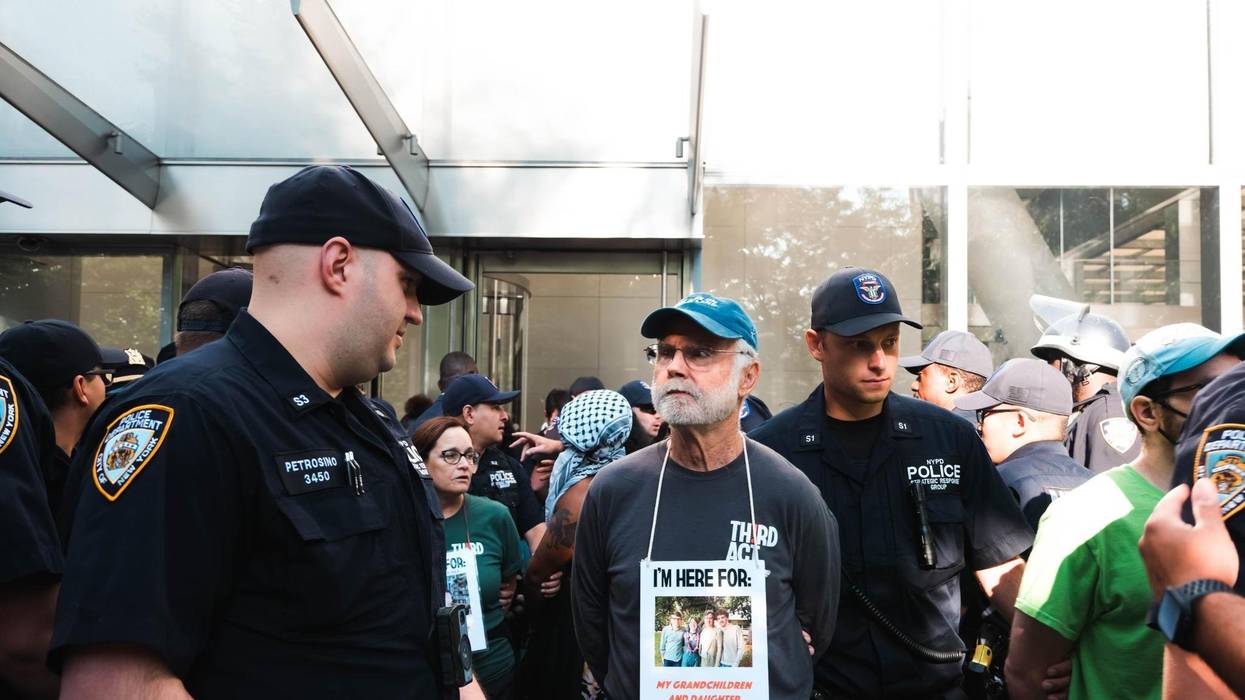
Wall Street giant responsible for massive funding of fossil fuels accused of "robbing our grandchildren's future."
The " Summer of Heat on Wall Street" protests continued Tuesday with at least 69 elders arrested while blocking Citibank's New York City headquarters to demand an end to the bank's financing of climate-wrecking fossil fuel projects.
"I'm here for my children and grandchildren," one woman explained as she was led away by a New York Police Department officer, wrists zip-tied behind her back. "I have kids and they need to live a better future!"
She was among several protesters who wore signs hanging from their necks that said "I'm here for:" followed by photos of loved ones.
BREAKING: NYPD arrests 29 grandparents at @Citibank HQ for demanding an end to Citi’s financing of oil, gas and coal projects.
“I have kids and they need to live a better future!” #SummerofHeat #CitiDropFossilFuels pic.twitter.com/j93mMl1YhS
— New York Communities for Change (@nychange) August 27, 2024
Bill McKibben, a 350.org co-founder arrested at a related action earlier this summer, welcomed Tuesday's protest on social media. Borrowing a phrase from Hip Hop Caucus' Rev. Lennox Yearwood Jr., he
declared, "Can't stop won't stop!"
"Old and bold!!" he added in response to footage of some arrests, also highlighting Third Act, his group for "Americans over the age of 60 determined to change the world for the better," which organized Tuesday's protest.
The Summer of Heat campaign was
initiated by a coalition that includes Climate Defenders, New York Communities for Change, Planet Over Profit, and Stop the Money Pipeline with support from more than 100 environmental and racial justice groups.
"Since the campaign launch on June 10, over 4,000 people have joined protests as part of the Summer of Heat," according to organizers. "And over 500 people have been arrested for engaging in nonviolent civil disobedience protests, urging banks like Citigroup to stop bankrolling new coal, oil, and gas."
Sharing a photo of one protester on social media Tuesday, Stop the Money Pipeline director Alec Connon said that "when I'm older I hope I will be like Pat, who was just arrested for blocking the doors to the headquarters of the world's largest funder of fossil fuel expansion since the Paris agreement. In a time of climate crisis, this is what real eldership looks like."
Tuesday's action in New York—which came as over 60 million people in the U.S. Midwest and Northeast faced heat advisories—followed a July demonstration in which Third Act members led a "funeral procession" near Citigroup's headquarters to honor elders who have died during recent dangerous heatwaves. That protest also led to arrests.
Other Summer of Heat actions targeting Citibank that resulted in arrests have been held by cello-playing grandfather, faith leaders, and mothers who gathered with their children outside bank CEO Jane Fraser's luxury apartment building.
This past weekend, over 30 self-described "climate feminists" were arrested in another demonstration outside Fraser's home, where they chanted: "Methane Jane, you can't hide. We charge you with ecocide."
More than 30 feminists sit down in the street in front of Methane Jane Fraser’s TriBeCa apartment. There’s nothing feminist about funding ecocide. pic.twitter.com/CtuQGWVaqh
— New York Communities for Change (@nychange) August 25, 2024
An annual report released in May showed that in 2023—the hottest year on record—the world's 60 biggest banks committed $705 billion to companies conducting business in fossil fuels, bringing the total since the Paris agreement to $6.9 trillion. Citi's totals were more than $30 billion last year and $396 billion overall.
This post has been updated to clarify when Bill McKibben was arrested and to include additional arrests after publication.
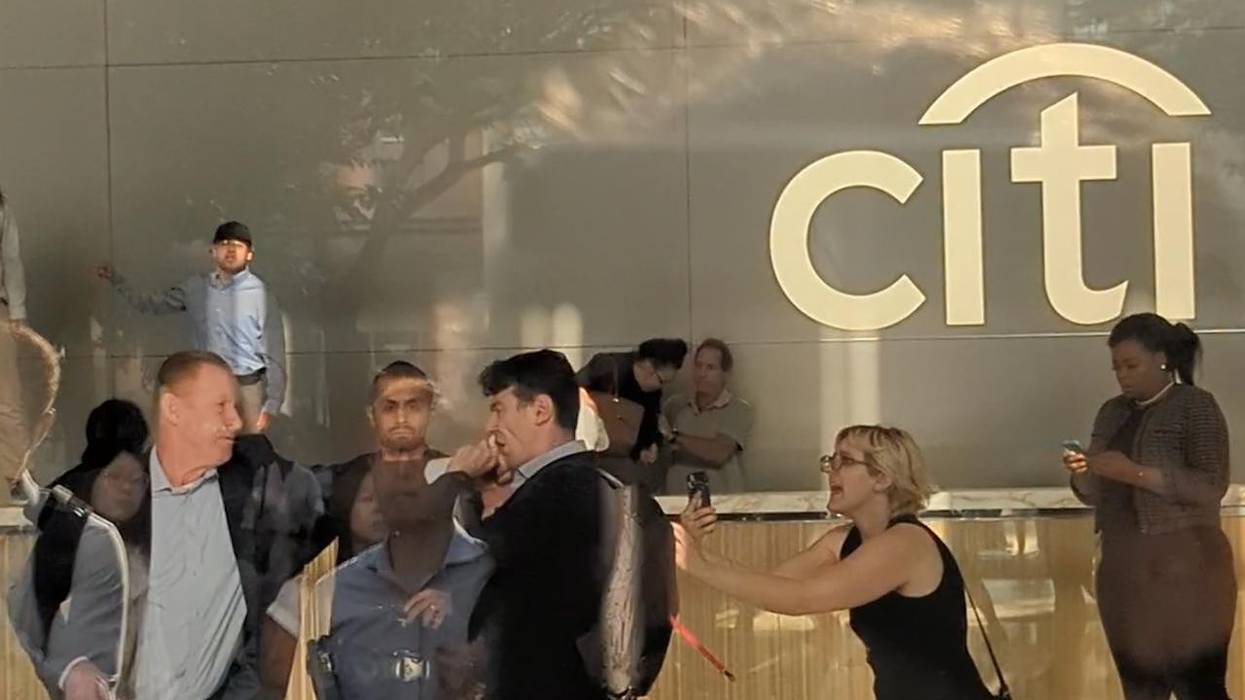
"Citi keeps proving their violent business is rooted in violent people," said the Planet Over Profit campaign.
A climate protester was taken to a hospital bleeding on Wednesday, according to organizers, after a security guard at Citibank's global headquarters in New York punched him in the face as campaigners assembled in the lobby of the building.
The climate advocate, Eren Can Illeri, was taking part in an action organized by Summer of Heat, which is supported by a coalition including New York Communities for Change, Planet Over Profit, and Stop the Money Pipeline.
Illeri was joining other campaigners in calling on Citibank executives to meet with them to discuss the bank's funding of fossil fuel projects. Citibank has invested $396.3 billion into coal, gas, and oil infrastructure projects since the Paris climate agreement was finalized in 2015, and Summer of Heat has made the bank its top target this summer as it demands Wall Street divest from the climate emergency.
"We have been asking Citi to meet with us for weeks to talk about what it can do to tackle the climate emergency," said Alicé Nascimento, a spokesperson for the Summer of Heat campaign. "But rather than meet with us, they have sent their security guards to physically attack peaceful climate activists after weeks of intimidation and threats."
Illeri appeared to be filming with a cellphone when the security staff member approached him and tried to grab the phone out of his hands, according to a video of the incident. The guard then punched Illeri in the face while holding the phone, and pushed him to the ground.
BREAKING: Citibank staff punches peaceful climate activist in the face for taking video. He was taken to the hospital bleeding.@Citi keeps proving their violent business is rooted in violent people. This can't go on. pic.twitter.com/E1KCwQ1dCY
— Planet Over Profit (@pop4climate) August 14, 2024
The violence displayed mirrors "the violence of fossil fuels and climate chaos," said Alice Hu, a climate campaigner for New York Communities for Change.
"Citi backs violence and it's sickening," she said.
Summer of Heat began on June 10, and since then more than 4,000 campaigners have joined protests to demand Citibank end its financing of fossil fuel projects.
More than 475 people have been arrested for protesting the bank's investments—including a cello-playing grandfather last week—and protesters last month reported being shoved by one of the bank's top lawyers.
"Citi keeps proving their violent business is rooted in violent people," said Planet Over Profit. "This can't go on."
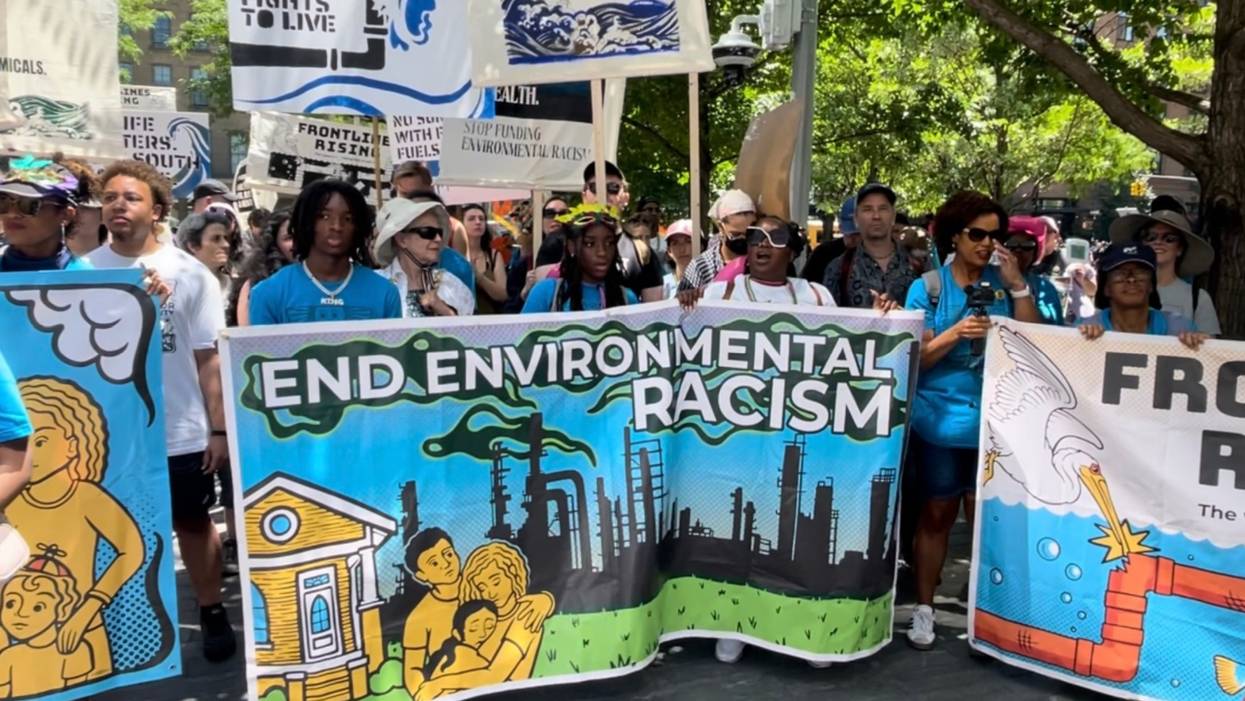
Scores of activists were arrested Friday during a protest outside Citigroup's New York City headquarters, where demonstrators condemned what organizers called the megabank's "racist investments devastating Black and brown communities" and fueling the worsening climate emergency.
Around 1,000 people including environmental leaders from the Gulf Coast of Texas and Louisiana gathered at Zuccotti Park in Lower Manhattan's Financial District, where they rallied before marching to "demand that Wall Street stop funding the fossil fuel projects causing environmental devastation in mostly Black and brown communities in the Gulf South and across the globe."
The march ended at Citigroup's headquarters on the west side of Lower Manhattan, where organizers from New York Communities for Change said 68 people were arrested. The group said a total of 259 activists have been arrested during ongoing Summer of Heat on Wall Street protests, which it organized along with Stop the Money Pipeline, Climate Defenders, and Planet Over Profit.
"On Monday, climate activists from the Gulf South and allies held a roving speak out in front of financial institutions backing the fossil fuel industry, including KKR, BlackRock, and Bank of America," New York Communities for Change said. "On Wednesday, protesters held a civil disobedience action in front of the insurance conglomerate Chubb, which insures petrochemical projects destroying the climate in the Gulf South and around the globe."
One of the protest's organizers, Roishetta Ozane—who founded the Vessel Project of Louisiana—said that "projects that kill our communities like Freeport LNG (liquefied natural gas), Cameron LNG, Corpus Christi LNG, and others would not exist without the backing of financial institutions like Citigroup."
"Money made from them is blood money," Ozane added. "Since they destroy our homes, we're coming to pay them a visit. We will break this cycle of violence and exploitation now because later is too late. We want Citigroup to stop funding fossil fuels and to stop hurting our communities and our families."
As Stop the Money Pipeline coordinator Alec Connon explained in an opinion piece published earlier this month by Common Dreams:
Since the adoption of the Paris agreement in 2015, Citi has provided $204.46 billion in financing to the company's most rapidly developing new coal, oil, and gas fields. Remarkably, Citi has provided more money to those oil and gas companies than even JPMorgan Chase―the bank that climate activists like to call the 'Doomsday Bank.'
To be clear, I'm talking here only about the financing Citi has provided for companies developing new oil and gas reserves, not merely investing in infrastructure to keep the oil pumping from existing reserves. When we take into account financing to all fossil fuel companies, Citi has provided a little shy of $400 billion to coal, oil, and gas companies since 2015.
Citigroup contends that it is "supporting the transition to a low-carbon economy through our net zero commitments and our $1 trillion sustainable finance goal," and that its "approach reflects the need to transition while also continuing to meet global energy needs."
However, Climate Defenders organizing director Marlena Fontes countered that "Citi's business model is frying our planet."
"Every credible climate scientist says that we can't afford to put one more penny into fossil fuels, but Citi is the number one funder of fossil fuel expansion in the world," Fontes added. "Until Citi stops funding fossil fuels, they can expect resistance from everyday people like us who want our children to be able to play outside without coughing on wildfire smoke or getting sick from deadly heatwaves."
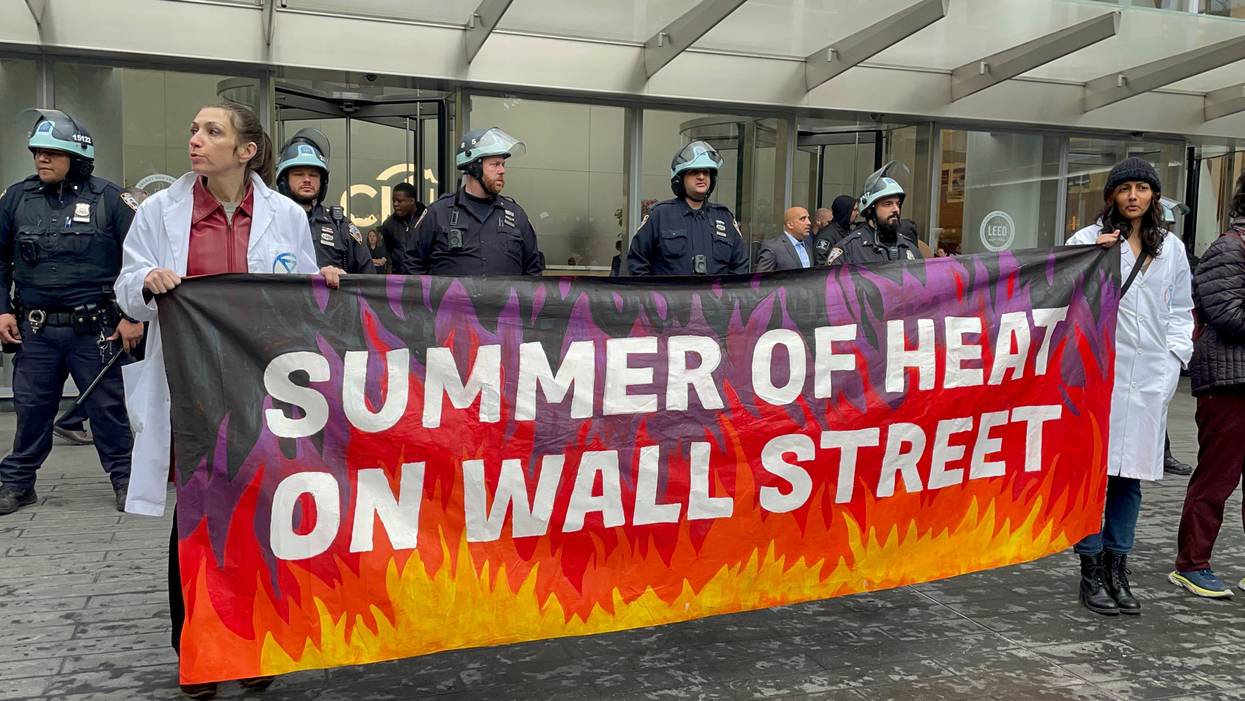
"Through people-powered resistance, we can give money a conscience and stop Citi's destruction of our planet," said one Indigenous campaigner.
Twenty more demonstrators were arrested Thursday, the second day of Earth Week protests targeting Citigroup's Manhattan headquarters in what organizers called "the beginning of a wave of direct actions to take place over the summer targeting big banks for creating climate chaos that is killing our communities and our planet."
Protest organizers—who include Climate Defenders, New York Communities for Change, Planet over Profit, and Stop the Money Pipeline—said 53 activists were arrested over two days of demonstrations, which included blocking the entrance to Citigroup's headquarters, to "demand that the bank stop funding fossil fuels."
Organizers said this week's demonstrations "were just the beginning" of what they're calling a "Summer of Heat" targeting big banks for their role in the climate emergency and for "polluting our land, air, and water, and threatening the health of children, families, and our planet." Citigroup is the world's second-largest fossil fuel financier.
"We're holding Citi accountable for financing dirty fossil fuels from Canada to Latin America and beyond," said Chief Na'moks of the Wet'suwet'en Nation, one of several Indigenous leaders who took part in the action. "Through people-powered resistance, we can give money a conscience and stop Citi's destruction of our planet."
Jonathan Westin, executive director of Climate Defenders, asserted that "Citigroup's racist funding of oil, coal, and gas is creating climate chaos that's devastating communities of color across the country."
"We're taking action to tell Citi that we won't put up with their environmental racism for one more day," Westin continued. "Our communities have reached the boiling point. Our children have asthma, our city's sky was orange, and our air polluted because of the climate crisis caused by Citi and Wall Street."
"We're going to keep organizing and taking direct action until Citi listens to us," he vowed.
Stop the Money Pipeline co-director Alec Connon said: "To have any chance of reigning in the climate crisis, we must stop investing in fossil fuel expansion. Yet, Citibank is pumping billions of dollars into new coal, oil, and gas projects."
"We're here to make it clear: If they're going to fund the companies disrupting our climate and our lives, we're going to disrupt their business," Connon added.
Activists have repeatedly targeted Citigroup in recent years as the megabank has pumped more than $300 billion into fossil fuel investments around the world since the Paris climate agreement.
According to the protest organizers:
Citi has provided $668 million in funding to Formosa Plastics between 2001-2021, which is trying to build a $9.4 billion plastics facility in a majority Black community in the heart of Cancer Alley in Louisiana.
Citigroup is also one of the biggest funders of state-run oil and gas companies in the Amazon basin, pumping in over $40 billion between 2016-2020, and a major backer of Petroperú, which has been involved in oil spills and Indigenous rights violations.
"From wildfires, heatwaves, and floods to deadly air pollution and mass drought, Citi's fossil fuel financing is killing us," said Alice Hu of New York Communities for Change. "We've sent polite petitions and had pleading meetings with bank representatives, but Citi refuses to stop pouring billions each year into coal, oil, and gas."
"That's why we're fighting for our lives now with the best tool we have left: mass, nonviolent disruptive civil disobedience," Hu added.

"We have no choice but to take direct action to put our bodies on the line because petitions, sign-waving, and chanting—we tried that for the past 50 years and it hasn't worked, and we're out of time," said one arrested activist.
Climate campaigners on Friday condemned the violent takedown of activists during a demonstration at the annual Jackson Hole Economic Policy Symposium in Wyoming, an elite gathering where U.S. Federal Reserve officials, central bankers from around the world, economists, and policymakers meet, mingle, and craft financial policies that critics say are exacerbating the planetary emergency.
Multiple videos posted on social media by the direct action group Climate Defiance show law enforcement officers slamming a pair of activists on a hard floor as they chant, "End fossil finance" at the conference, which is hosted by the Federal Reserve Bank of Kansas City. This year's theme is "Structural Shifts in the Global Economy."
One activist—25-year-old Teddy Ogborn of the group Planet Over Profit—was arrested, while other demonstrators were cited for criminal trespass, according to Eren Can Ileri, a policy advocate at the Stop the Money Pipeline coalition.
"I'm feeling a little sore but in pretty high spirits just thinking about the fact that someone has to be confronting these financial regulators who are actively choosing to fuel the climate crisis and burning the Rocky Mountains, where I'm from," Ogborn told Common Dreams.
"I am part of a global movement of young activists who see the world around us and know that progress is not being made fast enough on climate change," he continued. "People are climate laggards, they are climate delayists, they're climate deniers, and all that together means death in the near term for our futures and society as we know it."
"People want to do business as usual," Ogborn added. "Financial regulators have billionaire friends who want to watch the world burn from space. And so we have no choice but to take direct action to put our bodies on the line because petitions, sign-waving, and chanting—we tried that for the past 50 years and it hasn't worked, and we're out of time."
Ileri, who was also at the protest, told Common Dreams: "We tried to exert our democratic rights today. We tried to peacefully, nonviolently, and constructively engage the Federal Reserve on policy positions we believe are needed to save our futures. They showed us they were not open to conversation through their violence toward our activists but also by whisking the Fed chair away when we tried to approach him conversationally."
Federal Reserve Chair Jerome Powell once again took a hawkish stance during a speech in which he said that "although inflation has moved down from its peak—a welcome development—it remains too high," and that the Fed is "prepared to raise rates further if appropriate."
Powell did not address the climate emergency or the role central banks play in fueling it. Ileri asserted that "by isolating themselves from communities facing the real economy impacts of the climate crisis," Powell and other central bankers "are allowing themselves to define risk in a way that doesn't match the risks that normal Americans face on a day-to-day basis due to the climate breakdown."
Stop the Money Pipeline co-director and San Francisco Board of Supervisors candidate Jackie Fielder responded to the heavy-handed police tactics by telling Common Dreams that "it's absolutely horrendous how security and law enforcement would assault young climate activists who are simply calling out climate denialism at the Fed."
The direct action came as a coalition of more than 70 climate advocacy groups from around the world on Friday called on policymakers—especially in the banking and insurance sectors—to:
"Any symposium entitled 'Structural Shifts in the Global Economy' without a single mention of climate disasters and the billions they have cost everyday people and local economies should concern every American with a pension who agrees that climate change is here," Fielder said in a separate statement.
Akiksha Chatterji, lead campaigner at Positive Money U.S., a research and campaigning group "working to reimagine money, banks, and our economy for the well-being of people, communities, and the planet," said that "regulators are failing to act at the scale or pace necessary to curb the significant financial stability threats arising from climate change and fossil fuel financing."
"Rest assured, climate risks will materialize and we simply cannot quantify the precise nature and timing of these impacts as they are complex and ever-changing," she continued. "Emergency measures taken after a climate-driven financial crash may not suffice to contain such a meltdown."
"It's time," Chatterji added, "for the regulators and officials at this symposium to adopt a precautionary approach to climate and do their jobs before another financial crisis ensues."