

SUBSCRIBE TO OUR FREE NEWSLETTER
Daily news & progressive opinion—funded by the people, not the corporations—delivered straight to your inbox.
5
#000000
#FFFFFF
To donate by check, phone, or other method, see our More Ways to Give page.
Daily news & progressive opinion—funded by the people, not the corporations—delivered straight to your inbox.

Trump's warning to Oman over its negotiations with Iran comes as the closure of the Strait of Hormuz is once again putting upward pressure on petroleum prices.
President Donald Trump on Monday threatened to bomb a US ally in the Middle East if it gets in the way of a perpetually elusive deal with Iran to reopen the Strait of Hormuz.
Speaking with Fox News, Trump was asked about talks that Iran and Oman have been conducting about jointly overseeing operations of the strait, which has been shut down ever since Trump started an illegal war in late February.
Trump replied that "if Oman gets in the way" of reopening the strait, "we'll bomb the shit out of them."
.@POTUS on parallel talks between Iran and Oman on the Strait of Hormuz: "If Oman gets in the way, we'll bomb the shit out of them." pic.twitter.com/5dEXDOdAN4
— Rapid Response 47 (@RapidResponse47) August 17, 2026
It is unclear how effective Trump's threats against Oman will be, as the US military still hasn't forced Iran to reopen the strait even after burning through massive stocks of munitions—including what military sources have described to The Military Times as "virtually all" of its Army Tactical Missile Systems (ATACMS) and Precision Strike Missiles (PrSM).
As Trita Parsi of the Quincy Institute for Responsible Statecraft noted, the president previously threatened Oman when the country put forward proposals for a compromise on control of the strait.
Trump's warning to Oman comes as the closure of the strait is once again putting upward pressure on petroleum prices.
According to a Monday report from Reuters, data from maritime vessel tracking firm Kpler shows that "shipping appeared to grind to a near standstill" over the weekend, as only "five commodity vessels transited the strait on Saturday, with none registered for Sunday."
As Reuters noted, an average of 130 ships typically passed through the strait daily prior to the start of Trump's illegal war.
The price of Brent crude jumped over $89 per barrel during Monday trading, while data released by the American Automobile Association shows the average price of gas in the US now stands at $4.06 per gallon, up from $4.01 in the week prior.
The Wall Street Journal on Sunday reported that Iran believes that the war has been going so well that it has concocted a "secret plan" to escalate it, using the June ceasefire with the US to take time “to prepare for a bigger fight.”
"Arab intelligence officials have picked up evidence... of a strategic shift inside the country’s hard-line leadership to get their forces ready to widen the war and raise the costs for the US," the Journal reported. "Their overriding goal is to inflict enough pain to ensure the kind of attacks Iran has endured with the 12-day war last year and the continuing conflict aren’t repeated."
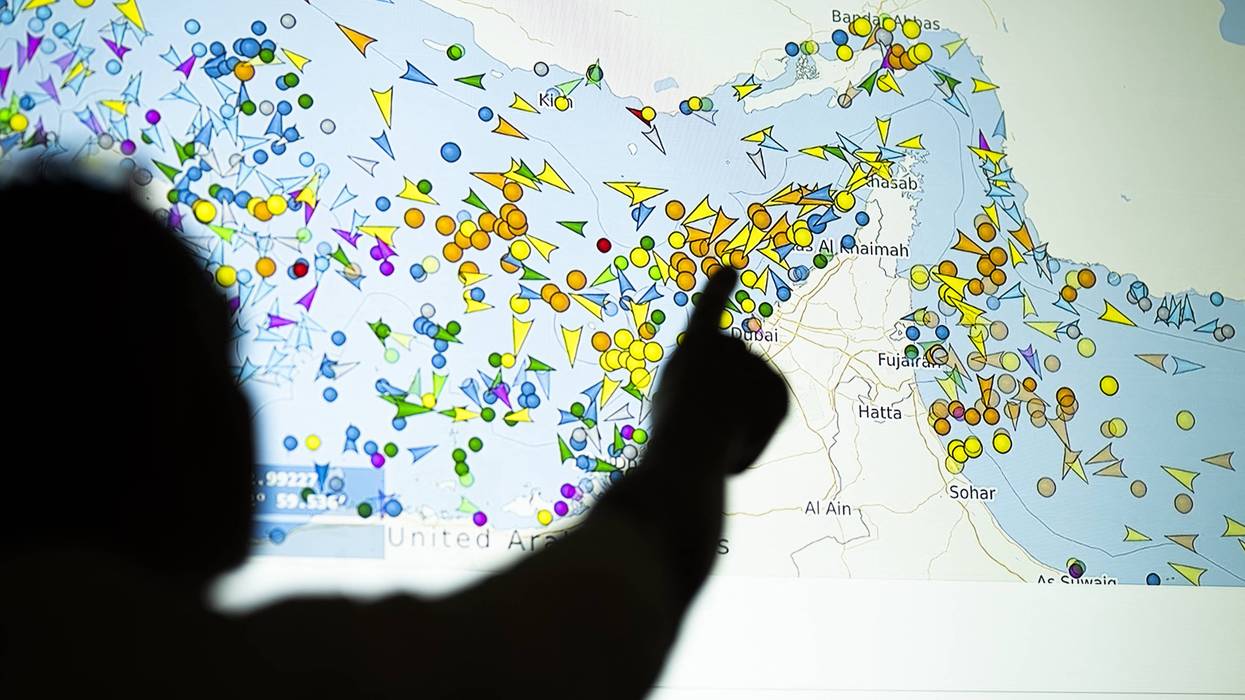
The Trump administration may not like paying for the privilege of using the strait, but its decision to go to war in the first place created the situation the United States is now in. Bad policies have unintended consequences.
In the weeks since the US-Iran Memorandum of Understanding collapsed, Washington and Tehran have used the time to strengthen their respective positions in the event negotiations resume.
For the United States, this has largely taken the form of overt threats by President Donald Trump himself and hints that an even more comprehensive US bombing campaign against Iranian strategic targets is on the table. For Iran, the strategy is familiar: ensure maritime traffic through the Strait of Hormuz is kept to an absolute minimum.
US and Iranian officials continue to give conflicting accounts of where negotiations stand. Despite Trump’s repeated declarations that Tehran is begging for a deal, the Iranians stress no talks are occurring with the United States. Still, both sides seem to agree that any pending agreement will center on the Strait of Hormuz, the strategic waterway that the Islamic Revolutionary Guard Corps has proved capable of shutting down at will.
Various schemes have been proposed between Iran and Oman, the two countries on either end of the strait. While a deal is not finalized, Iran will most certainly retain more power over the strait’s traffic than it did before the war began in February.
The question now is whether tolls or fees will accompany any arrangement worked out between Tehran and Muscat. The Trump administration is dead set against acceding to any fee structure because it would provide the Iranian government with additional revenue and represent visible proof that Trump’s preventive war was a strategic mistake. Referring to the Strait of Hormuz, Secretary of State Marco Rubio reiterated the US position in July: "If we create a precedent in the Middle East where a nation-state can decide that they are going to control an international waterway, charge a toll…we have created a very dangerous precedent which will repeat itself in other parts of the world.”
Of course, permitting an Iranian toll or fee structure isn’t ideal. Before the war, such a hypothetical would have been difficult to imagine. The strait at that time was free and open, and roughly 120 to 150 ships relied on the route each day to get their products to customers worldwide.
The United States wants Iran to return to this status quo. Yet Iran has no intention of doing so — and to expect otherwise is to be completely ignorant of how events have played out since.
Trump’s war handed Iran the perfect excuse to leverage its geography, and the Iranians didn’t hesitate to do so. Originally, Tehran’s shuttering of the strait aimed to increase the cost on Washington and eventually convince US partners in the region to pressure Trump into ending the war. But over time, the Strait of Hormuz, in addition to Iran’s more aggressive posture toward its neighbors writ-large, has become something far more valuable: a strategic card Iran can play whenever Trump threatens to accelerate military operations.
Re-opening the strait is now as important to the United States as containing Iran’s nuclear program, if not more so. The question is how to do it.
Trump originally tried to pursue this objective through military force, hoping US strikes could degrade Iran’s military capacity to such an extent that the IRGC would have to stop shooting at ships. The strategy overestimated the US military’s power to force a change in Tehran’s strategic calculus and underestimated Iran’s ability to manufacture and launch cheap drones and missiles at scale. Every US strike merely reaffirmed the Iranian government’s belief that the war was existential for them. Instead of capitulating, Iran fought back, targeting vessels that used the southerly route near Oman’s coast and making it clear that heavier US bombing would compel more Iranian attacks on Gulf energy infrastructure.
US military attempts to bring the strait back to its pre-February state have failed and will likely continue to fail. If the Trump administration seeks to extricate itself from a war without end, its best option is to accept a toll or fee structure in the regional chokepoint. Hawks on Capitol Hill would no doubt scream bloody murder, and some of Trump’s own political allies will have a difficult time explaining how such a scheme is appealing. But if the choice is between swallowing fees or endless conflict, then the former is the better option. The Trump administration may not like paying for the privilege of using the strait, but its decision to go to war in the first place created the situation the United States is now in. Bad policies have unintended consequences.
Fortunately, fees in the strait would not be the end of the world.
This wouldn’t be the first time a country located next to a critical trade chokepoint received some form of compensation. The most obvious case is the Strait of Malacca in Southeast Asia, where shipowners contribute to a voluntary fund, administered by Malaysia, Indonesia and Singapore, for navigational assistance, maritime safety, environmental protection and search and rescue. A similar arrangement in the Strait of Hormuz would thus not set a precedent. In fact, shipping companies and the insurance carriers that underwrite them might even view these voluntary payments as in their own interest if it helps prevent even costlier disasters or accidents.
There’s no use brushing the obvious under the rug: US acceptance of Iranian tolls or fees would be an embarrassing acknowledgment that Iran is now a principal arbiter of the strait. Moreover, depending on how high the fees are — Tehran is reportedly demanding 7% of the value of a ship’s cargo — the Iranians would be collecting revenue they wouldn’t have had prior to the war.
But even this scenario is not as dire as many assume. In practice, Iran’s leverage dissipates with every month that passes by. The Gulf Arab states are not sitting still and watching the new status quo helplessly. Rather, Tehran’s neighbors are increasingly adapting to Iran’s machinations by tapping into pipelines that bypass the strait altogether and exploring future projects that make their energy infrastructure more durable and less vulnerable to a single chokepoint.
Saudi Arabia is using its cross-country east-west pipeline to export more crude oil through the Red Sea. While this alternative route remains vulnerable to strikes by the Iran-aligned Houthis and doesn’t fully compensate for the loss of normal traffic in the Strait of Hormuz, it has still allowed the kingdom to avoid shutting down production entirely. Ditto the United Arab Emirates, which is sending more crude through its Fujairah export terminal, located outside the strait. Fujairah’s share of UAE exports increased to 66% in July from 51% a month earlier. Iran’s actions during the war will only reinforce Persian Gulf oil producers’ desire to diversify their routes, reducing Tehran’s ability to obstruct energy flows in the future.
Negotiations on reopening the Strait of Hormuz continue. If there comes a point where fees for passage are unavoidable, then US policymakers should keep a cool head. Ceding the point would be the most efficient way for the United States to remove itself from a foolish conflict at minimal cost.

"The 'no more foreign wars' president just threatened to attack yet another country," said one critic.
President Donald Trump on Wednesday threatened to "blow up" Oman if the US ally works with Iran to reopen and jointly manage the Strait of Hormuz.
Responding to reporting by Iranian state media that Iran and Oman were negotiating an agreement to jointly manage the Strait of Hormuz—through which around 20% of the world's oil was shipped before the illegal US-Israeli war of choice on Iran—Trump said that "nobody's gonna control" the vital waterway.
"We're gonna watch over it, but nobody's gonna control it," the president continued. "That's part of the negotiation that we have."
Donald Trump: "Oman will behave just like everybody else, or we'll have to blow them up."The "no more foreign wars" president just threatened to attack yet another country.
[image or embed]
— Home of the Brave (@ofthebraveusa.bsky.social) May 27, 2026 at 10:15 AM
"It's international waters, and Oman will behave just like everybody else, or we'll have to blow them up," Trump added. "They understand that; they'll be fine."
The US State Department posted a captioned video of Trump's remarks, removing all doubt about whether he indeed threatened an ally with which the United States has had a strategically important partnership for generations.
A defense cooperation agreement signed in 1980 allows US forces to use Omani military bases, including facilities used for logistics, surveillance, and regional operations. The two countries periodically hold joint military exercises and cooperate on counterterrorism and maritime security—especially regarding threats to Gulf shipping lanes.
The countries have also had a free trade agreement in effect since 2009, and the president's business organization is currently building Trump International Oman, a controversial $500 million luxury hotel, golf course, villa, and resort development near the capital, Muscat.
In which Biff forgets about the Trump golf course and hotel grift he is running in Oman
[image or embed]
— Tom Hearden (@followtheh.bsky.social) May 27, 2026 at 10:20 AM
Oman has also been a trusted mediator between the US and countries including Iran. Omani Foreign Minister Badr Albusaidi publicly said that a deal to avert the Iran War was "within our reach" as Trump ordered bombing to commence.
Trump's remarks suggested that US and Iranian negotiators are not as close to a deal to end the 88-day war—in which US and Israeli forces have killed thousands of Iranians and global energy prices have soared—as the president has claimed.
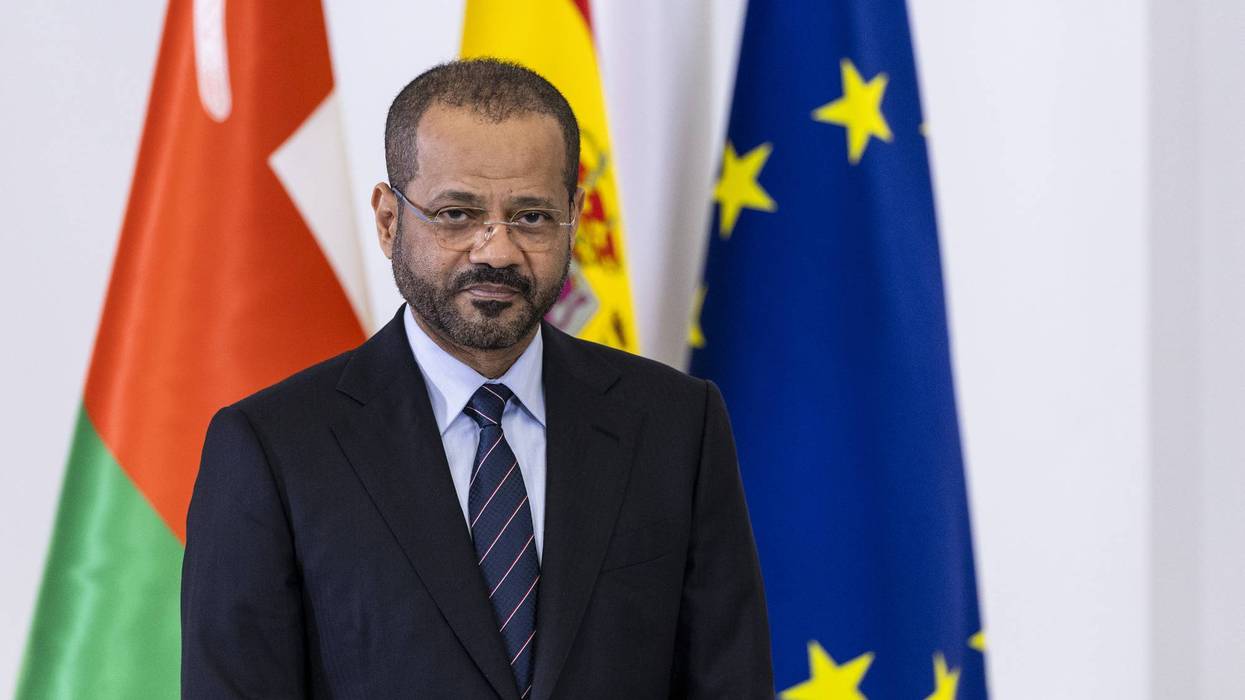
"The Omani FM decided to go public," suggested one observer, "so that the American people knew that peace was within reach when Trump instead opted for war."
Hours before President Donald Trump announced his decision to bomb Iran and pursue the overthrow of its government, the foreign minister of Oman appeared, in person, on one of the most prominent US television news programs to declare that a diplomatic breakthrough was possible.
"I can see that the peace deal is within our reach," Badr Albusaidi, the mediator of recent talks between the US and Iran, told "Face the Nation" host Margaret Brennan on Friday. "I'm asking to continue this process because we have already achieved quite a substantial progress in the direction of a deal. And the heart of this deal is very important, and I think we have captured that heart."
Pressed for specifics, Albusaidi said that Iran committed during the talks to renounce the possibility of amassing "nuclear material that will create a bomb"—a pledge that Trump claimed Iran refused to make as part of his justification for Saturday's strikes.
"This is something that is not in the old deal that was negotiated during President Obama's time," Albusaidi said, referring to the 2015 nuclear accord that Trump ditched during his first term in the White House. "This is something completely new. It really makes the enrichment argument less relevant, because now we are talking about zero stockpiling. And that is very, very important, because if you cannot stockpile material that is enriched, then there is no way you can actually create a bomb, whether you enrich or don't enrich. And I think this is really something that has been missed a lot by the media, and I want to clarify that from the standpoint of a mediator."
"There is no accumulation, so there would be zero accumulation, zero stockpiling, and full verification," the Omani foreign minister continued. "Full and comprehensive verification by the [International Atomic Energy Agency]."
In a social media post following the interview, Albusaidi reiterated that a deal "is now within reach" and implored all parties to "support the negotiators in closing the deal." Prior to Saturday's attacks, additional US-Iran talks were scheduled for next week.
Watch the full segment, which critics highlighted as evidence that the US-Israeli attacks on Saturday were aimed at forestalling a diplomatic resolution:
Trita Parsi, executive vice president of the US-based Quincy Institute for Responsible Statecraft, wrote in response to Albusaidi's remarks that "the Omanis are famously cautious."
"The Omani FM going on CBS to reveal what has actually been achieved in the negotiations is quite unprecedented. And what has been achieved is significant—Trump can indeed declare victory. Listen to this segment—it goes way beyond what Obama achieved," Parsi wrote. "But everything indicates that Trump won't take yes for an answer. That he will start a war of choice very soon."
"Which is probably why the Omani FM decided to go public," Parsi added. "So that the American people knew that peace was within reach when Trump instead opted for war."
According to one survey released earlier this month, just 21% of Americans support "the United States initiating an attack on Iran under the current circumstances."
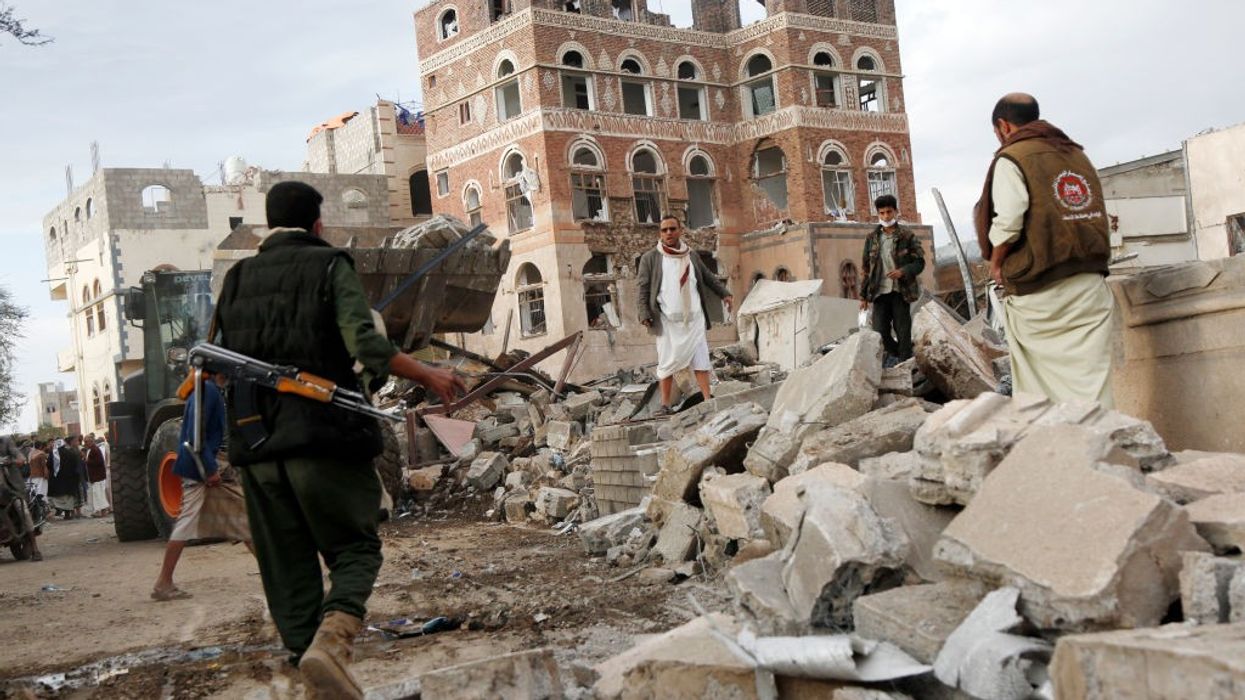
The U.S. president appears to be heeding Saudi wishes ahead of a visit to Riyadh, with a potential eye on negotiations with Iran as well.
Middle East Eye reports that Saudi Arabia pressured the Trump administration to cease bombing Yemen in advance of his planned trip to the Kingdom next week because such raids would be an embarrassment for him and his host. U.S. President Donald Trump said Tuesday that he was convinced that the Houthis were sincere in their new pledge to cease targeting shipping in the Red Sea.
The subtext here is that people in the region believe the U.S. is bombing an Arab country on behalf of Israeli shipping in the Red Sea and to protect Israel from repercussions for its Gaza genocide. Attacking the Houthis, who are not otherwise popular, on these grounds while Trump is in Riyadh would make it look like Saudi Arabia is also running interference for the government of Israeli Prime Minister Benjamin Netanyahu. The Houthi strategy of hitting out at Israeli interests has helped rally the people around them and lends them some regional popularity.
Both the Biden administration and the Trump administration have bombed Yemen in reaction to the Houthi targeting of Red Sea shipping and attacks on Israel in sympathy with the people of Gaza, against whom Israel has conducted serial atrocities.
MEE says that the Saudis have requested that Trump not bring up normalization with Israel on this trip, since Riyadh is determined not to recognize Israel until there is a firm prospect of a Palestinian state. Unlike the UAE and Bahrain, which did recognize Israel, Saudi Arabia has a fairly large population of citizens, most of whom would be extremely upset to see their king reward the Israelis for their Gaza atrocities by establishing diplomatic relations.
The Houthis do not appear to have made any pledge to cease targeting Israel with missiles, and the Israeli government was reportedly blindsided by the Trump move. Trump kept them out of the loop, much to their dismay. On Tuesday, Israel itself bombed Sanaa in retaliation for the Houthi missile attack Sunday on Ben Gurion Airport.
Oman’s foreign minister, Badr Albusaidi, confirmed the White House announcement of the cessation of hostilities. Oman has been a go-to mediator for conflicts in the region, and is helping negotiate a Trump deal with Iran.
A senior Houthi official, Politburo member Muhammad Ali al-Houthi, expressed cautious optimism, saying that the American pledge to halt bombing the small country on the southwest edge of the Arabian Peninsula would be “field tested.”
Both the Biden administration and the Trump administration have bombed Yemen in reaction to the Houthi targeting of Red Sea shipping and attacks on Israel in sympathy with the people of Gaza, against whom Israel has conducted serial atrocities. Trump alone has ordered 800 bombing raids on the desperately poor country. Yemen is the only Arab country to have reacted against the Israeli genocide of Palestinians in Gaza. Its methods, however, have involved war crimes, since it has attacked civilian container ships, most of them not actually connected to Israel, and has attacked civilian targets in Israel—or has been unable to control its missiles, endangering civilian life—which is a war crime.
Former National Security adviser to the Iranian parliament, Heshmetollah Felahat, said Tuesday that the cessation of U.S. bombing of Yemen was connected to U.S.-Iran negotiations and was a way for Trump to block attempts of Netanyahu to draw the U.S. into war with Iran. He said that the chances of successful U.S.-Iran negotiations just went up.
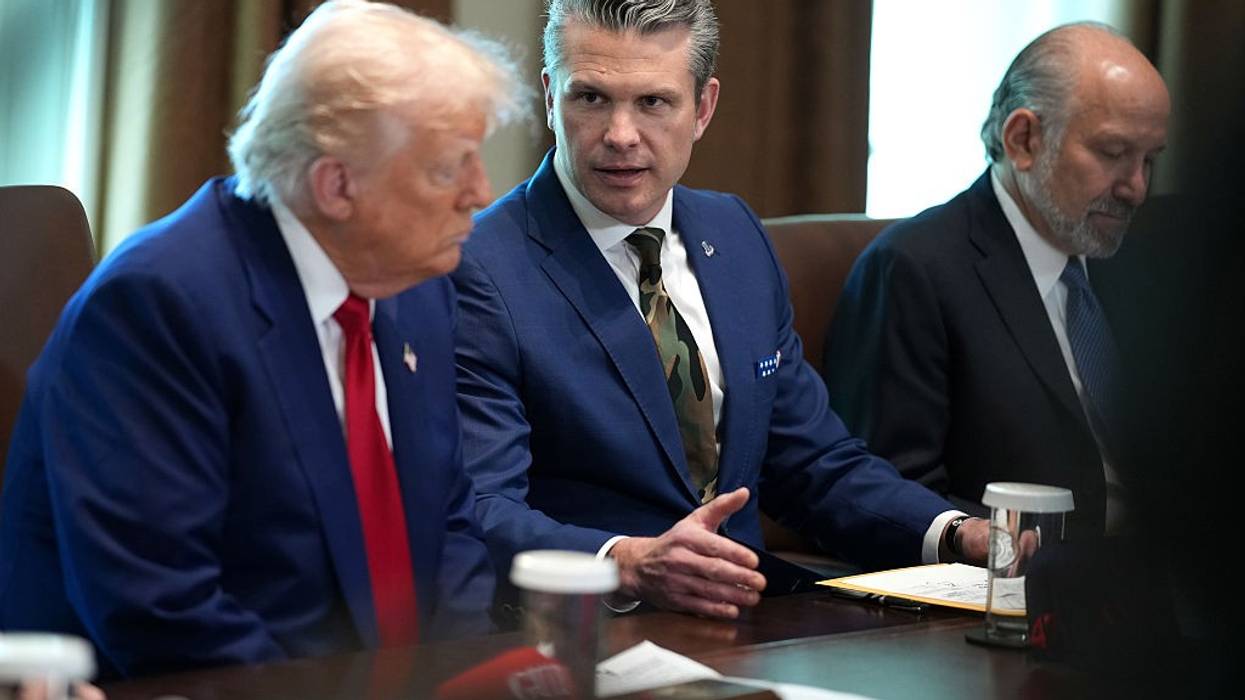
"With sufficient will, the negotiations can reach the finish line and avert the risks of a disastrous war and Iranian weaponization of its nuclear program," said the National Iranian American Council's policy director.
Omani Foreign Minister Badr al-Busaidi announced on social media Thursday that a fourth round of U.S.-Iran nuclear talks planned for this coming weekend has been postponed—just hours after U.S. Defense Secretary Pete Hegseth publicly threatened Iran.
However, al-Busaidi, who has mediated the previous rounds of negotiations, did not address the U.S. threat. He claimed on social media that the delay was due to "logistical reasons" and "new dates will be announced when mutually agreed."
As The Associated Press reported:
Iran's Foreign Ministry spokesperson Esmail Baghaei issued a statement describing the talks as being "postponed at the request of Oman's foreign minister." He said Iran remains committed to reaching "a fair and lasting agreement."
Meanwhile, a person familiar with the U.S. negotiators said that America "had never confirmed its participation" in a fourth round of talks in Rome. However, the person said the U.S. expected the talks to occur "in the near future." The person spoke on condition of anonymity to discuss the closed-door negotiations.
During U.S. President Donald Trump's first term, he ditched the Iran nuclear deal negotiated under the Obama administration. After Trump returned to the Oval Office in January, Vice President JD Vance had to cast a tiebreaking vote to confirm Hegseth, whose tenure as Pentagon chief thus far has been marred by controversy and accusations of ineptitude.
Hegseth—a former Fox News host who faces mounting calls to resign after sharing U.S. plans to bomb Yemen in multiple chats on the commercial messaging application Signal—addressed Iran's support for the Houthis, a Yemeni group, in a late Wednesday social media post.
"Message to IRAN: We see your LETHAL support to the Houthis," he said. "We know exactly what you are doing. You know very well what the U.S. Military is capable of—and you were warned. You will pay the CONSEQUENCE at the time and place of our choosing."
Hegseth's initial post was from his Pentagon account. He also
shared it on his personal account with a screenshot of a mid-March Truth Social post in which Trump railed against Iran and the Houthis.
In response to Hegseth, journalist Ryan Grim asked, "This because our jet fell off our boat?"
A $60 million U.S. Navy F/A-18 Super Hornet fighter jet recently went overboard from the USS Harry S. Truman after the aircraft carrier turned to evade Houthi fire, according to a U.S. official.
Republican Congressman Thomas Massie (Ky.)—who has a history of joining with Democrats to criticize military action without a declaration of war, particularly in Yemen—responded: "I support this administration, but the secretary of defense doesn't have the constitutional authority to declare war on a sovereign country. A planned military attack on Iran is an act of war and requires a vote of Congress according to the U.S. Constitution."
Ryan Costello, policy director of the National Iranian American Council, said in a statement that "Trump entered office with a deficit of effective U.S. diplomacy in the Middle East, not a deficit of threats or bombing. Where the administration has led with diplomacy and sustained that focus, they've delivered some positive results. Where the administration has let bombs lead the way, like the Biden administration before them, we've seen security worsen and sustainable solutions move further from reach."
"If there was a military solution to security in Yemen, Saudi Arabia would have emerged victorious in its conflict a decade ago, and the Biden administration would have halted the Houthis' targeting of shipping in the Red Sea last year," he continued. "Of course, there isn’t a military solution in Yemen, which makes it all the more befuddling that the Trump administration thinks it can bomb the Houthis into submission when this approach has been tried and failed repeatedly."
"Secretary Hegseth tweeting at Iran and threatening 'CONSEQUENCE' for its ties with the Houthis won't alter these dynamics, and risks leading the U.S. into far more damaging blowback against a more capable adversary," Costello stressed. "The U.S. and Iran need to resolve security challenges through diplomacy, not threats and military escalation. This is true on the nuclear issue, where we encourage the U.S. and Iran to return to negotiations as soon as possible. The pace that they have set on negotiations has been difficult to sustain, but not impossible."
"With sufficient will, the negotiations can reach the finish line and avert the risks of a disastrous war and Iranian weaponization of its nuclear program," he added. "Likewise, the U.S. should halt its backfiring bombing campaign in Yemen and find a way to bring all the relevant actors to the negotiating table—simultaneous with efforts to restore a cease-fire in Gaza that frees the remaining hostages and ensures urgent aid for the devastating humanitarian crisis on the ground."
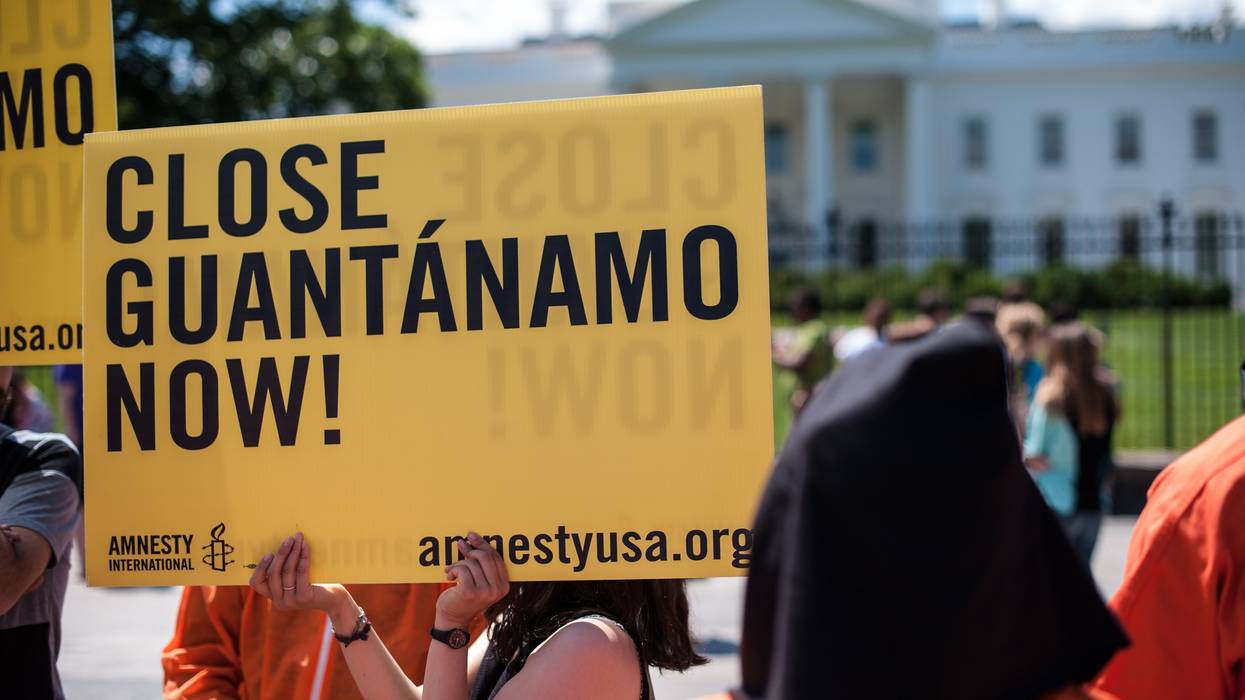
The president faces calls to "end the abhorrent U.S. practice of indefinite detention without charge or trial at Guantánamo by transferring the remaining detainees who have never been charged with crimes."
Human rights advocates on Monday praised the Biden administration's transfer of 11 Yemeni men from the United States' Guantánamo Bay military prison in Cuba to Oman for resettlement—which left just 15 detainees at the facility that opened nearly 23 years ago, during the early days of the so-called War on Terror, and is notorious for torture.
"We welcome the transfer of these 11 men to Oman by the Biden administration, as it was long overdue," said Daphne Eviatar, director of the Security With Human Rights program at Amnesty International USA, in a statement. "The U.S. government now has an obligation to ensure that the government of Oman will respect and protect their human rights."
Since taking office in 2021, President Joe Biden has failed to deliver on his promise to shutter the prison—like former President Barack Obama, who had Biden as his vice president. Between the Democrats, Republican former President Donald Trump, who wants to keep the facility open, served a term; he is set to return to the White House in two weeks.
Eviatar said that "we commend President Biden for taking this step before he leaves office and urge him to finally end the abhorrent U.S. practice of indefinite detention without charge or trial at Guantánamo by transferring the remaining detainees who have never been charged with crimes. This would be a tremendous achievement of his presidency."
The Center for Constitutional Rights (CCR)—which represents 51-year-old Sharqawi Al Hajj, one of the men flown to Oman—also welcomed the progress on Monday but called on the president to go even further while he remains in power.
"It is remarkable that the prison population at Guantánamo is down to 15 people," said CCR senior staff attorney Pardiss Kebriaei. "We urge the administration to press forward in transferring the remaining uncharged men, including Center for Constitutional Rights client Guleed Hassan Duran, allow resolution of the remaining charged cases through mutually acceptable pleas, and stand down in opposing habeas cases for anyone who is uncharged but will be left at Guantánamo."
Kebriaei represents Al Hajj, who "endured physical and psychological coercion" at Central Intelligence Agency sites before arriving at Guantánamo, where "he waged prolonged hunger strikes to protest his indefinite detention," and "attempted to hurt himself multiple times in moments of desperation," according to CCR. He was never charged with a crime.
"Our thoughts are with Mr. Al Hajj as he transitions to the free world after almost 23 years in captivity. His release is hopeful for him and for us," said Kebriaei. "We are grateful to Oman and to the individuals in the administration who made this transfer happen, and to the many people over the years whose work and advocacy paved the way for this moment."
The Pentagon said that the other 10 men are: Uthman Abd al-Rahim Muhammad Uthman, Moath Hamza Ahmed al-Alwi, Khalid Ahmed Qassim, Suhayl Abdul Anam al Sharabi, Hani Saleh Rashid Abdullah, Tawfiq Nasir Awad Al-Bihani, Omar Mohammed Ali al-Rammah, Sanad Ali Yislam Al Kazimi, Hassan Muhammad Ali Bib Attash, and Abd Al-Salam Al-Hilah.
The Pentagon also noted in its Monday statement that of the 15 remaining detainees, "three are eligible for transfer; three are eligible for a periodic review board; seven are involved in the military commissions process; and two detainees have been convicted and sentenced by military commissions."
Monday's transfers were originally scheduled to happen in October 2023, but were halted at the last minute due to concerns in Congress about instability in the Middle East following the Hamas attack on Israel.
That the plan was resurrected during President Biden's final two weeks in office signals a last-ditch effort by his administration to shrink Guantánamo's prisoner population and get closer to his goal of trying to close the facility. In recent weeks, the U.S. has transferred four other Guantánamo inmates—a Kenyan, a Tunisian, and two Malaysians—and is preparing for the transfer of at least one more, an Iraqi.
The repatriation of the Tunisian man, 59-year-old Ridah bin Saleh al-Yazidi, last week came on the same day that a Pentagon appeals panel upheld plea deals for Khalid Sheikh Mohammed, Walid bin Attash, and Mustafa al-Hawsawi, who were imprisoned at Guantánamo after allegedly plotting the September 11, 2001 terrorist attacks and agreed to spend the rest of their lives in prison to avoid execution.
Despite the Biden administration's progress, global vigils planned for Saturday "will, of course, be proceeding as planned, because 15 men are still held," according to journalist and Close Guantánamo co-founder Andy Worthington.
"This coming week—which includes the 23rd anniversary of the prison's opening, on Saturday, January 11—is a crucial time for highlighting the need for urgent action from the Biden administration," Worthington said, "in the last few weeks before Donald Trump once more occupies the White House, bringing with him, no doubt, a profound antipathy towards any of the men still held, and a hunger for sealing the prison shut as he did during his first term in office."

"How and when is he going to sell out U.S. interests?" Virginia Canter of CREW asked. "That is the question this creates."
A new Trump hotel and golf course under development in the Gulf of Oman raises fresh ethical concerns as Donald Trump runs for president again in 2024, a New York Times investigation revealed Tuesday.
Trump was both invited into the project by a Saudi Arabian real estate firm with close ties to the Saudi government and is now directly in business with the government of Oman to develop it.
"This is as blatant as it comes," Citizens for Responsibility and Ethics in Washington chief ethics council Virginia Canter told the Times. "How and when is he going to sell out U.S. interests? That is the question this creates. It is the kind of corruption our founding fathers most worried about."
"I have never seen anything like the Oman deal, re the potential for a conflict of interest."
As part of his investigation,Times reporter Eric Lipton conducted interviews, visited the Oman construction site, and looked over hundreds of pages of financial documents.
"As a NYT reporter, I've been investigating Trump family international deals since 2016," Lipton tweeted. "India, Indonesia, Philippines, Turkey, Panama. I have never seen anything like the Oman deal, re the potential for a conflict of interest."
According to the terms of the deal, the Trump Organization will design a hotel, golf course, and golf club and manage them for as long as 30 years. It will not put any money into the project, but has already received at least $5 million.
Its business partners are the Saudi real estate firm Dar Al Arkan and the government of Oman, which is putting up land and money for the project and will reap a share of the profits over time.
Lipton noted that both Trump and son-in-law Jared Kushner worked to deepen the U.S. relationship with Oman while Trump was in office. Oman is a U.S. ally and an important regional player because it maintains a relationship with both Saudi Arabia and Iran.
Trump also deepened ties with Saudi Arabia during his presidency. After his departure, he and Kushner have continued to do business with the country, as he worked with Saudi Arabia's sovereign wealth fund to host the LIV golf tour and Kushner received a $2 billion investment from the fund.
Trump announced that he would seek reelection on November 15, 2022. Days later, DarGlobal posted a video on YouTube launching the Trump-brand facilities at the Oman resort that featured footage of a Trump tower deal-closing event that Trump attended the same week. In February 2023, after his father had already thrown his hat into the presidential ring, Eric Trump traveled to Oman to meet with officials there.
"His stake in the project in Oman as he runs for president again only focuses more attention on whether and how his own financial interests could influence foreign policy were he to return to the White House," Lipton wrote for the Times.
The federal prosecutors behind Trump's indictment for mishandling classified documents have already subpoenaed information about his deals with foreign governments, including the LIV golf tour.
"This alone should disqualify Trump from ever being president again," journalist Victoria Brownworth tweeted in response to the Times revelations.
Another potential concern raised by Lipton is the possibility of labor rights violations in the construction of the project. Daytime temperatures in Oman can reach into the 100s of degrees Fahrenheit, and the country, like other gulf nations, has faced criticism for its treatment of migrant workers. Workers on the new project were paid as little as $340 per month for the first phase of construction, an engineer told Lipton.
"It's too hot—too hot," 38-year-old supervisor Mathan Mp of Tamil Nadu, India, told the Times. "But we came for work. We have a time schedule. We have to finish the project."

I suspect all U.S. Generals in the Middle East are thinking "Thanks Trump, for putting a target on my back!" after Iranian Major General Qassam Soliemani, the head of the Quds Revolutionary Forces, was assassinated outside of Baghdad's international airport by U.S. drone on the direct orders of President Trump.
As easy as it was for an American drone to blow up two vehicles in Soliemani's convoy coming from the airport, it will not be difficult for Iranian forces to retaliate by targeting senior U.S. military and diplomatic officials. Senate Majority leader Mitchell McConnell's comment that "our prayers are with U.S. diplomats and military in the region" is small consolation to those who will no doubt feel the brunt of Iranian ire over the assassination of one of the most popular leaders in Iran.
Should Wikileaks ever have another Chelsea Manning or Ed Snowden that will provide the world with documents that reveal the Trump administration's deliberations on the decision to cataclysmically escalate the confrontation with Iran, a country of 80 million that has been under U.S. sanctions since the 1979 revolutionary overthrow of the U.S.-backed Shah of Iran, we will finally find out who in the administration supported the decision and who was against it.
My guess is that the U.S. military was against the assassination knowing that U.S. military forces will get the brunt of Iranian retaliation. Chairman of the Joint Chiefs of Staff Mark Milley said, "Damn right, this puts our troops at risk." I think he realizes that he himself would be one of the first retaliatory targets.
I would guess that the CIA was for the assassination, the CIA's whose officials can generally hide from public view. And it probably was a CIA drone, not a U.S. military drone that fired the missiles that assassinated Soleimani. In 2017, Trump gave the CIA the authority to again use assassin drones after it had been withdrawn by the Obama administration.
No matter who was for and against the assassination, when you look for targets for retaliation, there are many: oil fields in Saudi Arabia, oil tankers in the Persian Gulf, big US military installations in Qatar (Central Command forward), Bahrain (5th fleet) and Djibouti (naval and drone bases)
Here are 36 bases with US Military forces in 14 countries that are neighbors with Iran. Additionally, there is a U.S. Embassy in each of those 14 countries as well as in Lebanon that could be targets for retribution for the assassination of General Soleimani.
Sharing its western border with Iran is Afghanistan. There are approximately 14,000 US military in Afghanistan and reportedly twice as many civilian contractors. There are 17,000 NATO troops from 39 countries in Afghanistan. There are six active U.S. military bases. The three major bases are listed below.
Bagram Air Base
Shindand Air Base in Heart Province
Kandahar International Airport
There are over 7,000 U.S. military personnel based in Bahrain, and the U.S. has maintained a naval presence in the country since 1948. The U.S. 5th fleet is based in Bahrain and patrols an area of responsibility covering the Arabian Gulf, the Gulf of Oman, the Red Sea, and the Arabian Sea, including the Strait of Hormuz, the Suez Canal, and the Strait of Bab al Mandeb.
Naval Support Activity Bahrain
Shaikh Isa Air Base
Part of Bahrain International Airport.
U.S. military presence in Djibouti was established in 2003 with a formal agreement that provides access to the airport through Camp Lemonnier and the port facilities. Since that time, Djibouti has hosted the only combat-capable U.S. military base in Africa, until the construction of a U.S. drone base in Niger.
Camp Lemonnier
The U.S. military does not maintain combat basing in Egypt, despite the historically robust military cooperation between the countries since the conclusion of the 1979 Israeli-Egyptian peace treaty. The only U.S. military facility in Egypt conducts medical research.
Naval Medical Research Unit Three (NAMRU-3)
Since the withdrawal of U.S. forces in 2011, the U.S. has not maintained permanent facilities in Iraq. As the U.S. presence in Iraq has evolved during the conduct of Operation Inherent Resolve, the primary U.S. presence appears to be located at Al Asad Air Base.
Al Asad Air Base
The U.S. has long maintained a security relationship with Israel, and in recent years has partnered to develop systems like the Iron Dome air defense system. Ships of the U.S. 6th fleet frequently make port visits to Haifa, but the building of U.S. facilities in Israel is new. U.S. deployments to Israel are small and intended to support anti-ballistic missile emplacements.
Dimona Radar Facility
Mashabim Air Base / Bisl'a Aerial Defense School
The U.S. presence in Jordan has expanded with the evolution of Operation Inherent Resolve against ISIS, with forces located at Muwaffaq Salti Air Base. Publicly available commercial satellite imagery indicates the presence of potential U.S. reaper drones at other bases in Jordan, but this is not acknowledged by the United States. U.S. military cooperation with Jordan is close. Most recently, U.S. troops participated in the "Eager Lion" exercises, involving several thousand U.S. Marines training alongside Jordanian troops.
Muwaffaq Salti Air Base (Azraq)
The U.S. has maintained a Defense Cooperation Agreement with Kuwait since 1991 Persian Gulf War. As such, Kuwait holds major non-NATO U.S. ally status. Since 2011, troops garrisoned in Kuwait are primarily intended to support Operation Spartan Shield, a mission to "deter regional aggression and stabilize countries within the region." The military currently maintains a force of 2,200 MRAPs in Kuwait.
Ali Al Salem Air Base
Camp Arifjan
Camp Buehring
Camp Patriot
The U.S. maintains an ability to use Omani bases through the Oman Facilities Access Agreement, originally signed in 1980, and most recently renewed in 2010. This accord made Oman the first country among the Persian Gulf States to explicitly partner militarily with the U.S. According to the agreement, the U.S. can request access to these facilities in advance for a specified purpose. Oman has allowed 5,000 aircraft overflights, 600 landings, and 80 port calls annually. During the early stages of Operation Enduring Freedom in Afghanistan (in late 2001), the U.S. relied considerably on Omani air bases. However, in subsequent years, U.S. presence in Oman has dwindled significantly.
Muscat International Airport
RAFO Thumrait
Al-Musannah Air Base
Port of Duqm
Port of Salalah
Qatar hosts approximately 10,000 U.S. service personnel, mostly at Al Udeid Air Base. Since the 1990s, Qatari base construction strategy has been deliberately intended to attract the United States to its facilities. As the U.S. withdrew the majority of its forces from Saudi Arabia in 2003 following the initial invasion of Iraq, basing in Qatar allowed for the permanent redeployment of those assets. The U.S. has relied heavily on its basing in Qatar to conduct the counter-ISIS military mission, Operation Inherent Resolve.
Al Udeid Air Base
Camp As Sayliyah
The U.S. withdrew the vast majority of its forces in 2003, as the invasion of Iraq eliminated the need for a troop presence in Saudi Arabia. Today, many of the American military personnel still in Saudi Arabia are part of the U.S. Military Training Mission, and do not provide an operational combat capability. Undoubtedly, USMTM personnel travel and work at different Saudi bases to complete their mission, but the primary "basing" point is Eskan Village near Riyadh.
Eskan Village
The U.S. withdrew from its 22 bases in Syria in October 2019 but has returned to six of them in northeast Syria. U.S. forces in Syria are primarily guarding Syrian oil facilities.
Turkey is the only NATO member in the Middle East region.
Incirlik Air Base
Izmir Air Station
The U.S. maintains approximately 5,000 personnel in the UAE under a defense cooperation agreement. The security relationship between the U.S. and UAE is robust, and has featured combat operations in Afghanistan in which UAE aircraft provided close air support to American troops on the ground.
Al Dhafra Air Base
Port of Jebel Ali
Fujairah Naval Base
A rare and powerful cyclone tracking through the Arabian Peninsula is poised to make destructive landfall in Yemen on Tuesday morning.
Hours after devastating the nearby island archipelago of Socotra, where three were killed and more than 200 injured, Cyclone Chapala continues its rapid approach to the mainland, where meteorologists expect it will tear through the beleaguered region with record rainfall and hurricane-strength winds. It is also aiming to hit Oman, though fears of its impact there have diminished.
Global weather expert Dr. Mansour Al Mazroui told Gulf News on Monday that the cyclone may send a 400mm downpour onto the mainland in 24 hours--that's more than three years' worth of rain in a day, Al Mazroui said. As Weather Underground meteorologist Quincy Vagell explained on Sunday, such heavy rain increases the risks of "potentially catastrophic flooding."
On Twitter, updates on the storm came under the hashtag #CycloneChapala.
In the center of the bullseye is Al Mukalla, a Yemeni city with a population of about 300,000. Its seafront has already been destroyed by massive waves, according to reports from the ground. One resident, Mohammed Ba Zuhair, told Reuters that there has been no assistance yet from officials or the Al Qaeda chapter that partially controls the city.
"Many people have left their homes and are seeking refuge in schools," Ba Zuhair said. "No relief or aid efforts are under way by either the tribal council or al-Qaeda, and the situation is really bad."
Officials on Socotra also reported mass displacement and lack of humanitarian aid.
"Around 1,500 families have fled to the interior and to the mountains," said Mohammed Alarqbi of the Socotra Environment Office. "There's absolutely no help coming from the outside."
Waters in the Arabian Sea are currently experiencing record warmth, allowing for rare extreme weather events like this, explained scientists with NASA and the National Oceanic and Atmospheric Organization (NOAA).
It is believed to be the most powerful storm to hit Yemen in decades.
"A comparatively weak tropical cyclone in 2008 impacted Yemen with heavy rain and thunderstorms, causing 180 deaths," Vagell wrote on Sunday. "Chapala is expected to be considerably stronger, as forecasts call for the storm to maintain hurricane-equivalent intensity at landfall."