

SUBSCRIBE TO OUR FREE NEWSLETTER
Daily news & progressive opinion—funded by the people, not the corporations—delivered straight to your inbox.
5
#000000
#FFFFFF
To donate by check, phone, or other method, see our More Ways to Give page.
Daily news & progressive opinion—funded by the people, not the corporations—delivered straight to your inbox.
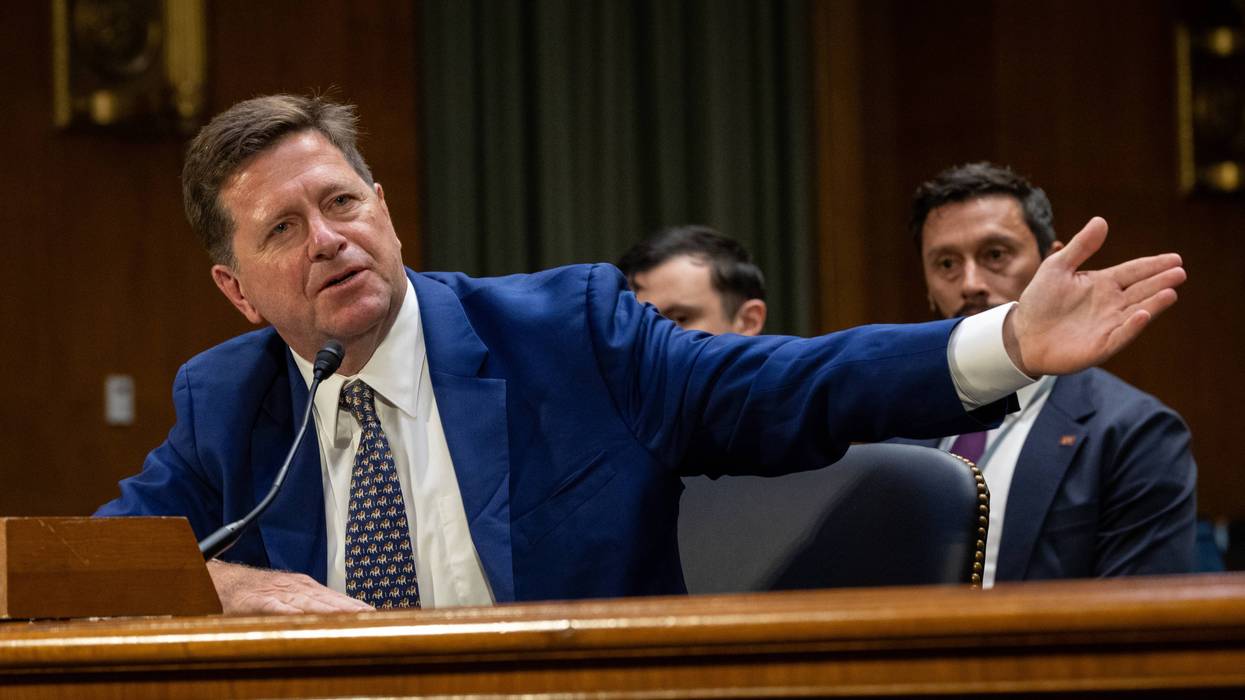
Hundreds of former officials warned that Clayton "has consistently shown an unwillingness to draw clear lines between the interests of the intelligence community and the political interests of the president."
Sen. Susan Collins, widely seen as the most vulnerable Republican senator up for reelection in November, voted on Monday to advance President Donald Trump's pick to lead the US intelligence community as he faced opposition from former national security officials and press freedom organizations.
Monday's 51-43 vote along party lines all but guarantees that Jay Clayton, currently the US attorney for the Southern District of New York, will be confirmed as director of national intelligence on Tuesday.
Collins (R-Maine), who is commonly portrayed as a moderate despite almost always voting with Trump, waved away Clayton's election denial during his Senate confirmation hearing earlier this month, when he refused to say Trump lost in 2020.
"The Office of the Director of National Intelligence does not certify elections, and he made very clear over and over again that Joe Biden had been certified as the winner of the election," Collins told reporters after the hearing. (When facing questions under oath, Trump nominees and officials often say Biden was "certified" as the 2020 winner to avoid directly contradicting the president's false claim that the election was stolen.)
Collins, who is running for a sixth Senate term, went on to say she believes Clayton "brings the experience" to the role and "did a good job" during his confirmation hearing.
Asked Susan Collins about Jay Clayton’s refusal to say Biden won in 2020.
The DNI “does not certify elections, and he made very clear over and over again that Joe Biden had been certified as the winner of the election. I'm not sure what my colleagues were seeking further.” pic.twitter.com/dlZxVS8LwY
— Manu Raju (@mkraju) July 16, 2026
Monday's procedural vote came as hundreds of former US national security and intelligence officials issued an open letter opposing Clayton's nomination, warning that he "has consistently shown an unwillingness to draw clear lines between the interests of the intelligence community and the political interests of the president who nominated him."
"Equally troubling is Mr. Clayton’s defense, during his hearing, of subpoenas issued to four journalists at The New York Times while he served as United States attorney for the Southern District of New York," the letter states. "The director of national intelligence sits at the intersection of secrecy and accountability, deciding what the public may know about the government’s most sensitive activities. A nominee who justifies forcing journalists to testify, instead of recognizing the First Amendment’s protections for a free press, does not demonstrate the sound judgment required for the office."
The Freedom of the Press Foundation (FPF), which also opposes Clayton's nomination, argued Monday that Clayton appears to have lied to lawmakers during his testimony about the subpoenas for Times journalists. The subpoenas targeted journalists who reported on the new Air Force One, a $400 million luxury jet donated by Qatar.
During his Senate testimony, Clayton insisted that he followed "the procedures we have in place to protect the First Amendment and protect the freedom of the press" prior to signing the subpoenas. But Trevor Timm, FPF's executive director, wrote Monday that "this was likely impossible."
"Given the Times’ story came out on a Wednesday and the subpoenas were issued on a Friday (after an hourslong White House meeting discussing the case with FBI Director Kash Patel), there was almost no way 'all reasonable attempts' were made before the subpoenas were issued. These investigations usually take months," Timm wrote. "It sure seemed like false testimony to us."
"But on Friday, the Department of Justice itself seems to have confirmed that Clayton lied to Congress," Timm noted. "In a court hearing in the Times subpoena case, a federal judge castigated government lawyers for an hour for making a multitude of errors when issuing the subpoenas, misleading the court, and not following the law... The DOJ didn’t even attempt to argue they took any investigative steps before issuing the subpoenas. Instead, they claimed there was an “exception” to that rule that allowed them to bypass it entirely, which left the judge flabbergasted."
"Clayton should be immediately called back to the Senate to answer for his seemingly false statement," he added.
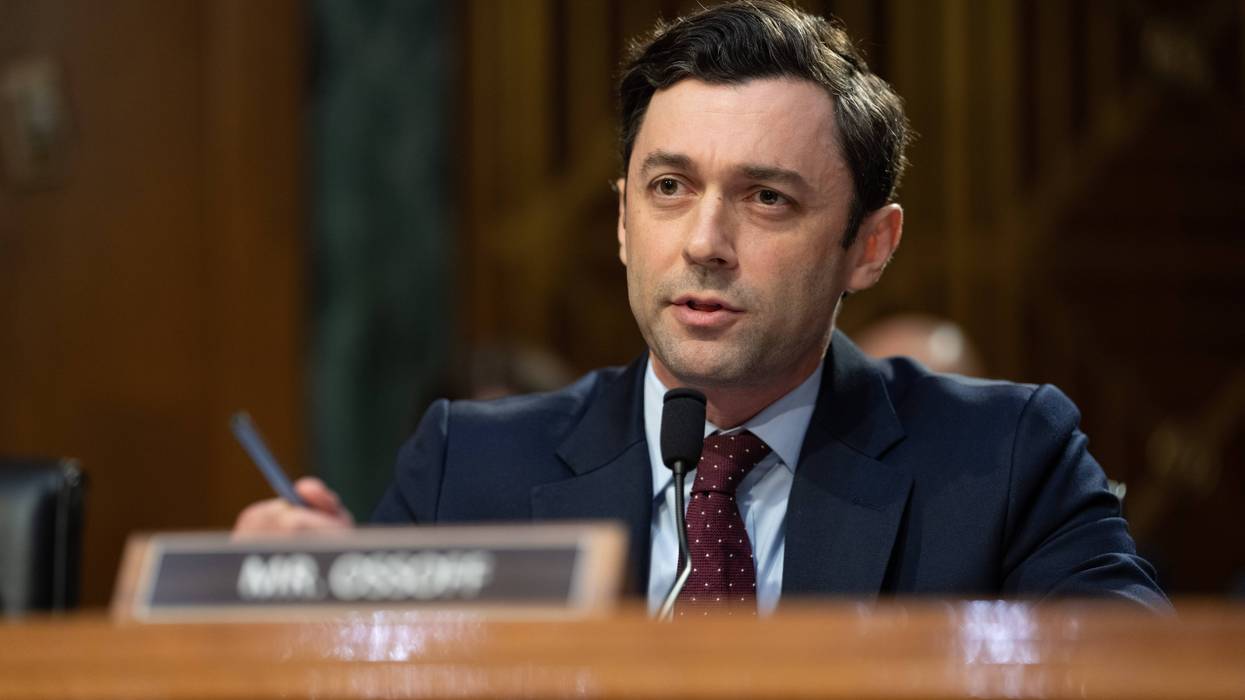
"You refuse to answer a basic question about who won a presidential election, but you asked to lead America's intelligence community?"
Sen. Jon Ossoff on Wednesday put President Donald Trump's nominee to be the next director of national intelligence on the spot by asking him about the results of the 2020 presidential election.
During a confirmation hearing before the Senate Intelligence Committee, Ossoff (D-Ga.) asked Jay Clayton, nominated by Trump to replace former DNI Tulsi Gabbard, who won the 2020 election.
"I'm not going to do this with you," Clayton replied.
Sen. Ossoff asks Trump's Director of National Intelligence nominee who won the 2020 election. pic.twitter.com/J3u5mqHqTt
— Ossoff's Office (@SenOssoff) July 15, 2026
"This is a job interview," Ossoff said. "We have established that you have an obligation to be honest and forthright with the committee, yes? You do have an obligation to honest and forthright with the committee?"
"Yes," Clayton said.
"Who won the 2020 election?" Ossoff pressed.
"Like I said, I'm not going to get into that with you," Clayton said.
After former President Joe Biden won the 2020 election, Trump refused to concede, told multiple lies to sow doubt about the results, tried to enlist officials including Georgia Secretary of State Brad Raffensperger and former Vice President Mike Pence to illegally overturn it, and then incited a violent riot at the US Capitol when those efforts failed.
Ossoff told Clayton that he would keep asking him about the 2020 election results because "you're not being honest and forthright with the committee."
"I'm not going to engage in the theater," Clayton shot back.
After being pressed by Ossoff again, Clayton simply sat in silence, which appeared to make the Georgia Democrat incredulous.
"You refuse to answer a basic question about who won a presidential election," Ossoff said, "but you asked to lead America's intelligence community? Isn't it humiliating to be unable to answer this question, to have to indulge the president's delusions?"
"We know, you know, everybody in this room knows the truthful answer to that question," Ossoff continued. "Why can you not give it?"
Sean Vitka, executive director for Demand Progress, said after the hearing that Clayton's refusal to answer Ossoff's question was disqualifying.
"Clayton’s trainwreck hearing showed us that he is willing to deny objective reality to avoid upsetting the president," Vitka said. "Someone like that must not be allowed to be the director of national intelligence, who wields vast power and must lead the intelligence community with nonpartisan integrity and independence from political pressure."
Vitka added that Democrats serving on congressional intelligence committees need to understand "the clear danger someone like Clayton would pose as Trump’s point man on government surveillance."

"Rewarding an official who is actively executing the White House's war on an independent press with the keys to the intelligence community would be a catastrophic mistake."
A coalition of progressive groups is pressuring Senate Democrats to oppose President Donald Trump's nomination of Jay Clayton III to lead America's spy agencies over his role in helping the administration use the legal system to attack journalists.
Over the weekend, The New York Times reported that Clayton, who currently serves as the US attorney for Manhattan, had issued subpoenas to four of its journalists after they'd reported on security concerns related to the luxury jet gifted by the Qatari government, which Trump has begun to use in place of Air Force One against the wishes of the Secret Service.
The US Department of Justice said in a statement that the goal of the investigation was to prosecute leakers who spoke to the press about the plane's lacking security features. According to the Times, the FBI requested that it hold off publishing the story and reveal the names of its anonymous sources, which it refused to do.
A top newsroom lawyer for the Times described the subpoenas as "an attempt to prevent the public from knowing what is happening in their country by intimidating journalists from doing their jobs.”
On Monday, the group Demand Progress and nearly three dozen other progressive advocacy groups sent a letter to Democrats on the Senate Select Committee on Intelligence, as well as Minority Leader Chuck Schumer (NY) and Whip Dick Durbin (Ill.).
It urged them to oppose the nomination of Clayton to serve as director of national intelligence, a role previously held by Tulsi Gabbard, who resigned in May.
"The committee need not speculate how Clayton would exercise the enormous powers of the federal government: He is demonstrating it now," the coalition wrote. "A federal prosecutor who will weaponize the grand jury process against reporters—and their sources—to punish disclosures unwelcome to the president has shown the Senate the precise instinct that is disqualifying in a director of national intelligence."
"Rewarding an official who is actively executing the White House's war on an independent press with the keys to the intelligence community would be a catastrophic mistake," the letter continued.
The coalition emphasized that Clayton, whose confirmation hearing in the Senate is scheduled for Wednesday, has no experience in intelligence work, having spent most of his career as a corporate lawyer on Wall Street. He was tapped to lead the Securities and Exchange Commission during Trump's first term and then to serve as US attorney for the Southern District of New York in his second.
"More troublingly," it said, "Clayton has spent his time in this position weaponizing his authority on behalf of the president, particularly by politicizing high-profile investigations."
As Trump came under fire for his relationship with the late child sex criminal Jeffrey Epstein, Clayton was assigned to "take the lead" of a Department of Justice probe that selectively targeted a list of the president's enemies.
Clayton also oversaw the process of redacting files related to Epstein before their release to the public, which was met with criticism for including identifying information of abuse survivors, including nude photos, while blacking out the names of Trump and other prominent individuals despite a mandate from Congress.
The letter also notes Clayton's amplifying of Trump's debunked theories of election fraud in California as part of efforts to restrict mail-in voting, as well as his defense of Trump's $1.8 billion "slush fund," which a judge ruled this week constituted an improper act of self-dealing.
"We are living with the serious consequences of unqualified Trump loyalists, blindly pursuing the "MAGA" agenda at agencies like the Departments of Defense, Homeland Security, Education, Health and Human Services, and more," the letter concludes. "Adding the [intelligence community] to this list—especially in light of Clayton's shocking willingness to weaponize federal power to satisfy the president's political grievances... will have devastating consequences for our national security and the civil liberties of Americans."
"There is a path to reauthorizing FISA, but it will require enacting meaningful reforms," said House Democratic leaders.
After privacy advocates in Congress blocked proposed extensions of an expiring federal spying power on Thursday over a lack of reforms and concerns about newly appointed acting Director of National Intelligence Bill Pulte, President Donald Trump announced a different man as his official nominee for the post.
"I am pleased to announce the Nomination of very Highly Respected Jay Clayton, former Chairman of the Securities and Exchange Commission, the former Head of Sullivan & Cromwell, one of the most prominent and successful Law Firms anywhere in the World, and the current United States Attorney for the Southern District of New York, to be the next Director of National Intelligence and, importantly, to serve in my Cabinet," Trump wrote on Truth Social. "Few people anywhere in the Legal Community are respected at the level of Jay. I encourage the United States Senate to confirm Jay as soon as possible."
Trump's announcement came shortly after Senate Republicans' unsuccessful requests for unanimous consent to extend Section 702 of the Foreign Intelligence Surveillance Act (FISA)—which lets the US government spy on electronic communications of noncitizens located outside the country without a warrant—and a failed vote in the GOP-controlled House of Representatives.
"If Trump had announced this last night, or even this morning, it could've helped avoid a FISA/702 lapse," Punchbowl News reporter Andrew Desiderio said of Clayton's nomination. "Now the House is gone (and out next week) and the Senate is holding its final vote of the week right now—but most senators have already voted and dashed to the airport."
House Democratic leaders who opposed the extension pointed to Trump's appointment of Pulte following Tulsi Gabbard's recent announcement that she's resigning from the Office of the Director of National Intelligence (ODNI). As Federal Housing Finance Agency director, Pulte has sent criminal referrals to the US Department of Justice, alleging mortgage fraud by four of the president's political foes.
The Senate is due back on Monday, but Minority Leader Chuck Schumer (D-NY) told reporters after the Clayton announcement that it "doesn't matter what else they do, Pulte's got to be gone. He's still in that role."
Meanwhile, the top Democrats on the intelligence panels in both chambers of Congress, Vice Chair Mark Warner (Va.) and Ranking Member Jim Himes (Conn.), praised Clayton. Sean Vitka, executive director at Demand Progress—a leader in the massive coalition of civil society groups demanding FISA reforms—said that "no Democrat should find solace in the fact that Trump has once again named a partisan hatchet man to be the nation's top spy."
"Just as Trump asked Bill Pulte to investigate Letitia James and Adam Schiff, he also has asked Jay Clayton to investigate Democrats' ties to Jeffrey Epstein," Vitka noted. "The fact that Sen. Warner and Rep. Himes would gush so effusively over Clayton shows their clear desire to sabotage a deal on FISA privacy reforms and hand President Trump the unfettered surveillance powers that he is asking for."
"Both Pulte and Clayton have already shown that they will carry out Trump’s directive to weaponize the government against his political enemies," he added. "Putting either of them at ODNI at a time when Trump is asking for warrantless surveillance powers through FISA is too big of a risk."
With both the House recess and Section 702's Friday expiration looming, Speaker Mike Johnson (R-La.) had tried to get two-thirds majority support for an extension on Thursday. He secured support from seven Democrats—Reps. Henry Cuellar (Texas), Don Davis (NC), Jared Golden (Maine), Vicente Gonzalez (Texas), Josh Gottheimer (NJ), Susie Lee (Nev.), and Marie Gluesenkamp Perez (Wash.)—but 19 Republicans joined the rest of the Democratic members present for the 198-218 vote.
"Section 702 is a critical foreign intelligence authority, but we cannot in good conscience vote for reauthorization without significant reforms to protect both national security and the constitutional privacy rights of Americans," said House Minority Leader Hakeem Jeffries (D-NY), Democratic Whip Katherine Clark (D-Mass.), Caucus Chair Pete Aguilar (D-Calif.), Judiciary Committee Ranking Member Jamie Raskin (D-Md.), and Himes.
"Bill Pulte has no relevant national security experience. Consequently, his appointment is in defiance of the law that requires the director of national intelligence to have 'extensive' national security experience. The apparent motivation for his elevation is the demonstrated willingness of Bill Pulte to search government databases for alleged dirt on President Trump's chosen political enemies," they continued. "There is a path to reauthorizing FISA, but it will require enacting meaningful reforms. We oppose this bill to kick the can further down the road."
Explaining her vote against "this sham extension of FISA that would allow continued spying on the American people," Rep. Pramila Jayapal (D-Wash.), a key progressive leader in the chamber, said that "a warrant requirement would pass today if Republican leadership put it up for a vote."
"However, Trump is doubling down on his appointment of Bill Pulte, closing any pathways for negotiation," she said before Clayton was announced. "I voted no today, and will continue to vote no until a warrant requirement is in place to protect our civil liberties."
Hajar Hammado, senior policy adviser at Demand Progress, said in a statement that "Speaker Johnson keeps trying and failing to jam through a no-reform FISA reauthorization, expecting different results—this time without even getting a simple majority of the House."
"If Johnson wants a FISA deal, all he has to do is allow amendment votes on privacy reforms," Hammado continued. "Adding warrant requirements to FISA is a path forward that has clear, bipartisan support. The only reason we're up against the deadline now is that congressional leaders and the White House keep ignoring this obvious reality and obstructing privacy reforms from getting a fair vote."
Elizabeth Goitein, co-director of the Brennan Center for Justice's Liberty and National Security Program, similarly said on social media that "Section 702 was in trouble well before Trump announced the appointment of Pulte as acting DNI (and by the way, Pulte could still be in that role through the midterm elections). The 702 renewal hit a wall because Republican leaders wouldn't allow votes on widely supported reforms."
After Johnson complained to reporters about the vote and said that "I pray that we do not have a serious calamity on our shores over the next few weeks," Jake Laperruque at the Center for Democracy & Technology said: "I'm sorry, you cannot demand the high ground claiming to be distraught about our national security when you are treating FISA as less important than blocking all reform votes. You sure as hell can't claim the high ground when treating it as less important than going on vacation."
While national security hawks have tried to use the deadline to force an extension, suggesting that a lapse would cause "a potential significant gap in foreign intelligence collection," privacy advocates such as Laperruque have emphasized that "the text of the law makes clear that this threat of collection suddenly going dark... is fearmongering and not a genuine possibility."
As Laperruque explained earlier this week: "So long as an approved FISA 702 certification is active, collection from communications providers based on directives stemming from that certification will continue. Because the FISA Court approved the most recent annual certifications this March, this lapse would not occur until 2027."
The House and Senate GOP's failures to extend Section 702 on Thursday came a day after Sen. John Cornyn (R-Texas) objected to a proposal from Sen. Ron Wyden (D-Ore.)—a leading privacy advocate—to pass by unanimous consent a nine-month renewal with warrant requirements. The Republican also opposed a five-week offer.
Calling out Cornyn's moves, Hammado said Wednesday that "surveillance hawks have spent all day screaming about how important it is to renew FISA, but then they just objected to a good faith deal that would reauthorize Section 702 with popular, bipartisan privacy reforms. The only thing stopping FISA from being renewed is congressional leadership's unexplained, persistent opposition to making the government get a warrant when it tries to access the private communications of Americans."
"Clear majorities in both parties, and of Americans in general, want a warrant requirement before renewing FISA," the Demand Progress campaigner added. "Why does congressional leadership prefer sunset over privacy?"
This article has been updated with additional comment from Sean Vitka of Demand Progress and Elizabeth Goitein of the Brennan Center for Justice.
"She never should've had this job to begin with," said one Democratic lawmaker.
Tulsi Gabbard resigned on Friday after serving as US President Donald Trump's Director of National Security during his second term in the White House.
"Good riddance," said Rep. Don Beyer (D-Va.) in response. "She never should've had this job to begin with."
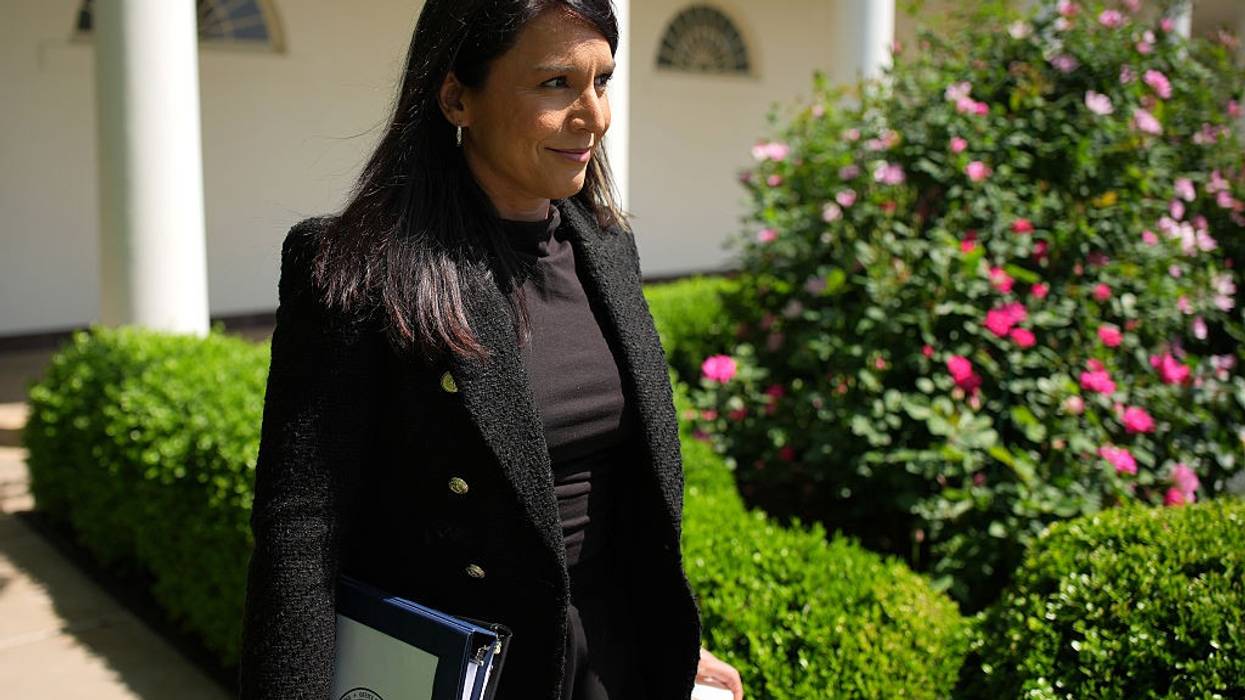
The attorney representing the whistleblower called it "confounding" that it took Gabbard’s office eight months to send a disclosure to Congress.
A whistleblower last year filed a complaint against US Director of National Intelligence Tulsi Gabbard whose contents are so sensitive that the complaint itself has reportedly been locked in a safe.
The Wall Street Journal reported on Monday that the complaint was filed in May, and it set off "a continuing, behind-the-scenes struggle about how to assess and handle it, with the whistleblower’s lawyer accusing Gabbard of stonewalling the complaint."
The Journal's sources say that the complaint is so classified that no one in the US Congress has even laid eyes on it, as disclosure of its contents could cause "grave damage to national security."
A letter written by Andrew Bakaj, the whistleblower's attorney, to Gabbard in November accused her office of trying to block the complaint from reaching members of Congress by failing to provide guidance about how it should be handled while minimizing national security risks.
Gabbard's office told the Journal that it is working to get the issue resolved but that it is taking time because of the sensitive nature of the complaint, which it dismissed as "baseless and politically motivated."
However, Bakaj told the Journal that he doesn't believe Gabbard's office is making a good-faith effort to disclose the complaint to Congress.
“From my experience, it is confounding for [Gabbard’s office] to take weeks—let alone eight months—to transmit a disclosure to Congress,” he said.
The Journal was not able to verify the contents of the complaint against Gabbard, and Bakaj told the paper that its contents are so highly classified that he has not been allowed to view it.
Whistleblower Aid, the nonprofit legal organization where Bakaj serves as chief legal counsel, called on Monday for Congress to open an investigation into Gabbard "for hiding high-level intelligence... for nearly eight months," as well as for "her attempts to bury a whistleblower disclosure about her own actions," as required by US law.
National security attorney Mark Zaid, who co-founded Whistleblower Aid, praised the organization's work in representing the whistleblower and declared in a social media post that Gabbard and her office "have a lot of explaining to do."
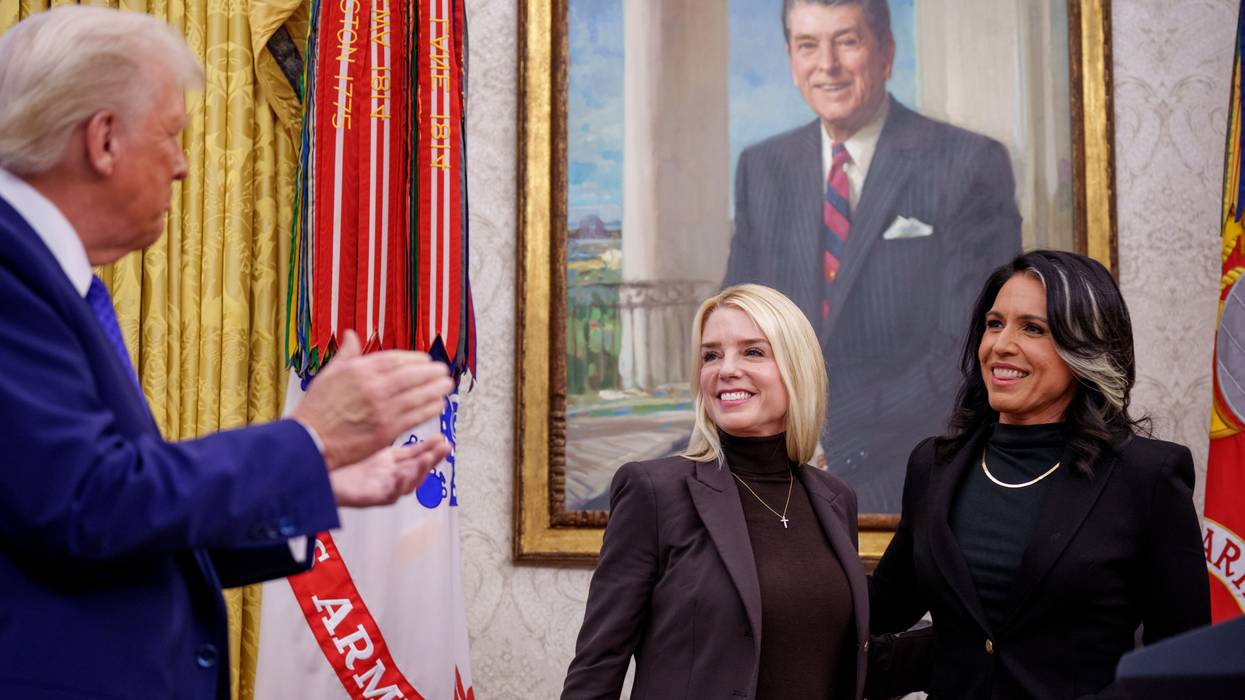
As Reuters asked agencies about the Interagency Weaponization Working Group targeting "the Deep State," Fox News amplified key government leaders' claims about the initiative.
As President Donald Trump's increasingly authoritarian behavior draws millions of Americans to the streets in protest, his administration is pushing a narrative about a newly revealed interagency group formed in response to one of his executive orders.
Trump issued his Ending the Weaponization of the Federal Government order on the first day of his second administration, and US Attorney General Pam Bondi and Director of National Intelligence Tulsi Gabbard swiftly announced related groups at their agencies. Reuters published a report late Monday after speaking with an unnamed source and obtaining federal records about an umbrella organization, the Interagency Weaponization Working Group (IWWG).
"Trump and his allies use the term 'weaponization' to refer to their unproven claims that officials from previous administrations abused federal power to target him during his two impeachments, his criminal prosecutions, and the investigation into Russia's interference in the 2016 election," Reuters reported. The source said IWWG's mission is "basically to go after 'the Deep State,'" which, the outlet noted, is a term "used by Trump and his supporters to refer to the president's perceived foes from the Obama and Biden administrations and his own first term."
IWWG involves at least 39 officials from across the government, including the White House, Office of the Director of National Intelligence (ODNI), Central Intelligence Agency, Federal Communications Commission, Internal Revenue Service, and departments of Defense, Homeland Security, and Justice (DOJ), according to Reuters.
A group of dozens of officials from across the federal government, including U.S. intelligence officers, has been helping to steer Trump's drive for retribution against his perceived “Deep State” enemies, according to government records and a source familiar with the effort.
[image or embed]
— Jon Cooper (@joncooper-us.bsky.social) October 20, 2025 at 9:56 PM
"Shortly after Reuters asked the agencies for comment on Monday," the news outlet highlighted, "Fox News reported the existence of the group, citing Gabbard as saying she 'stood up this working group.'"
Specifically, Gabbard told Fox that IWWG has been meeting biweekly since April to "share information, coordinate, and execute."
"The American people made a clear choice when they elected President Trump—to stop the Biden administration's prolific and dangerous weaponization of government agencies against the American people and the Constitution," she said. "I stood up this working group to start the important work of interagency coordination under President Trump's leadership to deliver accountability."
"True accountability is the first step toward lasting change," added the former congresswoman.
The Fox article, published just a few hours before Reuters' reporting, also features comments from Bondi and Federal Bureau of Investigation (FBI) Director Kash Patel, who have been accused of abusing their positions and politicizing their agencies for the president. The pair pointed to DOJ action against Trump, "pro-life" advocates, and parents at school board meetings during the Biden administration.
There are also complaints from unnamed officials that the media has attempted to "negatively spin lawful oversight and accountability" by claiming that IWWG is a way for the Trump administration to weaponize the government against political opponents. One official told Fox, "The irony is, accusing the Interagency Weaponization Working Group of targeting the president’s political opponents is classic projection and could not be further from the truth."
Such comments appear to be a direct response to Reuters, which reported: "Among those discussed by the interagency group, the source said, were former FBI Director James Comey; Anthony Fauci, Trump's chief medical adviser on the Covid-19 pandemic; and former top US military commanders who implemented orders to make Covid-19 vaccinations compulsory for servicemembers. Discussions of potential targets have ranged beyond current and former government employees to include former President Joe Biden's son, Hunter."
A senior ODNI official claimed that there was "no targeting of any individual person for retribution," and "IWWG is simply looking at available facts and evidence that may point to actions, reports, agencies, individuals, etc. who illegally weaponized the government in order to carry out political attacks."
Fauci and lawyers for Hunter Biden and Comey did not respond to requests for comment. Comey is fighting criminal charges that his legal team argues are an example of officials using "courts to punish and imprison their perceived personal and political enemies."
After Comey was indicted last month, Trump pledged that "there'll be others." Since then, Trump adviser-turned-critic John Bolton and New York Attorney General Letitia James—who successfully prosecuted the president for financial crimes—also have been indicted.
According to Reuters:
Another focus for the interagency group was retribution for the prosecution of the January 6 rioters, said the source.
Bondi tasked the DOJ Weaponization Working Group with reviewing the J6 prosecutions. Some of the documents seen by Reuters show that a smaller subset of employees from across the government have been convening on the topic. The Justice Department denied in its statement to Reuters that a separate January 6 group exists.
Among other issues the source recalled being discussed were the Jeffrey Epstein files, the prosecutions of Trump advisers Steve Bannon and Peter Navarro, and the possibility of stripping security clearances from transgender US officials. Reuters could not independently confirm these were the subject of discussions.
Officials from the White House and ODNI denied that the Epstein files were discussed. The ODNI officials said the same about revoking security clearance for transgender officials and the Bannon and Navarro cases.
Despite officials' claims, readers of the reporting suggested that IWWG appears to be a way for the administration to target Trump's "enemies list."
Larry Pfeiffer, who was previously a senior director of the White House Situation Room and chief of staff to former Central Intelligence Agency Director Michael V. Hayden, sarcastically said on social media: "Great! An interagency enemies list committee. And with participants from CIA and the ODNI. Nothing unusual about that!"
Meanwhile, Mother Jones editor-in-chief Clara Jeffery dubbed IWWG the president's "revenge committee."
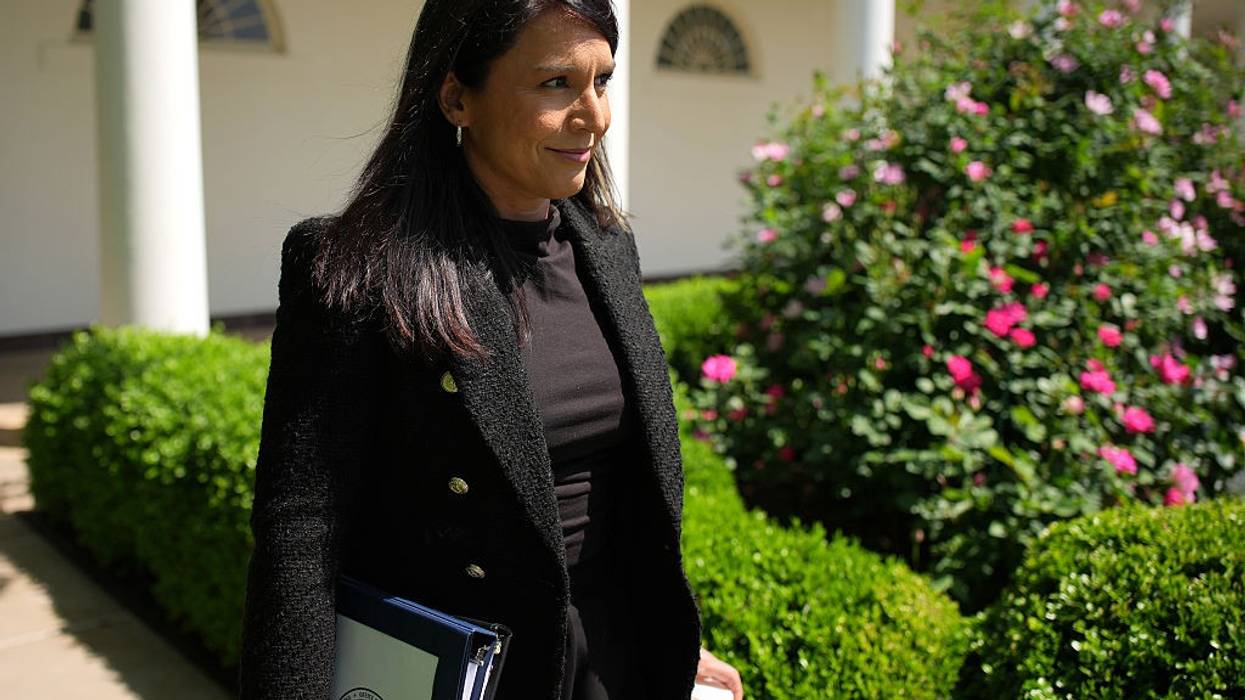
Critics called the ousters "ominous" and warned that "an intelligence service will not protect you from real-life threats if its members get fired for not lying."
Tulsi Gabbard, U.S. President Donald Trump's controversial director of national intelligence, is generating alarm this week for firing two top officials after a memo contradicting the administration's claims about deported migrants was made public.
As Fox News first reported Tuesday, Gabbard fired Mike Collins, acting chair of the National Intelligence Council, and his deputy, Maria Langan-Riekhof, and moved the NIC from the Central Intelligence Agency (CIA) to the Office of the Director of National Intelligence (ODNI).
As The Hill detailed:
Collins has spent nearly three decades in the intelligence community and has served as chief of staff for the CIA's deputy director. He started his career as an analyst focused on East Asia.
Langan-Riekhof also has more than 30 years of experience in the intelligence community, including as an expert on the Middle East. The ODNI previously listed her as an exceptional analyst. She also previously served as director of the Strategic Futures Group at the National Intelligence Council.
While an ODNI spokesperson told The Hill that "the director is working alongside President Trump to end the weaponization and politicization of the intelligence community," critics framed the firings as "the DEFINITION of politicizing intelligence."
"I am concerned about the apparent removal of senior leadership at the National Intelligence Council without any explanation except vague accusations made in the media," Congressman Jim Himes (D-Conn.), the ranking member on the House Intelligence Committee, told The Washington Post. "Absent evidence to justify the firings, the workforce can only conclude that their jobs are contingent on producing analysis that is aligned with the president's agenda, rather than truthful and apolitical."
The NIC leaders were fired after last week's release of an NIC memo confirming that U.S. intelligence agencies never agreed with Trump's claim that Venezuelan President Nicolás Maduro controls the criminal gang Tren de Aragua. The April 7 document states that "while Venezuela's permissive environment enables TDA to operate, the Maduro regime probably does not have a policy of cooperating with TDA and is not directing TDA movement to and operations in the United States."
Although, as the Post noted, "it was unclear what, if any, direct role Collins or Langan-Riekhof had in drafting the assessment," its release provoked pushback from Gabbard, who said last week that it was "outrageous that as President Trump and his administration work hard every day to make America safe by deporting these violent criminals, some in the media remain intent on twisting and manipulating intelligence assessments to undermine the president's agenda to keep the American people safe."
Trump has used dubious claims about Maduro controlling the gang to justify invoking the Alien Enemies Act to send hundreds of Venezuelan migrants to El Salvador's notorious Terrorism Confinement Center as part of his mass deportation agenda.
Senate Intelligence Committee Vice Chair Mark Warner (D-Va.) said on social media Wednesday: "Gabbard is purging intelligence officials over a report that the Trump administration finds politically inconvenient. Whatever the administration is trying to protect... it's not our national security."
Other critics called Gabbard's moves "ominous" and warned that "an intelligence service will not protect you from real-life threats if its members get fired for not lying."
The U.S. intelligence community (IC) "provides analysis independent of policy preferences," said James Madison University professor and former CIA analyst Stephen Marrin. "When those in power do not want to hear inconvenient facts and unwanted interpretation and punish messengers that provide it, that undermines the reason the IC was created in the first place."
Jonathan Panikoff, a former career U.S. intelligence officer who is now a director in the Atlantic Council's Middle East Program, said that "having spent five years working at the NIC, I can personally attest the [organization] is the heartbeat of apolitical U.S. all-source analysis, traditionally drawing the best of the IC's analysts together to tackle and produce assessments on the hardest issues. Anything that reduces its independence because policymakers don't like the independent conclusions it reaches, is the definition of politicization they are decrying. Mike and Maria are unbelievable leaders and IC professionals, not political actors."
Eric Brewer, who also worked for NIC, expressed full agreement with Panikoff's "excellent comments" and issued his own warning.
"This is a big deal. The result will be an IC less willing to tell the president and other leaders what they need to know rather than what they want to hear. America will be less secure because of it," Brewer said. "The professionals in the IC can withstand a lot, and will no doubt do their utmost to continue to provide objective assessments. But this act is blatant politicization and will have a chilling effect."
The memo that seemingly led to the NIC firings was revealed as a result of a Freedom of Information Act (FOIA) request filed by the Freedom of the Press Foundation. Lauren Harper, the group's Daniel Ellsberg chair on government secrecy, shared the Post's reporting about the ousters on social media Wednesday along with an observation.
"The director of national intelligence's FOIA website (which has reappeared after the entire site was briefly down) no longer has a reading room of released documents or links to its FOIA regulations which, were we to be picky, violates the EFOIA amendments of 1996," Harper highlighted. "Amazing timing."
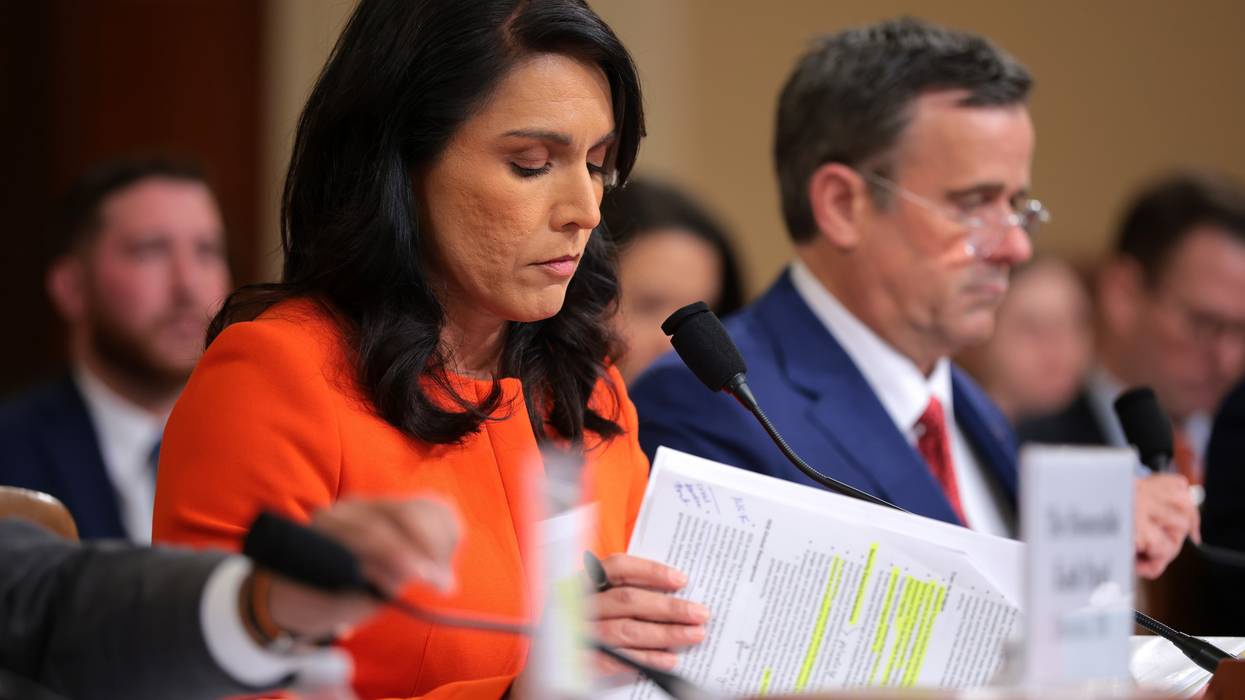
"Sunlight remains the best disinfectant for falsehoods," said one open government advocate.
A memo released Monday by the Trump administration in response to a Freedom of Information Act request confirmed that U.S. intelligence agencies never agreed with President Donald Trump's claim in March that Venezuelan President Nicolás Maduro controls the criminal gang Tren de Aragua—an assertion that was used to justify sending hundreds of migrants to a notorious Salvadoran prison.
The document said that "while Venezuela's permissive environment enables TDA to operate, the Maduro regime probably does not have a policy of cooperating with TDA and is not directing TDA movement to and operations in the United States."
Trump's claim about Maduro's connection to the group had been called into question by The New York Times in March, after Trump invoked the Alien Enemies Act for only the fourth time in U.S. history. The law empowers the federal government to summarily expel citizens of a country that is at war with or invading the United States.
The Times reported at the time, based on interviews with officials, that the intelligence community's findings about Tren de Aragua were "starkly at odds" with Trump's claims. The anonymous officials said the gang was not taking orders from Maduro's government.
That reporting prompted the U.S. Justice Department to open a criminal investigation into the "selective leak of inaccurate" information to the Times, with the Trump administration criticizing the Times for its "misleading" report.
Attorney General Pam Bondi also said in an April memo that the department would roll back press freedom protections in leak investigations after The Washington Post reported on the memo that was declassified Monday. The Post reported on the document from the Office of the Director of National Intelligence in mid-April when it was still classified.
"The declassification proves that the material should have been public from the start—not used as an excuse to suppress sharing information with the press," Lauren Harper, the Daniel Ellsberg chair on government secrecy at the Freedom of the Press Foundation, told the Times. The group filed the FOIA request for the memo, dated April 7, to be released.
A declassified ODNI memo disclosed in response to a @Freedom.Press FOIA request confirms a @nytimes.com report from March: U.S. intel agencies rejected the claim Trump made to justify deporting Venezuelans to a prison in El Salvador. www.nytimes.com/2025/05/05/u...
[image or embed]
— Alexander Howard (@digiphile.bsky.social) May 5, 2025 at 10:27 PM
The memo noted that the FBI partially dissented with the intelligence community's findings about Tren de Aragua.
Analysts at the FBI agreed with the agencies' overall assessment but believed "some Venezuelan government officials facilitate [Tren de Aragua] members' migration from Venezuela to the United States and use members as proxies in Chile, Colombia, Ecuador, Peru, and the United States to advance what they see as the Maduro regime's goal of destabilizing governments and undermining public safety in these countries."
"Most" of the intelligence community "judges that intelligence indicating that regime leaders are directing or enabling [Tren de Aragua] migration to the United States is not credible," the memo reads.
Intelligence agencies also noted in the memo that detainees accused of being members of the gang could have been motivated "to make false allegations about their ties to the Venezuelan regime in an effort to deflect responsibility for their crimes and to lessen any punishment by providing exculpatory or otherwise 'valuable' information to U.S. prosecutors."
Analysts said they had not collected information about communications or funding exchanges between Venezuelan officials and leaders of Tren de Aragua.
"So you mean kidnapping folks off the streets and sending them to a foreign gulag was not justified by our own intelligence?" said the Arkansas Justice Project. "They just made shit up to dog whistle their base. The AEA argument was never legitimate and they knew it all along."
After the memo was released, Director of National Intelligence Tulsi Gabbard said it was "outrageous that as President Trump and his administration work hard every day to make America safe by deporting these violent criminals, some in the media remain intent on twisting and manipulating intelligence assessments to undermine the president's agenda to keep the American people safe."
Courts, including the U.S. Supreme Court, have blocked the Trump administration from sending more migrants to El Salvador under the Alien Enemies Act, and the ACLU last month asked a federal judge to facilitate the return of all Venezuelans sent to the country's Terrorism Confinement Center to ensure they have due process via immigration hearings.
But judges hearing cases regarding Trump's mass deportations under the Alien Enemies Act have not yet questioned the administration's debunked claims about Tren de Aragua and the Maduro government.
Writer and open government advocate Alexander B. Howard said the release of the memo proves that "sunlight remains the best disinfectant for falsehoods."
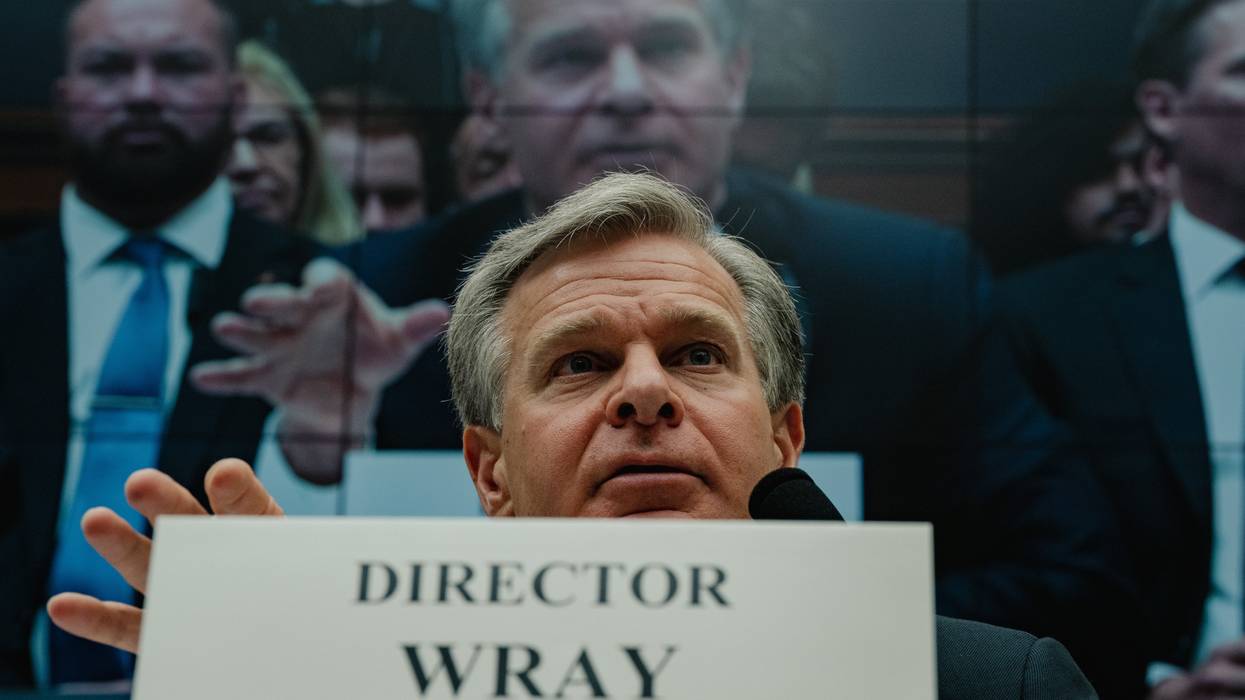
"Government self-policing will never be an adequate substitute for the Fourth Amendment's warrant requirement," said one expert as U.S. lawmakers consider whether to reauthorize or reform Section 702.
Privacy advocates renewed calls for swift congressional action to rein in warrantless spying on Americans following the Friday release of documents showing U.S. law enforcement's further misuse of a powerful surveillance tool.
"These disturbing new revelations show how Section 702 surveillance, a spy program the government claims is focused on foreign adversaries, is routinely used against Americans, immigrants, and people who are not accused of any wrongdoing," said Patrick Toomey, deputy director of the ACLU's National Security Project, in a statement.
The Federal Bureau of Investigation (FBI) "continues to break the rules put in place to protect Americans, running illegal searches on public officials, including a U.S. senator, and it's long past time for Congress to step in," he asserted. "As Congress debates reauthorizing Section 702, these opinions make clear why fundamental reforms are urgently needed."
Before the end of this year, members of Congress must decide whether to reauthorize Section 702 of the Foreign Intelligence Surveillance Act (FISA), which allows the U.S. government to collect the electronic communications of noncitizens who are believed to be located abroad and have specific types of information.
Americans' data swept up by such activities are supposed to be subject to extra protections, but a pair of redacted Foreign Intelligence Surveillance Court (FISC) opinions released in May revealed that in 2020 and early 2021, the FBI misused the Section 702 database over 278,000 times—a figure that experts warn is likely an undercount.
That FBI abuse—including searches for information on crime victims, protesters arrested after the 2020 police killing of George Floyd, donors to a congressional candidate, and people suspected of breaching the U.S. Capitol on January 6, 2021—led to internal reforms at the bureau and additional training for the involved analysts.
On Friday, the Office of the Director of National Intelligence, in consultation with the U.S. Department of Justice, released another redacted FISC opinion and related materials. The April 11, 2023 opinion addresses modifications to National Security Agency procedures as well as updates regarding FBI compliance.
Despite indications that the FBI's remedial measures after the previous abuse "are having the desired effect," compliance issues persist, the opinion details. "Some violations of the querying standard coincided with failure to follow an FBI policy that requires prior deputy director approval to use 'sensitive query terms'—e.g., identifiers of domestic public officials, domestic political candidates, members of the news media, academics, and religious organizations or persons prominent within them."
Additionally, the document notes, "in June 2022, an analyst conducted four queries of Section 702 information using the last names of a U.S. senator and a state senator" supposedly targeted by a foreign intelligence service. The New York Times reported that "the opinion did not make public the identities of the lawmakers who had been subject to overly broad searches, but the member of Congress was notified, officials told reporters in a background briefing on Friday."
The opinion adds that "on October 25, 2022, a staff operations specialist ran a query using the Social Security number of a state judge who 'had complained to FBI about alleged civil rights violations perpetrated by a municipal chief of police.'" According to the Times, "An official familiar with the matter said it had led to accountability measures but declined to provide further details."
FBI Director Christopher Wray said in a statement Friday that "Section 702 is critical in our fight against foreign adversaries" and the April court opinion "confirms the significant improvement" in the bureau's querying compliance since the reforms.
"We take seriously our role in protecting national security and we take just as seriously our responsibility to be good stewards of our Section 702 authorities," he added. "Compliance is an ongoing endeavor, and we recently announced new additional accountability measures. We will continue to focus on using our Section 702 authorities to protect American lives and keeping our homeland safe, while safeguarding civil rights and liberties."
While Wray wants to work with Congress to continue allowing the FBI access to Section 702 information—and sent a related letter to House Speaker Kevin McCarthy (R-Calif.) on Friday—civil liberties advocates argue that the recent violations are further evidence of the need for serious reforms.
"One warrantless query for Americans' private communications is one too many, and this opinion shows the government is still conducting hundreds of thousands per year, including thousands in violation of their own lax rules," said Jake Laperruque, deputy director of the Center for Democracy & Technology's Security & Surveillance Project, in a Friday statement.
"These new revelations of misconduct show yet again that lack of oversight invites abuse, and that it's impossible to fix FISA 702 without adding a warrant rule for U.S. person queries," Laperruque added. Elizabeth Goitein, co-director of the Brennan Center for Justice's Liberty and National Security Program at New York University School of Law, agreed in a series of Friday tweets.
"Government self-policing will never be an adequate substitute for the Fourth Amendment's warrant requirement," Goitein said. "The newest FISA Court opinion reaffirms that basic truth and underscores the urgent need for sweeping legislative reforms."
As the Times pointed out:
Privacy-minded lawmakers have long sought to impose greater limits on the program. But in previous cycles when Section 702 was about to lapse, they have been outvoted by hawks and centrists of both parties. This time, however, its liberal critics are joined by a faction of Republicans who have aligned themselves with former President Donald J. Trump's hostility to the "deep state" and see the issue as a chance to impose pain on the FBI.
[...]
Civil liberty and privacy activists have long pushed to require the government, or at least the FBI, to obtain a court warrant before using Americans' identifiers to search the repository of intercepted communications. They see the present odd-bedfellows alliance with the hard-right Republicans as a unique opportunity to achieve that reform.
U.S. Sen. Ron Wyden (D-Ore.) noted in a Friday statement that "for years, as government officials have provided misleadingly narrow testimony about who is targeted under Section 702, I have pushed to get the government to come clean."
"The revelation that 702 is used against 'foreign governments and related entities' directly impacts Americans' privacy, as American journalists, businesspeople, students, and others all have legitimate reason to communicate with foreign governments," he said. "The fact they can be swept up in 702 collection further highlights the need for reforms to protect their privacy."
"While I commend the administration for these releases," Wyden added, "it remains the case that information the public needs in advance of 702 reauthorization has been unnecessarily redacted."