SUBSCRIBE TO OUR FREE NEWSLETTER
Daily news & progressive opinion—funded by the people, not the corporations—delivered straight to your inbox.
5
#000000
#FFFFFF
To donate by check, phone, or other method, see our More Ways to Give page.
Daily news & progressive opinion—funded by the people, not the corporations—delivered straight to your inbox.
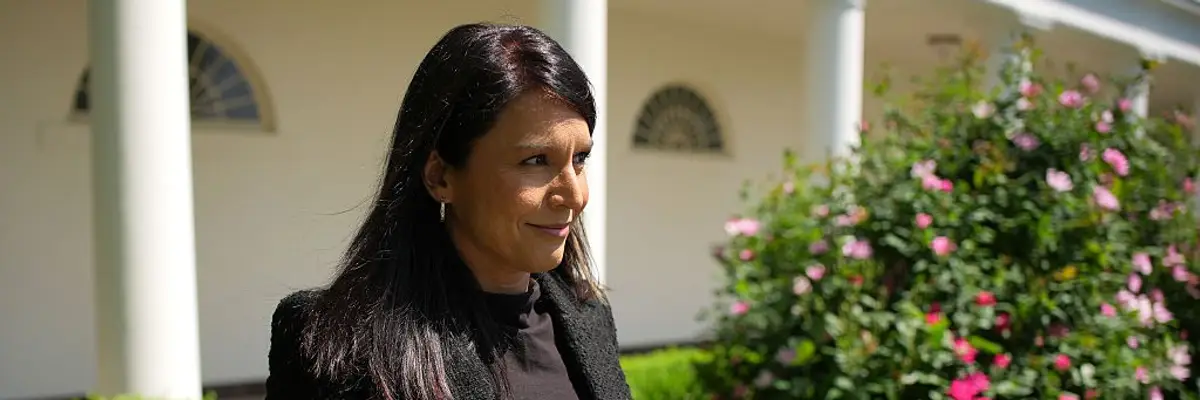
US Director of National Intelligence Tulsi Gabbard arrives for a National Day of Prayer event hosted by President Donald Trump in the Rose Garden at the White House on May 1, 2025 in Washington, DC.
The attorney representing the whistleblower called it "confounding" that it took Gabbard’s office eight months to send a disclosure to Congress.
A whistleblower last year filed a complaint against US Director of National Intelligence Tulsi Gabbard whose contents are so sensitive that the complaint itself has reportedly been locked in a safe.
The Wall Street Journal reported on Monday that the complaint was filed in May, and it set off "a continuing, behind-the-scenes struggle about how to assess and handle it, with the whistleblower’s lawyer accusing Gabbard of stonewalling the complaint."
The Journal's sources say that the complaint is so classified that no one in the US Congress has even laid eyes on it, as disclosure of its contents could cause "grave damage to national security."
A letter written by Andrew Bakaj, the whistleblower's attorney, to Gabbard in November accused her office of trying to block the complaint from reaching members of Congress by failing to provide guidance about how it should be handled while minimizing national security risks.
Gabbard's office told the Journal that it is working to get the issue resolved but that it is taking time because of the sensitive nature of the complaint, which it dismissed as "baseless and politically motivated."
However, Bakaj told the Journal that he doesn't believe Gabbard's office is making a good-faith effort to disclose the complaint to Congress.
“From my experience, it is confounding for [Gabbard’s office] to take weeks—let alone eight months—to transmit a disclosure to Congress,” he said.
The Journal was not able to verify the contents of the complaint against Gabbard, and Bakaj told the paper that its contents are so highly classified that he has not been allowed to view it.
Whistleblower Aid, the nonprofit legal organization where Bakaj serves as chief legal counsel, called on Monday for Congress to open an investigation into Gabbard "for hiding high-level intelligence... for nearly eight months," as well as for "her attempts to bury a whistleblower disclosure about her own actions," as required by US law.
National security attorney Mark Zaid, who co-founded Whistleblower Aid, praised the organization's work in representing the whistleblower and declared in a social media post that Gabbard and her office "have a lot of explaining to do."
Dear Common Dreams reader, It’s been nearly 30 years since I co-founded Common Dreams with my late wife, Lina Newhouser. We had the radical notion that journalism should serve the public good, not corporate profits. It was clear to us from the outset what it would take to build such a project. No paid advertisements. No corporate sponsors. No millionaire publisher telling us what to think or do. Many people said we wouldn't last a year, but we proved those doubters wrong. Together with a tremendous team of journalists and dedicated staff, we built an independent media outlet free from the constraints of profits and corporate control. Our mission has always been simple: To inform. To inspire. To ignite change for the common good. Building Common Dreams was not easy. Our survival was never guaranteed. When you take on the most powerful forces—Wall Street greed, fossil fuel industry destruction, Big Tech lobbyists, and uber-rich oligarchs who have spent billions upon billions rigging the economy and democracy in their favor—the only bulwark you have is supporters who believe in your work. But here’s the urgent message from me today. It's never been this bad out there. And it's never been this hard to keep us going. At the very moment Common Dreams is most needed, the threats we face are intensifying. We need your support now more than ever. We don't accept corporate advertising and never will. We don't have a paywall because we don't think people should be blocked from critical news based on their ability to pay. Everything we do is funded by the donations of readers like you. When everyone does the little they can afford, we are strong. But if that support retreats or dries up, so do we. Will you donate now to make sure Common Dreams not only survives but thrives? —Craig Brown, Co-founder |
A whistleblower last year filed a complaint against US Director of National Intelligence Tulsi Gabbard whose contents are so sensitive that the complaint itself has reportedly been locked in a safe.
The Wall Street Journal reported on Monday that the complaint was filed in May, and it set off "a continuing, behind-the-scenes struggle about how to assess and handle it, with the whistleblower’s lawyer accusing Gabbard of stonewalling the complaint."
The Journal's sources say that the complaint is so classified that no one in the US Congress has even laid eyes on it, as disclosure of its contents could cause "grave damage to national security."
A letter written by Andrew Bakaj, the whistleblower's attorney, to Gabbard in November accused her office of trying to block the complaint from reaching members of Congress by failing to provide guidance about how it should be handled while minimizing national security risks.
Gabbard's office told the Journal that it is working to get the issue resolved but that it is taking time because of the sensitive nature of the complaint, which it dismissed as "baseless and politically motivated."
However, Bakaj told the Journal that he doesn't believe Gabbard's office is making a good-faith effort to disclose the complaint to Congress.
“From my experience, it is confounding for [Gabbard’s office] to take weeks—let alone eight months—to transmit a disclosure to Congress,” he said.
The Journal was not able to verify the contents of the complaint against Gabbard, and Bakaj told the paper that its contents are so highly classified that he has not been allowed to view it.
Whistleblower Aid, the nonprofit legal organization where Bakaj serves as chief legal counsel, called on Monday for Congress to open an investigation into Gabbard "for hiding high-level intelligence... for nearly eight months," as well as for "her attempts to bury a whistleblower disclosure about her own actions," as required by US law.
National security attorney Mark Zaid, who co-founded Whistleblower Aid, praised the organization's work in representing the whistleblower and declared in a social media post that Gabbard and her office "have a lot of explaining to do."
A whistleblower last year filed a complaint against US Director of National Intelligence Tulsi Gabbard whose contents are so sensitive that the complaint itself has reportedly been locked in a safe.
The Wall Street Journal reported on Monday that the complaint was filed in May, and it set off "a continuing, behind-the-scenes struggle about how to assess and handle it, with the whistleblower’s lawyer accusing Gabbard of stonewalling the complaint."
The Journal's sources say that the complaint is so classified that no one in the US Congress has even laid eyes on it, as disclosure of its contents could cause "grave damage to national security."
A letter written by Andrew Bakaj, the whistleblower's attorney, to Gabbard in November accused her office of trying to block the complaint from reaching members of Congress by failing to provide guidance about how it should be handled while minimizing national security risks.
Gabbard's office told the Journal that it is working to get the issue resolved but that it is taking time because of the sensitive nature of the complaint, which it dismissed as "baseless and politically motivated."
However, Bakaj told the Journal that he doesn't believe Gabbard's office is making a good-faith effort to disclose the complaint to Congress.
“From my experience, it is confounding for [Gabbard’s office] to take weeks—let alone eight months—to transmit a disclosure to Congress,” he said.
The Journal was not able to verify the contents of the complaint against Gabbard, and Bakaj told the paper that its contents are so highly classified that he has not been allowed to view it.
Whistleblower Aid, the nonprofit legal organization where Bakaj serves as chief legal counsel, called on Monday for Congress to open an investigation into Gabbard "for hiding high-level intelligence... for nearly eight months," as well as for "her attempts to bury a whistleblower disclosure about her own actions," as required by US law.
National security attorney Mark Zaid, who co-founded Whistleblower Aid, praised the organization's work in representing the whistleblower and declared in a social media post that Gabbard and her office "have a lot of explaining to do."