

SUBSCRIBE TO OUR FREE NEWSLETTER
Daily news & progressive opinion—funded by the people, not the corporations—delivered straight to your inbox.
5
#000000
#FFFFFF
To donate by check, phone, or other method, see our More Ways to Give page.
Daily news & progressive opinion—funded by the people, not the corporations—delivered straight to your inbox.
Dr. Mustafa Barghouti, a physician and Palestinian leader, said the statement "indicates dangerous Israeli intentions of annexing 53% of the little Gaza Strip, and to prevent reconstruction of what Israel destroyed in Gaza."
The top-ranking officer in the Israel Defense Forces suggested that Israel may plan to permanently take over more than half of Gaza, which it currently occupies as part of a temporary arrangement under the latest "ceasefire" agreement.
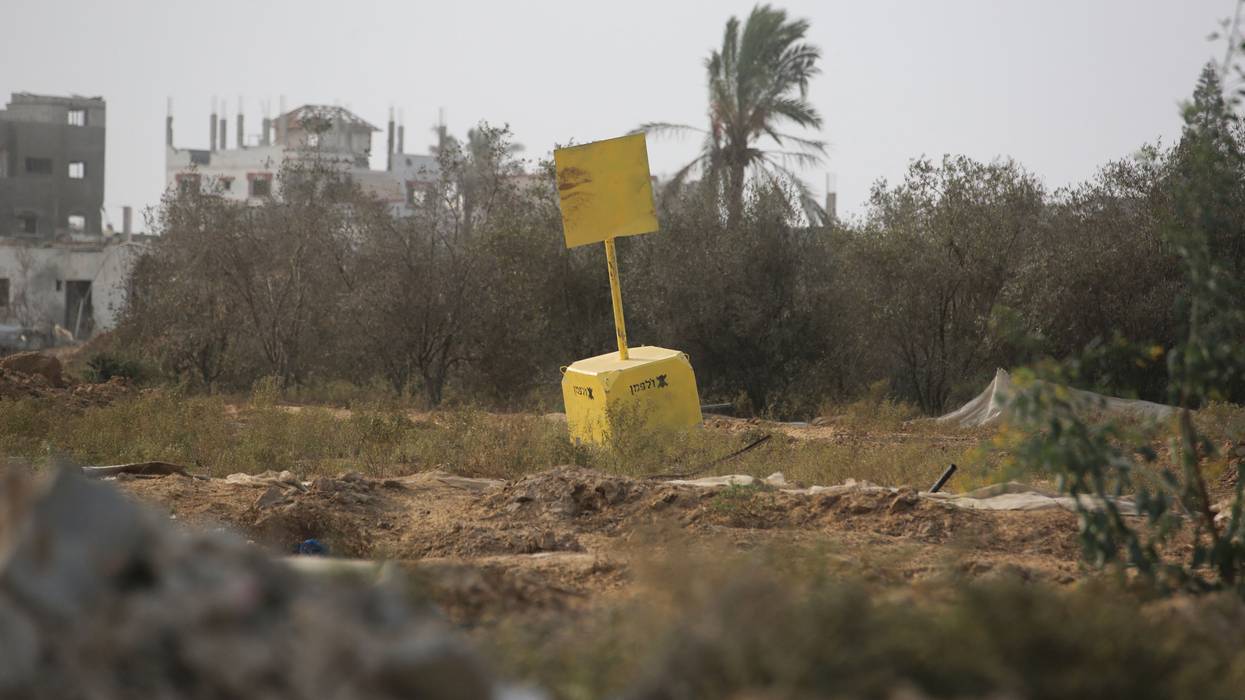
That agreement, signed in early October, required Israel to withdraw its forces behind a so-called "yellow line" as part of the first phase, which left it occupying over half of the territory on its side. Gaza's nearly 2 million inhabitants, meanwhile, are crammed into a territory of about 60 square miles—the vast majority of them displaced and living in makeshift structures.
The deal Israel agreed to in principle says this is only a temporary arrangement. Later phases would require Israel to eventually pull back entirely, returning control to an "International Stabilization Force" and eventually to Palestinians, with only a security buffer zone between the territories under Israel's direct control.
But on Sunday, as he spoke to troops in Gaza, IDF Chief of Staff Lt. Gen. Eyal Zamir described the yellow line not as a temporary fixture of the ceasefire agreement, but as “a new border line" between Israel and Gaza.
Zamir stated that Israel has "operational control over extensive parts of the Gaza Strip and we will remain on those defense lines,” adding that "the yellow line is a new border line—serving as a forward defensive line for our communities and a line of operational activity."
The IDF chief did not elaborate further on what he meant, but many interpreted the comments as a direct affront to the core of the ceasefire agreement.
"The Israeli chief of staff said today that the yellow line in Gaza is the new border between Israel and Gaza," said Dr. Mustafa Barghouti, who serves as general secretary of the Palestinian National Initiative, a political party in the West Bank. He said it "indicates dangerous Israeli intentions of annexing 53% of the little Gaza Strip, and to prevent reconstruction of what Israel destroyed in Gaza."
Zamir's statement notably comes shortly after a report from the Euro-Mediterranean Human Rights Monitor last week provided new details on a US-led proposal to resettle tens of thousands of Palestinians at a time into densely packed "‘cities’ of prefabricated container homes" on the Israeli-controlled side of the yellow line that they would not be allowed to leave without consent from Israel. The group likened the plan to "the historical model of ghettos."
The statement also notably came on the same day that Prime Minister Benjamin Netanyahu told German Chancellor Friedrich Merz at a joint press conference that Israel's annexation of the West Bank "remains a subject to be discussed." This year has seen a historic surge of violence by Israeli settlers in the illegally occupied territory, which ramped up following the ceasefire.
Israel has already been accused by Gaza authorities of violating the ceasefire several hundred times by routinely launching strikes in Gaza. On Saturday, the UN reported that at least 360 Palestinians have been killed since the truce went into effect on October 10, and that 70 of them have been children.
The IDF often claims that those killed have been Palestinians who crossed the yellow line. As Haaretz reported last week: "In many cases, the line Israel drew on the maps is not marked on the ground. The IDF's response policy is clear: Anyone who approaches the forbidden area is shot immediately, even when they are children."
On Sunday, Al Jazeera and the Times of Israel reported, citing local medics, that Israeli forces had shot a 3-year-old girl, later identified as Ahed al-Bayok, in southern Gaza’s coastal area of Mawasi, near Khan Younis. The shooting took place on the Hamas-controlled side of the yellow line.
Within the same hour on Sunday, the IDF posted a statement on social media: "IDF troops operating in southern Gaza identified a terrorist who crossed the yellow line and approached the troops, posing an immediate threat to them. Following the identification, the troops eliminated the terrorist." It remains unconfirmed whether that statement referred to al-Bayok, though the IDF has used similar language to describe the shootings of an 8- and 11-year-old child.
Until recently, Israel has also refused to allow for the opening of the Rafah Crossing, the most significant entry point for desperately needed humanitarian aid, which has been required to enter the strip "without interference" as part of the ceasefire agreement.
Israel agreed to open the crossing last week, but only to facilitate the exit of Palestinians from Gaza. In response, eight Arab governments expressed their “complete rejection of any attempts to displace the Palestinian people from their land."
Zamir's comments come as the ceasefire limps into its second phase, where US President Donald Trump and Israeli Prime Minister Benjamin Netanyahu will push for the full demilitarization of Hamas, which Israel has said would be a precondition for its complete withdrawal from Gaza.
“Now we are at the critical moment," said Qatari Premier and Foreign Minister Sheikh Mohammed bin Abdulrahman Al Thani, at a conference in Doha on Saturday. "A ceasefire cannot be completed unless there is a full withdrawal of the Israeli forces [and] there is stability back in Gaza."
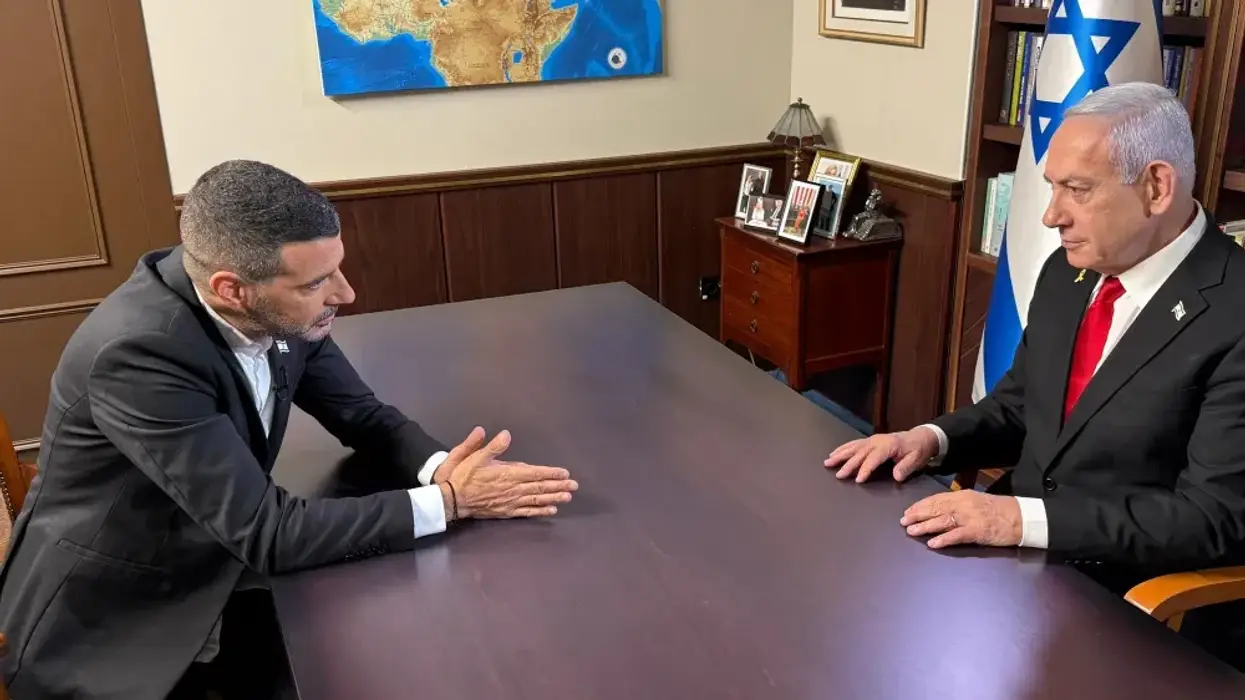
In supporting the notion of "Greater Israel," the prime minister suggested he supported efforts to expand Israel's borders by conquering large parts of several of its neighboring countries.
Israeli Prime Minister Benjamin Netanyahu is facing condemnation after he endorsed the goal of establishing "Greater Israel."
Many interpreted that as a promise to further expand Israel's borders into other parts of the Arab world.
As the Times of Israel explains:
The term Greater Israel refers to Israel in expanded borders in accordance with biblical or historical descriptions, and has many versions, some of which include parts of today's Jordan, Lebanon, Syria, Egypt, Iraq and Saudi Arabia...
It is still adopted by some far-right figures in Israel who express a desire to annex or eventually control many of those territories.
In an interview Tuesday on Israel's i24 TV network, interviewer Sharon Gal—a former right-wing member of the Knesset—handed Netanyahu an amulet depicting what he said was "the Promised Land."
"This is my vision," said Gal, before asking Netanyahu, "Do you connect to the vision?"
Netanyahu responded, "Very much."
Gal then stressed that the map "is Greater Israel."
"If you ask me, we are here," Netanyahu responded. "You know I often mention my father. My parents' generation had to establish the state. And our generation, my generation, has to guarantee its continued existence. And I see that as a great mission."
Though the pendant itself was not visible onscreen, it was likely the one sold by Gal's company, which the Times of Israel says depicts a "relatively maximalist" map containing territory stretching from the Nile River to the Euphrates—an area encompassing swathes of Egypt, Lebanon, Jordan, Syria, and Iraq.
i24 has cut this provocative exchange from the video of the interview on its Hebrew or English language YouTube channels. However, it can still be viewed on i24's Hebrew-language website.
The idea of colonizing other parts of the Arab world according to historic Jewish texts is popular among the far-right portion of Netanyahu's governing coalition.
Religious Zionist Party leader Bezalel Smotrich, Israel's minister of finance, has said he wants a Jewish State "according to the books of our sages" that will "extend to Damascus," the capital of Syria, and suggested Israel will "slowly" conquer the other side of the Jordan River.
At a conference in March 2023, before Israel's current military assault on the Gaza Strip began, Smotrich spoke at a conference behind a podium depicting a map of "Greater Israel," which encompassed parts of Jordan, Syria, and Saudi Arabia.
Earlier this week, Smotrich unveiled a new 3,000-person settlement in the illegally-occupied West Bank known as E1, which he said "buries the idea of a Palestinian state" because "there is nothing to recognize and no one to recognize."
Netanyahu has long sought to downplay the idea that Israel has waged the destruction of Gaza or its attacks on Syria and Lebanon with the goal of expansion. Even as his government talks openly of permanently exiling the people of Gaza to make room for Jewish settlers, the prime minister has maintained that his goals are purely defensive.
Mustafa Barghouti—the leader of the Palestinian National Initiative, a liberal party in the West Bank's legislature—said Netanyahu's endorsement of "Greater Israel" means "he is on a mission to violate all international laws, commit crimes against humanity, and annex Palestinian and other Arab countries' territories." The Palestinian Authority likewise said Netanyahu's comments were an expression of Israel's "expansionist colonial policies."
That outrage has echoed across the Arab world.
Saudi Arabia expressed its "complete rejection of the settlement and expansionist ideas." Egypt said the remarks had "implications of provoking instability and reflecting a rejection of the pursuit of peace in the region, as well as an insistence on escalation."
Qatar, which has often tried to mediate a ceasefire between Israel and Hamas, called the comments "an extension of the occupation's approach based on arrogance, fueling crises, and conflicts."
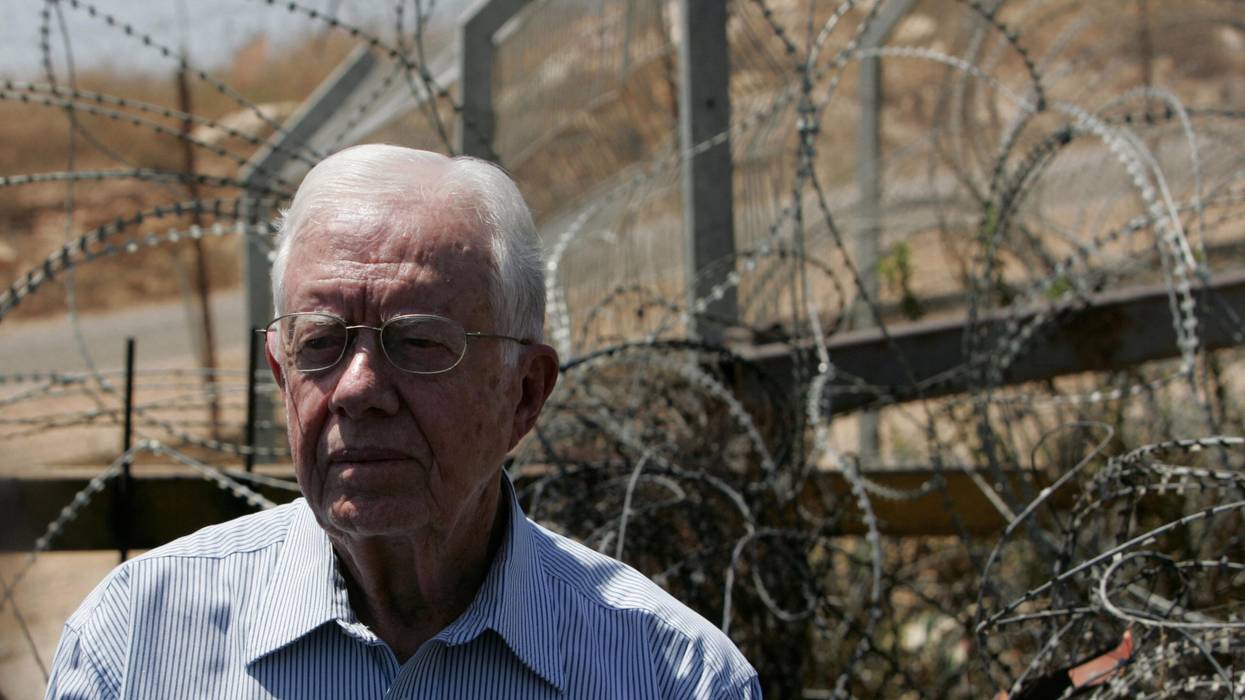
As we celebrate and reflect on Carter’s life and legacy, let us amplify his call for the U.S. to be a genuine force for peace and justice around the world.
Jimmy Carter, the 39th president of the United States who turned 100 this month, has built a legacy of courage and moral clarity over his many decades in public service, fighting tirelessly for peace and human dignity at home and around the world.
Now, as he nears the twilight of his life, we must take the time to reflect on one of his most courageous stances: his unwavering commitment to Palestinian dignity and self-determination.
In 1996, President Carter stood with us, the Palestinian people, as we voted for our leaders for the very first time. Though the Oslo peace process had failed to deliver the independent Palestinian state we had hoped for, Carter believed that the act of casting our ballots was still vital – that it was a chance to build a future rooted in peace and justice.
His presence in Palestine during that first election underscored our hopes for a brighter tomorrow, despite the heavy shadows of occupation and displacement.
What makes Jimmy Carter’s stance on Palestine unique is not only his moral courage, but the fact that he was once the most powerful man in the world.
In 2003, as the separation wall began to snake across the West Bank, I met President Carter once again at The Carter Center’s first-ever Human Rights Defenders Forum in Atlanta, Georgia.
There, I told him about the stark realities faced by Palestinians in the West Bank city of Qalqilia – 40,000 people encircled by concrete, with only one gate allowing them access to farms, medical care and the outside world. A single gate that opened and closed at the whim of Israeli soldiers, sometimes remaining shut for days at a time. As I updated him on the situation in Palestine, I called it what it is: apartheid, the separation of two peoples based on ethnicity, with one dominating the other through systemic injustice. Carter listened, intently and without judgement.
Just two years later, in 2005, he had the opportunity to see the reality for himself when he returned to Palestine to observe the presidential elections, in which I was the leading independent candidate against Fatah’s Mahmoud Abbas.
During this time, President Carter witnessed firsthand how Israel, rather than building bridges to secure peace, was constructing walls – walls that cut deep into Palestinian land, walls that annex settlements and water resources, walls that isolate Palestinians into enclaves. He also witnessed how, after a meeting we had in Jerusalem, the Israeli security service arrested me for no reason other than preventing me from talking to Palestinian voters there. It was during this visit, I believe, that it became clear to him that Israel was not preparing for peace, but instead consolidating control in ways that would make a two-state solution impossible.
In 2006, Carter published Palestine: Peace Not Apartheid, a book that shook the American political landscape. In it, he laid out a simple truth: without Palestinian freedom and dignity, there could be no peace. He made the case not as an enemy of Israel, but as someone deeply invested in its survival. Yet, for daring to speak this truth, Carter was vilified. He was accused of being anti-Semitic and ostracized by many in the US and even his Democratic Party. But Carter never wavered. He continued to speak the truth about the realities in Palestine – not out of malice for Israel, but from a deep belief in justice.
He understood that the only way Israel could truly thrive was through a just peace with the Palestinians. He recognized that the Palestinian people, who have lived under brutal occupation since 1967 and experienced repeated displacement since 1948, were entitled to the same rights and dignity as anyone else. He recognized in later writings that it was my 2003 account of the situation in Qalqilia that made him understand the reality of apartheid in Palestine.
What makes Jimmy Carter’s stance on Palestine unique is not only his moral courage, but the fact that he was once the most powerful man in the world. As U.S. president, he tried to open the road to lasting peace. He could not secure Palestinian self-determination during his one-term presidency between 1977 and 1981, yet he refused to stop trying. In the decades since leaving office, he has turned every stone, searched for every possibility to bring about a just peace for Palestinians and all the people of the Middle East.
As we celebrate and reflect on Carter’s life and legacy, let us amplify his call for the U.S. to be a genuine force for peace and justice around the world.
Now, as he enters his 100th year and tributes pour in to honor his many humanitarian achievements, we must not forget that he was one of the most important truth-tellers of our time. Carter was willing to see the brutality inflicted on the Palestinian people and refused to remain silent about it. That is a rare kind of courage, especially for a former U.S. president, that should be recognized and remembered.
The best way we can honor Jimmy Carter, his bravery and unwavering moral clarity is to carry forward his commitment to equal human rights for all people.
The Palestinian struggle for self-determination is not just a political issue – it is a moral one. As Carter always emphasized, the U.S. has a special responsibility. Without American political and military support, Israel would not have been able to continue its ruthless occupation and apartheid against Palestinians or to commit the genocide in Gaza.
As we celebrate and reflect on Carter’s life and legacy, let us amplify his call for the U.S. to be a genuine force for peace and justice around the world. Let us recognize, as Carter wanted, that peace in our Holy Land will only come when the rights and dignity of Palestinians are acknowledged and respected. Only then will we truly be able to honor his legacy and the values he stood for so bravely.
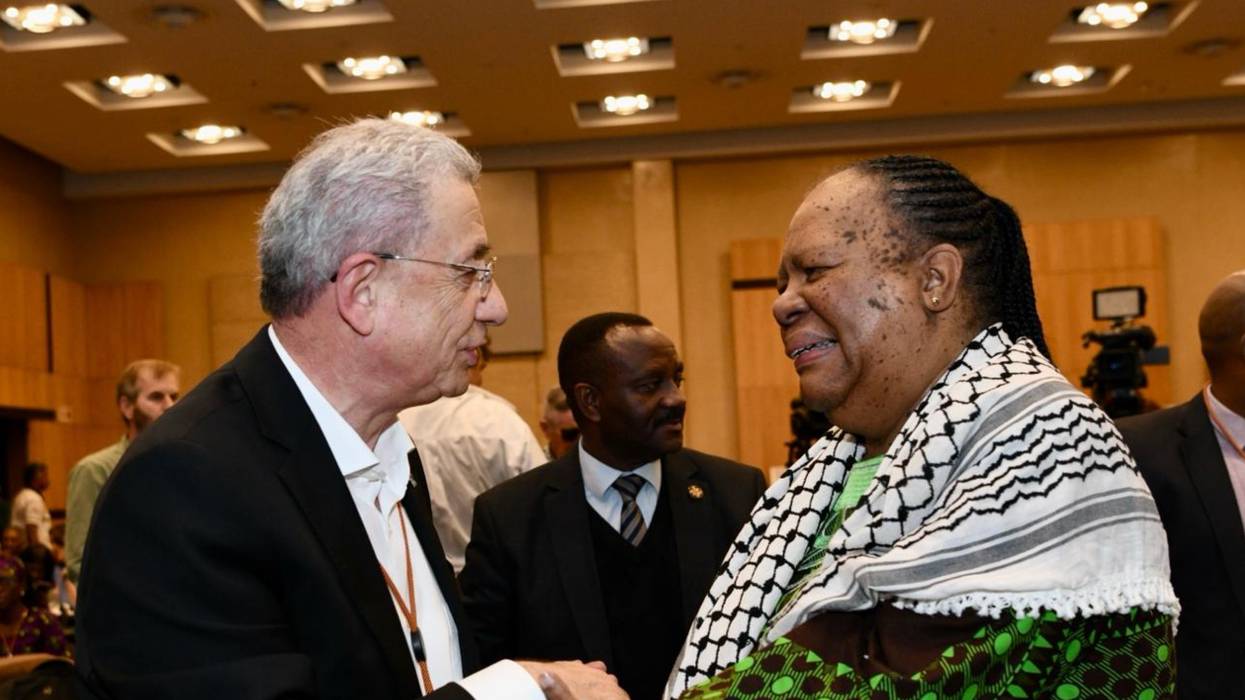
South African Foreign Minister Naledi Pandor said the movement to end Israeli apartheid is "following in the footsteps of Nelson Mandela" and "will not rest until the freedom of the peoples of Palestine is realized."
As Israeli forces continued their devastating assault on the Gaza Strip and deadly occupation of the West Bank, human rights defenders from around the world gathered Friday in South Africa—which is leading a genocide case against Israel at the World Court—for the inaugural Global Anti-Apartheid Conference on Palestine.
The conference began with a moment of silence for the nearly 35,000 Palestinians—most of them women and children—killed by Israeli troops during the 217-day war and "complete siege," which has also wounded more than 78,000 people, displaced around 90% of the strip's population, and starved at least hundreds of thousands of others—dozens of whom have died.
Meanwhile, Israel's illegal occupation and settler colonization have intensified in the West Bank and East Jerusalem, where soldiers and settlers have killed at least 467 Palestinians and wounded or arrested thousands of others—some of whom were tortured—over the past seven months.
"This conference must make sure that we mobilize the world... and free the people of Palestine," Rev. Frank Chikane of the African National Congress (ANC) and World Council of Churches said at the start of the symposium.
Thanking Chikane for "spearheading" conference organizing efforts, South African Foreign Minister Naledi Pandor hailed the "watershed moment" of "anti-apartheid movements on Palestine from around the globe coming together and joining forces in the struggle for justice for the Palestinian people."
"It has never been so urgent for the progressive forces around the globe to come together in a collective effort to exert maximum pressure to end the genocidal campaign underway in Gaza, and to end the apartheid system in Israel and the occupied territories, which is worse than what we experienced in our own country," she asserted, echoing past remarks by other South Africans and former U.S. President Jimmy Carter.
Pandor highlighted South Africa's December
filing of a genocide case at the International Court of Justice in The Hague, a move supported by over 30 countries and regional blocs and hundreds of advocacy groups. In January, the ICJ found that Israel is "plausibly" committing genocide in Gaza and ordered its government to prevent future genocidal acts—an order human rights monitors say Israel has ignored, largely by blocking humanitarian aid. In March, the ICJ ordered Israel to allow more aid into Gaza.
"We will continue to do everything within our power to preserve the existence of the Palestinian people as a group, to end all acts of apartheid and genocide against the Palestinian people, and to walk with them towards the realization of their collective right to self-determination," Pandor said. "We continue to do so following in the footsteps of Nelson Mandela and will not rest until the freedom of the peoples of Palestine is realized."
Ronnie Kasrils—a communist who went from being a guerrilla fighter in the ANC's armed wing during the apartheid era to a government minister in a free South Africa—warned against compromising in the fight for freedom. He also reaffirmed Palestinians' legal right to "armed struggle, an international right of resistance against tyranny, against military occupation."
Anti-Apartheid stalwart Ronnie Kasrils gives a passionate address at the Global Anti-Apartheid Conference On Palestine. #PalestineAfrica2024 pic.twitter.com/32i6KQfA85
— Salaamedia (@salaamedia) May 10, 2024
"There is no need to pussyfoot around the fact when we have our discussions about the rights of the Palestinians to resist with arms," Kasrils stressed.
Palestinian lawmaker, physician, and activist Mustafa Barghouti said that "we've woken the people of the world against genocide and injustice... and hypocrisy of international governments."
"Israel initiated this war but Israel will not be the one who decides how it ends," he added.
Lamis Deek, a New York-based attorney specializing in international human rights, called for "liberation of all the land from institutions of Zionist violence and supremacy, return, reparations, justice and accountability for every Zionist crime, and restitution."
"The Palestinian resistance is on the frontline against global descent into darkness and barbarism" @Lamis_Deek speaks powerfully about what it we means when we speak about Palestinian liberation. At The Global Anti Apartheid Conference on Palestine#PalestineAfrica pic.twitter.com/2eKGrS2EZ6
— CAGE International (@CAGEintl) May 10, 2024
Declan Kearney, a member of Northern Ireland's Legislative Assembly and national chairman of the Irish republican and democratic socialist party Sinn Féin, noted that "Palestinian and Irish freedom fighters share a special bond. Our commitment is absolute and unbreakable."
The Republic of Ireland said in March that it would intervene in the South African ICJ case and the country—along with fellow European Union members Spain, Slovenia, and Malta—is set later this month to join the nearly 140 nations that recognize Palestinian statehood.
The United Nations General Assembly voted 143-9 on Friday to approve Palestine's bid for full U.N. membership. The United States—Israel's leading international backer—and Israel voted against the proposal, which will head to the U.N. Security Council and an almost certain U.S. veto.
Kearney echoed other speakers who stressed the importance of international solidarity, applauding the "unprecedented" global outpouring of support for Palestine.
"We are with the Palestinian people on their long walk to freedom and will never abandon them," he vowed.
While many Israelis and their backers bristle at the apartheid label, Palestinians and individuals ranging from Carter to the late South African bishop and human rights campaigner Desmond Tutu to United Nations special rapporteurs have for decades called Israel's policies and actions in Palestine apartheid.
Major human rights organizations—including Human Rights Watch, Amnesty International, and the Israeli groups B'Tselem and Yesh Din—have also done so. So have prominent Israelis including a former Mossad chief, multiple former attorneys general and ambassadors, and a growing number of journalists, artists, veterans, and others.
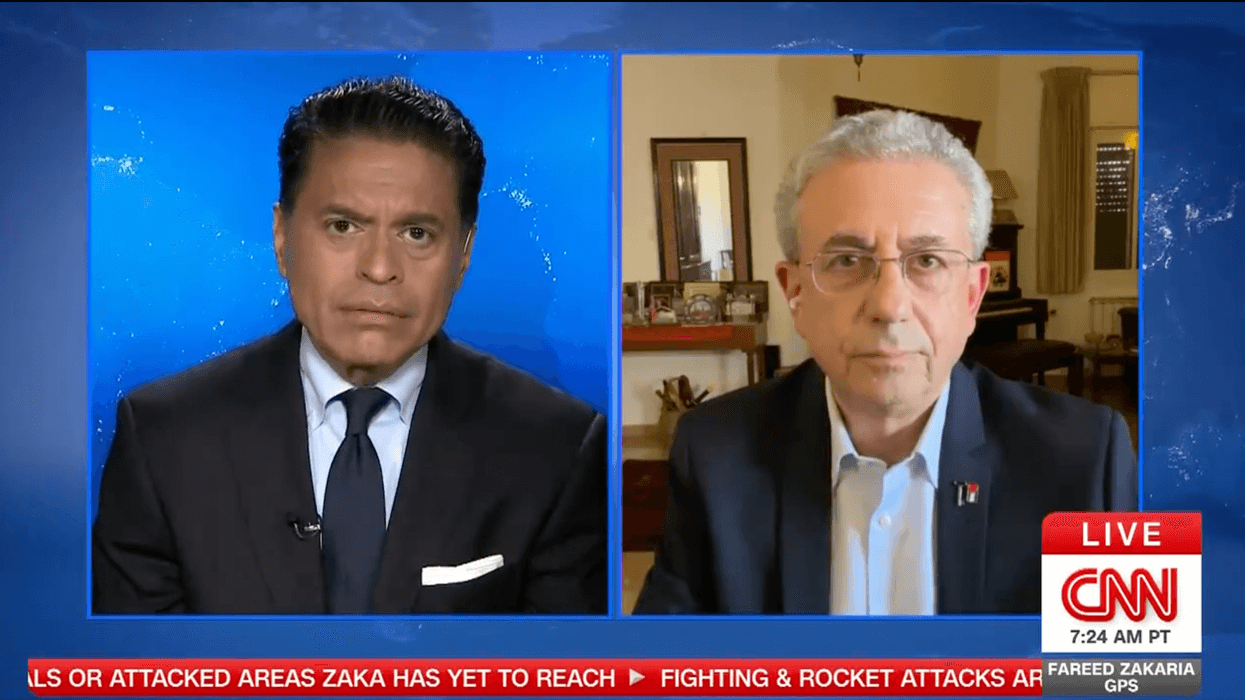
"We should all have equal life, we should have all peace, we should all have justice, and we should live in dignity," said Dr. Mustafa Barghouti. "The main way to achieve that is to end occupation, end the system of apartheid."
Palestinian human rights advocates and historians called an interview broadcast on CNN late Sunday a "must-watch" for anyone seeking the broader context for the violence that erupted over the weekend, as Palestinian politician and advocate Dr. Mustafa Barghouti told anchor Fareed Zakaria that the surprise attack by Hamas followed decades of occupation and apartheid as well as the killings of thousands of Palestinian civilians by Israeli forces in recent years.
Zakaria introduced Barghouti by saying that the political leader of Hamas "has blamed the violence squarely on Israel's occupation of Palestinian land," adding Barghouti would provide "another Palestinian viewpoint" for viewers of "Fareed Zakaria GPS."
While condemning violence against civilians, Barghouti said the fighting has evolved as "the direct result of the continuation of the longest occupation in modern history" and used the same term accepted by the United Nations, thousands of academics, and international human rights experts—apartheid—to describe the system Palestinians have been forced to live under.
"There is one way to stop any violence and that is to end the Israeli occupation," said Barghouti. "And that is for the United States to be fair. They cannot say that Israel has the right to defend itself, but we the Palestinians don't have the right to defend ourselves... The only way to stop it is to tell Israel, 'You have to respect international law, you have to end this illegal occupation and accept Palestinians as equal human beings.'"
While Israeli officials have refused to meet with the Palestinian government in the past decade, Barghouti noted, Palestinian civilians have faced escalating violence by the Israel Defense Forces (IDF) and settlers, including the killing of 248 civilians—40 children among them—just this year in attacks on Jenin, Nablus, and other cities.
Meanwhile, he said, 20 communities have been evicted "in an act of ethnic cleansing," Israeli extremists have attacked Muslim and Christian holy sites, and far-right Israeli Finance Minister Bezalel Smotrich has called for the entire Palestinian town of Huwara to be "wiped out" by his country's military as well as saying that "Palestinians have one of three options: only either to immigrate or accept a life of subjugation to Israelis, or die."
Barghouti's interview aired after the Hamas attack killed more than 700 people in Israel and as the group reportedly held more than 100 people hostage. Israel launched airstrikes in Gaza in response that killed more than 500 people and injured thousands, before officials announced a "complete siege" on the Gaza Strip, a region that has already faced a land, air, and sea blockade for 16 years.
Barghouti rejected the notion that the fighting over the weekend "will strengthen right-wing forces in Israel," as Zakaria said, and that it will ultimately make Palestinians' lives "harder," with restricted movement and impoverishment.
"Unfortunately, Fareed, what you have described is exactly what we already have, by 560 Israeli military checkpoints," said Barghouti. "The whole West Bank has been divided into 224 small ghettos separated from each other, and the settlers are everywhere attacking Palestinians. "Can we stop what's going on now? Yes, of course, all these Israelis who are now in Gaza can be released tomorrow... if Israel also accepts to release our 5,300 Palestinian prisoners who are in Israeli jails, including 1,260 Palestinians who are in jail without knowing why under the under the so-called "administrative detention."
The New Arab, a media outlet based in London, called Barghouti's interview "a rare occasion in media history where a Palestinian has been able to speak freely on live TV without being interrupted."
Human rights attorney Noura Erakat added that the discussion provided "an entire clinic to provide the context we need for a durable solution featuring justice with peace."
Barghouti concluded the interview by noting that Israel and its allies have identified no way for Palestinians to resist the decades-long occupation.
"If we struggle in a military form, we are terrorists, if we struggle in a nonviolent way we are described as violent, if we even resist with words we are described as provocative," he said. "If you support Palestinians and you are a foreigner, they describe you as an antisemite, and if you are a Jewish person—and there are many of those who support the Palestinian cause—they call them 'self-hating Jews.'"
"We should all have equal life, we should have all peace, we should all have justice, and we should live in dignity," he added. "The main way to achieve that is to end occupation, end the system of apartheid that I am sure no Jewish person can be proud of. Time has come for that and time has come for justice and freedom."