SUBSCRIBE TO OUR FREE NEWSLETTER
Daily news & progressive opinion—funded by the people, not the corporations—delivered straight to your inbox.
5
#000000
#FFFFFF
To donate by check, phone, or other method, see our More Ways to Give page.
Daily news & progressive opinion—funded by the people, not the corporations—delivered straight to your inbox.
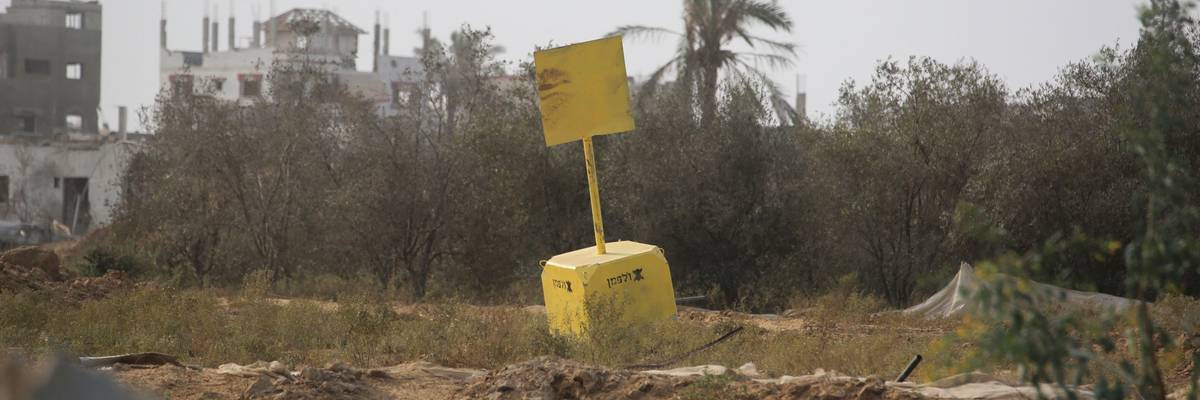
A general view of a concrete block marking the "yellow line" drawn by the Israeli military in Bureij, central Gaza Strip, on November 4, 2025.
Dr. Mustafa Barghouti, a physician and Palestinian leader, said the statement "indicates dangerous Israeli intentions of annexing 53% of the little Gaza Strip, and to prevent reconstruction of what Israel destroyed in Gaza."
The top-ranking officer in the Israel Defense Forces suggested that Israel may plan to permanently take over more than half of Gaza, which it currently occupies as part of a temporary arrangement under the latest "ceasefire" agreement.
That agreement, signed in early October, required Israel to withdraw its forces behind a so-called "yellow line" as part of the first phase, which left it occupying over half of the territory on its side. Gaza's nearly 2 million inhabitants, meanwhile, are crammed into a territory of about 60 square miles—the vast majority of them displaced and living in makeshift structures.
The deal Israel agreed to in principle says this is only a temporary arrangement. Later phases would require Israel to eventually pull back entirely, returning control to an "International Stabilization Force" and eventually to Palestinians, with only a security buffer zone between the territories under Israel's direct control.
But on Sunday, as he spoke to troops in Gaza, IDF Chief of Staff Lt. Gen. Eyal Zamir described the yellow line not as a temporary fixture of the ceasefire agreement, but as “a new border line" between Israel and Gaza.
Zamir stated that Israel has "operational control over extensive parts of the Gaza Strip and we will remain on those defense lines,” adding that "the yellow line is a new border line—serving as a forward defensive line for our communities and a line of operational activity."
The IDF chief did not elaborate further on what he meant, but many interpreted the comments as a direct affront to the core of the ceasefire agreement.
"The Israeli chief of staff said today that the yellow line in Gaza is the new border between Israel and Gaza," said Dr. Mustafa Barghouti, who serves as general secretary of the Palestinian National Initiative, a political party in the West Bank. He said it "indicates dangerous Israeli intentions of annexing 53% of the little Gaza Strip, and to prevent reconstruction of what Israel destroyed in Gaza."
Zamir's statement notably comes shortly after a report from the Euro-Mediterranean Human Rights Monitor last week provided new details on a US-led proposal to resettle tens of thousands of Palestinians at a time into densely packed "‘cities’ of prefabricated container homes" on the Israeli-controlled side of the yellow line that they would not be allowed to leave without consent from Israel. The group likened the plan to "the historical model of ghettos."
The statement also notably came on the same day that Prime Minister Benjamin Netanyahu told German Chancellor Friedrich Merz at a joint press conference that Israel's annexation of the West Bank "remains a subject to be discussed." This year has seen a historic surge of violence by Israeli settlers in the illegally occupied territory, which ramped up following the ceasefire.
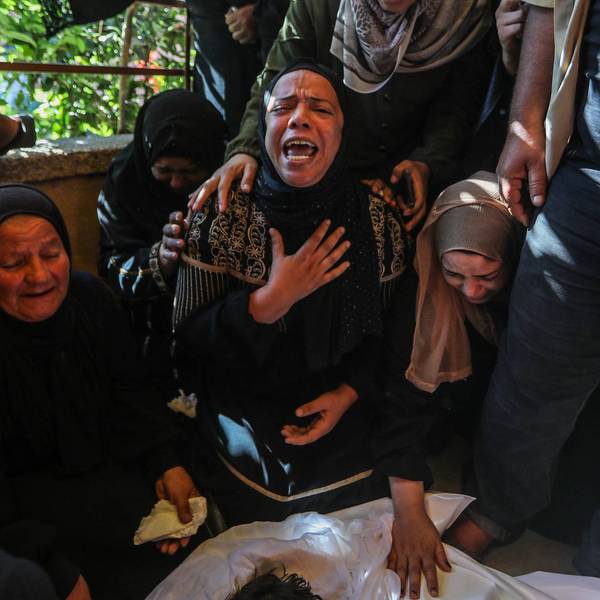
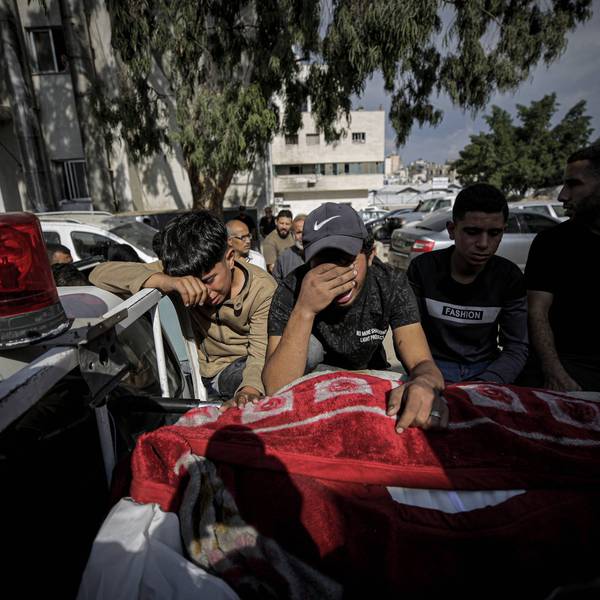
Israel has already been accused by Gaza authorities of violating the ceasefire several hundred times by routinely launching strikes in Gaza. On Saturday, the UN reported that at least 360 Palestinians have been killed since the truce went into effect on October 10, and that 70 of them have been children.
The IDF often claims that those killed have been Palestinians who crossed the yellow line. As Haaretz reported last week: "In many cases, the line Israel drew on the maps is not marked on the ground. The IDF's response policy is clear: Anyone who approaches the forbidden area is shot immediately, even when they are children."
On Sunday, Al Jazeera and the Times of Israel reported, citing local medics, that Israeli forces had shot a 3-year-old girl, later identified as Ahed al-Bayok, in southern Gaza’s coastal area of Mawasi, near Khan Younis. The shooting took place on the Hamas-controlled side of the yellow line.
Within the same hour on Sunday, the IDF posted a statement on social media: "IDF troops operating in southern Gaza identified a terrorist who crossed the yellow line and approached the troops, posing an immediate threat to them. Following the identification, the troops eliminated the terrorist." It remains unconfirmed whether that statement referred to al-Bayok, though the IDF has used similar language to describe the shootings of an 8- and 11-year-old child.
Until recently, Israel has also refused to allow for the opening of the Rafah Crossing, the most significant entry point for desperately needed humanitarian aid, which has been required to enter the strip "without interference" as part of the ceasefire agreement.
Israel agreed to open the crossing last week, but only to facilitate the exit of Palestinians from Gaza. In response, eight Arab governments expressed their “complete rejection of any attempts to displace the Palestinian people from their land."
Zamir's comments come as the ceasefire limps into its second phase, where US President Donald Trump and Israeli Prime Minister Benjamin Netanyahu will push for the full demilitarization of Hamas, which Israel has said would be a precondition for its complete withdrawal from Gaza.
“Now we are at the critical moment," said Qatari Premier and Foreign Minister Sheikh Mohammed bin Abdulrahman Al Thani, at a conference in Doha on Saturday. "A ceasefire cannot be completed unless there is a full withdrawal of the Israeli forces [and] there is stability back in Gaza."
Dear Common Dreams reader, It’s been nearly 30 years since I co-founded Common Dreams with my late wife, Lina Newhouser. We had the radical notion that journalism should serve the public good, not corporate profits. It was clear to us from the outset what it would take to build such a project. No paid advertisements. No corporate sponsors. No millionaire publisher telling us what to think or do. Many people said we wouldn't last a year, but we proved those doubters wrong. Together with a tremendous team of journalists and dedicated staff, we built an independent media outlet free from the constraints of profits and corporate control. Our mission has always been simple: To inform. To inspire. To ignite change for the common good. Building Common Dreams was not easy. Our survival was never guaranteed. When you take on the most powerful forces—Wall Street greed, fossil fuel industry destruction, Big Tech lobbyists, and uber-rich oligarchs who have spent billions upon billions rigging the economy and democracy in their favor—the only bulwark you have is supporters who believe in your work. But here’s the urgent message from me today. It's never been this bad out there. And it's never been this hard to keep us going. At the very moment Common Dreams is most needed, the threats we face are intensifying. We need your support now more than ever. We don't accept corporate advertising and never will. We don't have a paywall because we don't think people should be blocked from critical news based on their ability to pay. Everything we do is funded by the donations of readers like you. When everyone does the little they can afford, we are strong. But if that support retreats or dries up, so do we. Will you donate now to make sure Common Dreams not only survives but thrives? —Craig Brown, Co-founder |
The top-ranking officer in the Israel Defense Forces suggested that Israel may plan to permanently take over more than half of Gaza, which it currently occupies as part of a temporary arrangement under the latest "ceasefire" agreement.
That agreement, signed in early October, required Israel to withdraw its forces behind a so-called "yellow line" as part of the first phase, which left it occupying over half of the territory on its side. Gaza's nearly 2 million inhabitants, meanwhile, are crammed into a territory of about 60 square miles—the vast majority of them displaced and living in makeshift structures.
The deal Israel agreed to in principle says this is only a temporary arrangement. Later phases would require Israel to eventually pull back entirely, returning control to an "International Stabilization Force" and eventually to Palestinians, with only a security buffer zone between the territories under Israel's direct control.
But on Sunday, as he spoke to troops in Gaza, IDF Chief of Staff Lt. Gen. Eyal Zamir described the yellow line not as a temporary fixture of the ceasefire agreement, but as “a new border line" between Israel and Gaza.
Zamir stated that Israel has "operational control over extensive parts of the Gaza Strip and we will remain on those defense lines,” adding that "the yellow line is a new border line—serving as a forward defensive line for our communities and a line of operational activity."
The IDF chief did not elaborate further on what he meant, but many interpreted the comments as a direct affront to the core of the ceasefire agreement.
"The Israeli chief of staff said today that the yellow line in Gaza is the new border between Israel and Gaza," said Dr. Mustafa Barghouti, who serves as general secretary of the Palestinian National Initiative, a political party in the West Bank. He said it "indicates dangerous Israeli intentions of annexing 53% of the little Gaza Strip, and to prevent reconstruction of what Israel destroyed in Gaza."
Zamir's statement notably comes shortly after a report from the Euro-Mediterranean Human Rights Monitor last week provided new details on a US-led proposal to resettle tens of thousands of Palestinians at a time into densely packed "‘cities’ of prefabricated container homes" on the Israeli-controlled side of the yellow line that they would not be allowed to leave without consent from Israel. The group likened the plan to "the historical model of ghettos."
The statement also notably came on the same day that Prime Minister Benjamin Netanyahu told German Chancellor Friedrich Merz at a joint press conference that Israel's annexation of the West Bank "remains a subject to be discussed." This year has seen a historic surge of violence by Israeli settlers in the illegally occupied territory, which ramped up following the ceasefire.
Israel has already been accused by Gaza authorities of violating the ceasefire several hundred times by routinely launching strikes in Gaza. On Saturday, the UN reported that at least 360 Palestinians have been killed since the truce went into effect on October 10, and that 70 of them have been children.
The IDF often claims that those killed have been Palestinians who crossed the yellow line. As Haaretz reported last week: "In many cases, the line Israel drew on the maps is not marked on the ground. The IDF's response policy is clear: Anyone who approaches the forbidden area is shot immediately, even when they are children."
On Sunday, Al Jazeera and the Times of Israel reported, citing local medics, that Israeli forces had shot a 3-year-old girl, later identified as Ahed al-Bayok, in southern Gaza’s coastal area of Mawasi, near Khan Younis. The shooting took place on the Hamas-controlled side of the yellow line.
Within the same hour on Sunday, the IDF posted a statement on social media: "IDF troops operating in southern Gaza identified a terrorist who crossed the yellow line and approached the troops, posing an immediate threat to them. Following the identification, the troops eliminated the terrorist." It remains unconfirmed whether that statement referred to al-Bayok, though the IDF has used similar language to describe the shootings of an 8- and 11-year-old child.
Until recently, Israel has also refused to allow for the opening of the Rafah Crossing, the most significant entry point for desperately needed humanitarian aid, which has been required to enter the strip "without interference" as part of the ceasefire agreement.
Israel agreed to open the crossing last week, but only to facilitate the exit of Palestinians from Gaza. In response, eight Arab governments expressed their “complete rejection of any attempts to displace the Palestinian people from their land."
Zamir's comments come as the ceasefire limps into its second phase, where US President Donald Trump and Israeli Prime Minister Benjamin Netanyahu will push for the full demilitarization of Hamas, which Israel has said would be a precondition for its complete withdrawal from Gaza.
“Now we are at the critical moment," said Qatari Premier and Foreign Minister Sheikh Mohammed bin Abdulrahman Al Thani, at a conference in Doha on Saturday. "A ceasefire cannot be completed unless there is a full withdrawal of the Israeli forces [and] there is stability back in Gaza."
The top-ranking officer in the Israel Defense Forces suggested that Israel may plan to permanently take over more than half of Gaza, which it currently occupies as part of a temporary arrangement under the latest "ceasefire" agreement.
That agreement, signed in early October, required Israel to withdraw its forces behind a so-called "yellow line" as part of the first phase, which left it occupying over half of the territory on its side. Gaza's nearly 2 million inhabitants, meanwhile, are crammed into a territory of about 60 square miles—the vast majority of them displaced and living in makeshift structures.
The deal Israel agreed to in principle says this is only a temporary arrangement. Later phases would require Israel to eventually pull back entirely, returning control to an "International Stabilization Force" and eventually to Palestinians, with only a security buffer zone between the territories under Israel's direct control.
But on Sunday, as he spoke to troops in Gaza, IDF Chief of Staff Lt. Gen. Eyal Zamir described the yellow line not as a temporary fixture of the ceasefire agreement, but as “a new border line" between Israel and Gaza.
Zamir stated that Israel has "operational control over extensive parts of the Gaza Strip and we will remain on those defense lines,” adding that "the yellow line is a new border line—serving as a forward defensive line for our communities and a line of operational activity."
The IDF chief did not elaborate further on what he meant, but many interpreted the comments as a direct affront to the core of the ceasefire agreement.
"The Israeli chief of staff said today that the yellow line in Gaza is the new border between Israel and Gaza," said Dr. Mustafa Barghouti, who serves as general secretary of the Palestinian National Initiative, a political party in the West Bank. He said it "indicates dangerous Israeli intentions of annexing 53% of the little Gaza Strip, and to prevent reconstruction of what Israel destroyed in Gaza."
Zamir's statement notably comes shortly after a report from the Euro-Mediterranean Human Rights Monitor last week provided new details on a US-led proposal to resettle tens of thousands of Palestinians at a time into densely packed "‘cities’ of prefabricated container homes" on the Israeli-controlled side of the yellow line that they would not be allowed to leave without consent from Israel. The group likened the plan to "the historical model of ghettos."
The statement also notably came on the same day that Prime Minister Benjamin Netanyahu told German Chancellor Friedrich Merz at a joint press conference that Israel's annexation of the West Bank "remains a subject to be discussed." This year has seen a historic surge of violence by Israeli settlers in the illegally occupied territory, which ramped up following the ceasefire.
Israel has already been accused by Gaza authorities of violating the ceasefire several hundred times by routinely launching strikes in Gaza. On Saturday, the UN reported that at least 360 Palestinians have been killed since the truce went into effect on October 10, and that 70 of them have been children.
The IDF often claims that those killed have been Palestinians who crossed the yellow line. As Haaretz reported last week: "In many cases, the line Israel drew on the maps is not marked on the ground. The IDF's response policy is clear: Anyone who approaches the forbidden area is shot immediately, even when they are children."
On Sunday, Al Jazeera and the Times of Israel reported, citing local medics, that Israeli forces had shot a 3-year-old girl, later identified as Ahed al-Bayok, in southern Gaza’s coastal area of Mawasi, near Khan Younis. The shooting took place on the Hamas-controlled side of the yellow line.
Within the same hour on Sunday, the IDF posted a statement on social media: "IDF troops operating in southern Gaza identified a terrorist who crossed the yellow line and approached the troops, posing an immediate threat to them. Following the identification, the troops eliminated the terrorist." It remains unconfirmed whether that statement referred to al-Bayok, though the IDF has used similar language to describe the shootings of an 8- and 11-year-old child.
Until recently, Israel has also refused to allow for the opening of the Rafah Crossing, the most significant entry point for desperately needed humanitarian aid, which has been required to enter the strip "without interference" as part of the ceasefire agreement.
Israel agreed to open the crossing last week, but only to facilitate the exit of Palestinians from Gaza. In response, eight Arab governments expressed their “complete rejection of any attempts to displace the Palestinian people from their land."
Zamir's comments come as the ceasefire limps into its second phase, where US President Donald Trump and Israeli Prime Minister Benjamin Netanyahu will push for the full demilitarization of Hamas, which Israel has said would be a precondition for its complete withdrawal from Gaza.
“Now we are at the critical moment," said Qatari Premier and Foreign Minister Sheikh Mohammed bin Abdulrahman Al Thani, at a conference in Doha on Saturday. "A ceasefire cannot be completed unless there is a full withdrawal of the Israeli forces [and] there is stability back in Gaza."