SUBSCRIBE TO OUR FREE NEWSLETTER
Daily news & progressive opinion—funded by the people, not the corporations—delivered straight to your inbox.
5
#000000
#FFFFFF
To donate by check, phone, or other method, see our More Ways to Give page.


Daily news & progressive opinion—funded by the people, not the corporations—delivered straight to your inbox.
UN High Commissioner for Human Rights Volker Türk said the new law "raises serious concerns about due process violations, is deeply discriminatory, and must be promptly repealed.”
The top United Nations human rights official was among those who on Tuesday urged Israel to repeal legislation it passed the previous day legalizing the hanging of Palestinians convicted of terrorism-related killing of Israelis—a law critics contend will not apply to Israelis who commit similar crimes.
The law passed by the Israeli Knesset states that Palestinians must be hanged within 90 days if convicted of nationalistic killings in a military court. While the legislation does not allow pardons, it gives judges discretionary power when it comes to sentencing Israeli citizens convicted of similar crimes, and observers say it's highly unlikely that any Israeli would ever be hanged under the law.
Experts argue the 90-day provision and lack of appellate process are violations of international humanitarian law.
“It is deeply disappointing that this bill has been approved by the Knesset,” UN High Commissioner for Human Rights Volker Türk said Tuesday. “It is patently inconsistent with Israel’s international law obligations, including in relation to the right to life. It raises serious concerns about due process violations, is deeply discriminatory, and must be promptly repealed.”
“The death penalty is profoundly difficult to reconcile with human dignity, and it raises the unacceptable risk of executing innocent people,” he added. “Its application in a discriminatory manner would constitute an additional, particularly egregious violation of international law. Its application to residents of the occupied Palestinian territory would constitute a war crime.”
While proponents of the law—some of whom, like Israeli National Security Minister Itamar Ben-Gvir, celebrated its passage—say they believe it will deter Palestinians from killing Israelis, studies in the United States, the only Western democracy that actively executes people, have repeatedly shown that the death penalty is not a deterrent to crime.
Palestinians and their defenders have also warned that the law could open the door to mass executions, including of anyone found to have killed Israelis during the October 7, 2023 Hamas-led attack, for which Israel retaliated with an ongoing assault and siege that has left more than 250,000 Palestinians dead, maimed, or missing.
“Trials for crimes related to October 7 are supremely important, but they must not be anchored in discrimination," said Türk. "All victims are entitled to equal protection of the law, and all perpetrators must be held accountable without discrimination.”
Other human rights defenders also condemned the new Israeli law and called for its repeal.
"The Israeli parliament's adoption of a racist law authorizing the hanging of Palestinian prisoners is the very definition of apartheid," the Washington, DC-based Council on American-Islamic Relations (CAIR) said in a statement Tuesday. "Even the South African apartheid government never adopted a death penalty law so explicitly racist."
Taking aim at Israeli Prime Minister Benjamin Netanyahu—who is wanted by the International Criminal Court for alleged crimes against humanity and war crimes in Gaza—CAIR continued, "The Netanyahu regime is completely out of control because our nation continues to bankroll its crimes, from the de facto annexation of the West Bank to the genocide in Gaza, to the ethnic cleansing of southern Lebanon, to the occupation of Syria, to the illegal war with Iran that it triggered, to the closure of Christian and Muslim holy sites in Jerusalem."
“Congress is not just failing to act, it is actively advancing more military support while treating that US taxpayer funding as automatic, even as these abuses escalate," the group added. "Every member of Congress—especially Democratic leaders of the House and Senate—must condemn these crimes, including the racist execution law, and announce their opposition to any further military funding for the Israeli apartheid regime."
A 2024 ruling by the International Court of Justice in The Hague—where Israel is also facing a genocide case brought by South Africa in response to the US-backed war on Gaza—affirmed that the Israeli occupation of Palestine is an illegal form of apartheid that must be ended.
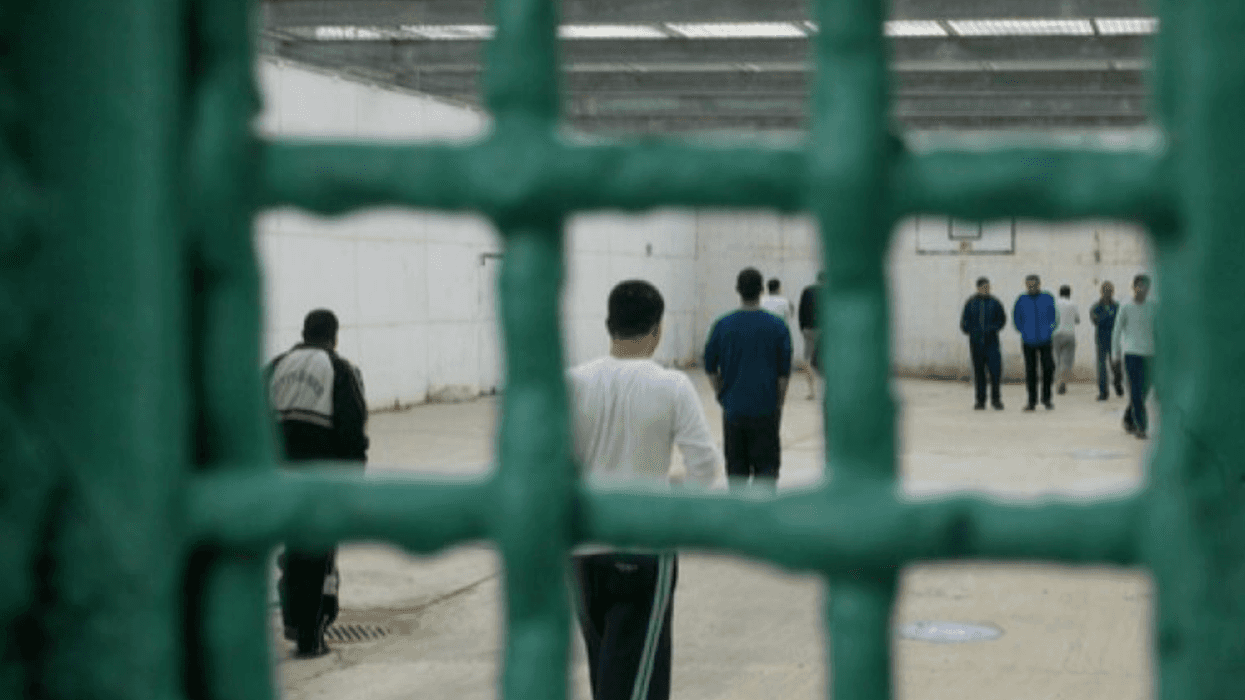
More than 9,500 Palestinians are currently locked up in Israeli prisons, including 350 children and 73 women, according to advocacy groups. Palestinian and Israeli human rights defenders say detainees face torture, starvation, and medical neglect behind bars, causing many deaths.
Former prisoners as well as Israeli staff and medical personnel say they have witnessed torture at prisons including Sde Teiman, the most infamous of Israel's lockups, with victims ranging from children to the elderly.
Israeli physicians who worked at Sde Teiman described widespread serious injuries caused by 24-hour shackling of hands and feet that sometimes required amputations. Palestinians taken by Israeli forces recounted rapes and sexually assaults by male and female soldiers, electrocution, maulings by dogs, denial of food and water, sleep deprivation, and other torture.
“It seems the criminal apartheid state of Israel has grown impatient with slowly torturing, starving, and beating Palestinian hostages to death,” said one observer.
Israeli lawmakers on Tuesday voted to advance a bill legalizing execution by hanging of Palestinians convicted of "terrorism"-related killings, a move that prompted opponents to warn of mass executions under what one prominent human rights group called "apartheid" legislation.
The Knesset National Security Committee voted to send the bill for its final two readings before the Knesset General Assembly, which are expected to take place next week.
Bill sponsor Limor Son Har-Melech of the far-right Jewish Power Party called the bill's advancement a "moral and necessary step."
“The law sets out a clear and unequivocal message: Those who choose to murder Jews because they are Jews lose their right to live,” added Har-Melech.
The bill passed its first reading at the full Knesset last November, drawing widespread condemnation for provisions including mandatory death sentences without judicial discretion or possibility of pardons, to be carried out within 90 days.
Since then, amendments have been proposed to avoid accusations of discrimination amid the filing of around 2,000 proposed revisions by opposition lawmakers. Language under which Jewish Israelis who kill Palestinians are not subjected to the legislation has been softened; however, critics contend that in practice, the bill would apply predominantly to Palestinian perpetrators.
The bill also retains what critics say is a discriminatory two-track legal regime; one for military courts which have jurisdiction over Palestinians—but not Israeli settlers—in the illegally occupied West Bank, and another for civilian courts inside Israel and East Jerusalem, which, like wider West Bank, has been unlawfully occupied by Israel for nearly 59 years.
Israeli Prime Minister Benjamin Netanyahu had reportedly pushed for the changes, which also include allowing judicial discretion in sentencing and removing a requirement for trials to take place in military courts. Netanyahu—who is wanted by the International Criminal Court for alleged crimes against humanity and war crimes in Gaza—is said to be wary of more global backlash against a country already facing a genocide case at the International Court of Justice.
Israeli National Security Minister Itamar Ben-Gvir—who was ordered last week to remove a video promoting the bill, in which he stands by a gallows at a memorial to Jews executed in the 1930s and '40s for resisting British occupation—called Tuesday's vote "a historic moment of justice for the state of Israel."
"No more revolving door of attacks, imprisonments, and releases," he added. "This law restores deterrence, restores justice, and sends a clear and unambiguous message to our enemies: Jewish blood is not cheap. We will continue to lead an uncompromising policy against terror until victory.”
Studies in the United States—the only Western democracy that actively executes people—have repeatedly shown that the death penalty does not deter crime.
Knesset members opposing the legislation—who are believed to be outnumbered by more than 2 to 1—condemned Tuesday's vote.
Rabbi Gilad Kariv, who represents the left-wing Democrats, slammed what he called "an extreme bill that does not exist in any democratic country, with serious moral flaws and profound security recklessness.”
Har-Melech, Ben-Gvir, and other backers of the bill have repeatedly worn noose-shaped lapel bins to show their support for legislation. Ben-Gvir handed out sweets to Knesset colleagues after the bill passed its first reading. Har-Melech recently dressed as an executioner replete with noose and syringe for the Purim holiday, while her husband donned a costume representing what he called the themes of "occupation, expulsion, settlement"—or the conquest, ethnic cleansing, and settler-colonization of Palestine.
"With God's help, on next Purim we will need far more than a single breath to read the names of all the terrorists who were hanged," Har-Melech said in a video message marking the festive holiday. "And to the Jews there was light and joy and gladness."
Palestinians and their defenders warn that, if passed, the bill could open the door to mass executions.
Hamas, which still rules Gaza despite nearly 29 months of Israeli war and siege, called the bill “a dangerous terrorist step that paves the way for carrying out murder and liquidation crimes against our prisoners."
The Palestinian Prisoners Media Office said Wednesday in a statement: "This dangerous development constitutes an unprecedented escalation in the enemy's policies against our prisoners and represents a flagrant violation of all international laws and conventions. It reveals premeditated intentions to commit an organized crime against the prisoner movement."
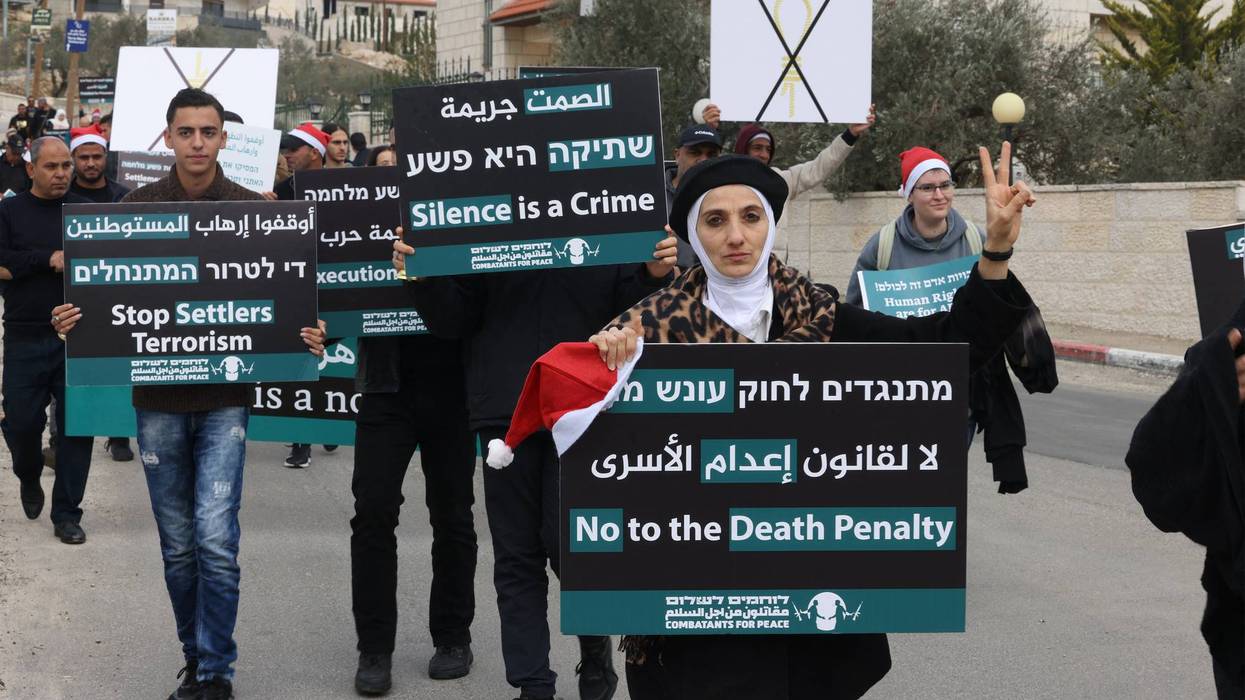
The bill has sparked widespread condemnation around the world. United Nations experts have implored Israel to withdraw the bill, arguing it “would violate the right to life and discriminate against Palestinians in the occupied Palestinian territory."
The European Union Diplomatic Service said Tuesday that the EU "opposes capital punishment in all cases and under all circumstances."
"Israel has long upheld a de facto moratorium on both executions and capital punishment sentencing, thereby leading by example in the region despite a complex security environment," the agency added. "Approving this bill would represent a grave step backward from this important practice and from positions Israel has itself expressed in the past."
Israel abolished the death penalty for murder in 1954; currently, its only capital offenses are crimes against humanity and treason. The only execution in Israeli history occurred in 1962 when Holocaust architect Adolf Eichmann was hanged for genocide and crimes against humanity.
One senior Amnesty International official called the bill "yet another tool within Israel’s institutionalized system of apartheid against all Palestinians whose rights it controls."
Some critics noted that around 100 Palestinian prisoners have died in Israeli custody since the Hamas-led attack of October 2023, including some who were allegedly tortured or raped to death.
“Israel is already killing Palestinians on a regular basis—in detention facilities, and in the field, where lethal force is widely used by Israeli settlers and by the military with close to zero accountability,” Yuli Novak, executive director of the Israeli human rights group B'Tselem, told The Guardian on Wednesday, adding, "This law is another tool in this toolbox.’’
"Survivors of captivity clearly told us that every media stunt about the death penalty for terrorists leads to harsher conditions and violence against the hostages," said the wife of an Israeli abducted by Hamas.
A parliamentary committee in Israel on Sunday advanced legislation to allow the execution of Palestinians convicted of "racially or ideologically motivated" murders of Israelis, drawing condemnation from human rights defenders.
The Knesset National Security Committee voted to approve the first reading of a bill sponsored by Limor Son Har-Melech of the Jewish Power party requiring the execution of any "terrorist convicted of murder motivated by racism or hostility toward a particular public, and under circumstances where the act was committed with the intent to harm the state of Israel and the rebirth of the Jewish people in their homeland."
Explanatory notes to the bill state that the purpose of the legislation—which would not apply to Israelis who murder Palestinians for similar reasons—is to "nip terrorism in the bud and create a weighty deterrent."
In order to become law, the bill must pass three readings.
Israeli National Security Minister Itamar Ben-Gvir, who leads Jewish Power, said that Palestinians "need to know that if even a single hair of a hostage falls, there will be a death sentence."
Israel abolished the death penalty for murder in 1954; currently, its only capital offenses are crimes against humanity and treason. The only execution in Israeli history occurred in 1962 when Holocaust architect Adolf Eichmann was hanged for genocide and crimes against humanity.
The Palestinian Commission for Detainees’ Affairs and the Palestinian Prisoner Society condemned the bill as "unprecedented savagery" and cited Israel's ongoing genocidal war on Gaza, which according to the Gaza Health Ministry has killed more than 66,000 Palestinians, wounded over 168,000 others, and left upward of 2 million more forcibly displaced, starved, or sickened.
Gal Hirsch, the Israeli government's coordinator for hostages and missing persons, warned that the bill could endanger the lives of Israelis held by Hamas since October 7, 2023, "especially since we are currently engaged in a combined military and diplomatic effort to bring back the hostages."
Relatives of Israeli hostages also denounced the bill, with Lishay Miran Lavi, wife of captive Omri Miran, writing Sunday on the social media site X: "Survivors of captivity clearly told us that every media stunt about the death penalty for terrorists leads to harsher conditions and violence against the hostages. [Israeli Prime Minister Benjamin] Netanyahu knows this. Gal Hirsch knows this. Ben Gvir knows this."
According to Palestinian prisoner advocacy groups, Israel currently imprisons at least 10,800 Palestinians, including 450 children and 49 women. More than 3,600 prisoners are held in administrative detention without charge or trial.
The United Nations human rights office reported last year that Palestinian prisoners have been subjected to torture including electric shocks, waterboarding, sleep deprivation, attacks by dogs, sexual violence, and other abuse—which the agency called "a preventable crime against humanity."