

SUBSCRIBE TO OUR FREE NEWSLETTER
Daily news & progressive opinion—funded by the people, not the corporations—delivered straight to your inbox.
5
#000000
#FFFFFF
To donate by check, phone, or other method, see our More Ways to Give page.
Daily news & progressive opinion—funded by the people, not the corporations—delivered straight to your inbox.
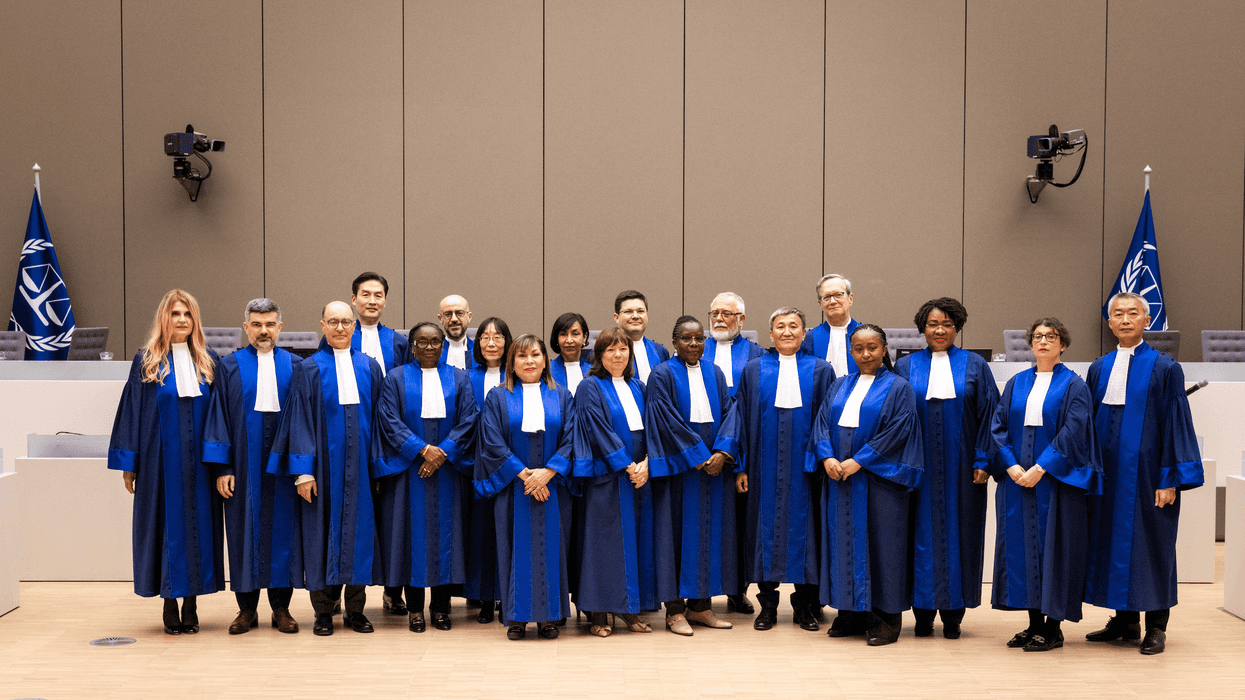
“In my country, I prosecuted terrorists and drug lords," said Judge Luz Ibáñez Carranza of Peru. "I will continue my work."
International Criminal Court judges remain steadfast in their pursuit of justice—including for victims of Israel's genocidal war on Gaza—even as they suffer from devastating US sanctions, some of the affected jurists said in recent interviews.
Nine ICC officials are under sanctions imposed in two waves earlier this year by the Trump administration following the Hague-based tribunal's issuance of arrest warrants for Israeli Prime Minister Benjamin Netanyahu and former Israeli Defense Minister Yoav Gallant for alleged crimes against humanity and war crimes in Gaza, including murder and forced starvation. The tribunal also issued warrants for the arrest of three Hamas officials, all of whom have been killed by Israel during the course of the war.
The sanctioned jurists are: Chief Prosecutor Karim Khan (United Kingdom), Deputy Prosecutor Nazhat Shameem Khan (Fiji), Deputy Prosecutor Mame Mandiaye Niang (Senegal), Judge Solomy Balungi Bossa (Uganda), Judge Luz del Carmen Ibáñez Carranza (Peru), Judge Reine Adelaide Sophie Alapini-Gansou (Benin), Judge Beti Hohler (Slovenia), Judge Nicolas Yann Guillou (France), and Judge Kimberly Prost (Canada).
The sanctions followed a February executive order from US President Donald Trump sanctioning Khan and accusing the ICC of “baseless actions targeting America and our close ally Israel.”
The sanctions—which experts have called an act of criminal obstruction—prevent the targeted ICC officials and their relatives from entering the United States; cut off their access to financial services including banking and credit cards; and prohibit the use of online services like email, shopping, and booking sites.
Fearing steep fines and other punitive measures including possible imprisonment for running afoul of US sanctions by providing “financial, material, or technological support" to targeted individuals, businesses and other entities strictly blacklist sanctioned people—who are typically terrorists, organized crime leaders, and political or military leaders accused of serious human rights crimes.
“Your whole world is restricted,” Prost—who was part of an ICC appellate chamber's unanimous 2020 decision to investigate alleged US war crimes and crimes against humanity in Afghanistan—told the Associated Press on Thursday. “I’ve worked all my life in criminal justice, and now I’m on a list with those implicated in terrorism and organized crime."
Ibáñez Carranza said the US sanctions are not deterring her, telling the AP: “In my country, I prosecuted terrorists and drug lords. I will continue my work."
Guillou told Le Monde last week that the sanctions mean he is banned from almost all digital services—including Amazon and PayPal—in a world dominated by US tech giants. This has led to some absurd scenarios, including having a hotel reservation he booked via Expedia in his own country canceled.
"To be under sanctions is like being transported back to the 1990s," he said.
The Trump administration's objective, said Guillou, is "intimidation... permanent fear, and powerlessness."
"European citizens under US sanctions will be wiped out economically and socially within the [European Union]," he added.
Guillou remains defiant in the face of sweeping hardship caused by the sanctions, contending that he is part of a larger struggle for justice as, "empires are hitting back" in response to "three decades of progress in multilateralism."
The US—which, like Israel, is not party to the Rome Statute that governs the ICC—has been at odds with the court for decades. In 2002, Congress passed, and then-President George W. Bush signed, the American Service Members’ Protection Act—also known as the Hague Invasion Act—which authorizes the president to use “all means necessary and appropriate” including military intervention to secure the release of American or allied personnel held by or on behalf of the ICC.
During his first term, Trump sanctioned then-ICC Chief Prosecutor Fatou Bensouda and Prosecution Jurisdiction Division Director Phakiso Mochochoko over the Afghan war crimes probe.
The nine jurists sanctioned this year by the US are seeking relief and are calling on European governments to invoke the EU's so-called "Blocking Statute," which is meant to shield officials of the 27-nation bloc from the extraterritorial application of third country laws.
"States parties [to the Rome Statute] face a choice: Continue to capitulate to the bullying of the US, or meet the challenge posed by the sanctions, past and future, and respond appropriately," Jens Iverson, an assistant professor of international law at Leiden University in the Netherlands, wrote last month for OpinioJuris. "Which choice they make will reveal the actual values of the states who as a matter of law are pledged to combat atrocity and impunity."
Ibáñez Carranza told Middle East Eye in a recent interview: "What we are asking are practical measures. What we are asking is action. We need the support of the entire world. But we are in Europe now, and Europe is a powerful structure. The European Union is a powerful structure. They should react as such. They cannot be subordinated to the American policies."
International Criminal Court (ICC) judge Luz del Carmen Ibanez Carranza has called on the international community to stand with ICC judges following US-imposed sanctions over the court’s arrest warrants for Israeli officials pic.twitter.com/otJfwHgzdw
— Middle East Eye (@MiddleEastEye) December 6, 2025
Ibáñez Carranza said that said measures should be taken "to support the court, not only to support the judges, but to support the system... of Rome."
"It's not only the judges" who are affected by the US sanctions, she asserted. "They want to affect the system of Rome, the system of the court, where we deliver justice for... the most defenseless and vulnerable victims... They are the affected ones with this."
"The work of the International Criminal Court is for humanity," Ibáñez Carranza added. "And this is why we are resilient, and this is why we need not only to stand together as judges, but the entire international community."
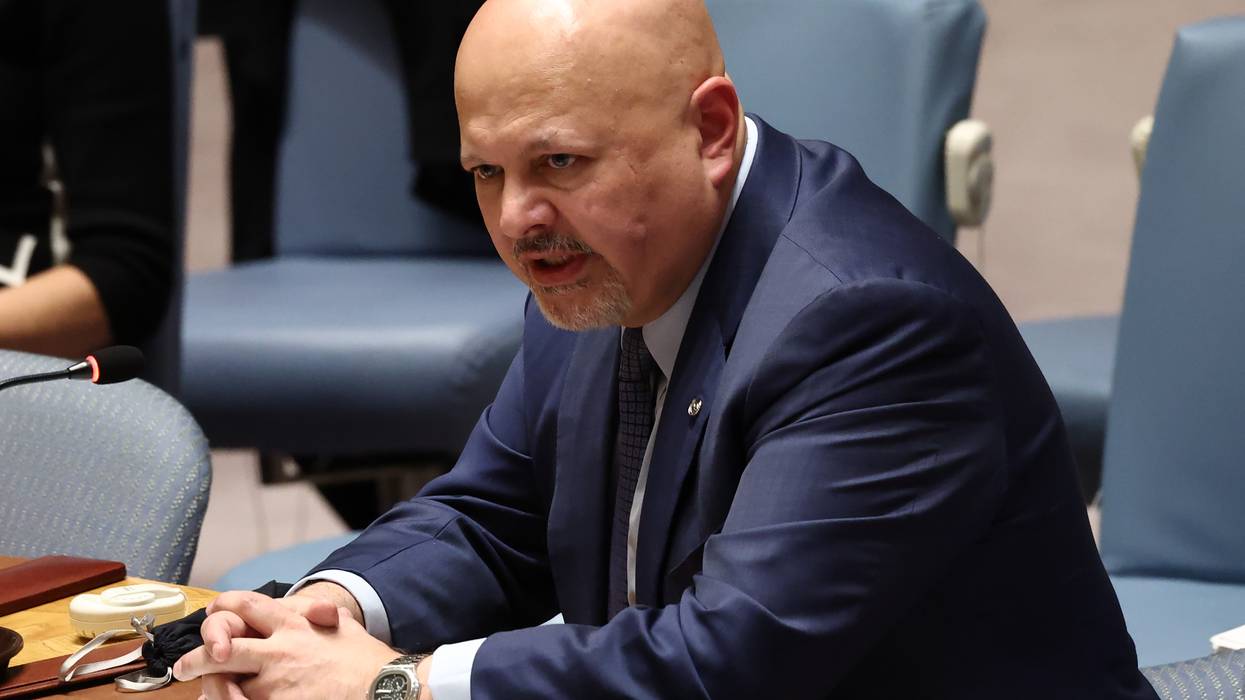
A British-Israeli lawyer told ICC Prosecutor Karim Khan he'd spoken to a top Israeli legal adviser and warned he should have gone after "lower-level suspects."
One international human rights expert said Tuesday that a new report of alleged threats made against the International Criminal Court's prosecutor regarding his arrest warrants for Israeli officials were "extremely worrying," noting that the reported threats were just the latest show of intimidation against authorities who aim to hold Israel to account for its abuses of humanitarian law.
"The Commission of Inquiry on the [occupied Palestinian territories] quit, Francesca Albanese was sanctioned, and now we have reports of threats against Karim Khan," said London School of Economics human rights fellow Alonso Gurmendi, referring to the mass resignation of three United Nations human rights experts, U.S. sanctions targeting the U.N. special rapporteur on the OPT, and the news about the ICC prosecutor.
The Middle East Eye (MEE) reported that a British-Israeli defense lawyer linked to Israel's government, Nicholas Kaufman, delivered a warning to Khan at a meeting in May, as Khan was facing pressure over the arrest warrants he'd issued for Israeli Prime Minister Benjamin Netanyahu and former Israeli Defense Minister Yoav Gallant. Along with Hamas leader Mohammed Deif—since confirmed dead—Netanyahu and Gallant were accused of war crimes and crimes against humanity.
Netanyahu's government began a military assault on Gaza in October 2023 that has been called a genocide by top human rights experts and groups.
Days before the meeting in May, Kaufman reportedly told Khan that he'd spoken to Roy Schondorf, a legal adviser to Israeli Prime Minister Benjamin Netanyahu.
When they met at a hotel in The Hague, Kaufman told Khan to apply to the ICC to have the warrants for Netanyahu and Gallant reclassified as "confidential" and submit them as part of a "noncriminal, noninvestigative process," allowing Israel to access the details of the allegations and privately challenge them without the outcome of the case being made public.
"This looks like a coordinated attack on international accountability on a scale never before seen."
Kaufman also told Khan that issuing more arrest warrants for Israeli officials including Finance Minister Bezalel Smotrich and National Security Minister Itamar Ben-Gvir over their support for illegal settlements in the West Bank, as the ICC was considering at the time, could result in more U.S. sanctions against the ICC; the Trump administration imposed travel and economic sanctions against Khan earlier this year. More sanctions would "risk destroying the court," said Kaufman, MEE reported.
"All options would be off the table" for Khan if he issued the new arrest warrants, warned Kaufman. "They will destroy you, and they will destroy the court."
Kaufman told MEE that he requested a meeting with Khan in early May "because as an Israeli ICC lawyer, who had experienced the shock of October 7, 2023, I was well placed to understand the matter" and because Khan was "under fire" over his investigation into alleged war crimes committed by Netanyahu's government in Gaza.
At the time of the meeting, Khan was also facing an investigation into allegations of sexual misconduct; he has denied the allegations.
He also told Khan that he should have gone after "lower-level suspects" and that his indictments of Netanyahu and Gallant had "basically indicted Israel."
Kaufman told the outlet that he had simply "told Mr. Khan that he should be looking for a way to extricate himself from his errors" but denied that he'd made a proposal to amend Khan's case against the Israeli officials on behalf of the government—despite his contact days earlier with Netanyahu's legal adviser.
Khan and his wife, lawyer Shyamala Alagendra, who also attended the meeting, told Kaufman his warning that Israel would "destroy" Khan over more warrants "was a clear threat."
Gurmendi said that if MEE's report is true, "this looks like a coordinated attack on international accountability on a scale never before seen."
Khan has faced other threats from officials allied with Israel since investigating Israel's assault on Gaza. In April 2024, the United Kingdom's then-foreign secretary, former Prime Minister David Cameron, had a tense phone call with Khan in which he threatened to defund the ICC and withdraw the U.K. from the court if it issued warrants for any Israeli leaders.
In May 2024, U.S. Sen. Lindsey Graham (R-S.C.) threatened sanctions against ICC officials is Khan applied for more warrants.
Graham "was screaming at us," ICC lawyer Andrew Cayley, who oversaw the court's investigation into Palestine, told The Observer.
After Khan announced later that month that's he'd requested warrants for the Israeli and Hamas leaders, Cayley "began receiving anonymous, threatening phone calls saying, 'You're in a very dangerous position.'"

"Sanctioning ICC judges for doing their work on behalf of justice is a flagrant attack on the rule of law," said one critic.
Human rights defenders on Friday accused U.S. President Donald Trump and Secretary of State Marco Rubio of criminal obstruction after Rubio announced sanctions targeting four International Criminal Court judges who authorized an investigation into torture allegations against American troops in Afghanistan and arrest warrants for fugitive Israeli Prime Minister Benjamin Netanyahu.
Rubio sanctioned International Criminal Court Judges Solomy Balungi Bossa of Uganda, Luz del Carmen Ibáñez Carranza of Peru, Reine Adelaide Sophie Alapini Gansou of Benin, and Beti Hohler of Slovenia "pursuant to President Trump's Executive Order 14203." The order was issued in February and sanctioned ICC Prosecutor Karim Khan and accused the Hague-based tribunal of "baseless actions targeting America and our close ally Israel."
"Have Marco Rubio's State Department lawyers read him Article 70 of the Rome Statute on obstruction of justice?"
"These four individuals have actively engaged in the ICC's illegitimate and baseless actions targeting America or our close ally, Israel," Rubio added. "The ICC is politicized and falsely claims unfettered discretion to investigate, charge, and prosecute nationals of the United States and our allies."
Two of the sanctioned judges authorized a probe of U.S. war crimes in Afghanistan. The other two green-lighted warrants for the arrest of Netanyahu and Yoav Gallant, his former defense minister, for alleged war crimes and crimes against humanity in Gaza, including weaponized starvation and the murder of Palestinians—at least 54,607 of whom have been killed since Israel began its assault and siege of Gaza following the October 7, 2023 Hamas-led attack, according to the Gaza Health Ministry.
The ICC's Assembly of State Parties—the court's governing body—said in a statement Friday that the U.S. sanctions are a "regrettable" effort to "impede the court and its personnel in the exercise of their independent judicial functions.
Kenneth Roth, a professor at the Princeton School of Public and International Affairs and former director of Human Rights Watch, on Friday accused Trump and Rubio of "obstructing justice under Article 70 of the Rome Statute," the treaty establishing and governing the ICC.
Christoph Safferling, director of the International Nuremberg Principles Academy—a Germany-based foundation "dedicated to the advancement of international criminal law and related human rights"— said Friday that 80 years after the the Nuremberg Trials of Nazi war criminals, "obstructing the ICC is an affront to the commitment to justice and the rule of law."
"The court carries forward this legacy and calls for our steadfast support in the fight against impunity," Safferling added.
United Nations High Commissioner for Human Rights Volker Türk
said Friday that he was "profoundly disturbed" by the U.S. sanctions.
"Attacks against judges for performance of their judicial functions, at national or international levels, run directly counter to respect for the rule of law and the equal protection of the law—values for which the U.S. has long stood," Türk added.
European Commission President Ursula von der Leyen said the European Union "deeply regrets" the Trump administration's move.
Slovenia's Foreign Ministry said that "Slovenia regrets the announced sanctions by the U.S. government against four judges of the International Criminal Court, including a judge from Slovenia," and "rejects pressure on judicial institutions and influence on judicial operations."
"Courts must act in the interests of law and justice," the ministry continued. "In the current situation we will support the judge, who is a Slovenian citizen in carrying out her mandate." Due to the inclusion of an E.U. member state on the sanctions list, Slovenia will propose the immediate activation of the blocking act."
The E.U.'s blocking statute is meant to protect businesses in the 27-nation bloc from adverse consequences of foreign—particularly U.S.—sanctions.
During the first Trump administration, former Secretary of State Mike Pompeosanctioned then-ICC Prosecutor Fatou Bensouda and Prosecution Jurisdiction Division Director Phakiso Mochochoko for investigating U.S. war crimes in Afghanistan. This, even after the ICC Pre-Trial Chamber II announced it would not grant a request by Bensouda to open an investigation into the alleged torture of prisoners held in U.S. military and secret CIA prisons in Afghanistan, Poland, Romania, and Lithuania.
In 2021, Khan angered human rights defenders by announcing he was seeking approval to resume an investigation into potential war crimes in Afghanistan committed by the Taliban and the Islamic State—but would exclude alleged crimes perpetrated by U.S. forces.
U.S. and Israeli officials often note that neither country is a party to the Rome Statute. However, the court has affirmedr its jurisdiction "in relation to crimes committed on the territory of Palestine, including Gaza," as well as "over crimes committed by Palestinian nationals inside or outside Palestinian territory."
Responding to the U.S. sanctions, Amnesty International secretary general Agnès Callamard said Friday that "this is an attack against international justice and the fight against impunity."
"Governments who believe in a rule-based order must take all necessary measures to protect the four judges against the impact of the sanctions," she continued. "They must assure the ICC of their full support. They must voice their commitment to the independence and impartiality of the ICC clearly and loudly. They must implement all arrest warrants and support the ICC in all its investigations."
"International justice is a battleground. It has been so from the very beginning," Callamard added. "Victims know so all too well. We will keep fighting and resisting all attempts to derail, undermine, destroy the search for justice and the rule of law."
In April, the ACLU filed a lawsuit in a Maine federal court on behalf of Matthew Smith, co-founder of the human rights group Fortify Rights, and international lawyer Akila Radhakrishnan arguing that Trump's sanctions against Khan violate their First Amendment rights.

"No arrest warrant of any kind will deter me," said far-right Israeli National Security Minister Itamar Ben-Gvir.
Far-right Israeli National Security Minister Itamar Ben-Gvir responded proudly Wednesday to reports that the chief prosecutor of the International Criminal Court was considering arrest warrants against him and fellow extremist minister Bezalel Smotrich over their roles in expanding illegal settlements in the occupied West Bank.
Ben-Gvir, who has openly fought efforts to deliver aid to starving Palestinians and worked to prevent progress toward a durable cease-fire, wrote in a social media post that "when The Hague is against me, I know I'm on the right path"—suggesting he would view an arrest warrant from the ICC as a badge of honor.
"I have one clear message to the chief prosecutor at the International Criminal Court in The Hague," he wrote. "No arrest warrant of any kind will deter me from continuing to work for the people of Israel and the Land of Israel. The prosecutor in The Hague does not scare me."
The Israeli minister's post came after The Wall Street Journal reported that ICC chief prosecutor Karim Khan "was preparing to seek arrest warrants for two far-right Israeli cabinet members before he went on leave as the United Nations investigates sexual-assault allegations against him."
The Journal noted that the cases center on Ben-Gvir and Smotrich's "roles in expanding Jewish settlements in the West Bank." Both ministers live in West Bank settlements, which have expanded significantly since Israel began its full-scale assault on the Gaza Strip following the Hamas-led attack of October 7, 2023.
"A decision on whether to pursue the cases falls to Khan's two deputies, and it is unclear how they plan to proceed," the Journal reported. "ICC prosecutors have been weighing whether Smotrich and Ben-Gvir committed war crimes by pushing construction of West Bank Jewish settlements."
Late last year, the ICC issued arrest warrants for Israeli Prime Minister Benjamin Netanyahu and former Israeli Defense Minister Yoav Gallant, accusing the pair of committing war crimes in the Gaza Strip.
Khan decided to take leave earlier this month amid the U.N. probe of sexual assault allegations made by one of his aides. Khan has denied the accusations, which have thrown the ICC into chaos at a pivotal moment.
Journalist Alice Speri reported for Drop Site earlier this month that "the woman's accusations were far more serious than what has been revealed so far, and include what she described to colleagues as monthslong grooming, psychological coercion, and sexual advances, which eventually escalated into 'unwanted' and 'coerced' sex that lasted nearly a year and continued even after she told Khan that his conduct had left her suicidal."
Khan's alleged conduct and the resulting blowback risks compromising the ICC's work to hold Israeli officials to account for war crimes committed in the occupied Palestinian territories, advocates and court officials fear.
Speri reported that "many at the court, including the alleged victim... understood the abuse allegations were political dynamite and 'a gift for Israel,' as one person put it, and they worried about how they may be used to discredit the ICC, and particularly delegitimize the case against Netanyahu, which many believed was warranted and crucial."
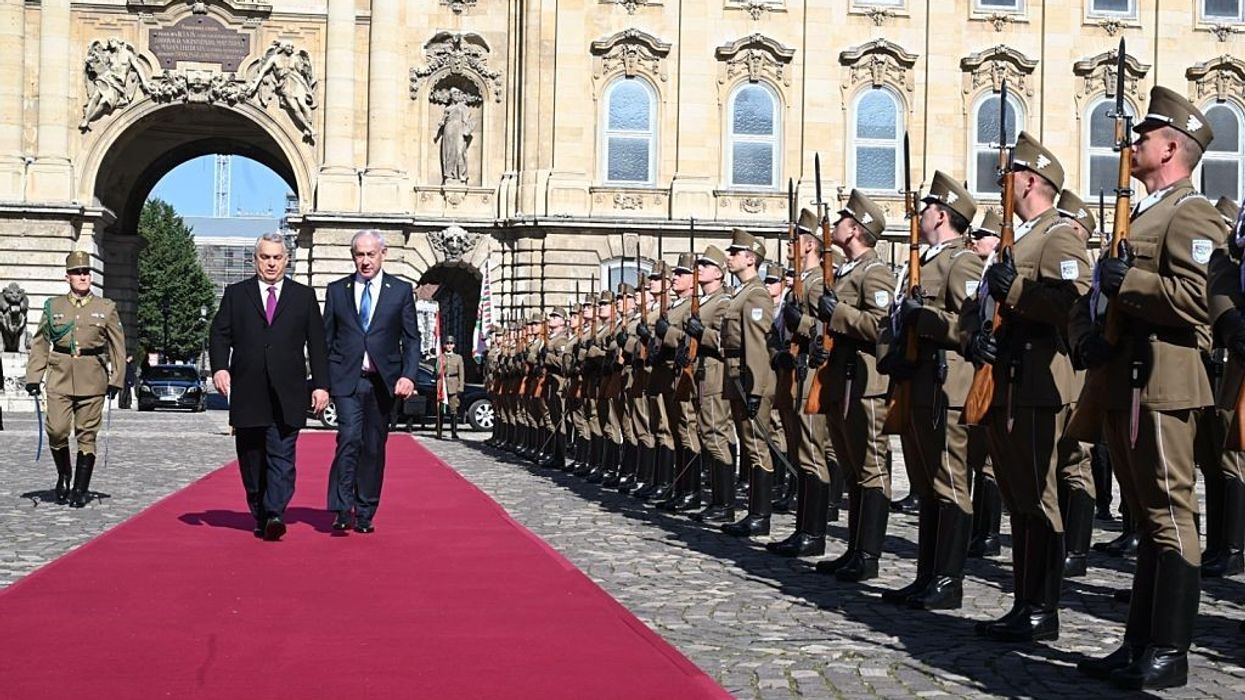
The head of Amnesty International in Europe said the court has done "what the E.U. should have: taken legal measures against Hungary for its failure to arrest a fugitive wanted for war crimes."
The International Criminal Court on Wednesday initiated proceedings against Hungary for failing to enforce the tribunal's arrest warrant for Israeli Prime Minister Benjamin Netanyahu during his recent visit to the Central European nation.
The ICC is asking Hungary's far-right government to explain why it did not comply with its warrant for Netanyahu for alleged war crimes and crimes against humanity in Gaza. Such compliance is required under the Rome Statute, the treaty governing the ICC to which Hungary is signatory.
The tribunal's request cites Article 87 of the Rome Statute, which authorizes legal action against state parties who don't cooperate with the court, and gives Hungary until May 23 to respond.
Hungarian Prime Minister Viktor Orbán said shortly before Netanyahu's visit that Hungary would quit the ICC. Not only did Hungary reject the arrest warrant, Orbán literally rolled out the red carpet to welcome his far-right counterpart in Budapest earlier this month, prompting rebuke from the ICC and human rights groups.
In May 2021, ICC Prosecutor Karim Khan applied for warrants to apprehend Netanyahu and former Israeli Defense Minister Yoav Gallant for "crimes of causing extermination, causing starvation as a method of war, including the denial of humanitarian relief supplies, [and] deliberately targeting civilians in conflict."
Khan also sought warrants to arrest three Hamas leaders who have since been killed by Israel for alleged crimes committed during and after the October 7, 2023 attack, including "extermination, murder, taking of hostages, rape, and sexual assault in detention."
The full 18-judge ICC approved the warrants in November, prompting Republicans and dozens of Democrats in the U.S. House of Representatives to pass legislation to sanction tribunal officials. Democrats subsequently blocked the measure in the Senate. Shortly after taking office, President Donald Trump issued an executive order imposing sanctions on the ICC, prompting an ACLU-led lawsuit.
Israel and allies including the United States have either openly flouted the ICC warrant or offered dubious legal reasons for sidestepping the arrest order.
Italy and France, for example, have granted Netanyahu immunity on the grounds that he is the head of state of a country that is not an ICC member.
Trump welcomed Netanyahu to the White House a month before the Budapest trip, though the U.S. is not a party to the Rome Statute.
Although Israel is not signatory to the Rome Statute, officials from non-state parties are still subject to ICC prosecution if they commit crimes inside nations that have ratified the treaty. Palestine became an ICC member in 2015.
Just two years ago France backed the ICC arrest warrant for Russian President Vladimir Putin on Ukraine war crimes charges—even though Moscow has not signed the Rome Statute—arguing that "no one responsible for crimes committed by Russia in Ukraine, regardless of their status, should escape justice."
Last year, an ICC panel referred Mongolia to the court's oversight body after it failed to arrest Putin, who was warmly welcomed by Mongolian President Ukhnaagiin Khürelsükh and other officials in Ulaanbaatar.
Luis Moreno Ocampo, who served as the ICC's first prosecutor,
told the Emirati newspaper The National on Wednesday that Netanyahu remains free thanks to the political influence of countries including the U.S. However, Ocampo said that "this protection is temporary" and accused Netanyahu of prolonging the Gaza war to delay his own domestic criminal corruption trial.

An advocate who has worked with the ICC said the order "actively undermines international justice efforts and obstructs the path to accountability for communities facing unthinkable horrors."
In a federal court in Maine on Friday, two human rights advocates argued that U.S. President Donald Trump's economic and travel sanctions against International Criminal Court Prosecutor Karim Khan violates their First Amendment rights, because of Trump's stipulation that U.S. citizens cannot provide Khan with any services or material support as long as the sanctions are in place.
The lawsuit was filed by the ACLU on behalf of Matthew Smith, co-founder of the human rights group Fortify Rights, and international lawyer Akila Radhakrishnan.
Trump targeted Khan with the sanctions over his issuing of an arrest warrant for Israeli Prime Minister Benjamin Netanyahu and former Israeli Defense Minister Yoav Gallant, whom he accused of war crimes and crimes against humanity in Gaza.
The plaintiffs argued that stopping U.S. citizens from working with Khan will bring their work investigating other atrocities to a halt.
Smith has provided the ICC with evidence of the forced deportation and genocide of the Rohingya people in Myanmar, but he said he has been "forced to stop helping the ICC investigate horrific crimes committed against the people of Myanmar, including mass murder, torture, and human trafficking."
"This executive order doesn't just disrupt our work—it actively undermines international justice efforts and obstructs the path to accountability for communities facing unthinkable horrors," Smith said in a statement.
"The Trump administration's sanctions may discourage countries, as well as individuals and corporations, from assisting the court, making it harder to bring alleged perpetrators from Israel and other countries to trial."
Charlie Hogle, staff attorney with the ACLU's National Security Project, said it was "unconstitutional" to block the plaintiffs and other humanitarian groups in the U.S. from "doing their human rights work" with the ICC.
Radhakrishnan, who focuses on gender-based violence in Afghanistan, said she was "bringing this suit to prevent my own government from punishing me for trying to hold the Taliban accountable for its systematic violence against women and girls from Afghanistan."
In March, Amnesty International warned that Trump's sanctions would "hinder justice for all victims for whom the [ICC] is a last resort," particularly those in Gaza and the occupied Palestinian territories.
The court "relies on its member states to cooperate in its investigations and prosecutions, including by arresting individuals subject to ICC arrest warrants," said Amnesty. "The Trump administration's sanctions may discourage countries, as well as individuals and corporations, from assisting the court, making it harder to bring alleged perpetrators from Israel and other countries to trial."
"Ultimately, the sanctions will harm all of the ICC's investigations, not just those opposed by the U.S. government," said the group. "They will negatively impact the interests of all victims who look to the court for justice in all the countries where it is conducting investigations, including those investigations the U.S. ostensibly supports—for example in Ukraine, Uganda, or Darfur."
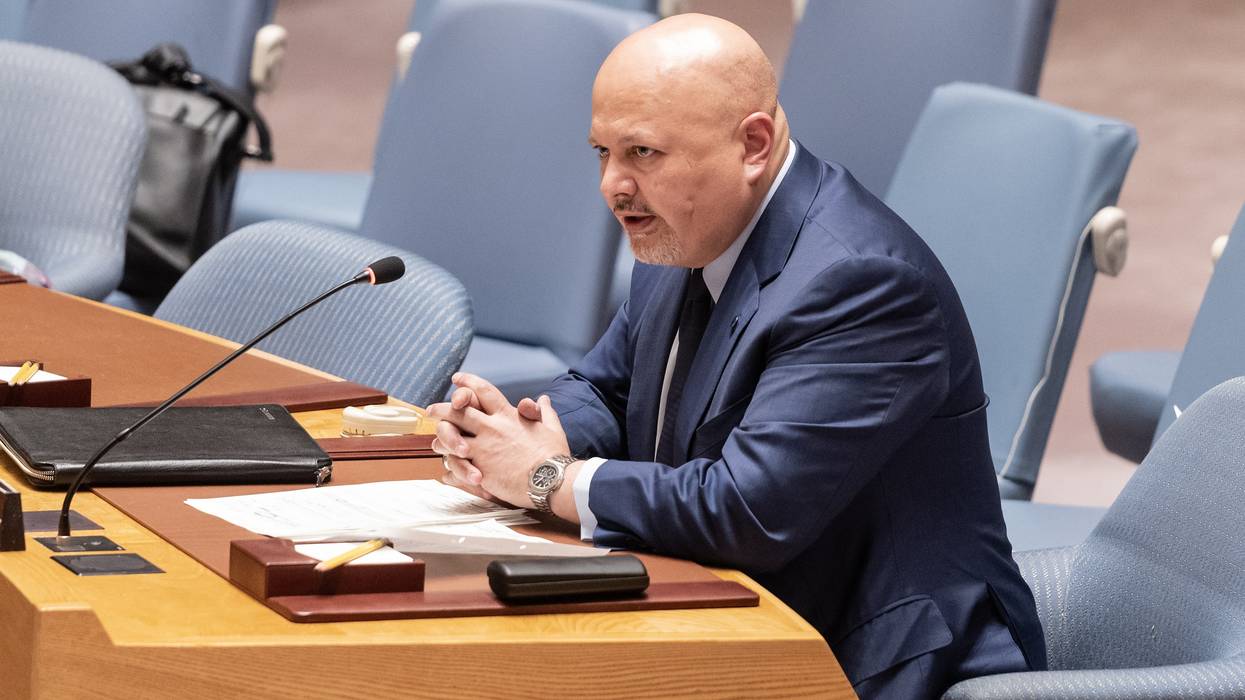
Prosecutor Karim Khan also said the threat of sanctions against the ICC "is a matter that should make all people of conscience be concerned."
After International Criminal Court prosecutor Karim Khan brought allegations of war crimes against Israeli Prime Minister Benjamin Netanyahu, Israel could have probed the accusations itself, Khan told Reuters in a Thursday interview—but it has made "no real effort" to do so.
The conversation took place a day after Israel and Hamas reached a cease-fire and hostage deal that is expected to go into effect on Sunday, though Israeli airstrikes in the besieged Gaza strip have continued since the deal was announced.
Khan sought arrest warrants against Israeli Prime Minister Benjamin Netanyahu and former Israeli defense chief Yoav Gallant for alleged war crimes in Gaza, including starvation of civilians as a method of warfare and the directing of attacks against civilians. The warrants were granted by ICC judges in November. Israel rejects the charges.
Khan also successfully sought an arrest warrant for Hamas leader Ibrahim Al-Masri, who he accused of crimes against humanity including murder, extermination, torture, and rape.
Khan told Reuters that "we're here as a court of last resort and... as we speak right now, we haven't seen any real effort by the State of Israel to take action that would meet the established jurisprudence, which is investigations regarding the same suspects for the same conduct."
Khan added that an Israeli investigation could have led to the case being send to Israeli courts under what are called complementary principles. It's possible for Israel to demonstrate its willingness to investigate, even after warrants were issued, Khan told Reuters.
However, "the question is have those judges, have those prosecutors, have those legal instruments been used to properly scrutinize the allegations that we've seen in the occupied Palestinian territories, in the State of Palestine? And I think the answer to that was 'no'," he said.
Khan said he still felt firm in his decision regarding the arrest warrants despite the fact the U.S. House of Representatives last week voted to sanction the International Criminal Court (ICC) to protest the warrants.
The ICC is an international body with 125 member countries—a list that does not include the United States or Israel—that seeks to investigate and prosecute grave offenses such as war crimes and genocide.
The Republican-controlled House passed the "Illegitimate Court Counteraction Act," with the help of 45 Democrats, which would "impose sanctions with respect to the International Criminal Court (ICC) engaged in any effort to investigate, arrest, detain, or prosecute any protected person of the United States and its allies," including Israel.
Passage in the House sets the bill up for likely enactment, given Republican support for the measure and GOP control of both the Senate and the White House.
Khan told Reuters that the threat of sanctions against the ICC “is a matter that should make all people of conscience be concerned.”
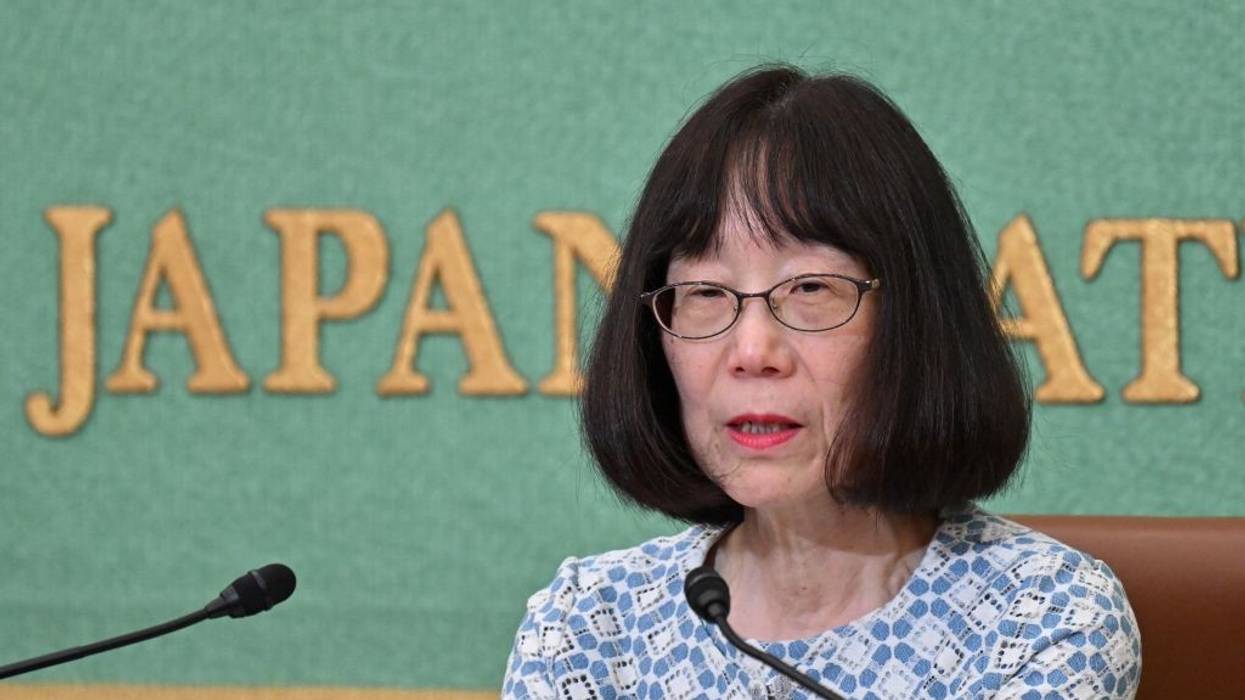
The judge pointed to Russian arrest warrants for court leadership and U.S. threats of "draconian economic sanctions."
Less than two weeks after the International Criminal Court issued arrest warrants for Israeli and Hamas leaders, the ICC president on Monday warned that the tribunal faces "existential" threats—taking aim at Russia and the United States without naming either.
Judge Tomoko Akane's comments came at the start of the 23rd session of the Assembly of States Parties to the Rome Statute of the International Criminal Court, set to run through Saturday in The Hague, the Netherlands. Established in 2002, the treaty-based ICC prosecutes individuals for genocide, war crimes, crimes against humanity, and the crime of aggression.
"We are at a turning point in history. Regretfully, this is not rhetorical," the ICC president said. "International law and international justice are under threat. So is the future of humanity. The International Criminal Court will continue to carry out its lawful mandate, independently and impartially, without giving in to any outside interference."
"The court has been subjected to attacks seeking to undermine its legitimacy and ability to administer justice and realize international law and fundamental rights; coercive measures, threats, pressure, and acts of sabotage."
Akane shared examples of what the ICC has faced while pursuing justice "as atrocities continue to plague the world," detailing how "the court has been subjected to attacks seeking to undermine its legitimacy and ability to administer justice and realize international law and fundamental rights; coercive measures, threats, pressure, and acts of sabotage."
Rather than naming Russia or the U.S., she called them out as permanent members of the United Nations Security Council.
"Several elected officials are being severely threatened and are subjected to arrest warrants from a permanent member of the U.N. Security Council, merely for having faithfully and diligently carried out their judicial mandate per the statutory framework and international law," she said, referring to Russia, which launched a full-blown invasion of Ukraine in February 2022.
As Human Rights Watch (HRW) summarized Monday: "Arrest warrants issued by Russia against the ICC prosecutor and six of the court's current and former judges in retaliation to the court's March 2023 warrant against Russian President Vladimir Putin, remain pending, and a law criminalizing cooperation with the ICC remains in force in the country. In September 2023, the court was the target of a serious cyberattack."
In addition to Putin, the ICC last year issued a warrant for Russian Commissioner for Children's Rights Maria Lvova-Belova for allegedly abducting Ukrainian children and transporting them to Russia. At the time, neither Russia nor Ukraine was a party to the Rome Statute, but as Akane noted, Ukraine has since ratified the treaty that established the court and will be a state party beginning next year.
Highlighting U.S. attacks on the ICC, Akane said that "the court is being threatened with draconian economic sanctions from institutions of another permanent member of the Security Council as if it was a terrorist organization. These measures would rapidly undermine the court's operations in all situations and cases and jeopardize its very existence."
The ICC issued warrants for Israeli Prime Minister Benjamin Netanyahu, former Israeli Defense Minister Yoav Gallant, and Hamas leader Mohammed Diab Ibrahim Al-Masri last month despite pressure from the United States. Neither the U.S. nor Israel is a party to the ICC, but Palestine is.
As Palestine Chronicle editor Ramzy Baroud noted in a Monday opinion piece for Common Dreams, the November decision was significant in part because "historically, the vast majority of arrest warrants, and actual detention of accused war criminals seemed to target the Global South, and Africa, in particular."
The outgoing Biden administration and U.S. President-elect Donald Trump's pick for national security adviser have criticized the warrants for the leaders from Israel, which also faces a genocide case at the International Court of Justice over its assault on the people of Gaza.
Responding to the warrants on Fox News last month, U.S. Sen. Lindsey Graham (R-S.C.)—a key ally of Trump in the upper chamber that will soon be controlled by Republicans—said: "So to any ally, Canada, Britain, Germany, France, if you try to help the ICC, we're gonna sanction you... We should crush your economy, because we're next."
While Canadian Prime Minister Justin Trudeau said last week that "we will abide by all the regulations and rulings of the international court" as a party to the Rome Statute, France has flip-flopped on warrant enforcement. Just a day after French Prime Minister Michel Barnier told Parliament that the government would fulfill its obligations, the Foreign Ministry announced it would not detain Netanyahu and Gallant, claiming they have "immunities" because Israel is not a party to the treaty.
The Associated Press explained Monday that "Graham's threat isn't seen as just empty words," considering that as president, Trump "sanctioned the court's previous prosecutor, Fatou Bensouda, with a travel ban and asset freeze for investigating American troops and intelligence officials in Afghanistan."
Graham isn't alone in making threats. U.S. Sen. Tom Cotton (R-Ark.) targeted the court's current prosecutor in response to the warrants, writing on social media: "The ICC is a kangaroo court and Karim Khan is a deranged fanatic. Woe to him and anyone who tries to enforce these outlaw warrants. Let me give them all a friendly reminder: The American law on the ICC is known as the Hague Invasion Act for a reason. Think about it."
Officially titled the American Service Members' Protection Act, the 2002 law enables the president to use "all means necessary and appropriate to bring about the release of any U.S. or allied personnel being detained or imprisoned by, on behalf of, or at the request of the International Criminal Court."
Akane said Monday that "we firmly reject any attempt to influence the independence and the impartiality of the court. We resolutely dismiss efforts to politicize our function. We have and always will comply only with the law, under all circumstances."
"There isn't such a thing as selective sanctions or coercive measures. If the court collapses, this will inevitably imply the collapse of all situations and cases," she stressed. "The fall of the court would imply the fall of the rule of law in the international community and a final defeat of the fight against impunity."
Still, the judge concluded that "the court can continue to provide what for humanity is the most essential sentiment: hope," a sentiment echoed by Khan, who spoke after her at the opening of the conference.
The prosecutor said that "history will judge whether or not the promise of the Rome Statute is vindicated in practice in the maelstrom that we see around us, not only the storm we face but winds that are perhaps to come. But despite that, really the focus of my remarks today is that we don't have the luxury, nor do we need to give in to despondency and despair."
As the conference got underway, Human Rights Watch released a 24-page report with recommendations to ensure the court has everything it needs to advance cases and called on state parties to support the ICC in the face of global attacks.
"ICC warrants, whether against Vladimir Putin or Benjamin Netanyahu, send a critical message that no one is above the law," said Liz Evenson, HRW's international justice director. "ICC member countries should make a commitment during their annual meeting to take all necessary steps to ensure that the ICC's crucial work for justice can continue without obstruction."

"The road to your arrest and The Hague won't be long either, you genocidal war criminal," one observer retorted.
Israeli Defense Minister Yoav Gallant said Tuesday on social media that Hezbollah's pick of Naim Qassem to lead the Lebanon-based political and paramilitary group would be "temporary"—a remark seen by many as an assassination threat.
Hezbollah tapped Qassem, its longtime deputy chief, to lead the group following Israel's assassination of former Secretary-General Hassan Nasrallah in Beirut last month.
"Temporary appointment. Not for long," Gallant said on X, the social media site formerly known as Twitter, in response to Hezbollah's move.
The state of Israel's official Arabic X account said Qassem's "tenure in this position may be the shortest in the history of this terrorist organization if he follows in the footsteps of his predecessors."
"There is no solution in Lebanon except to dismantle this organization as a military force," the account added.
Since earlier this month, when Israeli forces launched a ground invasion accompanied by a massive ongoing bombing campaign against Lebanon, nearly 2,800 Lebanese have been killed and more than 12,700 others injured, the country's Ministry of Health said Tuesday. The ministry added that 82 Lebanese have been killed and another 180 injured over the past 24 hours alone.
Since shortly after October 7, 2023—when Hamas led the deadliest single attack on Israel in its history—Hezbollah has been launching rockets and other projectiles at Lebanon's southern neighbor, killing and wounding scores of Israelis.
The International Criminal Court (ICC) in The Hague, Netherlands is currently
weighing whether to approve Prosecutor Karim Khan's application for warrants to arrest Gallant—who responded to the Hamas-led attack by ordering a "complete siege" of Gaza that has been blamed for the starvation and sickening of hundreds of thousands of Palestinians—and Israeli Prime Minister Benjamin Netanyahu. Khan also sought ICC arrest warrants for three Hamas leaders, at least two of whom have been assassinated by Israel.
Over 388 days, Israeli forces have killed at least 43,020 Palestinians in Gaza, most of them women and children. At least 101,100 others have been wounded. More than 10,000 Palestinians are also missing and presumed dead and buried beneath the ruins of Gaza. Almost everyone in the embattled Gaza Strip has been forcibly displaced, often multiple times.
Responding to Gallant's threat, Somali-Australian journalist Najat Abdi said on X that "the road to your arrest and The Hague won't be long either, you genocidal war criminal."
Gallant's remarks came amid reports that Israeli and Hezbollah negotiators are "in the advanced stages" of hammering out cease-fire agreement that would lead to Israeli troops withdrawing from Lebanon, where they have been suffering high casualties at the hands of Hezbollah fighters.
One important unanswered question is whether Hezbollah will accept a deal to end hostilities with Israel without a cease-fire in Gaza.
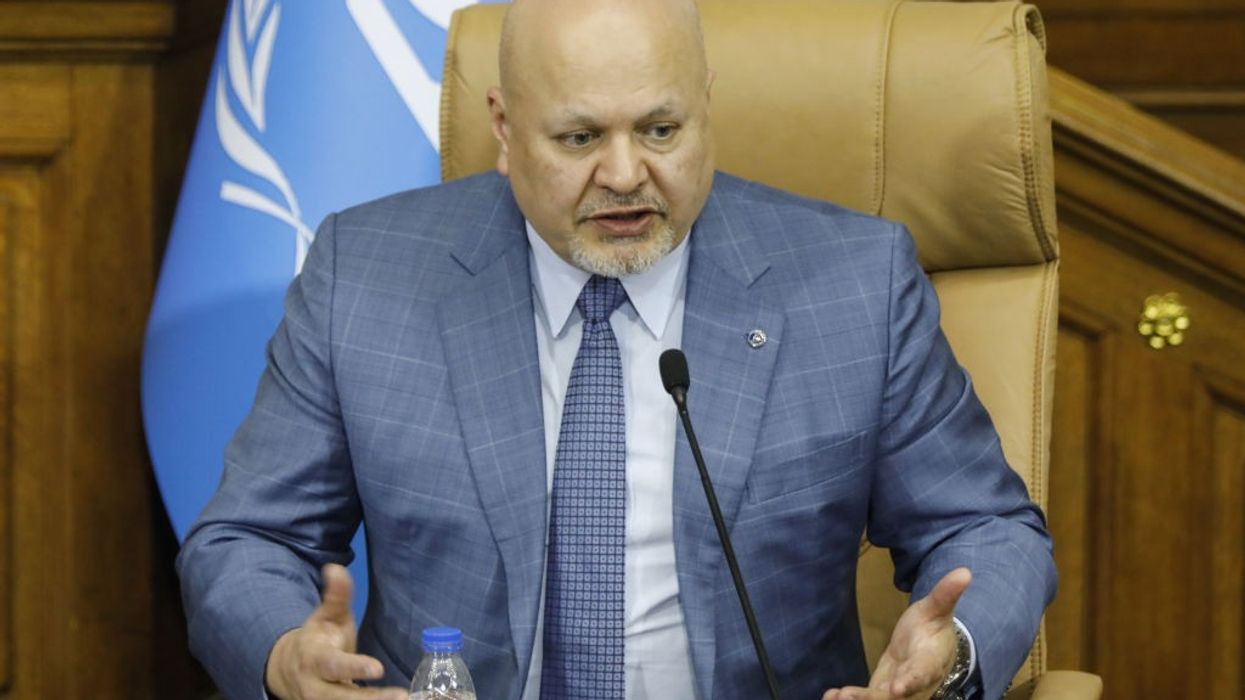
"The ICC's credibility is hanging by a thread," warned one former United Nations official in response to the court's delay in deciding whether to issue arrest warrants for Israeli leaders.
The office of International Criminal Court Prosecutor Karim Khan said Thursday that it is "aware of the reports" that Hamas leader Yahya Sinwar was assassinated by Israeli forces in Gaza, adding that it would withdraw its request for an arrest warrant for war crimes and crimes against humanity related to the October 7, 2023 attack and imprisonment of hostages if Sinwar's death is confirmed.
"In line with standard practice, the office will take relevant action if sufficient information is received confirming his death," Khan's division said of Sinwar, according to The Associated Press.
Israeli authorities said DNA, fingerprints, and dental records confirm Sinwar's death.
The announcement left some international critics frustrated at the ICC's delay in issuing arrest warrants for Israeli Prime Minister Benjamin Netanyahu, more than a year after Israel began its bombardment of Gaza.
In May, Khan announced that he had formally applied for warrants to arrest Netanyahu and Defense Minister Yoav Gallant for their role "in the crimes of causing extermination, causing starvation as a method of war, including the denial of humanitarian relief supplies, [and] deliberately targeting civilians in conflict."
Khan also said he was seeking arrest warrants for three Hamas leaders: Sinwar, former political leader Ismail Haniyeh, and al-Qassam Brigades commander Mohammed Diab Ibrahim Al-Masri for alleged war crimes including extermination, murder, hostage-taking, rape, torture, and other violations of international law.
Haniyeh was assassinated in late July by Israeli operatives in Tehran, Iran. Israel claims to have also killed Al-Masri, although this has not been confirmed.
In a Thursday evening address, Netanyahu asserted that "Hamas will no longer rule Gaza. This is the beginning of the day after Hamas."
"This is an opportunity for you, the residents of Gaza, to finally break free from its tyranny," he added in an appeal to Palestinians in the embattled strip—more than 150,000 of whom have been killed or wounded in a war for which Israel is on trial for genocide at the International Court of Justice.
Netanyahu's government allowed Hamas—which Israel propped up for years in a bid to counterbalance the power of the Palestinian National Authority—to receive billions of dollars in cash payments via Qatar.
U.S. President Joe Biden said in a statement on Sinwar's reported assassination that "this is a good day for Israel, for the United States, and for the world."
Biden claimed U.S. involvement in efforts to find and kill Sinwar.
"Shortly after the October 7 massacres, I directed special operations personnel and our intelligence professionals to work side-by-side with their Israeli counterparts to help locate and track Sinwar and other Hamas leaders hiding in Gaza," the president said. "With our intelligence help, the [Israel Defense Forces] relentlessly pursued Hamas' leaders, flushing them out of their hiding places and forcing them onto the run."
U.S. Vice President Kamala Harris, the Democratic nominee for president, said during a Thursday press conference that "any terrorist who kills Americans, threatens the American people, or threatens our troops or our interests, know this: We will always bring you to justice."
"Israel has a right to defend itself, and the threat Hamas poses to Israel must be eliminated," Harris added. "Today, there is clear progress toward that goal. Hamas is decimated and its leadership is eliminated."
With the ICC accused of moving too slowly in pursuit of arrest warrants for Israeli and Hamas leaders, Khan has urged the court to "urgently render its decisions" on his May applications.
Khan had some reason to tread carefully, as Israel waged a nearly decadelong intimidation campaign against former ICC Prosecutor Fatou Bensouda in response to her pursuit of justice for Israeli war criminals.
U.S. lawmakers have also threatened to sanction ICC officials who seek to hold Israeli leaders accountable for violations of international law, and in June dozens of House Democrats joined their Republican colleagues in passing H.R. 8282, the Illegitimate Court Counteraction Act, which would sanction ICC personnel involved in efforts to bring Israeli leaders to justice.
In an opinion piece published earlier this week by Al Jazeera, former United Nations official Moncef Khane wrote that "the ICC's credibility is hanging by a thread."
"It took Khan no less than seven months to recommend to the court's pre-trial chamber the issuance of warrants of arrest for Netanyahu and Gallant, notwithstanding a rather formidable amount of evidence of their personal responsibility in the war crimes perpetrated in Gaza," he noted.
"Now that he has done his duty, it is for the three sitting judges of the pre-trial chamber to decide whether to issue the warrants or not," Khane added. "The glaring and extraordinary amount of evidence of war crimes, crimes against humanity, genocide, and crime of aggression is such that were they to abscond from their responsibility, they would ring the death knell of the ICC."