SUBSCRIBE TO OUR FREE NEWSLETTER
Daily news & progressive opinion—funded by the people, not the corporations—delivered straight to your inbox.
5
#000000
#FFFFFF
To donate by check, phone, or other method, see our More Ways to Give page.


Daily news & progressive opinion—funded by the people, not the corporations—delivered straight to your inbox.
"Sen. Jim Justice says people 'might get upset' about SNAP cuts," said a government watchdog that's fought against the bill. "No kidding."
Anti-poverty campaigners and rights advocates have warned for months that the Republican Party's proposed cuts to federal nutrition assistance that tens of millions of Americans rely on would harm families as well as hundreds of thousands of jobs and the economies of cities and states across the nation—and on Wednesday one GOP senator appeared to have finally gotten the message.
Sen. Jim Justice (R-W.Va.) told Politico that if the Senate approves—or tries to "one-up"—the House's $300 billion in cuts to the Supplemental Nutrition Assistance Program (SNAP), which President Donald Trump has endorsed, it could cost the party its congressional majority.
"If we don't watch out, people are going to get hurt, people are going to be upset. It's going to be the No. 1 thing on the nightly news all over the place," Justice, who served as West Virginia's governor for eight years before winning his Senate seat last year, told Politico.
The government watchdog Accountable.US rejected Justice's attempt to "dodge the blame" for a proposal his party has been aggressively pushing since Trump took office.
Justice is now one of several Republican governors-turned-senators who have warned against the SNAP provision in the party’s budget reconciliation bill, which would require states to pay 75% of the program's administrative costs and 5-25% of the program's total food aid costs, with states that have higher payment error rates forced to pay more.
Justice's constituents are likely to be disproportionately impacted by the SNAP cuts, with 16% of West Virginians relying on SNAP in 2024. The national average is 12%, according to the Center for Budget and Policy Priorities.
The nonpartisan Congressional Budget Office has estimated that 3.2 million adults, including 800,000 who have school-aged children, could lose their SNAP benefits as a result of what Democratic senators have slammed as the "Big, Beautiful Betrayal."
The sweeping bill also threatens the health coverage of an estimated 13.7 million Americans with cuts to Medicaid and the end of Affordable Care Act tax credits, while the richest households and corporations would benefit from an extension of the GOP's 2017 tax cuts.
Republican lawmakers including Sens. Josh Hawley (R-Mo.) and Lisa Murkowski (R-Alaska) have said they will not vote for a package with cuts to Medicaid.
"Sen. Justice is the latest of many congressional Republicans to voice concern over extreme, draconian cuts to critical programs like SNAP and Medicaid," said Tony Carrk, executive director of the government watchdog Accountable.US. "And there's no question that the budget scam is concerning. Between slashing SNAP benefits for more than 3 million Americans and gutting healthcare for nearly 16 million Americans, this bill will make millions of people poorer, hungrier, and sicker while driving up our national debt."
The Senate Agriculture Committee was examining how to scale back the SNAP cost-sharing proposal on Wednesday, with committee Chair John Boozman (R-Ark.) planning to have bill text finalized by the end of the week.
"During his time in office, Manchin served the fossil fuel industry and lined his pockets with the payoff," said one critic.
Progressives on Thursday were unsurprised to hear that right-wing Democratic U.S. Sen. Joe Manchin has decided not to seek reelection next year, following recent polling that showed him 13 points behind Republican Gov. Jim Justice—but expressed frustration over the conservative senator's legacy of tanking the Democratic Party's agenda as leaders insisted he was the only Democrat who could possibly win the approval of voters in his home state of West Virginia.
After Manchin released a video announcing he will retire from the Senate seat he's held since 2010, former Ohio state Sen. Nina Turner (D) noted that economic justice and rights advocates have long been told they "had to sacrifice every progressive reform so we could hold on to a blue seat in West Virginia."
"Now, he's vacating the seat," said Turner.
The senator has outraged progressives in recent years by refusing to join his party in backing broadly popular reforms. He made numerous demands to reduce the anti-poverty and climate provisions in President Joe Biden's signature Build Back Better Act in 2021 before finally killing the bill over its inclusion of the expanded child tax credit—a program that more than 300,000 children in his own state benefited from before it expired but that Manchin falsely claimed would be used by parents to buy drugs.
He also joined Republicans in 2022 to block legislation codifying abortion rights months before the U.S. Supreme Court overturned Roe v. Wade and helped the GOP push to include language in a debt limit deal this year that would expedite the construction of the Mountain Valley Pipeline (MVP) in his state. Local advocates have denounced the project, which could lead to fossil fuel emissions equivalent to dozens of coal-fired power plants.
The state, said Denali Nalamalapu, communications director of the Protect Our Water, Heritage, Rights Coalition, is now witnessing "firsthand the repercussions of Sen. Joe Manchin's insatiable greed."
Nalamalapu expressed hope that West Virginians may ultimately be represented by "a climate champion who will serve their interests in the broader global shift towards a renewable future, not a robber baron who scurries away once he has maxed out his political fossil fuel profits."
Manchin suggested his political career may not be over as he said he will be "traveling the country and speaking out to see if there is an interest in creating a movement to mobilize the middle and bring Americans together"—which former U.S. Housing and Urban Development Secretary Julián Castro translated as: "Stay tuned. I want to run for president."
Progressive strategist Sawyer Hackett noted that Manchin's objection to the expanded child tax credit was a significant factor when the child poverty rate shot up last year, following an historic reduction that was attributed to the initiative.
"Not a great legacy to kickstart a long-shot bid for president," said Hackett.
Daniel Nichanian, editor-in-chief of Bolts, said that without Manchin, Democrats must now ensure they hold onto Senate seats in a number of states in order to maintain their slim majority.
But with Manchin likely to lose to Justice if he had sought reelection, Nichanian added, "it's a stretch to describe Manchin's retirement as a huge change to the Senate math for 2024."
Author and 350.org co-founder Bill McKibben said Manchin's exit marks the start of another race: "to see who will replace him as the biggest collector of campaign cash from the oil and gas industry."
"Over a five-year period, defendants engaged in over 130 violations of federal law, thereby posing health and safety risks to the public and the environment," said U.S. Attorney Christopher R. Kavanaugh.
The U.S. Department of Justice on Wednesday sued Republican West Virginia Gov. Jim Justice's family coal empire in federal court for millions of dollars in unpaid penalties, fees, and interest for dozens of legal violations.
The two-term governor—who is seeking U.S. Sen. Joe Manchin's (D-W.Va.) seat in next year's election—is not named in the civil suit but his son, James "Jay" Justice III, is, as the owner or operator of the 13 defendant companies.
Politico noted that "although the suit doesn't name the elder Justice, he's faced scrutiny before for the unpaid fines as well as reports that he's still maintained a firm grip on the family business."
Assistant Attorney General Todd Kim of the Justice Department's Environment and Natural Resources Division said in a statement that "our environmental laws serve to protect communities against adverse effects of industrial activities including surface coal mining operations."
"Through this suit, the Justice Department seeks to deliver accountability for defendants' repeated violations of the law and to recover the penalties they owe as a result of those violations," Kim added.
"The filing of this complaint continues the process of holding defendants accountable for jeopardizing the health and safety of the public and our environment."
The department's complaint accuses the 13 coal companies of violating their legal obligations under the Surface Mining Control and Reclamation Act (�SMCRA�), or permits issued under the law, and failing "to pay uncontested penalties assessed for their uncontested violations."
"Defendants have been cited for over 130 violations and have failed to pay over $5 million in civil penalties assessed by the Office of Surface Mining Reclamation and Enforcement (�OSMRE�)," the filing states. "In addition, certain defendants also collectively owe, and have not paid, over $190,000 in abandoned mine land (�AML�) reclamation fee debts."
When interest, late payment penalties, and administrative expenses are included, the defendants owe approximately $7.6 million, according to the Justice Department—which took legal action on behalf of the �OSMRE�, a branch of the Interior Department.
"Over a five-year period, defendants engaged in over 130 violations of federal law, thereby posing health and safety risks to the public and the environment," said U.S. Attorney Christopher R. Kavanaugh for the Western District of Virginia.
“After given notice, they then failed to remedy those violations and were ordered over 50 times to cease mining activities until their violations were abated," Kavanaugh explained. "Today, the filing of this complaint continues the process of holding defendants accountable for jeopardizing the health and safety of the public and our environment."
Justice took office as a Democrat in January 2017 and later that year, at a rally with Republican then-President Donald Trump, announced he was returning to the GOP. His online biography boasts about various business ventures, stating that after his father's death, "Jim launched a massive expansion of multiple businesses which included significant coal reserve expansion, Christmas tree farms, cotton gins, turfgrass operations, golf courses, timber enhancement, and land projects."
The 72-year-old "has dozens of business holdings listed on his annual state ethics disclosures," West Virginia's MetroNews reported Wednesday. "The governor has not placed most of his family's holdings in a blind trust but has repeatedly said the responsibility of running the businesses has been passed on to Jay and adult daughter Jill Justice."
During a Wednesday briefing, the governor reportedly reiterated that he does not control the coal companies' day-to-day operations and said that "the Biden administration is aware of the fact that with a win for the U.S. Senate, and everything, we could very well flip the Senate. You know, government agencies can sometimes surely react, and this could be something in regard to that."
"But with all that being said—as I've said over and over, and you've seen it a thousand, million times—when something comes up and someone rears an ugly head, do we run and jump in a hole and die? We don’t do that," Justice added. "You know, my son and my daughter and our companies will always fulfill obligations, every single one, and absolutely at the end of the day have we not done it and done it and done it?"
MetroNews pointed out that in 2019, under Trump, federal prosecutors filed a similar $4.7 million lawsuit against several Justice coal companies stemming from nearly 2,300 citations—which resulted in a 2020 settlement. Earlier this month, prosecutors filed a motion over those companies' failure to make four consecutive payments since February.
The new suit comes after the East Carolina University Center for Survey Research on Tuesday released polling results which show that in a hypothetical 2024 U.S. Senate race between Justice and Manchin, the governor has a 22-point lead, securing support from 54% of registered West Virginia voters compared with the 32% who said they would support the incumbent.
The 75-year-old Democratic senator—who has come under fire nationally for serving fossil fuel interests and thwarting his own party's agenda—has not yet said whether he plans to seek reelection. However, there has been speculation that he may instead run for president next year. Manchin
said in a statement last month, "Make no mistake, I will win any race I enter."
"While we lost the battle in the legislature, our defeat is temporary. We will not lose in court," said one Kentucky activist. "And we are winning in so many other ways."
West Virginia and Kentucky on Wednesday joined the growing list of U.S. states where Republicans have banned gender-affirming healthcare for minors, denying them access to evidence-based treatments that advocates say have saved the lives of countless transgender youth.
Republican West Virginia Gov. Jim Justice signed legislation outlawing the prescription of hormone therapy and fully reversible puberty blockers to anyone under age 18. Minors are also now prohibited from undergoing gender-affirming surgeries, even though doctors say no such operations are performed in the state. The law contains an exception for minors who are deemed at risk of suicide or other self-harm, diagnosed with severe gender dysphoria by two doctors, and have parental consent.
According to UCLA's Williams Institute on Sexual Orientation and Gender Identity Law and Public Policy, West Virginia is the state with the highest per capita number of transgender youth in the country, by far.
"We are denying families, their physicians, and their therapists the right to make medically informed decisions for their families."
Following the lead of Tennessee—which recently banned public drag shows—Republican state lawmakers in West Virginia have also recently introduced a pair of bills ostensibly aimed at "protecting minors from exposure to indecent displays," in part by defining "obscene matter" as "included but not limited to transvestite and/or transgender exposure in performances or displays to minors."
One of the bills punishes violators with a year in prison; the other imposes a six-month sentence.
Meanwhile, Republican state lawmakers used their supermajority in both chambers of the Legislature to override Democratic Gov. Andy Beshear's veto of legislation described by Louisville Courier Journal reporter Olivia Krauth as "one of the nation's most extreme anti-trans bills."
Hundreds of LGBTQ+ youths and their allies rallied outside the Kentucky state Capitol, and 19 activists were arrested inside the building and charged with criminal trespassing after refusing orders to leave, the Courier Journal reported.
Hazel Hardesty, a transgender teen who spoke at the rally, said that without gender-affirming care, "my male puberty would continue" and "cause a lot of mental distress."
"People don't even understand how it feels," the 16-year-old said. "Going through the wrong puberty, every day your body is a little bit farther from what feels like you. And eventually, you don't even recognize yourself in the mirror."
Another trans teen, June Wagner, told the crowd that "my own government is working against me."
As Krauth noted, the Kentucky bill:
"We are denying families, their physicians, and their therapists the right to make medically informed decisions for their families," Kentucky state Sen. Karen Berg (D-26) said on the chamber's floor prior to the vote.
"To say this is a bill protecting children is completely disingenuous, and to call this a 'parents' rights' bill is an absolutely despicable affront to me, personally," Berg added, recounting how her transgender son killed himself in December. She also linked anti-trans legislation to violent attacks on transgender people.
The ACLU of Kentucky's new executive director, Amber Duke, called the veto override "another shameful attack on LGBTQ youth."
"Trans Kentuckians, medical and mental health professionals, and accredited professional associations pleaded with lawmakers to listen to the experts, not harmful rhetoric based in fear and hate," Duke continued. "Their pleas fell on deaf ears."
"To all the trans youth who may be affected by this legislation: We stand by you, and we will not stop fighting. You are cherished. You are loved. You belong," she added. "To the commonwealth: We will see you in court."
Trans youth can still obtain gender-affirming care in Kentucky, as the law won't take effect for 90 days.
The American Medical Association, the American Psychiatric Association, and the American Academy of Pediatrics are among the many medical groups supporting gender-affirming care for minors. A study published last year by the University of Washington found that youth who received such healthcare were 73% less likely to experience suicidality and 60% less likely to suffer from depression than minors who did not get care.
Yet GOP-led state legislatures in 2023 have already introduced more than 100 bills aimed at banning or severely limiting gender-affirming healthcare for minors, according to the ACLU.
As The Associated Press notes:
At least 11 states have now enacted laws restricting or banning gender-affirming care for minors: Alabama, Arkansas, Arizona, Georgia, Iowa, Kentucky, Mississippi, Tennessee, Utah, South Dakota, and West Virginia. Federal judges have blocked enforcement of laws in Alabama and Arkansas, and nearly two dozen states are considering bills this year to restrict or ban care.
Earlier this month, the Idaho House of Representatives passed a bill that would make providing gender-affirming care to transgender youths a felony, punishable by life imprisonment. The legislation also contains a provision making it a crime for parents or guardians to allow their children to travel out of the state for treatment.
According to the Williams Institute, more than 144,000 U.S. transgender youth lost or remain at risk of losing access to gender-affirming care due to bans.
Belying Republican claims that healthcare bans are for the protection of children, GOP-led states have also moved to ban or limit gender-affirming care for adults.
Speaking after the Kentucky veto override, Chris Hartman from the advocacy group Fairness Campaign said in a statement that "while we lost the battle in the legislature, our defeat is temporary."
"We will not lose in court," Hartman added. "And we are winning in so many other ways."
"Poverty or a prison sentence should not be a death sentence," asserted campaign co-chair Bishop William J. Barber II after relatives of inmates who died last year told their loved ones' stories.
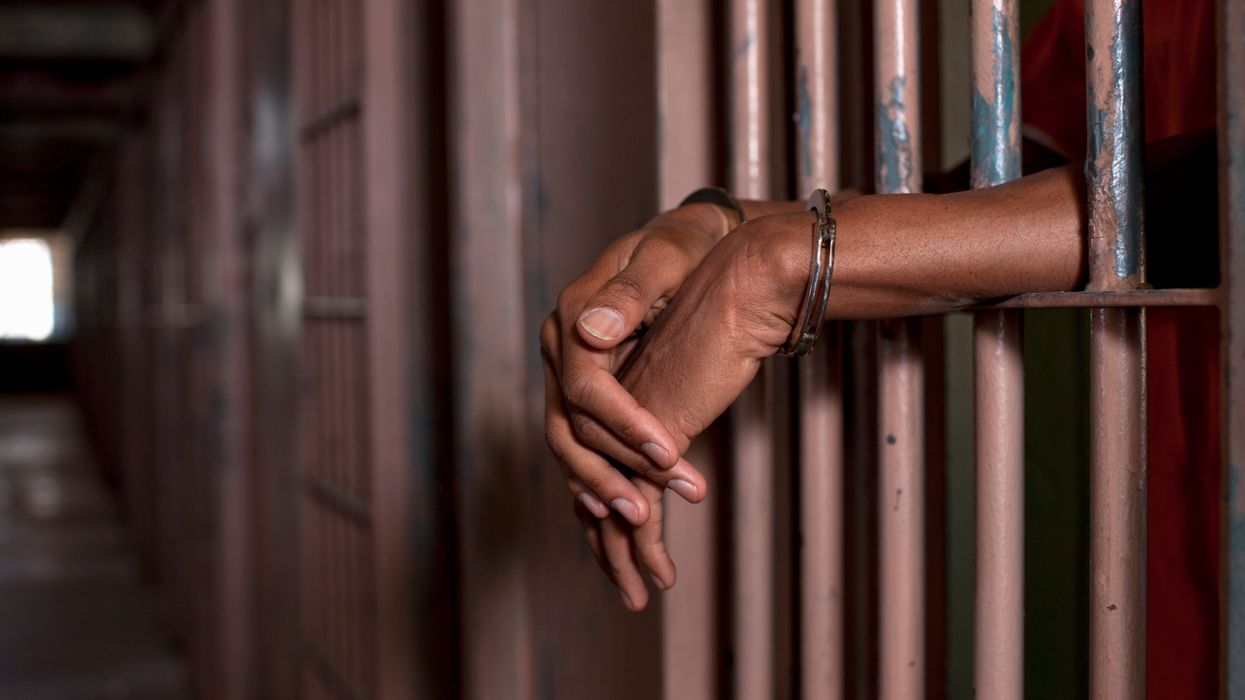
Activists with the Poor People's Campaign and relatives of some of the 13 inmates who died at West Virginia's Southern Regional Jail last year held a press conference Thursday to implore the Biden administration to investigate conditions at the notorious lockup, as well as the deaths of more than 100 prisoners in the state during the last 10 years.
"We're doing this on behalf of the 13 people who have died senselessly, we believe, at the Southern Regional Jail... and on behalf of over 100 more who have died within West Virginia regional jails over the last decade," Bishop William J. Barber II, co-chair of the Poor People's Campaign: A National Call for Moral Revival, said at the online conference.
Speaking to Common Dreams by phone after the press conference, Barber said that "we need a full, independent investigation by the Justice Department. We're talking about basic civil rights and human dignity. Give us the truth. Give us justice."
"We need a full, independent investigation by the Justice Department. We're talking about basic civil rights and human dignity. Give us the truth. Give us justice."
"There are too many unanswered questions here," he added. "We're talking about people dying in jail."
In one case, a man jailed at Southern Regional Jail (SRJ) for littering and missing a court date died 81 days after his arrest. In another, a woman died after she was brutally beaten and literally torn apart by inmates looking for drugs in her private parts.
Latasha Williams, whose 37-year-old fiancée Quantez Burks died a day after he was locked up at SRJ for alleged wanton endangerment and obstruction, said she only found out her partner was dead when she called to inquire about posting bond the day after his arrest.
"The magistrate said, 'I hate to tell you this, but he passed away last night at 9:00 pm,'" Williams recounted. "I threw the phone and started crying... and I [said] they lying, it's somebody else, 'cause I just talked to him."
After state officials said the cause of Burks' death was "natural," his loved ones raised $5,000 for an independent autopsy by Pittsburgh forensic pathologist Cyril Wecht, a former president of the American Academy of Forensic Sciences.
"We just felt like there was probably some foul play in it, and that's really what made us decide to get that second autopsy," Burks explained.
"Findings were consistent with being handcuffed while being beaten," she said. "Both of his wrists were broken. He had an arm broken, nose broken, and a leg bone broken. He also had blunt force trauma to his whole body, including his head. He also had a heart attack, which they said was probably caused by the stress his body was put into."
Reacting to Burks' remarks, Barber asserted that "poverty or a prison sentence should not be a death sentence."
"We need an independent federal investigation. We need it now. We need the Justice Department to come in and meet with these families."
"Countless low-income West Virginians of all races... have died under the watch of the state prison and jail system," he continued. "We need an independent federal investigation. We need it now. We need the Justice Department to come in and meet with these families."
"The mothers and fathers and sisters and brothers and family members of those who have died at the hands of our jail system in West Virginia need and deserve answers," Barber added. "We cannot allow our elected leaders to continue to ignore what is unfolding right in front of them."
Barber urged U.S. Sen. Joe Manchin (D-W.Va.) and Republican Gov. Jim Justice to support an independent federal probe into the "dangerous, inhumane, and unconstitutional conditions in the Southern Regional Jail."
"You don't have video. You don't have body cameras," said Barber. "But you have real lives and real families and tremendous pain and death and people going in for... minor offenses and then family members finding out, sometimes in less than 24 hours, sometimes less than 24 days, that a loved one is dead, dead, dead. And all kinds of questions have gone unanswered."
While the U.S. Department of Homeland Security last year conducted an investigation of conditions at SRJ, critics including attorneys for inmates at the jail called the probe a "sham."
Barber told Common Dreams that "only a full federal investigation, with the DOJ and its power of the federal purse strings," would be sufficient to "give us the truth" and answer the questions of those whose loved ones died at SRJ.
"Systems that investigate themselves are not as thorough, and are prone to cover-ups," he added.
Thursday's press conference came as current and former prisoners filed a new class-action lawsuit this week over conditions at SRJ. The suit alleges that inmates are denied access to drinking water, that they face dangerous overcrowding, mold, human sewage, toilet water, rats, sexual assault, and other violence.
According to WVNS journalist Jessica Farrish, who has reported extensively on the jail:
The suit states that up to 16 mentally ill people are forced inside of an alleged "suicide cell" that measures 120 square feet, and that prison and medical staff allegedly leave them in the cell for days. Attorneys also say jail staff allegedly destroys legal mail sent to inmates, opens inmates' legal mail when they are not present, and photocopies legal mail sent to inmates.
A previous class-action lawsuit filed last year alleges abuse and mistreatment at SRJ.
"Hearing these stories, my heart is breaking," said Rev. Dr. Liz Theoris, co-chair of the Poor People's Campaign. "This drive to criminalize the poor is immoral and poverty and incarceration... should not be a death sentence."
"Enough is enough. This has to stop," she added. "We are calling... on our elected officials and on the DOJ to make a difference. We are calling on Sen. Manchin and Gov. Justice to hear the cries of the families seeking answers and to do what's right."
A state investigation into conditions at SRJ that concluded inmates were lying about abuse was widely dismissed as grossly inadequate.
As an October 2022 editorial in the Register-Herald, a Beckley, West Virginia-based paper, noted:
The state report on conditions at SRJ was produced lickety-split, in about 30 days, by West Virginia Homeland Security Secretary Jeff Sandy, who cooked the books to deny any problems whatsoever at the facility. A high school term paper would have been more revealing—and more credible. Sandy once served as chair of the Regional Jail Board from 2012 to 2016 and now serves in the governor's cabinet.
Yes, the governor directed an insider to conduct a fair and impartial investigation. Even a blind man could see that was never going to happen. As such, the problems at SRJ persist because they have not been meaningfully addressed—and inmates are dying because of it.
Kat Robles, an attorney at the advocacy group Forward Justice, specifically called on the U.S. Justice Department's Civil Rights Division to launch an investigation under the Civil Rights of Institutionalized Persons Act, which empowers the DOJ to probe abuse and neglect in prisons and jails, mental health facilities, and other institutions.
"This is an urgent crisis. This is an outrage," said Robles, who added that what's needed is "not just an investigation."
"We want them to meet with community leaders, to meet with families, and to remedy this urgent crisis," she said.