

SUBSCRIBE TO OUR FREE NEWSLETTER
Daily news & progressive opinion—funded by the people, not the corporations—delivered straight to your inbox.
5
#000000
#FFFFFF
To donate by check, phone, or other method, see our More Ways to Give page.
Daily news & progressive opinion—funded by the people, not the corporations—delivered straight to your inbox.
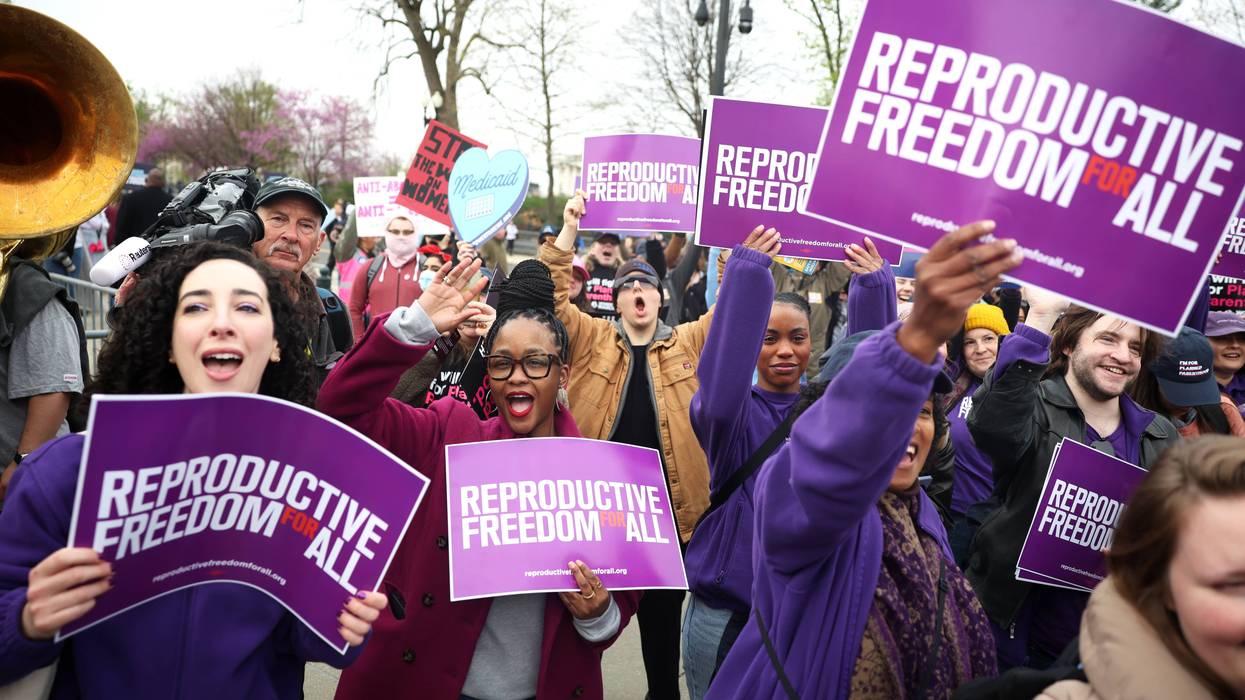
"Abortion bans don't stay in exam rooms," said the Center for Reproductive Rights president. "They reshape communities, workplaces, and state economies."
With attention directed at President Donald Trump's war on immigrants across the United States and various international conflicts, including the assault on Iran, there hasn't been much prominent news coverage in recent weeks about a key issue of the 2024 campaign—GOP abortion bans—but people nationwide continue to endure the impacts of such policies, as revealed in a Monday report from the Center for Reproductive Rights.
The Price of Safety: Stories of Abortions Denied, Careers Disrupted, and States Left Behind features various profiles demonstrating "the human and economic toll" of abortion bans, which right-wing policymakers have enacted or intensified since the US Supreme Court reversed Roe v. Wade with its Dobbs v. Jackson Women's Health Organization decision in 2022.
The anthology uses stories from patients, doctors, business leaders, and others to "show the real-world consequences of laws that criminalize standard medical care," said Nancy Northup, the center's president, in a statement. "Abortion bans don't stay in exam rooms. They reshape communities, workplaces, and state economies. As long as politicians keep restricting care, families will keep moving, clinicians will keep leaving, and states will keep watching their competitive edge slip away."
"Our daughter's spine was severely abnormal, her brain hadn't formed correctly, and she only had one kidney... I did everything by the book medically, but the experience still made me feel like a criminal for seeking evidence-based care for a lethal fetal diagnosis."
Dani Mathisen, "a Fort Worth native from a family of physicians," discovered during a routine anatomy scan with her OB-GYN, who is also her aunt, that she needed an abortion, 18 weeks into a planned pregnancy. As she explained, "Our daughter's spine was severely abnormal, her brain hadn't formed correctly, and she only had one kidney."
Texas had banned abortions after six weeks and allowed private citizens to sue anyone who helped a pregnant person access care. According to Mathisen: "My mom, also a doctor, stepped in anyway. She found a clinic in New Mexico, booked the flights and hotel, called the staff, and handed us an envelope of cash. We paid for the abortion with cash out of fear of leaving a paper trail tying Texas credit cards to out-of-state abortion care. I did everything by the book medically, but the experience still made me feel like a criminal for seeking evidence-based care for a lethal fetal diagnosis."
"I had always imagined building my career in Texas," she added. "After this, I chose an OB-GYN residency in Hawaii because I needed full-spectrum training—including abortion care—and I couldn't get that in Texas."
Mathisen wasn't alone in fleeing that state. Amanda Ducach, CEO and co-founder of an artificial intelligence startup focused on women's health, shared how she "built Ema in Houston, and Texas shaped our earliest users and our mission," but when Roe fell, she "was seven and a half months into a high-risk pregnancy."
"Suddenly, even if I were to face a life-threatening emergency, I wasn't sure I'd receive timely care. My doctors weren't sure either," Ducach detailed. "It also changed how I thought about my company, and our responsibility to the people who rely on us through our partner platforms."
"After months of legal review and deep conversations with my team, I decided to relocate both my family and Ema's headquarters to Massachusetts where abortion access is protected under state law," she continued. "I also gave employees the option to work from any location, which brought immediate relief."
"Suddenly, even if I were to face a life-threatening emergency, I wasn't sure I'd receive timely care. My doctors weren't sure either."
Elizabeth Weller also left Texas. She said that "the decision cost us $25,000+ in income, distanced us from our community, and upended the future we had envisioned. But after the pregnancy complications I faced, it was painfully clear: Texas no longer provided the basic medical care necessary to have a child."
So did Dr. Judy Levison, who spent over two decades practicing and teaching obstetrics and gynecology in the state. After "watching abortion bans turn routine medical care into a legal minefield," she retired, moved to Colorado, and "began volunteering with an abortion support group."
It's not just Texas. Kayla Smith said that she left Idaho—"where I'd lived for 13 years, gone to college, met my husband, built our careers, and wanted to grow our family"—for Washington state. She explained that just 48 hours after Idaho's ban took effect and "19 weeks into my pregnancy with my second child, we discovered that our baby had a severe, inoperable heart defect."
Tracy Young, "a first-generation American, a mother of four, and the co-founder of two technology companies," highlighted how abortion bans also outlaw proper treatment for people experiencing miscarriages. While she is based in San Francisco, California, Young began "losing a pregnancy I had deeply wanted" while traveling for work in Louisiana.
"Back home in California, my doctors told me that my body had not completed the miscarriage naturally. They prescribed misoprostol, and when that wasn't enough, performed a surgical procedure to prevent infection and complications," she said. "Today, abortion bans have made that same care illegal or heavily restricted in many states, including Louisiana where I miscarried."
Another business leader, Chris Webb, CEO and co-founder of ChowNow—an online ordering platform with offices in California and Missouri—publicly supported abortion access in 2019 by signing on to a coalition's "Don't Ban Equality" letter. After Roe's reversal, he sent out a company-wide email disclosing a girlfriend's abortion and offering to personally cover the travel costs of any employee who needed such care.
"Leaders owe employees honesty about where they stand—and action when basic rights are on the line," he said. "Abortion policies aren't just about healthcare. They're good for employers and good for people. When more companies speak up, there is safety in numbers. And in the long run, protecting your team protects your business—and is just the right thing to do."
"Reproductive rights are so crucial that Americans are uprooting their lives to ensure they have access to care."
The report's release coincided with the publication of a paper adapted from one prepared for the center by researchers who estimated "the market value of reproductive rights as capitalized into US housing markets."
The paper, published by the National Bureau of Economic Research, shows that "total abortion bans reduced rents by an average of 2.2% from July 2022 through June 2025, with the effect reaching 4.0% in the most recent year. Over the same horizon, bans increased rental vacancy rates by an average of 1.1 percentage points, with the effect reaching 1.8 percentage points in the most recent year. Estimates for home values and homeowner vacancy rates are similar in magnitude but less precise."
The center's senior director, Julia Taylor Kennedy, said that "the economic data and the firsthand accounts are telling the same story... Reproductive rights are so crucial that Americans are uprooting their lives to ensure they have access to care. That means that, for employers and policymakers, abortion bans carry measurable workforce and competitiveness implications."
Despite such findings, Republican state and federal policymakers continue to restrict reproductive freedom. In recent months, the Trump administration quietly imposed an abortion ban at the US Department of Veterans Affairs and expanded the global gag rule.
Meanwhile, at the state level last month, Tennessee Republicans introduced legislation to make abortion a capital offense, and a sheriff's office in South Carolina launched an investigation into a fetus, estimated to be just 13-15 weeks, found at a water treatment plant, highlighting the rising criminalization of pregnancy loss.
Last week, the Marion County Superior Court granted a permanent injunction preventing enforcement of Indiana's near-total abortion ban, and Republican Attorney General Todd Rokita swiftly appealed.
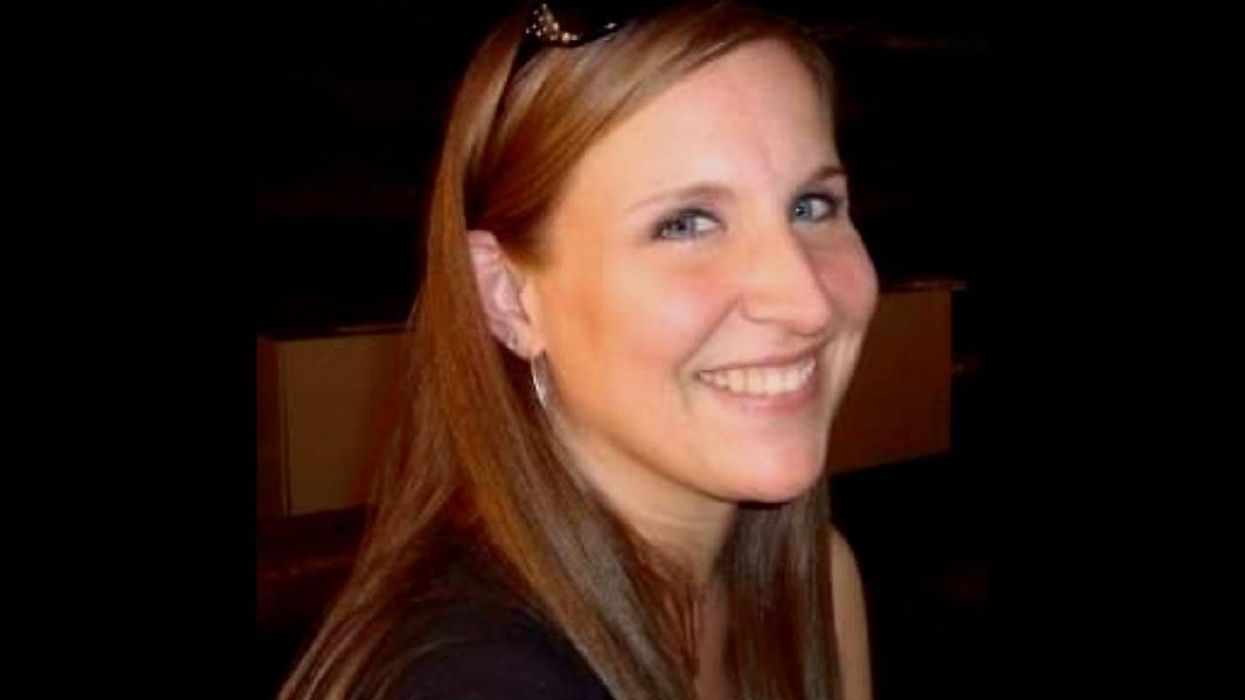
"I'm hopeful that my new trial will end with me being freed, because I simply lost my pregnancy at home because of an infection," said Brooke Shoemaker, who has already spent five years in prison.
While Brooke Shoemaker and a rights group representing her in court are celebrating this week after an Alabama judge threw out her conviction and ordered a new trial, her case is also drawing attention to the dangers of "fetal personhood" policies.
"Laws and judicial decisions that grant fetuses—and in some cases embryos and fertilized eggs—the same legal rights and status given to born people, such as the right to life, is 'fetal personhood,'" explains the website of the group, Pregnancy Justice. "When fetuses have rights, this fundamentally changes the legal rights and status of all pregnant people, opening the door to criminalization, surveillance, and obstetric violence."
Since the US Supreme Court's Dobbs v. Jackson Women's Health Organization ruling ended the federal right to abortion in 2022, far-right activists and politicians have ramped up their fight for fetal personhood policies. Pregnancy Justice found that in the two years after the decision, the number of people who faced criminal charges related to their pregnancies hit its highest level in US history.
Shoemaker's case began even earlier, in 2017, when she experienced a stillbirth at home about 24-26 weeks into her pregnancy. Paramedics brought her to a hospital, where she disclosed using methamphetamine while pregnant. Although a medical examiner could not determine whether the drug use caused the stillbirth—and, according to Pregnancy Justice, "her placenta showed clear signs of infection"—a jury found her guilty of chemical endangerment of a minor. She's served five years of her 18-year sentence.
"After becoming Ms. Shoemaker's counsel in 2024, Pregnancy Justice filed a petition alongside Andrew Stanley of the Samford Law Office requesting a hearing based on new evidence about the infection that led to the demise of Ms. Shoemaker's pregnancy, leading the judge to agree with Pregnancy Justice's medical witness and to vacate the conviction," the rights group said in a Monday statement.
Lee County Circuit Judge Jeffrey Tickal wrote in his December 22 order that "should the facts had been known, and brought before the jury, the results probably would have been different."
Shoemaker said Monday that "after years of fighting, I'm thankful that I'm finally being heard, and I pray that my next Christmas will be spent at home with my children and parents... I'm hopeful that my new trial will end with me being freed, because I simply lost my pregnancy at home because of an infection. I loved and wanted my baby, and I never deserved this."
Although Tickal's decision came three days before Christmas, the 45-year-old mother of four remained behind bars for the holiday last week, as the state appeals.
"While we are thrilled with the judge's decision, we are outraged that Ms. Shoemaker is still behind bars when she should have been home for Christmas," said former Pregnancy Justice senior staff attorney Emma Roth. "She was convicted based on feelings, not facts. Pregnancy Justice will continue to fight on appeal and prove that pregnancies end tragically for reasons far beyond a mother's control. Women like Ms. Shoemaker should be allowed to grieve their loss without fearing arrest."
AL.com reported Tuesday that "Alabama is unique in that it is one of only three states, along with Oklahoma and South Carolina, where the state Supreme Court allows the application of criminal laws meant to punish child abuse or child endangerment to be applied in the context of pregnancy."
However, similar cases aren't restricted to those states. Pregnancy Justice found that in the two years following Dobbs, "prosecutors initiated cases in 16 states: Alabama, California, Florida, Idaho, Kentucky, Mississippi, Nebraska, New Mexico, Ohio, Oklahoma, Pennsylvania, South Carolina, South Dakota, Texas, Wisconsin, and Wyoming. While prosecutions were brought in all of these states, to date, the majority of the reported cases occurred in Alabama (192) and Oklahoma (112)."
This is fantastic news!!I wrote in my book how the medical examiner ruled the cause of the stillbirth "undetermined," but the coroner (who lacks medical training) instead listed cause of stillbirth as mom's meth usage on the fetal death certificate.
[image or embed]
— Jill Wieber Lens (@jillwieberlens.bsky.social) December 30, 2025 at 12:25 PM
"Prosecutors used a variety of criminal statutes to charge the defendants in these cases, often bringing more than one charge against an individual defendant," the group's report continues. "In total, the 412 defendants faced 441 charges for conduct related to pregnancy, pregnancy loss, or birth. The majority of charges (398/441) asserted some form of child abuse, neglect, or endangerment."
"As has been the case for decades, nearly all the cases alleged that the pregnant person used a substance during pregnancy," the report adds. "In 268 cases, substance use was the only allegation made against the pregnant person. In the midst of a wide-ranging crisis in maternal healthcare and despite maternal healthcare deserts across the country, prosecutors or police argued that pregnant people's failure to obtain prenatal care was evidence of a crime. This was the case in 29 of 412 cases."
When the publication was released last year, Pregnancy Justice president Lourdes A. Rivera said in a statement that "the Dobbs decision emboldened prosecutors to develop ever more aggressive strategies to prosecute pregnancy, leading to the most pregnancy-related criminal cases on record."
"This is directly tied to the radical legal doctrine of 'fetal personhood,' which grants full legal rights to an embryo or fetus, turning them into victims of crimes perpetrated by pregnant women," Rivera argued. "To turn the tide on criminalization, we need to separate healthcare from the criminal legal system and to change policy and practices to ensure that pregnant people can safely access the healthcare they need, without fear of criminalization. This report demonstrates that, in post-Dobbs America, being pregnant places people at increased risk, not only of dire health outcomes, but of arrest."
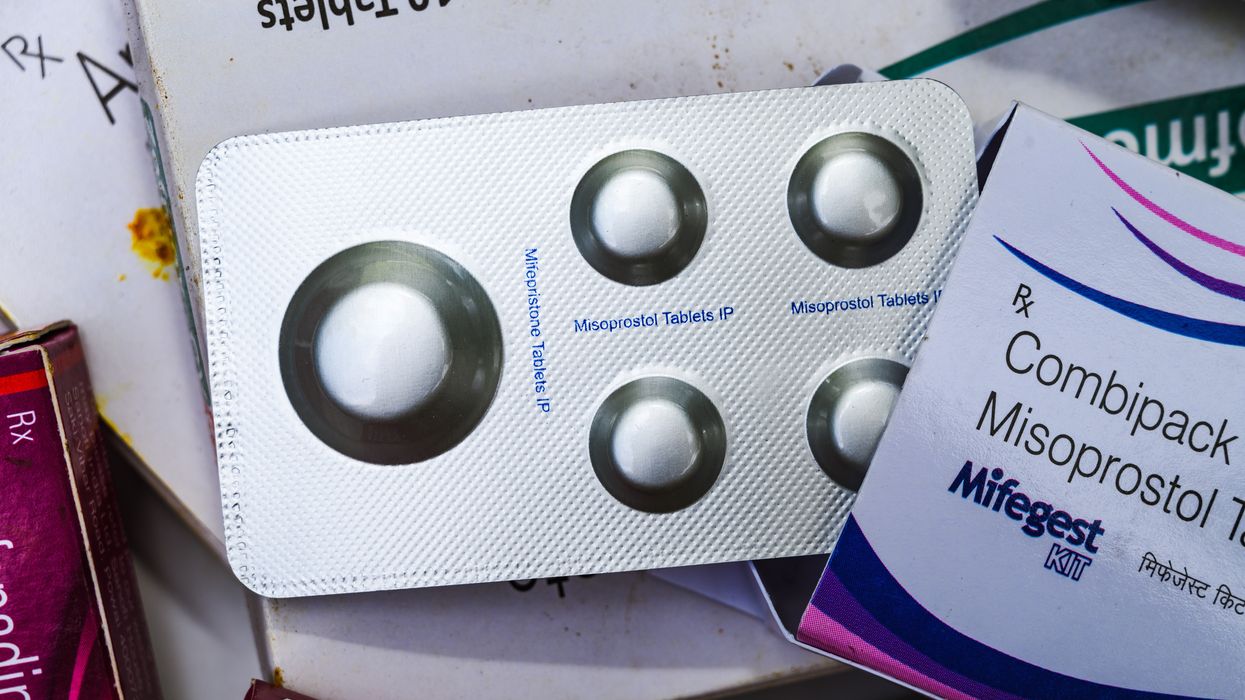
The high-profile lawyer behind the case "wants to shut down doctors in shield law states," said one expert, and "he wants a federal court to weigh in on the Comstock Act."
As polling reaffirms U.S. public support for abortion rights, a new case in Texas is generating alarm and outrage, as it involves a federal "zombie law" that the forced birth movement aims to use to block people across the country from accessing abortion pills.
Jonathan Mitchell is serving as lead counsel in the proposed class action lawsuit, filed Sunday in the Southern District of Texas. Described as an "anti-abortion legal terrorist" by Susan Rinkunas in Jezebel, Mitchell is Texas' former solicitor general and the chief architect of a state law that entices anti-choice vigilantes with $10,000 bounties to enforce a six-week abortion ban.
"He's represented at least three other men who've sued over women's abortions—including Marcus Silva, who sued his ex-wife's friends for helping her get abortion pills. That case was eventually dropped, but not before it came out that Silva tried to use the lawsuit to blackmail his ex into having sex with him," Jessica Valenti noted in her Abortion, Everyday newsletter. "Since then, Mitchell and other anti-abortion activists have been cozying up to men's rights groups, 'abortion recovery' ministries, and crisis pregnancy centers—on the lookout for more angry men eager to sue their partners or exes for ending a pregnancy."
In the new wrongful death case in Texas, Mitchell represents Jerry Rodriguez, who is suing Rémy Coeytaux, a California doctor accused of mailing to Galveston County medication that his girlfriend used to end her pregnancy last September. The complaint claims the girlfriend's estranged husband and mother "pressured her to kill the baby with the drugs obtained from Coeytaux."
The complaint also claims the girlfriend ended a second pregnancy with "pills that were illegally obtained" in January—and she is now two months into a third pregnancy, and Rodriguez believes she may seek another medication abortion. He asked for $75,000 in damages and "an injunction to stop Coeytaux from distributing abortion-inducing drugs in violation of state or federal law."
The new "wrongful death" abortion pill lawsuit out of Texas is a BFD for several reasons, but one twist is that the doctor being targeted is the brother of lifelong reproductive health advocate Francine Coeytaux of @plancpills.bsky.social Collab by Nina Martin & me on what the case is all about:
[image or embed]
— Madison Pauly (@msjpauly.bsky.social) July 23, 2025 at 5:25 PM
Among the legislation cited in the filing is the Comstock Act, or 18 U.S. Code § 1461, a dormant 1873 law that criminalized the shipping of "obscene" materials, including abortifacients. While some anti-choice advocates aim to outlaw abortion nationwide with legislation in Congress, Mitchell has said that "we don't need a federal ban when we have Comstock on the books."
Since the U.S. Supreme Court's right-wing majority reversed Roe v. Wade with Dobbs v. Jackson Women's Health Organization in 2022, Republican lawmakers have ramped up their efforts to restrict abortion rights within their states—with deadly consequences. Residents of those parts of the country have increasingly turned to telehealth. States with pro-choice policymakers have enacted "shield laws" to protect abortion providers and patients who are traveling or receiving care online.
"These anti-abortion folks are really upset that all these pills are being sent to their states, and they're doing whatever they can to try to stop it," Jill Wieber Lens, a University of Iowa College of Law professor and reproductive rights expert, told Jezebel.
Lens also framed the Texas case as a fear tactic. "I think so much of this is about the chilling effect, as opposed to actually winning this lawsuit," she said. "This might scare other doctors in shield states from wanting to continue what they're doing."
According to Mother Jones, "The case is the first known test of whether abortion opponents can use federal court lawsuits to circumvent state shield laws aimed at protecting providers—a major escalation of attacks on abortion-friendly states."
Mary Ziegler, an abortion historian and law professor at the University of California, Davis, told the outlet that "the whole game for Jonathan Mitchell is to get into federal court... both because he wants to shut down doctors in shield law states, like everyone in the anti-abortion movement, and because he wants a federal court to weigh in on the Comstock Act."
Ziegler added on social media that the suit is also intended to "force a response" from the U.S. Supreme Court and President Donald Trump, who has so far resisted pressure from forced birth activists to use the Comstock Act to ban abortion nationwide. Further, she said, "it reinforces arguments for fetal personhood (note that is a class action on behalf of all 'fathers of unborn children')."
Three years after the fall of Roe v. Wade, most Americans still support legal abortion.-64% say abortion should be legal in all or most cases.-80%+ support it in cases of rape, incest, or health risks.-Even after Dobbs, public opinion hasn’t budged; the people are not with the ban.
[image or embed]
— Anna DNP, FNP, BC@ AccessToCareAdvocate (@anna1900.bsky.social) July 24, 2025 at 7:33 AM
The case comes as Thursday polling from the Associated Press-NORC Center for Public Affairs Research shows that 64% of U.S. adults across the political spectrum say that abortion should be legal in all or most cases.
While 52% of all respondents agreed abortion should be allowed if the patient does not want to be pregnant "for any reason," large majorities believe it should be allowed if the pregnant person's health is seriously endangered (89%), the pregnancy is a result of rape or incest (86%), and an abnormality would prevent the fetus from surviving outside of the womb (85%).
Additionally, according to the poll, a majority of Americans support protecting abortion access for people who endure miscarriages or other pregnancy-related emergencies (69%), protecting a patient's right to obtain care in another state (56%), and protecting doctors from fines or prison time (55%).
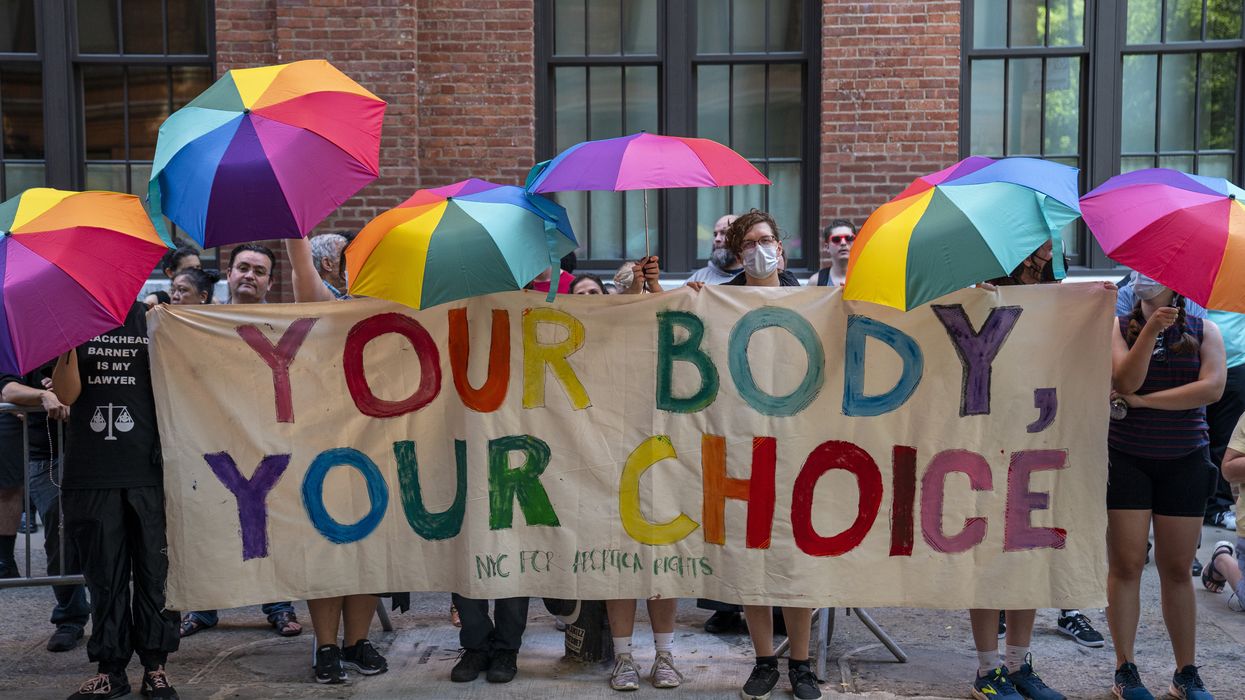
This is a critical moment in history for both patients and physicians alike to stay informed—because the moves happening now could reshape access to reproductive healthcare nationwide.
Three years ago, I remember exactly where I was when the Supreme Court overturned Roe v. Wade. My stomach sank. As an OB/GYN PA with more than a decade in reproductive care, I knew this wasn’t just devastating—it was going to reshape the healthcare landscape completely.
The conversations I’d been having with patients for years—about abortion, birth control, miscarriage, pregnancy loss, pain—were about to get harder, more complicated, and more dangerous.
I had the honor of joining over 100 incredible storytellers in Washington, D.C. for the Our Voices, Our Stories, Our Future: Free & Just Storyteller Summit, to mark three years since the deadly Dobbs decision.
In emergencies, minutes matter. I’ve been in those rooms. And I can tell you: When someone is crashing in front of you, the last thing you should be doing is calling legal.
I am still in awe of the number of people who were courageous enough to travel from across the country to tell their stories and fight for reproductive freedom. We laughed together, we cried together, and we shared our visions for a better future.
We also came to D.C. to meet with lawmakers to remind them that Dobbs didn’t just overturn Roe: It changed lives.
Although the fall of Roe didn’t end abortion in this country, it made it exponentially harder to access. It made it scarier. It deepened the segregation of healthcare access in America. If you’re wealthy enough to travel for care, you might still be okay. But if you’re not—if you’re young, uninsured, working class, Black, or Brown—you’re at greater risk. And we know abortion bans lead to higher maternal mortality, especially for Black women.
Let’s be clear: The anti-abortion zealots behind Dobbs were never going to stop there. In the three years since, I’ve watched extremists celebrate it as a win for “states’ rights,” while women are forced to flee their home states for basic care. “Leaving it to the states” doesn’t mean freedom. It means chaos. It means harm. It means people die.
That’s not an exaggeration—that’s reality.
And President Donald Trump? He doesn’t need to sign a national abortion ban to wreak havoc. He and his allies are already gutting protections through rollbacks, legal loopholes, and silence where there should be leadership.
Recently, Trump’s Supreme Court ruled that states can block people relying on Medicaid from choosing Planned Parenthood as their trusted healthcare provider, a devastating blow to abortion rights and reproductive healthcare—specifically, the freedom of millions of people who use Medicaid to choose Planned Parenthood as their healthcare provider.
The court put millions of Americans’ essential right to reproductive care at risk, and it will devastate communities all across the country just so Republicans in Congress can completely gut Medicaid for millions more Americans. Earlier this month, the Trump administration rescinded federal guidance that protected abortion access in emergencies. That guidance made clear what EMTALA—our federal emergency care law—already guarantees: If a pregnant patient shows up to the ER in crisis and needs an abortion to survive, they must get care.
Now that guidance is gone. And providers are left wondering if they’ll be sued—or even arrested—for doing their jobs.
In emergencies, minutes matter. I’ve been in those rooms. And I can tell you: When someone is crashing in front of you, the last thing you should be doing is calling legal.
And now they’ve set their sights on medication abortion—specifically mifepristone. This medication has been safely used by more than 8 million people over the last 20+ years. It’s not only essential for abortion care—it’s critical for miscarriage management too. But extremists don’t care about science, or safety. They care about control.
If they succeed in restricting mifepristone, it won’t just impact abortion access. It will gut miscarriage care. It could force providers to delay or deny treatment. And it could shut down clinics that rely on it to function—clinics already hanging on by a thread.
This is how they win. Not just with bans, but with quiet sabotage. With red tape. With fear. With confusion. With back-handed backdoor restrictions on our rights to bodily autonomy.
This is a critical moment in history for both patients and physicians alike to stay informed—because the moves happening now could reshape access to reproductive healthcare nationwide.
That’s why I started Take Back Trust—because people need more than outrage. They need answers, and they need tools. Patients need to walk into an ER or a clinic and know what to say, what to ask, and what their rights are.
Take Back Trust is a national resource hub helping people navigate this broken system. Whether you’re facing a miscarriage, scheduling a birth control visit, or trying to figure out if your state still protects you—we’ve got your back.
I am inspired by the words of former Vice President Kamala Harris, who surprised us via video at the Summit. “I know these are difficult times, and it requires a whole lot of courage, and it requires a level of optimism, to remember that we’re fighting for something, not against something,” the former Vice President reminded us. “And in that way we are doing good and important work that is about upholding fundamental rights, such as the freedom of an individual to make decisions about her own body and not have her government tell her what to do.”
As a clinician, a content creator, and a full-time reproductive rights advocate working at the intersection of medicine and movement, I’ll keep showing up. I’ll keep saying the quiet parts out loud. Because we’re not going back—and we’re not backing down.
We can’t afford to.
Lives are on the line. Not someday, today.

"These anti-choice fanatics will stop at nothing. They don't think their work is finished even after such a horrible and wide-ranging decision as Dobbs," warned the Senate's top Democrat.
Reproductive freedom advocates on Tuesday marked the third anniversary of the U.S. Supreme Court reversing Roe v. Wade by calling out Republican decision-makers—including President Donald Trump—for the harmful impacts of the Dobbs v. Jackson Women's Health Organization decision.
"Three years after the Supreme Court's devastating Dobbs decision stripped away constitutional protections for reproductive freedom, we face not only the predicted economic catastrophe but a terrifying escalation of political violence targeting women's rights advocates," said Equal Rights Advocates executive director Noreen Farrell, pointing to the recent assassination of former Minnesota House Speaker Melissa Hortman (DFL-61) and attempted murder of state Sen. John Hoffman (DFL-34).
"Equal Rights Advocates warned that Dobbs would unleash more than legal restrictions—it would legitimize extremism. Now we see the tragic fulfillment of that prediction," Farrell continued. "This administration's policies represent calculated economic warfare against women, particularly low-income women and women of color. The case of Adriana Smith last week illustrates the extreme consequences of the Dobbs decision—a pregnant Black woman denied medical care, becoming a brain-dead incubator for a fetus against her medical directive and her family's wishes."
"In the 21 states with abortion bans and extreme restrictions, women continue to die, and along with their providers, are being threatened, targeted, and criminalized."
The Georgia law doctors at Emory University Hospital cited to keep Smith on life support—allegedly without the input or consent of her family—until her fetus could be delivered is one of various anti-choice state laws that took effect after Dobbs.
"For the last three years, we have witnessed firsthand what happens when politicians try to control the rights of people to practice basic bodily autonomy—with dire results," said Dr. Jamila Perritt, an OB-GYN and abortion provider who serves as president and CEO of Physicians for Reproductive Health, in a Tuesday statement.
"We have seen countless people forced to leave their communities to get basic healthcare, forced to remain pregnant when they wouldn't have otherwise, criminalized for experiencing pregnancy loss, and ultimately, we have seen people dying after being turned away when seeking emergency abortion care," Perritt detailed.
The Guttmacher Institute on Tuesday released new data about the 155,000 abortion patients who traveled out of state to obtain care last year. The group said that "similar to 2023, Illinois remained a critical access point in 2024, with 35,470 patients traveling from across the South and Midwest to obtain abortion care in the state."
Guttmacher Institute data scientist and study lead Isaac Maddow-Zimet noted that "while these findings show us where and how far patients are traveling, they are not able to capture the numerous financial, logistical, social, and emotional obstacles people face. In addition to the travel costs, driving or flying across state lines often requires taking time off work, navigating complex logistics and arranging childcare, not to mention paying for the abortion itself."
As states continue to pass restrictions post-Dobbs, patients' options are dwindling. For example, Guttmacher director of state policy Candace Gibson explained that "Florida had been an important access point for abortion in the Southeast, so when the state's six-week ban went into effect in May 2024, it was not just Floridians who were impacted, but also the thousands of out-of-state patients who would have traveled there for care."
While running to retake the White House last year, Republican President Donald Trump—who appointed three of the Supreme Court's six right-wing justices during his first term—came out against a Florida ballot measure that would end his state's strict abortion ban and bragged about his role in reversing Roe but also tried to downplay the importance of reproductive rights to voters.
"It's been three years since people in the United States have lost their federal constitutional right to abortion; three years since President Trump's handpicked Supreme Court justices stripped Americans of this fundamental right to freedom," Alexis McGill Johnson, president and CEO of Planned Parenthood Action Fund, said in a Tuesday statement. "The consequences have been devastating, even lethal."
"We can't know all the names of the women who have died because of abortion bans, but we will never forget that people have endured injury, pain, and suffering because of the Dobbs decision," she declared. "We continue to fight President Trump and his backers' attacks on reproductive rights, including their effort to 'defund' Planned Parenthood in Congress and end abortion access for everyone, everywhere. Planned Parenthood Action Fund will never stop advocating for a country where all people have the power to control their own bodies, lives, and futures."
Reproductive Freedom for All president and CEO Mini Timmaraju was similarly determined on Tuesday, launching a campaign to mobilize against Trump and the GOP.
"In the 21 states with abortion bans and extreme restrictions, women continue to die, and along with their providers, are being threatened, targeted, and criminalized," Timmaraju said. "And while the Trump administration continues to gut our fundamental freedoms, we continue to fight against the GOP's attacks on Planned Parenthood, Medicaid, and essential reproductive care."
Congressional Democrats—who have minorities in both chambers—joined advocacy group leaders in using the Dobbs anniversary to direct anger at the president and Republican policymakers working to strip away reproductive freedom from people nationwide.
During a Tuesday press conference, Senate Minority Leader Chuck Schumer (D-N.Y.) said the high court's June 2022 ruling "will go down in history as one of the worst, most harmful, most regressive decisions in modern history" and stressed that "people are dying as a result of the Dobbs decision."
Noting that many patients have had to travel or wait for care, Schumer said that "this is abominable. We know that this is what Republicans want, a total ban on abortion. These anti-choice fanatics will stop at nothing. They don't think their work is finished even after such a horrible and wide-ranging decision as Dobbs. Reproductive freedom is under attack on all sides. Extremists are banning and restricting abortion, criminalizing providers, defunding care, and interfering with lifesaving medicines."
"These attacks are also devastating our economy. With fewer reproductive healthcare protections, fewer women are participating in the workforce. State-level restrictions on abortion access combined with the lack of federal protection cost the economy more than $133 billion nationally," he continued. "The 16 states with the most restrictive abortion policies were responsible for $64 billion in economic loss."
The Senate's top Democrat also called out his GOP colleagues for what he called "a Republican backdoor abortion ban done in the reconciliation bill," taking aim at "two nasty provisions to defund Planned Parenthood and eliminate coverage for comprehensive reproductive care" from the Affordable Care Act marketplace.
"I'm here to say that Democrats are going to fight like hell to strip these cruel provisions from the Republican bill, including in the Byrd bath, which will be occurring today or tomorrow," he pledged, referring to the Senate parliamentarian's review of the GOP megabill. "Just as we fought back against attacks on abortion before, we will fight these nasty provisions with every fiber in our being."
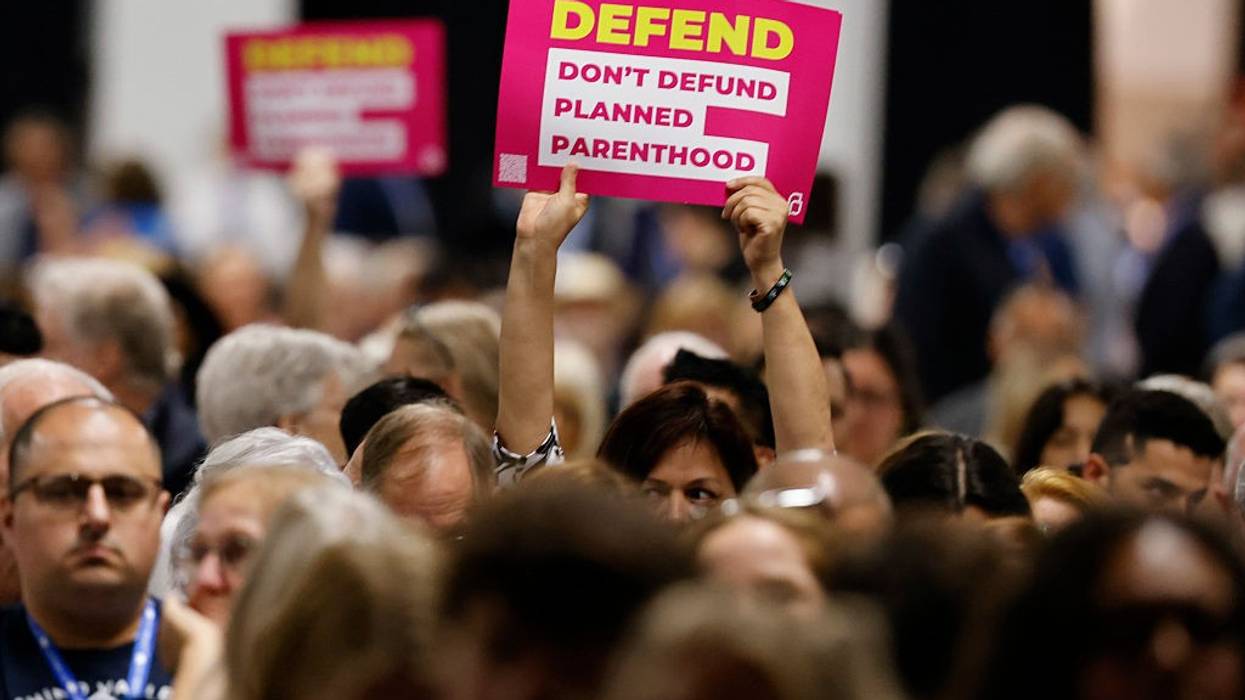
"We have been fighting to hold together an unsustainable infrastructure as the landscape shifts around us and an onslaught of attacks continues," said the head of Planned Parenthood North Central States.
On the heels of Planned Parenthood announcing clinic closures in the Midwest last month, The Guardian published a Monday analysis showing that the reproductive healthcare provider has closed or disclosed plans to shutter at least 20 locations across seven states since the beginning of the year "amid immense financial and political turbulence."
"The Planned Parenthood network, which operates nearly 600 clinics through a web of independent regional affiliates and is overseen by the Planned Parenthood Federation of America, is facing a number of threats from the Trump administration," the newspaper reported, detailing closures in Illinois, Iowa, Michigan, Minnesota, New York, Utah, and Vermont.
In a May statement, Planned Parenthood North Central States (PPNCS) detailed cost-saving closures, consolidation, and layoffs impacting eight health centers in Iowa and Minnesota, and stressed that "dangerous attacks on care continue."
"My heart hurts as we announce the closure of health centers and the departure of trusted and talented colleagues, but our patients come first—always," said Ruth Richardson, president and CEO of PPNCS. "We have been fighting to hold together an unsustainable infrastructure as the landscape shifts around us and an onslaught of attacks continues."
Since the U.S. Supreme Court empowered abortion opponents by reversing Roe v. Wade with the Dobbs v. Jackson Women's Health Organization decision in 2022, those attacks have included the freezing of Title X funds and Republicans in the U.S. House of Representatives voting last month to advance a reconciliation package that would defund Planned Parenthood.
In response to the House's May vote, Jessica Barquist, Kayla Montgomery, and Lisa Margulies, vice presidents of public affairs at Planned Parenthood of Northern New England (PPNNE), said, "To be clear, 'defunding' Planned Parenthood and taking away health insurance from millions will do nothing to lower healthcare costs, address challenges in our healthcare system, or save lives."
"Taking healthcare away from people struggling to deal with rising costs and preventing people from using their health insurance at their trusted provider is cruel," they continued. "We know what happens when people lose access to care: they skip cancer screenings, delay STI testing, miss birth control appointments. These delays lead to worsened health outcomes and more costly emergency care down the line."
In addition to warning of "catastrophic" consequences for patients, the trio highlighted that "analysis from the Congressional Budget Office finds 'defunding' Planned Parenthood would cost $300 million and is the only provision in the healthcare portion of the bill that would increase the deficit."
PPNNE in April announced the closure of a Vermont health center, citing "serious financial hardship." Nicole Clegg, president and CEO of the regional group, said at the time that the decision was "very difficult" and "PPNNE attempted many different investments and organizational changes to tackle the complexities of delivering care in St. Johnsbury, but the challenges persisted."
That same month, Planned Parenthood Association of Utah (PPAU) said that it had to restructure due to the Trump administration's attacks, "including the recent withholding of $2.8 million in Title X funding."
"The painful decisions to close Logan and St. George health centers, reduce PPAU's staff, and increase service fees are forced on us by the Trump administration," declared PPAU interim CEO Sarah Stoesz. "We believe that by consolidating our healthcare delivery and expanding telehealth, we will be in a better position to continue serving those who rely on us for healthcare."
Planned Parenthood of Michigan (PPMI) also revealed in April that it "is reducing its brick-and-mortar footprint and reorganizing operations statewide," which includes closing three health centers in Jackson, Petoskey, and Marquette; consolidating two clinics in Ann Arbor; and expanding its telehealth offerings.
PPMI president and CEO Paula Thornton Greear said at the time that "the Trump administration and its anti-abortion allies have made clear their intention to defund Planned Parenthood and attack access to sexual and reproductive healthcare nationwide," and "these necessary changes strengthen PPMI's ability to adapt quickly in a challenging political landscape."
The Guardian noted that PPMI "was not among the Planned Parenthood affiliates that saw their Title X funding frozen," and "did not immediately respond to a request for comment about the clinic closures and the role of Title X in those closures."
According to the newspaper:
Planned Parenthood’s financial woes have raised eyebrows for some advocates of abortion rights and reproductive health. The organization has weathered several crises, including allegations of mismanagement, in the years since Roe collapsed—but as the face of U.S. abortion access it continued to rake in donations. (Most abortions in the US are in fact performed by small "independent" clinics, which are grappling with their own financial turmoil.) As of June 2023, the Planned Parenthood network had about $3 billion in assets, according to its 2024 report.
In March, Planned Parenthood of Greater New York (PPGNY) announced it would put its property that houses the Manhattan Health Center up for sale as part of an "ongoing strategy to ensure future, long-term patient access for underserved communities throughout New York state."
Just two days after U.S. President Donald Trump returned to office in January—following a campaign in which the Republican tried to downplay how much voters care about reproductive rights while also bragging about his role in reversing Roe—Planned Parenthood of Illinois (PPIL) said it would close four health centers, downsize administrative staff, and boost telehealth.
Illinois, a blue state surrounded by red ones, saw an influx of "abortion refugees" post-Dobbs. PPIL interim president and CEO Tonya Tucker said in January that "we made plans for the patient surge, however, rising care costs and lower reimbursement rates from insurers is jeopardizing PPIL's sustainability."
"Unfortunately, this is the reality many other Planned Parenthood affiliates are facing in the rapidly evolving healthcare environment," Tucker added. "We are making the difficult decisions today so we can continue providing care tomorrow and well into the future."
Other recent reporting has also highlighted how reproductive healthcare providers, particularly those that offer abortion, are struggling to stay open, even in places where politicians haven't passed laws that make it harder to end pregnancies.
"At least 17 clinics closed last year in states where abortion remains legal," NPR reported last month, citing the Guttmacher Institute. "Experts say the closures indicate that financial and operational challenges, rather than future legal bans, may be the biggest threats to abortion access in states whose laws still protect it."

Rep. Pramila Jayapal called the findings "a direct result of Trump's right-wing Supreme Court and extreme MAGA abortion bans."
In yet another example of what's at stake in the November 5 elections, now just two weeks away, researchers revealed Monday that since the U.S. Supreme Court reversed Roe v. Wade in June 2022, babies have died at a higher rate across the country.
Responding to the findings on Tuesday, Congresswoman Pramila Jayapal (D-Wash.)—who has publicly shared her own abortion care story—took aim at Republican nominee Donald Trump, who as president appointed three of the justices behind the Dobbs v. Jackson Women's Health Organization ruling that unleashed a GOP attack on reproductive freedom nationwide.
"The U.S. has a higher infant mortality rate than before the Dobbs decision—a direct result of Trump’s right-wing Supreme Court and extreme MAGA abortion bans," Jayapal said on social media. "Another proof point that this was never about protecting life. We must restore abortion rights."
Research published in JAMA Pediatrics in June showed "increased infant mortality in Texas following passage of Senate Bill 8, banning abortion in early pregnancy," notes the new paper, published in the same journal. "The increase appeared pronounced among infants with congenital anomalies, potentially owing to frail fetuses more often being carried to term following the implementation of abortion restrictions."
"In the seven to 14 months after Roe v. Wade was overturned, we saw a 7% increase in infant mortality, and a 10% increase in those babies born with congenital anomalies."
Parvati Singh and Maria Gallo of Ohio State University decided to examine "whether national monthly trends in infant mortality exhibit similar patterns" following Dobbs. They found that "infant mortality was higher than expected, overall and among those with congenital anomalies, for several months after the Dobbs decision in the U.S."
Specifically, "in the seven to 14 months after Roe v. Wade was overturned, we saw a 7% increase in infant mortality, and a 10% increase in those babies born with congenital anomalies," said Singh, an assistant professor of epidemiology, in a statement.
More than 20 states currently have total abortion bans or limit care at various points during the first 18 weeks of pregnancy. Over the past two years, stories of pregnant people who have been denied emergency care or even died due to state restrictions have mounted.
Though some experts warned of such consequences back in 2022, Gallo said that "I'm not sure that people expected infant mortality rates to increase following Dobbs. It's not necessarily what people were thinking about. But when you restrict access to healthcare it can cause a broader impact on public health than can be foreseen."
"Will this continue past this time period? That's an open question," the epidemiology professor added. "It could be that, yes, it will because access is shut down in some states. But it also could be that eventually more state policymakers are seeing that this isn't what people in the state want and more will pass constitutional amendments to protect access."
Both the researchers behind this paper and the lead author of the Texas study, Johns Hopkins Bloomberg School of Public Health demographer and perinatal epidemiologist Alison Gemmill, pointed out that the infant mortality rates might have been even higher if the latest analysis focused on states where policies changed versus national trends.
"Prior to these abortion bans, people had the option to terminate if the fetus was found to have a severe congenital anomaly—we're talking about organs being outside of the body and other things that are very severe and not compatible with life," Gemmill told the Los Angeles Times. If patients in these positions are forced continue their pregnancies, she added, "those babies would die shortly after birth."
The Democratic nominee, Vice President Kamala Harris, and her allies warn that a Trump victory in November could result in a federal ban on abortion as well as restrictions on birth control and fertility treatments.
Although the Republican has tried to deflect criticism by claiming he supports leaving such decisions to states, that approach threatens the lives and rights of people living in GOP-controlled states. Given that Trump is also a well-documented liar, critics say his public promises to leave it up to the states doesn't mean he wouldn't sign a federal abortion ban if a Republican-held Congress put one on his desk.
Trump recently said he will vote against a Florida ballot measure that would strike down the state's six-week ban and prevent similar pre-viability prohibitions.
"Because of Donald Trump, millions of women across our nation are living under Trump abortion bans and lack access to critical reproductive healthcare," Harris said last week.
"Because of Donald Trump, doctors, and nurses face potential jail time for taking care of their patients," she continued. "And because of Donald Trump, women are facing horrific consequences to their health and lives—even death. Donald Trump is the architect of this healthcare crisis. He is 'proud' of overturning Roe v. Wade and if given the chance, he will make the crisis even worse in all 50 states. We will not let that happen."
In addition to choosing the next president, U.S. voters—some of whom are already casting ballots—will pick which party controls each chamber of Congress. Last month, Harris, a former senator, endorsed eliminating the Senate filibuster to codify Roe.

"I ended up losing half of my fertility and if I was made to wait any longer, it's very likely I would have died," said one Texas patient.
Monday reporting from The Associated Press and newly filed federal complaints highlight how abortion restrictions enacted in U.S. states since the 2022 reversal of Roe v. Wade endanger the health and lives of pregnant people nationwide.
Building on a report published earlier this year ahead of oral arguments in a relevant U.S. Supreme Court case, the AP's Amanda Seitz revealed that "more than 100 pregnant women in medical distress who sought help from emergency rooms were turned away or negligently treated since 2022," according to an analysis of federal hospital investigations.
Legal experts and medical providers argue that "nursing and doctor shortages that have plagued hospitals since the onset of Covid-19, trouble staffing ultrasounds around-the-clock, and new abortion laws are making the emergency room a dangerous place for pregnant women," Seitz reported. Even when laws make exceptions intended for cases of rape, incest, and emergencies, some doctors and facilities decline to provide care out of fear of state restrictions.
As the AP detailed:
A pregnant patient at a Bakersfield, California, emergency room was quickly triaged, but staff failed to realize the urgency of her condition, a uterine rupture. The delay, an investigator concluded, may have contributed to the baby’s death.
Doctors at emergency rooms in California, Nebraska, Arkansas, and South Carolina failed to check for fetal heartbeats or discharged patients who were in active labor, leaving them to deliver at home or in ambulances, according to the documents.
Seitz also shared stories from Florida, Idaho, Texas, and Washington. Two women from Texas—Kelsie Norris-De La Cruz and Kyleigh Thurman—had the Center for Reproductive Rights (CRR) file complaints on their behalf with the U.S. Department of Health and Human Services last week. They both had ectopic pregnancies and lost a fallopian tube.
"Despite the fact that my life was clearly in danger, the hospital told me that they could not help me. I ended up losing half of my fertility and if I was made to wait any longer, it's very likely I would have died," Norris-De La Cruz said Monday in a CRR statement.
"The doctors knew I needed an abortion, but these bans are making it nearly impossible to get basic emergency healthcare," she continued. "So, I'm filing this complaint because women like me deserve justice and accountability from those that hurt us. Texas state officials can't keep ignoring us. We can't let them."
Thurman said that "I never imagined I would find myself in the crosshairs of my home state's extreme abortion bans. For weeks, I was in and out of emergency rooms trying to get the abortion that I needed to save my future fertility and life. This should have been an open-and-shut case. Yet, I was left completely in the dark without any information or options for the care I deserved."
"Pregnancy is not straightforward, and I now have to live with the consequences of these extreme laws every day," she added. "None of this should have happened to me, and I want to make sure this doesn't happen to anyone else."
Beth Brinkmann, CRR's senior director of U.S. litigation, asked: "How many more people will nearly die before we see change? These women are proof that exceptions do not make abortion bans less dangerous, even when they are exceedingly clear."
"Texas law clearly allows for abortions to treat ectopic pregnancies, and federal law requires it," Brinkmann explained. "Yet, Kelsie and Kyleigh were denied absolutely urgent care. As long as these bans are in place, doctors will be terrified to provide abortions of any kind."
"It's impossible to have the best interest of your patient in mind when you're staring down a life sentence," she asserted. "Texas officials have put doctors in an impossible situation. It is clear that these exceptions are a farce, and that these laws are putting countless lives in jeopardy."
The relevant Supreme Court case focuses on Idaho's strict abortion ban and the Emergency Medical Treatment and Labor Act (EMTALA), a federal law requiring emergency departments that accept Medicare to provide patients with "necessary stabilizing treatment," which the Biden administration argues includes abortion care.
Two years after reversing Roe with the Dobbs v. Jackson Women's Health Organization ruling, the high court in June dismissed the Idaho case without ruling on its merits and sent it back to the lower courts. The decision temporarily restored emergency abortions in Idaho but, as CRR said at the time, "still leaves millions of people in states with abortion bans vulnerable."
In response to the "horrifying" AP reporting and CRR complaints, reproductive rights advocates, including some doctors, called out the Supreme Court's right-wing supermajority—led by Chief Justice John Roberts—and politicians who installed them and are trying to outlaw abortion care.
"In addition to these individual incidents is the horrifying recognition that they are not one-off consequences of some short-term disaster. They represent a reality created by the Supreme Court that will take a generation at minimum to undo. This is now our status quo," said Gillian Branstetter, a communications strategist at the ACLU, on her personal social media.
Denver Post opinion editor Megan Schrader declared that "pregnant women are suffering because of the twisted and corrupted jurisprudence of Justices Neil Gorsuch, Samuel Alito, Amy Coney Barrett, Brett Kavanaugh, and Clarence Thomas."
Dr. Michelle Au, an anesthesiologist and Democratic member of the Georgia House of Representatives for the 50th District, stressed that "standards of care haven't changed. EMTALA hasn't changed. What has changed are state laws inhibiting doctors from caring for patients."
Au took aim at former President Donald Trump, the Republican nominee for the November election, declaring that "Trump did this."
American Bridge 21st Century, a super political action committee and research group that supports Democrats, similarly said Monday that "Trump overturned Roe and American women are paying the price."
Although Trump has recently tried to downplay the significance of abortion rights in this cycle and distance himself from some restrictions, recognizing them as politically risky, he has previously backed anti-abortion laws and bragged about appointing half of the justices who overturned Roe. Rights advocates fear what his return to office would mean for reproductive freedom.
Trump and his vice presidential candidate, anti-choice U.S. Sen. JD Vance (R-Ohio), are set to face Democratic Vice President Kamala Harris and her running mate, Minnesota Gov. Tim Walz, on November 5.

One expert said the theme of both abortion cases this term is "kicking the can down the road—and significantly, until after a major election."
A U.S. Supreme Court spokesperson confirmed an opinion that would allow emergency abortions in Idaho despite its strict ban was accidentally shared Wednesday on the website—from which the full text was copied by Bloomberg before it was taken down.
"The court's Publications Unit inadvertently and briefly uploaded a document to the court's website," said Patricia McCabe, the court's public information officer. "The court's opinion in Moyle v. United States and Idaho v. United States will be issued in due course."
After the high court's right-wing supermajority reversed Roe v. Wade two years ago with Dobbs v. Jackson Women's Health Organization, several states including Idaho further restricted abortion care. This case centers on the Emergency Medical Treatment and Labor Act (EMTALA), a federal law requiring emergency departments that accept Medicare to provide patients with "necessary stabilizing treatment," which the Biden administration argues includes abortions.
The text obtained by Bloomberg suggests that the justices will issue a 6-3 decision—with Justices Samuel Alito, Neil Gorsuch, and Clarence Thomas dissenting—that reinstates a district court order ensuring hospitals can perform emergency abortions in the state if the pregnant person's health is at risk while litigation proceeds to a federal appeals court.
"Victory will only happen when abortion is completely legal, available, and accessible for everyone, everywhere in the country."
This will be the Supreme Court's second abortion-related decision this term; earlier this month, the justices unanimously agreed to preserve access to mifepristone, a medication commonly used for abortion care. In response to the first ruling, Destiny Lopez, acting co-CEO of the pro-choice Guttmacher Institute, said that "we are relieved by this outcome, but we are not celebrating."
Liberal Justice Ketanji Brown Jackson wrote in the text obtained by Bloomberg that "today's decision is not a victory for pregnant patients in Idaho. It is delay. While this court dawdles and the country waits, pregnant people experiencing emergency medical conditions remain in a precarious position, as their doctors are kept in the dark about what the law requires. The court had a chance to bring clarity and certainty to this tragic situation, and we have squandered it."
Reproductive Freedom for All president and CEO Mini Timmaraju said in a statement Wednesday that "we agree with what Justice Ketanji Brown Jackson reportedly said—this is not a victory but a delay. The abortion bans that are putting people's lives on the line in the first place will continue to remain on the books."
Fatima Goss Graves, president and CEO of the National Women's Law Center, said that "while we await the final decision in what should be an open-and-shut case, we are furious that this draft appears to leave the door open for the Supreme Court to end emergency abortion care in the coming months or years."
"It is unconscionable that this court would allow the continued suffering of patients who need emergency care now," she asserted. "It is only a small measure of justice that for now people in Idaho can continue to access the care that they need—victory will only happen when abortion is completely legal, available, and accessible for everyone, everywhere in the country."
Legal historian Mary Ziegler wrote on social media that "I worry that this will be reported as a big win for abortion rights. The litigation will continue if this is the final decision. The theme of both cases this term is that SCOTUS is kicking the can down the road—and significantly, until after a major election."
Reproductive freedom is a key issue in elections at all levels of government this cycle, including the race for the White House. Democratic President Joe Biden, who supports abortion rights, is set to face former Republican President Donald Trump, who has bragged about appointing three of the six justices responsible for the Dobbs ruling—which, notably, was leaked nearly two months before its official release.
"We're grateful that the Biden administration is fighting to preserve the shreds of access possible in states where anti-abortion extremists are doing everything in their power to block people from the care they need, even under the most dire of circumstances," said Timmaraju.
"We won't forget who is responsible for these bans—Donald Trump and the MAGA Republicans who enabled him," she added. "Our rights are on the line, and we must send President Biden back to the White House to restore the federal right to abortion and end these bans once and for all."

Sens. Bernie Sanders and Patty Murray stressed the need to show "how extreme right-wing abortion bans and restrictions on reproductive healthcare have endangered women, hurt families, and rolled back rights."
It's been nearly two years since the U.S. Supreme Court reversed Roe v. Wade, triggering a fresh wave of Republican restrictions on abortion at the state level—the topic of a Senate hearing that progressive leaders are planning for next week.
Senate Health, Education, Labor, and Pensions (HELP) Committee Chair Bernie Sanders (I-Vt.) and Sen. Patty Murray (D-Wash.), the panel's former leader, announced Wednesday that the hearing—titled, "The Assault on Women's Freedoms: How Abortion Bans Have Created a Healthcare Nightmare Across America"—will be held on June 4 at 10:00 am ET.
While the witness list has not been released yet, Sanders and Murray previewed the event in a joint statement, saying that "in the two years since Roe was overturned, Republican abortion bans have created a full-blown healthcare crisis—forcing providers to close their doors and shut down their practices, putting women's lives in danger, decimating access to maternal healthcare, and forcing women to remain pregnant, no matter their circumstances."
The June 2022 majority opinion in Dobbs v. Jackson Women's Health Organization and "Republican abortion bans have forced women to leave their states under duress or wait until they are near death to receive care," the pair noted. "Providers have been forced to make gut-wrenching decisions about whether to risk jail time to help a woman access the healthcare she needs."
As of May 1, just nine states and Washington, D.C. don't ban abortion or impose gestational limits, according to the Guttmacher Institute. That means 41 states have restrictions: 14 have total bans; seven ban abortion at or before 18 weeks; and 20 ban it after 18 weeks. Some states have exceptions for rape, incest, and the health of the pregnant person—though providers and patients have stressed that such policies often don't actually help those seeking care.
"The harm of Dobbs has extended far beyond states with extreme abortion bans" Sanders and Murray pointed out. "In places where abortion remains legal, women are waiting longer for care and providers are struggling to keep up with a dramatically increased patient load."
As Common Dreams reported last week, after Florida's six-week ban went into effect at the beginning of this month, wait times increased at 30% of the abortion clinics in the closest states and the driving distance for the average Floridian increased by nearly 30 times to 590 miles.
The influx of "healthcare refugees" is impacting places like Illinois, where Planned Parenthood saw its out-of-state patients jump from about 6% to nearly a third each month in the wake of Dobbs. Jennifer Welch, the provider's president and CEO, said in December 2022 that "the number of patients from other states forced to travel to our health centers is at a historic high."
As the GOP has worked to further restrict reproductive freedom since Dobbs, protecting and expanding such rights has become a top priority for voters across the country. For the 2024 cycle, campaigners in several states are focused on ballot measures affirming the right to abortion and other care, while Democratic President Joe Biden and the presumed Republican nominee, former President Donald Trump, have campaigned on their respective records.
Though some of Biden's public statements have frustrated rights advocates, the president supports access to abortion care. Trump, meanwhile, has both bragged about appointing three of the six justices who reversed Roe but also recognized the risks of openly backing the most extreme bans—as his allies plot major attacks on reproductive rights if he returns to office.
"The threats to a woman's right to make her own decisions about her body and her future keep coming—right now Republicans are working to rip away access to safe medication abortion, block women from receiving emergency abortion care that could save their lives, ban abortion nationwide, and restrict access to contraception," Sanders and Murray warned.
The U.S. Supreme Court is set to soon rule on one case that could restrict access to mifepristone, a medication commonly used for abortions, and another case about whether abortion care is included in the "necessary stabilizing treatment" that emergency healthcare departments are required to provide under federal law, as the Biden administration argues.
"And Republican attacks on basic healthcare are only escalating," Sanders and Murray said. "The anti-abortion movement has shown its cruelty and utter disregard for women's lives again and again, and it is essential that we use every opportunity to continue to make clear exactly how extreme right-wing abortion bans and restrictions on reproductive healthcare have endangered women, hurt families, and rolled back rights."
"We must continue to shine a light on the living nightmare extreme right-wing abortion bans and other healthcare restrictions have been for women across the country," they concluded, "and do everything we can to restore every woman's right to make her own healthcare decisions."