
SUBSCRIBE TO OUR FREE NEWSLETTER
Daily news & progressive opinion—funded by the people, not the corporations—delivered straight to your inbox.
5
#000000
#FFFFFF
To donate by check, phone, or other method, see our More Ways to Give page.


Daily news & progressive opinion—funded by the people, not the corporations—delivered straight to your inbox.
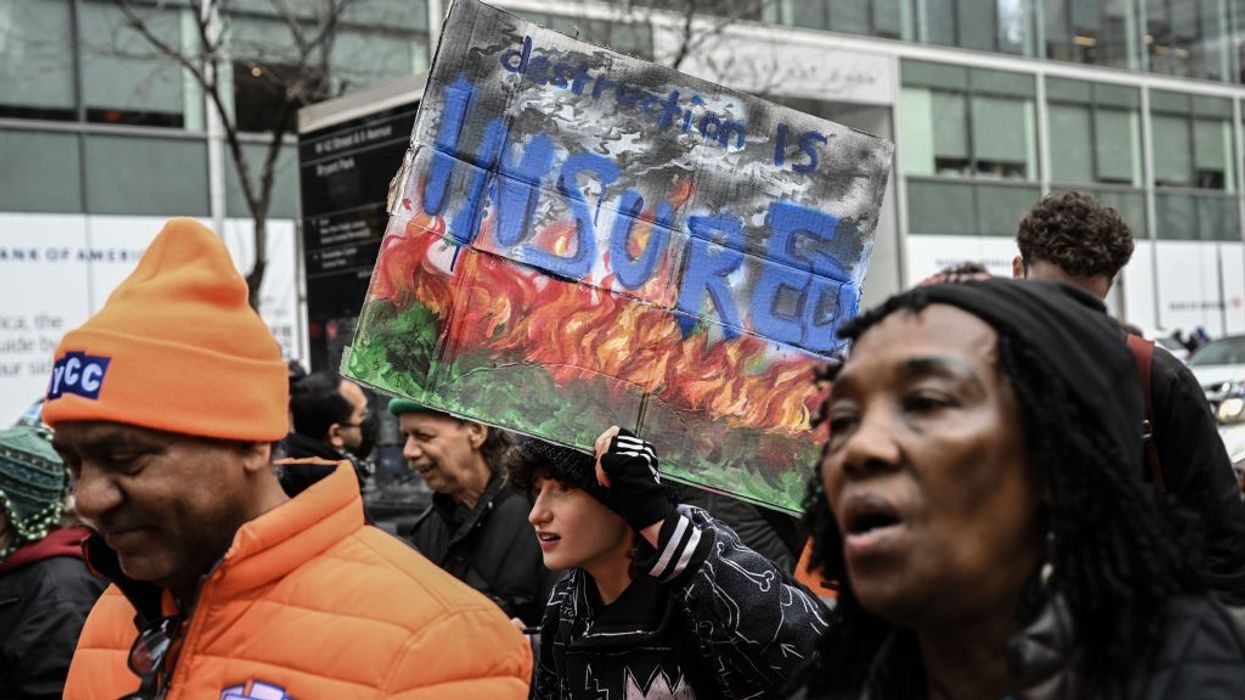
"It's absurd for Chubb to continue to underwrite activities that are causing climate change and then turn around and pay for the claims and payouts caused by these activities," said one critic.
Chubb's 2019 decision to stop underwriting new coal projects or offering policies to businesses that generate more than 30% of their revenue or energy production from the fossil fuel was welcomed as a "major step forward" that could pressure other insurance giants to follow suit—but six years later, Wednesday reporting revealed that the company "has reversed its stance."
"It appears to have broken that pledge last week by reinsuring Nghi Son 2, a 1.2GW power plant on Vietnam's coast fueled entirely by coal," The Bureau of Investigative Journalism detailed. "Nghi Son 2 could emit up to 175 million metric tons of CO2 over 25 years—more than the annual emissions of the Philippines—according to Global Energy Monitor, which tracks energy data."
While Chubb CEO Evan Greenberg said six years ago that the company recognizes the reality of climate change and the substantial impact of human activity on our planet," neither the insurer nor Nghi Son 2 Power responded to the outlet's requests for comment.
Meanwhile, Giovanna Eichner, shareholder advocate at Green Century Capital Management, which holds shares in the insurer, said that "it's absurd for Chubb to continue to underwrite activities that are causing climate change and then turn around and pay for the claims and payouts caused by these activities."
In fact, the outlet highlighted, Chubb stopped covering wildfire-prone areas of California in 2021. Experts at the advocacy groups As You Sow and the Consumer Federation of America called out Chubb for contravening its coal policy—and doing so while ditching customers who need coverage in the face of extreme weather made worse by the continued use of fossil fuels.
Chubb, one of the world’s largest insurers, was one of the first to stop covering coal-projects, pledging to ‘do its part as a steward of Earth’But it has now become the lead reinsurer for a coal-fired power plant in Vietnam
[image or embed]
— The Bureau of Investigative Journalism (@tbij.bsky.social) July 23, 2025 at 7:07 AM
It's not immediately clear what Chubb's reported move in Vietnam will mean for other decisions. For example, as with the 2019 coal announcement, the insurer was praised by climate, environmental, and Indigenous rights defenders last year for abandoning a highly controversial methane gas project on the Texas Gulf Coast after facing months of grassroots community pressure.
Wednesday's reporting comes after a working paper published last month by a trio of researchers at the University of Zurich explained that insurers adopting restrictions on coal were accelerating the shift away from it.
Writing about the findings on Substack, longtime climate campaigner Peter Bosshard noted that "the Insure Our Future campaign has pressured the insurance industry to shift away from coal and other fossil fuels since 2017. We have seen a lot of anecdotal evidence that the restrictions which insurers adopted during this period have created bottlenecks for coal companies and made it impossible to build new coal power plants in much of the world."
"Through freedom of information requests, the Zurich researchers managed to access 9,745 insurance policies across 456 mines during the 2014-24 period, covering more than three-quarters of U.S. coal production," he continued. "Based on this data, they can for the first time offer hard evidence on the impact of insurers' coal restrictions."
While the paper identifies two exceptions to the overall trend—Lloyd's and Zurich—the researchers still concluded that insurers' policies can limit coal mining activity. Given that, Bosshard asserted that "insurance companies should use their clout to accelerate not just the shift away from coal, but also from oil and gas."
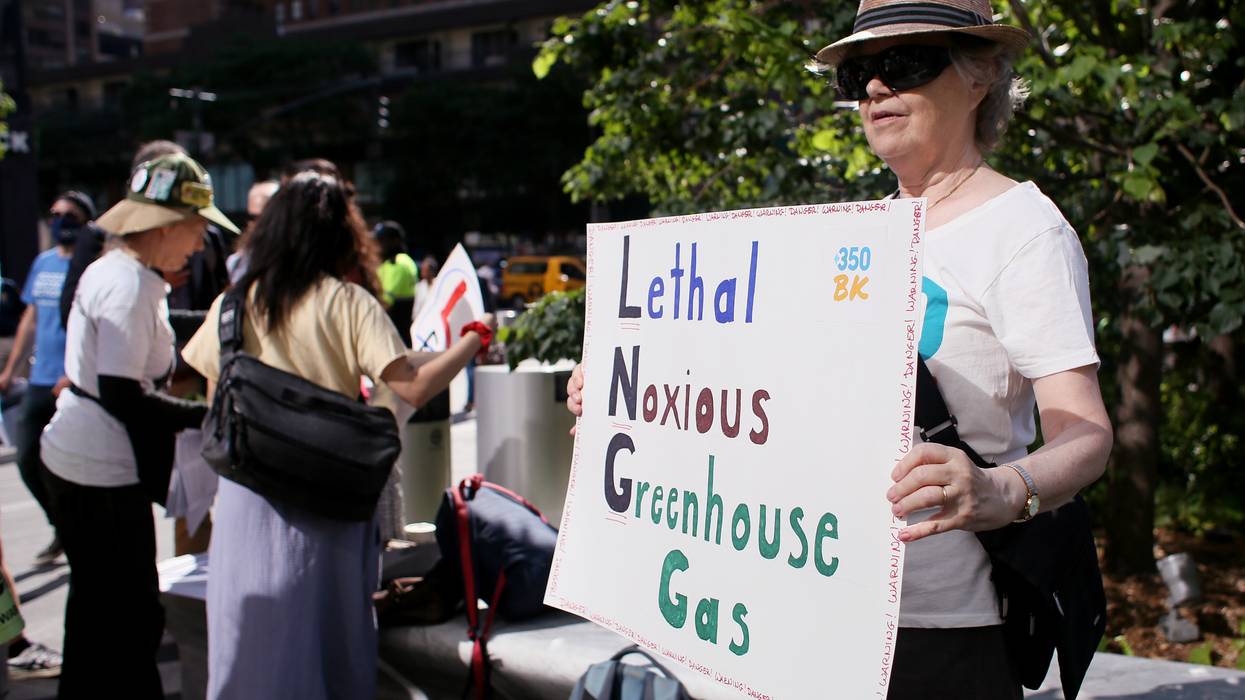
The project jeopardizes the health and environment of frontline communities, threatens local economies and endangered wildlife, and exposes investors to financial and reputational risks.
In its 2024 fourth quarter update, NextDecade, a Houston-based liquefied natural gas company, announced its intention to more than double its export capacity at the Rio Grande LNG facility near Brownsville, Texas. Despite NextDecade’s sunny projections, community members and investors in the project’s owner, Global Infrastructure Partners, and its parent company, BlackRock, should be wary of risks associated with the LNG facility. The proposed expansion could further harm local communities, the region, and pose significant risks to investors.
LNG is primarily composed of methane, a potent greenhouse gas with 80 times the atmospheric warming potential of carbon dioxide over a 20-year period. As originally proposed, this project was estimated to emit the equivalent emissions of 44 coal power plants every year, about 163 million tons of carbon dioxide annually. The newly announced expansion would be projected to emit over 300 million tons of carbon dioxide equivalent every year, or the equivalent of the emissions from 83 coal plants annually.
Perhaps in an effort to address criticism about emissions, NextDecade’s original proposal included carbon capture and storage (CCS), though some opponents described this as greenwashing from the beginning. The company withdrew its CCS application with the Federal Energy Regulatory Commission (FERC) in August 2024, yet continues to tout sustainability on its website.
The path forward demands a just transition to clean energy that respects both people and the planet.
The Rio Grande LNG facility sits in a region already burdened by economic hardship and environmental injustice. Its expansion will amplify air pollution, exposing local residents—many of whom are Latino and low-income—to increased risks of respiratory illnesses, cancer, and other serious health conditions.
Several nearby towns and entities formally oppose the project, including Laguna Vista, South Padre Island, Port Isabel, and the Laguna Madre Water District. The Rio Grande LNG terminal is being built on the sacred land of the Carrizo/Comecrudo Tribe of Texas, yet Rio Grande LNG, regulatory agencies, and banks have failed to consult with that Tribe on its impacts.
Additionally, according to an environmental report,, the facilities will likely significantly degrade local fishing, shrimping, and natural tourism industries, putting communities’ livelihoods at risk. The project also threatens critical wetlands adjacent to the Laguna Atascosa National Wildlife Refuge, which protects endangered species such as the ocelot and Kemp’s Ridley sea turtle. The noise, light, and industrial activity will disrupt fragile ecosystems and threaten biodiversity. The opposition shines a light on the environmental risks inherent in this project.
Rio Grande LNG has faced significant challenges, including pending approval and permitting of the project from the Federal Energy Regulatory Commission. Some banks and insurance companies have wavered in their support. Long before the expansion announcement, insurance company CHUBB backed out of the project. Societe Generale, BNP Paribas, and La Banque Postale have also pulled financial support from the project in the last several years.
For investors, this means escalating risks: construction delays, legal battles, potentially stranded assets, and the threat of diminished returns. Continuing to pour capital into this project is not just environmentally irresponsible—it is financially imprudent.
The global energy market is also shifting rapidly. Ongoing trade wars and on-and-off-again tariffs could make it difficult for Rio Grande LNG to meet its Final Investment Decision, the last fundraising hurdle a project like this must clear before beginning a new stage of construction. At the same time, LNG demand is projected to peak before 2030, and an oversupply threatens to depress prices. And the methane emissions from LNG production undermine the climate benefits often touted by proponents.
The Rio Grande LNG expansion is a lose-lose proposition. It jeopardizes the health and environment of frontline communities, threatens local economies and endangered wildlife, and exposes investors to financial and reputational risks. The path forward demands a just transition to clean energy that respects both people and the planet.
Investors in Global Infrastructure Partners and its parent company BlackRock can limit the harms associated with this project. Potential investors with each company should decline to invest in the expansion of the Rio Grande LNG terminal for the sake of local residents, the region’s economy, and returns on investments.
"Chubb has the potential to lead the industry and raise the bar for AIG and Liberty Mutual to follow suit," said one campaigner.
Climate, environmental, and Indigenous rights defenders on Tuesday welcomed news that global insurance giant Chubb dropped out of a highly controversial methane gas project on the Texas Gulf Coast after months of grassroots community pressure.
The Sunrise Project published an insurance certificate obtained via a public information act request showing that Chubb is no longer insuring the Rio Grande liquefied natural gas (LNG) terminal in Brownsville. Houston-based NextDecade—which touts itself as a "sustainable LNG" company—says Phase I of Rio Grande LNG is currently under construction and that the 984-acre site "will be the largest privately funded infrastructure project in Texas."
In addition to exacerbating the climate emergency, Rio Grande LNG threatens land and sites sacred to the Carrizo/Comecrudo Tribe, which opposes the project.
"When you do the due diligence and understand Indigenous rights, this project is a no-go," Carrizo/Comecrudo Tribe of Texas Chair Juan Mancias said in a statement. "Investors and major banks have dropped Rio Grande LNG, and now insurers are following suit because the claims of the fossil fuel companies can't be trusted—here, or anywhere in Texas."
According to the Sunrise Project:
This is the latest setback for the not-yet-built project that would harm the coastal landscape of the Rio Grande Valley as one of the last pristine areas of the Texas coastline—a haven for wildlife, fishing, tourism, and recreation and home to Latine and Indigenous communities—into an industrial methane export hub. Years of campaigning was a likely factor in the insurer backing away. Five banks—SMBC, Société Générale, Credit Suisse, and privately, two additional banks—committed to not financing the project after pressure from community leaders.
Community members voiced the impacts that the methane terminal's gas storage tanks, flare stacks, pipelines, and explosion risks pose to the Port of Brownsville, including the city of Brownsville and those known as the "Laguna Madre": Port Isabel, South Padre Island, Laguna Vista, Long Island Village, and Laguna Heights. The cumulative impacts on soils, air and water quality, community health, vegetation, wildlife, threatened and endangered species, tourism, commercial fisheries, and noise would be significant.
"We tell companies the truth about these projects that would be an environmental disaster for our South Texas community. It feels good to be heard," said Bekah Hinojosa of the South Texas Environmental Network. "I expect other insurers like AIG and Sompo to drop next because the LNG facility, the pipeline, the company—they're losers with a dangerous project."
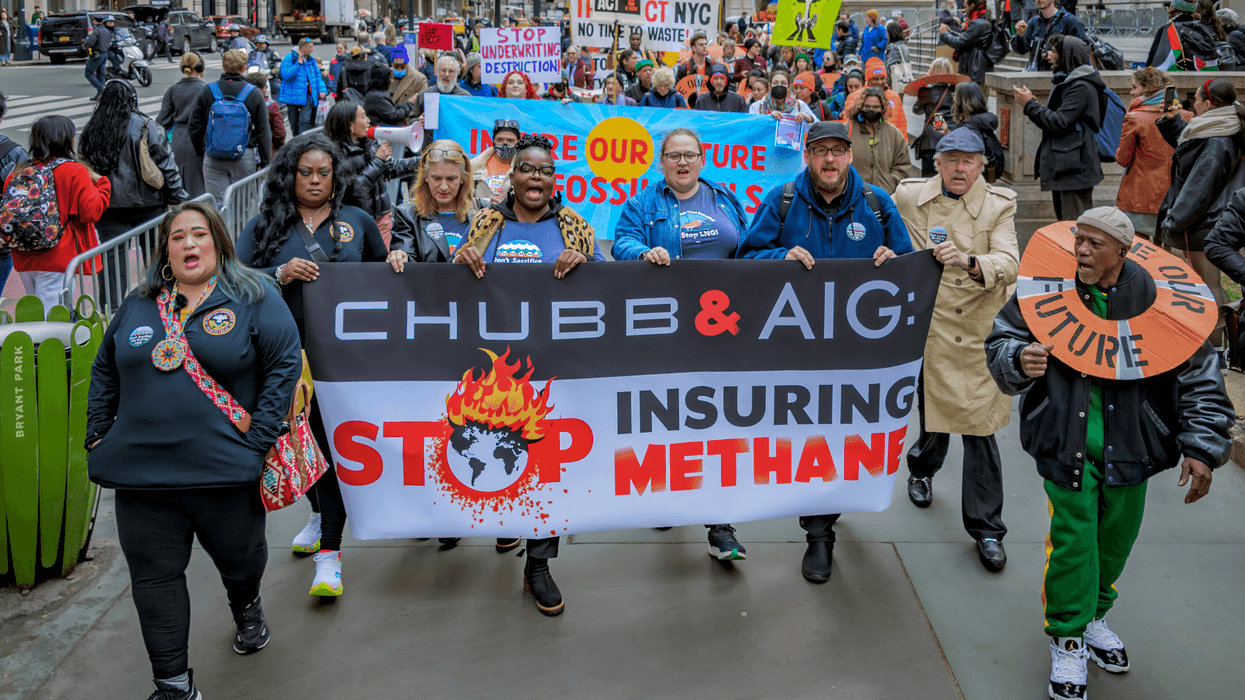
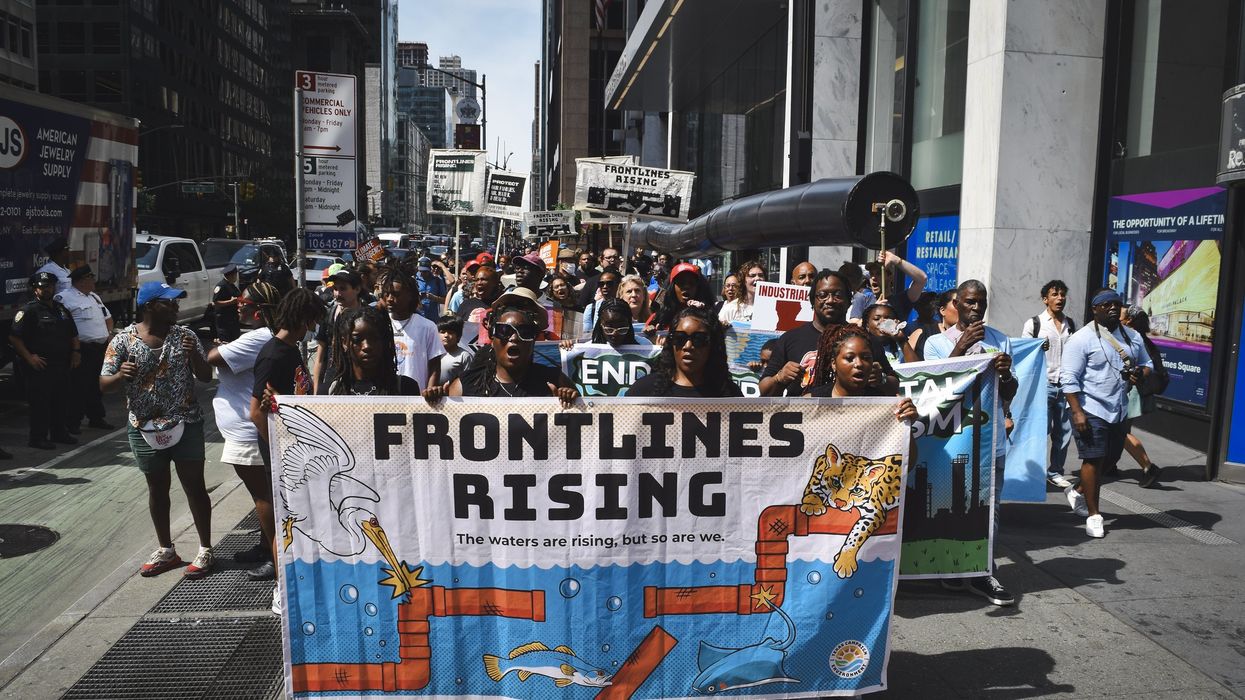
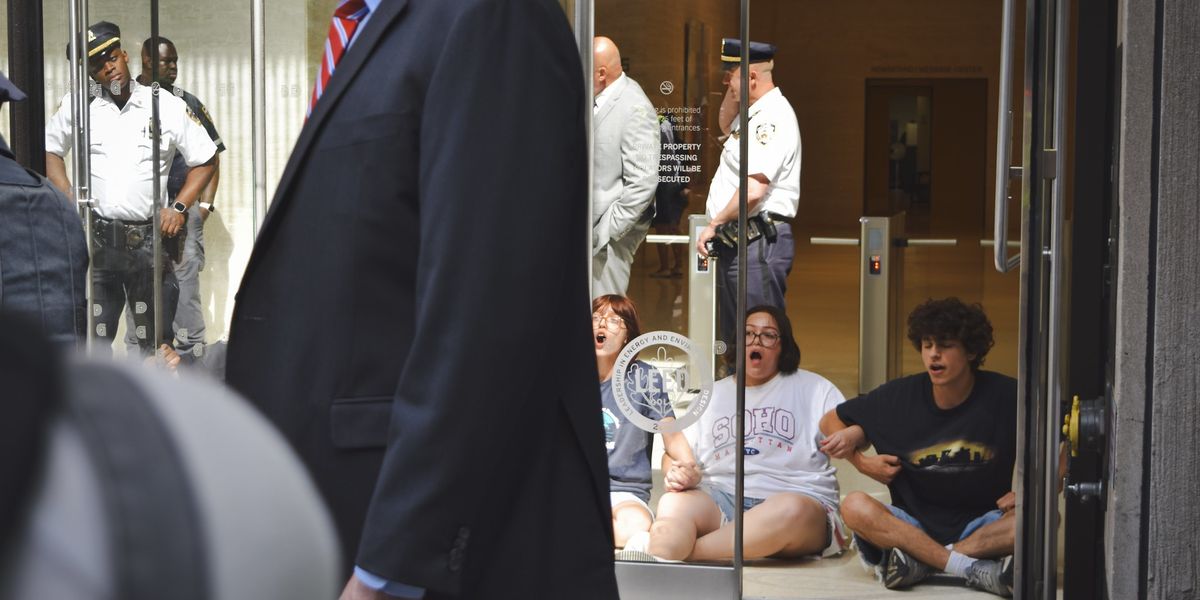
In June, hundreds of Gulf Coast residents traveled to Chubb's New York office to protest the company's insurance of fossil fuel projects including Rio Grande LNG, Texas LNG, Freeport LNG, and Cameron LNG. Six activists were arrested for blocking the main entrance to Chubb's building. The protest—one of several targeting fossil fuel funders and insurers—was part of the Summer of Heat, a civil disobedience campaign aimed at getting Wall Street to stop funding planet-heating oil, gas, and coal projects.
Ethan Nuss of Rainforest Action Network (RAN) asserted that "Chubb is showing some promising leadership by pulling out of Rio Grande LNG."
"Now Chubb must take the next step of becoming a true climate leader and stop insuring all methane," Nuss added. "Now Chubb must take the next step of becoming a true climate leader and stop insuring all methane. Chubb has the potential to lead the industry and raise the bar for AIG and Liberty Mutual to follow suit."
In February, RAN and the consumer advocacy group Public Citizen published a report revealing that at least 35 different insurance companies were underwriting Rio Grande LNG. The report named Chubb and AIG as the world's two most prolific insurers of fossil fuel projects.
"AIG has tripped over itself to insure Rio Grande LNG in the wake of Chubb's exit," Public Citizen insurance campaigner Rick Morris said on Tuesday.
"This move is the latest in a long pattern of insuring and investing in fossil fuels that shows AIG's climate and human rights commitments aren't worth the paper they're written on," he added. "We have one message for AIG: We won't stop fighting until you drop these disastrous projects."