
SUBSCRIBE TO OUR FREE NEWSLETTER
Daily news & progressive opinion—funded by the people, not the corporations—delivered straight to your inbox.
5
#000000
#FFFFFF
To donate by check, phone, or other method, see our More Ways to Give page.


Daily news & progressive opinion—funded by the people, not the corporations—delivered straight to your inbox.
"We tried to tell all those fuckers that if Trump was elected, we were going to get Handmaid's Tale-d," said one author.
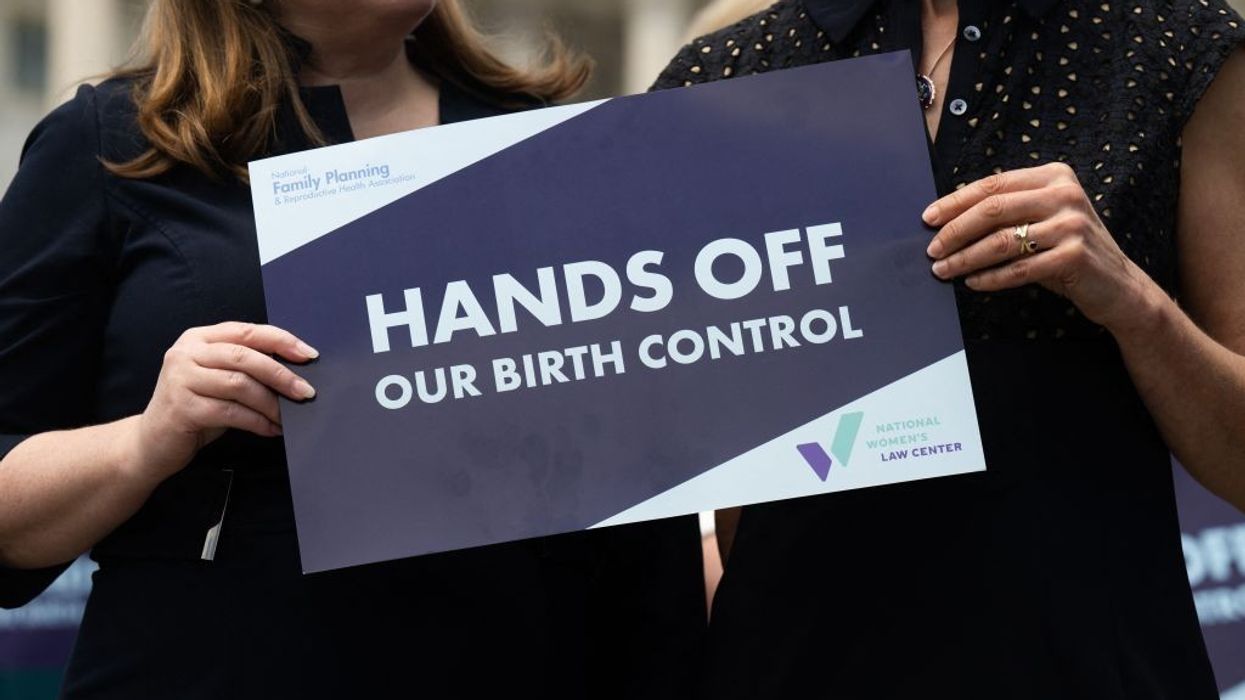
Nearly three years after U.S. Supreme Court Justice Clarence Thomas' 2022 concurring opinion for the reversal of Roe v. Wade elevated fears of Americans losing the right to contraception, a far-right legal group is working to limit access to birth control.
Jezebel reported Wednesday on the current anti-contraception effort by the conservative Christian group, Alliance Defending Freedom (ADF)—which has bragged that its "attorneys and staff were proud to be involved from the very beginning" in the fight to overturn Roe, the 1973 ruling that affirmed the right to abortion nationwide up until the Dobbs v. Jackson Womens Health Organization decision.
Last week, ADF wrote to the U.S. Department of Health and Human Services, urging HHS to "end funding to an organization that has become a radicalized opponent of health and of your agenda: the American College of Obstetricians & Gynecologists (ACOG) and its related entities." The legal group also recommended opening "a civil compliance investigation into whether ACOG improperly used HHS cooperative agreements to promote" diversity, equity, and inclusion (DEI).
"If you have a uterus, it's a great time to get permanent birth control, and stock up on some Plan B and Ella."
The ADF letter states that an HHS agency, the Health Resources and Services Administration (HRSA), "pays ACOG to create online content and podcasts advocating DEI, gender ideology, and abortion advocacy. This program has allocated ACOG over $15 million and needs to be ended promptly to prevent the continued waste of taxpayer funds."
In addition to taking aim at funding for the Alliance for Innovation on Maternal Health (AIM)—which, according to its website, works to "make birth safer, improve maternal health outcomes, and save lives" with its content—ADF wants the Trump administration to "end HRSA's cooperative agreement with ACOG that radicalized the women's preventive services mandate under Obamacare."
Jezebel explained how ADF's attack on the Women's Preventive Services Initiative (WPSI) threatens access to birth control:
The Affordable Care Act says insurance companies have to cover a range of women's preventive health services without cost-sharing like copays or deductibles. The law doesn't name which services, but rather tasks an HHS agency to determine what services have strong evidence showing health benefits. That agency gave a contract to ACOG, which convenes the WPSI panel that includes representatives from its membership and three other major professional organizations. One of the panel's recommendations is that "adolescent and adult women have access to the full range of contraceptives and contraceptive care to prevent unintended pregnancies and improve birth outcomes." So insurance in the U.S. has to cover birth control pills, patches, rings, implants, [intrauterine devices, or IUDs], and tubal ligation without additional costs beyond people's monthly premiums.
Groups like ADF do not like this requirement—especially the mandated coverage of IUDs and emergency contraception like Plan B or Ella. Conservatives falsely claim that these methods block implantation of fertilized eggs, which they believe is tantamount to abortion. (ADF represented one of the plaintiffs in the 2014 Hobby Lobby case who objected to covering these methods.) "This mandate has included a coverage requirement for contraception, including some items that can prevent the implantation of embryos after conception," the ADF letter notes. "The failure to offer robust religious and moral exemptions to that mandate led to years of litigation and repeated trips to the U.S. Supreme Court." Yes, they want employers to be able to object to covering birth control in their insurance plans for either religious or moral reasons, which could really mean anything, including sexist and eugenic objections to single women or people with disabilities being sexually active.
ADF urges HHS to "conduct any scientific reviews in-house," Jezebel pointed out, noting recent mass layoffs at the department. "Alternatively, HHS could add members of anti-abortion groups to the advisory panel. Whatever happens here, potential changes to insurance coverage of certain birth control methods—based on the false idea that they cause abortions—is alarming."
On the campaign trail, President Donald Trump bragged about his role in reversing Roe—he appointed three of the court's right-wing justices—but also attempted to downplay reproductive rights as a key issue for voters.
Regarding contraception specifically, Trump swiftly tried to backtrack after signaling support for limits on birth control during a radio interview last May. U.S. Sen. Elizabeth Warren (D-Mass.) said at the time: "Trump is talking out of both sides of his mouth. Here he is encouraging the far right. Later, he claimed he didn't mean it. But he can't hide his record. And his allies still plan to restrict birth control nationwide."
The ideas in ADF's letter "did not appear out of thin air," Jezebel stressed Wednesday. "Ending mandated insurance coverage of Ella is a proposal in Project 2025 (page 485), as is restoring religious and moral exemptions (page 483), and ending this contract with ACOG (page 484). Trump tried to disavow the Project 2025 playbook on the campaign trail, but his administration is implementing much of it and conservative groups are asking him to enact parts he hasn't gotten to yet."
HHS cutting ties with ACOG is just a step. Many far-right forced pregnancy advocates want the Supreme Court to—as Thomas wrote three years ago—"reconsider all of the court's substantive due process precedents," including the 1965 Griswold v. Connecticut ruling, which affirmed that the government cannot interfere in the procurement of contraceptives.
The new reporting led reproductive rights advocates to share their own healthcare experiences and encourage patients to seek out longer-term birth control like IUDs now, while they still have access to such options.
Feeling really grateful right about now for the tubal ligation I started fighting tooth and nail for at 19 and finally managed to score by age 27. We tried to tell all those fuckers that if Trump was elected, we were going to get Handmaid's Tale-d. www.jezebel.com/far-right-gr...
[image or embed]
— Brianna Karp ( @briannakarp.bsky.social) April 16, 2025 at 5:22 PM
"I've said this repeatedly but I'll say it again: If you're able, get an IUD," said content designer Shauna Wright. "It's easily removed but otherwise lasts for years. (Voice of experience here: Ask for a paracervical block pre-insertion, and if they refuse, find another dr.)"
Writer Effie Seiberg similarly said: "If you have a uterus, it's a great time to get permanent birth control, and stock up on some Plan B and Ella. (Ella works better for people 165-195 lbs.)"
"We cannot quit. We cannot be silent. If we quit, we lose more women," said one mother whose daughter died after being denied care under Georgia's six-week ban.
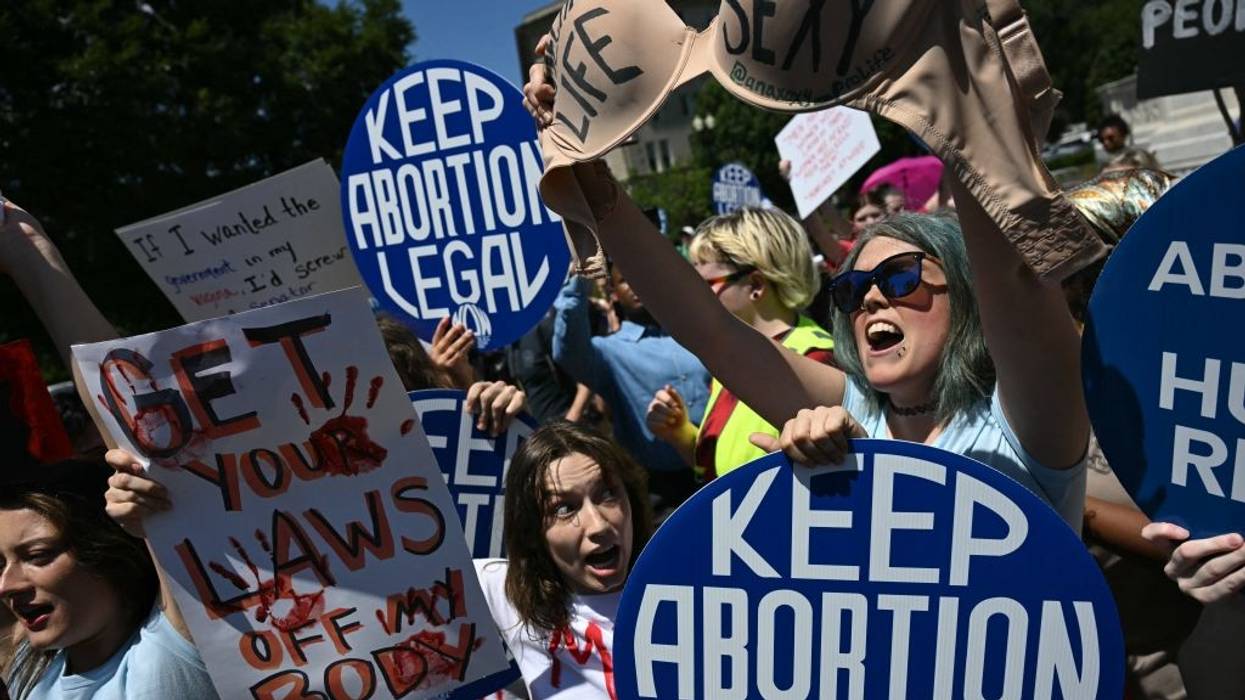
Congresswoman Nikema Williams joined patients, healthcare providers, and activists—including the mother of a woman who died after being refused abortion care in Georgia—at a Tuesday press conference held a day before what would have been the 52nd anniversary of Roe v. Wade, and amid fears of a national abortion ban during U.S. President Donald Trump's second term.
"I refuse to stand by while extremist politicians attack our freedoms, our health, and our future," Williams (D-Ga.) told attendees of the virtual press conference, which was hosted by the abortion rights group Free & Just. "Reproductive freedom is about healthcare, it's about dignity, it's about autonomy. It's about ensuring that everyone, every person, has the ability to make the best decisions for themselves and their families without government interference."
Speakers at Tuesday's event included Shanette Williams, whose 28-year-old daughter Amber Nicole Thurman died in 2022 after being forced to travel out of state to seek care due to a recently passed Georgia law banning almost all abortions after six weeks of pregnancy, a period during which many people don't even know they're pregnant.
"I want to send a clear message to men to get off the sidelines and enter the fight for reproductive justice."
Thurman, who was the single mother of a young son, is one of at least several U.S. women—most of them Black or brown—whose deaths have been attributed to draconian anti-abortion laws.
"She left a son, who every day is confused by why his mother is not here," Williams said of her daughter. "I'm here to be that voice, to fight, to push, to do whatever I need to do to help save another life. Because I never want a mother to feel what I feel today."
"We cannot quit. We cannot be silent. If we quit, we lose more women," Williams added. "In November, following reporting from ProPublica, officials in Georgia dismissed all members of the state's Maternal Mortality Review Committee, which investigates the deaths of pregnant women across the state."
Last September, Fulton County Judge Robert McBurney struck down the state's six-week abortion ban as a violation of "a woman's right to control what happens to and within her body," a decision that made the procedure legal up to approximately 22 weeks of pregnancy. Republican Georgia Attorney General Chris Carr appealed the ruling to the state Supreme Court.
Avery Davis Bell, a Savannah mother who had to travel out of Georgia for care after her fetus was diagnosed with a fatal condition that threatened her own life as well, said during Tuesday's press conference: "I could have been Amber Nicole Thurman. It is important for me to continue sharing my story and advocating for us to be able to build the families we want, protect our lives, and be here for our living children."
Atlanta-area ultrasound technician and abortion care provider Suki O. said during the event that Georgia's ban "has been in place for three years now and it doesn't get any easier."
"To turn women away is the hardest thing for me to do," she added. "How many Black women will die, have died, and will continue to die due to these abortion bans?"
Davan'te Jennings, president of Young Democrats of Georgia and youth organizing director at Men4Choice, told the press conference that abortion "is not just a women's issue, this is a man's issue as well."
"I want to send a clear message to men to get off the sidelines and enter the fight for reproductive justice," Jennings added. "What would it look like for you to have to watch your mother go through this? To watch your sister go through this?"
While Trump has said he would veto any national abortion ban passed by the Republican-controlled Congress, reproductive rights advocates have expressed doubt that the president—a well-documented liar—would actually do so, and warned that his administration could use a 151-year-old law known as the Comstock Act to outlaw the procedure without needing congressional approval.
Critics also note that Trump has repeatedly bragged about appointing three of the U.S. Supreme Court justices who voted to overturn Roe in Dobbs v. Jackson Women's Health Organization, the 2022 decision that canceled nearly a half-century of federal abortion rights.
The Trump administration is also widely expected to revive the so-called Global Gag Rule, which bans foreign nongovernmental organizations from performing or promoting abortion care using funds from any source, if they receive funds from the U.S. government for family planning activities.
Conservative groups, including the Heritage Foundation-led coalition behind Project 2025—a blueprint for a far-right overhaul of the federal government—have proposed policies including a national abortion ban, restricting access to birth control, defunding Planned Parenthood, monitoring and tracking pregnancy and abortion data, and eviscerating federal protections for lifesaving emergency abortion care.
While campaigning for president, Trump said he would allow states to monitor women's pregnancies and prosecute anyone who violates an abortion ban. According to the Guttmacher Institute, 12 states currently have near-total abortion bans, and 29 states have enacted prohibitions based on gestational duration.
"The only way to guarantee our right to privacy is to vote for Democrats," said one advocacy group. "They have no interest in forcing guys to be dads before they are ready."
With just five days until the U.S. elections, Democrats are continuing to highlight another presidential term for Republican nominee Donald Trump as a grave danger for women, as the nation learns about a growing number of women who have died because of abortion bans and voters in 10 states make their voices heard on proposed measures to protect abortion rights.
But a provocative ad that went viral on social media Thursday makes the case that men should be worried about letting the far-right MAGA movement take control of the White House and Congress, too.
The ad, by the Democratic political action committee Progress Action Fund, opens with a young man and woman having sex.
Just afterward, the man says he's realized the condom he was using broke.
"Oh, I have Plan B in the bathroom," replies the woman, referring to the emergency contraception pill approved by the Food and Drug Administration in 1999.
Her partner offers to get the pill, but makes another troubling realization as soon as he closes the medicine cabinet.
"Sorry," says a balding man who's appeared in the bathroom. "You can't use that... I'm your Republican congressman. Now that we're in charge, we banned Plan B."
"No, you can't do this," pleads the young man. "I can't have a kid right now!"
But the lawmaker explains that since he won the last election, whether or not the young couple has a child is no longer their decision.
"It's my decision," he says. "Now let's get back in there so we can give her the news... Daddy."
The nonprofit progressive advocacy group DemCast said the ad was one "every man in America" needs to see.
"The only way to guarantee our right to privacy is to vote for Democrats," said the group. "They have no interest in forcing guys to be dads before they are ready."
The production company Eleven Films said the ad provides a new perspective on the idea that "MAGA wants to control everything about you. Including when you can have a baby."
"Yeah, bro," said the organization. "Even you."
Nick Knudsen, co-founder and executive director of DemCast, said that the ad, "when tested, moves under-30-men by 2+ points away from Donald Trump."
Common Dreams was unable to independently verify the claim as of this writing.
Political action committee Defend the Vote said it had partnered with Progress Action Fund to air the ad in battleground states.
"There are only a few days left in the election," said the group. "Get out and vote to protect your freedoms!"
Democratic strategist Alicia Strohl Resnicoff said the ad and its reminder that the Republican Party aims to attack reproductive freedom, including the right to abortion care as well as contraception, "is the scariest thing you see today."
The ad was originally released on YouTube in mid-October, four months after Republicans in the Senate blocked consideration of the Right to Contraception Act. In 2022, when the right-majority on the Supreme Court overturned Roe v. Wade, Justice Clarence Thomas said the court should also review the precedent set by Griswold v. Connecticut, which affirmed in 1965 that couples have the right to use contraceptives.
Progress Action Fund has produced a number of ads exposing Republicans' plans to invade the privacy of people across the U.S. Last week the group posted one featuring the same "Republican congressman," who appears in a man's bedroom and snatches his phone out of his hands to stop him from watching a pornographic video. Project 2025, the far-right agenda that was co-authored by at least 140 of people from Trump's presidential term, proposes a nationwide ban on pornography.
"Creepy Republicans want control of your bedroom," said Eleven Films on Thursday. "Don't let MAGA in your sheets."
"As Trump and his radical Republican allies restrict women's reproductive healthcare, today's action by the Biden-Harris administration shows there is a different path," said Sen. Ron Wyden.
U.S. Vice President Kamala Harris, the Democratic presidential candidate, suggested Monday that the Biden administration's newly proposed rule to expand access to over-the-counter birth control is the latest policy that underscores the stakes for reproductive justice in the 2024 election.
"While we fight to protect and expand healthcare, extremist so-called leaders are attacking reproductive freedom at every turn," said Harris.
The vice president was referring to a new rule under the Affordable Care Act (ACA) proposed by the administration to require insurers to cover all over-the-counter birth control, including the nonprescription birth control pill approved last year, emergency contraception, condoms, and spermicides.
The ACA requires health plans to cover contraception without copayments for patients, but the rule only applies to prescription birth control.
After the Food and Drug Administration approved Opill, a nonprescription birth control pill, last year, reproductive rights advocates and Democrats in Congress called on the Biden administration to make sure the pill would "meet its potential and be truly accessible."
"Federal departments must ensure that it is covered without cost-sharing and without the need for a prescription as a condition of coverage," said 48 Senate Democrats in a letter.
The Biden administration said that if the rule is finalized, it would expand access to 52 million women of reproductive age who have private health insurance.
"We should not forget that Republicans have consistently sought to undermine access to contraception and far-right extremists have even sought to limit access or even ban basic forms of contraception—this threat to our healthcare is real and serious."
"Birth control—and any kind of contraception—is just basic healthcare, and it should be covered and easy to get," said Sen. Patty Murray (D-Wash.), who authored the Affordability Is Access Act to require insurers to fully cover over-the-counter birth control. "Women in America should not have to jump through hoops to make sure insurance is covering their basic reproductive healthcare needs."
"We should not forget that Republicans have consistently sought to undermine access to contraception and far-right extremists have even sought to limit access or even ban basic forms of contraception—this threat to our healthcare is real and serious," added Murray. "While Republicans continue to attack standard and necessary forms of healthcare, Democrats will continue to fight to expand access to contraception and lower healthcare costs for everyone."
When Roe v. Wade was overturned in 2022 by the right-wing majority on the U.S. Supreme Court—stacked with justices appointed by former President Donald Trump, now the Republican presidential nominee—Justice Clarence Thomas said the court's finding that the "right to privacy" did not extend to abortion care could also be used to overturn a 1965 case that affirmed married couples had a right to use contraception.
Senate Republicans earlier this year blocked consideration of the Right to Contraception Act, and Trump has suggested he supports restrictions on birth control.
"As Trump and his radical Republican allies restrict women's reproductive healthcare, today's action by the Biden-Harris administration shows there is a different path: expanded access and lower costs for women's healthcare," said Sen. Ron Wyden (D-Ore.) Monday. "I'm all in on the effort to ensure Americans across the country can get the reproductive healthcare they need without worrying about cost or prosecution by ideological crusaders."
"The American people want to know where their senators stand on freedom of choice," said Democratic Senate Majority Leader Chuck Schumer.
In another display of GOP lawmakers' opposition to reproductive rights, U.S. Senate Republicans on Wednesday blocked the Reproductive Freedom for Women Act.
Introduced last month by Sen. Patty Murray (D-Wash.), the bill states that "the protections enshrined in Roe v. Wade... should be restored and built upon, moving towards a future where there is reproductive freedom for all."
The bill also acknowledges Dobbs v. Jackson Women's Health Organization, the right-wing U.S. Supreme Court's June 2022 ruling that reversed Roe, the decision that had affirmed the right to abortion until viability since 1973. Dobbs set off a fresh wave of efforts to impose devastating new restrictions on reproductive healthcare.
"If Republicans are going to force women to stay pregnant, we are going to force them to be honest with the American people about their extreme position. And, by the way, Democrats are going to keep fighting to restore the rights the American people have been so clear that they want back," Murray said on the Senate floor before Wednesday's vote.
The vote was 49-44, mostly along party lines. Seven senators were not present, and Sens. Susan Collins (R-Maine) and Lisa Murkowski (R-Alaska) were the only Republicans who supported holding a final vote on the legislation. Senate Majority Leader Chuck Schumer (D-N.Y.) changed his vote to "no" so he can bring the bill back up at a later date.
Wednesday's vote followed Republicans blocking bills on in vitro fertilization (IVF) and contraception last month. It also came after the GOP blocked three bills on Tuesday, which aimed to affirm the freedom to cross state lines for abortion care, protect doctors providing legal abortions from being punished for treating patients from other states, and support training for more providers.
"We know where the American people stand on the freedom of choice: Over 80% of Americans—including two-thirds of Republicans—agree that healthcare decisions including abortion should be between a woman and her doctor," Schumer said on the Senate floor Wednesday.
"But Americans are rightfully worried that reproductive rights are becoming extinct in this country. They see what's happening at the Supreme Court. They see the attacks on women's rights in states like Texas and Florida and Alabama and Idaho and beyond," he continued. "The American people want to know where their senators stand on freedom of choice."
The Senate majority leader also called out former President Donald Trump, the presumptive Republican nominee to face embattled Democratic President Joe Biden in November.
While Trump's recognition that rolling back reproductive freedom is unpopular is reportedly what led to changes in the Republican Party's 2024 policy platform, campaigners and legal experts have warned this week that the final language is still incredibly threatening and the GOP can't be trusted on this issue.
The White House said Tuesday that "the administration strongly supports Senate passage" of the bill and "will continue to work with Congress to defend reproductive freedom once and for all."
The statement also called out the GOP, saying that "Republican elected officials' extreme agenda is putting women's health and lives at risk and unleashing chaos and cruelty across America."
After the vote Wednesday, Reproductive Freedom for All president and CEO Mini Timmaraju said in a statement that "we're grateful to Sen. Murray, Leader Schumer, and our champions in the Senate for continuing to hold Republicans' feet to the fire for the damage they've done to reproductive freedom."
She added that "the GOP must be held accountable for the abortion bans they've helped orchestrate and refuse to back down from—and this November, they will be voted out of office."
The "slate of dangerous and unpopular provisions" includes "eliminating the Title X family planning program and reinstating the Trump-era expanded global gag rule."
As the Republican majority in the U.S. House of Representatives uses the appropriations process to promote the GOP agenda ahead of the November elections, Planned Parenthood Action Fund on Monday highlighted how the spending bills attack health within and beyond the United States.
"Once again, anti-abortion rights politicians in Congress are manipulating the federal appropriations process to push for a recycled slate of dangerous and unpopular provisions to block access to sexual and reproductive healthcare across the country and around the world," states the new Planned Parenthood Action Fund memo.
The document details anti-health policies in spending legislation for fiscal year 2025 that House Republicans have advanced recently, which include provisions "eliminating the Title X family planning program and reinstating the Trump-era expanded global gag rule."
The global gag rule bars U.S. government funding for foreign groups that provide information, referrals, or services for abortion care, or advocate for decriminalization or increasing access. It was initially implemented by former Republican President Ronald Reagan as the Mexico City policy, then reinstated and expanded by former President Donald Trump.
"In all, anti-abortion rights politicians continue to act in defiance of the vast majority of their constituents who believe that the government has no right to control people's personal healthcare decisions with attacks on abortion, birth control, and gender-affirming care."
Despite Trump's ongoing legal battles, he is the presumptive Republican nominee to face Democratic President Joe Biden in November. Biden rescinded his predecessor's gag rule shortly after taking office in 2021. Reproductive freedom has been a key issue in not only that contest but races at all levels of U.S. politics this cycle, as GOP policymakers and candidates have set their sights on abortion care, birth control, and in vitro fertilization.
The gag rule was included in the appropriations bill for the Department of State, foreign operations, and related programs, which the House on Friday passed 212-200. The only Democrat who voted in favor was Rep. Marie Gluesenkamp Perez of Washington—who supports reproductive rights and has shared her own abortion story.
That bill would also "cap funding for international family planning and reproductive health programs at $461 million, a nearly 25% cut," and end funding for United Nations entities including the U.N. Population Fund, as the Planned Parenthood memo notes. It would also "restrict information about and access to gender-affirming care," and "maintain the Helms Amendment in addition to restrictions on abortion coverage for Peace Corps volunteers."
Speaking out against the legislation last week, Rep. Rosa DeLauro (D-Conn.), ranking member of the House Appropriations Committee, said that "much like last year, the fiscal year 2025 state and foreign operations bill resurrects the doomed isolationism of the early 20th century."
"For the sake of our national security, women's health globally, and our response to the climate crisis, Republicans must abandon this reckless and partisan path and join Democrats at the table to govern," declared DeLauro, who raised the alarm about House GOP appropriations proposals throughout June.
Taking aim at the labor, health and human services, and education legislation last week, she said that "in keeping with the majority's other partisan bills, this bill is chock full of dozens of poison pill riders, including multiple provisions that attack women's freedom and block abortion and reproductive healthcare services."
Specifically, as the new memo points out, it would interfere with postgraduate training in abortion care, impose the Hyde and Weldon amendments, restrict access to gender-affirming care, block Biden administration executive orders intended to boost abortion care access in the wake of Dobbs v. Jackson Women's Health Organization, and eliminate funding for Title X family planning and teen pregnancy prevention programs while pouring money into abstinence-only-until-marriage initiatives.
It would also "defund" Planned Parenthood, preventing people in communities across the United States—particularly in rural and medically underserved areas—from accessing services including sexually transmitted infection testing and treatment, cancer screenings, and birth control, as the memo outlines.
The recently introduced commerce, justice, and science bill would block most federal prisoners from attaining abortion coverage and prevent the U.S. Department of Justice from suing state or local governments over anti-choice laws, according to the memo. The financial services and general government legislation would reverse a District of Columbia law protecting workers from being fired for their reproductive healthcare choices, bar D.C. from using local funds to cover abortion care, and ban Federal Employee Health Benefits Program coverage of most abortions.
"In all, anti-abortion rights politicians continue to act in defiance of the vast majority of their constituents who believe that the government has no right to control people's personal healthcare decisions with attacks on abortion, birth control, and gender-affirming care," the publication states.
The document also targets provisions in multiple recently passed spending bills focused on homeland security, the Pentagon, and veterans—including attacks on abortion and gender-affirming care for current and former service members and their families as well as anyone in U.S. Immigration and Customs Enforcement custody.
"Anti-abortion rights lawmakers recently included similar measures in the National Defense Authorization Act (NDAA)—an annual must-pass bill," the memo highlights.
"Everyone deserves access to abortion and gender-affirming care, including service members and their families. But these lawmakers would rather play games with our fundamental rights in their attempt to control our bodies, lives, and futures."
After the mid-June NDAA vote, Planned Parenthood Action Fund president Alexis McGill Johnson said that "it's like Groundhog Day. Anti-abortion rights House members use must-pass bills as a vehicle to force through their deeply unpopular and dangerous agenda—again and again and again. Everyone deserves access to abortion and gender-affirming care, including service members and their families. But these lawmakers would rather play games with our fundamental rights in their attempt to control our bodies, lives, and futures."
The NDAA and spending bills aren't expected to pass the Senate—which is narrowly controlled by Democrats—in their current forms, but they send a message about what Republicans would prioritize if they fully reclaimed Congress and the White House.
"The majority's policy riders do not belong in appropriations bills, and like last year, we will defeat them," DeLauro said last month. "But it is disappointing that we are going through this charade again, just months after Republicans and Democrats voted for the 2024 appropriations bills."
This post has been updated to clarify that the memo was exclusively from Planned Parenthood Action Fund, not Planned Parenthood Federation of America.
"Today was not a 'show vote'—this was a show-us-who-you-are vote," said Senate Majority Leader Chuck Schumer. "And Senate Republicans showed the American people exactly who they are."
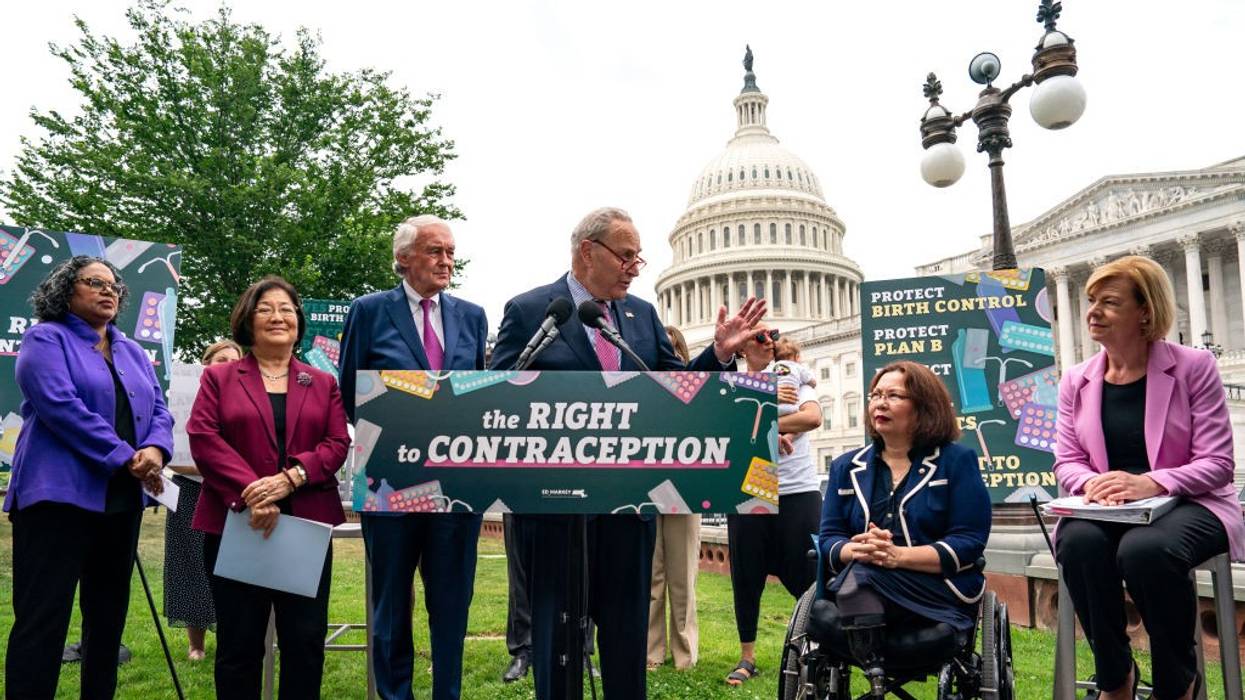
U.S. Senate Republicans on Wednesday blocked consideration of the Right to Contraception Act, a move that Democratic leaders and rights advocates pointed to as further evidence that the GOP is hellbent on further degrading reproductive freedom.
"It's appalling. Shameful. Inexcusable. Grossly out of touch. Today Republicans in the U.S. Senate refused to take the simple step of enshrining our right to contraception into federal law when they voted down the Right to Contraception Act," declared Kristin Rowe-Finkbeiner, executive director and CEO of MomsRising. "When Senate Republicans turned their backs on it today, they turned their backs on America's moms."
Reproductive Freedom for All president and CEO Mini Timmaraju said that "if you still need more proof that Republicans are coming for birth control, here it is. Their refusal to protect this popular and fundamental right tells us everything we need to know—and voters won't forget it this November."
Reproductive freedom has been a key issue at all levels of U.S. politics leading up to the general election, when voters will determine who controls Congress and the White House. Democratic President Joe Biden, who supports reproductive rights, is running for reelection and is set to face former Republican President Donald Trump.
The Right to Contraception Act was spearheaded by Sens. Ed Markey (D-Mass.), Mazie Hirono (D-Hawaii), and Tammy Duckworth (D-Ill.). The bill would "protect an individual's ability to access contraceptives and to engage in contraception and... protect a healthcare provider's ability to provide contraceptives, contraception, and information related to contraception."
Timmaraju thanked the Democratic sponsors and Senate Majority Leader Chuck Schumer (D-N.Y.) for trying to advance to a final vote a bill that members of Congress have been fighting for since 2022. She also stressed that "as Republican lawmakers and Donald Trump continue to threaten access to contraception, protecting it is more important than ever."
After the procedural vote on Wednesday, Biden's reelection campaign released a video in which Vice President Kamala Harris notes that Trump—who has bragged about appointing three of the six U.S. Supreme Court justices who overturned Roe v. Wade—signaled on camera last month that his election would threaten access to not only abortion care but also contraceptives.
"If given an opportunity, Donald Trump would sign a national abortion ban," Harris warns in the clip. "A second Trump term would really mean more harm, more pain, and less freedoms. But we're not going to let that happen."
While Republican senators on Wednesday tried to dismiss Democrats' push for a vote on the contraception bill as a political stunt, rights advocates and reporters have highlighted right-wing Supreme Court Justice Clarence Thomas' concurring opinion two years ago in Dobbs v. Jackson Women's Health Organization, the case that reversed Roe.
"In future cases, we should reconsider all of this court's substantive due process precedents," Thomas wrote, setting his sights on the 1965 Griswold v. Connecticut ruling in favor of the liberty to use contraceptives, the 2003 Lawrence v. Texas decision overturning a state law that criminalized consensual sexual activity between adults of the same sex, and the 2015 Obergefell v. Hodges opinion that affirmed same-sex couples can legally marry nationwide.
As Schumer emphasized during a press conference after the vote, since Dobbs, Republican policymakers have created what critics in the chamber call "a healthcare nightmare across America" by ramping legislative attacks on reproductive rights—as was detailed during a Senate Health, Education, Labor, and Pensions Committee hearing on Tuesday.
"Today was not a 'show vote'—this was a show-us-who-you-are vote. And Senate Republicans showed the American people exactly who they are. They showed that they're not willing to stand up and protect something that 92% of Americans support," Schumer said Wednesday. "To Senate Republicans who argue federal protections for birth control are unnecessary, go ask the people of Virginia what they think after their Republican governor vetoed a bill that would have protected contraceptives at the state level."
"Go ask the people of Nevada what they think after their Republican governor also vetoed a bill to protect access to birth control," he continued. "And to those who say birth control will never fall at risk, go ask the people of Arizona, or Florida, or Idaho, or Iowa, or Missouri. In each of these states, Republican governors or Republican state legislators are on record blocking protections for birth control access in some form or another."
The majority leader—who changed his vote on the Right to Contraception Act to "no" so he has the option to bring it up for a vote again—is planning a similar push for a bill to protect access to in vitro fertilization (IVF) next week. Several rights leaders have connected the fight for abortion and contraception rights to fertility care, including Fatima Goss Graves, president and CEO of the National Women's Law Center.
"We are outraged that some senators blocked passage of the Right to Contraception Act, especially at a time when extremists are threatening access to birth control, blocking access to IVF, and criminalizing abortion," she said. "Their refusal to vote to protect our right to birth control goes against the will of the people and it demonstrates that our right to contraception is not safe."
Reproductive Equity Now similarly warned on social media that "it's obvious from today's vote that anti-abortion extremists will not stop at banning abortion. They will attempt to block our access to birth control, attack IVF, eliminate LGBTQ+ healthcare, and decimate our reproductive autonomy. This is what's at stake in November."
"Donald Trump has repeatedly promised that state Republicans will have a blank check to pass extreme laws attacking every facet of reproductive care," one critic noted.
Reproductive freedom continues to dominate this year's contest for the White House and former U.S. President Donald Trump made clear Tuesday morning that his election would threaten access to not only abortion care but also contraceptives—even though the Republican later tried to walk back his remarks.
"Do you support any restrictions on a person's right to contraception?" Jon Delano at the Pittsburgh station KDKA asked Trump, who is expected to face Democratic President Joe Biden in November.
Trump responded: "We're looking at that, and I'm going to have a policy on that very shortly, and I think it's something that you'll find interesting... You will find it, I think, very smart. I think it's a smart decision. But we'll be releasing it very soon."
After Delano pointed out that Trump's response suggests he may support some restrictions, such as on the morning-after pill, the GOP candidate said that "things really do have a lot to do with the states, and some states are gonna have different policies than others. But I'm coming out, within a week or so, with a very comprehensive policy."
Politico reported that Trump's campaign didn't respond to its request for comment and "KDKA declined to confirm... when the interview was recorded, but the Biden campaign released video of the exchange on Tuesday."
After the video started garnering attention, Trump said on his social media platform: "I HAVE NEVER, AND WILL NEVER ADVOCATE IMPOSING RESTRICTIONS ON BIRTH CONTROL, or other contraceptives. This is a Democrat fabricated lie, MISINFORMATION/DISINFORMATION, because they have nothing else to run on except FAILURE, POVERTY, AND DEATH. I DO NOT SUPPORT A BAN ON BIRTH CONTROL, AND NEITHER WILL THE REPUBLICAN PARTY!"
Trump has attempted to campaign on both sides of the reproductive freedom fight. Sometimes he has highlighted his role reversing the landmark abortion rights ruling Roe v. Wade: He appointed three of the six right-wing U.S. Supreme Court justices behind the majority opinion in Dobbs v. Jackson Women's Health Organization.
Since that 2022 decision, the GOP has ramped up attacks on abortion rights, enacting total bans in 14 states and signaling support for federal restrictions. At times, Trump has tried to distance himself from laws he recognizes as a political risk while also saying last month that he would let states monitor pregnancies and prosecute anyone who violates an abortion ban.
Many warn Republicans won't stop at abortion. Jill Filipovic reported Monday for Time that "the obvious question is, what's next? Is contraception access also on the line? Many activists, lawyers, historians, and politicians who favor abortion rights and contraception access say yes."
The progressive advocacy group Stand Up America said Tuesday that "in the past few days, Trump floated the idea of a three-term presidency, posted a video calling for a 'unified Reich' if reelected, and said he's looking at restricting access to birth control. Take his words seriously. Trump is a major threat to our freedoms and democracy."
Democrats are seizing opportunites to spotlight Republican attacks on reproductive freedom in campaign messages.
Noting Trump's comments to KDKA, Sarafina Chitika, a spokesperson for Biden and Vice President Kamala Harris' campaign, said Tuesday that "women across the country are already suffering from Donald Trump's post-Roe nightmare, and if he wins a second term, it's clear he wants to go even further by restricting access to birth control and emergency contraceptives."
"It's not enough for Trump that women's lives are being put at risk, doctors are being threatened with jail time, and extreme bans are being enacted with no exceptions for rape or incest. He wants to rip away our freedom to access birth control too," Chitika added. "While Trump works overtime to roll back the clock and rip away women's freedoms, President Biden and Vice President Harris are fighting nonstop to protect access to birth control and women's right to make their own personal healthcare decisions."
The Democratic Legislative Campaign Committee (DLCC), which works to elect party members at the state level, also responded to Trump's interview with Delano.
"In 2024, the battle for power in the states has never been more crucial. Donald Trump has repeatedly promised that state Republicans will have a blank check to pass extreme laws attacking every facet of reproductive care, from undermining contraception and birth control access to denying abortion care," said DLCC national press secretary Sam Paisley. "To fully stop Trump's MAGA agenda, we must invest in building Democratic power in the states."
"State elections this year will determine the future of reproductive rights, and it has never been more important to elect Democratic majorities to state legislatures who will champion our rights, not legislate them away. This is our best defense against MAGA extremists hellbent on dragging states into the past," Paisley argued. "The DLCC is rallying to build Democratic power across the country, especially as we reach this crisis point around the fight for fundamental freedoms. It is no exaggeration to say this is the most important year in state legislative history."
In addition to supporting candidates at all levels who will defend and expand reproductive freedom, abortion rights advocates are working to advance ballot measures that will safeguard access to care in states including Arizona, Florida, Montana, and Nevada.
"Trump's strategy is clear: Sow chaos and uncertainty on his unpopular positions and ride a wave of misinformation back to the White House. One day he hints at draconian policies, the next he might backtrack, but his core intent remains the same," said Indivisible chief campaigns officer Sarah Dohl. "He is a textbook narcissist who prioritizes his interests over the freedom of the American people.
"In contrast, Joe Biden has consistently promised to protect our reproductive rights," she added. "He is committed to signing federal abortion protections into law and vetoing any national abortion ban. From Arizona to Florida and beyond, Indivisible will make sure every voter knows exactly where Trump stands when they head to the ballot box in November—because our health, our choices, and our freedom are on the line."
This post has been updated with comment from Indivisible.
If the pill is made affordable and covered by insurance, said one advocate, the approval has the potential to be "a game-changer for communities impacted by systemic health inequities."
"Groundbreaking," "monumental," and "transformative" were just a few of the words rights advocates used on Thursday to describe the U.S. Food and Drug Administration's long-awaited approval of over-the-counter use of Opill, a birth control pill that was approved for prescription use five decades ago.
The approval could revolutionize access to contraception for young people, low-income people, and others in a country where nearly half of all pregnancies are unintended, said Free the Pill, a coalition of more than 200 reproductive justice groups and advocates who have been campaigning for over-the-counter (OTC) access to birth control for nearly two decades.
"Over-the-counter birth control pills will help bridge gaps in access and give people greater control over their reproductive health and lives," said Victoria Nichols, project director of Free the Pill. "This is a movement win led by a coalition that recognized the potential of over-the-counter birth control pills and worked for nearly two decades to build the evidence, support, and partnerships necessary to make them a reality."
Perrigo Company, the Ireland-based manufacturer which makes Opill, said the contraceptive could be available at pharmacies and stores in the U.S. in early 2024, and CVS has already said it will carry it in its 10,000 locations across the country.
A joint advisory panel at the FDA unanimously recommended approving the pill in May, saying the benefits of permitting OTC use outweighed the risks of people potentially misusing the drug.
The company submitted the results of a study that showed the vast majority of nearly 900 participants took the progestin-only pill at the same time every day as required for it to be effective—or used an alternative form of birth control if they didn't do so. Opill has a 93% effectiveness rate at preventing pregnancy when taken correctly.
The FDA approval was announced just over a year after the right-wing majority of the U.S. Supreme Court overturned Roe v. Wade, clearing the way for at least 14 states so far to ban abortion care and others to severely restrict access.
"I'm thrilled the FDA followed the science and the unanimous decision of its advisory committee and has authorized Opill for sale over the counter," said Debra Hauser, president of Advocates for Youth and a member of the Free the Pill steering committee. "Having an OTC option for birth control pills is incredibly important and long overdue. We know that the far right will continue to attack and limit access to reproductive health care, and we need to ensure young people have everything they need to lead healthy lives and plan their futures."
Advocates said now that the FDA has approved the pill for OTC use, they will fight to ensure Opill is accessible and affordable for anyone who needs it.
The Affordable Care Act requires health insurance plans to cover prescription contraceptives, but not OTC birth control, and a majority of states do not have laws requiring coverage.
The White House and Senate Democrats have taken steps recently, including an executive order and introducing legislation, to require coverage.
"FDA approval is an important step forward, but we must ensure that OTC birth control pills are equitably accessible to all," said Nichols. "To ensure equitable access we must continue to advocate for OTC birth control pills to be affordably priced and fully covered by insurance."
A survey by Kaiser Family Foundation last year found that 10% of women would not be willing or able to pay out-of-pocket for contraceptive pills, and about 40% would not pay more than $10 per month.
The approval has the potential to be "a game-changer for communities impacted by systemic health inequities" if Opill is "available equitably," said Dr. Daniel Grossman, director of Advancing New Standards in Reproductive Health.
He also urged the FDA to go a step further in ensuring reproductive justice for all in the U.S. by approving OTC use of mifepristone, one of two pills used in medication abortions.
"An over-the-counter birth control pill marks a groundbreaking advancement for contraceptive access nationwide," said Lin-Fan Wang, a family physician at QueerDoc. "Today's decision by the FDA reflects decades of data that show progestin-only birth control pills like Opill are safe and effective for use without a prescription. As a healthcare provider, I want my patients to have access to care that helps them plan their reproductive lives and futures without medically unnecessary barriers."
Legalizing Opill won’t undo the ongoing GOP assault on reproductive freedom, but it could be a vital lifeline
A federal advisory committee has unanimously recommended that the Food and Drug Administration allow the sale of Opill, an over-the-counter birth control pill.
Coming amid a widespread assault on reproductive health care, this could be a game-changer.
Margery Gass, an advisory committee member and an emerita professor of medicine at the University of Cincinnati, told The Washington Post: “I think this represents a landmark in our history of women’s health.”
“I think this represents a landmark in our history of women’s health.”
The expected legalization of Opill is a step toward bringing the United States up to international standards—currently such pills are available in more than 100 countries worldwide. It’s also great news for women’s economic independence.
By making the purchase of a contraceptive pill as easy and affordable as a trip to the drug store, birth control can become more accessible to those who are uninsured or underinsured, who can’t get an OB-GYN appointment, or who live in areas where Republican officials have all but eliminated reproductive health clinics.
Many studies show the impact of birth control on women’s livelihoods. A report by Planned Parenthood concluded: “Being able to get the pill before age 21 has been found to be the most influential factor in enabling women already in college to stay in college.”
The Institute for Women’s Policy Research reviewed the available evidence and found that prescription birth control pills have helped women stay out of poverty, attend college and graduate in higher numbers, and earn more at work.
It’s no wonder that a massive majority of women surveyed were in favor of an over-the-counter pill being available in the U.S.—77% of women aged 18 to 49 said as much in a Kaiser Family Foundation survey last fall.
Legalizing an over-the-counter contraceptive pill won’t undo the ongoing GOP assault on reproductive freedom, of course. But it could be a vital lifeline with that assault accelerating as Republicans court the support of fanatical anti-abortion groups.
How fanatical are they?
One organization peddling flat-out lies in order to pave the way for ending access to contraception is Pulse Life Advocates. The group’s website makes claims that are so preposterous, they veer on comical—such as “contraception increases likelihood of divorce” and “contraception kills babies.”
These same zealots want the GOP to attack access to prescription birth control pills, as well as Plan B, the “morning-after” pill. The popularity of such pills offers little political protection—a majority of Americans have continued to support access to abortion even as Republican politicians have eroded it.
If the anti-abortionists were truly interested in protecting fetal cells, contraceptive pills would help ensure such cells were not generated in the first place.
But of course, the ultimate agenda—usually couched in faux concern for women’s health—is to control women. Indeed, Pulse Life Advocates sees the birth control pill as akin to couples saying, “We want the physical pleasure of sex, but we want control.”
Um, yes. Wanting control over one’s body is a fundamental tenet of democracy. The anti-abortionists and their antiquated views on birth control represent medievalism, not modernity.
Last year, Mother Jones magazine quoted an anti-abortion activist who called birth control “unbiblical and harmful to women’s bodies.” By the numbers, pregnancy is far more harmful to women’s bodies, education, careers, wages, and overall well-being than abortion or contraception.
For those who choose to have children in spite of the disadvantages—people like me—the risks are worth the rewards. But the critical factor is choice.