

SUBSCRIBE TO OUR FREE NEWSLETTER
Daily news & progressive opinion—funded by the people, not the corporations—delivered straight to your inbox.
5
#000000
#FFFFFF
To donate by check, phone, or other method, see our More Ways to Give page.
Daily news & progressive opinion—funded by the people, not the corporations—delivered straight to your inbox.

"The impact of an unqualified army of ICE agents being unleashed across the country has been severe," wrote Reps. Becca Balint and Pramila Jayapal.
A pair of House Democrats on Thursday demanded that the tech behemoths Google and Meta stop allowing Immigration and Customs Enforcement to use their platforms to bolster the Trump administration's efforts to recruit agents for its mass deportation campaign and lawless assault on communities across the United States.
In letters to Meta CEO Mark Zuckerberg and Google CEO Sundar Pichai, Reps. Becca Balint (D-Vt.) and Pramila Jayapal (D-Wash.) wrote that they are "alarmed by recent reports that the Department of Homeland Security (DHS) has partnered" with the tech giants "as part of a large-scale campaign that uses white nationalist-inspired propaganda to recruit immigration enforcement agents."
ICE, the lawmakers wrote, has "taken to Google’s platforms to draw in more applicants using advertisements that use white nationalist themes." As for Meta, Balint and Jayapal pointed to a recent Washington Post story showing that DHS "spent $2.8 million on recruitment ads across Meta platforms Facebook and Instagram" last year.
"Since August, the agency has paid Meta an additional $500,000 to run recruitment advertisements on its platforms," the House Democrats wrote. "In the first three weeks of the government shutdown last year alone, ICE spent an astounding $4.5 million on paid media campaigns."
DHS, which oversees ICE, has repeatedly used white nationalist-linked rhetoric in social media posts and recruitment ads. Investigative journalist Austin Campbell reported for The Intercept earlier this month that "the Department of Homeland Security’s official Instagram account made a recruitment post proclaiming, 'We'll Have Our Home Again,' attaching a song of the same name by Pine Tree Riots."
"Popularized in neo-Nazi spaces, the track features lines about reclaiming 'our home' by 'blood or sweat,' language often used in white nationalist calls for race war," Campbell noted. "It isn’t new to see extremist right-wing ideology perpetuated in online culture. What is new is seeing it echoed in official messaging from a federal law enforcement agency with the power to detain, deport, and use lethal force."
In their letters on Thursday, Balint and Jayapal demanded that Meta and Google "cease further enabling this conduct," arguing the companies are "complicit" in the Trump administration's dangerous onslaught against US communities.
"The impact of an unqualified army of ICE agents being unleashed across the country has been severe," they wrote.
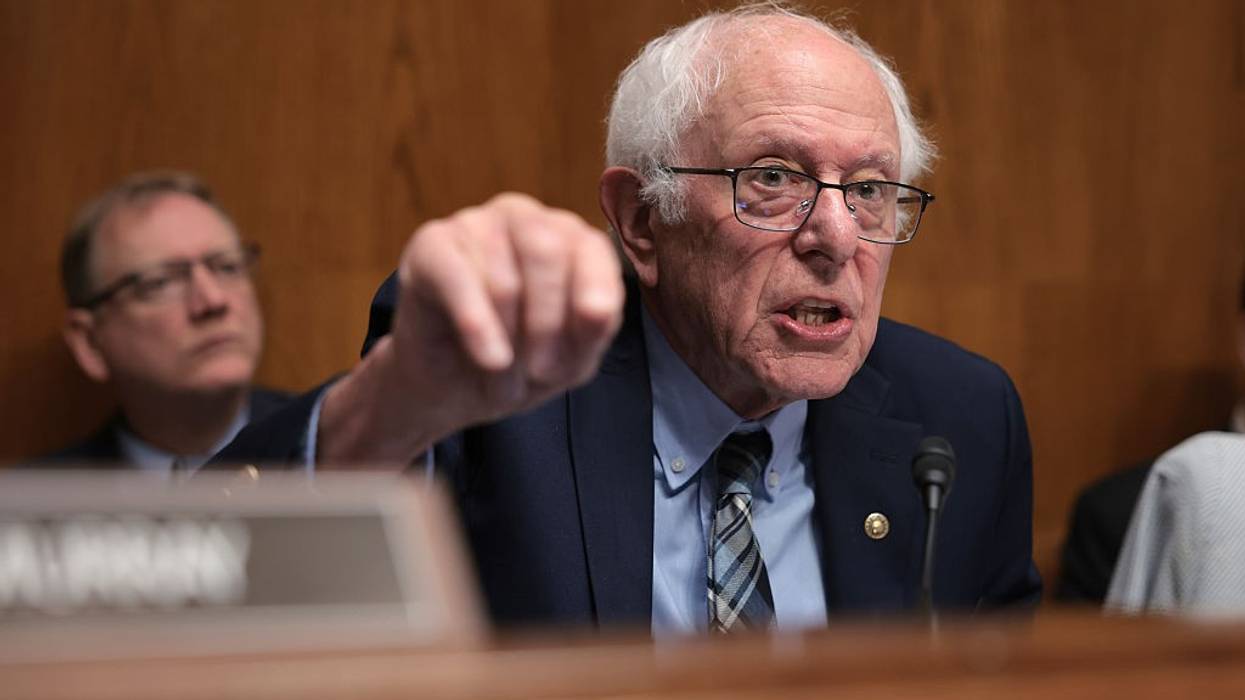
"We must use every ounce of our leverage to demand an immediate ceasefire," said Sanders.
Joining numerous genocide and Holocaust experts, human rights groups in Israel and around the world, and a United Nations commission, Sen. Bernie Sanders on Wednesday accused the Israeli government of engaging in a genocide against the Palestinian people.
In an editorial titled "It Is Genocide," the independent Vermont senator leveled his harshest criticism yet of the far-right Israeli government led by Prime Minister Benjamin Netanyahu.
Picking up on the findings of a report from the United Nations’ (UN) commission of inquiry released on Tuesday, Sanders recounted the massive human suffering that Israel has inflicted on Gaza in the 23 months since Hamas launched a surprise attack that killed 1,200 Israelis.
"Out of a population of 2.2 million Palestinians in Gaza, Israel has now killed some 65,000 people and wounded roughly 164,000," he wrote. "The full toll is likely much higher, with many thousands of bodies buried under the rubble. A leaked classified Israeli military database indicates that 83% of those killed have been civilians. More than 18,000 children have been killed, including 12,000 aged 12 or younger."
The raw death toll doesn't capture the extent of Israel's genocidal actions, Sanders continued, and he pointed to the systematic destruction of infrastructure in Gaza that has made the exclave unlivable.
"Satellite imagery shows that the Israeli bombardment has destroyed 70% of all structures in Gaza," he said. "The UN estimates that 92% of housing units have been damaged or destroyed. At this very moment, Israel is demolishing what's left of Gaza City. Most hospitals have been destroyed, and almost 1,600 healthcare workers have been killed. Almost 90% of water and sanitation facilities are now inoperable."
Sanders went on to accuse Israel of "openly pursuing a policy of ethnic cleansing in Gaza and the West Bank" with the full support of the US government. He also noted the consistently dehumanizing rhetoric that high-level Israeli officials have used against Palestinians, including statements labeling them "animals," as well as a desire to erase "all of Gaza from the face of the earth."
In response to this genocide, Sanders said, "we must use every ounce of our leverage to demand an immediate ceasefire, a massive surge of humanitarian aid facilitated by the UN, and initial steps to provide Palestinians with a state of their own."
Pro-Palestinian activists have pushed Sanders for nearly two years to label Israel's actions a genocide. While he has consistently condemned the Israeli military's mass killings of Palestinian civilians, Wednesday marked the first time he described them as a genocide.
Twenty members of Congress have now described Israel's assault as a genocide, according to Prem Thakker of Zeteo. Rep. Becca Balint (D-Vt.) also said Wednesday that she believes "Israel is committing a genocide against the Palestinian people." She and Sanders are the first Jewish members of Congress to say so.
"I feel compelled to speak out," said Balint, "because I know there are so many others like me who are horrified by what they see."

"Stop entertaining this man. Stop giving him money. It's really that simple," said one critic of Elon Musk, the richest man on Earth.
The U.S. government on Monday awarded a $200 million contract to Elon Musk's artificial intelligence company, despite the tech billionaire's ongoing spat with President Donald Trump and his AI chatbot's recent praise for Nazi leader Adolf Hitler.
The Chief Digital and Artificial Intelligence Office announced contract awards to Anthropic, Google, OpenAI, and Musk's xAI "to accelerate Department of Defense (DOD) adoption of advanced AI capabilities to address critical national security challenges."
Last week, xAI garnered sweeping condemnation after Grok, the chatbot built into Musk's social media platform X—formerly known as Twitter—started spewing antisemitic content and calling itself "MechaHitler."
Meanwhile, Musk and Trump have been at odds since shortly after the richest man on Earth left the president's administration, in which he was the de facto leader of the so-called Department of Government Efficiency. Musk's involvement in the administration generated widespread concern, both because of DOGE's efforts to gut the federal government and because his various companies get so much money from federal contracts.
In a Monday statement about "Grok for Government," xAI not only confirmed the new DOD contract but also said that its products will be "available to purchase via the General Services Administration (GSA) schedule. This allows every federal government department, agency, or office, to access xAI's frontier AI products."
The Trump administration's new money for Musk drew intense criticism on various platforms, including X—where Congresswoman Becca Balint (D-Vt.) wrote that "despite the social media wars, the Trump-Elon corruption machine is alive and well."
Kat Abughazaleh, a progressive Democrat running in Illinois' 9th Congressional District, said: "Stop entertaining this man. Stop giving him money. It's really that simple."
Abughazaleh also pointed to her past with Musk—she was laid off from the nonprofit watchdog Media Matters for America as it faced financial strain from legal battles, including what the billionaire described as a "thermonuclear lawsuit."
"Elon Musk cost me my job, deposed me for being too mean to him online, and now he's responsible for tens of thousands of job losses while getting hundreds of millions of our tax dollars," she noted. "I'm running for Congress to stop men like him."
Nina Turner, a former progressive congressional candidate from Ohio, noted that "the Pentagon, which has failed seven straight audits, just gave $200,000,000 of our tax dollars to Elon Musk to use xAI. Meanwhile, funding for food banks [was] cut in the name of 'efficiency.'"
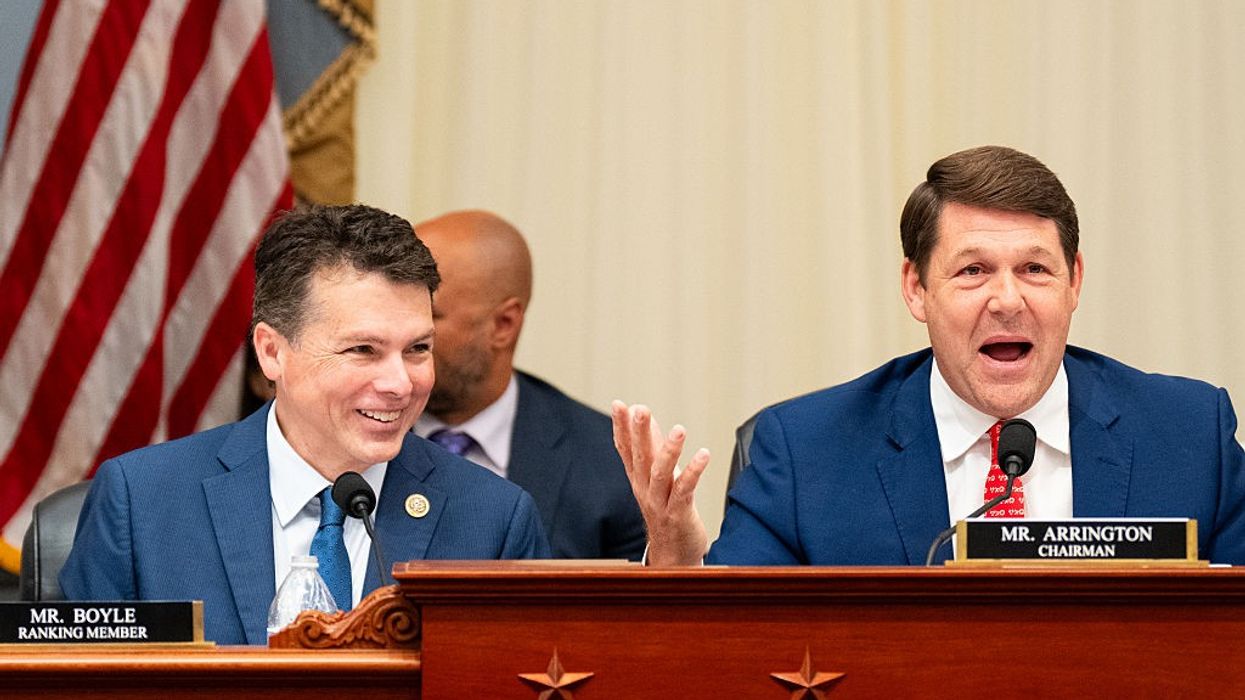
"It is the biggest tax cuts for billionaires in American history paid for by throwing 13.7 million Americans off their healthcare coverage," said the panel's top Democrat, Rep. Brendan Boyle.
Multiple Republican "fiscal hawks" on Friday voted with Democrats on the U.S. House Budget Committee to block the GOP's budget reconciliation package—and while high-level negotiations are expected to continue, members were reportedly told they could go home.
"They couldn't agree on how many people to take healthcare away from in order to give billionaires a tax cut," said Rep. Pramila Jayapal (D-Wash.), a panel member, after the vote. "Embarrassing. We'll keep fighting to protect Medicaid and the American people."
The five Republicans who voted no were Reps. Josh Brecheen (Okla.), Andrew Clyde (Ga.), Ralph Norman (S.C.), Chip Roy (Texas), and Lloyd Smucker (Pa.)—though, unlike the others, Smucker changed his vote from yes to no for a procedural reason.
"To be clear—I fully support the One Big Beautiful Bill (OBBB). My vote today in the Budget Committee is a procedural requirement to preserve the committee's opportunity to reconsider the motion to advance OBBB," he explained on social media.
According to The Hill, Smucker also said that "we're working through some remaining issues here, there are just a few outstanding issues I think everyone will get to yes, and we're going to... resolve this as quick as we can and hopefully have a vote, ideally on Monday, and we can advance this bill."
The House Freedom Caucus said on social media Friday that "Reps. Roy, Norman, Brecheen, Clyde, and others continue to work in good faith to enact the president's 'Big Beautiful Bill'—we were making progress before the vote in the Budget Committee and will continue negotiations to further improve the reconciliation package. We are not going anywhere, and we will continue to work through the weekend."
Friday's failed vote comes after various GOP-controlled panels advanced parts of the package this week, in the face of protests from Democratic lawmakers and constituents outraged that Republicans are trying to pass massive tax giveaways for wealthy individuals and corporations while adding $3.8 trillion to the national debt they claim to worry about and gutting programs like Medicaid that serve the working class.
"The House Budget Committee's vote is a necessary—but largely performative—step that bundles the 11 different bills Republicans have approved over the last few weeks through their policy committees, including the piece the tax-writing Ways and Means Committee advanced this week and the measure the Energy and Commerce Committee approved after an all-night markup of Medicaid policies forecast to strip healthcare coverage from more than 10 million people," Politico reported.
As the Budget Committee's markup began on Friday, Ranking Member Brendan Boyle (D-Pa.) charged that "this is a big bill for billionaires."
Boyle continued:
Now, we will hear over the course of this hearing a vigorous debate, and frankly, there is a strong divide between Republicans and some other Republicans. There is also a divide between both sets of Republicans and this side of the dais, I can speak at least as to why it is every Democratic member will be voting no on the bill for billionaires.
Simply put, besides all of the other important issues involved in this bill, this is the overarching truth. It is the biggest tax cuts for billionaires in American history paid for by throwing 13.7 million Americans off their healthcare coverage.
Now, those aren't my claims, that is not subjective. The nonpartisan Congressional Budget Office just this week confirmed that at least 13,700,000 Americans will lose their healthcare if the GOP bill for billionaires becomes law. That is bad economics. It is unconscionable.
Several other Democrats have spotlighted the GOP's attempt to strip healthcare from millions of Americans in their critical comments about the megabill, which is backed by Republican President Donald Trump.
"This budget is disastrous and cruel, and we stopped it from moving forward," declared Rep. Becca Balint (D-Vt.), a committee member, on Friday. "Republicans have no mandate to rip away health care and food assistance from families."
Another panel member, Rep. Lloyd Doggett (D-Texas), said after the vote that "even some GOP recognized that this is an ugly lie atop a mountain of lies and dangerous trillions of additional national debt."
"They'll be back with another scheme next week, and we'll be ready to fight," he added. "Limiting this bill's benefits to 98% of Americans and denying them to Elon Musk and the 2% richest would cut this bill's cost in half and protect the healthcare of millions, which the GOP would otherwise deny."
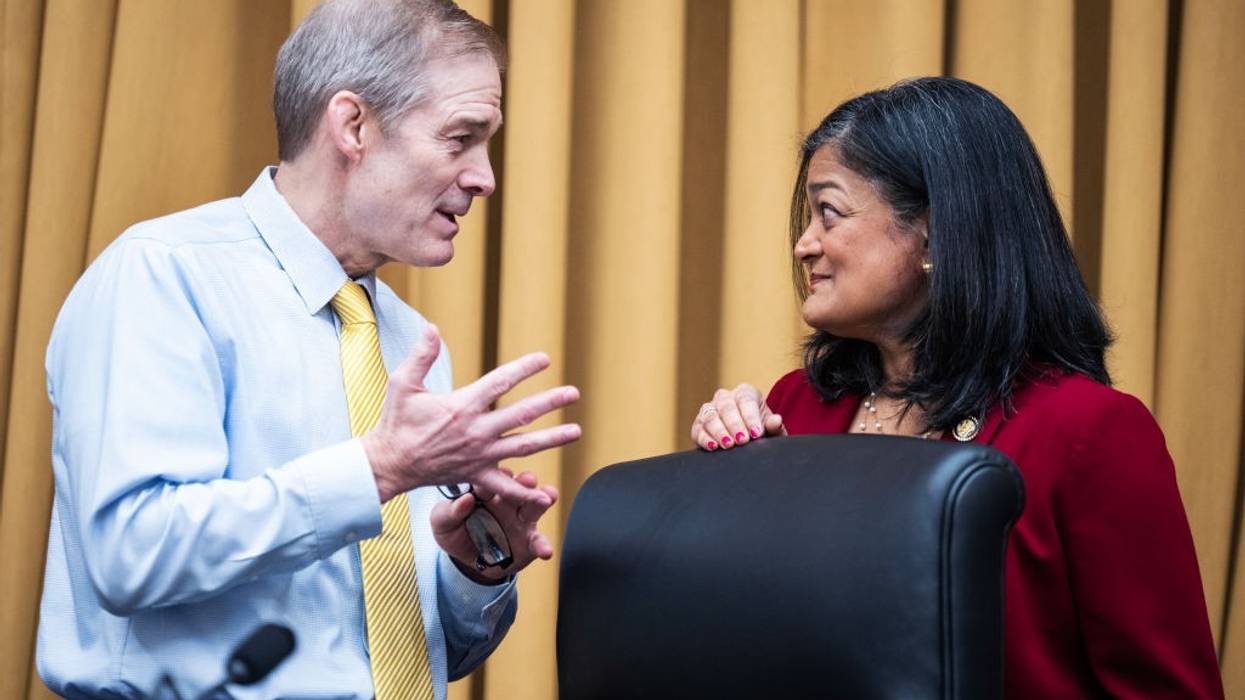
"We applaud Democratic members of the Judiciary Committee that stood up against his harmful proposal to ensure this amendment landed where it belongs—on the cutting room floor," said one antitrust advocate.
House Republicans on Wednesday dropped an effort to hamstring the Federal Trade Commission's ability to fight corporate consolidation after antitrust advocates, Democratic lawmakers, and news outlets—including Common Dreams—highlighted and sounded the alarm over the proposal.
Rep. Jim Jordan (R-Ohio), chairman of the House Judiciary Committee, agreed during a markup hearing Wednesday to remove the proposal from the panel's section of the GOP's sprawling reconciliation package—though he indicated he would try to revive the proposal as a standalone bill at a later date.
The reversal came after Democrats on the panel, including Reps. Pramila Jayapal (D-Wash.) and Becca Balint (D-Vt.), ripped the proposal as a disaster for small businesses and consumers.
"Why would you go after the FTC and make it harder for small businesses to survive in this landscape?" Balint asked in fiery remarks at Wednesday's hearing. "You all talk about competition... and then you go after the FTC. It doesn't make any sense, and it doesn't pass the straight-face test."
"Why would you go after the FTC and make it harder for small businesses to survive in this landscape? You all talk about competition... and then you go after the FTC. It doesn't make any sense." pic.twitter.com/8EF8AOmW8m
— American Economic Liberties Project (@econliberties) April 30, 2025
Jordan ultimately relented and the House Judiciary Committee voted to remove the section in question, which would have transferred the FTC's antitrust staff and funding to the Justice Department—which doesn't have the same statutory authority to protect the American public from "unfair methods of competition."
Morgan Harper, director of policy and advocacy at the American Economic Liberties Project, said in a statement that Jordan and other Republicans on the judiciary panel "did the right thing scrapping a proposal that would have kneecapped antitrust enforcement against our economy’s most harmful monopolies."
"We applaud Democratic members of the Judiciary Committee that stood up against his harmful proposal to ensure this amendment landed where it belongs—on the cutting room floor," said Harper.
But Jordan made clear following Wednesday's hearing that he did not agree to remove the FTC proposal from the reconciliation package out of genuine concern about its implications for the future of antitrust enforcement.
Rather, he accepted Republican senators' warnings that the proposal wouldn't comply with the rules of the budget reconciliation process.
"We'll just do it in a standalone bill," Jordan told Punchbowl.
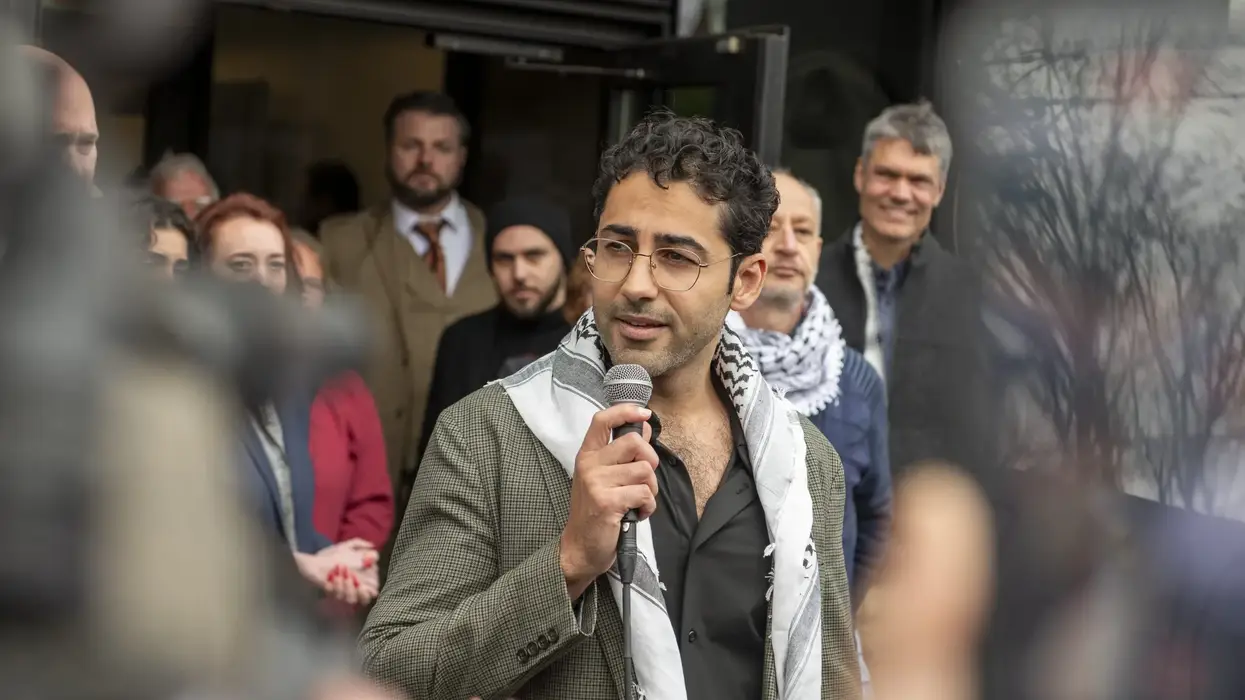
The court's order for the release of the detained student protest leader, said one lawyer, "is a victory for all people in this country invested in their ability to dissent and speak and protest."
This is a breaking story… Please check back for possible updates...
Mohsen Mahdawi, a Palestinian student targeted for deportation by the Trump administration because he participated in anti-genocide protests at Columbia University, was released on bail Wednesday following an order from Vermont-based U.S. District Judge Geoffrey Crawford.
Politico reported that upon his release, Mahdawi shared a message for President Donald Trump outside the courthouse.
"I am saying it clear and loud," Mahdawi declared. "To President Trump and his Cabinet: I am not afraid of you."
When Mahdawi, a green-card holder, arrived at a Colchester, Vermont immigration office to complete the process of becoming a U.S. citizen earlier this month, he was arrested by masked, hooded federal agents and put in an unmarked vehicle.
Mahdawi has been held at the Northwest State Correctional Facility in St. Albans since U.S. District Judge William Sessions III blocked the Trump administration's attempt to send him to a detention facility in Louisiana, like other student organizers.
His legal team—including attorneys with the ACLU and Creating Law Enforcement Accountability & Responsibility (CLEAR)—is arguing in court that Mahdawi's detention violates his constitutional rights, including free speech and due process.
"Nobody should fear detention for exercising their rights under the First Amendment. We are delighted that the court recognized that Mohsen is not a flight risk and that he should be released while his case proceeds," said Nathan Freed Wessler, deputy director of the ACLU's Speech, Privacy, and Technology Project, in a Wednesday statement.
CLEAR staff attorney Shezza Abboushi Dallal also welcomed the development: "The court's order to free Mohsen today is a victory for Mohsen, in his just pursuit of continued advocacy for Palestinian lives, and it is a victory for all people in this country invested in their ability to dissent and speak and protest for causes they are morally drawn to. We will continue our legal battle for Mohsen until his constitutional rights are fully vindicated."
Vermont's congressional delegation—Rep. Becca Balint (D) and Sens. Bernie Sanders (I) and Peter Welch (D.)—said in a joint statement Wednesday that "we are relieved that Mohsen Mahdawi was released on bail... and that the constitutional right to due process has prevailed."
"Mohsen Mahdawi is here in the United States legally and acted legally. He should never have experienced this grave injustice," they added. "The Trump Administration's actions in this case—and in so many other cases of wrongfully detained, deported, and disappeared people—are shameful and immoral. This is an important first step. We will continue the fight against President Trump's assault on the rule of law.”
The trio has been advocating for Mahdawi since his arrest. Welch visited him in detention last week and Sanders was among several lawmakers who spoke at a Tuesday rally organized by Balint outside the U.S. State Department in Washington, D.C.
"Mohsen Mahdawi is a cherished member of our community in Vermont, and I want to do everything that I can to elevate his story, because it is an indication of just how far from our values we have strayed," Balint said.
"This administration needs to know that we are watching very carefully what they are doing, that we care about our rights," she stressed, addressing the importance of taking to the streets to protest Trump's actions. "It is about standing up for all of our rights, but it's also about giving Mohsen Mahdawi and other people like him the understanding that we are standing with him."
Highlighting some other cases that have made headlines during Trump's first 100 days, Balint said that "people right now, in our country, are being disappeared by this administration. Children with cancer are being shipped off illegally—babies. Students are being harassed, and detained, and intimidated, and threatened. Why? Because they exercised free speech rights and the right to assemble. These are the rights that are basic to who we are—or who we say we are—as Americans."
Mahdawi grew up in a Palestinian refugee camp in the West Bank, which remains illegally occupied by Israel. Sanders noted Tuesday that "he has used his voice to advocate for peace, justice, and dignity for Palestinians and Israelis."
Speaking out against Mahdawi's arrest, the senator said that "not only was this action cruel and inhumane, most importantly, it was illegal, it was unconstitutional."
"This is not just about Mohsen Mahdawi. It is about you and you and you," he continued, pointing to members of the crowd. "If you can pick up a legal resident off the streets, throw them into a car, and put them in jail without any due process, that could happen to you."
Sen. Chris Van Hollen (D-Md.)—who recently traveled to El Salvador to meet with Kilmar Abrego Garcia—and Reps. Maxine Dexter (D-Ore.), Maxwell Frost (D-Fla.), Pramila Jayapal (D-Wash.), Ayanna Pressley (D-Mass.), Rashida Tlaib (D-Mich.), and Nydia Velázquez (D-N.Y.) also delivered remarks on Tuesday, as did leaders from Demand Progress and Indivisible.
Many of them pointed to others swept up in the Trump administration's effort to crush critics and carry out mass deportations, including Abrego Garcia, who was mistakenly deported to a megaprison in his native El Salvador alongside hundreds of Venezuelan migrants; former Columbia organizer Mahmoud Khalil; Badar Khan Suri, a postdoctoral fellow at Georgetown University; and Tufts University Ph.D. student Rümeysa Öztürk.
A federal district court judge had ordered the Trump administration to transfer Öztürk, a Turkish national, from Louisiana to Vermont by Thursday for a hearing on her petition challenging her detention. However, the government appealed, and the U.S. Court of Appeals for the 2nd Circuit on Tuesday halted the directive. Arguments for the appeal are now scheduled for next week.
Öztürk's legal team, which also includes the ACLU and CLEAR, said in response to Tuesday's decision that "Rümeysa Öztürk never should have been arrested and detained, period. We are ready to argue her case before the 2nd Circuit Court of Appeals, and we won't stop fighting until she is free."
Also on Tuesday, a U.S. district judge in New Jersey rejected the Trump administration's attempt to shut down Khalil's lawsuit arguing that the government is unlawfully detaining him for his political views. Like Öztürk and Mahdawi, his legal team includes the ACLU and CLEAR.
"The court has affirmed that the federal government does not have the unreviewable authority to trample on our fundamental freedoms," Noor Zafar, senior staff attorney with the ACLU's Immigrants' Rights Project, said Tuesday. "This is a huge step forward for Mahmoud and for the other students and scholars that the Trump administration has unlawfully detained in retaliation for their political speech, and a rebuke of attempts by the executive to use immigration laws to weaken First Amendment protections for political gain."
Khalil recently missed the birth of his child, due to his detention. His wife, Noor Abdalla, said Tuesday that "as I am now caring for our barely week-old son, it is even more urgent that we continue to speak out for Mahmoud's freedom, and for the freedom of all people being unjustly targeted for advocating against Israel's genocide in Gaza."
"I am relieved at the court's finding that my husband can move forward with his case in federal court," added Abdalla, a U.S. citizen. "This is an important step towards securing Mahmoud's freedom. But there is still more work to be done. I will continue to strongly advocate for my husband, so he can come home to our family, and feel the pure joy all parents know of holding your first-born child in your arms."
All of these cases are expected to continue to move through the federal judicial system. One case—Abrego Garcia's—has already reached the U.S. Supreme Court. Despite the high court's right-wing supermajority, which includes three Trump appointees, the justices earlier this month unanimously ordered Trump to facilitate Abrego Garcia's return to the United States.
During a Tuesday interview, ABC News anchor Terry Moran suggested that Trump could bring Abrego Garcia home to his family in Maryland with one phone call, saying: "You could get him back. There's a phone on this desk."
Trump responded: "I could... And if he were the gentleman that you say he is, I would do that." The president then accused him of being a member of the gang MS-13, which Abrego Garcia has denied.
On Wednesday, Trump's homeland security secretary, Kristi Noem, told CBS News that Abrego Garcia "is not under our control. He is an El Salvador citizen. He is home there in his country. If he were to be brought back to the United States of America, we would immediately deport him again."

Rep. Chuck Fleischmann is one of several Republican lawmakers who have openly called for genocide in Gaza in recent months.
U.S. Rep. Becca Balint, a Vermont Democrat, on Thursday said the latest rant by a Republican lawmaker about Israel's ongoing U.S.-backed slaughter of civilians in Gaza should be recognized for what it is: "a member of Congress calling for the genocide of the Palestinian people."
Rep. Chuck Fleischmann (R-Tenn.) was confronted by campaigners with the anti-war group CodePink on Wednesday in a corridor at the U.S. Capitol where he repeatedly told them he "will never support" the Palestinians and "will support Israel forever."
Fleischmann refused to answer the protesters as they asked if he would make an exception if Israel was found to be guilty of war crimes and genocide, which the International Court of Justice found was "plausible" in an interim ruling in January.
"Why do you support the genocide and all the war crimes and collective punishment?" asked one campaigner. "Are you concerned about all the children dying in Gaza?"
Fleischmann replied that "they are not guilty of genocide and I will support Israel forever."
When one organizer told Fleischmann that he is Palestinian and asked if he supported the killing of his cousins who live in Gaza, the congressman replied: "I will never support you. I will tell you to your face, goodbye to Palestine."
Jack Allen, a Democrat who is running for Fleischmann's seat in Congress, condemned the congressman's "hostility" toward the campaigners and said, "We are well past the need for a cease-fire in this conflict."
Fleischmann's comments came as the far-reaching effects of Israel's blocking of nearly all food aid since October became increasingly clear. Defense for Children International - Palestine reported Thursday that at least 17 children have starved to death so far in the enclave, which has been relentlessly bombarded by Israel for five months.
The deliberate starving of civilians is "a hallmark of genocide," the organization said.
Fleisc hmann is one of at least two Republican lawmakers to openly call for the destruction of Gaza and its population of more than 2 million people in recent weeks.
Last month, Rep. Andy Ogles, also of Tennessee, responded to an activist who told him: "I've seen the footage of shredded children's bodies. That's my taxpayer dollars that are going to bomb those kids."
"You know what? So, I think we should kill 'em all," Ogles replied.
Sen. Lindsey Graham (R-S.C.) also called for Israel to "level the place" in the first days of the bombardment of Gaza.
On Wednesday, Libyan-American writer Hend Amry remarked that the refusal of the Democratic Party, particularly President Joe Biden, to stand firmly against Israel's attacks on civilians and civilian infrastructure and its blockade on humanitarian aid "is also teaching Republicans how much they can get away with."

"What is needed right now is an immediate break in violence to allow for a true negotiated cease-fire," said Rep. Becca Balint.
Progressives in Congress and Jewish advocates for Palestinian rights were among those applauding Thursday as U.S. Rep. Becca Balint became the first Jewish federal lawmaker—and the first representing Vermont—to support a cease-fire in Gaza.
Balint (D-Vt.) reversed her earlier position, writing in the VTDigger that the anguish she has felt since Hamas killed about 1,200 Israelis and kidnapped 240 people "has only grown" in the past month as Israel's "ensuing siege has killed thousands of civilians in Gaza who were already struggling under Hamas rule and Israeli blockade."
Echoing 31 other members of Congress who have demanded the Biden administration call for a cease-fire—an action that would likely put a swift end to the deadly bombing of hospitals, refugee shelters, and homes in Gaza—Balint strongly condemned Hamas and said stopping the bombardment could facilitate the return of hostages.
"I'm one generation removed from the horrific trauma of the Holocaust, which impacted my family and reshaped the world," wrote Balint. "Like me, there are thousands of American Jews that share a deep emotional connection to Israel because of what it meant for the survival of the Jewish people in the face of extermination. This same history also drives so many of us to fight for the protection of Palestinian lives. I do not claim to know how to solve every aspect of this decadeslong conflict. But what I do know is that killing civilians, and killing children, is an abomination and categorically unacceptable—no matter who the civilians are, and no matter who the children are."
"What is needed right now is an immediate break in violence to allow for a true negotiated cease-fire," she continued. "One in which both sides stop the bloodshed, allow critical access to humanitarian aid, and move towards negotiating a sustainable and lasting peace."
The congresswoman added that Israeli Prime Minister Benjamin Netanyahu's current strategy "does not make Israel safer" and in addition to killing at least 11,470 Palestinian civilians, Israel is likely fueling "recruitment for terrorist groups like Hamas."
"This pattern further undermines the security of both Palestinians and Israelis," wrote Balint. "The aerial bombing must end."
IfNotNow, the Jewish-led Palestinian rights group, praised the congresswoman for "bravely joining tens of thousands of Jews for cease-fire across the country."
"Time for other Jewish members of Congress to follow her lead," the group added.
Sen. Bernie Sanders (I-Vt.), a longtime anti-war advocate and critic of Israel's violent policies in the occupied Palestinian territories, has been notably absent among the members of Congress who have called for a cease-fire in the past month. He advocated for a humanitarian pause earlier this month.
Jennifer Tierney, executive director of Doctors Without Borders Australia, explained last week on the Australian television show Q+A why a humanitarian pause is insufficient to protect civilian lives.
"What you are asking us to do in a humanitarian pause is to bring in the equipment necessary to stitch people up and repair them and then to start the bombing again and for us to then fix them," said Tierney. "That is not enough. We need a cease-fire."
Balint's reversal came less than a week after protesters with Jewish Voice for Peace interrupted a rally in Burlington, Vermont where the lawmaker was speaking. The campaigners demanded Balint back a cease-fire.
Rep. Alexandria Ocasio-Cortez (D-N.Y.), who led a renewed push this week demanding that U.S. President Joe Biden support a cease-fire, said Thursday that Balint was "incredibly brave, taking a stance rooted in her commitment to human rights and protection of the innocent."

"The American people expect their elected representatives to hold their colleagues to a higher ethical standard and punish those who violate the public's trust," said Stand Up America's Brett Edkins.
"House Republicans have once again demonstrated their moral bankruptcy by shielding a deceitful and indicted fraudster in their ranks," declared Stand Up America managing director of policy and political affairs Brett Edkins.
"George Santos' seemingly endless lies and criminal behavior have disgraced the GOP and left voters in New York's 3rd Congressional District without real representation," he argued. "Still, today, House Republicans voted to put political expediency over common decency."
Edkins added that "the American people expect their elected representatives to hold their colleagues to a higher ethical standard and punish those who violate the public's trust. It's time for House Republicans to grow a backbone and fulfill their obligation to their constituents."
Rather than immediately ousting Santos—who faces charges including wire fraud, money laundering, and theft of public funds—Republicans referred the expulsion resolution led by Democratic Reps. Robert Garcia (Calif.), Becca Balint (Vt.), and Eric Sorenson (Ill.) to the House Committee on Ethics.
Introduced Tuesday, the trio's privileged resolution cites a clause in the U.S. Constitution that states the House and Senate can determine how their members are disciplined, including by expulsion with a two-thirds majority.
Wednesday's 221-204 vote was along party lines, though the ethics panel's five Democrats—Susan Wild (Pa.), Glenn Ivey (Md.), Veronica Escobar (Texas), Deborah Ross (N.C.), and Mark DeSaulnier (Calif.)—plus Democratic Reps. Chrissy Houlahan (Pa.) and Marie Gluesenkamp Perez (Wash.) abstained.
After the vote, Garcia—who has called for Santos' expulsion for months—took aim at House Speaker Kevin McCarthy (R-Calif.), who had said Tuesday that the House Ethics Committee should investigate the embattled freshman Republican.
"George Santos is a fraud, and Kevin McCarthy's efforts to protect him with this vote will fail. We will continue to hold him and those who protect him accountable for his fraud and lies," Garcia tweeted Wednesday, adding that "the House Republicans are now officially the SAVE SANTOS CAUCUS."
According to The Washington Post:
Santos said that if the Ethics Committee finds a reason to remove him, "that is the process."
In March, the Ethics Committee voted to create a bipartisan subcommittee to investigate claims about Santos.
In its March statement, the ethics panel said it is working to determine whether Santos, 34, may have "engaged in unlawful activity with respect to his 2022 congressional campaign; failed to properly disclose required information on statements filed with the House; violated federal conflict of interest laws in connection with his role in a firm providing fiduciary services; and/or engaged in sexual misconduct towards an individual seeking employment in his congressional office."
Santos was
released on $500,000 bond last week after being charged on Long Island. He has pleaded not guilty and told reporters outside the courthouse that he plans to fight "the witch hunt" against him.
Prosecutors allege Santos convinced supporters of his congressional campaign to donate to a company but then used the money for exorbitant personal expenses. They have also accused him of lying on federal disclosure forms and receiving unemployment benefits when he was employed at an investment firm.
Balint warned Tuesday that if the Republicans continue to accept Santos' alleged criminal activity, it will be "a sign of the deteriorating health of our government."
"Democracies don't die overnight; they erode slowly as we degrade our ethical standards and turn away from our values," she said. "Americans want to have faith in our democracy, but with trust in government at an all-time low it's critical we take action to restore that trust."
Separately from the criminal charges, Santos has admitted to lying about his educational and professional background and his connection to survivors of the Holocaust. A New York Times investigation found that he also lied about his employees having been killed in the 2016 Pulse nightclub shooting in Orlando, Florida.