

SUBSCRIBE TO OUR FREE NEWSLETTER
Daily news & progressive opinion—funded by the people, not the corporations—delivered straight to your inbox.
5
#000000
#FFFFFF
To donate by check, phone, or other method, see our More Ways to Give page.
Daily news & progressive opinion—funded by the people, not the corporations—delivered straight to your inbox.
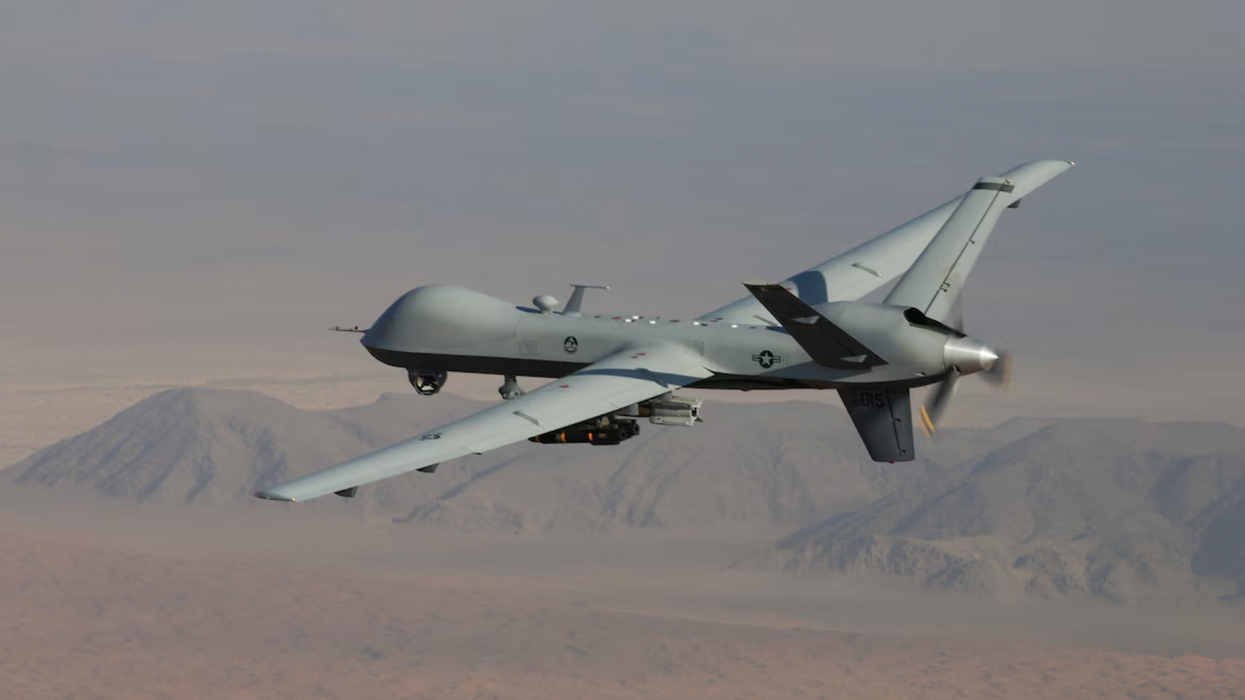
The US has carried out nearly 100 strikes in Somalia this year alone, with scant coverage by the corporate media.
At least a dozen civilians—eight children, three women, and an elderly man—were killed in weekend bombings that local sources claimed were the latest of nearly 100 US airstrikes in the Horn of Africa nation this year alone.
The Somali Guardian reported that the strikes occurred near the southern Somali town of Jamame in the Lower Juba region. In addition to the 12 civilians killed, nine others were reportedly wounded in the attack.
While no one has claimed responsibility for the bombing, US Africa Command (AFRICOM) acknowledged carrying out weekend "airstrikes targeting al-Shabaab," an al-Qaeda-affiliated militant group, near Jamame.
“Specific details about units and assets will not be released to ensure continued operations security,” added AFRICOM—which earlier this year stopped sharing information about civilian harm caused by US attacks.
Somali Guardian reported that Danab, a US-trained Somali special forces unit, was also conducting operations in villages around Jamame. Danab often receives US air support while carrying out such missions.
The weekend strikes follow a Danab raid in Balcad district last week in which children were reportedly killed.
"Three were murdered including 2- and 3-year-olds," Somali activist Adan Abdulle said on Sunday. "This is not the first time that US or US-trained forces have murdered innocent civilians in cold blood. What makes these murders stand out is the callousness with which pressure was exerted on grieving families to keep quiet."
The latest strikes came amid a surge in US bombings targeting Somalia-based militants during US President Donald Trump's second term. Antiwar.com's Dave DeCamp has counted 96 US airstrikes on Somalia this year alone, based on AFRICOM data.
"President Trump has shattered the annual record for US airstrikes in Somalia, which he previously set at 63 during his first term in 2019," DeCamp noted Sunday. "For context, President [Joe] Biden launched a total of 51 airstrikes in Somalia throughout his four years in office, and President [Barack] Obama launched 48 over eight years."
Trump's record bombardment of Somalia has received almost no coverage in the US corporate media.
According to the UK-based watchdog Airwars, US forces have killed at least 92 and as many as 167 civilians in Somalia since 2007, when then-President George W. Bush ordered strikes on the country as part of the War on Terror.
The Costs of War Project at Brown University's Watson School for International and Public Affairs says that the open-ended US-led war has left more than 940,000 people dead, upward of 432,000 of them civilians, in at least seven countries, since shortly after the September 11, 2001 attacks on the United States.
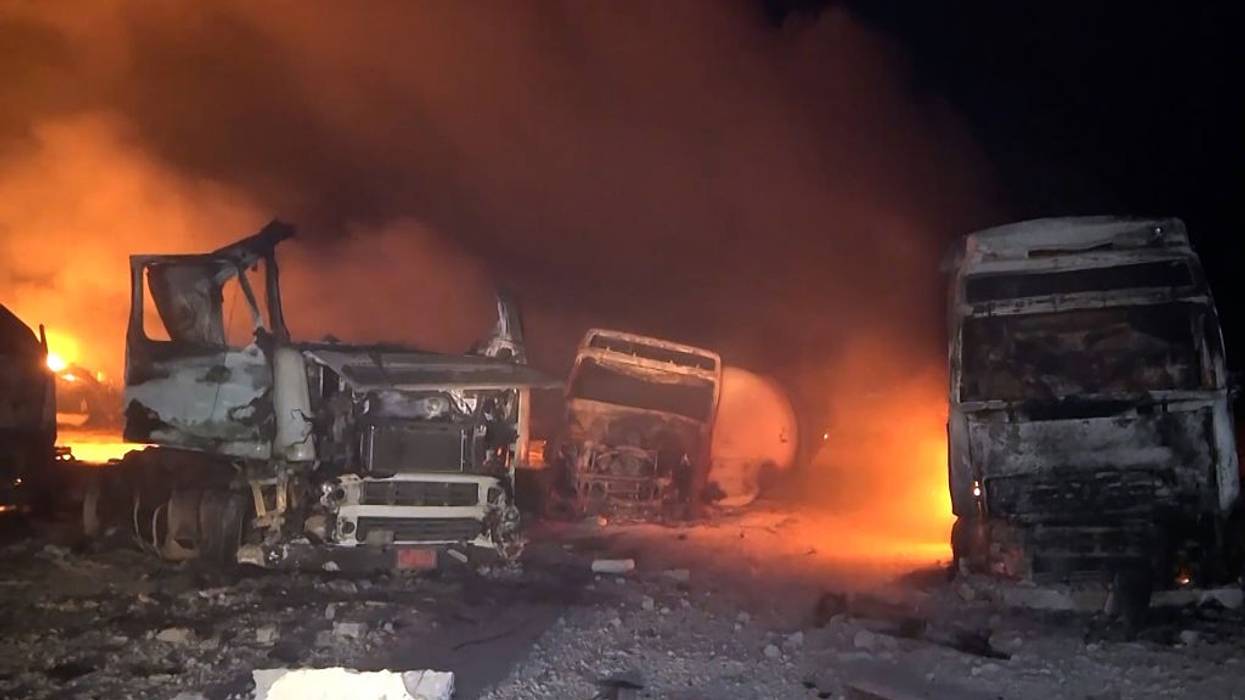
Human Rights Watch said the April bombings, which also wounded more than 150 civilians, demonstrated "a callous disregard for civilian lives" and should be investigated.
The April bombing of a Yemeni oil port by U.S. forces that killed and wounded hundreds of civilians and disrupted the delivery of lifesaving aid to one of the world's most war-torn nations was "an apparent war crime" that should be investigated, a leading international human rights group said Wednesday.
On April 17, a series of U.S. airstrikes destroyed the Ras Isa oil Port on the Red Sea north of Hodeidah, killing 84 people and wounding more than 150 others, according to first responders, local officials, and a probe by the U.K.-based independent monitor Airwars.
The bombings were part of the Trump administration's response to resistance by Houthi rebels to Israel's annihilation of Gaza, which has included ballistic missile strikes targeting Israel and Red Sea shipping related to the key U.S. ally.
"The U.S. has been implicated in laws-of-war violations in Yemen since it began 'targeted killing operations' in 2002."
"U.S. forces took action to eliminate this source of fuel for the Iran-backed Houthi terrorists and deprive them of illegal revenue that has funded Houthi efforts to terrorize the entire region for over 10 years," U.S. Central Command said at the time, adding that "this strike was not intended to harm the people of Yemen."
However, the first four U.S. strikes on the port happened while workers were still on the job. Officials said first responders including paramedics and rescue workers who rushed to the scene were killed in subsequent strikes, known as "double taps" in military parlance.
Human Rights Watch said Wednesday that of the strikes' victims, "49 were people who worked at the port, several were truck drivers, and two were civil defense personnel. Others may have been workers' family members. Three were identified as children."
"The list contained one person identified as a 'colonel,' but who was not necessarily a military member," HRW continued. "The Hodeidah branch of the government-owned Yemen Oil Company posted photographs of 49 employees they said were killed."
HRW Yemen and Bahrain researcher Niku Jafarnia said Wednesday that "the U.S. government's decision to strike Ras Isa Port, a critical entry point for aid in Yemen, while hundreds of workers were present demonstrates a callous disregard for civilians' lives."
"At a time when the majority of Yemenis don't have adequate access to food and water, the attack's impact on humanitarian aid could be enormous, particularly after Trump administration aid cutbacks," Jafarnia added.
U.S. airstrikes on Yemen, which averaged around a dozen per month during the final year of the Biden administration, soared to more than 60 in March under President Donald Trump, according to the Yemen Data Project.
Other recent U.S. massacres in Yemen include a series of March 15 strikes on residential areas in the capital Sanaa that killed at least 53 people including numerous women and children, an April 20 strike on the Farwah market in the Shuub neighborhood of the capital Sanaa that killed at least 12 people and wounded 30 others, and the April 28 bombing of a detention center for African migrants in the city of Sa'ada that left at least 68 people dead and dozens more wounded.
These strikes came after President Donald Trump and Defense Secretary Pete Hegseth loosened the U.S. military's rules of engagement to allow the bombing of a wider range of targets and people. In March, Hegseth announced that the Pentagon's Civilian Harm Mitigation and Response Office and Civilian Protection Center of Excellence, which was established during the Biden administration, would be closed.
Hegseth—who has supported pardons for convicted U.S. war criminals—lamented during his Senate confirmation hearing that "restrictive rules of engagement" have "made it more difficult to defeat our enemies," who "should get bullets, not attorneys," according to his 2024 book The War on Warriors.
The U.S has been bombing and conducting ground raids in Yemen since the beginning of the so-called War on Terror launched by the George W. Bush administration in response to the September 11, 2001 attacks on the United States. Airwars says hundreds of Yemeni civilians have been killed in 181 declared U.S. actions since 2002.
In 2015, then-President Barack Obamaannounced that U.S. forces would provide "logistical and intelligence support" to the Saudi-led coalition intervening in the ongoing Yemeni civil war on behalf of the national government as it battled Iran-backed Houthi rebels. That assistance included refueling Saudi and Emirati warplanes that were bombing Yemeni targets and killing thousands of civilians while a blockade fueled famine and illness that claimed hundred of thousands of lives.
"The U.S. has been implicated in laws-of-war violations in Yemen since it began 'targeted killing operations' in 2002 against Al-Qaeda in the Arabian Peninsula," HRW said Wednesday. "Those strikes continued until at least 2019 and killed many civilians, including 12 people attending a wedding in 2013. To Human Rights Watch's knowledge, the U.S. has never acknowledged or provided compensation for civilians harmed in this or other unlawful attacks."
The Pentagon has only acknowledged 13 civilian deaths caused by U.S. military action in Yemen since 2002. The Trump administration has been especially tight-lipped about civilian casualties resulting from its operations, a stance some critics have called ironic given that top administration officials including Hegseth discussed highly sensitive plans for attacking Yemen on a Signal group chat in which a journalist was inadvertently included.
"The recent U.S. airstrikes in Yemen are just the latest causing civilian harm in the country over the past two decades," Jafarnia said. "The Trump administration should reverse past U.S. practice and provide prompt compensation to those unlawfully harmed."
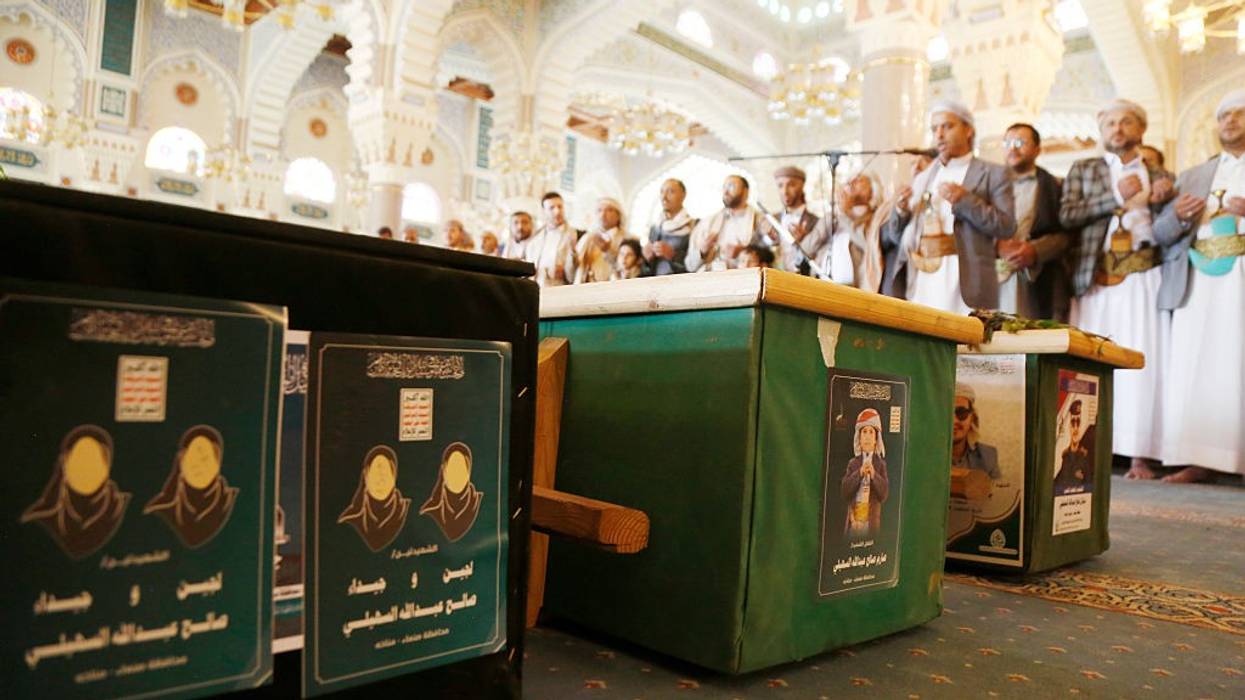
"President Trump has called himself a 'peacemaker,' but that claim rings hollow when U.S. military operations kill scores of civilians."
A trio of Democratic senators on Thursday demanded answers from embattled Defense Secretary Pete Hegseth regarding U.S. airstrikes in Yemen, which have reportedly killed scores of civilians including numerous women and children since last month.
"We write to you concerning reports that U.S. strikes against the Houthis at the Ras Isa fuel terminal in Yemen last week killed dozens of civilians, potentially more than 70," Sens. Chris Van Hollen (D-Md.), Elizabeth Warren (D-Mass.), and Tim Kaine (D-Va.) wrote in a letter to Hegseth.
The lawmakers noted that "the United Nations Protection Cluster's Civilian Impact Monitoring Project has... assessed that March 2025 marked the highest monthly casualty count in Yemen in almost two years, tripling the previous month, with a total of 162 civilian casualties."
"If these reports of civilian casualties are accurate, they should come as no surprise," the senators said. "Using explosive weapons in populated areas—as these intense strikes appear to do—always carries a high risk of civilian harm."
"Further, reports suggest that the Trump administration plans to dismantle civilian harm mitigation policies and procedures at the Pentagon designed to reduce civilian casualties in U.S. operations," the letter notes. "And the Trump administration has already dismissed senior, nonpartisan judge advocates, or JAG officers, who provide critical legal counsel to U.S. warfighters, especially when it comes to the laws of war and adherence to U.S. civilian harm mitigation policies."
"The Defense Department also recently loosened the rules of engagement to allow [U.S. Central Command] and other combatant commands to conduct strikes without requiring White House sign-off, removing necessary checks and balances on crucial life-and-death decisions," the senators added. "Taken altogether, these moves suggest that the Trump administration is abandoning the measures necessary to meet its obligations to reducing civilian harm."
The senators asked Hegseth to answer the following questions:
Asked during his confirmation hearing whether troops under his leadership would adhere to the Geneva Conventions, Hegseth replied, "What we are not going to do is put international conventions above Americans."
During his first administration, President Donald Trumprelaxed rules of military engagement meant to protect civilians as he followed through on his campaign pledge to "bomb the shit" out of Islamic State militants and "take out their families." Thousands of civilians were killed during the campaign against ISIS in Iraq and Syria as then-Defense Secretary James "Mad Dog" Mattis announced a shift from a policy of attrition to one of "annihilation."
Meanwhile, noncombatant casualties soared by over 300% in Afghanistan between the final year of the Obama administration and 2019.
Overall, upward of 400,000 civilians in Afghanistan, Pakistan, Iraq, Syria, Libya, and Yemen have died as a direct result of the U.S.-led War on Terror, according to the Costs of War Project at Brown University's Watson Institute for International and Public Affairs.
In Yemen, the U.K.-based monitor Airwars says U.S. forces have killed hundreds of civilians in 181 declared actions since 2002. Overall, hundreds of thousands of Yemenis have died during the civil war that began in 2014, with international experts attributing more than 150,000 Yemeni deaths to U.S.-backed, Saudi-led bombing and blockade.
The U.S. bombing of Yemen has not received nearly as much coverage in the corporate media as the scandal involving Hegseth's use of Signal chats to share plans for attacking the Middle Eastern country with colleagues, a journalist, and relatives. However, critics say the mounting backlash over the high civilian casualties there is belying Trump's claim of an anti-war presidency.
"President Trump has called himself a 'peacemaker,' but that claim rings hollow when U.S. military operations kill scores of civilians," the senators stressed in their letter. "The reported high civilian casualty numbers from U.S. strikes in Yemen demonstrate a serious disregard for civilian life, and call into question this administration's ability to conduct military operations in accordance with U.S. best practices for civilian harm mitigation and international law."
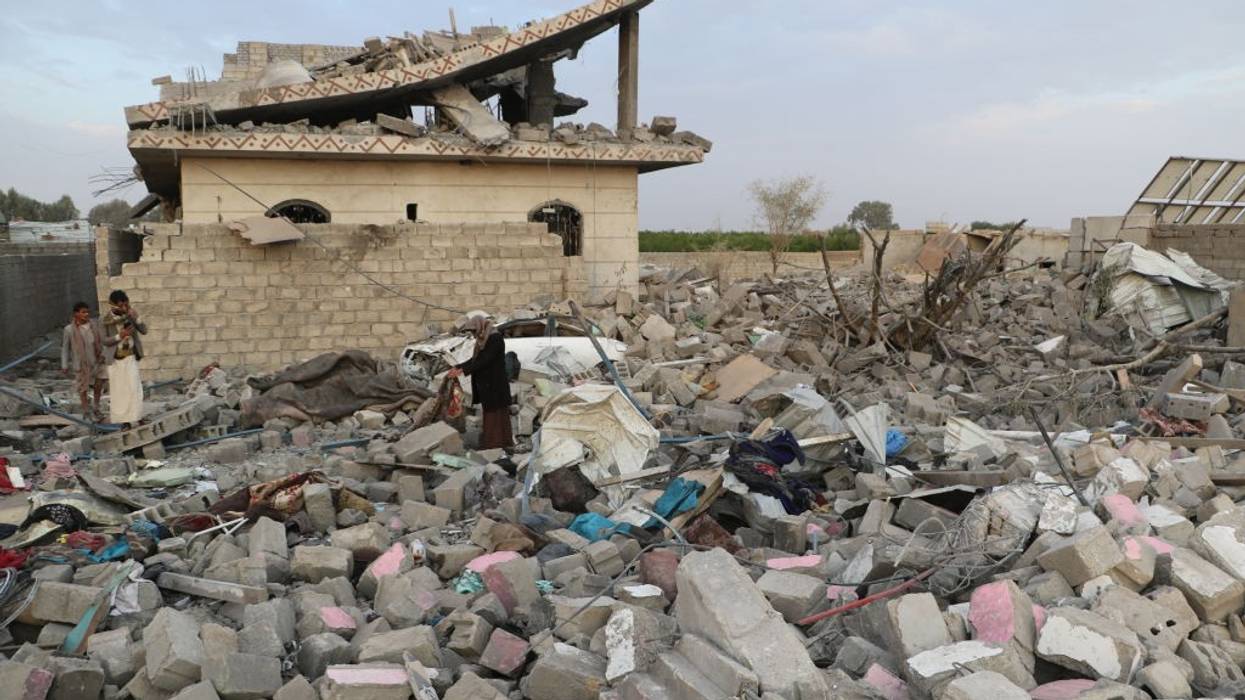
"All because Yemen refuses to let Israelis wipe Palestine out," said one critic.
The Yemeni Health Ministry said Sunday that most of the more than 50 people killed in U.S. airstrikes over the weekend were women and children as the war-torn Mideast nation braced for more "overwhelming lethal force" promised by President Donald Trump in retaliation for Houthi rebel attacks on American warships, international shipping, and Israel.
Anis al-Asbahi, a spokesperson for the Yemeni Health Ministry, said that the wave of dozens of U.S. strikes across eight provinces including the capital Sanaa killed 53 people, 31 of them civilians, and wounded more than 100 others.
"The majority of them were children and women," al-Asbhahi told Drop Site News, adding that the death toll was likely to rise, as rescue workers were still finding victims amid the rubble.
Dozens of civilians, including children and women, were killed in U.S. bombings across Yemen as Trump vows to unleash “overwhelming lethal force” to stop the Houthi naval blockade targeting Israel’s war on Gaza. Read Shuaib Almosawa's report from Yemen: www.dropsitenews.com/p/trump-mass...
[image or embed]
— Jeremy Scahill ( @jeremyscahill.com) March 17, 2025 at 3:53 AM
Yemeni journalist Shuaib Almosawa wrote for Drop Site News:
Scenes filmed inside Saada hospital revealed a chaotic environment, with medical staff rushing injured people, including children and women, on stretchers into hospitals and through corridors. Severely injured children were screaming, some with faces bloodied and burned. Others were covered with dust and blood, suggesting they had been pulled from the rubble. A few small victims were charred beyond recognition.
Nasser Mohammed Saad told Almosawa that he was at a friend's home in Sanaa on Saturday evening celebrating iftar when four U.S. airstrikes directly hit the house next door.
"The house that was hit belongs to a citizen who has nothing to do with anything," Saad said, calling the strikes "a savage and barbaric aggression targeting civilians."
"It only targeted the innocent, terrifying children, women, and the elderly," he added.
The weekend strikes sparked protests in Yemen on Monday, including a massive demonstration in Sanaa attended by at least hundreds of thousands of people, many of whom believe the bombings were carried out on behalf of U.S. allies Israel and Saudi Arabia. Some of the demonstrators held placards with slogans including "Death to America, Death to Israel!"
The Trump administration said the strikes were ordered after Houthi rebels—who are officially known as Ansar Allah and who control Sanaa and most of western Yemen—resumed attacking ships including U.S. naval vessels in the Red Sea and Gulf of Aden. The Houthis began attacking commercial and military ships in the area in response to Israel's annihilation of Gaza.
Trump wrote on his Truth Social site Saturday that he "ordered the United States Military to launch decisive and powerful Military action" against the Houthis, who "have waged an unrelenting campaign of piracy, violence, and terrorism against American, and other, ships, aircraft, and drones."
"Joe Biden's response was pathetically weak, so the unrestrained Houthis just kept going," Trump continued, referring to the series of sustained strikes carried out by his Democratic predecessor along with Britain and Israel that reportedly killed at least dozens of Houthi fighters and at least one civilian. "It has been over a year since a U.S. flagged commercial ship safely sailed through the Suez Canal, the Red Sea, or the Gulf of Aden."
"The Houthi attack on American vessels will not be tolerated," the president said. "We will use overwhelming lethal force until we have achieved our objective."
Trump also had a message for Iran, which backs the Houthis: "Support for the Houthi terrorists must end IMMEDIATELY! Do NOT threaten the American People, their President, who has received one of the largest mandates in Presidential History, or Worldwide shipping lanes. If you do, BEWARE, because America will hold you fully accountable and, we won't be nice about it!"
In response to the U.S. strikes, the Houthis said they launched a barrage of drones and missiles at the USS Harry Truman, a nuclear-powered aircraft carrier, in the Red Sea, and other ships in its carrier group. The U.S. military said that none of its warships were hit and that U.S. warplanes shot down all of the incoming drones.
"We affirm that this aggression will not deter the Yemeni people from continuing to support Palestine and fulfilling their religious and humanitarian duties in supporting the people of Gaza, their resistance, and their heroic fighters," Ansar Allah said in a statement.
U.S. forces have launched drone and other airstrikes against Yemen since the George W. Bush administration. There have also been occasional U.S. ground raids in the Middle Eastern country, including one in January 2017 that killed Nawar al-Awlaki, an 8-year-old American girl whose father and brother were killed in separate U.S. drone strikes during the administration of former President Barack Obama.
According to the U.K.-based monitor Airwars, U.S. forces have killed an estimated 175-300 Yemeni civilians in 181 declared actions since 2002. Overall, hundreds of thousands of Yemenis have died during the civil war that began in 2014, with international experts attributing more than 150,000 Yemeni deaths to U.S.-backed, Saudi-led bombing and blockade.

"Save this for the next time you hear that the Israeli military does everything possible to avoid harming civilians, and that the level of civilian harm in Gaza is less than other comparable conflicts," said one advocate.
The world's foremost monitor of civilian harm caused by aerial bombardment published a report Thursday calling the first 25 days of Israel's ongoing U.S.-backed annihilation of Gaza the worst assault on noncombatants it has ever seen.
U.K.-based Airwars—which over its decadelong existence has meticulously and painstakingly documented civilian casualties in various campaigns of the U.S.-led so-called War on Terror, Russia's bombing of Ukraine and Syria, Turkish attacks on Syria and Iraq, and other conflicts—published a "patterns of harm analysis" examining the first few weeks of Israel's retaliatory assault on Gaza following the Hamas-led attack of October 7, 2023.
"By almost every metric, the harm to civilians from the first month of the Israeli campaign in Gaza is incomparable with any 21st century air campaign," Airwars said in a summary of the report. "It is by far the most intense, destructive, and fatal conflict for civilians that Airwars has ever documented."
Key findings include:
"The international community has raised grave concern about Israeli military practice and the unprecedented scale of civilian harm," the report notes. "The United Nations has repeatedly warned that Israel is breaching international law and even United States President Joe Biden, a staunch ally of Israel, eventually labeled the military response 'over the top.' In January 2024, South Africa brought a claim of genocide against Israel at the International Court of Justice."
As of Friday, Gaza officials say that at least 44,875 Palestinians have been killed and 106,464 have been wounded in Gaza. At least 11,000 others are missing and believed to be dead and buried beneath the rubble of hundreds of thousands of bombed-out buildings.
The report also pushes back on claims that Israel "does everything possible to avoid harming civilians," and that "the level of civilian harm in Gaza is broadly consistent with, and even favorable to, other comparable conflicts in recent decades."
Save this for the next time you hear that the Israeli military does everything possible to avoid harming civilians, and that the level of civilian harm in Gaza is less that other comparable conflicts… gaza-patterns-harm.airwars.org
[image or embed]
— Huwaida Arraf (@huwaida.bsky.social) December 13, 2024 at 9:27 AM
"The manner in which Israel has conducted the war in Gaza may signal the development of a concerning new norm: a way of conducting air campaigns with a greater frequency of strikes, a greater intensity of damage, and a higher threshold of acceptance for civilian harm than ever seen before," the authors wrote.
Airwars leaves readers with the ominous prospect that, while it is "expecting the overall trends to remain, magnitudes of difference—where measures of civilian harm in Gaza outpace those from previously documented conflicts—are expected to grow."
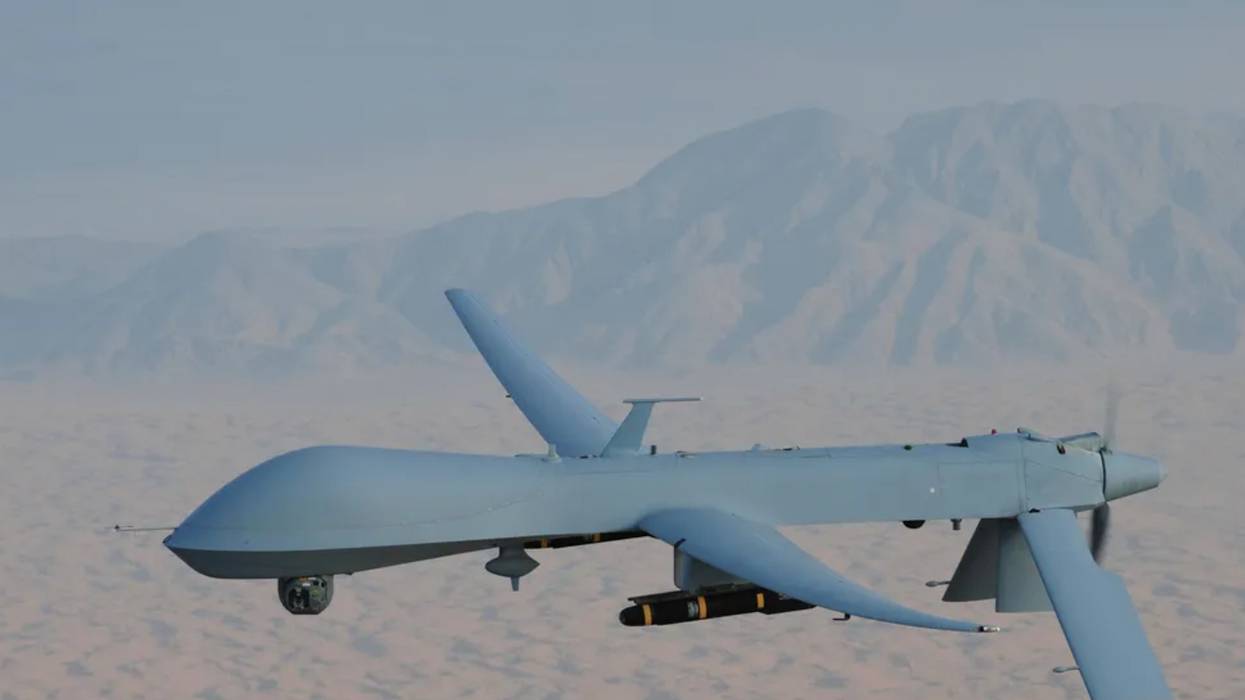
Cuban and American officials are investigating the unverified claim that the doctors, who were kidnapped by al-Shabaab militants in 2019, died during a recent U.S. drone strike.
The United States military said Tuesday that it is investigating whether a drone strike on Somalia targeting al-Shabaab fighters killed two Cuban doctors being held hostage by the militant group.
According to al-Shabaab, surgeon Landy Rodríguez Hernández and general medicine specialist Assel Herrera Correa were killed in a U.S. airstrike in Somalia's southern state of Jubaland last Thursday—although there has been no confirmation of the deaths.
"The aerial bombardment, which began at around 12:10 am, targeted a house in Jilib, instantly killing Assel Herrera and Landy Rodríguez," the al-Qaeda-affiliated group said on social media.
The Cuban Foreign Ministry said Tuesday that National Assembly President Esteban Lazo Hernández traveled to Kenya "to make urgent efforts with the highest authorities of that country in the search for cooperation and clarification, in the light of the recent published news on the possible unconfirmed death" of the two doctors.
U.S. Africa Command (AFRICOM) acknowledged carrying out the February 15 bombing but said that "we do not have further information at this time about these reports, but we do take all claims of civilian casualties seriously. The command will continue to assess the results of this operation and will provide additional information as available."
According to Airwars, a U.K.-based monitoring group, hundreds of Somalis—including some civilians—were killed by U.S. airstrikes last year alone as the Biden administration quietly continues the so-called War on Terror launched in the wake of the September 11, 2001 attacks on the United States. The U.S. has been conducting airstrikes and ground raids in Somalia since the George W. Bush administration.
Al-Shabaab kidnapped the Cuban doctors in Mandera County, Kenya in April 2019. The doctors were working there under an agreement between the Kenyan and Cuban governments for the provision of medical professionals for services including the implemention of universal healthcare.
Cuba's socialist government provides universal healthcare to the Caribbean country's citizens and also deploys doctors to dozens of nations on humanitarian missions. While Cuban doctors are hailed around the world for their lifesaving service, they also allegedly face serious restrictions on their freedoms while working abroad.
Responding to news of the doctors' possible deaths, Cuban President Miguel Mario Díaz-Canel y Bermúdez said: "I express all my solidarity and affection to the families of our doctors Assel and Landy, in these moments of uncertainty and increased pain, and in the face of the tragic news not yet confirmed, in whose clarification we are working hard with international authorities."
"I admire the strength of both families and I remember with great affection our previous meetings," he continued. "Assel and Landy represent the noble and generous spirit of a people who share even what they do not have, with the humble of the Earth."
"Cuba does not lose hope of finding them alive," Díaz Canel added. "We will do so as long as there is no official confirmation that they have died."

"The U.S. just bombed Yemen again," the peace group CodePink noted. "The U.S. is illegally attacking Yemen so Israel can continue illegally attacking Gaza."
Anti-war voices on Monday condemned the start of what appeared to be the "sustained" assault on Yemen by U.S. and U.K. forces that top Biden administration officials have reportedly been planning—without congressional approval—in a bid to stop Houthi attacks on Red Sea shipping.
"The U.S. just bombed Yemen again," the peace group CodePink lamented on social media. "The U.S. is illegally attacking Yemen so Israel can continue illegally attacking Gaza."
The intensified attacks on Yemen—an impoverished nation reeling from a decade of civil war and U.S.-backed Saudi-led airstrikes—come amid Israel's 108-day assault on Gaza, which has killed over 25,000 people and drawn a response from the Houthis in the form of largely ineffective missile and drone strikes.
"Today, the militaries of the United States and United Kingdom, at the direction of their respective governments with support from Australia, Bahrain, Canada, and the Netherlands, conducted an additional round of proportionate and necessary strikes against eight Houthi targets in Yemen in response to the Houthis' continued attacks against international and commercial shipping as well as naval vessels transiting the Red Sea," a joint statement from those six nations explained.
"These precision strikes are intended to disrupt and degrade the capabilities that the Houthis use to threaten global trade and the lives of innocent mariners, and are in response to a series of illegal, dangerous, and destabilizing Houthi actions since our coalition strikes on January 11, including anti-ship ballistic missile and unmanned aerial system attacks that struck two U.S.-owned merchant vessels," the statement continued.
According to the six countries, Monday's attacks "specifically targeted a Houthi underground storage site and locations associated with the Houthis' missile and air surveillance capabilities."
Fatik Al-Rodaini, a Yemeni journalist and human rights activist who founded the charity Mona Relief, reported on social media that "massive explosions have been heard loudly in the capital Sanaa," while multiple videos published online showed large explosions rocking the city, raising fears of civilian casualties.
Houthi spokesperson Mohammed Al-Bukhaiti vowed on social media Monday that "the American-British aggression will only increase the Yemeni people's determination to carry out their moral and humanitarian responsibilities towards the oppressed in Gaza."
"The war today is between Yemen, which is struggling to stop the crimes of genocide, and the American-British coalition to support and protect its perpetrators," he added. "Thus, every party or individual in this world is faced with two choices that have no thirds: either to preserve its humanity and stand with Yemen, or to lose it and stand with the American-British alliance."
Asked last week if bombing Yemen was working, U.S. President Joe Biden—an ardent supporter of Israel's assault on Gaza—replied: "Well, when you say 'working,' are they stopping the Houthis? No. Are they going to continue? Yes."
Some Biden administration officials have said it may take weeks or even months to stop Houthi attacks on Israeli-linked commerce. U.S. bombardment is nothing new to Yemenis, who have suffered American air and drone strikes—as well as occasional ground raids like the one in which 8-year-old Yemeni American Nawar al-Awlaki was killed—since the George W. Bush administration.
According to the U.K.-based monitor Airwars, U.S. forces have killed an estimated 154-273 Yemeni civilians in 181 declared actions since 2002.
In an article published by The Nation Monday, U.S. Rep. Ro Khanna (D-Calif.) asserted that "President Biden has both the constitutional obligation and a political imperative to seek congressional authorization" for attacking Yemen.
"To be sure, the president is afforded the authority under the Constitution and the War Powers Act to repel a sudden Houthi attack on the United States, its territories, possessions, or its armed forces, in the narrow case where self-defense requires immediate action," the congressman added. "But in the absence of such a national emergency, the president must seek authorization from Congress."
The online activist group RootsAction weighed in on the latest U.S. war—which Biden administration officials won't admit is one—by accusing the president of seeking to "starve the region's poorest country."
"Joe Biden is starting a war on Yemen with no exit plan. Just more forever wars that no one wants," the group said. "The Democratic Party expects us to vote for this in November?"
"The U.S. is failing to fulfill its commitments in responding appropriately to civilian harm," said one advocate.
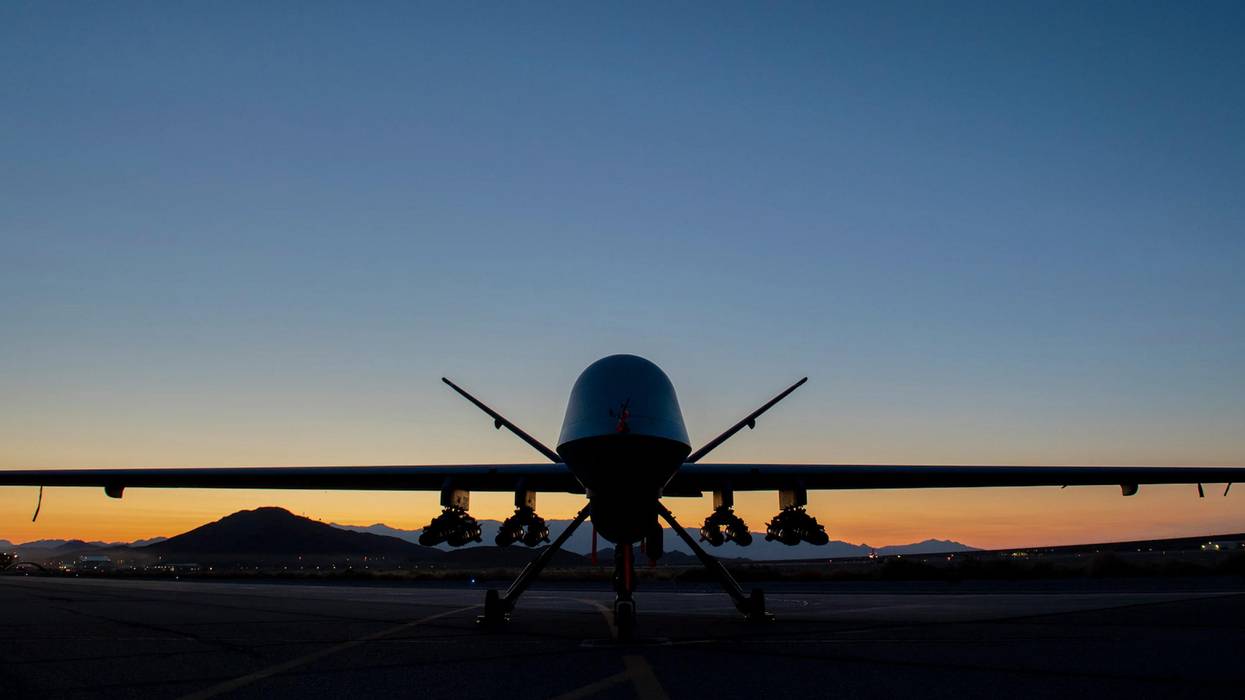
Two dozen Somali and international human rights groups on Monday asked the Pentagon to "take immediate steps to address the requests of families whose loved ones were killed or injured by U.S. airstrikes in Somalia"—people who often say they're being ignored by American officials.
In a letter to U.S. Defense Secretary Lloyd Austin, the groups cite recent Intercept reporting that "illustrates how in multiple cases of civilian harm in Somalia confirmed by the U.S. government, civilian victims, survivors, and their families have yet to receive answers, acknowledgment, and amends despite their sustained efforts to reach authorities over several years."
The letter highlights victims including Luul Dahir Mohamed, a 22-year-old Somali woman who was killed along with her 4-year-old daughter Mariam Shilow Muse in an April 2018 U.S. drone strike in El Buur. Luul's brother Abubakar Dahir Mohamed said that despite confirming their deaths and admitting they were civilians, the U.S. military has yet to provide the family with a "substantive reply."
"Since the strike, our family has been broken apart. It has been more than five years since it happened, but we have not been able to move on," Abubakar Dahir Mohamed wrote in an opinion piece published last week by The Continent. "Even as we have contacted [the U.S. government] in every way we know how, we have never been able to even start a process of getting justice. The U.S. has never even acknowledged our existence."
The groups' letter asserts that "the U.S. response thus far stands in stark contrast to this administration's stated priorities of mitigating, responding to, and learning from civilian harm."
Declaring that "the protection of civilians is a strategic priority as well as a moral imperative," the Pentagon last year
published its Civilian Harm Mitigation and Response Action Plan (CHMR-AP), which includes stated commitments to improving commanders' understanding of civilian environments, developing standardized incident reporting and data management processes, and enhancing the military's ability to assess and respond when noncombatants are harmed by U.S. attacks.
"In light of these commitments, it is unfathomable that Abubakar and his family have for so long struggled to receive acknowledgment or amends from the United States," the new letter contends. "We urge the Department of Defense to urgently make long-overdue amends in consultation with Abubakar's family and their representatives, including condolence payments and an explanation for why their demands appear to have been ignored until now."
The letter notes that "the Department of Defense has at its disposal $3 million of annual funding provided by the U.S. Congress to make ex gratia payments to civilian victims and survivors of U.S. operations."
However, the signers "know of no cases in which those funds have been used in Somalia, despite the fact that in numerous cases confirmed by the United States, the identities of civilian victims and survivors are known and their contact information has been made available through their own reporting or through civil society representatives."
Living up to the Pentagon's commitment "requires responding to the inquiries of civilians seeking answers and making amends for the life-altering harm they and their families have experienced," the letter asserts. "We urge [U.S. Africa Command] and the Department of Defense to do so immediately."
International groups joining Somali signatories to the letter include Airwars, Amnesty International USA, Center for Civilians in Conflict, the Columbia Law School Human Rights Institute, and Human Rights Watch.
According to Airwars, a U.K.-based monitoring group, hundreds of Somalis—including some civilians—have been killed by U.S. airstrikes this year alone as the Biden administration quietly continues the so-called War on Terror launched in the wake of the September 11, 2001 attacks on the United States.
Airwars said in 2021 that as many as 48,000 civilians in over half a dozen countries have been killed by U.S. airstrikes since 9/11, while the Costs of War Project at Brown University's Watson Institute for International & Public Affairs estimates that more than 430,000 noncombatants have been killed by all sides during the war.

Airwars noted that this is "the most named victims we have ever monitored in a single event."
Israel's war on Gaza has killed more than 11,000 Palestinians, including over 100 civilian victims of a single Israeli bombing in the densely populated Jabalia refugee camp on October 31 who were publicly identified on Thursday by the U.K.-based watchdog Airwars.
The group identified 116 names of civilians killed in the strike—including 10 cases with the death of multiple family members, three of which reportedly involved entire families being wiped out. The estimated civilian death toll is 126-136, including 69 children.
Airwars noted on social media that this is "the most named victims we have ever monitored in a single event," and "almost every named victim we found died along with at least one other family member."
As Guardian reporting cited by Airwars detailed:
A spokesperson for the Israeli military said the attack had been authorized to assassinate a senior Hamas commander and destroy his base. IDF spokesperson Daniel Hagari named the target as Ibrahim Biari, commander of Central Jabaliya Battalion, who he said had been leading fighting in northern Gaza from a network of tunnels under the camp.
Hagari declined to comment on how many munitions, or which types, were used to target the camp, or identify which craters were caused by tunnel collapses. He said Israel would provide some of these details at a later date.
But a visual analysis by The Guardian has identified at least five craters in the densely populated refugee camp, which weapons experts said were left by the use of multiple JDAMs—joint direct attack munitions—in the airstrike.
"Hamas spokesperson Hazem Qassem denied any senior commander there and called the claim an Israeli pretext for killing civilians," according to Reuters.
Ahmad al-Kahlout, a spokesperson for the Hamas-controlled Gaza Interior Ministry in Gaza, told reporters at the time that "these buildings house hundreds of citizens. The occupation's air force destroyed this district with six U.S.-made bombs. It is the latest massacre caused by Israeli aggression on the Gaza Strip."
Hagari claimed the IDF killed "scores" of militants alongside Biari.
"With ambiguity around the exact number of militants killed, Airwars has applied a 12-24 combatant casualty range to account for comments such as 'dozens' of targets killed," the watchdog said.
Those in the camp remain at risk. Middle East Eye reported Wednesday that "renewed heavy Israeli shelling has targeted residential homes in the Jabalia refugee camp. Footage showed blocks falling to the ground and survivors digging in the rubble with their hands to retrieve dead bodies."
The IDF strikes on Jabalia have been globally condemned as war crimes—as have various other Israeli actions since October 7, when the nation launched what experts are calling a "genocidal" war in response to a Hamas-led attack.
Throughout Israel's bombing campaign and ground operations in Gaza—which along with killing and wounding thousands of civilians have destroyed civilian infrastructure and displaced around three-quarters of the population—global calls for a cease-fire have mounted.
There have also been growing demands for International Criminal Court action. Rutgers Law School professor and Just Security executive editor Adil Haque tagged the ICC prosecutor, Karim A. A. Khan, in a social media post about the Airwars analysis.
Khan last month asked civil society groups "to send us any and all evidence that underpins their reports or their communiques or their notices that they issue" on Gaza, explaining that "reports by themselves are, of course, not evidence and I cannot and will not act pursuant to my oath of office without reliable evidence that we can validate that can stand up in a court of law."

"Britain claims a 'perfect' war against Islamic State in Iraq," said a report co-author. "It isn't credible, and it isn't true."
British airstrikes targeting Islamic State militants in Iraq and Syria likely killed dozens of noncombatants despite claims by U.K. military leaders that no civilians died during such bombings, a major investigation by the monitor group Airwars and The Guardian revealed on Tuesday.
"Britain claims a 'perfect' war against Islamic State in Iraq. Thousands of missiles fired, thousands of fighters killed, and not a single civilian harmed," Guardian senior international affairs reporter and report co-author Emma Graham-Harrison tweeted. "It isn't credible, and it isn't true."
Airwars obtained via Freedom of Information Act requests previously classified documents from which the group identified eight airstrikes that may have been carried out by U.K. warplanes in which at least 32 civilians were killed.
"Working with The Guardian, we visited Iraq to search for the victims mentioned in the original casualty allegations and piece together what happened," said Airwars. "One of those we found was the Younis family in Mosul."
Using declassified reports, coalition statements, survivor and other witness interviews, and 3D modeling, Airwars reconstructed the November 29, 2016 strike that killed a 6-year-old member of the Younis family in the Iraqi city.
"We found that shortly before 4:00 pm a mission commander requested a strike on ISIS militants firing at Iraqi allies. After the strike was approved, coalition analysts reported losing sight of their initial targets," the group said. "They ultimately identified another group of males on the sidewalk carrying a 'possible' weapon."
Around this time, Enam Younis and her children left their home "looking for safety a few streets away. Both Enam and her father said there were no ISIS fighters within 30 meters. As they walked past the door of the neighboring house, the missile detonated."
As The Guardian reports:
Enam Younis, 31 at the time, was thrown to the ground by the blast and has never walked again. Her older daughter, Taiba, 6, inquisitive and desperate to start school, was killed instantly. Zahra, just 3, was hurled over a fence. She survived but was peppered with shrapnel that tore into her stomach and is still lodged deep in her skull. Doctors have said that if it moves, it could cause devastating brain injury.
There was a third child, Ali, a toddler too young to walk, who was shielded from the drone cameras—and the worst of the blast—by his mother's arms, but who still lost part of a foot and hand.
Younis was taken out of Mosul for treatment and even six years later, her memories are too painful for her to return to the city she called home. "It is still impossible for me to think about going to Mosul now," she said weeping. "I didn't even visit my daughter's grave. I can't do it."
A U.K. Ministry of Defense spokesperson declined to confirm or deny whether British forces carried out any of the airstrikes detailed in the investigation while insisting that "there is no evidence or indication that civilian casualties were caused by strikes in Syria and Iraq."
"The U.K. always minimizes the risk of civilian casualties through our rigorous processes and carefully examines a range of evidence to do this, including comprehensive analysis of the mission data for every strike," the spokesperson told The Guardian.
However, according to Airwars:
Politicians, campaigners, and civil society groups have consistently raised concerns about the U.K.'s lack of civilian harm monitoring and accountability in Iraq and Syria. The Netherlands has since paid millions in compensation to victims of its strikes, while the United States has launched major policy reforms to learn the lessons of the campaign. The U.K. remains an outlier, claiming it had robust mechanisms for monitoring the impact of its strikes—including post-strike battle damage assessments—and refusing to review its policies.
Airwars has also accused U.S. officials of habitually undercounting the number of civilians killed by American bombs and bullets.
The report notes that while "civilian victims of U.K. airstrikes can theoretically claim condolence payments from the British government," those attempting to do so "would face severe procedural and legal hurdles."
"The U.K. has not publicly compensated a single victim of a British airstrike and there is no clear process for victims and their families to apply," Airwars said.
The U.S.-led coalition victory over ISIS was achieved at a tremendous cost of civilian life. Cities, towns, and villages including Mosul and Raqqa, Syria were largely reduced to rubble.
Airwars estimates that between 8,197 and 13,254 Iraqi and Syrian civilians have been killed by U.S.-led coalition forces in 1,525 separate strikes since 2014. This figure stands in stark contrast with a coalition estimate of 1,437 civilians killed in 342 separate incidents.
Since the U.S.-led invasion of Iraq 20 years ago, between 550,000 and 580,000 Iraqis and Syrians have died, according to Airwars.