SUBSCRIBE TO OUR FREE NEWSLETTER
Daily news & progressive opinion—funded by the people, not the corporations—delivered straight to your inbox.
5
#000000
#FFFFFF
To donate by check, phone, or other method, see our More Ways to Give page.

Shibley Telhami and Michael Hammer have a new commentary out based on their polling at the University of Maryland’s Critical Issues Poll during the past year. One of the three issues they address is Israel/ Palestine.
They found that 62% of Americans have no idea what Zionism is. Zionism is, of course, a form of Jewish nationalism born in Central Europe in the late 19th century, which seeks to turn the Jewish religion into a platform for a state, and which excludes non-Jews from sovereignty over territory claimed by this Jewish state.
In the case of Palestine, this ideology has produced the statelessness of Palestinians under Israeli occupation and has made citizens of Israel of Palestinian heritage into second-class citizens. That is, Zionism is akin to other ethnic supremacist ideologies such as white nationalism or the Baathist form of Arab nationalism (which made Kurds second-class citizens in Iraq and perpetuated their non-citizen status in Syria).
Americans are not being educated about the world in which they live, which is consequential for our own democracy. If we are simply ignorant, it is more likely that we will get policy wrong
The mantra often found among US politicians, that Israel must be democratic and Jewish, reflects the ethnic supremacism implicit in Zionist thinking. What would happen, for instance, if the proportion of Israelis of non-Jewish heritage rose to become a majority? If the state must be “Jewish,” this development would presumably require the expulsion or disenfranchisement of non-Jews.
Such demographic developments are not theoretical but are apparent in the contemporary world. Lebanese Christians were 51% of Lebanon’s population in 1930 but probably only 22% or so today.
Saying that Israel must be democratic and Jewish is like saying the United States must be democratic and white or democratic and Christian. The second, ethnic supremacist, demand is profoundly undemocratic and so the second part of the phrase stealthily negates the first.
Joe Biden says he is a Zionist, and given his behavior during the past three months, I think we have to conclude that he is an extreme sort of Zionist. It is baffling that the overwhelming majority of Americans doesn’t even know what he means when he says this, or what the ideology is of the country that receives more US aid than any other in the world.
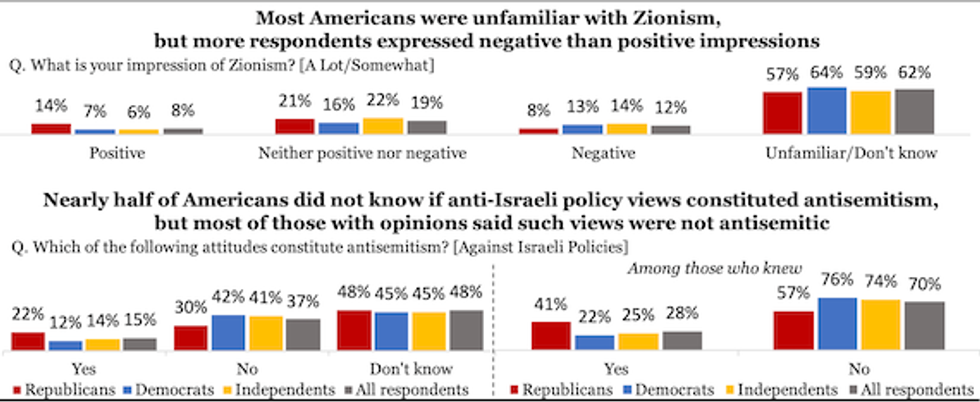
Interestingly, 12% of Americans have a negative perception of Zionism, and 8% have a positive one. Some 19% don’t care one way or another. Presumably this 39% comprises the bulk of those who say they know what Zionism is.
Americans who view Zionism negatively are more likely to be Democrats or Independents than Republicans, though the spread is not that great (8% are Republicans, 13% Democrats, 14% independents).
Some 15% of Americans believe that criticizing Israeli policies is a form of antisemitism (bigotry toward Jews). Only 37% say that such criticism does not constitute anti-Jewish prejudice. 48% don’t know.
If we zero in on the 52% who had an opinion on the matter, 70% said that criticizing Israel does not amount to being prejudiced toward Jews. It is worrying, however, that 28% of those who said they knew the answer to the question believe that the only way to avoid anti-Jewish bigotry is to be silent about Israeli policies and actions.
This issue is of the utmost importance, since 38 states have passed laws forbidding the boycott of Israel and punishing it by denial of state government contracts (including speaking fees to professors and journalists and writers). That is, the belief that you can’t criticize Israel is undermining basic first amendment freedoms of Americans, among them the freedom to boycott enterprises with which they disagree. The Civil Rights movement probably could not have succeeded if it had been illegal to boycott white-owned businesses practicing segregation.
The United States and France are characterized by civic nationalism, or at least that is their constitutional tradition. As long as people are loyal to the Constitution in each country, their ethnicity ideally shouldn’t matter in the law. Obviously, it does matter, de facto, but even so the terms can change. See, e.g., Barack Obama, who probably could not have been president of the USA until the 21st century. At that point, we were truer to our constitutional tradition of civic nationalism than we had earlier been. Progress is possible in civic nationalism in a way that ethnonationalism forestalls.
The big takeaway from the University of Maryland poll for me is that the corporate news media have again failed to do their job. Americans are not being educated about the world in which they live, which is consequential for our own democracy. If we are simply ignorant, it is more likely that we will get policy wrong and that we will give away our birthright as a free people with a Bill of Rights.
Shibley Telhami and Michael Hammer have a new commentary out based on their polling at the University of Maryland’s Critical Issues Poll during the past year. One of the three issues they address is Israel/ Palestine.
They found that 62% of Americans have no idea what Zionism is. Zionism is, of course, a form of Jewish nationalism born in Central Europe in the late 19th century, which seeks to turn the Jewish religion into a platform for a state, and which excludes non-Jews from sovereignty over territory claimed by this Jewish state.
In the case of Palestine, this ideology has produced the statelessness of Palestinians under Israeli occupation and has made citizens of Israel of Palestinian heritage into second-class citizens. That is, Zionism is akin to other ethnic supremacist ideologies such as white nationalism or the Baathist form of Arab nationalism (which made Kurds second-class citizens in Iraq and perpetuated their non-citizen status in Syria).
Americans are not being educated about the world in which they live, which is consequential for our own democracy. If we are simply ignorant, it is more likely that we will get policy wrong
The mantra often found among US politicians, that Israel must be democratic and Jewish, reflects the ethnic supremacism implicit in Zionist thinking. What would happen, for instance, if the proportion of Israelis of non-Jewish heritage rose to become a majority? If the state must be “Jewish,” this development would presumably require the expulsion or disenfranchisement of non-Jews.
Such demographic developments are not theoretical but are apparent in the contemporary world. Lebanese Christians were 51% of Lebanon’s population in 1930 but probably only 22% or so today.
Saying that Israel must be democratic and Jewish is like saying the United States must be democratic and white or democratic and Christian. The second, ethnic supremacist, demand is profoundly undemocratic and so the second part of the phrase stealthily negates the first.
Joe Biden says he is a Zionist, and given his behavior during the past three months, I think we have to conclude that he is an extreme sort of Zionist. It is baffling that the overwhelming majority of Americans doesn’t even know what he means when he says this, or what the ideology is of the country that receives more US aid than any other in the world.
Interestingly, 12% of Americans have a negative perception of Zionism, and 8% have a positive one. Some 19% don’t care one way or another. Presumably this 39% comprises the bulk of those who say they know what Zionism is.
Americans who view Zionism negatively are more likely to be Democrats or Independents than Republicans, though the spread is not that great (8% are Republicans, 13% Democrats, 14% independents).
Some 15% of Americans believe that criticizing Israeli policies is a form of antisemitism (bigotry toward Jews). Only 37% say that such criticism does not constitute anti-Jewish prejudice. 48% don’t know.
If we zero in on the 52% who had an opinion on the matter, 70% said that criticizing Israel does not amount to being prejudiced toward Jews. It is worrying, however, that 28% of those who said they knew the answer to the question believe that the only way to avoid anti-Jewish bigotry is to be silent about Israeli policies and actions.
This issue is of the utmost importance, since 38 states have passed laws forbidding the boycott of Israel and punishing it by denial of state government contracts (including speaking fees to professors and journalists and writers). That is, the belief that you can’t criticize Israel is undermining basic first amendment freedoms of Americans, among them the freedom to boycott enterprises with which they disagree. The Civil Rights movement probably could not have succeeded if it had been illegal to boycott white-owned businesses practicing segregation.
The United States and France are characterized by civic nationalism, or at least that is their constitutional tradition. As long as people are loyal to the Constitution in each country, their ethnicity ideally shouldn’t matter in the law. Obviously, it does matter, de facto, but even so the terms can change. See, e.g., Barack Obama, who probably could not have been president of the USA until the 21st century. At that point, we were truer to our constitutional tradition of civic nationalism than we had earlier been. Progress is possible in civic nationalism in a way that ethnonationalism forestalls.
The big takeaway from the University of Maryland poll for me is that the corporate news media have again failed to do their job. Americans are not being educated about the world in which they live, which is consequential for our own democracy. If we are simply ignorant, it is more likely that we will get policy wrong and that we will give away our birthright as a free people with a Bill of Rights.
Shibley Telhami and Michael Hammer have a new commentary out based on their polling at the University of Maryland’s Critical Issues Poll during the past year. One of the three issues they address is Israel/ Palestine.
They found that 62% of Americans have no idea what Zionism is. Zionism is, of course, a form of Jewish nationalism born in Central Europe in the late 19th century, which seeks to turn the Jewish religion into a platform for a state, and which excludes non-Jews from sovereignty over territory claimed by this Jewish state.
In the case of Palestine, this ideology has produced the statelessness of Palestinians under Israeli occupation and has made citizens of Israel of Palestinian heritage into second-class citizens. That is, Zionism is akin to other ethnic supremacist ideologies such as white nationalism or the Baathist form of Arab nationalism (which made Kurds second-class citizens in Iraq and perpetuated their non-citizen status in Syria).
Americans are not being educated about the world in which they live, which is consequential for our own democracy. If we are simply ignorant, it is more likely that we will get policy wrong
The mantra often found among US politicians, that Israel must be democratic and Jewish, reflects the ethnic supremacism implicit in Zionist thinking. What would happen, for instance, if the proportion of Israelis of non-Jewish heritage rose to become a majority? If the state must be “Jewish,” this development would presumably require the expulsion or disenfranchisement of non-Jews.
Such demographic developments are not theoretical but are apparent in the contemporary world. Lebanese Christians were 51% of Lebanon’s population in 1930 but probably only 22% or so today.
Saying that Israel must be democratic and Jewish is like saying the United States must be democratic and white or democratic and Christian. The second, ethnic supremacist, demand is profoundly undemocratic and so the second part of the phrase stealthily negates the first.
Joe Biden says he is a Zionist, and given his behavior during the past three months, I think we have to conclude that he is an extreme sort of Zionist. It is baffling that the overwhelming majority of Americans doesn’t even know what he means when he says this, or what the ideology is of the country that receives more US aid than any other in the world.
Interestingly, 12% of Americans have a negative perception of Zionism, and 8% have a positive one. Some 19% don’t care one way or another. Presumably this 39% comprises the bulk of those who say they know what Zionism is.
Americans who view Zionism negatively are more likely to be Democrats or Independents than Republicans, though the spread is not that great (8% are Republicans, 13% Democrats, 14% independents).
Some 15% of Americans believe that criticizing Israeli policies is a form of antisemitism (bigotry toward Jews). Only 37% say that such criticism does not constitute anti-Jewish prejudice. 48% don’t know.
If we zero in on the 52% who had an opinion on the matter, 70% said that criticizing Israel does not amount to being prejudiced toward Jews. It is worrying, however, that 28% of those who said they knew the answer to the question believe that the only way to avoid anti-Jewish bigotry is to be silent about Israeli policies and actions.
This issue is of the utmost importance, since 38 states have passed laws forbidding the boycott of Israel and punishing it by denial of state government contracts (including speaking fees to professors and journalists and writers). That is, the belief that you can’t criticize Israel is undermining basic first amendment freedoms of Americans, among them the freedom to boycott enterprises with which they disagree. The Civil Rights movement probably could not have succeeded if it had been illegal to boycott white-owned businesses practicing segregation.
The United States and France are characterized by civic nationalism, or at least that is their constitutional tradition. As long as people are loyal to the Constitution in each country, their ethnicity ideally shouldn’t matter in the law. Obviously, it does matter, de facto, but even so the terms can change. See, e.g., Barack Obama, who probably could not have been president of the USA until the 21st century. At that point, we were truer to our constitutional tradition of civic nationalism than we had earlier been. Progress is possible in civic nationalism in a way that ethnonationalism forestalls.
The big takeaway from the University of Maryland poll for me is that the corporate news media have again failed to do their job. Americans are not being educated about the world in which they live, which is consequential for our own democracy. If we are simply ignorant, it is more likely that we will get policy wrong and that we will give away our birthright as a free people with a Bill of Rights.