5
#000000
#FFFFFF
To donate by check, phone, or other method, see our More Ways to Give page.
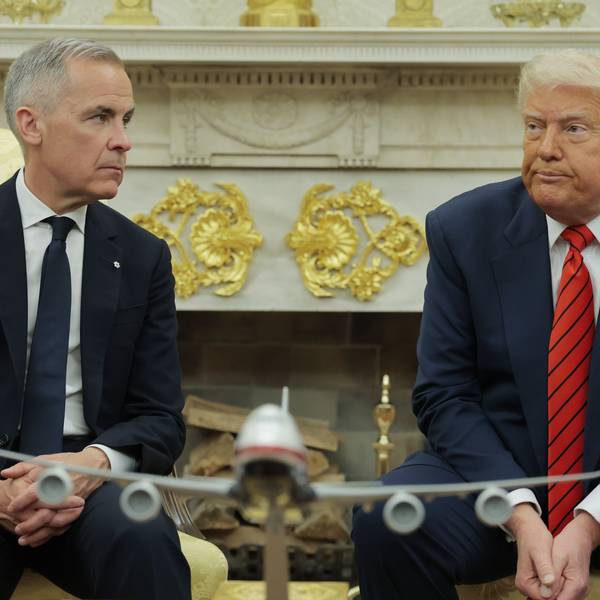
After pushing through one of the more regressive tax cuts in history back in 2017, President Donald Trump promised, on taking office in January 2025, that his new regime of onerous tariffs would be different. Foreigners would pay them, American consumers would be held harmless, and American manufacturing would bloom anew.
In the real world, of course, companies routinely pass tariffs on to American consumers in the form of higher retail prices, and it’s generally agreed that this is what happened when Trump’s tariff regime took effect. But after the Supreme Court found most of Trump’s tariffs to be illegal and ordered that they be refunded to importing companies, those refunds have not generally been passed onto consumers, as a series of candid corporate earnings calls in recent months have demonstrated.
In other words, working Americans, who make up most of the nation’s consumers, paid for checks that are now being written to corporations and that will enrich their (mostly wealthy) shareholders. Trump’s tariffs have played out as a straightforward redistribution of income from ordinary Americans to corporations, much like the two other major tax cuts he’s pushed through as president.
Of course, this is not how Trump marketed his trade policies.
Because he chose instead to levy these tariffs using authority the law simply doesn’t give him, the Trump tariff experiment now amounts to a multibillion-dollar transfer of cash from working families to shareholders.
The administration promised, at various points, that the new tariff revenue would be enough to replace the entire federal income tax, boost military spending by 50%, pay a $2,000 dividend to every American, and somehow simultaneously reduce the national debt.
The court’s February decision ruled that the tariffs—imposed by Trump under the International Emergency Economic Powers Act (IEEPA)—were illegal and must be refunded to the companies that had initially paid them. This was no surprise—the IEEPA was enacted in 1977 to restrict presidential power, not expand it. The decision meant that fully $166 billion, well over half of the additional tariffs collected to date by the Trump administration, must be refunded.
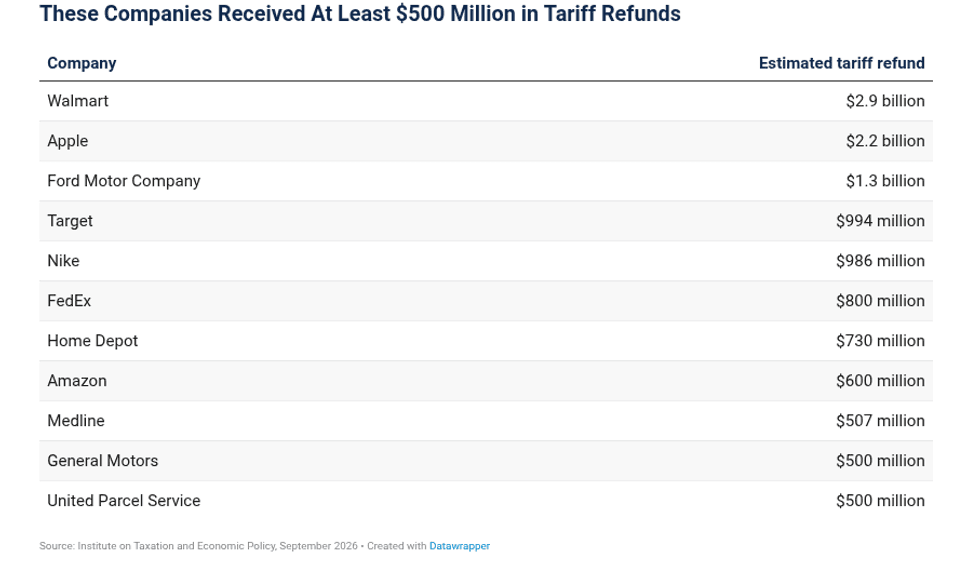
For the millions of Americans who saw the prices of almost everything they buy increased by tariffs, the obvious question was how—if at all—these companies would pass through their tariff refunds to consumers. But as a series of corporate earnings calls have made clear over the past several weeks, in general these corporations are treating the tariff refunds—which often come with interest paid on top—not as something they should duly pass on to consumers, but a way of padding their bottom line. And this is true even of companies that acknowledged raising prices last year to offset the tariffs.
For example, in an earnings call back in summer 2025, a Nike executive estimated the company would see a tariff impact of around $1 billion, and announced that it “intend[s] to fully mitigate the impact” of the tariffs with a series of steps including “surgical price increase in the United States.” The $5 to $10 price increases introduced by the company that summer were transparently Nike’s “surgical” way of passing the buck to consumers.
Yet when Nike announced earlier this summer that it would see close to a $1 billion tariff refund, company officials simply noted that this “unplanned benefit” would boost the company’s earnings for the quarter. As a result, consumers have filed a class-action suit against Nike for extracting a double benefit from the Trump tariffs—first boosting shoe prices to offset the cost of the tariffs and then pocketing the tariff refunds.
Some companies claim that part of their refunds will lower prices for consumers going forward, but this is meaningless spin that is divorced from how prices are set. Receiving unexpected cash from the government does not create an incentive for a company to charge customers less for its products than the market will bear. But several corporations are making this claim to distract the public from their windfall.
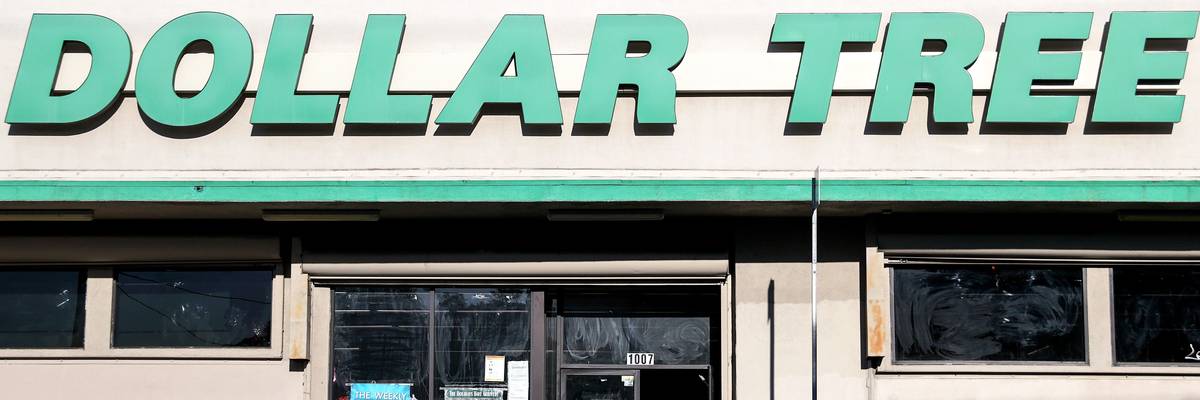
For example, Dollar Tree recently reported it will receive $383 million in tariff refunds and said that $22 million of that $383 million in refunds will go toward “higher markdowns… related to our tariff reinvestment initiative.” While some of the remaining refund will go toward “customer messaging and marketing, and incremental improvements in store conditions and operations,” Dollar Tree has not said how much more it will devote to price markdowns. But the company’s leaders were far less squishy about announcing a $605 million stock buyback for the quarter—more than 27 times the $22 million it recorded for tariff-related markdowns.
Other big companies have vaguely promised that consumers will benefit from the giant refund checks without saying how much. Walmart says it is using refunds to support “price leadership.” Target says it will “invest in price.” Lowe’s initially promised “customer-facing actions” that will “reinforce our value proposition,” although the company subsequently pivoted toward saying its leaders “feel strongly that we want to deliver strong profitability for our shareholders.” But none have said what share of their tariff refund will actually make its way back to consumers. Levi Strauss, having previously admitted it would be taking “thoughtful, targeted pricing actions” in response to the tariffs, tops them all by saying of its $80 million tariff refund windfall only that “we haven’t figured out what to do with it.” (Levi Strauss now also faces a proposed class-action suit for not returning tariffs to consumers.)
Some companies aren’t even bothering to pretend they’re interested in offering relief to their customers. Shoe maker Steve Madden, which previously acknowledged “adjusting pricing” in response to the tariffs and subsequently noted it was “pleased overall with consumer acceptance of the price increases,” now says it will use its $92 million in tariff refunds to “pay down debt.”
This unmistakable shift of cash away from consumers and into the pockets of corporations and their shareholders is, on one level, not the companies’ fault. Once companies incorporated their tariffs into price increases across all the items they sell, there was no practical way to identify exactly which consumers bore which portion of those tariffs, or to reverse those price increases dollar for dollar: That egg can’t be unscrambled.
The ultimate responsibility for this regressive tax shift falls on the Trump administration, which chose to impose these tariffs unilaterally, without seeking the congressional authorization the law required. If Trump had gotten the approval he needed from Congress to levy these tariffs, this whole episode would merely have been an economically catastrophic, regressive tax hike on consumers.
But because he chose instead to levy these tariffs using authority the law simply doesn’t give him, the Trump tariff experiment now amounts to a multibillion-dollar transfer of cash from working families to shareholders. In that sense, Trump’s illegal tariffs are beginning to look a lot like his much-ballyhooed tax cuts of 2017 and 2025: Working families were promised big tax cuts, but corporations and their shareholders ultimately made out best.
After pushing through one of the more regressive tax cuts in history back in 2017, President Donald Trump promised, on taking office in January 2025, that his new regime of onerous tariffs would be different. Foreigners would pay them, American consumers would be held harmless, and American manufacturing would bloom anew.
In the real world, of course, companies routinely pass tariffs on to American consumers in the form of higher retail prices, and it’s generally agreed that this is what happened when Trump’s tariff regime took effect. But after the Supreme Court found most of Trump’s tariffs to be illegal and ordered that they be refunded to importing companies, those refunds have not generally been passed onto consumers, as a series of candid corporate earnings calls in recent months have demonstrated.
In other words, working Americans, who make up most of the nation’s consumers, paid for checks that are now being written to corporations and that will enrich their (mostly wealthy) shareholders. Trump’s tariffs have played out as a straightforward redistribution of income from ordinary Americans to corporations, much like the two other major tax cuts he’s pushed through as president.
Of course, this is not how Trump marketed his trade policies.
Because he chose instead to levy these tariffs using authority the law simply doesn’t give him, the Trump tariff experiment now amounts to a multibillion-dollar transfer of cash from working families to shareholders.
The administration promised, at various points, that the new tariff revenue would be enough to replace the entire federal income tax, boost military spending by 50%, pay a $2,000 dividend to every American, and somehow simultaneously reduce the national debt.
The court’s February decision ruled that the tariffs—imposed by Trump under the International Emergency Economic Powers Act (IEEPA)—were illegal and must be refunded to the companies that had initially paid them. This was no surprise—the IEEPA was enacted in 1977 to restrict presidential power, not expand it. The decision meant that fully $166 billion, well over half of the additional tariffs collected to date by the Trump administration, must be refunded.
For the millions of Americans who saw the prices of almost everything they buy increased by tariffs, the obvious question was how—if at all—these companies would pass through their tariff refunds to consumers. But as a series of corporate earnings calls have made clear over the past several weeks, in general these corporations are treating the tariff refunds—which often come with interest paid on top—not as something they should duly pass on to consumers, but a way of padding their bottom line. And this is true even of companies that acknowledged raising prices last year to offset the tariffs.
For example, in an earnings call back in summer 2025, a Nike executive estimated the company would see a tariff impact of around $1 billion, and announced that it “intend[s] to fully mitigate the impact” of the tariffs with a series of steps including “surgical price increase in the United States.” The $5 to $10 price increases introduced by the company that summer were transparently Nike’s “surgical” way of passing the buck to consumers.
Yet when Nike announced earlier this summer that it would see close to a $1 billion tariff refund, company officials simply noted that this “unplanned benefit” would boost the company’s earnings for the quarter. As a result, consumers have filed a class-action suit against Nike for extracting a double benefit from the Trump tariffs—first boosting shoe prices to offset the cost of the tariffs and then pocketing the tariff refunds.
Some companies claim that part of their refunds will lower prices for consumers going forward, but this is meaningless spin that is divorced from how prices are set. Receiving unexpected cash from the government does not create an incentive for a company to charge customers less for its products than the market will bear. But several corporations are making this claim to distract the public from their windfall.
For example, Dollar Tree recently reported it will receive $383 million in tariff refunds and said that $22 million of that $383 million in refunds will go toward “higher markdowns… related to our tariff reinvestment initiative.” While some of the remaining refund will go toward “customer messaging and marketing, and incremental improvements in store conditions and operations,” Dollar Tree has not said how much more it will devote to price markdowns. But the company’s leaders were far less squishy about announcing a $605 million stock buyback for the quarter—more than 27 times the $22 million it recorded for tariff-related markdowns.
Other big companies have vaguely promised that consumers will benefit from the giant refund checks without saying how much. Walmart says it is using refunds to support “price leadership.” Target says it will “invest in price.” Lowe’s initially promised “customer-facing actions” that will “reinforce our value proposition,” although the company subsequently pivoted toward saying its leaders “feel strongly that we want to deliver strong profitability for our shareholders.” But none have said what share of their tariff refund will actually make its way back to consumers. Levi Strauss, having previously admitted it would be taking “thoughtful, targeted pricing actions” in response to the tariffs, tops them all by saying of its $80 million tariff refund windfall only that “we haven’t figured out what to do with it.” (Levi Strauss now also faces a proposed class-action suit for not returning tariffs to consumers.)
Some companies aren’t even bothering to pretend they’re interested in offering relief to their customers. Shoe maker Steve Madden, which previously acknowledged “adjusting pricing” in response to the tariffs and subsequently noted it was “pleased overall with consumer acceptance of the price increases,” now says it will use its $92 million in tariff refunds to “pay down debt.”
This unmistakable shift of cash away from consumers and into the pockets of corporations and their shareholders is, on one level, not the companies’ fault. Once companies incorporated their tariffs into price increases across all the items they sell, there was no practical way to identify exactly which consumers bore which portion of those tariffs, or to reverse those price increases dollar for dollar: That egg can’t be unscrambled.
The ultimate responsibility for this regressive tax shift falls on the Trump administration, which chose to impose these tariffs unilaterally, without seeking the congressional authorization the law required. If Trump had gotten the approval he needed from Congress to levy these tariffs, this whole episode would merely have been an economically catastrophic, regressive tax hike on consumers.
But because he chose instead to levy these tariffs using authority the law simply doesn’t give him, the Trump tariff experiment now amounts to a multibillion-dollar transfer of cash from working families to shareholders. In that sense, Trump’s illegal tariffs are beginning to look a lot like his much-ballyhooed tax cuts of 2017 and 2025: Working families were promised big tax cuts, but corporations and their shareholders ultimately made out best.
After pushing through one of the more regressive tax cuts in history back in 2017, President Donald Trump promised, on taking office in January 2025, that his new regime of onerous tariffs would be different. Foreigners would pay them, American consumers would be held harmless, and American manufacturing would bloom anew.
In the real world, of course, companies routinely pass tariffs on to American consumers in the form of higher retail prices, and it’s generally agreed that this is what happened when Trump’s tariff regime took effect. But after the Supreme Court found most of Trump’s tariffs to be illegal and ordered that they be refunded to importing companies, those refunds have not generally been passed onto consumers, as a series of candid corporate earnings calls in recent months have demonstrated.
In other words, working Americans, who make up most of the nation’s consumers, paid for checks that are now being written to corporations and that will enrich their (mostly wealthy) shareholders. Trump’s tariffs have played out as a straightforward redistribution of income from ordinary Americans to corporations, much like the two other major tax cuts he’s pushed through as president.
Of course, this is not how Trump marketed his trade policies.
Because he chose instead to levy these tariffs using authority the law simply doesn’t give him, the Trump tariff experiment now amounts to a multibillion-dollar transfer of cash from working families to shareholders.
The administration promised, at various points, that the new tariff revenue would be enough to replace the entire federal income tax, boost military spending by 50%, pay a $2,000 dividend to every American, and somehow simultaneously reduce the national debt.
The court’s February decision ruled that the tariffs—imposed by Trump under the International Emergency Economic Powers Act (IEEPA)—were illegal and must be refunded to the companies that had initially paid them. This was no surprise—the IEEPA was enacted in 1977 to restrict presidential power, not expand it. The decision meant that fully $166 billion, well over half of the additional tariffs collected to date by the Trump administration, must be refunded.
For the millions of Americans who saw the prices of almost everything they buy increased by tariffs, the obvious question was how—if at all—these companies would pass through their tariff refunds to consumers. But as a series of corporate earnings calls have made clear over the past several weeks, in general these corporations are treating the tariff refunds—which often come with interest paid on top—not as something they should duly pass on to consumers, but a way of padding their bottom line. And this is true even of companies that acknowledged raising prices last year to offset the tariffs.
For example, in an earnings call back in summer 2025, a Nike executive estimated the company would see a tariff impact of around $1 billion, and announced that it “intend[s] to fully mitigate the impact” of the tariffs with a series of steps including “surgical price increase in the United States.” The $5 to $10 price increases introduced by the company that summer were transparently Nike’s “surgical” way of passing the buck to consumers.
Yet when Nike announced earlier this summer that it would see close to a $1 billion tariff refund, company officials simply noted that this “unplanned benefit” would boost the company’s earnings for the quarter. As a result, consumers have filed a class-action suit against Nike for extracting a double benefit from the Trump tariffs—first boosting shoe prices to offset the cost of the tariffs and then pocketing the tariff refunds.
Some companies claim that part of their refunds will lower prices for consumers going forward, but this is meaningless spin that is divorced from how prices are set. Receiving unexpected cash from the government does not create an incentive for a company to charge customers less for its products than the market will bear. But several corporations are making this claim to distract the public from their windfall.
For example, Dollar Tree recently reported it will receive $383 million in tariff refunds and said that $22 million of that $383 million in refunds will go toward “higher markdowns… related to our tariff reinvestment initiative.” While some of the remaining refund will go toward “customer messaging and marketing, and incremental improvements in store conditions and operations,” Dollar Tree has not said how much more it will devote to price markdowns. But the company’s leaders were far less squishy about announcing a $605 million stock buyback for the quarter—more than 27 times the $22 million it recorded for tariff-related markdowns.
Other big companies have vaguely promised that consumers will benefit from the giant refund checks without saying how much. Walmart says it is using refunds to support “price leadership.” Target says it will “invest in price.” Lowe’s initially promised “customer-facing actions” that will “reinforce our value proposition,” although the company subsequently pivoted toward saying its leaders “feel strongly that we want to deliver strong profitability for our shareholders.” But none have said what share of their tariff refund will actually make its way back to consumers. Levi Strauss, having previously admitted it would be taking “thoughtful, targeted pricing actions” in response to the tariffs, tops them all by saying of its $80 million tariff refund windfall only that “we haven’t figured out what to do with it.” (Levi Strauss now also faces a proposed class-action suit for not returning tariffs to consumers.)
Some companies aren’t even bothering to pretend they’re interested in offering relief to their customers. Shoe maker Steve Madden, which previously acknowledged “adjusting pricing” in response to the tariffs and subsequently noted it was “pleased overall with consumer acceptance of the price increases,” now says it will use its $92 million in tariff refunds to “pay down debt.”
This unmistakable shift of cash away from consumers and into the pockets of corporations and their shareholders is, on one level, not the companies’ fault. Once companies incorporated their tariffs into price increases across all the items they sell, there was no practical way to identify exactly which consumers bore which portion of those tariffs, or to reverse those price increases dollar for dollar: That egg can’t be unscrambled.
The ultimate responsibility for this regressive tax shift falls on the Trump administration, which chose to impose these tariffs unilaterally, without seeking the congressional authorization the law required. If Trump had gotten the approval he needed from Congress to levy these tariffs, this whole episode would merely have been an economically catastrophic, regressive tax hike on consumers.
But because he chose instead to levy these tariffs using authority the law simply doesn’t give him, the Trump tariff experiment now amounts to a multibillion-dollar transfer of cash from working families to shareholders. In that sense, Trump’s illegal tariffs are beginning to look a lot like his much-ballyhooed tax cuts of 2017 and 2025: Working families were promised big tax cuts, but corporations and their shareholders ultimately made out best.