

SUBSCRIBE TO OUR FREE NEWSLETTER
Daily news & progressive opinion—funded by the people, not the corporations—delivered straight to your inbox.
5
#000000
#FFFFFF
To donate by check, phone, or other method, see our More Ways to Give page.
Daily news & progressive opinion—funded by the people, not the corporations—delivered straight to your inbox.
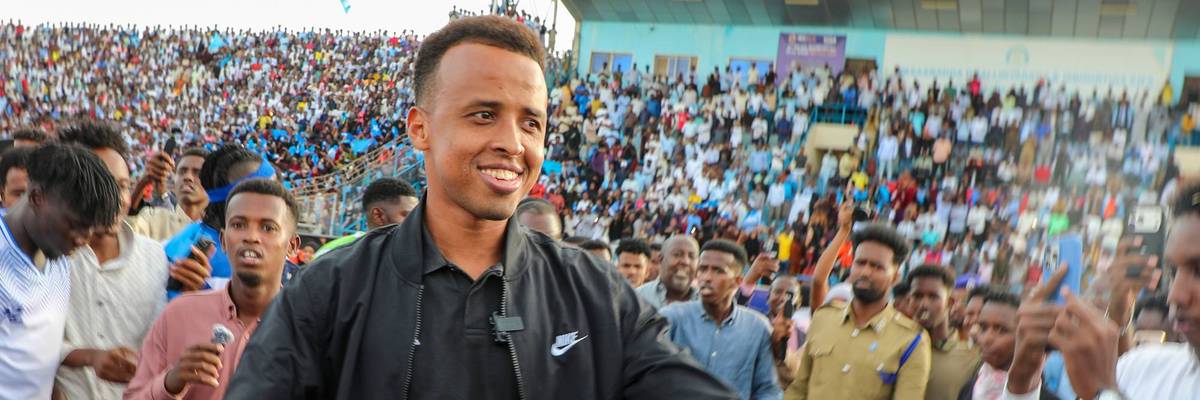
Somali referee Omar Abdulkadir Artan greets fans who show support for him, after he was denied entry into the United States where he had traveled to take part in the World Cup organization and was forced to return to his country, in Mogadishu, Somalia on June 10, 2026.
Preventing fans and players from freely entering the United States, and forcing them to bear the personal cost of policies directed at their governments, produces no discernable security benefit but does produce a steady stream of international criticism.
The 2026 FIFA World Cup has begun on American soil, the first time the United States has hosted the tournament in 32 years. When it concludes, the country will begin preparing for the 2028 Summer Olympics in Los Angeles. In exchange for the privilege of hosting the world’s two largest sporting events, and the enormous revenue they generate, a host nation should ease its visa policy to the fullest extent consistent with ordinary security interests.
Previous World Cup host nations made this the norm. South Africa in 2010 created a dedicated events visa and waived normal fees entirely for ticket holders. Brazil in 2014 created a fee-waived visa category tied directly to match tickets. Russia in 2018 abolished visa requirements entirely for Fan ID holders. Most recently, Qatar in 2022 created a universal entry document for all fans and loosened its terms further mid-tournament.
Instead, the United States has adopted the widest nationality-based exclusion policy since the Chinese Exclusion Act.
Nationals from 39 countries currently face US entry restrictions, ranging from partial limitations to outright bans. Among those 39 are 4 countries whose national teams qualified for the tournament. Haiti and Iran face complete entry bans; Ivory Coast and Senegal face partial restrictions. Although players are exempt from the presidential ban, fans have no pathway to acquire tourist visas to support their teams, player families cannot watch their loved ones play in the biggest match in the world, and local media cannot obtain visas to cover the games stateside.
President Trump has also barred the Iranian national team from sleeping on American soil, requiring the players to overnight in Tijuana and cross the border only to compete.
At the same time, the United States created a system called FIFA PASS, which gives World Cup ticket holders the ability to schedule a prioritized consular interview. So, while some are fully banned, those who are not can expedite their visa appointment. This pattern recurs throughout this administration’s approach: Those fully excluded receive nothing, while those who are not excluded receive an expedited benefit unavailable to the general public.
One might wonder how these bans are allowed in the first place. The legal vehicle is INA section 212(f), a provision historically invoked with restraint and for targeted purposes. Before Donald Trump, presidents used it for specific suspensions tied to specific conduct: Haitians intercepted at sea under Ronald Reagan, maritime interdiction extended under George W. Bush, senior Haitian government officials (affiliated with the 1994 coup) under Bill Clinton, and persons responsible for grave human rights abuses by the Iranian and Syrian governments under Barack Obama. Despite leading a country built by immigrants, Trump has used the same authority to ban ordinary people from large portions of the world. This is unlike anything seen among fellow Five Eyes countries.
Although nationality-based exclusion has historical precedent, the current bans appear to function as instruments of punishment rather than legitimate security measures. The justification typically rests on elevated visa overstay rates or insufficient governmental cooperation, meaning that individual nationals are effectively penalized for the conduct of others. This year’s World Cup will reflect that reality in diminished diversity, and the consequences extend beyond mere attendance. President Trump has also barred the Iranian national team from sleeping on American soil, requiring the players to overnight in Tijuana and cross the border only to compete.
No story captures this more sharply than that of Omar Artan. Named Africa’s best male referee in 2025 and selected by FIFA for the tournament, Artan was set to become the first Somali referee ever to officiate at a World Cup. He cleared the visa process, boarded his flight, and landed in Miami. US Customs and Border Protection denied him entry over unspecified “vetting concerns,” and FIFA removed him from the tournament. He returned home to a hero’s welcome in Mogadishu, received by thousands at the stadium and by Somalia’s prime minister, who wrote that Artan had “already won the hearts of millions.”
As in the first Trump administration, serious questions remain about whether these bans serve any genuine security purpose. Instead, they appear to function as diplomatic punishment aimed at governments this administration dislikes. Preventing fans and players from freely entering the United States, and forcing them to bear the personal cost of policies directed at their governments, produces no discernable security benefit. What it does produce is a steady stream of international criticism. On the opening day of a World Cup the United States is hosting, Omar Artan’s story is the image America has projected to the world.
Dear Common Dreams reader, It’s been nearly 30 years since I co-founded Common Dreams with my late wife, Lina Newhouser. We had the radical notion that journalism should serve the public good, not corporate profits. It was clear to us from the outset what it would take to build such a project. No paid advertisements. No corporate sponsors. No millionaire publisher telling us what to think or do. Many people said we wouldn't last a year, but we proved those doubters wrong. Together with a tremendous team of journalists and dedicated staff, we built an independent media outlet free from the constraints of profits and corporate control. Our mission has always been simple: To inform. To inspire. To ignite change for the common good. Building Common Dreams was not easy. Our survival was never guaranteed. When you take on the most powerful forces—Wall Street greed, fossil fuel industry destruction, Big Tech lobbyists, and uber-rich oligarchs who have spent billions upon billions rigging the economy and democracy in their favor—the only bulwark you have is supporters who believe in your work. But here’s the urgent message from me today. It's never been this bad out there. And it's never been this hard to keep us going. At the very moment Common Dreams is most needed, the threats we face are intensifying. We need your support now more than ever. We don't accept corporate advertising and never will. We don't have a paywall because we don't think people should be blocked from critical news based on their ability to pay. Everything we do is funded by the donations of readers like you. When everyone does the little they can afford, we are strong. But if that support retreats or dries up, so do we. Will you donate now to make sure Common Dreams not only survives but thrives? —Craig Brown, Co-founder |
The 2026 FIFA World Cup has begun on American soil, the first time the United States has hosted the tournament in 32 years. When it concludes, the country will begin preparing for the 2028 Summer Olympics in Los Angeles. In exchange for the privilege of hosting the world’s two largest sporting events, and the enormous revenue they generate, a host nation should ease its visa policy to the fullest extent consistent with ordinary security interests.
Previous World Cup host nations made this the norm. South Africa in 2010 created a dedicated events visa and waived normal fees entirely for ticket holders. Brazil in 2014 created a fee-waived visa category tied directly to match tickets. Russia in 2018 abolished visa requirements entirely for Fan ID holders. Most recently, Qatar in 2022 created a universal entry document for all fans and loosened its terms further mid-tournament.
Instead, the United States has adopted the widest nationality-based exclusion policy since the Chinese Exclusion Act.
Nationals from 39 countries currently face US entry restrictions, ranging from partial limitations to outright bans. Among those 39 are 4 countries whose national teams qualified for the tournament. Haiti and Iran face complete entry bans; Ivory Coast and Senegal face partial restrictions. Although players are exempt from the presidential ban, fans have no pathway to acquire tourist visas to support their teams, player families cannot watch their loved ones play in the biggest match in the world, and local media cannot obtain visas to cover the games stateside.
President Trump has also barred the Iranian national team from sleeping on American soil, requiring the players to overnight in Tijuana and cross the border only to compete.
At the same time, the United States created a system called FIFA PASS, which gives World Cup ticket holders the ability to schedule a prioritized consular interview. So, while some are fully banned, those who are not can expedite their visa appointment. This pattern recurs throughout this administration’s approach: Those fully excluded receive nothing, while those who are not excluded receive an expedited benefit unavailable to the general public.
One might wonder how these bans are allowed in the first place. The legal vehicle is INA section 212(f), a provision historically invoked with restraint and for targeted purposes. Before Donald Trump, presidents used it for specific suspensions tied to specific conduct: Haitians intercepted at sea under Ronald Reagan, maritime interdiction extended under George W. Bush, senior Haitian government officials (affiliated with the 1994 coup) under Bill Clinton, and persons responsible for grave human rights abuses by the Iranian and Syrian governments under Barack Obama. Despite leading a country built by immigrants, Trump has used the same authority to ban ordinary people from large portions of the world. This is unlike anything seen among fellow Five Eyes countries.
Although nationality-based exclusion has historical precedent, the current bans appear to function as instruments of punishment rather than legitimate security measures. The justification typically rests on elevated visa overstay rates or insufficient governmental cooperation, meaning that individual nationals are effectively penalized for the conduct of others. This year’s World Cup will reflect that reality in diminished diversity, and the consequences extend beyond mere attendance. President Trump has also barred the Iranian national team from sleeping on American soil, requiring the players to overnight in Tijuana and cross the border only to compete.
No story captures this more sharply than that of Omar Artan. Named Africa’s best male referee in 2025 and selected by FIFA for the tournament, Artan was set to become the first Somali referee ever to officiate at a World Cup. He cleared the visa process, boarded his flight, and landed in Miami. US Customs and Border Protection denied him entry over unspecified “vetting concerns,” and FIFA removed him from the tournament. He returned home to a hero’s welcome in Mogadishu, received by thousands at the stadium and by Somalia’s prime minister, who wrote that Artan had “already won the hearts of millions.”
As in the first Trump administration, serious questions remain about whether these bans serve any genuine security purpose. Instead, they appear to function as diplomatic punishment aimed at governments this administration dislikes. Preventing fans and players from freely entering the United States, and forcing them to bear the personal cost of policies directed at their governments, produces no discernable security benefit. What it does produce is a steady stream of international criticism. On the opening day of a World Cup the United States is hosting, Omar Artan’s story is the image America has projected to the world.
The 2026 FIFA World Cup has begun on American soil, the first time the United States has hosted the tournament in 32 years. When it concludes, the country will begin preparing for the 2028 Summer Olympics in Los Angeles. In exchange for the privilege of hosting the world’s two largest sporting events, and the enormous revenue they generate, a host nation should ease its visa policy to the fullest extent consistent with ordinary security interests.
Previous World Cup host nations made this the norm. South Africa in 2010 created a dedicated events visa and waived normal fees entirely for ticket holders. Brazil in 2014 created a fee-waived visa category tied directly to match tickets. Russia in 2018 abolished visa requirements entirely for Fan ID holders. Most recently, Qatar in 2022 created a universal entry document for all fans and loosened its terms further mid-tournament.
Instead, the United States has adopted the widest nationality-based exclusion policy since the Chinese Exclusion Act.
Nationals from 39 countries currently face US entry restrictions, ranging from partial limitations to outright bans. Among those 39 are 4 countries whose national teams qualified for the tournament. Haiti and Iran face complete entry bans; Ivory Coast and Senegal face partial restrictions. Although players are exempt from the presidential ban, fans have no pathway to acquire tourist visas to support their teams, player families cannot watch their loved ones play in the biggest match in the world, and local media cannot obtain visas to cover the games stateside.
President Trump has also barred the Iranian national team from sleeping on American soil, requiring the players to overnight in Tijuana and cross the border only to compete.
At the same time, the United States created a system called FIFA PASS, which gives World Cup ticket holders the ability to schedule a prioritized consular interview. So, while some are fully banned, those who are not can expedite their visa appointment. This pattern recurs throughout this administration’s approach: Those fully excluded receive nothing, while those who are not excluded receive an expedited benefit unavailable to the general public.
One might wonder how these bans are allowed in the first place. The legal vehicle is INA section 212(f), a provision historically invoked with restraint and for targeted purposes. Before Donald Trump, presidents used it for specific suspensions tied to specific conduct: Haitians intercepted at sea under Ronald Reagan, maritime interdiction extended under George W. Bush, senior Haitian government officials (affiliated with the 1994 coup) under Bill Clinton, and persons responsible for grave human rights abuses by the Iranian and Syrian governments under Barack Obama. Despite leading a country built by immigrants, Trump has used the same authority to ban ordinary people from large portions of the world. This is unlike anything seen among fellow Five Eyes countries.
Although nationality-based exclusion has historical precedent, the current bans appear to function as instruments of punishment rather than legitimate security measures. The justification typically rests on elevated visa overstay rates or insufficient governmental cooperation, meaning that individual nationals are effectively penalized for the conduct of others. This year’s World Cup will reflect that reality in diminished diversity, and the consequences extend beyond mere attendance. President Trump has also barred the Iranian national team from sleeping on American soil, requiring the players to overnight in Tijuana and cross the border only to compete.
No story captures this more sharply than that of Omar Artan. Named Africa’s best male referee in 2025 and selected by FIFA for the tournament, Artan was set to become the first Somali referee ever to officiate at a World Cup. He cleared the visa process, boarded his flight, and landed in Miami. US Customs and Border Protection denied him entry over unspecified “vetting concerns,” and FIFA removed him from the tournament. He returned home to a hero’s welcome in Mogadishu, received by thousands at the stadium and by Somalia’s prime minister, who wrote that Artan had “already won the hearts of millions.”
As in the first Trump administration, serious questions remain about whether these bans serve any genuine security purpose. Instead, they appear to function as diplomatic punishment aimed at governments this administration dislikes. Preventing fans and players from freely entering the United States, and forcing them to bear the personal cost of policies directed at their governments, produces no discernable security benefit. What it does produce is a steady stream of international criticism. On the opening day of a World Cup the United States is hosting, Omar Artan’s story is the image America has projected to the world.

