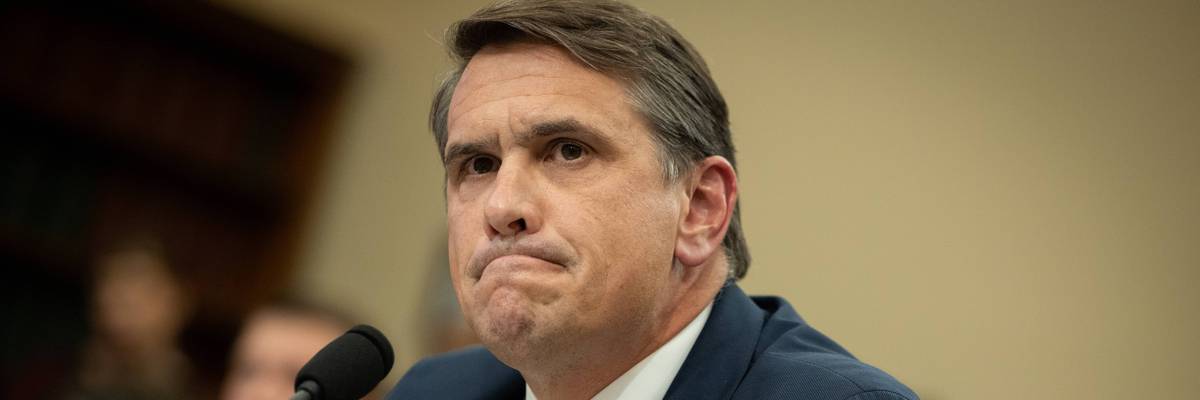
Acting US Attorney General Todd Blanche testifies before a House Committee on Appropriations Subcommittee on Commerce, Justice, Science, and Related Agencies hearing at the Rayburn House Office Building in Washington, DC on June 2, 2026.
Abandoning the 'Anti-Weaponization Fund' Won’t Solve Todd Blanche’s Big Problem
The consequences of a lawyer misleading the court survive the case in which it occurs, and those consequences can be profound.
Between March 2023 and December 2024, Todd Blanche earned millions of dollars as Donald Trump’s personal defense lawyer in the Stormy Daniel hush-money case, the Mar-a-Lago documents case, and the election interference case. As Acting Attorney General of the United States, he’s wading through another Trump mess.
And he’s drowning.
The Fund is Dead; Long Live the Fund
On May 18, Trump’s lawyers and the Department of Justice (DOJ) created an “Anti-Weaponization Fund” to settle President Trump’s frivolous lawsuit against the Internal Revenue Service (IRS). Even Senate Republicans rebelled against the prospect of using $1.776 billion in taxpayer money as Trump’s slush fund to pay January 6 insurrectionists.
To quell the uprising that was threatening Trump’s legislative agenda, Blanche met with Republicans on Capitol Hill. He made things worse as the weeklong Memorial Day break began.
Todd Blanche—who still operates as if he were Trump’s personal attorney—now has stunning legal problems of his own.
Faced with mounting pressure—from the public, congressional Republicans, and two judges who were questioning the fund’s legality—Blanche told a House committee on June 2 that the fund was not moving forward.
Some senators found comfort in Blanche’s assurances. But the same day, Trump was asked by the New York Post in a podcast interview whether he had dropped the Fund.
Trump said, “No, a court ruled against” it.
Asked again about the fund on June 3, Trump answered: “I love it. I think it’s so important.”
But the controversy over the fund’s status is diverting attention from an issue that is much more important to Trump—and a much bigger problem for Blanche: his signature on a document releasing Trump’s potential tax liabilities.
A Phony Lawsuit Leads to a Collusive Settlement
January 29, 2026: Trump filed a lawsuit against the IRS seeking $10 billion. He claimed that a former IRS contractor had illegally obtained access to and disclosed Trump’s tax returns to media outlets.
In the past, the IRS mounted aggressive defenses to similar claims. Following normal procedure, IRS attorneys prepared a 25-page memorandum outlining the flaws in Trump’s lawsuit and recommending a motion to dismiss it. But the Justice Department didn’t even enter an appearance in the case, much less seek dismissal.
Presiding US District Court Judge Kathleen Williams was concerned that there was no “actual adversity” between the parties because Trump was on both sides of the lawsuit: The president (plaintiff) controlled the IRS (defendant). She ordered Trump’s lawyers and the Justice Department to address the obvious conflict of interest by May 20.
May 18: With the court deadline approaching and Blanche’s DOJ struggling internally over a response to Judge Williams’ order, Trump’s lawyers filed a notice of voluntary dismissal. Believing that she had no choice, Judge Williams entered an order dismissing the case. The court observed that “the Notice [of dismissal] does not reference any settlement or include a stipulation of settlement,” and therefore “there is no settlement of record.”
But unbeknownst to Judge Williams, there was a settlement agreement—also dated May 18. In exchange for dismissing his frivolous case, Trump’s Justice Department would create a $1.776 billion “Anti-Weaponization Fund.”
May 19: Another element of the settlement agreement emerged. It gained less attention but was far more important to Trump. Without fanfare, the Justice Department revealed an addendum that contained an extraordinary release in favor of Trump and “related or affiliated individuals or parties…” from any matters “currently pending or that could be pending..." before the IRS or other federal government agencies or departments.
The IRS has been a recurring thorn in Trump’s side. In 2022, two of his organizations were found guilty of tax fraud and falsifying business records. The New York Times estimated that the addendum's release covered audits that could have cost Trump more than $100 million on just one of his properties.
When asked who came up with the terms for the settlement, Blanche denied that he had a role: “The president has outside counsel, and their counsel, the Department of Justice, not me.”
Except Blanche—and only Blanche—signed the addendum sealing the deal.
May 29: Judge Williams reacted to a bipartisan group of 35 former federal judges urging her to reopen Trump’s previously dismissed case. The court concluded that it had been presented with “grievous allegations that Plaintiffs voluntarily dismissed this litigation solely to avoid judicial scrutiny of a lawsuit that ‘was collusive from the start’ and was only filed to provide the imprimatur of legality for an unlawful settlement.” She cited allegations that the IRS did not “‘even try[] to defend against Plaintiffs’ claims’ despite their active opposition to nearly identical claims in other litigation” and that “Plaintiffs’ claims were ‘clearly untimely’ and therefore untenable.”
Judge Williams ordered Trump’s lawyers and the Justice Department to address allegations that they had: 1) filed a collusive suit; 2) premised the earlier dismissal notice on deception; and 3) made the court a victim of fraud.
Footnote two of the court's order focused on Blanche:
This addendum, as the non-party movants point out, may be in conflict with internal Department of Justice policies that require the Department to only enter into compromises that are "specifically limited to the immediate subject matter of the claim which was in fact compromised." The addendum was signed only by the Acting Attorney General [Todd Blanche]. (Emphasis supplied)
Blanche’s Problems Grow
Apart from Blanche’s conflict of interest problem, under DOJ policy dating to 1934, the attorney general doesn’t even have the legal authority to stop civil tax audits. And after the revelations of President Richard Nixon’s abuse of the IRS, it has been “unlawful for the President and any employee of the Executive Office of the President, among other officials, to directly or indirectly request that the IRS terminate any ongoing audit or investigation of any particular taxpayer.” (Emphasis in original)
If Judge Williams concludes that Trump’s lawyers or Justice Department attorneys deceived her in connection with the original dismissal of the case, even voiding the settlement in its entirety won’t end the matter. The consequences of a lawyer misleading the court survive the case in which it occurs, and those consequences can be profound.
The addendum gives Trump a stunning victory. And Todd Blanche—who still operates as if he were Trump’s personal attorney—now has stunning legal problems of his own.
It’s a classic Trump outcome: Trump wins; his loyalist loses.
We are at a crossroads
This country and this world are at a monumental crossroads. In a few short weeks, US voters will have an opportunity to beat back the forces of fascism and confront the billionaires who are rigging the economy, our media system, and our democracy, making it increasingly impossible for ordinary people to get by. We’re not just talking about the election. We’re talking about what must be done once these fascist elements are vanquished from power. We need a bolder set of solutions than what either major party has so far been willing to offer and a working-class movement ready to fight like hell for it. Trump didn't emerge from nowhere. The conditions that fueled MAGA authoritarianism were created by decades of radical neoliberal economic policies and a corrupt political system dominated by corporate interests. They slashed taxes on the super-rich, promising that the benefits would trickle down. They said giveaways to the corporate titans would make life more affordable for the rest of us. It was all bullshit. And when a bitter, betrayed populace searches for someone to blame, right-wing demagogues have little trouble finding scapegoats. People know when they're being lied to, but you won't hear any of this from the corporate media. Only independent journalism—powered and funded by people who believe in building a better world—can deliver truly trustworthy daily news. Our Fall Campaign is underway, and we need your help. To power our newsroom through the rest of the year, we need to raise $125,000 by midnight on October 31. So if you share our vision, please contribute whatever you can to sustain our work. |
Between March 2023 and December 2024, Todd Blanche earned millions of dollars as Donald Trump’s personal defense lawyer in the Stormy Daniel hush-money case, the Mar-a-Lago documents case, and the election interference case. As Acting Attorney General of the United States, he’s wading through another Trump mess.
And he’s drowning.
The Fund is Dead; Long Live the Fund
On May 18, Trump’s lawyers and the Department of Justice (DOJ) created an “Anti-Weaponization Fund” to settle President Trump’s frivolous lawsuit against the Internal Revenue Service (IRS). Even Senate Republicans rebelled against the prospect of using $1.776 billion in taxpayer money as Trump’s slush fund to pay January 6 insurrectionists.
To quell the uprising that was threatening Trump’s legislative agenda, Blanche met with Republicans on Capitol Hill. He made things worse as the weeklong Memorial Day break began.
Todd Blanche—who still operates as if he were Trump’s personal attorney—now has stunning legal problems of his own.
Faced with mounting pressure—from the public, congressional Republicans, and two judges who were questioning the fund’s legality—Blanche told a House committee on June 2 that the fund was not moving forward.
Some senators found comfort in Blanche’s assurances. But the same day, Trump was asked by the New York Post in a podcast interview whether he had dropped the Fund.
Trump said, “No, a court ruled against” it.
Asked again about the fund on June 3, Trump answered: “I love it. I think it’s so important.”
But the controversy over the fund’s status is diverting attention from an issue that is much more important to Trump—and a much bigger problem for Blanche: his signature on a document releasing Trump’s potential tax liabilities.
A Phony Lawsuit Leads to a Collusive Settlement
January 29, 2026: Trump filed a lawsuit against the IRS seeking $10 billion. He claimed that a former IRS contractor had illegally obtained access to and disclosed Trump’s tax returns to media outlets.
In the past, the IRS mounted aggressive defenses to similar claims. Following normal procedure, IRS attorneys prepared a 25-page memorandum outlining the flaws in Trump’s lawsuit and recommending a motion to dismiss it. But the Justice Department didn’t even enter an appearance in the case, much less seek dismissal.
Presiding US District Court Judge Kathleen Williams was concerned that there was no “actual adversity” between the parties because Trump was on both sides of the lawsuit: The president (plaintiff) controlled the IRS (defendant). She ordered Trump’s lawyers and the Justice Department to address the obvious conflict of interest by May 20.
May 18: With the court deadline approaching and Blanche’s DOJ struggling internally over a response to Judge Williams’ order, Trump’s lawyers filed a notice of voluntary dismissal. Believing that she had no choice, Judge Williams entered an order dismissing the case. The court observed that “the Notice [of dismissal] does not reference any settlement or include a stipulation of settlement,” and therefore “there is no settlement of record.”
But unbeknownst to Judge Williams, there was a settlement agreement—also dated May 18. In exchange for dismissing his frivolous case, Trump’s Justice Department would create a $1.776 billion “Anti-Weaponization Fund.”
May 19: Another element of the settlement agreement emerged. It gained less attention but was far more important to Trump. Without fanfare, the Justice Department revealed an addendum that contained an extraordinary release in favor of Trump and “related or affiliated individuals or parties…” from any matters “currently pending or that could be pending..." before the IRS or other federal government agencies or departments.
The IRS has been a recurring thorn in Trump’s side. In 2022, two of his organizations were found guilty of tax fraud and falsifying business records. The New York Times estimated that the addendum's release covered audits that could have cost Trump more than $100 million on just one of his properties.
When asked who came up with the terms for the settlement, Blanche denied that he had a role: “The president has outside counsel, and their counsel, the Department of Justice, not me.”
Except Blanche—and only Blanche—signed the addendum sealing the deal.
May 29: Judge Williams reacted to a bipartisan group of 35 former federal judges urging her to reopen Trump’s previously dismissed case. The court concluded that it had been presented with “grievous allegations that Plaintiffs voluntarily dismissed this litigation solely to avoid judicial scrutiny of a lawsuit that ‘was collusive from the start’ and was only filed to provide the imprimatur of legality for an unlawful settlement.” She cited allegations that the IRS did not “‘even try[] to defend against Plaintiffs’ claims’ despite their active opposition to nearly identical claims in other litigation” and that “Plaintiffs’ claims were ‘clearly untimely’ and therefore untenable.”
Judge Williams ordered Trump’s lawyers and the Justice Department to address allegations that they had: 1) filed a collusive suit; 2) premised the earlier dismissal notice on deception; and 3) made the court a victim of fraud.
Footnote two of the court's order focused on Blanche:
This addendum, as the non-party movants point out, may be in conflict with internal Department of Justice policies that require the Department to only enter into compromises that are "specifically limited to the immediate subject matter of the claim which was in fact compromised." The addendum was signed only by the Acting Attorney General [Todd Blanche]. (Emphasis supplied)
Blanche’s Problems Grow
Apart from Blanche’s conflict of interest problem, under DOJ policy dating to 1934, the attorney general doesn’t even have the legal authority to stop civil tax audits. And after the revelations of President Richard Nixon’s abuse of the IRS, it has been “unlawful for the President and any employee of the Executive Office of the President, among other officials, to directly or indirectly request that the IRS terminate any ongoing audit or investigation of any particular taxpayer.” (Emphasis in original)
If Judge Williams concludes that Trump’s lawyers or Justice Department attorneys deceived her in connection with the original dismissal of the case, even voiding the settlement in its entirety won’t end the matter. The consequences of a lawyer misleading the court survive the case in which it occurs, and those consequences can be profound.
The addendum gives Trump a stunning victory. And Todd Blanche—who still operates as if he were Trump’s personal attorney—now has stunning legal problems of his own.
It’s a classic Trump outcome: Trump wins; his loyalist loses.
- Trump, Extreme Wealth Concentration, and Our Societal Crisis ›
- 'Epically Corrupt': Raskin Demands Answers for $1.25 Million Taxpayer Payout to Trump Crony ›
- The Tragic Transformation of Todd Blanche ›
- Opinion | What Todd Blanche Failed to Learn From Watergate | Common Dreams ›
- Opinion | If the Senate Confirms Todd Blanche, It Will Change Our Lives for the Worse | Common Dreams ›
- Trump Pushes to Keep Blanche as Acting AG and 'Resurrect the Payout Pot for Punks' | Common Dreams ›
Between March 2023 and December 2024, Todd Blanche earned millions of dollars as Donald Trump’s personal defense lawyer in the Stormy Daniel hush-money case, the Mar-a-Lago documents case, and the election interference case. As Acting Attorney General of the United States, he’s wading through another Trump mess.
And he’s drowning.
The Fund is Dead; Long Live the Fund
On May 18, Trump’s lawyers and the Department of Justice (DOJ) created an “Anti-Weaponization Fund” to settle President Trump’s frivolous lawsuit against the Internal Revenue Service (IRS). Even Senate Republicans rebelled against the prospect of using $1.776 billion in taxpayer money as Trump’s slush fund to pay January 6 insurrectionists.
To quell the uprising that was threatening Trump’s legislative agenda, Blanche met with Republicans on Capitol Hill. He made things worse as the weeklong Memorial Day break began.
Todd Blanche—who still operates as if he were Trump’s personal attorney—now has stunning legal problems of his own.
Faced with mounting pressure—from the public, congressional Republicans, and two judges who were questioning the fund’s legality—Blanche told a House committee on June 2 that the fund was not moving forward.
Some senators found comfort in Blanche’s assurances. But the same day, Trump was asked by the New York Post in a podcast interview whether he had dropped the Fund.
Trump said, “No, a court ruled against” it.
Asked again about the fund on June 3, Trump answered: “I love it. I think it’s so important.”
But the controversy over the fund’s status is diverting attention from an issue that is much more important to Trump—and a much bigger problem for Blanche: his signature on a document releasing Trump’s potential tax liabilities.
A Phony Lawsuit Leads to a Collusive Settlement
January 29, 2026: Trump filed a lawsuit against the IRS seeking $10 billion. He claimed that a former IRS contractor had illegally obtained access to and disclosed Trump’s tax returns to media outlets.
In the past, the IRS mounted aggressive defenses to similar claims. Following normal procedure, IRS attorneys prepared a 25-page memorandum outlining the flaws in Trump’s lawsuit and recommending a motion to dismiss it. But the Justice Department didn’t even enter an appearance in the case, much less seek dismissal.
Presiding US District Court Judge Kathleen Williams was concerned that there was no “actual adversity” between the parties because Trump was on both sides of the lawsuit: The president (plaintiff) controlled the IRS (defendant). She ordered Trump’s lawyers and the Justice Department to address the obvious conflict of interest by May 20.
May 18: With the court deadline approaching and Blanche’s DOJ struggling internally over a response to Judge Williams’ order, Trump’s lawyers filed a notice of voluntary dismissal. Believing that she had no choice, Judge Williams entered an order dismissing the case. The court observed that “the Notice [of dismissal] does not reference any settlement or include a stipulation of settlement,” and therefore “there is no settlement of record.”
But unbeknownst to Judge Williams, there was a settlement agreement—also dated May 18. In exchange for dismissing his frivolous case, Trump’s Justice Department would create a $1.776 billion “Anti-Weaponization Fund.”
May 19: Another element of the settlement agreement emerged. It gained less attention but was far more important to Trump. Without fanfare, the Justice Department revealed an addendum that contained an extraordinary release in favor of Trump and “related or affiliated individuals or parties…” from any matters “currently pending or that could be pending..." before the IRS or other federal government agencies or departments.
The IRS has been a recurring thorn in Trump’s side. In 2022, two of his organizations were found guilty of tax fraud and falsifying business records. The New York Times estimated that the addendum's release covered audits that could have cost Trump more than $100 million on just one of his properties.
When asked who came up with the terms for the settlement, Blanche denied that he had a role: “The president has outside counsel, and their counsel, the Department of Justice, not me.”
Except Blanche—and only Blanche—signed the addendum sealing the deal.
May 29: Judge Williams reacted to a bipartisan group of 35 former federal judges urging her to reopen Trump’s previously dismissed case. The court concluded that it had been presented with “grievous allegations that Plaintiffs voluntarily dismissed this litigation solely to avoid judicial scrutiny of a lawsuit that ‘was collusive from the start’ and was only filed to provide the imprimatur of legality for an unlawful settlement.” She cited allegations that the IRS did not “‘even try[] to defend against Plaintiffs’ claims’ despite their active opposition to nearly identical claims in other litigation” and that “Plaintiffs’ claims were ‘clearly untimely’ and therefore untenable.”
Judge Williams ordered Trump’s lawyers and the Justice Department to address allegations that they had: 1) filed a collusive suit; 2) premised the earlier dismissal notice on deception; and 3) made the court a victim of fraud.
Footnote two of the court's order focused on Blanche:
This addendum, as the non-party movants point out, may be in conflict with internal Department of Justice policies that require the Department to only enter into compromises that are "specifically limited to the immediate subject matter of the claim which was in fact compromised." The addendum was signed only by the Acting Attorney General [Todd Blanche]. (Emphasis supplied)
Blanche’s Problems Grow
Apart from Blanche’s conflict of interest problem, under DOJ policy dating to 1934, the attorney general doesn’t even have the legal authority to stop civil tax audits. And after the revelations of President Richard Nixon’s abuse of the IRS, it has been “unlawful for the President and any employee of the Executive Office of the President, among other officials, to directly or indirectly request that the IRS terminate any ongoing audit or investigation of any particular taxpayer.” (Emphasis in original)
If Judge Williams concludes that Trump’s lawyers or Justice Department attorneys deceived her in connection with the original dismissal of the case, even voiding the settlement in its entirety won’t end the matter. The consequences of a lawyer misleading the court survive the case in which it occurs, and those consequences can be profound.
The addendum gives Trump a stunning victory. And Todd Blanche—who still operates as if he were Trump’s personal attorney—now has stunning legal problems of his own.
It’s a classic Trump outcome: Trump wins; his loyalist loses.
- Trump, Extreme Wealth Concentration, and Our Societal Crisis ›
- 'Epically Corrupt': Raskin Demands Answers for $1.25 Million Taxpayer Payout to Trump Crony ›
- The Tragic Transformation of Todd Blanche ›
- Opinion | What Todd Blanche Failed to Learn From Watergate | Common Dreams ›
- Opinion | If the Senate Confirms Todd Blanche, It Will Change Our Lives for the Worse | Common Dreams ›
- Trump Pushes to Keep Blanche as Acting AG and 'Resurrect the Payout Pot for Punks' | Common Dreams ›