SUBSCRIBE TO OUR FREE NEWSLETTER
Daily news & progressive opinion—funded by the people, not the corporations—delivered straight to your inbox.
5
#000000
#FFFFFF
To donate by check, phone, or other method, see our More Ways to Give page.
Daily news & progressive opinion—funded by the people, not the corporations—delivered straight to your inbox.
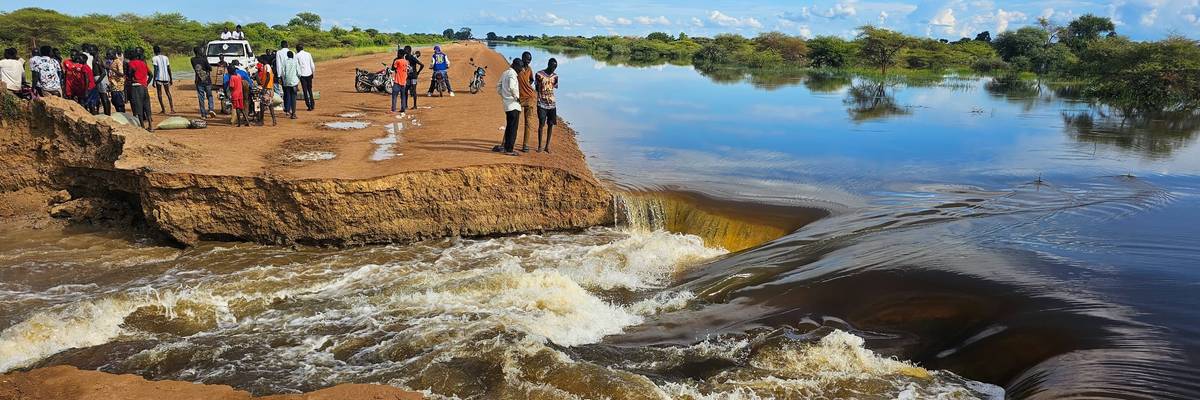
A road cut off by flood water in South Sudan, Aweil in Northern Bahr el Ghazal State.
As the humanitarian response continues, it is clear that sustained assistance will be needed to help the people of Aweil recover from this latest disaster.
The northern parts of South Sudan, particularly Aweil in Northern Bahr el Ghazal State, has been hit hard by relentless flooding, leaving a trail of destruction in its wake. The floods have had a particularly devastating impact on returnees, many of whom had recently resettled in Aweil after months of displacement due to the ongoing crisis in neighboring Sudan. These returnees, who had begun the slow process of rebuilding their lives, now find themselves displaced once more, their hopes for stability washed away with the floodwaters.
As the water levels rose, entire villages were submerged, and families were forced to flee their homes, taking only what they could carry. Makeshift camps have sprung up in higher areas that remain above water, but these temporary shelters are overcrowded, with inadequate access to clean water, food, and sanitation facilities. The conditions in these areas are dire, and diseases such as malaria and cholera may be easy to spread, exacerbated by stagnant floodwaters and a lack of medical supplies. Many children and elderly are falling ill, compounding the community’s sense of despair.
For the returnees, this disaster is particularly heartbreaking. Having already endured years of displacement and conflict, they had returned to Aweil in search of peace and the chance to rebuild their homes and livelihoods. Many had invested their savings into small farms, hoping to cultivate crops that would sustain them. Now, their fields are underwater, and the crops they were counting on for food and income have been destroyed. Families who had started to find their footing are once again plunged into uncertainty, unsure of where they will sleep or how they will feed their children in the days to come as they continually depend on fish from the flood waters.
For the returnees in particular, the flooding represents a tragic reversal of the fragile progress they had made since returning home. Their resilience and determination, however, remain a source of hope.
Beyond the direct impact on homes and farms, the flooding has also severely damaged infrastructure. Roads, which are critical for accessing essential services, have become impassable, isolating entire communities. Health centers, already under-resourced, are now cut off from those who need them most. Expectant mothers, children suffering from malnutrition, and the elderly are particularly vulnerable, as they can no longer reach health facilities for vital care. In some cases, patients have had to be transported by boat or carried on makeshift stretchers over long distances just to receive basic medical attention.
The road between Malualkon and the rural communities, which serves as the lifeline for delivering food, medical supplies, and other essential goods, is completely submerged in many areas. Vehicles attempting to navigate these roads are frequently stuck or washed away by the strong currents, making it impossible for humanitarian organizations to deliver aid to those in need. This has further compounded the crisis, as displaced families in remote areas are left without access to the relief supplies that could provide some measure of comfort.
The community’s resilience is being tested like never before. Local leaders have been appealing for assistance, but the scale of the disaster is overwhelming. In response, humanitarian organizations have ramped up efforts to provide emergency relief, setting up temporary shelters and delivering food aid. However, the needs far exceed the resources available. Many families remain without adequate shelter, exposed to the elements as they wait for aid to reach them. The long-term impacts of this flooding disaster are likely to be severe. With much of the farmland destroyed, food insecurity looms large over the region. Even as the rains begin to subside, the floodwaters are expected to take months to recede, delaying any attempts at recovery. As a result, displaced families will likely remain in temporary camps for an extended period, facing an uncertain future.
For the returnees in particular, the flooding represents a tragic reversal of the fragile progress they had made since returning home. Their resilience and determination, however, remain a source of hope. With the right support, they may yet find a way to rebuild once more, but the road to recovery will be long and challenging. As the humanitarian response continues, it is clear that sustained assistance will be needed to help the people of Aweil recover from this latest disaster, rebuild their lives, and prepare for the next challenge, as climate-related events like these floods become an ever-more frequent threat to their survival.
Dear Common Dreams reader, It’s been nearly 30 years since I co-founded Common Dreams with my late wife, Lina Newhouser. We had the radical notion that journalism should serve the public good, not corporate profits. It was clear to us from the outset what it would take to build such a project. No paid advertisements. No corporate sponsors. No millionaire publisher telling us what to think or do. Many people said we wouldn't last a year, but we proved those doubters wrong. Together with a tremendous team of journalists and dedicated staff, we built an independent media outlet free from the constraints of profits and corporate control. Our mission has always been simple: To inform. To inspire. To ignite change for the common good. Building Common Dreams was not easy. Our survival was never guaranteed. When you take on the most powerful forces—Wall Street greed, fossil fuel industry destruction, Big Tech lobbyists, and uber-rich oligarchs who have spent billions upon billions rigging the economy and democracy in their favor—the only bulwark you have is supporters who believe in your work. But here’s the urgent message from me today. It's never been this bad out there. And it's never been this hard to keep us going. At the very moment Common Dreams is most needed, the threats we face are intensifying. We need your support now more than ever. We don't accept corporate advertising and never will. We don't have a paywall because we don't think people should be blocked from critical news based on their ability to pay. Everything we do is funded by the donations of readers like you. When everyone does the little they can afford, we are strong. But if that support retreats or dries up, so do we. Will you donate now to make sure Common Dreams not only survives but thrives? —Craig Brown, Co-founder |
The northern parts of South Sudan, particularly Aweil in Northern Bahr el Ghazal State, has been hit hard by relentless flooding, leaving a trail of destruction in its wake. The floods have had a particularly devastating impact on returnees, many of whom had recently resettled in Aweil after months of displacement due to the ongoing crisis in neighboring Sudan. These returnees, who had begun the slow process of rebuilding their lives, now find themselves displaced once more, their hopes for stability washed away with the floodwaters.
As the water levels rose, entire villages were submerged, and families were forced to flee their homes, taking only what they could carry. Makeshift camps have sprung up in higher areas that remain above water, but these temporary shelters are overcrowded, with inadequate access to clean water, food, and sanitation facilities. The conditions in these areas are dire, and diseases such as malaria and cholera may be easy to spread, exacerbated by stagnant floodwaters and a lack of medical supplies. Many children and elderly are falling ill, compounding the community’s sense of despair.
For the returnees, this disaster is particularly heartbreaking. Having already endured years of displacement and conflict, they had returned to Aweil in search of peace and the chance to rebuild their homes and livelihoods. Many had invested their savings into small farms, hoping to cultivate crops that would sustain them. Now, their fields are underwater, and the crops they were counting on for food and income have been destroyed. Families who had started to find their footing are once again plunged into uncertainty, unsure of where they will sleep or how they will feed their children in the days to come as they continually depend on fish from the flood waters.
For the returnees in particular, the flooding represents a tragic reversal of the fragile progress they had made since returning home. Their resilience and determination, however, remain a source of hope.
Beyond the direct impact on homes and farms, the flooding has also severely damaged infrastructure. Roads, which are critical for accessing essential services, have become impassable, isolating entire communities. Health centers, already under-resourced, are now cut off from those who need them most. Expectant mothers, children suffering from malnutrition, and the elderly are particularly vulnerable, as they can no longer reach health facilities for vital care. In some cases, patients have had to be transported by boat or carried on makeshift stretchers over long distances just to receive basic medical attention.
The road between Malualkon and the rural communities, which serves as the lifeline for delivering food, medical supplies, and other essential goods, is completely submerged in many areas. Vehicles attempting to navigate these roads are frequently stuck or washed away by the strong currents, making it impossible for humanitarian organizations to deliver aid to those in need. This has further compounded the crisis, as displaced families in remote areas are left without access to the relief supplies that could provide some measure of comfort.
The community’s resilience is being tested like never before. Local leaders have been appealing for assistance, but the scale of the disaster is overwhelming. In response, humanitarian organizations have ramped up efforts to provide emergency relief, setting up temporary shelters and delivering food aid. However, the needs far exceed the resources available. Many families remain without adequate shelter, exposed to the elements as they wait for aid to reach them. The long-term impacts of this flooding disaster are likely to be severe. With much of the farmland destroyed, food insecurity looms large over the region. Even as the rains begin to subside, the floodwaters are expected to take months to recede, delaying any attempts at recovery. As a result, displaced families will likely remain in temporary camps for an extended period, facing an uncertain future.
For the returnees in particular, the flooding represents a tragic reversal of the fragile progress they had made since returning home. Their resilience and determination, however, remain a source of hope. With the right support, they may yet find a way to rebuild once more, but the road to recovery will be long and challenging. As the humanitarian response continues, it is clear that sustained assistance will be needed to help the people of Aweil recover from this latest disaster, rebuild their lives, and prepare for the next challenge, as climate-related events like these floods become an ever-more frequent threat to their survival.
The northern parts of South Sudan, particularly Aweil in Northern Bahr el Ghazal State, has been hit hard by relentless flooding, leaving a trail of destruction in its wake. The floods have had a particularly devastating impact on returnees, many of whom had recently resettled in Aweil after months of displacement due to the ongoing crisis in neighboring Sudan. These returnees, who had begun the slow process of rebuilding their lives, now find themselves displaced once more, their hopes for stability washed away with the floodwaters.
As the water levels rose, entire villages were submerged, and families were forced to flee their homes, taking only what they could carry. Makeshift camps have sprung up in higher areas that remain above water, but these temporary shelters are overcrowded, with inadequate access to clean water, food, and sanitation facilities. The conditions in these areas are dire, and diseases such as malaria and cholera may be easy to spread, exacerbated by stagnant floodwaters and a lack of medical supplies. Many children and elderly are falling ill, compounding the community’s sense of despair.
For the returnees, this disaster is particularly heartbreaking. Having already endured years of displacement and conflict, they had returned to Aweil in search of peace and the chance to rebuild their homes and livelihoods. Many had invested their savings into small farms, hoping to cultivate crops that would sustain them. Now, their fields are underwater, and the crops they were counting on for food and income have been destroyed. Families who had started to find their footing are once again plunged into uncertainty, unsure of where they will sleep or how they will feed their children in the days to come as they continually depend on fish from the flood waters.
For the returnees in particular, the flooding represents a tragic reversal of the fragile progress they had made since returning home. Their resilience and determination, however, remain a source of hope.
Beyond the direct impact on homes and farms, the flooding has also severely damaged infrastructure. Roads, which are critical for accessing essential services, have become impassable, isolating entire communities. Health centers, already under-resourced, are now cut off from those who need them most. Expectant mothers, children suffering from malnutrition, and the elderly are particularly vulnerable, as they can no longer reach health facilities for vital care. In some cases, patients have had to be transported by boat or carried on makeshift stretchers over long distances just to receive basic medical attention.
The road between Malualkon and the rural communities, which serves as the lifeline for delivering food, medical supplies, and other essential goods, is completely submerged in many areas. Vehicles attempting to navigate these roads are frequently stuck or washed away by the strong currents, making it impossible for humanitarian organizations to deliver aid to those in need. This has further compounded the crisis, as displaced families in remote areas are left without access to the relief supplies that could provide some measure of comfort.
The community’s resilience is being tested like never before. Local leaders have been appealing for assistance, but the scale of the disaster is overwhelming. In response, humanitarian organizations have ramped up efforts to provide emergency relief, setting up temporary shelters and delivering food aid. However, the needs far exceed the resources available. Many families remain without adequate shelter, exposed to the elements as they wait for aid to reach them. The long-term impacts of this flooding disaster are likely to be severe. With much of the farmland destroyed, food insecurity looms large over the region. Even as the rains begin to subside, the floodwaters are expected to take months to recede, delaying any attempts at recovery. As a result, displaced families will likely remain in temporary camps for an extended period, facing an uncertain future.
For the returnees in particular, the flooding represents a tragic reversal of the fragile progress they had made since returning home. Their resilience and determination, however, remain a source of hope. With the right support, they may yet find a way to rebuild once more, but the road to recovery will be long and challenging. As the humanitarian response continues, it is clear that sustained assistance will be needed to help the people of Aweil recover from this latest disaster, rebuild their lives, and prepare for the next challenge, as climate-related events like these floods become an ever-more frequent threat to their survival.