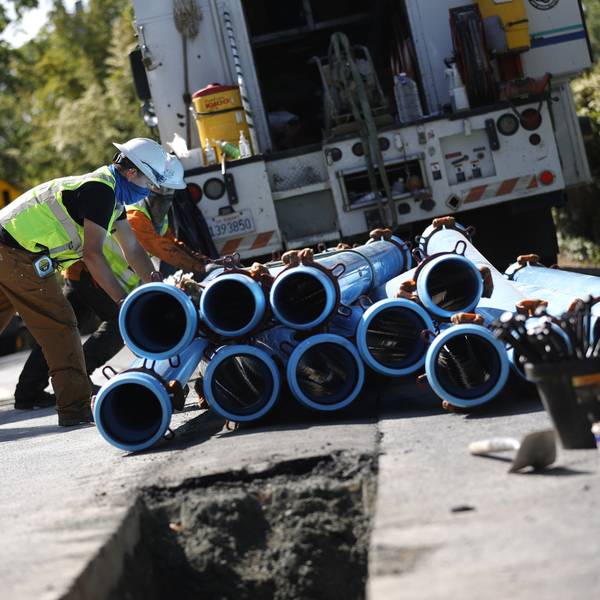

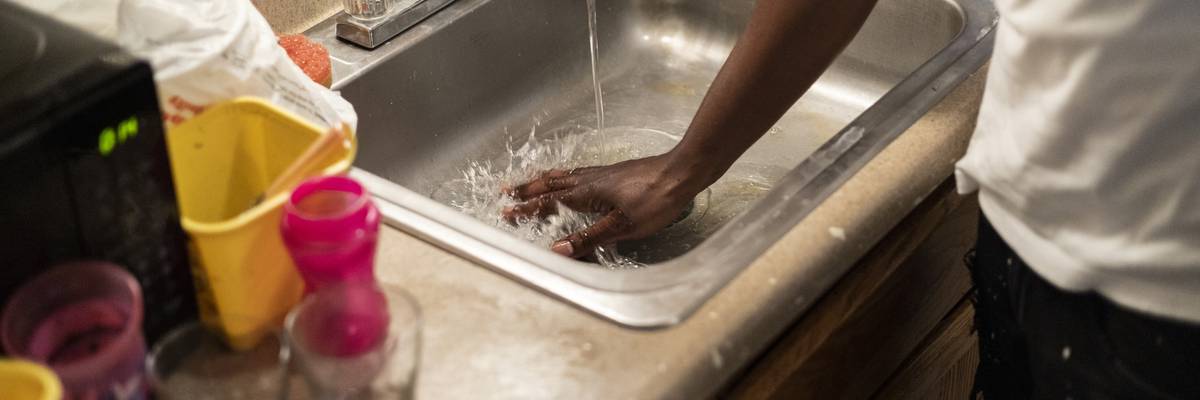
Terrence Carter mixes bleach and soap into the water before washing dishes in response to the water crisis on September 1, 2022 in Jackson, Mississippi.
The Time Has Come for a 'Right' to Clean Water
Green Amendments rely upon the highest legal authorities we have in the US–our state and federal constitutions–and use their placement within the Bill of Rights to make environmental rights an unquestionable, enforceable legal entitlement for everyone.
Sometimes defeat can be clarifying.
Last week, the US Fifth Circuit Court of Appeals upheld the dismissal of a lawsuit against the City of Jackson, Mississippi, in which the plaintiffs alleged that city officials knowingly allowed residents to drink water that was unsafe, tainted with lead and dangerous microbes.
The facts are not in dispute. “The City’s public-water system is fraught with vexing shortcomings,” the court found. “In recent years, it produced water containing lead, E. Coli, and other bacteria, allegedly violated the Safe Drinking Water Act and EPA regulations, shut down and left residents without water for weeks, and necessitated the issuance of dozens of boil-water notices.”
Despite this, the court ruled that the lawsuit could not move forward. The problem for the plaintiffs, as the court found, was that these harms do not rise to the level of constitutional harm. “These deprivations, while grievous,” the court wrote, “do not infringe upon any deeply rooted constitutional right.” And so the court rejected their arguments.
Green Amendments legally elevate our rights to a clean, safe, healthy, and quality environment to the same level as our rights to speech, religion, and a free press.
What are we to make of a situation where a city can neglect its responsibilities, knowingly expose its residents to dangerous and life-altering contamination, and get away with it because, in the eyes of our legal system, “mismanagement of the public-water system resulting in Plaintiffs’ lead exposure is wholly different” from “sexual assault by a police officer,” “forced surgical examination,” “forced stomach pumping for evidence,” “and medicating prisoners against their will”?
Is it truly all that different? Just because the law excuses it, should we truly accept injustices that contaminate our bodies, make us sick, and cause lifelong learning disabilities in children?
We don’t have to–there is another option. We regroup. We reorganize. And we fight back. And in this case, we have a solution.
“It is undisputed that the [US] Constitution does not guarantee clean water,” the court wrote. That’s true. But it's not the whole story.
In Mississippi and in most states across our nation there is no constitutional right to clean water. But in three states, with dozens more on the same path, there is.
In Pennsylvania, the Commonwealth’s Constitution guarantees the “right to clean air, pure water, and to the preservation of the natural, scenic, historic, and esthetic values of the environment.” It adds: “Pennsylvania's public natural resources are the common property of all the people, including generations yet to come,” and requires all government officials–both state and local–to conserve and maintain the state's natural resources for the benefit of the people.
The State Constitution of Montana recognizes the inalienable right “to a clean and healthful environment and the rights of pursuing life’s basic necessities.”
And New York’s constitution declares, “Each person shall have a right to clean air and water, and a healthful environment.”
It’s called a Green Amendment, and it is explicitly designed to protect people from harm like that suffered by the residents of Jackson, Mississippi.
Green Amendments are self-executing provisions added to a state constitution’s Bill of Rights or Declaration of Rights that recognize, protect, and guarantee the inalienable rights of all people to an environment of quality, including pure water, clean air, a safe climate, and healthy environments.
Green Amendments legally elevate our rights to a clean, safe, healthy, and quality environment to the same level as our rights to speech, religion, and a free press. Green Amendments are clear in their protections, deriving their strength from plain and clear language, proven legal theories, and robust constitutional court precedent.
In short, Green Amendments rely upon the highest legal authorities we have in the US–our state and federal constitutions–and use their placement within the Bill of Rights to make environmental rights an unquestionable, enforceable legal entitlement for everyone.
When our rights to free speech or religion, to a free press or freedom of assembly are infringed upon by government action, we do not sit idly by and accept it. We rise up and demand our rights be protected, secure in the knowledge that we are backed by the clear and powerful language of our constitutions. Why should our right to pure water, clean air, or a healthy environment be any different? With Green Amendments they do not have to be.
Today pollution and environmental desecration are seen as entitlements of powerful industrial and political interests. Recall that in Sterling v. City of Jackson the court agreed that the city was poisoning its residents–but wouldn’t let the plaintiffs sue to rectify it with a remedy that protected all city residents from harm. Instead the court suggested that pursuit of tort claims, likely resulting in money damages for those who could document harm from the contaminated water, was good enough. That’s just the way it is, the court shrugged.
With Green Amendments, we transform this expectation. Our entitlement to a clean, safe, and healthy environment becomes the baseline government must responsibly protect.
Environmental issues are all around us these days: rising carbon emissions driving ever-hotter summers; PFAS, lead, mercury, and other toxic chemicals leaching into our drinking water; the hyperscaling of data centers slurping up ever growing amounts of land, water, and power.
With Green Amendments we may not always win when we experience environmental injustice, but they give us the constitutional ability to say, “No,” to push back, and to fight for our rights.
A Mississippi Green Amendment could have meant a very different outcome for communities living in the City of Jackson.
We are at a crossroads
This country and this world are at a monumental crossroads. In a few short weeks, US voters will have an opportunity to beat back the forces of fascism and confront the billionaires who are rigging the economy, our media system, and our democracy, making it increasingly impossible for ordinary people to get by. We’re not just talking about the election. We’re talking about what must be done once these fascist elements are vanquished from power. We need a bolder set of solutions than what either major party has so far been willing to offer and a working-class movement ready to fight like hell for it. Trump didn't emerge from nowhere. The conditions that fueled MAGA authoritarianism were created by decades of radical neoliberal economic policies and a corrupt political system dominated by corporate interests. They slashed taxes on the super-rich, promising that the benefits would trickle down. They said giveaways to the corporate titans would make life more affordable for the rest of us. It was all bullshit. And when a bitter, betrayed populace searches for someone to blame, right-wing demagogues have little trouble finding scapegoats. People know when they're being lied to, but you won't hear any of this from the corporate media. Only independent journalism—powered and funded by people who believe in building a better world—can deliver truly trustworthy daily news. Our Fall Campaign is underway, and we need your help. To power our newsroom through the rest of the year, we need to raise $125,000 by midnight on October 31. So if you share our vision, please contribute whatever you can to sustain our work. |
Sometimes defeat can be clarifying.
Last week, the US Fifth Circuit Court of Appeals upheld the dismissal of a lawsuit against the City of Jackson, Mississippi, in which the plaintiffs alleged that city officials knowingly allowed residents to drink water that was unsafe, tainted with lead and dangerous microbes.
The facts are not in dispute. “The City’s public-water system is fraught with vexing shortcomings,” the court found. “In recent years, it produced water containing lead, E. Coli, and other bacteria, allegedly violated the Safe Drinking Water Act and EPA regulations, shut down and left residents without water for weeks, and necessitated the issuance of dozens of boil-water notices.”
Despite this, the court ruled that the lawsuit could not move forward. The problem for the plaintiffs, as the court found, was that these harms do not rise to the level of constitutional harm. “These deprivations, while grievous,” the court wrote, “do not infringe upon any deeply rooted constitutional right.” And so the court rejected their arguments.
Green Amendments legally elevate our rights to a clean, safe, healthy, and quality environment to the same level as our rights to speech, religion, and a free press.
What are we to make of a situation where a city can neglect its responsibilities, knowingly expose its residents to dangerous and life-altering contamination, and get away with it because, in the eyes of our legal system, “mismanagement of the public-water system resulting in Plaintiffs’ lead exposure is wholly different” from “sexual assault by a police officer,” “forced surgical examination,” “forced stomach pumping for evidence,” “and medicating prisoners against their will”?
Is it truly all that different? Just because the law excuses it, should we truly accept injustices that contaminate our bodies, make us sick, and cause lifelong learning disabilities in children?
We don’t have to–there is another option. We regroup. We reorganize. And we fight back. And in this case, we have a solution.
“It is undisputed that the [US] Constitution does not guarantee clean water,” the court wrote. That’s true. But it's not the whole story.
In Mississippi and in most states across our nation there is no constitutional right to clean water. But in three states, with dozens more on the same path, there is.
In Pennsylvania, the Commonwealth’s Constitution guarantees the “right to clean air, pure water, and to the preservation of the natural, scenic, historic, and esthetic values of the environment.” It adds: “Pennsylvania's public natural resources are the common property of all the people, including generations yet to come,” and requires all government officials–both state and local–to conserve and maintain the state's natural resources for the benefit of the people.
The State Constitution of Montana recognizes the inalienable right “to a clean and healthful environment and the rights of pursuing life’s basic necessities.”
And New York’s constitution declares, “Each person shall have a right to clean air and water, and a healthful environment.”
It’s called a Green Amendment, and it is explicitly designed to protect people from harm like that suffered by the residents of Jackson, Mississippi.
Green Amendments are self-executing provisions added to a state constitution’s Bill of Rights or Declaration of Rights that recognize, protect, and guarantee the inalienable rights of all people to an environment of quality, including pure water, clean air, a safe climate, and healthy environments.
Green Amendments legally elevate our rights to a clean, safe, healthy, and quality environment to the same level as our rights to speech, religion, and a free press. Green Amendments are clear in their protections, deriving their strength from plain and clear language, proven legal theories, and robust constitutional court precedent.
In short, Green Amendments rely upon the highest legal authorities we have in the US–our state and federal constitutions–and use their placement within the Bill of Rights to make environmental rights an unquestionable, enforceable legal entitlement for everyone.
When our rights to free speech or religion, to a free press or freedom of assembly are infringed upon by government action, we do not sit idly by and accept it. We rise up and demand our rights be protected, secure in the knowledge that we are backed by the clear and powerful language of our constitutions. Why should our right to pure water, clean air, or a healthy environment be any different? With Green Amendments they do not have to be.
Today pollution and environmental desecration are seen as entitlements of powerful industrial and political interests. Recall that in Sterling v. City of Jackson the court agreed that the city was poisoning its residents–but wouldn’t let the plaintiffs sue to rectify it with a remedy that protected all city residents from harm. Instead the court suggested that pursuit of tort claims, likely resulting in money damages for those who could document harm from the contaminated water, was good enough. That’s just the way it is, the court shrugged.
With Green Amendments, we transform this expectation. Our entitlement to a clean, safe, and healthy environment becomes the baseline government must responsibly protect.
Environmental issues are all around us these days: rising carbon emissions driving ever-hotter summers; PFAS, lead, mercury, and other toxic chemicals leaching into our drinking water; the hyperscaling of data centers slurping up ever growing amounts of land, water, and power.
With Green Amendments we may not always win when we experience environmental injustice, but they give us the constitutional ability to say, “No,” to push back, and to fight for our rights.
A Mississippi Green Amendment could have meant a very different outcome for communities living in the City of Jackson.
- UN Recognizes Access to Clean, Affordable Water and Climate Justice as Civil Rights Under International Law ›
- Clean Water Safeguards Headed Down the Drain? ›
- Our Race Against the Clock to Affirm Water as a Human Right ›
- Water's Moment: Advancing the Human Right to Water in the United States ›
- 'Literally Eat Sh*t': Supreme Court Strikes Down EPA Clean Water Rule ›
- Governments Must Act Like Access to Water Is a Human Right, Because It Is ›
Sometimes defeat can be clarifying.
Last week, the US Fifth Circuit Court of Appeals upheld the dismissal of a lawsuit against the City of Jackson, Mississippi, in which the plaintiffs alleged that city officials knowingly allowed residents to drink water that was unsafe, tainted with lead and dangerous microbes.
The facts are not in dispute. “The City’s public-water system is fraught with vexing shortcomings,” the court found. “In recent years, it produced water containing lead, E. Coli, and other bacteria, allegedly violated the Safe Drinking Water Act and EPA regulations, shut down and left residents without water for weeks, and necessitated the issuance of dozens of boil-water notices.”
Despite this, the court ruled that the lawsuit could not move forward. The problem for the plaintiffs, as the court found, was that these harms do not rise to the level of constitutional harm. “These deprivations, while grievous,” the court wrote, “do not infringe upon any deeply rooted constitutional right.” And so the court rejected their arguments.
Green Amendments legally elevate our rights to a clean, safe, healthy, and quality environment to the same level as our rights to speech, religion, and a free press.
What are we to make of a situation where a city can neglect its responsibilities, knowingly expose its residents to dangerous and life-altering contamination, and get away with it because, in the eyes of our legal system, “mismanagement of the public-water system resulting in Plaintiffs’ lead exposure is wholly different” from “sexual assault by a police officer,” “forced surgical examination,” “forced stomach pumping for evidence,” “and medicating prisoners against their will”?
Is it truly all that different? Just because the law excuses it, should we truly accept injustices that contaminate our bodies, make us sick, and cause lifelong learning disabilities in children?
We don’t have to–there is another option. We regroup. We reorganize. And we fight back. And in this case, we have a solution.
“It is undisputed that the [US] Constitution does not guarantee clean water,” the court wrote. That’s true. But it's not the whole story.
In Mississippi and in most states across our nation there is no constitutional right to clean water. But in three states, with dozens more on the same path, there is.
In Pennsylvania, the Commonwealth’s Constitution guarantees the “right to clean air, pure water, and to the preservation of the natural, scenic, historic, and esthetic values of the environment.” It adds: “Pennsylvania's public natural resources are the common property of all the people, including generations yet to come,” and requires all government officials–both state and local–to conserve and maintain the state's natural resources for the benefit of the people.
The State Constitution of Montana recognizes the inalienable right “to a clean and healthful environment and the rights of pursuing life’s basic necessities.”
And New York’s constitution declares, “Each person shall have a right to clean air and water, and a healthful environment.”
It’s called a Green Amendment, and it is explicitly designed to protect people from harm like that suffered by the residents of Jackson, Mississippi.
Green Amendments are self-executing provisions added to a state constitution’s Bill of Rights or Declaration of Rights that recognize, protect, and guarantee the inalienable rights of all people to an environment of quality, including pure water, clean air, a safe climate, and healthy environments.
Green Amendments legally elevate our rights to a clean, safe, healthy, and quality environment to the same level as our rights to speech, religion, and a free press. Green Amendments are clear in their protections, deriving their strength from plain and clear language, proven legal theories, and robust constitutional court precedent.
In short, Green Amendments rely upon the highest legal authorities we have in the US–our state and federal constitutions–and use their placement within the Bill of Rights to make environmental rights an unquestionable, enforceable legal entitlement for everyone.
When our rights to free speech or religion, to a free press or freedom of assembly are infringed upon by government action, we do not sit idly by and accept it. We rise up and demand our rights be protected, secure in the knowledge that we are backed by the clear and powerful language of our constitutions. Why should our right to pure water, clean air, or a healthy environment be any different? With Green Amendments they do not have to be.
Today pollution and environmental desecration are seen as entitlements of powerful industrial and political interests. Recall that in Sterling v. City of Jackson the court agreed that the city was poisoning its residents–but wouldn’t let the plaintiffs sue to rectify it with a remedy that protected all city residents from harm. Instead the court suggested that pursuit of tort claims, likely resulting in money damages for those who could document harm from the contaminated water, was good enough. That’s just the way it is, the court shrugged.
With Green Amendments, we transform this expectation. Our entitlement to a clean, safe, and healthy environment becomes the baseline government must responsibly protect.
Environmental issues are all around us these days: rising carbon emissions driving ever-hotter summers; PFAS, lead, mercury, and other toxic chemicals leaching into our drinking water; the hyperscaling of data centers slurping up ever growing amounts of land, water, and power.
With Green Amendments we may not always win when we experience environmental injustice, but they give us the constitutional ability to say, “No,” to push back, and to fight for our rights.
A Mississippi Green Amendment could have meant a very different outcome for communities living in the City of Jackson.
- UN Recognizes Access to Clean, Affordable Water and Climate Justice as Civil Rights Under International Law ›
- Clean Water Safeguards Headed Down the Drain? ›
- Our Race Against the Clock to Affirm Water as a Human Right ›
- Water's Moment: Advancing the Human Right to Water in the United States ›
- 'Literally Eat Sh*t': Supreme Court Strikes Down EPA Clean Water Rule ›
- Governments Must Act Like Access to Water Is a Human Right, Because It Is ›