SUBSCRIBE TO OUR FREE NEWSLETTER
Daily news & progressive opinion—funded by the people, not the corporations—delivered straight to your inbox.
5
#000000
#FFFFFF
To donate by check, phone, or other method, see our More Ways to Give page.
Daily news & progressive opinion—funded by the people, not the corporations—delivered straight to your inbox.
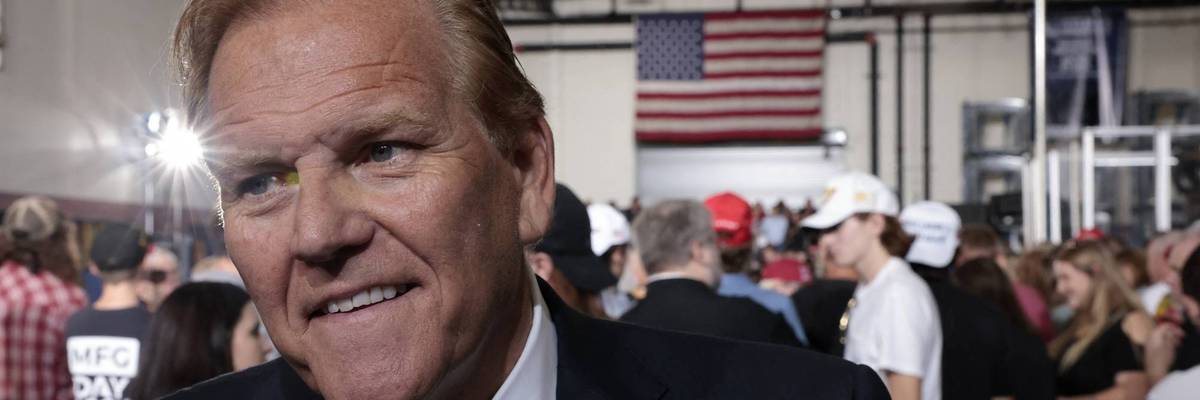
Former US Representative and current 2026 US Senate candidate Mike Rogers, Republican from Michigan, speaks to reporters before Vice President JD Vance delivers remarks during a visit to a precision metal stamping facility in Howell, Michigan, on September 17, 2025.
More and more Republicans are calling for an end to the Iran War as the midterm elections approach, but is this an opening for true accountability or merely a ploy to win votes?
On September 21, Iowa Rep. Ashley Hinson, the Republican Senate nominee, called for a “successful and immediate end” to the Iran war. In Washington, the conflict still appears primarily to be a question of presidential power. In Michigan, Iowa, and Ohio, however, it has become a question of Republican candidates’ ability to win or retain office. As the midterms approach, the White House continues to define the war through its own authorities and objectives, while Republicans facing voters increasingly have to explain how it should end. Their cautious distancing suggests less a change in foreign policy than a belated confrontation with political accountability.
Republican appeals to party loyalty rest on a familiar premise: On national security, the party should stand behind its own president. But a war without a clear end in sight raises a difficult question: Can party loyalty substitute for an explanation of where a military conflict is heading? Or do elected representatives, even when they support their own administration, have a duty to ask why the war continues and under what conditions it can end? The recent positions of some Republicans suggest that these questions are no longer confined to debate among analysts; they have entered the governing party itself.
Alongside Hinson, Michigan Senate candidate Mike Rogers, Iowa Rep. Mariannette Miller-Meeks, Michigan Rep. John James, and Ohio Sen. Jon Husted have called for an end to the war, while others continue to support it. Retiring Sens. Joni Ernst and Thom Tillis have also questioned its duration or the lack of a clear path to its conclusion. Yet on September 22, Senate Majority Leader John Thune appealed for Republican unity. The next day, he encouraged candidates to run their own campaigns, even when they disagreed with President Donald Trump. These positions suggest a party in which alignment with the president carries growing political costs.
Republicans cannot indefinitely choose loyalty to the president over accountability to the public.
The significance lies not simply in the number of Republicans calling for an end to the war, but in their changing political language. The issue is no longer merely whether to support or oppose the president. It is also how representatives explain a prolonged war to voters who may demand answers about its necessity, purpose, and prospects. Calling for an end to the war becomes a way of redefining the relationship between lawmakers and their constituents—a relationship that cannot remain indefinitely obscured by party discipline or loyalty to the White House.
This shift does not necessarily indicate a principled reassessment of Republican foreign policy. Distancing from the war may stem from electoral calculations, concern about voters’ reactions, or an effort to reduce the political costs of a protracted conflict. Even if some lawmakers have concluded that continuing the war conflicts with the preferences of some voters, their positions cannot yet be treated as a strategic break with Trump’s approach. What is emerging is cautious distancing: an attempt to avoid the war’s political costs while preserving ties with the party leadership.
Nevertheless, that caution reveals an important reality: The war can no longer be treated solely as a matter of executive decisions and geopolitical calculations. Responsibility extends beyond the White House to lawmakers who have supported its continuation, remained silent, or used party unity as a substitute for public debate. Accountability is no longer simply an external demand imposed on the party; it has become an internal issue affecting its credibility and cohesion.
Thune’s appeal for unity matters in this context. Party unity during wartime can be presented as a sign of strength and political stability. Yet as disagreements over the war grow, that unity risks becoming organized silence. The party may ask lawmakers to stand with the president, but loyalty must not render the ballot powerless or erase constituents’ questions. Unity that cannot articulate a clear objective or a conceivable endpoint for the war may turn from a political asset into a liability.
The midterm elections are thus becoming a mechanism of political accountability. Lawmakers who once explained the war primarily through party loyalty must now demonstrate whether they accept responsibility for limiting it, defining the conditions for its conclusion, and responding to public concerns. This demand does not necessarily imply opposition to every aspect of the war. Voters may support the administration’s security objectives while demanding explanations for the conflict’s prolonged duration, the absence of an exit strategy, and its uncertain costs. Republican politicians are increasingly being forced to take that distinction seriously.
From this perspective, some lawmakers’ distancing from the Iran war is less evidence of an abrupt transformation within the party than a sign that accountability has entered Republican political calculations belatedly. Calls to end the war are growing louder because the conflict is no longer merely a presidential decision; it can affect politicians’ relationships with voters. Yet that delay leaves a fundamental question: Why has explaining how the war should end gained such urgency as the elections approach?
Political accountability has meaning when it begins before a crisis becomes an electoral threat, not when politicians conclude that continued silence may cost them votes. If Republicans are calling for an end to the war, they must pursue that position beyond campaign statements through clear demands concerning the conflict’s objectives, limits, and exit strategy. Otherwise, their recent distancing may amount less to accountability than to managing the consequences of a policy that previously escaped scrutiny.
The Iran war is not merely a test of Republican foreign policy; it is a test of when responsibility is assumed. Republicans cannot indefinitely choose loyalty to the president over accountability to the public. The question is not who distances themselves from the war first, but why calls to end it have grown louder as the elections draw closer. If that question remains unanswered, these positions will signal not a change of course, but only that the cost of silence has finally become greater than the cost of dissent.
Dear Common Dreams reader, It’s been nearly 30 years since I co-founded Common Dreams with my late wife, Lina Newhouser. We had the radical notion that journalism should serve the public good, not corporate profits. It was clear to us from the outset what it would take to build such a project. No paid advertisements. No corporate sponsors. No millionaire publisher telling us what to think or do. Many people said we wouldn't last a year, but we proved those doubters wrong. Together with a tremendous team of journalists and dedicated staff, we built an independent media outlet free from the constraints of profits and corporate control. Our mission has always been simple: To inform. To inspire. To ignite change for the common good. Building Common Dreams was not easy. Our survival was never guaranteed. When you take on the most powerful forces—Wall Street greed, fossil fuel industry destruction, Big Tech lobbyists, and uber-rich oligarchs who have spent billions upon billions rigging the economy and democracy in their favor—the only bulwark you have is supporters who believe in your work. But here’s the urgent message from me today. It's never been this bad out there. And it's never been this hard to keep us going. At the very moment Common Dreams is most needed, the threats we face are intensifying. We need your support now more than ever. We don't accept corporate advertising and never will. We don't have a paywall because we don't think people should be blocked from critical news based on their ability to pay. Everything we do is funded by the donations of readers like you. When everyone does the little they can afford, we are strong. But if that support retreats or dries up, so do we. Will you donate now to make sure Common Dreams not only survives but thrives? —Craig Brown, Co-founder |
On September 21, Iowa Rep. Ashley Hinson, the Republican Senate nominee, called for a “successful and immediate end” to the Iran war. In Washington, the conflict still appears primarily to be a question of presidential power. In Michigan, Iowa, and Ohio, however, it has become a question of Republican candidates’ ability to win or retain office. As the midterms approach, the White House continues to define the war through its own authorities and objectives, while Republicans facing voters increasingly have to explain how it should end. Their cautious distancing suggests less a change in foreign policy than a belated confrontation with political accountability.
Republican appeals to party loyalty rest on a familiar premise: On national security, the party should stand behind its own president. But a war without a clear end in sight raises a difficult question: Can party loyalty substitute for an explanation of where a military conflict is heading? Or do elected representatives, even when they support their own administration, have a duty to ask why the war continues and under what conditions it can end? The recent positions of some Republicans suggest that these questions are no longer confined to debate among analysts; they have entered the governing party itself.
Alongside Hinson, Michigan Senate candidate Mike Rogers, Iowa Rep. Mariannette Miller-Meeks, Michigan Rep. John James, and Ohio Sen. Jon Husted have called for an end to the war, while others continue to support it. Retiring Sens. Joni Ernst and Thom Tillis have also questioned its duration or the lack of a clear path to its conclusion. Yet on September 22, Senate Majority Leader John Thune appealed for Republican unity. The next day, he encouraged candidates to run their own campaigns, even when they disagreed with President Donald Trump. These positions suggest a party in which alignment with the president carries growing political costs.
Republicans cannot indefinitely choose loyalty to the president over accountability to the public.
The significance lies not simply in the number of Republicans calling for an end to the war, but in their changing political language. The issue is no longer merely whether to support or oppose the president. It is also how representatives explain a prolonged war to voters who may demand answers about its necessity, purpose, and prospects. Calling for an end to the war becomes a way of redefining the relationship between lawmakers and their constituents—a relationship that cannot remain indefinitely obscured by party discipline or loyalty to the White House.
This shift does not necessarily indicate a principled reassessment of Republican foreign policy. Distancing from the war may stem from electoral calculations, concern about voters’ reactions, or an effort to reduce the political costs of a protracted conflict. Even if some lawmakers have concluded that continuing the war conflicts with the preferences of some voters, their positions cannot yet be treated as a strategic break with Trump’s approach. What is emerging is cautious distancing: an attempt to avoid the war’s political costs while preserving ties with the party leadership.
Nevertheless, that caution reveals an important reality: The war can no longer be treated solely as a matter of executive decisions and geopolitical calculations. Responsibility extends beyond the White House to lawmakers who have supported its continuation, remained silent, or used party unity as a substitute for public debate. Accountability is no longer simply an external demand imposed on the party; it has become an internal issue affecting its credibility and cohesion.
Thune’s appeal for unity matters in this context. Party unity during wartime can be presented as a sign of strength and political stability. Yet as disagreements over the war grow, that unity risks becoming organized silence. The party may ask lawmakers to stand with the president, but loyalty must not render the ballot powerless or erase constituents’ questions. Unity that cannot articulate a clear objective or a conceivable endpoint for the war may turn from a political asset into a liability.
The midterm elections are thus becoming a mechanism of political accountability. Lawmakers who once explained the war primarily through party loyalty must now demonstrate whether they accept responsibility for limiting it, defining the conditions for its conclusion, and responding to public concerns. This demand does not necessarily imply opposition to every aspect of the war. Voters may support the administration’s security objectives while demanding explanations for the conflict’s prolonged duration, the absence of an exit strategy, and its uncertain costs. Republican politicians are increasingly being forced to take that distinction seriously.
From this perspective, some lawmakers’ distancing from the Iran war is less evidence of an abrupt transformation within the party than a sign that accountability has entered Republican political calculations belatedly. Calls to end the war are growing louder because the conflict is no longer merely a presidential decision; it can affect politicians’ relationships with voters. Yet that delay leaves a fundamental question: Why has explaining how the war should end gained such urgency as the elections approach?
Political accountability has meaning when it begins before a crisis becomes an electoral threat, not when politicians conclude that continued silence may cost them votes. If Republicans are calling for an end to the war, they must pursue that position beyond campaign statements through clear demands concerning the conflict’s objectives, limits, and exit strategy. Otherwise, their recent distancing may amount less to accountability than to managing the consequences of a policy that previously escaped scrutiny.
The Iran war is not merely a test of Republican foreign policy; it is a test of when responsibility is assumed. Republicans cannot indefinitely choose loyalty to the president over accountability to the public. The question is not who distances themselves from the war first, but why calls to end it have grown louder as the elections draw closer. If that question remains unanswered, these positions will signal not a change of course, but only that the cost of silence has finally become greater than the cost of dissent.
On September 21, Iowa Rep. Ashley Hinson, the Republican Senate nominee, called for a “successful and immediate end” to the Iran war. In Washington, the conflict still appears primarily to be a question of presidential power. In Michigan, Iowa, and Ohio, however, it has become a question of Republican candidates’ ability to win or retain office. As the midterms approach, the White House continues to define the war through its own authorities and objectives, while Republicans facing voters increasingly have to explain how it should end. Their cautious distancing suggests less a change in foreign policy than a belated confrontation with political accountability.
Republican appeals to party loyalty rest on a familiar premise: On national security, the party should stand behind its own president. But a war without a clear end in sight raises a difficult question: Can party loyalty substitute for an explanation of where a military conflict is heading? Or do elected representatives, even when they support their own administration, have a duty to ask why the war continues and under what conditions it can end? The recent positions of some Republicans suggest that these questions are no longer confined to debate among analysts; they have entered the governing party itself.
Alongside Hinson, Michigan Senate candidate Mike Rogers, Iowa Rep. Mariannette Miller-Meeks, Michigan Rep. John James, and Ohio Sen. Jon Husted have called for an end to the war, while others continue to support it. Retiring Sens. Joni Ernst and Thom Tillis have also questioned its duration or the lack of a clear path to its conclusion. Yet on September 22, Senate Majority Leader John Thune appealed for Republican unity. The next day, he encouraged candidates to run their own campaigns, even when they disagreed with President Donald Trump. These positions suggest a party in which alignment with the president carries growing political costs.
Republicans cannot indefinitely choose loyalty to the president over accountability to the public.
The significance lies not simply in the number of Republicans calling for an end to the war, but in their changing political language. The issue is no longer merely whether to support or oppose the president. It is also how representatives explain a prolonged war to voters who may demand answers about its necessity, purpose, and prospects. Calling for an end to the war becomes a way of redefining the relationship between lawmakers and their constituents—a relationship that cannot remain indefinitely obscured by party discipline or loyalty to the White House.
This shift does not necessarily indicate a principled reassessment of Republican foreign policy. Distancing from the war may stem from electoral calculations, concern about voters’ reactions, or an effort to reduce the political costs of a protracted conflict. Even if some lawmakers have concluded that continuing the war conflicts with the preferences of some voters, their positions cannot yet be treated as a strategic break with Trump’s approach. What is emerging is cautious distancing: an attempt to avoid the war’s political costs while preserving ties with the party leadership.
Nevertheless, that caution reveals an important reality: The war can no longer be treated solely as a matter of executive decisions and geopolitical calculations. Responsibility extends beyond the White House to lawmakers who have supported its continuation, remained silent, or used party unity as a substitute for public debate. Accountability is no longer simply an external demand imposed on the party; it has become an internal issue affecting its credibility and cohesion.
Thune’s appeal for unity matters in this context. Party unity during wartime can be presented as a sign of strength and political stability. Yet as disagreements over the war grow, that unity risks becoming organized silence. The party may ask lawmakers to stand with the president, but loyalty must not render the ballot powerless or erase constituents’ questions. Unity that cannot articulate a clear objective or a conceivable endpoint for the war may turn from a political asset into a liability.
The midterm elections are thus becoming a mechanism of political accountability. Lawmakers who once explained the war primarily through party loyalty must now demonstrate whether they accept responsibility for limiting it, defining the conditions for its conclusion, and responding to public concerns. This demand does not necessarily imply opposition to every aspect of the war. Voters may support the administration’s security objectives while demanding explanations for the conflict’s prolonged duration, the absence of an exit strategy, and its uncertain costs. Republican politicians are increasingly being forced to take that distinction seriously.
From this perspective, some lawmakers’ distancing from the Iran war is less evidence of an abrupt transformation within the party than a sign that accountability has entered Republican political calculations belatedly. Calls to end the war are growing louder because the conflict is no longer merely a presidential decision; it can affect politicians’ relationships with voters. Yet that delay leaves a fundamental question: Why has explaining how the war should end gained such urgency as the elections approach?
Political accountability has meaning when it begins before a crisis becomes an electoral threat, not when politicians conclude that continued silence may cost them votes. If Republicans are calling for an end to the war, they must pursue that position beyond campaign statements through clear demands concerning the conflict’s objectives, limits, and exit strategy. Otherwise, their recent distancing may amount less to accountability than to managing the consequences of a policy that previously escaped scrutiny.
The Iran war is not merely a test of Republican foreign policy; it is a test of when responsibility is assumed. Republicans cannot indefinitely choose loyalty to the president over accountability to the public. The question is not who distances themselves from the war first, but why calls to end it have grown louder as the elections draw closer. If that question remains unanswered, these positions will signal not a change of course, but only that the cost of silence has finally become greater than the cost of dissent.