SUBSCRIBE TO OUR FREE NEWSLETTER
Daily news & progressive opinion—funded by the people, not the corporations—delivered straight to your inbox.
5
#000000
#FFFFFF
To donate by check, phone, or other method, see our More Ways to Give page.
Daily news & progressive opinion—funded by the people, not the corporations—delivered straight to your inbox.
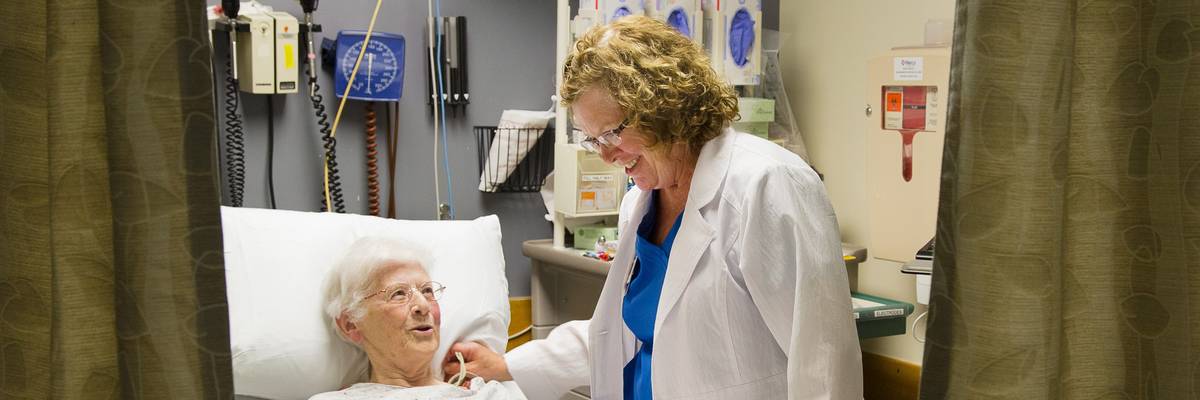
Mercy Hospital ER nurse Katie Johnson treats Sister Margaret Cushman at the State Street emergency room on Wednesday, August 16, 2017.
The Office of Management and Budget’s proposed rule putting political appointees in charge of healthcare-funding decisions threatens the patients we serve.
As a nurse educator and a psychiatric-mental health nurse, we have built our careers on evidence-based practice, ethics, and compassion when caring for patients. Politics never entered the picture. Our responsibility has always been to provide care guided by science, professional standards, and the individual needs of our patients, not political ideology or partisan priorities. That is why the Office of Management and Budget’s proposed rule, Docket OMB-2026-0034, which would hand healthcare funding decisions to political appointees, stops us cold.
At first glance, this proposal may sound administrative or technical. In reality, it would fundamentally alter how federally funded healthcare, nursing education, behavioral health programs, and scientific research are approved, monitored, and terminated. Under rule §200.340, any grant can be ended at any point if it no longer aligns with the priorities of the administration. That is not oversight. It is political control.
For nurses, the consequences would not be abstract. They would be immediate, personal, and dangerous for the patients we care for.
Psychiatric nursing already operates within a fragile system. Across the United States, communities face severe shortages of mental health professionals; long wait times for psychiatric care; rising suicide rates; surging substance use disorders; and escalating mental health crises among children, veterans, and older adults. Nurses are often the last line of support for patients who have nowhere else to go.
Healthcare funding decisions should be based on patient outcomes, workforce needs, public health evidence, and community impact, not whether a program aligns with the political priorities of whichever party holds power.
Every day, we talk with parents who are doing everything they can to find behavioral care for their children, but too often they feel frustrated and alone. Parents often share that they spend months calling providers, sitting on waitlists, and navigating insurance paperwork, all while trying to support their child through daily challenges at school and at home.
Hospitals are faced with the daunting task of finding inpatient services for patients in crisis. Sometimes the search for placement takes hours or even days, resulting in patients, many of them young people and the elderly, sitting in over-crowded emergency departments, waiting for care that may never come.
Many of the programs that train psychiatric nurses, support community mental health services, fund suicide prevention initiatives, and expand rural behavioral healthcare depend on federal grants and cooperative agreements. Under §200.205, the proposed OMB rule places a single political appointee in control over those funding decisions, with the power to override independent scientific and professional review.
This should alarm every American, regardless of political affiliation.
Healthcare funding decisions should be based on patient outcomes, workforce needs, public health evidence, and community impact, not whether a program aligns with the political priorities of whichever party holds power. Mental healthcare especially requires stability, continuity, and trust. When funding becomes politicized, patients inevitably suffer.
We are equally concerned about the chilling effect this rule would have on nursing schools and healthcare education programs. Federal support helps nursing programs prepare students to work in underserved communities, conduct behavioral health research, develop telepsychiatry services, and address disparities in care. Under §200.206 a political appointee could deny funding to any institution deemed “un-American,” a standard so vague it could be applied to programs addressing mental health disparities, harm reduction, or any work that falls outside current political favor.
We encourage nurses, educators, researchers, and the general public to join us and submit public comments on Docket OMB-2026-0034 before July 13, 2026, urging federal officials to reject these policies.
The proposed rule threatens the integrity of evidence-based practice itself. Nursing education is built on teaching students how to evaluate research critically, apply best practices, and advocate for patient-centered care. We cannot tell future nurses to “follow the science” while simultaneously allowing political officials to override scientific peer review and the expertise of those closest to patients.
We know what happens when systems become unstable. We witnessed it during the pandemic. Burnout rises. Staffing worsens. Experienced clinicians leave. Patients wait longer for care. Rural communities lose services first. One of us lived through the 2025 Southern California wildfires. Vulnerable populations suffer most. The mental health system was already stretched thin before the flames arrived.
This OMB proposal risks accelerating those exact outcomes.
Public trust in healthcare depends on the belief that medical and scientific decisions are guided by expertise rather than ideology. Once political influence is written into the structure of healthcare funding, that trust may never be fully restored. Mental health patients already fight stigma, long waits, and shrinking access to care. They should never have to wonder whether a political appointee is shaping the care available to them.
Nurses are educated to protect human dignity, promote health equity, and uphold evidence-based care. Those values do not change depending on which party controls Washington. They are foundational to the nursing profession and guide how nurses advocate for patients, families, and communities every single day.
The OMB proposal is framed as a restructuring of federal financial assistance, but for healthcare professionals on the ground, it represents something much larger: a deliberate shift away from independent expertise and toward political control over healthcare priorities. That does not strengthen nursing, mental healthcare, or public health. It dismantles all three.
We encourage nurses, educators, researchers, and the general public to join us and submit public comments on Docket OMB-2026-0034 before July 13, 2026, urging federal officials to reject these policies. If we allow political ideology to dictate which healthcare programs survive, which research is funded, and which communities receive support, we risk abandoning the very people the healthcare system exists to protect.
Nurses stand at the bedside of patients during their most vulnerable moments, regardless of politics, income, geography, or background. Federal healthcare policy should reflect a similar commitment. The future of mental healthcare, nursing education, and public trust in science depends on preserving independent, evidence-based decision-making free from political interference. Our patients deserve nothing less.
Dear Common Dreams reader, It’s been nearly 30 years since I co-founded Common Dreams with my late wife, Lina Newhouser. We had the radical notion that journalism should serve the public good, not corporate profits. It was clear to us from the outset what it would take to build such a project. No paid advertisements. No corporate sponsors. No millionaire publisher telling us what to think or do. Many people said we wouldn't last a year, but we proved those doubters wrong. Together with a tremendous team of journalists and dedicated staff, we built an independent media outlet free from the constraints of profits and corporate control. Our mission has always been simple: To inform. To inspire. To ignite change for the common good. Building Common Dreams was not easy. Our survival was never guaranteed. When you take on the most powerful forces—Wall Street greed, fossil fuel industry destruction, Big Tech lobbyists, and uber-rich oligarchs who have spent billions upon billions rigging the economy and democracy in their favor—the only bulwark you have is supporters who believe in your work. But here’s the urgent message from me today. It's never been this bad out there. And it's never been this hard to keep us going. At the very moment Common Dreams is most needed, the threats we face are intensifying. We need your support now more than ever. We don't accept corporate advertising and never will. We don't have a paywall because we don't think people should be blocked from critical news based on their ability to pay. Everything we do is funded by the donations of readers like you. When everyone does the little they can afford, we are strong. But if that support retreats or dries up, so do we. Will you donate now to make sure Common Dreams not only survives but thrives? —Craig Brown, Co-founder |
As a nurse educator and a psychiatric-mental health nurse, we have built our careers on evidence-based practice, ethics, and compassion when caring for patients. Politics never entered the picture. Our responsibility has always been to provide care guided by science, professional standards, and the individual needs of our patients, not political ideology or partisan priorities. That is why the Office of Management and Budget’s proposed rule, Docket OMB-2026-0034, which would hand healthcare funding decisions to political appointees, stops us cold.
At first glance, this proposal may sound administrative or technical. In reality, it would fundamentally alter how federally funded healthcare, nursing education, behavioral health programs, and scientific research are approved, monitored, and terminated. Under rule §200.340, any grant can be ended at any point if it no longer aligns with the priorities of the administration. That is not oversight. It is political control.
For nurses, the consequences would not be abstract. They would be immediate, personal, and dangerous for the patients we care for.
Psychiatric nursing already operates within a fragile system. Across the United States, communities face severe shortages of mental health professionals; long wait times for psychiatric care; rising suicide rates; surging substance use disorders; and escalating mental health crises among children, veterans, and older adults. Nurses are often the last line of support for patients who have nowhere else to go.
Healthcare funding decisions should be based on patient outcomes, workforce needs, public health evidence, and community impact, not whether a program aligns with the political priorities of whichever party holds power.
Every day, we talk with parents who are doing everything they can to find behavioral care for their children, but too often they feel frustrated and alone. Parents often share that they spend months calling providers, sitting on waitlists, and navigating insurance paperwork, all while trying to support their child through daily challenges at school and at home.
Hospitals are faced with the daunting task of finding inpatient services for patients in crisis. Sometimes the search for placement takes hours or even days, resulting in patients, many of them young people and the elderly, sitting in over-crowded emergency departments, waiting for care that may never come.
Many of the programs that train psychiatric nurses, support community mental health services, fund suicide prevention initiatives, and expand rural behavioral healthcare depend on federal grants and cooperative agreements. Under §200.205, the proposed OMB rule places a single political appointee in control over those funding decisions, with the power to override independent scientific and professional review.
This should alarm every American, regardless of political affiliation.
Healthcare funding decisions should be based on patient outcomes, workforce needs, public health evidence, and community impact, not whether a program aligns with the political priorities of whichever party holds power. Mental healthcare especially requires stability, continuity, and trust. When funding becomes politicized, patients inevitably suffer.
We are equally concerned about the chilling effect this rule would have on nursing schools and healthcare education programs. Federal support helps nursing programs prepare students to work in underserved communities, conduct behavioral health research, develop telepsychiatry services, and address disparities in care. Under §200.206 a political appointee could deny funding to any institution deemed “un-American,” a standard so vague it could be applied to programs addressing mental health disparities, harm reduction, or any work that falls outside current political favor.
We encourage nurses, educators, researchers, and the general public to join us and submit public comments on Docket OMB-2026-0034 before July 13, 2026, urging federal officials to reject these policies.
The proposed rule threatens the integrity of evidence-based practice itself. Nursing education is built on teaching students how to evaluate research critically, apply best practices, and advocate for patient-centered care. We cannot tell future nurses to “follow the science” while simultaneously allowing political officials to override scientific peer review and the expertise of those closest to patients.
We know what happens when systems become unstable. We witnessed it during the pandemic. Burnout rises. Staffing worsens. Experienced clinicians leave. Patients wait longer for care. Rural communities lose services first. One of us lived through the 2025 Southern California wildfires. Vulnerable populations suffer most. The mental health system was already stretched thin before the flames arrived.
This OMB proposal risks accelerating those exact outcomes.
Public trust in healthcare depends on the belief that medical and scientific decisions are guided by expertise rather than ideology. Once political influence is written into the structure of healthcare funding, that trust may never be fully restored. Mental health patients already fight stigma, long waits, and shrinking access to care. They should never have to wonder whether a political appointee is shaping the care available to them.
Nurses are educated to protect human dignity, promote health equity, and uphold evidence-based care. Those values do not change depending on which party controls Washington. They are foundational to the nursing profession and guide how nurses advocate for patients, families, and communities every single day.
The OMB proposal is framed as a restructuring of federal financial assistance, but for healthcare professionals on the ground, it represents something much larger: a deliberate shift away from independent expertise and toward political control over healthcare priorities. That does not strengthen nursing, mental healthcare, or public health. It dismantles all three.
We encourage nurses, educators, researchers, and the general public to join us and submit public comments on Docket OMB-2026-0034 before July 13, 2026, urging federal officials to reject these policies. If we allow political ideology to dictate which healthcare programs survive, which research is funded, and which communities receive support, we risk abandoning the very people the healthcare system exists to protect.
Nurses stand at the bedside of patients during their most vulnerable moments, regardless of politics, income, geography, or background. Federal healthcare policy should reflect a similar commitment. The future of mental healthcare, nursing education, and public trust in science depends on preserving independent, evidence-based decision-making free from political interference. Our patients deserve nothing less.
As a nurse educator and a psychiatric-mental health nurse, we have built our careers on evidence-based practice, ethics, and compassion when caring for patients. Politics never entered the picture. Our responsibility has always been to provide care guided by science, professional standards, and the individual needs of our patients, not political ideology or partisan priorities. That is why the Office of Management and Budget’s proposed rule, Docket OMB-2026-0034, which would hand healthcare funding decisions to political appointees, stops us cold.
At first glance, this proposal may sound administrative or technical. In reality, it would fundamentally alter how federally funded healthcare, nursing education, behavioral health programs, and scientific research are approved, monitored, and terminated. Under rule §200.340, any grant can be ended at any point if it no longer aligns with the priorities of the administration. That is not oversight. It is political control.
For nurses, the consequences would not be abstract. They would be immediate, personal, and dangerous for the patients we care for.
Psychiatric nursing already operates within a fragile system. Across the United States, communities face severe shortages of mental health professionals; long wait times for psychiatric care; rising suicide rates; surging substance use disorders; and escalating mental health crises among children, veterans, and older adults. Nurses are often the last line of support for patients who have nowhere else to go.
Healthcare funding decisions should be based on patient outcomes, workforce needs, public health evidence, and community impact, not whether a program aligns with the political priorities of whichever party holds power.
Every day, we talk with parents who are doing everything they can to find behavioral care for their children, but too often they feel frustrated and alone. Parents often share that they spend months calling providers, sitting on waitlists, and navigating insurance paperwork, all while trying to support their child through daily challenges at school and at home.
Hospitals are faced with the daunting task of finding inpatient services for patients in crisis. Sometimes the search for placement takes hours or even days, resulting in patients, many of them young people and the elderly, sitting in over-crowded emergency departments, waiting for care that may never come.
Many of the programs that train psychiatric nurses, support community mental health services, fund suicide prevention initiatives, and expand rural behavioral healthcare depend on federal grants and cooperative agreements. Under §200.205, the proposed OMB rule places a single political appointee in control over those funding decisions, with the power to override independent scientific and professional review.
This should alarm every American, regardless of political affiliation.
Healthcare funding decisions should be based on patient outcomes, workforce needs, public health evidence, and community impact, not whether a program aligns with the political priorities of whichever party holds power. Mental healthcare especially requires stability, continuity, and trust. When funding becomes politicized, patients inevitably suffer.
We are equally concerned about the chilling effect this rule would have on nursing schools and healthcare education programs. Federal support helps nursing programs prepare students to work in underserved communities, conduct behavioral health research, develop telepsychiatry services, and address disparities in care. Under §200.206 a political appointee could deny funding to any institution deemed “un-American,” a standard so vague it could be applied to programs addressing mental health disparities, harm reduction, or any work that falls outside current political favor.
We encourage nurses, educators, researchers, and the general public to join us and submit public comments on Docket OMB-2026-0034 before July 13, 2026, urging federal officials to reject these policies.
The proposed rule threatens the integrity of evidence-based practice itself. Nursing education is built on teaching students how to evaluate research critically, apply best practices, and advocate for patient-centered care. We cannot tell future nurses to “follow the science” while simultaneously allowing political officials to override scientific peer review and the expertise of those closest to patients.
We know what happens when systems become unstable. We witnessed it during the pandemic. Burnout rises. Staffing worsens. Experienced clinicians leave. Patients wait longer for care. Rural communities lose services first. One of us lived through the 2025 Southern California wildfires. Vulnerable populations suffer most. The mental health system was already stretched thin before the flames arrived.
This OMB proposal risks accelerating those exact outcomes.
Public trust in healthcare depends on the belief that medical and scientific decisions are guided by expertise rather than ideology. Once political influence is written into the structure of healthcare funding, that trust may never be fully restored. Mental health patients already fight stigma, long waits, and shrinking access to care. They should never have to wonder whether a political appointee is shaping the care available to them.
Nurses are educated to protect human dignity, promote health equity, and uphold evidence-based care. Those values do not change depending on which party controls Washington. They are foundational to the nursing profession and guide how nurses advocate for patients, families, and communities every single day.
The OMB proposal is framed as a restructuring of federal financial assistance, but for healthcare professionals on the ground, it represents something much larger: a deliberate shift away from independent expertise and toward political control over healthcare priorities. That does not strengthen nursing, mental healthcare, or public health. It dismantles all three.
We encourage nurses, educators, researchers, and the general public to join us and submit public comments on Docket OMB-2026-0034 before July 13, 2026, urging federal officials to reject these policies. If we allow political ideology to dictate which healthcare programs survive, which research is funded, and which communities receive support, we risk abandoning the very people the healthcare system exists to protect.
Nurses stand at the bedside of patients during their most vulnerable moments, regardless of politics, income, geography, or background. Federal healthcare policy should reflect a similar commitment. The future of mental healthcare, nursing education, and public trust in science depends on preserving independent, evidence-based decision-making free from political interference. Our patients deserve nothing less.