SUBSCRIBE TO OUR FREE NEWSLETTER
Daily news & progressive opinion—funded by the people, not the corporations—delivered straight to your inbox.
5
#000000
#FFFFFF
To donate by check, phone, or other method, see our More Ways to Give page.
Daily news & progressive opinion—funded by the people, not the corporations—delivered straight to your inbox.

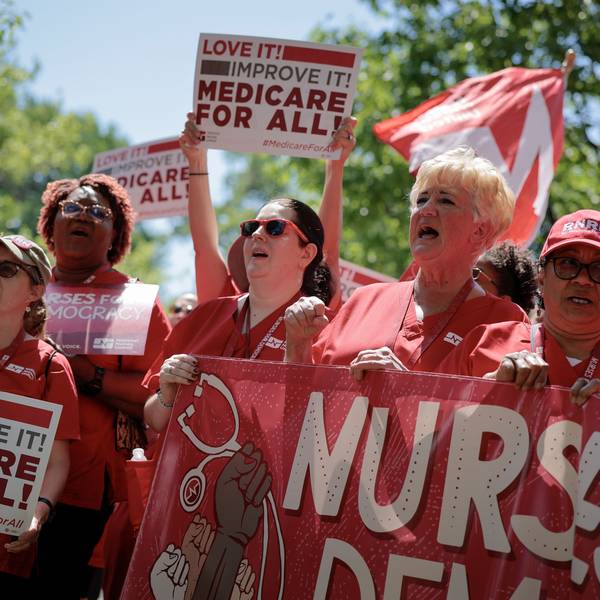
We need health care system designed to care for people, not profits--and Medicare for All is the best way we can do that. (Photo: Shutterstock)
When I signed my letter of intent to medical school, I signed up to work with patients, not insurance companies. I wanted to be part of a team of nurses, doctors, pharmacists, and respiratory therapists -- working together to make sick people feel better.
I soon learned that medicine and health care are two different things.
Medicine is diagnosing and treating people. Health care is the bureaucracy that prevents physicians, nurses, and all other providers from practicing medicine to the best of their abilities.
I'd heard that doctors everywhere were overwhelmed by paperwork and dealing with insurance companies, but I didn't realize just how bad it was. I still don't understand it -- and I know it's about to hit me like a ton of bricks.
I shouldn't have to deal with it. And neither should anyone else trying to heal people.
I should be able to work with my patients to decide what's best for them, not argue with the insurance company about why my patient needs a heart procedure. I should be able to give my patients life-saving drugs without having to worry about whether they can afford it.
I should be able to practice the medicine I'm being taught without having to succumb to a broken system. This is why we need Medicare for All.
Sure, it will cost money, but we can afford it. Studies suggest it would be cheaper than the current for-profit model.
And yes, Medicare for All would raise taxes, but it would eliminate the need to pay for insurance. The total average costs to most families would go down -- and many could even see higher paychecks, since employer health costs would drop.
It will lower the costs we all pay for health care, while covering everyone. It will cut out the middleman so we can negotiate drug prices ourselves, decreasing Big Pharma's monopoly.
Almost no one likes their insurance. No one likes paying copays, deductibles, and premiums. Medicare for All would eliminate all of these payments for everyone and increase the quality of care in the United States.
There's this fear that Medicare for All will allow the government to control who gets care, but a more sinister version of this already happens with for-profit insurance corporations. Doctors already need to get permission from insurance companies to cover necessary procedures or medication.
Medical schools emphasize treating the person, not the disease. Yet insurance companies routinely deny care to patients they've never met. That's just bad medicine. Medicare for All would return the power to choose to patients and physicians.
For-profit health care just doesn't work. When you get sick, you can't negotiate how much you pay--that's why we buy insurance to negotiate for us. But insurance negotiates with hospitals to lower the cost for themselves, not for you.
They have no interest or incentive to pay for your care. You already pay their premiums every month, so if there's any way for them to avoid paying for your care, they're going to take it.
It's time to kick insurance out of my doctor's office. Physicians and other healthcare workers are being overburdened with unnecessary paperwork. Patients are either being denied care outright or forced to pay outrageous prices, or both.
What good is a country that can't protect its own people? We need health care system designed to care for people, not profits--and Medicare for All is the best way we can do that. My patients deserve a health care system that puts them first.
Dear Common Dreams reader, It’s been nearly 30 years since I co-founded Common Dreams with my late wife, Lina Newhouser. We had the radical notion that journalism should serve the public good, not corporate profits. It was clear to us from the outset what it would take to build such a project. No paid advertisements. No corporate sponsors. No millionaire publisher telling us what to think or do. Many people said we wouldn't last a year, but we proved those doubters wrong. Together with a tremendous team of journalists and dedicated staff, we built an independent media outlet free from the constraints of profits and corporate control. Our mission has always been simple: To inform. To inspire. To ignite change for the common good. Building Common Dreams was not easy. Our survival was never guaranteed. When you take on the most powerful forces—Wall Street greed, fossil fuel industry destruction, Big Tech lobbyists, and uber-rich oligarchs who have spent billions upon billions rigging the economy and democracy in their favor—the only bulwark you have is supporters who believe in your work. But here’s the urgent message from me today. It's never been this bad out there. And it's never been this hard to keep us going. At the very moment Common Dreams is most needed, the threats we face are intensifying. We need your support now more than ever. We don't accept corporate advertising and never will. We don't have a paywall because we don't think people should be blocked from critical news based on their ability to pay. Everything we do is funded by the donations of readers like you. When everyone does the little they can afford, we are strong. But if that support retreats or dries up, so do we. Will you donate now to make sure Common Dreams not only survives but thrives? —Craig Brown, Co-founder |
When I signed my letter of intent to medical school, I signed up to work with patients, not insurance companies. I wanted to be part of a team of nurses, doctors, pharmacists, and respiratory therapists -- working together to make sick people feel better.
I soon learned that medicine and health care are two different things.
Medicine is diagnosing and treating people. Health care is the bureaucracy that prevents physicians, nurses, and all other providers from practicing medicine to the best of their abilities.
I'd heard that doctors everywhere were overwhelmed by paperwork and dealing with insurance companies, but I didn't realize just how bad it was. I still don't understand it -- and I know it's about to hit me like a ton of bricks.
I shouldn't have to deal with it. And neither should anyone else trying to heal people.
I should be able to work with my patients to decide what's best for them, not argue with the insurance company about why my patient needs a heart procedure. I should be able to give my patients life-saving drugs without having to worry about whether they can afford it.
I should be able to practice the medicine I'm being taught without having to succumb to a broken system. This is why we need Medicare for All.
Sure, it will cost money, but we can afford it. Studies suggest it would be cheaper than the current for-profit model.
And yes, Medicare for All would raise taxes, but it would eliminate the need to pay for insurance. The total average costs to most families would go down -- and many could even see higher paychecks, since employer health costs would drop.
It will lower the costs we all pay for health care, while covering everyone. It will cut out the middleman so we can negotiate drug prices ourselves, decreasing Big Pharma's monopoly.
Almost no one likes their insurance. No one likes paying copays, deductibles, and premiums. Medicare for All would eliminate all of these payments for everyone and increase the quality of care in the United States.
There's this fear that Medicare for All will allow the government to control who gets care, but a more sinister version of this already happens with for-profit insurance corporations. Doctors already need to get permission from insurance companies to cover necessary procedures or medication.
Medical schools emphasize treating the person, not the disease. Yet insurance companies routinely deny care to patients they've never met. That's just bad medicine. Medicare for All would return the power to choose to patients and physicians.
For-profit health care just doesn't work. When you get sick, you can't negotiate how much you pay--that's why we buy insurance to negotiate for us. But insurance negotiates with hospitals to lower the cost for themselves, not for you.
They have no interest or incentive to pay for your care. You already pay their premiums every month, so if there's any way for them to avoid paying for your care, they're going to take it.
It's time to kick insurance out of my doctor's office. Physicians and other healthcare workers are being overburdened with unnecessary paperwork. Patients are either being denied care outright or forced to pay outrageous prices, or both.
What good is a country that can't protect its own people? We need health care system designed to care for people, not profits--and Medicare for All is the best way we can do that. My patients deserve a health care system that puts them first.
When I signed my letter of intent to medical school, I signed up to work with patients, not insurance companies. I wanted to be part of a team of nurses, doctors, pharmacists, and respiratory therapists -- working together to make sick people feel better.
I soon learned that medicine and health care are two different things.
Medicine is diagnosing and treating people. Health care is the bureaucracy that prevents physicians, nurses, and all other providers from practicing medicine to the best of their abilities.
I'd heard that doctors everywhere were overwhelmed by paperwork and dealing with insurance companies, but I didn't realize just how bad it was. I still don't understand it -- and I know it's about to hit me like a ton of bricks.
I shouldn't have to deal with it. And neither should anyone else trying to heal people.
I should be able to work with my patients to decide what's best for them, not argue with the insurance company about why my patient needs a heart procedure. I should be able to give my patients life-saving drugs without having to worry about whether they can afford it.
I should be able to practice the medicine I'm being taught without having to succumb to a broken system. This is why we need Medicare for All.
Sure, it will cost money, but we can afford it. Studies suggest it would be cheaper than the current for-profit model.
And yes, Medicare for All would raise taxes, but it would eliminate the need to pay for insurance. The total average costs to most families would go down -- and many could even see higher paychecks, since employer health costs would drop.
It will lower the costs we all pay for health care, while covering everyone. It will cut out the middleman so we can negotiate drug prices ourselves, decreasing Big Pharma's monopoly.
Almost no one likes their insurance. No one likes paying copays, deductibles, and premiums. Medicare for All would eliminate all of these payments for everyone and increase the quality of care in the United States.
There's this fear that Medicare for All will allow the government to control who gets care, but a more sinister version of this already happens with for-profit insurance corporations. Doctors already need to get permission from insurance companies to cover necessary procedures or medication.
Medical schools emphasize treating the person, not the disease. Yet insurance companies routinely deny care to patients they've never met. That's just bad medicine. Medicare for All would return the power to choose to patients and physicians.
For-profit health care just doesn't work. When you get sick, you can't negotiate how much you pay--that's why we buy insurance to negotiate for us. But insurance negotiates with hospitals to lower the cost for themselves, not for you.
They have no interest or incentive to pay for your care. You already pay their premiums every month, so if there's any way for them to avoid paying for your care, they're going to take it.
It's time to kick insurance out of my doctor's office. Physicians and other healthcare workers are being overburdened with unnecessary paperwork. Patients are either being denied care outright or forced to pay outrageous prices, or both.
What good is a country that can't protect its own people? We need health care system designed to care for people, not profits--and Medicare for All is the best way we can do that. My patients deserve a health care system that puts them first.