SUBSCRIBE TO OUR FREE NEWSLETTER
Daily news & progressive opinion—funded by the people, not the corporations—delivered straight to your inbox.
5
#000000
#FFFFFF
To donate by check, phone, or other method, see our More Ways to Give page.
Daily news & progressive opinion—funded by the people, not the corporations—delivered straight to your inbox.
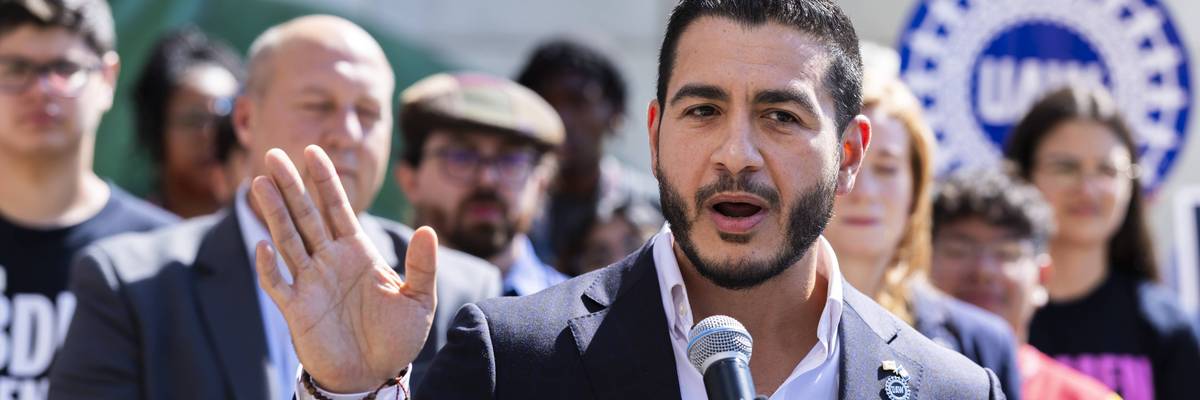
Michigan Democratic Senate primary winner Abdul El-Sayed speaks during a press conference in front of the Spirit of Detroit statue on August 5, 2026 in Detroit, Michigan.
His win proved that a pro-Palestinian progressive could triumph over AIPAC, dark money, and the Democratic establishment.
In what, I believe, will be seen as this year’s most significant election; Dr Abdul El-Sayed won a victory in Michigan’s Democratic Senate primary. It was a close contest—a nail-biter, as we say—but it was an important win that marks a watershed moment in US politics.
It was the first time that Israel’s genocidal war in Gaza and massive US military support to Israel became central themes that were actively debated across the state. This issue has come up in a few other races. But this Senate race was different. There were daily discussions about the fact that the US has been subsidizing Israeli policies that have taken such a huge toll on Palestinians and Lebanese. From the results it is clear: Israel and the candidate that supported Israel, four term congresswoman, Rep. Haley Stevens, both lost.
Another major issue actively debated in this contest was the role of “dark money” and other independent expenditures. We’ve seen dark money dominate campaigns in the past. But never at this level. At last count, Stevens had received upwards of $70 million, with the bulk of these funds coming directly from pro-Israel groups, led by the Israel lobby, American Israel Public Affairs Committee (AIPAC). In contrast, El-Sayed’s campaign was fueled largely by small donors. Overall, Stevens and AIPAC outspent El-Sayed by a margin of over 11 to one! In the end, dark money and AIPAC were resoundingly defeated, proving that money can prop up a candidate but can’t automatically win an election.
The El-Sayed-Stevens contest also became a national face-off between the progressive wing of the Democratic Party and the party’s establishment, with leading Democrats from both wings endorsing and campaigning in the state. El-Sayed’s win in this bellwether Midwestern battleground state represents a major win for progressives. It demonstrated that the “establishment” itself has become toxic to many Democratic voters.
I am hard pressed to find an election that was more consequential and broke ground in more areas than this Michigan primary contest.
This election also marks a huge victory for Michigan’s Arab Americans. Four decades ago, the leading candidate for mayor of Dearborn made “What to do about the Arab problem?” a central issue in his campaign. Since then, that community has continued to organize, register voters, and win elections. Much maligned after registering their discontent with the Biden administration’s support for Israel, they came roaring back by helping to elect an Arab American as the Democratic Senate nominee. Not only that, but in the contest in the Dearborn area for the nomination to represent Democrats in the November election for Michigan State Senate, Abbas Alawieh won a decisive victory. Abbas was the leader of the 2024 “Uncommitted” movement.
I am hard pressed to find an election that was more consequential and broke ground in more areas than this Michigan primary contest. Now it’s on to November.
Dear Common Dreams reader, It’s been nearly 30 years since I co-founded Common Dreams with my late wife, Lina Newhouser. We had the radical notion that journalism should serve the public good, not corporate profits. It was clear to us from the outset what it would take to build such a project. No paid advertisements. No corporate sponsors. No millionaire publisher telling us what to think or do. Many people said we wouldn't last a year, but we proved those doubters wrong. Together with a tremendous team of journalists and dedicated staff, we built an independent media outlet free from the constraints of profits and corporate control. Our mission has always been simple: To inform. To inspire. To ignite change for the common good. Building Common Dreams was not easy. Our survival was never guaranteed. When you take on the most powerful forces—Wall Street greed, fossil fuel industry destruction, Big Tech lobbyists, and uber-rich oligarchs who have spent billions upon billions rigging the economy and democracy in their favor—the only bulwark you have is supporters who believe in your work. But here’s the urgent message from me today. It's never been this bad out there. And it's never been this hard to keep us going. At the very moment Common Dreams is most needed, the threats we face are intensifying. We need your support now more than ever. We don't accept corporate advertising and never will. We don't have a paywall because we don't think people should be blocked from critical news based on their ability to pay. Everything we do is funded by the donations of readers like you. When everyone does the little they can afford, we are strong. But if that support retreats or dries up, so do we. Will you donate now to make sure Common Dreams not only survives but thrives? —Craig Brown, Co-founder |
In what, I believe, will be seen as this year’s most significant election; Dr Abdul El-Sayed won a victory in Michigan’s Democratic Senate primary. It was a close contest—a nail-biter, as we say—but it was an important win that marks a watershed moment in US politics.
It was the first time that Israel’s genocidal war in Gaza and massive US military support to Israel became central themes that were actively debated across the state. This issue has come up in a few other races. But this Senate race was different. There were daily discussions about the fact that the US has been subsidizing Israeli policies that have taken such a huge toll on Palestinians and Lebanese. From the results it is clear: Israel and the candidate that supported Israel, four term congresswoman, Rep. Haley Stevens, both lost.
Another major issue actively debated in this contest was the role of “dark money” and other independent expenditures. We’ve seen dark money dominate campaigns in the past. But never at this level. At last count, Stevens had received upwards of $70 million, with the bulk of these funds coming directly from pro-Israel groups, led by the Israel lobby, American Israel Public Affairs Committee (AIPAC). In contrast, El-Sayed’s campaign was fueled largely by small donors. Overall, Stevens and AIPAC outspent El-Sayed by a margin of over 11 to one! In the end, dark money and AIPAC were resoundingly defeated, proving that money can prop up a candidate but can’t automatically win an election.
The El-Sayed-Stevens contest also became a national face-off between the progressive wing of the Democratic Party and the party’s establishment, with leading Democrats from both wings endorsing and campaigning in the state. El-Sayed’s win in this bellwether Midwestern battleground state represents a major win for progressives. It demonstrated that the “establishment” itself has become toxic to many Democratic voters.
I am hard pressed to find an election that was more consequential and broke ground in more areas than this Michigan primary contest.
This election also marks a huge victory for Michigan’s Arab Americans. Four decades ago, the leading candidate for mayor of Dearborn made “What to do about the Arab problem?” a central issue in his campaign. Since then, that community has continued to organize, register voters, and win elections. Much maligned after registering their discontent with the Biden administration’s support for Israel, they came roaring back by helping to elect an Arab American as the Democratic Senate nominee. Not only that, but in the contest in the Dearborn area for the nomination to represent Democrats in the November election for Michigan State Senate, Abbas Alawieh won a decisive victory. Abbas was the leader of the 2024 “Uncommitted” movement.
I am hard pressed to find an election that was more consequential and broke ground in more areas than this Michigan primary contest. Now it’s on to November.
In what, I believe, will be seen as this year’s most significant election; Dr Abdul El-Sayed won a victory in Michigan’s Democratic Senate primary. It was a close contest—a nail-biter, as we say—but it was an important win that marks a watershed moment in US politics.
It was the first time that Israel’s genocidal war in Gaza and massive US military support to Israel became central themes that were actively debated across the state. This issue has come up in a few other races. But this Senate race was different. There were daily discussions about the fact that the US has been subsidizing Israeli policies that have taken such a huge toll on Palestinians and Lebanese. From the results it is clear: Israel and the candidate that supported Israel, four term congresswoman, Rep. Haley Stevens, both lost.
Another major issue actively debated in this contest was the role of “dark money” and other independent expenditures. We’ve seen dark money dominate campaigns in the past. But never at this level. At last count, Stevens had received upwards of $70 million, with the bulk of these funds coming directly from pro-Israel groups, led by the Israel lobby, American Israel Public Affairs Committee (AIPAC). In contrast, El-Sayed’s campaign was fueled largely by small donors. Overall, Stevens and AIPAC outspent El-Sayed by a margin of over 11 to one! In the end, dark money and AIPAC were resoundingly defeated, proving that money can prop up a candidate but can’t automatically win an election.
The El-Sayed-Stevens contest also became a national face-off between the progressive wing of the Democratic Party and the party’s establishment, with leading Democrats from both wings endorsing and campaigning in the state. El-Sayed’s win in this bellwether Midwestern battleground state represents a major win for progressives. It demonstrated that the “establishment” itself has become toxic to many Democratic voters.
I am hard pressed to find an election that was more consequential and broke ground in more areas than this Michigan primary contest.
This election also marks a huge victory for Michigan’s Arab Americans. Four decades ago, the leading candidate for mayor of Dearborn made “What to do about the Arab problem?” a central issue in his campaign. Since then, that community has continued to organize, register voters, and win elections. Much maligned after registering their discontent with the Biden administration’s support for Israel, they came roaring back by helping to elect an Arab American as the Democratic Senate nominee. Not only that, but in the contest in the Dearborn area for the nomination to represent Democrats in the November election for Michigan State Senate, Abbas Alawieh won a decisive victory. Abbas was the leader of the 2024 “Uncommitted” movement.
I am hard pressed to find an election that was more consequential and broke ground in more areas than this Michigan primary contest. Now it’s on to November.