SUBSCRIBE TO OUR FREE NEWSLETTER
Daily news & progressive opinion—funded by the people, not the corporations—delivered straight to your inbox.
5
#000000
#FFFFFF
To donate by check, phone, or other method, see our More Ways to Give page.
Daily news & progressive opinion—funded by the people, not the corporations—delivered straight to your inbox.
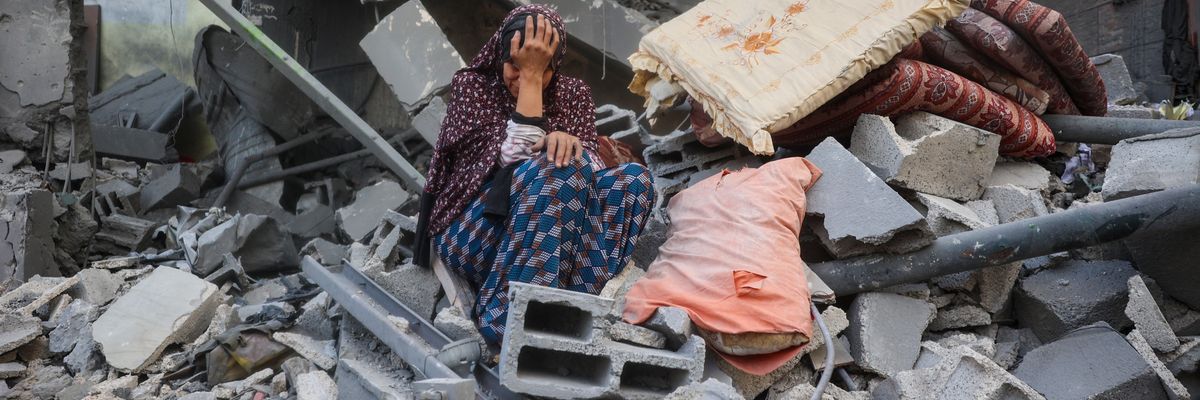
A woman cries while sitting on the rubble of her house, destroyed in an Israeli strike, in the Nuseirat refugee camp in central Gaza Strip on March 18, 2025.
The slaughter in Gaza is carried out, financed, and defended by Israel and Western powers for domestic political reasons.
In a genocidal war that has spiraled into a struggle for political survival, Israeli Prime Minister Benjamin Netanyahu’s coalition and the global powers supporting him continue to sacrifice Palestinian lives for political gain.
The sordid career of Israel’s extremist National Security Minister Itamar Ben-Gvir epitomizes this tragic reality.
Ben-Gvir joined Netanyahu’s government coalition following the December 2022 elections. He remained in the coalition after the October 7, 2023 war and genocide, with the understanding that any cease-fire in Gaza would force his departure.
Though “war is the continuation of politics by other means,” as Prussian General Carl von Clausewitz once surmised, in Israel’s case, the “politics” behind the war is not about Israel as a state but about Netanyahu’s own political survival.
As long as the killing of Palestinians and the destruction of their cities continued, Ben-Gvir stayed on board—though neither he nor Netanyahu had any real “next-day” plan, other than to carry out some of the most heinous massacres against a civilian population in recent history.
On January 19, Ben-Gvir left the government immediately following a cease-fire agreement, which many argued would not last. Netanyahu’s untrustworthiness, along with the collapse of his government if the war ended completely, made the cease-fire unfeasible.
Ben-Gvir returned when the genocide resumed on March 18. “We are back, with all our might and power!” he wrote in a tweet on the day of his return.
Israel lacks a clear plan because it cannot defeat the Palestinians. While the Israeli army has inflicted suffering on the Palestinian people like no other force has against a civilian population in modern history, the war endures because the Palestinians refuse to surrender.
Yet, Israel’s military planners know that a military victory is no longer possible. Former Defense Minister Moshe Ya’alon recently added his voice to the growing chorus, stating during an interview on March 15 that “revenge is not a war plan.”
The Americans, who supported Netanyahu’s violation of the cease-fire—thus resuming the killings—also understand that the war is almost entirely a political struggle, designed to keep figures like Ben-Gvir and extremist Finance Minister Bezalel Smotrich in Netanyahu’s coalition.
Though “war is the continuation of politics by other means,” as Prussian General Carl von Clausewitz once surmised, in Israel’s case, the “politics” behind the war is not about Israel as a state but about Netanyahu’s own political survival. He is sacrificing Palestinian children to stay in power, while his extremist ministers do the same to expand their support among right-wing, religious, and ultra-nationalist constituencies.
This logic—that Israel’s war on Gaza reflects internal politics, ideological warfare, and class infighting—extends to other political players as well.
The Trump administration supports Israel as payback for the financial backing it received from Netanyahu’s supporters in the U.S. during the last elections. On the other hand, Britain remains steadfast in its commitment to Tel Aviv, despite the political shifts in Westminster, thus continuing to align with U.S.-Israeli interests while disregarding the wishes of its own population. Meanwhile, Germany, it’s said, is driven by the guilt of its past crimes, while other Western governments pay lip service to human rights, all the while acting in ways that contradict their stated foreign policies.
This mirrors the dystopian world of George Orwell’s 1984, where perpetual war is waged based on cynical and false assumptions, where “war is peace… freedom is slavery… and ignorance is strength.”
Indeed, these elements are reflected in today’s equally dystopian reality. However, Israel substitutes “peace” with “security,” the U.S. is motivated by dominance and “stability,” and Europe continues to speak of “democracy.”
Another key difference is that Palestinians do not belong to any of these “superstates.” They are treated as mere pawns, their deaths and enduring of injustice used to create the illusion of “conflict” and to justify the ongoing prolongation of the war.
The deaths of Palestinians—now numbering over 50,000—are widely reported by mainstream media outlets, yet rarely do they mention that this is not a war in the traditional sense, but a genocide, carried out, financed, and defended by Israel and Western powers for domestic political reasons. Palestinians continue to resist because it is their only option in the face of utter destruction and extermination.
Netanyahu’s war, however, is not sustainable in the Orwellian sense, either. For it to be sustainable, it would need infinite economic resources, which Israel, despite U.S. generosity, cannot afford. It would also need an endless supply of soldiers, but reports indicate that at least half of Israel’s reserves are not rejoining the army.
Furthermore, Netanyahu does not merely seek to sustain the war; he aims to expand it. This could shift regional and international dynamics in ways that neither Israeli leaders nor their allies fully understand.
Aware of this, Arab leaders met in Cairo on March 4 to propose an alternative to Netanyahu-Trump’s plan to ethnically cleanse Palestinians from Gaza. However, they have yet to take meaningful action to hold Israel accountable if it continues to defy international and humanitarian laws—as it has since the Arab summit.
The Arab world must escalate beyond mere statements, or the Middle East may endure further war, all to prolong Netanyahu’s coalition of extremists a little longer.
As for the West, the crisis lies in its moral contradictions. The situation in Gaza embodies Orwell’s concept of “doublethink”—the power of holding two contradictory beliefs in one’s mind simultaneously and accepting both. Western powers claim to support human rights while simultaneously backing genocide. Until this dilemma is resolved, the Middle East will continue to endure suffering for years to come.
Dear Common Dreams reader, It’s been nearly 30 years since I co-founded Common Dreams with my late wife, Lina Newhouser. We had the radical notion that journalism should serve the public good, not corporate profits. It was clear to us from the outset what it would take to build such a project. No paid advertisements. No corporate sponsors. No millionaire publisher telling us what to think or do. Many people said we wouldn't last a year, but we proved those doubters wrong. Together with a tremendous team of journalists and dedicated staff, we built an independent media outlet free from the constraints of profits and corporate control. Our mission has always been simple: To inform. To inspire. To ignite change for the common good. Building Common Dreams was not easy. Our survival was never guaranteed. When you take on the most powerful forces—Wall Street greed, fossil fuel industry destruction, Big Tech lobbyists, and uber-rich oligarchs who have spent billions upon billions rigging the economy and democracy in their favor—the only bulwark you have is supporters who believe in your work. But here’s the urgent message from me today. It's never been this bad out there. And it's never been this hard to keep us going. At the very moment Common Dreams is most needed, the threats we face are intensifying. We need your support now more than ever. We don't accept corporate advertising and never will. We don't have a paywall because we don't think people should be blocked from critical news based on their ability to pay. Everything we do is funded by the donations of readers like you. When everyone does the little they can afford, we are strong. But if that support retreats or dries up, so do we. Will you donate now to make sure Common Dreams not only survives but thrives? —Craig Brown, Co-founder |
In a genocidal war that has spiraled into a struggle for political survival, Israeli Prime Minister Benjamin Netanyahu’s coalition and the global powers supporting him continue to sacrifice Palestinian lives for political gain.
The sordid career of Israel’s extremist National Security Minister Itamar Ben-Gvir epitomizes this tragic reality.
Ben-Gvir joined Netanyahu’s government coalition following the December 2022 elections. He remained in the coalition after the October 7, 2023 war and genocide, with the understanding that any cease-fire in Gaza would force his departure.
Though “war is the continuation of politics by other means,” as Prussian General Carl von Clausewitz once surmised, in Israel’s case, the “politics” behind the war is not about Israel as a state but about Netanyahu’s own political survival.
As long as the killing of Palestinians and the destruction of their cities continued, Ben-Gvir stayed on board—though neither he nor Netanyahu had any real “next-day” plan, other than to carry out some of the most heinous massacres against a civilian population in recent history.
On January 19, Ben-Gvir left the government immediately following a cease-fire agreement, which many argued would not last. Netanyahu’s untrustworthiness, along with the collapse of his government if the war ended completely, made the cease-fire unfeasible.
Ben-Gvir returned when the genocide resumed on March 18. “We are back, with all our might and power!” he wrote in a tweet on the day of his return.
Israel lacks a clear plan because it cannot defeat the Palestinians. While the Israeli army has inflicted suffering on the Palestinian people like no other force has against a civilian population in modern history, the war endures because the Palestinians refuse to surrender.
Yet, Israel’s military planners know that a military victory is no longer possible. Former Defense Minister Moshe Ya’alon recently added his voice to the growing chorus, stating during an interview on March 15 that “revenge is not a war plan.”
The Americans, who supported Netanyahu’s violation of the cease-fire—thus resuming the killings—also understand that the war is almost entirely a political struggle, designed to keep figures like Ben-Gvir and extremist Finance Minister Bezalel Smotrich in Netanyahu’s coalition.
Though “war is the continuation of politics by other means,” as Prussian General Carl von Clausewitz once surmised, in Israel’s case, the “politics” behind the war is not about Israel as a state but about Netanyahu’s own political survival. He is sacrificing Palestinian children to stay in power, while his extremist ministers do the same to expand their support among right-wing, religious, and ultra-nationalist constituencies.
This logic—that Israel’s war on Gaza reflects internal politics, ideological warfare, and class infighting—extends to other political players as well.
The Trump administration supports Israel as payback for the financial backing it received from Netanyahu’s supporters in the U.S. during the last elections. On the other hand, Britain remains steadfast in its commitment to Tel Aviv, despite the political shifts in Westminster, thus continuing to align with U.S.-Israeli interests while disregarding the wishes of its own population. Meanwhile, Germany, it’s said, is driven by the guilt of its past crimes, while other Western governments pay lip service to human rights, all the while acting in ways that contradict their stated foreign policies.
This mirrors the dystopian world of George Orwell’s 1984, where perpetual war is waged based on cynical and false assumptions, where “war is peace… freedom is slavery… and ignorance is strength.”
Indeed, these elements are reflected in today’s equally dystopian reality. However, Israel substitutes “peace” with “security,” the U.S. is motivated by dominance and “stability,” and Europe continues to speak of “democracy.”
Another key difference is that Palestinians do not belong to any of these “superstates.” They are treated as mere pawns, their deaths and enduring of injustice used to create the illusion of “conflict” and to justify the ongoing prolongation of the war.
The deaths of Palestinians—now numbering over 50,000—are widely reported by mainstream media outlets, yet rarely do they mention that this is not a war in the traditional sense, but a genocide, carried out, financed, and defended by Israel and Western powers for domestic political reasons. Palestinians continue to resist because it is their only option in the face of utter destruction and extermination.
Netanyahu’s war, however, is not sustainable in the Orwellian sense, either. For it to be sustainable, it would need infinite economic resources, which Israel, despite U.S. generosity, cannot afford. It would also need an endless supply of soldiers, but reports indicate that at least half of Israel’s reserves are not rejoining the army.
Furthermore, Netanyahu does not merely seek to sustain the war; he aims to expand it. This could shift regional and international dynamics in ways that neither Israeli leaders nor their allies fully understand.
Aware of this, Arab leaders met in Cairo on March 4 to propose an alternative to Netanyahu-Trump’s plan to ethnically cleanse Palestinians from Gaza. However, they have yet to take meaningful action to hold Israel accountable if it continues to defy international and humanitarian laws—as it has since the Arab summit.
The Arab world must escalate beyond mere statements, or the Middle East may endure further war, all to prolong Netanyahu’s coalition of extremists a little longer.
As for the West, the crisis lies in its moral contradictions. The situation in Gaza embodies Orwell’s concept of “doublethink”—the power of holding two contradictory beliefs in one’s mind simultaneously and accepting both. Western powers claim to support human rights while simultaneously backing genocide. Until this dilemma is resolved, the Middle East will continue to endure suffering for years to come.
In a genocidal war that has spiraled into a struggle for political survival, Israeli Prime Minister Benjamin Netanyahu’s coalition and the global powers supporting him continue to sacrifice Palestinian lives for political gain.
The sordid career of Israel’s extremist National Security Minister Itamar Ben-Gvir epitomizes this tragic reality.
Ben-Gvir joined Netanyahu’s government coalition following the December 2022 elections. He remained in the coalition after the October 7, 2023 war and genocide, with the understanding that any cease-fire in Gaza would force his departure.
Though “war is the continuation of politics by other means,” as Prussian General Carl von Clausewitz once surmised, in Israel’s case, the “politics” behind the war is not about Israel as a state but about Netanyahu’s own political survival.
As long as the killing of Palestinians and the destruction of their cities continued, Ben-Gvir stayed on board—though neither he nor Netanyahu had any real “next-day” plan, other than to carry out some of the most heinous massacres against a civilian population in recent history.
On January 19, Ben-Gvir left the government immediately following a cease-fire agreement, which many argued would not last. Netanyahu’s untrustworthiness, along with the collapse of his government if the war ended completely, made the cease-fire unfeasible.
Ben-Gvir returned when the genocide resumed on March 18. “We are back, with all our might and power!” he wrote in a tweet on the day of his return.
Israel lacks a clear plan because it cannot defeat the Palestinians. While the Israeli army has inflicted suffering on the Palestinian people like no other force has against a civilian population in modern history, the war endures because the Palestinians refuse to surrender.
Yet, Israel’s military planners know that a military victory is no longer possible. Former Defense Minister Moshe Ya’alon recently added his voice to the growing chorus, stating during an interview on March 15 that “revenge is not a war plan.”
The Americans, who supported Netanyahu’s violation of the cease-fire—thus resuming the killings—also understand that the war is almost entirely a political struggle, designed to keep figures like Ben-Gvir and extremist Finance Minister Bezalel Smotrich in Netanyahu’s coalition.
Though “war is the continuation of politics by other means,” as Prussian General Carl von Clausewitz once surmised, in Israel’s case, the “politics” behind the war is not about Israel as a state but about Netanyahu’s own political survival. He is sacrificing Palestinian children to stay in power, while his extremist ministers do the same to expand their support among right-wing, religious, and ultra-nationalist constituencies.
This logic—that Israel’s war on Gaza reflects internal politics, ideological warfare, and class infighting—extends to other political players as well.
The Trump administration supports Israel as payback for the financial backing it received from Netanyahu’s supporters in the U.S. during the last elections. On the other hand, Britain remains steadfast in its commitment to Tel Aviv, despite the political shifts in Westminster, thus continuing to align with U.S.-Israeli interests while disregarding the wishes of its own population. Meanwhile, Germany, it’s said, is driven by the guilt of its past crimes, while other Western governments pay lip service to human rights, all the while acting in ways that contradict their stated foreign policies.
This mirrors the dystopian world of George Orwell’s 1984, where perpetual war is waged based on cynical and false assumptions, where “war is peace… freedom is slavery… and ignorance is strength.”
Indeed, these elements are reflected in today’s equally dystopian reality. However, Israel substitutes “peace” with “security,” the U.S. is motivated by dominance and “stability,” and Europe continues to speak of “democracy.”
Another key difference is that Palestinians do not belong to any of these “superstates.” They are treated as mere pawns, their deaths and enduring of injustice used to create the illusion of “conflict” and to justify the ongoing prolongation of the war.
The deaths of Palestinians—now numbering over 50,000—are widely reported by mainstream media outlets, yet rarely do they mention that this is not a war in the traditional sense, but a genocide, carried out, financed, and defended by Israel and Western powers for domestic political reasons. Palestinians continue to resist because it is their only option in the face of utter destruction and extermination.
Netanyahu’s war, however, is not sustainable in the Orwellian sense, either. For it to be sustainable, it would need infinite economic resources, which Israel, despite U.S. generosity, cannot afford. It would also need an endless supply of soldiers, but reports indicate that at least half of Israel’s reserves are not rejoining the army.
Furthermore, Netanyahu does not merely seek to sustain the war; he aims to expand it. This could shift regional and international dynamics in ways that neither Israeli leaders nor their allies fully understand.
Aware of this, Arab leaders met in Cairo on March 4 to propose an alternative to Netanyahu-Trump’s plan to ethnically cleanse Palestinians from Gaza. However, they have yet to take meaningful action to hold Israel accountable if it continues to defy international and humanitarian laws—as it has since the Arab summit.
The Arab world must escalate beyond mere statements, or the Middle East may endure further war, all to prolong Netanyahu’s coalition of extremists a little longer.
As for the West, the crisis lies in its moral contradictions. The situation in Gaza embodies Orwell’s concept of “doublethink”—the power of holding two contradictory beliefs in one’s mind simultaneously and accepting both. Western powers claim to support human rights while simultaneously backing genocide. Until this dilemma is resolved, the Middle East will continue to endure suffering for years to come.