

SUBSCRIBE TO OUR FREE NEWSLETTER
Daily news & progressive opinion—funded by the people, not the corporations—delivered straight to your inbox.
5
#000000
#FFFFFF
To donate by check, phone, or other method, see our More Ways to Give page.
Daily news & progressive opinion—funded by the people, not the corporations—delivered straight to your inbox.

Claire Guzdar, spokesperson for the ProsperUS coalition, reacted to yesterday’s passage of the new House Republican rules package with the following statement:
“House Republicans have jammed through a rules package that makes it very clear what their priorities this Congress will be: more tax breaks for the rich; massive cuts to health care, education, and other family priorities; and politically-motivated manufactured crises.
“The House Republican rules package puts this Congress on a path we’ve traveled before, which will lead to slower economic growth, fewer good jobs, and hurt for millions of families by slashing the investments they need at a time when we should be cementing and building on our economic recovery. We demand better from Congressional leadership – it’s time to make the economically-sound investments that families need to thrive.”
ProsperUS is a coalition of movement groups, labor organizations, think tanks, experts, and advocates that believes government should invest in people.
(520) 623-5252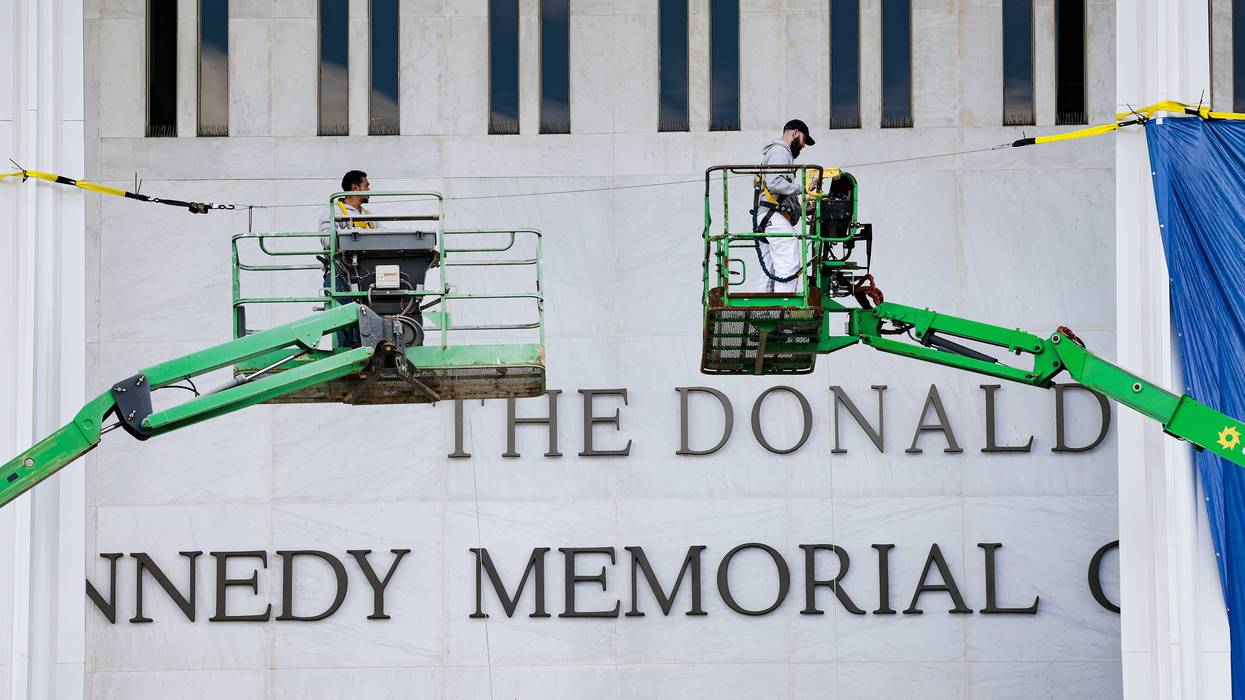
“Congress gave the Kennedy Center its name, and only Congress can change it."
A federal judge ruled Friday that President Donald Trump's renaming of the John F. Kennedy Memorial Center for the Performing Arts after himself is illegal and temporarily barred the president from shuttering the Washington, DC cultural institution for renovations.
Trump's effort to rename the iconic Kennedy Center the Trump-Kennedy Center came after the president used his authority to purge the institution's board and appoint new trustees. In an unprecedented move, the trustees then voted to make Trump the center's board chair. Last December, the board voted unanimously to rename the institution—a move that violated federal law.
Congresswoman Joyce Beatty (D-Ohio), an ex officio member of the Kennedy Center board, sued over the name change, which outraged many Americans and, along with Trump's addition of his name to the US Institute of Peace, sparked legislation aimed at banning the naming or renaming of federal assets after sitting presidents.
"May the John F. Kennedy Center for the Performing Arts be renamed absent Congressional authorization? The answer, plain from the face of the statute, is no," US District Judge Christopher Cooper wrote in his ruling on Beatty's suit. "Nor can any other individual be memorialized on the front portico of the building."
BREAKING: we just won our Kennedy Center case!Both the renaming & the closure of the Kennedy Center are enjoinedKudos to our wonderful client @repbeatty.bsky.social & my colleagues @democracydefendersaction.org & Washington Litigation GroupThis is a 1-2 punch against Trump's corruption
[image or embed]
— Norm Eisen (@normeisen.bsky.social) May 29, 2026 at 11:55 AM
Originally called the National Cultural Center, the Kennedy Center was renamed via an act of Congress following former President John F. Kennedy's 1963 assassination.
"It is hard to imagine a more intentional legislative effort to call the Center by its chosen name," Cooper—an appointee of former President Barack Obama—wrote. "The organic statute also takes pains to ensure that the Kennedy Center’s public spaces honor President Kennedy and President Kennedy alone... The prohibition is unambiguous."
“Congress gave the Kennedy Center its name, and only Congress can change it," the judge added.
Cooper also temporarily blocked Trump's planned two-year closure of the Kennedy Center for renovations.
"In ratifying President Trump’s closure announcement, the Board was derelict in discharging the full range of its responsibilities to the Center," he wrote. "More specifically, the Board based its decision on an insufficient, one-sided presentation of information and
neglected to consider the full range of its statutory obligations and potential adverse consequences of closure on programming and memorial functions."
While Trump claimed the decision to shutter the Kennedy Center was based on input from a group of “many Highly Respected experts,” who said the center was “tired, broken, and dilapidated," critics including John F. Kennedy's descendants pointed to artists not wanting to perform there after the president's takeover and purge, which resulted in programming including the world premier of a documentary film about his wife panned by one critic as "a scowling void of pure nothingness."
Cooper said that the Kennedy Center could be allowed to close “after independently balancing its multiple obligations to the Center in a prudent fashion."
Beatty welcomed Cooper's ruling, which she said "rightly affirms that this administration's efforts to rename and close the Center have no basis in law."
"The Kennedy Center is an institution that belongs to the American people, not to Donald Trump," she added. "He has desecrated this sacred memorial for his own vanity. I am proud to have fought for the rule of law and to protect this sacred institution."
Trump, meanwhile, took to his Truth Social network to rail against Cooper, "a Judge appointed by Barack Hussein Obama."
"Cooper ruled that The Kennedy Center, which was going to close in early July for largescale renovations and construction due to years of neglect, decay, and poor maintenance, and which was to be transformed by the Trump Administration into the Finest Facility of its kind, anywhere in the World, is not allowed to close for these renovations, which would not be possible to properly do without such a closure," the president wrote.
"Additionally, Judge Cooper ruled that the 36 Member Board of Trustees, which unanimously voted to add the name 'TRUMP' onto the former Kennedy Center, making it The Trump Kennedy Center, did not have the right to do such an addition, and the name, 'TRUMP,' must be removed," Trump's screed continued.
"I took great pride in taking over a losing Institution, and looked forward to making it into a Great and Prestigious WINNER for Washington, D.C., and indeed, the United States of America," he continued. "Unfortunately, Judge Cooper and the Radical Left would rather see it DIE than have President Trump transform it into something that everyone could be proud of, much as I have done, in many cases, throughout my life."
"Therefore, based on the fact that the Radical Left Democrats care more about opposing your favorite President, ME, than saving a dying Performing Arts Center, almost all of which lose large amounts of money throughout the Country, we are going to be working with Congress to transfer this failing Institution back to them so they can make a determination as to what to do with it," Trump said.
"Judge Cooper should be ashamed of himself! I cannot be involved with a situation where danger to the Public is allowed to flourish in plain and open sight," the president wrote. "Unless I am free to do what I do better than anyone else, bring this Institution back, physically, financially, and artistically, I have no interest in continuing what could only be a hopeless journey into 'NEVER NEVER LAND.'"
"There has never been a President of the United States who has been treated so unfairly by the Courts as I," he added, "but, that’s OK, I will continue to do, what is considered to be, a great job for the wonderful people of our Country."
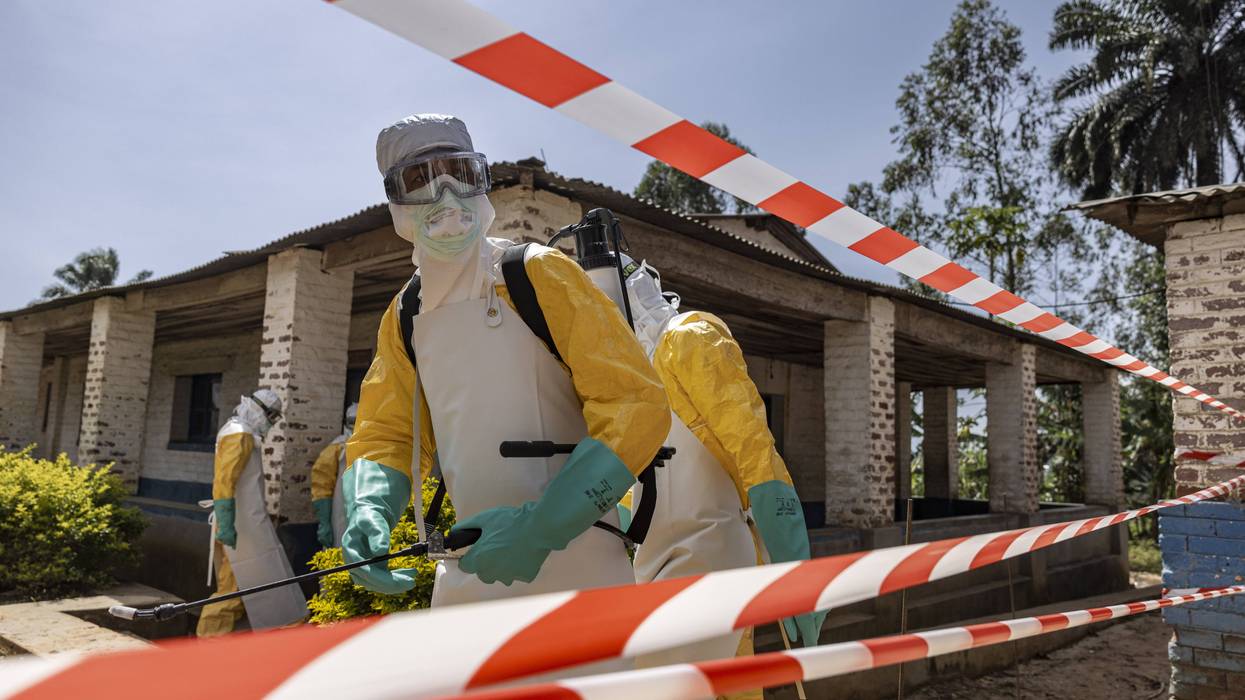
Kenya's largest medical professionals union, which welcomed the ruling, argued that if setting up an Ebola quarantine facility "is too dangerous for America, it is too dangerous for Kenya."
A day after US officials said Kenya had approved a request to open a quarantine center for Americans exposed to a rare strain of the Ebola virus, a court in the East African nation on Friday temporarily blocked the plan amid a growing outbreak in neighboring Uganda and the Democratic Republic of Congo.
The High Court prohibited the Kenyan government from establishing or operating any Ebola exposure, quarantine, isolation, or treatment facility in the country under any agreement with the United States or any other foreign government or agency.
The court also blocked Kenya's government from allowing anyone infected with or exposed to Ebola into the country pending the outcome of the case, which was filed by the Katiba Institute, a civil rights group.
“At its core, the case is about preserving constitutional accountability, protecting public health, and ensuring that no government may place expediency above the lives and safety of the people of Kenya,” Katiba Institute executive director Nora Mbagathi said Thursday.
A 50-bed Ebola quarantine center was set to open Friday at Laikipia Air Base in Nanyuki, located approximately 125 miles north of Nairobi. The facility would have been operated by members of the US Public Health Service, a uniformed branch of the Department of Health and Human Services.
US Secretary of State Marco Rubio said Thursday during a Cabinet meeting that “we cannot and will not allow any cases of Ebola to enter the United States."
However, US public health officials strongly criticized the plan to quarantine Americans in Kenya instead of repatriating them, with one emergency physician accusing the Trump administration of “a dramatic abdication of what we owe our own."
Elected leaders in Laikipia County welcomed the High Court's ruling. They had opposed the US quarantine center, and had asked in a joint statement prior to the decision, "Why Laikipia?"
"What does the US government know about this that they are not accepting their own affected citizens into their soil but are ready to have them elsewhere?" the officials added.
The Kenya Medical Practitioners, Pharmacists, and Dentists Union (KMPDU), which had strongly opposed the quarantine center and had threatened to strike, also welcomed the High Court ruling.
"We are utterly disgusted by the government’s apparent willingness to trade national biosecurity and the lives of its citizens for foreign aid," KMPDU secretary general Davji Bhimji Attelah said in a statement Thursday, referring to the $13.5 million the Trump administration pledged for Ebola preparedness in Kenya, part of a broader $125 million US commitment toward fighting the disease.
Kenyan healthcare workers are pushing back hard against reported plans for the U.S. to establish Ebola quarantine/treatment facilities in Kenya for exposed American personnel during the ongoing Bundibugyo Ebola outbreak in Central/East Africa.
[image or embed]
— BK. Titanji (@boghuma.bsky.social) May 28, 2026 at 11:31 AM
"We will not sit back and watch Kenya be treated as a containment colony for a lethal pathogen that we did not generate," Attelah added. “We will not tolerate an apartheid healthcare model on Kenyan soil. If it is too dangerous for America, it is too dangerous for Kenya."
Critics say President Donald Trump’s ideologically driven decision to withdraw the US from the World Health Organization (WHO), his administration’s dismantling of the US Agency for International Development, and reduced funding for the US Centers for Disease Control and Prevention’s global public health efforts have adversely affected the response to the current Ebola epidemic, compared with 2014 and 2019 outbreaks.
The WHO said Friday that there were a total of 906 suspected Ebola cases and 223 suspected deaths reported in the Democratic Republic of the Congo as of Wednesday, and 125 confirmed cases in the DRC and 9 in Uganda, with 18 deaths among the confirmed cases in both countries.
Ebola—which typically kills between 25% and 90% of infected people, depending upon the strain of the virus and quality of available medical care—causes widespread and often catastrophic damage to the body’s blood vessels, immune system, and organs. The virus is transmitted to people from wild animals, including fruit bats, porcupines, and non-human primates, and then spreads between humans through direct contact with the blood or bodily fluids of infected people.

The average US household, according to Moody's, has shouldered nearly $450 in extra fuel costs due to the Republican president's unprovoked Middle East war.
Americans have made clear since President Donald Trump joined Israel in beginning an unprovoked war on Iran that they view the conflict-of-choice as damaging to their financial well-being—and that they blame the president for the higher cost of fuel since the war started in February.
On Friday, Moody's Analytics put an exact number on the heightened financial anxiety families across the country have been feeling over the past three months as Iran's closure of the Strait of Hormuz has sent fuel prices soaring: $447.19.
That's how much the average US household has had to additionally spend on fuel-related expenses since Trump and Israeli Prime Minister Benjamin Netanyanu launched their attack on February 28, Moody's told CNBC.
Altogether, Americans have spent a total of nearly $60 billion on gas, airline fares, and other related costs as the strait, a key shipping route for oil, has remained effectively closed.
According to AAA, the average price of a gallon of regular gas stands at $4.39—up close to 50% since early March. Diesel now costs $5.52 per gallon, forcing consumers to pay $20 billion more in additional expenses on groceries and other goods.
"The economy isn’t just soft, it’s struggling," Mark Zandi, Moody's chief economist, said Thursday. "The Iran war needs to end, and the Strait of Hormuz needs to be reopened soon, or recession will become more likely than not."
"Unless the war ends soon, financially pressed consumers will have no option but to turn more cautious in their spending."
As CNBC reported Friday, "higher energy costs can force consumers to raid their savings and lean more on debt to cover expenses."
Trump flatly said earlier this month that he doesn't consider Americans' financial situation "even a little bit" when it comes to the war on Iran, while National Economic Council Director Kevin Hassett posited earlier this week that Americans are "spending more money" not because higher prices are forcing them to but because they're "very, very optimistic about the state of the economy." He also bragged recently that "credit card spending is through the roof"—a sign several observers took not as a positive omen for the economy but as a sign that families are being forced to take on debt to pay for gas and other essentials.
Zandi provided a reality check Friday.
"Unless the war ends soon, financially pressed consumers will have no option but to turn more cautious in their spending, threatening the already soft economy,” he told CNBC, warning that families could end up spending nearly $2,000 extra on fuel-related costs if the war continues reaches the one-year mark.
Republicans emphasized last year that Trump's One Big Beautiful Bill Act would give bigger tax returns to families across the country. Any benefit, said Zandi, has now been canceled out by the president's war.
On Thursday, US Sens. Elizabeth Warren (D-Mass.), Chuck Schumer (D-NY), and Jeff Merkley (D-Ore.) said the White House is in denial about the fact that Americans are struggling with the impact of Trump's foreign policy decisions as the Pentagon vastly underestimates how much the conflict has cost in public statements.
The acting comptroller of the Pentagon told Congress in April that the war had cost $25 billion, increasing the estimate to $29 billion two weeks later.
The senators told the Congressional Budget Office Friday that independent analyses had put the real cost of the war at $40 billion-$50 billion.
“It is essential," said the lawmakers, "that Congress and the American public receive accurate, comprehensive estimates of the costs of the war in Iran."