

SUBSCRIBE TO OUR FREE NEWSLETTER
Daily news & progressive opinion—funded by the people, not the corporations—delivered straight to your inbox.
5
#000000
#FFFFFF
To donate by check, phone, or other method, see our More Ways to Give page.
Daily news & progressive opinion—funded by the people, not the corporations—delivered straight to your inbox.

Malagasy government violated right to freedom of movement and choice of residence of Antandroy IDPs
Malagasy authorities have failed to protect and assist thousands of Antandroy people who have been forced to flee their homes since 2017 because of drought-induced famines in the Androy region, in southern Madagascar, Amnesty International said in a new report.
“’That Suffering Haunts Me Even Here’ - The Struggle for Human Rights of the Antandroy People Displaced by Climate Change from Southern Madagascar”, documents how Antandroy people have been forced to travel to other parts of the country in search of better conditions, with many internally displaced people (IDPs) making the arduous 1,500km journey to the northern Boeny region. The report exposes the government’s violation of their rights to freedom of movement and choice of residence within state borders, adequate housing, and an adequate standard of living.
“From insufficiently addressing the impacts of droughts in the south, to its lack of protection and support for internally displaced persons, the government has repeatedly failed the Antandroy,” said Tigere Chagutah, Amnesty International’s Regional Director for East and Southern Africa.
“To mitigate against these failures and their effects on IDPs, Madagascar must do more to improve its response to a changing climate by urgently adopting comprehensive national and local strategies to address drought-induced displacements, and by prioritizing the human rights needs of displaced Antandroy.”
Drought-induced displacements in southern Madagascar are deeply rooted in the French colonial era which introduced cochineal parasites to eradicate the opuntia monacantha, a drought-resilient cactus growing in the region. This policy contributed to the vulnerability of the Antandroy people to droughts, which the government of Madagascar and scientists have in recent years linked to global climate change.
More recently, the effects of climate change have made droughts more severe, leading to displacements towards the Boeny region in north Madagascar and other parts of the country.
“Madagascar’s contribution to global carbon emissions is negligible. Yet, the Antandroy people find themselves bearing the brunt of a crisis created, in part, by the actions of high-income historical emitting countries and French colonial rule. France must own up to its historical role in the ongoing crisis and provide reparatory justice for the colonial wrongs against the Antandroy,” said Tigere Chagutah. “High-income, historical emitting states must financially support Madagascar with grants and the transfer of environmentally sound technologies.”
To understand the plight of those displaced, Amnesty International visited six villages of Antandroy IDPs and the main arrival bus station. In total, Amnesty International interviewed 122 IDPs, and also consulted government officials, local and international organizations, academics, climate scientists, and analysed satellite imagery.
The government responded to Amnesty International, underscoring efforts to improve drought resilience in southern Madagascar. It also explained that plans for a local displacement management strategy had been delayed partly due to limited logistical and financial resources. The response, however, failed to address France’s responsibility dating back to the French colonial period, the 2021 forced evictions, or the inadequacy of the 2023 pilot resettlement site.
An arduous journey
Between 2018 and 2024, about 90,000 people from southern Madagascar, mostly the Antandroy, were forced to leave their ancestral lands due to drought-induced famines.
Those interviewed by Amnesty International described the journey from Androy to Boeny as long and difficult. In most cases, they travelled by bus, with two main routes connecting southern Androy to northwestern Boeny, which are about 1,500 km apart. Many could not afford the trip and had to borrow money, sell their belongings, take stops on the journey to do casual jobs, or call on family members to send them money. In some cases, families made stops along the way to work and feed themselves, sleeping in markets and forests before continuing their journey.
The journey put families at risk of exploitation. One woman, Lia, told Amnesty she was coerced into exchanging sex with bus drivers for a seat.
One man, Masoandro, 48, said: “I negotiated with the driver. To repay him, he employed my son as a herder for one year, and the debt to the driver amounted to 220,000 Malagasy Ariary (about US$50). My son did this because he had no choice, as the driver had threatened to imprison us if the debt was not repaid.”
Upon arrival
Once in Boeny, they received no support from the government, including access to productive land.
Boeny Governor Mokthar Andriatomanga told Amnesty International: “All available land has already been allocated to the local community.”
Rather than providing support or alternatives, from April to July 2021, the government forcibly evicted Antandroy people who had built homes or cultivated land within a designated reforestation area bordering the Ankarafantsika National Park, violating their right to adequate housing.
Betro, a 28-year-old woman, recalls how she was taken by surprise during an eviction in July 2021 as the gendarmes stormed a church where she was praying: “At that time, upon the shock of seeing them, I gave birth and then I fled [she was nine months pregnant]. The umbilical cord had not even been cut yet...The state did not do anything... They just arrested people.”
The authorities’ failure to address the Antandroy’s plight and its root causes, including historic neglect by central government, has resulted in families being separated, with no support from the government or aid organizations for reunification.
Reny, 46, said: “Those strong enough to work and earn money are the ones who leave [for Boeny]. Those with children, and those who are weak, stay behind.”
Amnesty International calls on the Madagascar government to ensure all evictions comply with international human rights law.
Placed in an open-air prison
A resettlement site constructed by the Boeny regional government lacks essential services. It consists of 33 tiny huts with leaky walls, which let in rain, wind, and sweltering heat. During the rainy season
the nearby Kamoro River swells dangerously, encircling the site with fast-flowing and crocodile-infested waters cutting access to essential services such as markets, chemists, hospitals and schools. In 2023, one man was killed by a crocodile and another drowned while trying to cross.
Mandry, a mother of eight, expressed her frustration: "What can we say? There’s not much we can do. If we fall ill, it’s death because we can’t cross this body of water – we don’t have money for a pirogue (small boat).”
In January 2025, a newborn, Anakaondry, died after her mother, weakened by hunger and thirst, could no longer breastfeed.
Despite these conditions, the regional government estimates that around 100 Antandroy IDPs enter the region each week.
“Responsibility for the support and protection of the Antandroy IDPs goes beyond Madagascar - regional and international partners including the Southern African Development Community (SADC), the African Union (AU), the United Nations, as well as humanitarian organizations, must mobilize resources to speed up adaptation efforts,” said Tigere Chagutah.
Amnesty International is a worldwide movement of people who campaign for internationally recognized human rights for all. Our supporters are outraged by human rights abuses but inspired by hope for a better world - so we work to improve human rights through campaigning and international solidarity. We have more than 2.2 million members and subscribers in more than 150 countries and regions and we coordinate this support to act for justice on a wide range of issues.
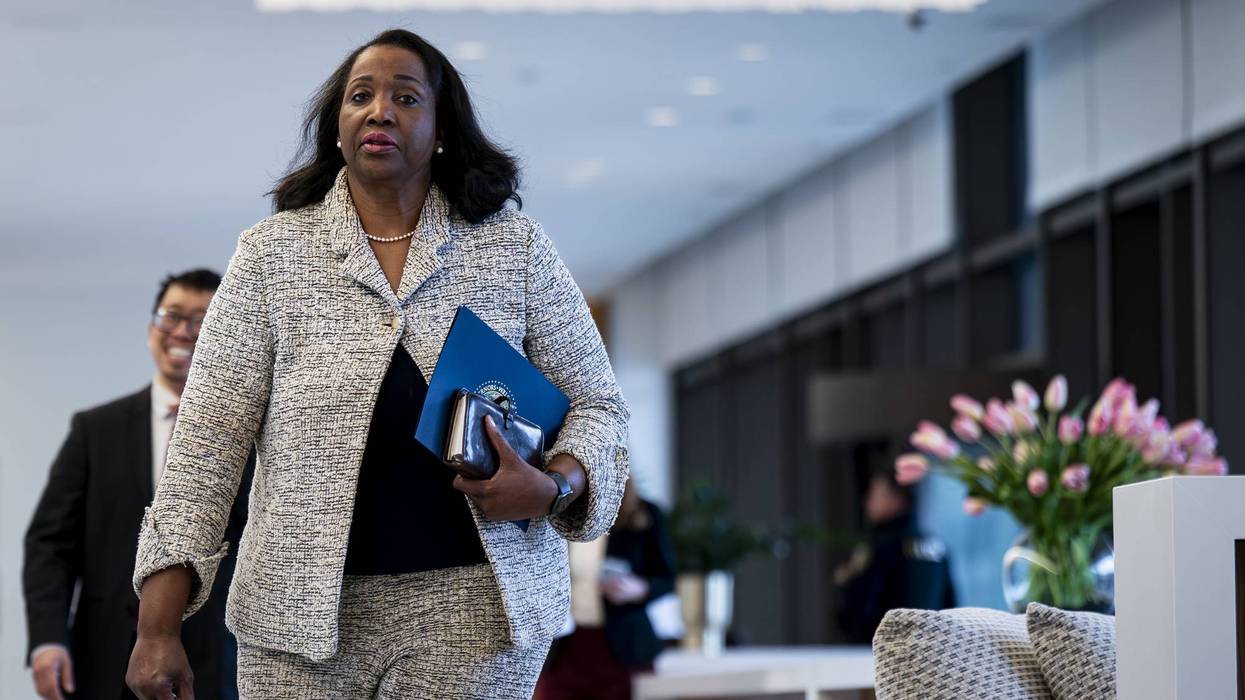
Sen. Elizabeth Warren said President Donald Trump's formation of a committee to investigate cook is part of his "dangerous quest to illegally take over our nation’s central bank."
Sen. Elizabeth Warren, the top Democrat on the Senate Banking Committee, said Friday that President Donald Trump's formation of a new committee to investigate Federal Reserve Gov. Lisa Cook amounts to "an illegitimate show trial in his dangerous quest to illegally take over our nation’s central bank."
"Instead of playing judge in a kangaroo court of his own making, Trump should end the war in Iran and cancel his chaotic tariffs," Warren (D-Mass.) said after the White House announced a "committee of inquiry" to investigate allegations that Cook "made false statements in connection with one or more mortgage instruments." Cook, a frequent target of the president's, has denied the White House's repeated accusations that she committed mortgage fraud.
The White House said that the new committee—which will consist of three officials including Trump economic adviser Kevin Hassett and the Trump-appointed acting director of the Office of Government Ethics—will hold an in-person hearing at the White House on November 5 to "consider the evidence and allegations against Gov. Cook."
In a Friday statement, Cook's lawyers said they "have grave doubts that this 'hearing' is a legitimate one that would conform to the law."
"If it is anything close to objective, the conclusion will be that Gov. Cook did not commit mortgage fraud," said Abbe Lowell and Norm Eisen. "We have engaged with the White House to evaluate whether the process proposed has a possibility of being a genuine one and not simply a box-checking exercise."
Trump attempted to fire Cook last year but was rebuffed by the US Supreme Court after the Fed governor took legal action to prevent her removal. Under federal law, the president can only remove members of the Fed Board of Governors "for cause."
Critics argue that the Trump administration has concocted baseless mortgage fraud allegations against Cook to justify a politically motivated termination.
"Trump is escalating his smear campaign against Lisa Cook while turning the presidency into a personal ATM: crypto schemes, taxpayer-funded propaganda ads, cash for his family—the list could go on forever," Senate Minority Leader Chuck Schumer (D-NY) said Friday. "This has nothing to do with 'ethical concerns.' It’s about Trump trying to seize control of the Fed, something that would mean even more economic chaos for American families."
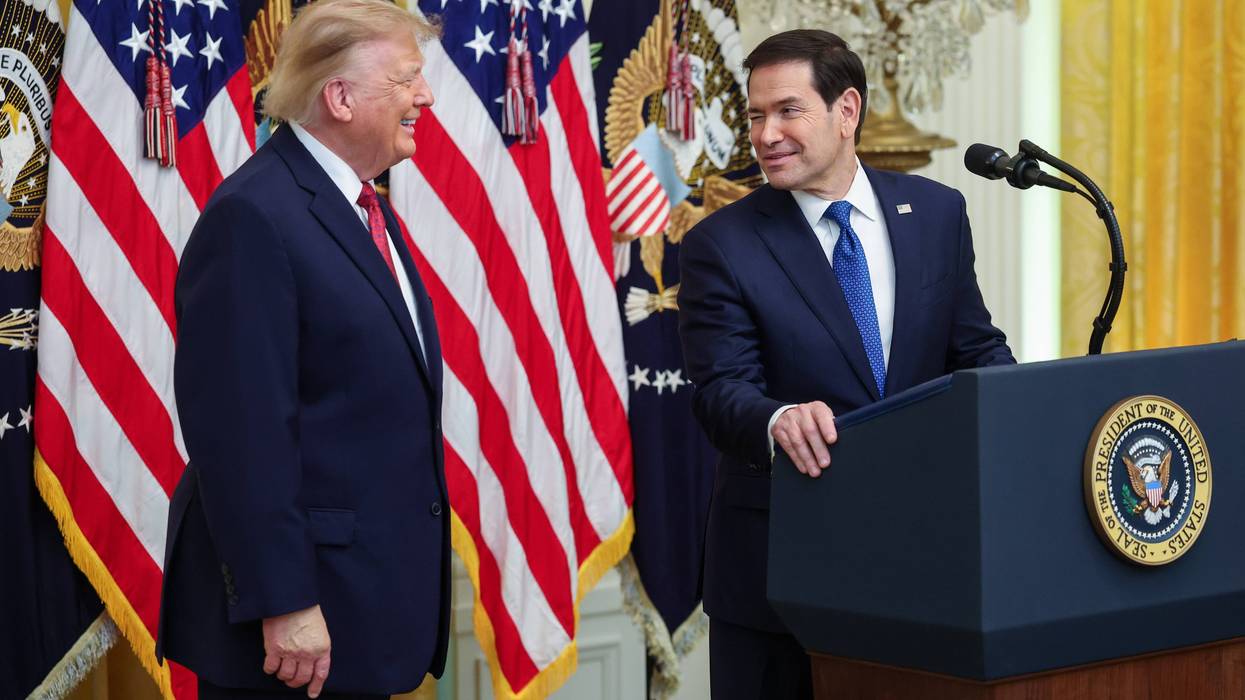
One US campaigner declared that "the Trump administration has taken a sledgehammer to the most important development in international justice in half a century."
Not long after a former International Criminal Court judge on Friday won the Nobel Peace Prize for "ensuring that war crimes, crimes against humanity, and genocide are prosecuted," US President Donald Trump—who has long sought the award—continued his administration's "campaign to dismantle" the ICC with new sanctions.
"Globalist experts that are an ocean away... want the International Criminal Court to do more, including the prosecution of American citizens and service members that are defending their country," US Secretary of State Marco Rubio claimed in a video posted on social media.
"They want to prosecute border patrol agents that are protecting our nation's borders, and they want to prosecute our elected leaders that are ensuring our national security," he continued. "President Donald Trump will never allow the International Criminal Court to prosecute Americans."
"We will ban transactions with this rogue court, cutting off their resources and crippling their ability to operate against us, because our message is clear: The United States and the American people are not subject to the jurisdiction of this fake ICC," Rubio said. "Both parties agree on this, but only President Trump has the resolve to take the action needed to end this threat once and for all."
"Either the ICC will end its threats, or we will end the ICC—and we expect our allies, many of whom are part of the ICC and that rely on American service members for their defense, to rein in this rogue court," he added. "If they do not, the United States will continue its campaign to dismantle the ICC piece by piece until Americans are threatened no longer."
The United States has never been a party to the Rome Statute, the treaty establishing the Hague-based tribunal to investigate genocide, crimes against humanity, war crimes, and the crime of aggression. Since 2002, a federal law known as the Hague Invasion Act has empowered the president to prevent the ICC from detaining US or allied personnel. Although the court has probed alleged crimes by US citizens, it has never prosecuted anyone from the United States.
Trump and Rubio have been particularly hostile toward the ICC and imposed a series of sanctions since the president returned to power last year. They are especially angry about the court's 2024 arrest warrants for Israeli Prime Minister Benjamin Netanyahu—who welcomed Friday's sanctions announcement—and his former defense minister, Yoav Gallant, over their ongoing US-backed assault on the Gaza Strip.
Israel's war on Gaza has killed over 74,000 Palestinians and has been widely denounced as genocide, including by a United Nations commission that was chaired by South African jurist Navanethem "Navi" Pillay, the recipient of the 2026 Nobel Peace Prize. In addition to serving on that panel and the ICC, she has been a High Court of South Africa judge, International Criminal Tribunal for Rwanda president, and UN high commissioner for human rights. She remains an International Court of Justice ad hoc judge.
Trump has publicly demanded the prize for years—while threatening to invade various nations, abducting a foreign leader, killing hundreds of people by blowing up dozens of boats on the high seas, and bombing more countries than any other US commander in chief this century, including Iran, where his and Israel's illegal war is ongoing. Late-night host Jimmy Kimmel, who often ridicules the president, even compiled a supercut of his frequent comments about the award on Thursday, in anticipation of Friday's announcement.
After Pillay was revealed as the winner, Trump predictably attacked her. However, rather than commenting directly, he shared a post on his Truth Social platform in which US lawyer David I. Schoen claimed that the selection committee "shamed itself beyond repair and demeaned the once great Nobel Peace Prize" by giving it to Pillay, calling her "an unabashed hater of America and Israel" who has "celebrated terrorists and rewarded Hamas."
Schoen also suggested that Trump should receive the prize for the Abraham Accords, as well as because "he is making best efforts to end the Russia/Ukraine war, to stop Iran, the number one sponsor of international terrorism, and he is trying to rebuild Gaza despite the terrorists' best efforts to control it."
Pakistani Prime Minister Shehbaz Sharif said Friday that the US leader "played a historic role in advancing peace in South Asia. His timely intervention helped bring Pakistan and India back from the brink and secure a ceasefire, that is holding till today. In recognition of his outstanding contribution, Pakistan had nominated President Trump for the Nobel Peace Prize."
Earlier this year, shortly after US troops invaded Venezuela to abduct President Nicolás Maduro and his wife, Cilia Flores, Venezuelan opposition leader María Corina Machado gifted her 2025 Nobel Peace Prize to Trump. Pillay joked to those applauding her on Friday that "if you clap a little bit more, I may share this prize with Trump."
"Navi Pillay has dedicated her career to defending human rights, fighting impunity and strengthening international justice," Alexis Deswaef, president of the International Federation for Human Rights, said Friday. "At a time when those who uphold international law are increasingly under attack, this award is a powerful reminder that justice is essential to peace, and that those who defend it must be protected."
While also celebrating Pillay's win, Amnesty International secretary general Agnès Callamard ripped the US war against the ICC on social media: "I am writing this from Nuremberg, where 80 years ago, American judges and lawyers played a crucial role in trying the highest Nazi leaders and commanders, and establishing the foundational principles of international criminal law. 80 years later, what a betrayal. The Trump administration's decision is appalling. But ultimately, it is not about them. It is about us."
The United States' "grotesque decision is a test for all European governments which have been tiptoeing, shying away from confronting and responding to the predatory actions from the Trump administration," said the French human rights leader. "They now need to rise to the moment. History demands of Europe that it stands for international justice and its institutions. There is only one possible response: impose immediately blocking orders. The US sanctions cannot and should not be implemented on European territory. This is not a USA moment. This is an 'Us' moment. Let's rise to it. Because humanity must win."
Isabelle Hayslip, advocacy associate at the US-based Democracy for the Arab World Now (DAWN), also highlighted that the European Union "has a tool built exactly for when rogue states use sanctions to further political aims: a blocking statute that can shield the court and Europeans from US sanctions."
"If states won't act now to protect the court as they have repeatedly vowed to do, then when?" Hayslip asked. "Every day they wait, European banks move closer to abandoning the court out of fear of Washington."
The European Commission—the EU's executive arm—said Friday that the bloc "has been a constant supporter" of the court, called the new sanctions "deeply regrettable," and pledged to "work closely with the ICC to ensure it continues to operate effectively."
"And we remain committed to working with all 125 states that are parties to the Rome Statute to preserve and respect its independence so that it can continue its vital mission," the commission continued. "As there is a six-month delay before the measures are applicable, there is room for dialogue. The EU stands ready to take any necessary measures to enable the court to carry out its work both in investigating and prosecuting war crimes and crimes against humanity, and to protect the interests of EU operators within the single market."
Noting that "ICC prosecutors also have tools when a state intimidates or retaliates to stop court officials from doing their jobs: The Rome Statute makes this a crime," DAWN's Hayslip argued that "they should investigate and prosecute Donald Trump, Marco Rubio, and other senior administration officials for obstructing justice."
Her organization and the Taxpayer Alliance Against Genocide previously took legal action in US court, suing over Trump's related Executive Order 14203 in July.
"In applying tools reserved for the most serious criminals to the world's only permanent international court, the US is claiming the power to jail for 20 years Americans who represent a victim, submit evidence, or handle payroll for the court," Raed Jarrar, DAWN's advocacy director, stressed Friday. "We have taken the Trump administration to court, because such brazen declarations trample the fundamental constitutional rights of millions of Americans. No president has that power."
The group's executive director, Omar Shakir, said that "by sanctioning the entire International Criminal Court, the Trump administration has taken a sledgehammer to the most important development in international justice in half a century."
Shakir warned that "US sanctions threaten to shut the last viable road to justice for millions of victims of serious crimes, from Gaza and Sudan to Afghanistan and Ukraine—all to shield Israeli officials who have perpetrated a genocide from justice."
The ICC itself forcefully condemned the Trump administration's latest "unprecedented" sanctions as "an attempt to obstruct the course of justice" as well as "an assault on the rule of law and on the very foundations of the international legal order which strikes at the simple principle that no one stands above the law."
ICC President Tomoko Akane vowed that "the court will continue to fully discharge its mandate, with independence and impartiality, acting only on the basis of the law and the evidence, for the sake of the countless victims of grave crimes."

Republicans' cuts to Medicaid and their refusal to extend enhanced Affordable Care Act subsidies are key factors in the coverage drop.
Independent healthcare analyst Charles Gaba on Thursday published an updated analysis estimating that up to 12 million Americans have lost their insurance coverage since the start of President Donald Trump's second term.
Gaba based his new estimate on updated data he compiled from recent reports for Medicare, Medicaid, and the Children's Health Insurance Program (CHIP), as well as some state enrollment data for Affordable Care Act (ACA) insurance exchanges.
In total, Gaba found that enrollment in Medicaid and CHIP has dropped by 6.2 million people since the start of Trump's second term, while enrollment in ACA exchanges is down by anywhere from 4.6 million to 6.1 million people, and enrollment in Basic Health Plans (BHP) is down by nearly 275,000 people over the same period.
While there are around 1.8 million more people enrolled in Medicare now than there were at the start of Trump's term, Gaba noted that this isn't nearly enough to make up for the loss of enrollment in other programs.
Adding everything up, Gaba estimated that "between 10.88 million and 12.40 million fewer Americans enrolled in a public healthcare coverage program as of June 2026 than in were as of January 2025."
As in prior analyses, Gaba examined the possibility that some of the people who lost coverage through these programs transitioned to employer-sponsored insurance, but deemed it "extremely unlikely... since unemployment is higher than it was in January 2025."
Over the last two years, Trump and congressional Republicans have taken a number of actions that have made healthcare less affordable and pushed people off coverage.
First, they cut spending on Medicaid by an estimated $900 billion over a 10-year period when they enacted the One Big Beautiful Bill Act in 2025. The Congressional Budget Office projects these cuts will leave more than 10 million fewer people enrolled in the program by 2034.
GOP lawmakers last year also refused to extend enhanced subsidies for insurance plans purchased through the ACA, even as insurers raised premiums on those plans by an average of 26% this year, according to an analysis published by KFF.
In a Thursday article published by Time, scholars Neale Mahoney and Abigail Sanchez of the Stanford Institute for Economic Research warned that the costs of private health insurance are set to spike even further in 2027.
"Employer health plan costs are projected to rise 8 to 10% next year," Mahoney and Sanchez explained, "the largest increase in more than 20 years and double the average increase of the 2010s."
The two researchers said there are three major reasons for the surge in insurance costs: The expiration of the enhanced ACA subsidies, an increase in premiums and out-of-pocket costs for employer-based insurance plans, and the upcoming Medicaid work requirements projected to push millions of people off the program.

A petition signed by nearly 6,500 healthcare workers demands accountability for the Israeli Medical Association, accusing the organization of complicity in human rights violations.
Thousands of healthcare workers from across the globe are calling on the World Medical Association to suspend Israel’s membership in the organization over the government's mass killing and detention of medical professionals in Gaza, destruction of the Palestinian territory's healthcare system, and ongoing genocide.
The demand came as the WMA's General Assembly gathered in The Netherlands for its annual meeting, which runs through Saturday. A petition addressed to WMA leadership and signed by around 6,500 healthcare workers declares that the Israeli Medical Association (IMA) has "failed to uphold core medical ethical standards" and is "complicit in serious violations of medical neutrality and human rights, committed by the Israeli military and government."
The petition points to Israel's systematic attacks on Palestinian healthcare infrastructure and personnel, detention and torture of medical professionals such as Dr. Hussam Abu Safiya, obstruction of medicine and other humanitarian aid in the occupied Palestinian territories, and the ongoing genocide in Gaza.
Supporters of the petition campaign demanded that the WMA suspend the IMA "until it publicly upholds medical ethics and humanitarian law, condemns murder and torture of Palestinian health workers and takes action against violations by its members." They also called on individual national members of the WMA to follow the example of the South African Medical Association, the British Medical Association, and the Turkish Medical Association in cutting institutional ties with the IMA.
"Medical ethics are the foundation of trust in healthcare," the petition states. "The international medical community has acted before, including during apartheid in South Africa. If medical ethics are to mean anything in the future, and we are to have confidence that the WMA can fulfill its role as the international guardian of medical ethics, then it must take concerted action to hold the IMA to account."
The Israeli military has killed around 1,700 healthcare workers and detained hundreds more without charge since it began its massive assault on Gaza in the aftermath of the Hamas-led October 7, 2023 attacks.
Last year, the IMA defeated a similar effort to suspend its WMA membership. Instead, the WMA General Assembly adopted a toothless resolution calling on the Israeli government to "instantly halt all forms of attacks on healthcare personnel, patients, healthcare facilities, and food and medical aid logistics."
“Thirty years of WMA dialogue with the IMA has done nothing but give the IMA a sense of impunity. Why should they change?” Jonathan Fluxman, a British Medical Association member and retired doctor, said in a statement on Friday. “It is time for national medical associations and the WMA to speak out and take action. Break your ties with the IMA and suspend the IMA from the WMA now.”
"Either a white coat is worth protecting everywhere, or it is protected nowhere."
Earlier this week, Doctors Without Borders—known internationally as Médecins Sans Frontières (MSF)—called on the WMA to "join the calls to conduct swift, transparent, and impartial investigations into attacks on healthcare in Gaza and the West Bank, while reiterating its call for the release of all arbitrarily detained healthcare workers."
Dr. Javid Abdelmoneim, MSF's international president, highlighted the case of Abu Safiya, the former head of Gaza's Kamal Adwan hospital who has been detained by Israeli authorities for over 18 months without charge.
"He continues to endure prolonged solitary confinement, severe weight loss, and untreated pre-existing conditions; an international petition for his release has drawn signatories from 41 countries," Abdelmoneim noted. "Alongside him stands Dr Mazen Al-Rantisi, the 71-year-old family physician from Ramallah, known as the ‘doctor of the poor,' arrested in June 2026 in a pre-dawn raid on his home. In addition, our long-time Médecins Sans Frontières colleague, Dr Mohammed Hassan Ali Obeid, a respected 43-year-old Palestinian orthopedic surgeon and father of three children, has been detained under the Unlawful Combatant Law in Israel for more than 600 days without charges."
"Healthcare workers are not targets," wrote Abdelmoneim. "Either a white coat is worth protecting everywhere, or it is protected nowhere. The test is not simply whether we affirm these principles, but whether we uphold them when it matters most."

“I love my Somali friends and neighbors," said one former Democratic official in the state. “If Trump tries to come for them, he needs to come through all of us.”
Fear is running high in Minnesota after President Donald Trump went on yet another racist tirade against the state's Somali community on Thursday—this time verging into what was widely interpreted as a call for vigilante violence.
"The once Great State of Minnesota is being taken over by Somali Immigrants," Trump wrote Thursday afternoon on Truth Social. "There is Violence, Murder, and Mayhem all over the State. The people of Minnesota must fight back."
Trump raged against Democratic Gov. Tim Walz, whom he described as an "incompetent thief who doesn't want to get involved," and seemed to suggest that if ordinary Minnesotans took matters into their own hands, they'd have the blessing of the federal government.
"The Somalians [sic] should not be allowed to get away with what they are doing," Trump said. "They view you as weak and stupid people. Fight back, Minnesota, fight back! If you need, the Federal Government will come to your rescue."
It's hardly the first time Trump has slurred Somali immigrants. He's previously referred to them as "garbage," "very low-IQ people," and "pirates," and said they should all be deported from the country.
But Trump’s comments on Thursday went a step further than that, leaving community members on edge about the possibility that they could instigate violent attacks by his supporters.
“President Trump is placing a target on the backs of Somali Americans," said Jaylani Hussein, the executive director of the Council on American-Islamic Relations in Minnesota, in a statement. "His words are not simply political rhetoric. They are a dangerous invitation to hatred and potentially violence."
"Minnesota has led the nation in attacks on mosques, including fire-bombings," he said. "We know firsthand what happens when hateful rhetoric turns into violence.”
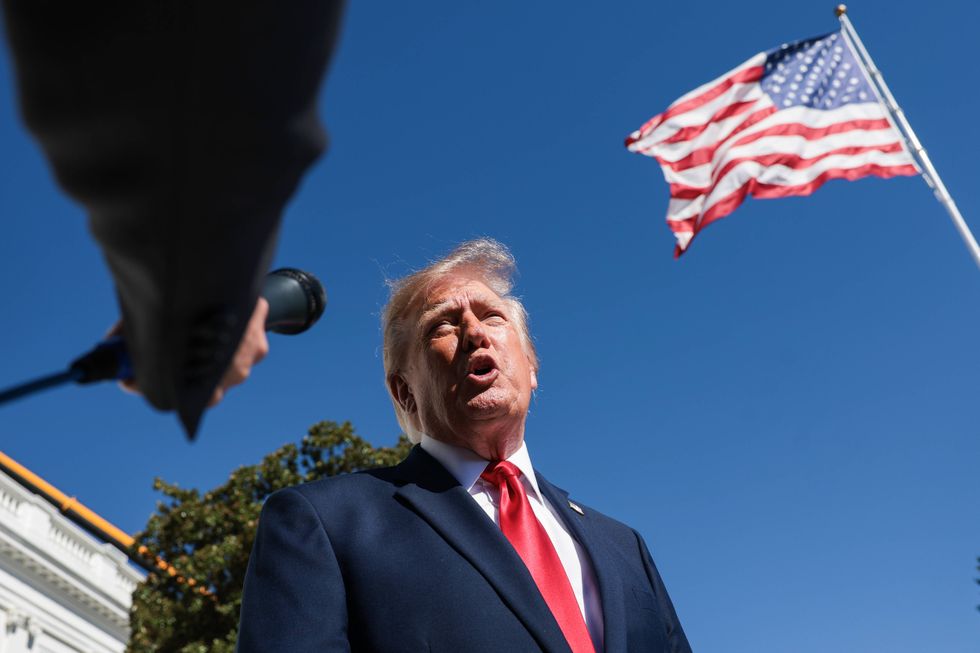 President Donald Trump speaks to reporters before boarding Marine One on the South Lawn of the White House on October 7, 2026 in Washington, DC. (Photo by Anna Moneymaker/Getty Images)
Faisa Ahmed, a Somali American political organizer and senior adviser to the reelection campaign of Minnesota Attorney General Keith Ellison, said unease ran deep in her home city of Minneapolis on Thursday night.
"Every Somali I know is walking through our own neighborhoods scared tonight," she said.
"The president just told Minnesotans to 'fight back' against Somalis by name," she added. "This is incitement, and everyone should call it that."
Though most of them are US citizens, Somalis were aggressively targeted when thousands of immigration agents descended on Minnesota during Trump's Operation Metro Surge earlier this year.
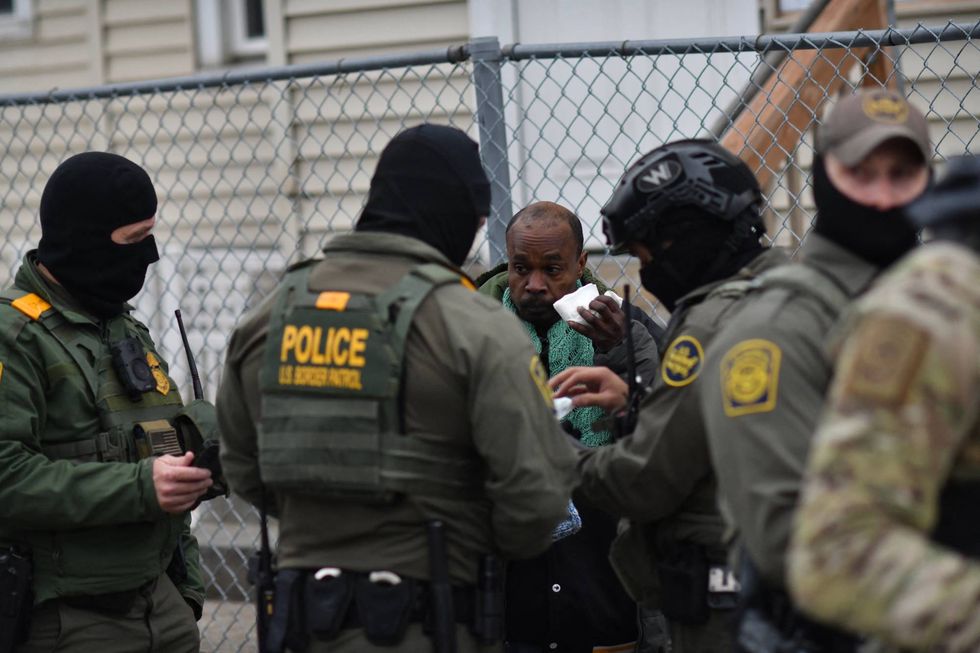 US Border Patrol agents detain an unidentified man of Somali descent in Minneapolis, Minnesota, on January 8, 2026. (Photo by Octavio Jones/AFP via Getty Images)
In numerous cases, Immigration and Customs Enforcement (ICE) and other federal agents were documented engaging in explicit racial profiling directed at Somali citizens—as well as other immigrants—many of whom were detained arbitrarily and attacked with physical violence.
Ellison, who has sued the administration for civil rights violations and pushed for agents to be investigated under state law, said he would not let this happen again.
"We've seen what Trump's government coming to the 'rescue' looks like," he wrote on social media Thursday. "It ended with two Minnesotans shot dead by federal agents, racial profiling, assaults, and the violation of our rights."
"Never again. If Trump tries, I'll drag him back to court," he said. "Somali Minnesotans are our neighbors. They are part of Minnesota. And the Minnesota I know and love is so much better than this bigotry."
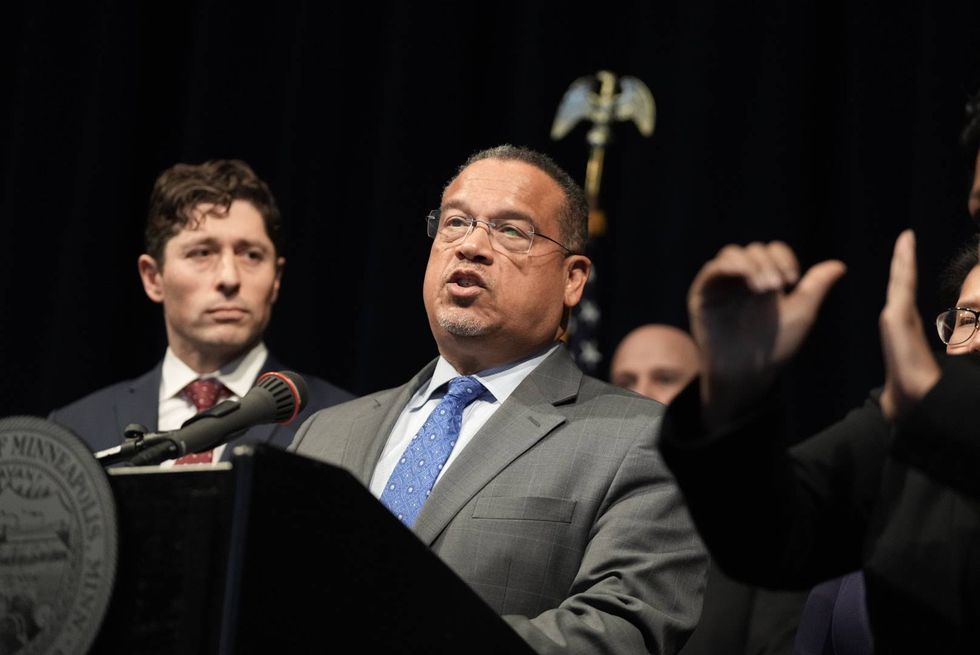 Minnesota Attorney General Keith Ellison, along with Minneapolis Mayor Jacob Frey, announced a lawsuit against the Trump administration's deployment of ICE agents to the Twin Cities during a press conference at Minneapolis City Hall on Monday, January 12, 2026. (Photo by Richard Tsong-Taatarii/The Minnesota Star Tribune via Getty Images)
With less than a month to go before the midterm elections, Minnesota Republicans have sought to harness bigotry against Somalis to rally support.
Democratic candidate Doug Chapin, who is trying to unseat Republican House Majority Whip Tom Emmer in Minnesota's 6th district, put it plainly during an event on Thursday night.
"I'll call it what it is," Chapin said. "The president is trying to foment a race war here in Minnesota."
But as the violent rhetoric has ramped back up, so have expressions of solidarity from community members who have called it out as a cynical political tactic.
"This is KGB-style fear-mongering before an election. Trump’s terrified he’s going to lose the House and Senate and get impeached," said Mike Norton, the former vice chair of the Democratic Farmer-Labor Party in Minneapolis.
"I love my Somali friends and neighbors. They make Minnesota a better place," Norton said. "If Trump tries to come for them, he needs to come through all of us."
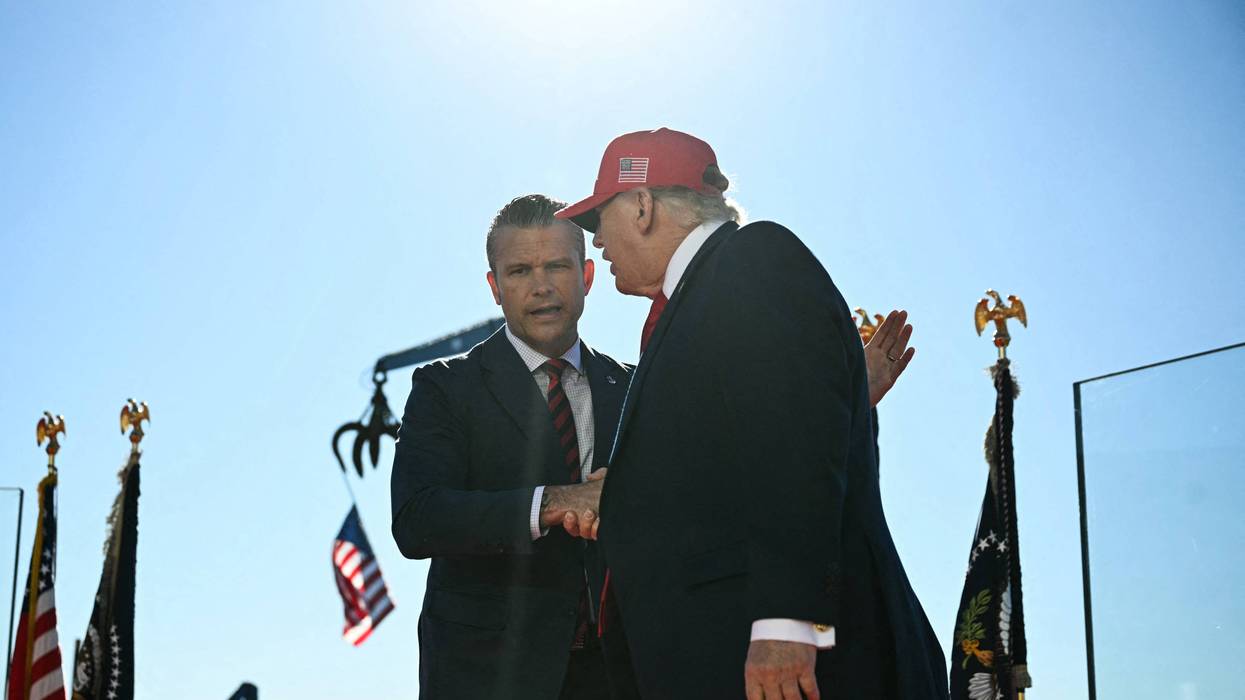
"The world’s supposedly greatest (or formerly greatest) democracy has arrived at a horrific new moral nadir," said one columnist of the plan to livestream the killing by firing squad of Nidal Hasan.
As rights advocates across the US expressed horror at the Trump administration's confirmed plans to publicly broadcast the execution of Nidal Hasan, the former military psychiatrist who was convicted of killing 13 people in a mass shooting at Fort Hood in 2009, the top United Nations human rights expert warned that the public state killing would violate international laws prohibiting torture.
“The livestreaming of an execution is tantamount to a public execution and would breach the absolute prohibition of torture,” the Office of the High Commissioner for Human Rights (OHCHR) told Agence France-Presse Friday.
As Common Dreams reported Thursday, the US Army announced that Hasan would be executed by firing squad at Fort Hood on December 3, with the Trump administration inviting the public to watch the shooting via livestream.
The UN special rapporteur on extrajudicial, summary, or arbitrary executions said in a report to the UN Human Rights Council in June that all capital punishment must be abolished worldwide, as "severe physical pain and psychological distress are an inherent part of the design and implementation" of the practice.
The OHCHR has particularly spoken out against public executions, such as those that have been carried out in Afghanistan and Iran.
Public killings by the state "constitute a form of cruel, inhuman, or degrading treatment or punishment," the office has said.
"This planned livestreamed execution says it all about what is happening in America today, opening the window ever wider on the Trump administration’s moral vacuity and its paucity of human decency."
Should the livestream go forward, Hasan's execution will be the first public state-sanctioned killing in the US in 90 years, according to Michael L. Radelet, professor emeritus at the University of Colorado Boulder, an expert on capital punishment.
Rainey Bethea, a Black man, was hanged in Kentucky in 1936 after reportedly confessing to the killing of a white woman. He was never charged with murder. Thousands of people attended his execution outside a courthouse.
As Edmarverson A. Santos wrote at the independent research platform Diplomacy & Law, the Trump administration's proposed execution livestream "raises substantial concerns under international human rights law."
"The UN Human Rights Committee expressly interprets Article 7 of the [International Covenant on Civil and Political Rights] as prohibiting public executions and considers executions conducted in violation of that provision to constitute arbitrary deprivations of life under Article 6," wrote Santos. "A government-sponsored livestream accessible to the general public could fall within that interpretation, particularly where the condemned person's death is deliberately displayed as part of the state's punitive message."
"Hasan's conviction for intentional murder and the presidential approval of his death sentence do not independently establish the legality of publicly broadcasting his execution," Santos added.
Paul Daley, a columnist for The Guardian Australia, wrote Thursday that the planned livestream—and Defense Secretary Pete Hegseth's statement that the execution will be made viewable to all to show that "there’s serious consequences for these types of things"—amounted to "state-sanctioned killing as entertainment."
"The world’s supposedly greatest (or formerly greatest) democracy has arrived at a horrific new moral nadir," wrote Daley. "This represents a significant lurch in the US from civilization towards savagery... And this planned livestreamed execution says it all about what is happening in America today, opening the window ever wider on the Trump administration’s moral vacuity and its paucity of human decency."

"We are seeing the limitations of the US military’s training program and ability to maintain discipline, and have to say that it is not functioning as an organization."
The Okinawa Prefectural Assembly on Friday adopted a resolution calling for a formal review of its Status of Forces agreement with the US military amid outrage over the alleged murder of local woman by an American Marine.
As reported by Kyodo News, the assembly passed the resolution by an overwhelming margin, with 45 members in favor and just two opposed.
According to Kyodo News, the two opponents of the resolution said that it didn't go far enough and demanded language calling for the dismissal of the head of the US military in Okinawa.
The Status of Forces agreement, established in 1960, has been criticized for being too preferential to US service members, who are seen as being totally outside the reach of Japan's domestic law enforcement.
Kyodo News noted that the Okinawa assembly "passed a similar protest resolution and opinion statement in 2024 when a series of sexual assaults by US servicemen in Okinawa came to light."
Ryotaro Odo, leader of the assembly's special committee on US military bases, said the resolution was necessary because "we are seeing the limitations of the US military’s training program and ability to maintain discipline, and have to say that it is not functioning as an organization."
The resolution will now be delivered to the US embassy in Japan.
Authorities on Sunday arrested 20-year-old US Lance Cpl. Devin Jacob Ballard on suspicion of murdering 39-year-old Anna Yagi, whom Okinawa police say died from asphyxiation caused by pressure to her neck. In addition to facing murder accusations, Ballard also faces charges that he stole Yagi's wallet and backpack.
The US Marine has denied all allegations.
The alleged murder sparked angry protests and led right-wing Japanese Prime Minister Sanae Takaichi, who supports US military presence in Japan, to condemn what she called a "heinous crime" in a speech delivered in Japan's parliament.
“The Japanese government has lodged a strong protest with the US side," said Takaichi, "and has strongly demanded full cooperation with the investigation, as well as strict disciplinary action against US military personnel and thorough measures to prevent a recurrence of such incidents."

"Thank you so much," said the international jurist in a moment of jest. "If you clap a little bit more, I may share this prize with Trump."
The international reputation of the Nobel Peace Prize, which has suffered in progressive and human rights circles over recent years, may be on the path to improvement after Friday's announcement that this year's award has been given to Navi Pillay, a person of "exceptional courage" who has been at the forefront of accountability efforts for apartheid, prosecuting war crimes, and upholding international law for decades.
In its statement, The Norwegian Nobel Committee said Pillay—who during her career served as a judge on the High Court in South Africa, her native country, and later the International Criminal Tribunal for Rwanda and the International Criminal Court (ICC)—"has been instrumental in ensuring that war crimes, crimes against humanity and genocide are prosecuted."
Pillay also served for six years as the United Nations High Commissioner for Human Rights, from 2008 to 2014, and more recently chaired the UN Independent International Commission of Inquiry on the Occupied Palestinian Territory, which generated a 2025 report concluding that the Israeli government had committed genocide in Gaza.
"The last thing I did is the report on Gaza naming what is happening there as genocide. One of the main reactions to that report [was] paying tribute to me for my courage.. why would you need courage to speak the truth?" Navi Pillay upon winning the 2026 Nobel peace prize https://t.co/hYPA94eFLe
— Saul Staniforth (@SaulStaniforth) October 9, 2026
"The last thing I did is the report on Gaza naming what is happening there as genocide," Pillay said Friday. "One of the main reactions to that report is paying tribute to me for my 'courage.' And you can imagine our surprise—why would you need courage to speak the truth?"
"Is it true?" asked Pillay when first notified of the award, fittingly while at the Nuremburg Court where Nazi's were tried for their atrocities of last century.
In a moment of levity, surrounded by colleagues applauding her achievement, Pillay said, "Thank you so much. If you clap a little bit more, I may share this prize with [US President Donald] Trump."
Trump, accused of war crimes himself, has notoriously said he deserves the Nobel Peace Prize despite his record of violating international laws, kidnapping or assassinating foreign heads of state, initiating wars of aggression, and carrying out a lawless campaign of lethal attacks in the Pacific Ocean and Caribbean which human rights experts have denounced as "murder spree."
Volker Türk, the current UN high commissioner for human rights, said the award going to Pillay represents "a proud moment for the global human rights movement," and that to call it "well-deserved" would be "a understatement."
"At a time when human rights are under attack on so many fronts, including from those who wield enormous power, this award is particularly poignant," Türk continued. "It is an award to all those who, around the world, dedicate their lives to the defense of human rights—at great risk to their security."
Agnes Callamard, secretary general of Amnesty International, called Pillay's selection an "amazing moment" for human rights.
"We are at the Nuremberg Court; I cannot think of a stronger symbol for her Nobel prize," said Callamard. "We are all so thrilled!"
Amazing moment. Navi Pillay has received the Nobel Peace Prize ! https://t.co/HL3r1PJzLOWe are at the Nuremberg Court; I cannot think of a stronger symbol for her Nobel prize. We are all so thrilled! This is her first reactions upon hearing the news: https://t.co/Crbj6XdiyQ
— Agnes Callamard (@AgnesCallamard) October 9, 2026
"At a time of existential challenges—including more wars and conflicts than the world has seen in a long time—international law is no longer just a supplement to peace and security. It is an absolute necessity," the Nobel Committee said in its announcement.
Warning that "the system of international law is under tremendous pressure, and its institutions are under attack," the committee said "a shift towards power politics at the expense of legal frameworks and global respect for law and justice" threatens peace and stability worldwide, a veiled but clear reference to the antagonism the US government under Trump has shown to the ICC, the United Nations, and other legal institutions and frameworks.
"Whenever might overtakes right, it undermines stability, trust and peaceful co-existence," the statement said. And continued:
History has shown that a world operating without the rule of law is unjust, unwise and inhumane. The judges – those who guard the thin red line between order and chaos—are therefore highly deserving of our praise. But today, as these same judges are sanctioned, and their institutions are attacked, we need people of courage, vision and determination—qualities that Navi Pillay demonstrates in her work on the bench.
Pillay, it concluded, "is one of the great defenders of international legal principles in our time. Her distinguished career reminds us of the need to support, fortify and expand the global rule of law. Navi Pillay’s commitment to justice and human dignity is a source of hope and inspiration to all who seek to bring about a more peaceful world."
As Türk put it in his remarks, recognition of Pillay's work and legacy by the Nobel committee is "a reaffirmation that human rights, the rule of law and justice and accountability are fundamental to everything—to peace, security and prosperity."

"This is a guy who wants to do service for the corporations," the Democratic US Senate candidate said of his Republican opponent.
Democratic US Senate candidate Abdul El-Sayed said during a televised debate Thursday night that his opponent, Mike Rogers, is "bought off," pointing to the Republican's financial support from the pharmaceutical industry and his opposition to legislative efforts to lower prescription drug prices and provide healthcare to all Americans as a right.
El-Sayed noted that Rogers once described himself as a "champion" of the pharmaceutical industry, which benefited from the Republican's tenure in the US House.
"This is what you can expect from a guy who's bought off: $5 million from corporations to run his previous campaigns," El-Sayed said of Rogers, who opposed the push to let Medicare negotiate drug prices directly with pharmaceutical companies.
El-Sayed said that Rogers "voted to raise your prescription drug prices or to keep them high 19 times" during his seven congressional terms.
"He has the audacity to do an ad looking at the drug prices in Canada," the Democratic candidate continued. "Except for he voted four times to keep you from buying the prescription drugs in Canada."
El-Sayed also touted his support for Medicare for All—which, according to new polling, is backed by two-thirds of US adults—and contrasted that position with Rogers'.
"He voted against the ACA, for God's sake," said El-Sayed, referring to Rogers' opposition to the Affordable Care Act. "I want to guarantee every single person in this country cradle-to-grave coverage, without premiums, co-pays, deductibles. That doesn't have a network. That does not pay a corporate CEO tens of millions of dollars a year."
"This is a guy who wants to do service for the corporations," the Democrat said of Rogers.
Later in the debate, El-Sayed accused Rogers of vying for the "Peeping Tom" vote, citing the Republican's consistent support for mass surveillance.
El-Sayed said he "absolutely" supports putting federal guardrails on Flock cameras and questioned why "we continue to have a situation in which we're watching more and more technology steal more and more data."
"The very Big Tech corporations that are buying his campaigns," El-Sayed added.
Ravi Mangla, national press secretary for the Working Families Party, applauded El-Sayed's performance in Thursday's debate and said that Rogers "has spent his career doing the bidding of Wall Street and Big Pharma CEOs, while watching jobs in Michigan get shipped overseas and prescription drugs grow more and more expensive."
"Tonight’s debate made it crystal clear that Abdul El-Sayed is the only candidate who will fight to put money back in the people's pockets, end the reckless wars abroad, and stand up to the billionaire CEOs who think they should be able to call the shots in Washington," said Mangla.

“Our New York communities have been built by generations of immigrant love, ingenuity, creativity, and resilience," said one organizer. "Trump can’t take that from us."
Outraged community members gathered in New York City's Marble Hill neighborhood Thursday night to demand that federal immigration agents leave the city after a US Immigration and Customs Enforcement officer fired at least seven shots into a vehicle on a bustling street, wounding the driver while a five-year-old boy sat in the back seat.
Mayor Zohran Mamdani expressed anger at the shooting that had left the child "traumatized and terrified," and accused the Trump administration of "terrorizing" the city.
“Tonight, millions of our neighbors are wondering whether they will be safe on our streets, in our schools, at their work sites," said Mamdani, a democratic socialist. "We know that ICE is rotten to its core. Tonight's shooting is only further confirmation of what we have long known, which is that ICE operates with impunity... that they have killed far more of our neighbors than they have ever claimed to save."
Mamdani: What happened today was an outrage. Today's shooting is only further devastating confirmation of what we have long known, which is that ICE operates with impunity, that they sow chaos and terror across our country, that they have killed far more of our neighbors than they could ever have claimed to save. This is an agency that must be abolished.
— Acyn (@Acyn) October 9, 2026
Mamdani said he had spent two hours on the phone with President Donald Trump and Secretary of Homeland Security Markwayne Mullin in an attempt to negotiate the release of the man who was shot, identified as 28-year-old Oscar Belgal, but ICE instead "put the man in an unmarked vehicle and whisked him away" after he was treated at a hospital for his injuries.
The shooting took place around 4:00 pm on West 225th Street, as children were being let out of numerous schools in the neighborhood, Mamdani emphasized.
According to surveillance footage, Belgal was parked in front of a fire hydrant when a plainclothes ICE officer, dressed in a construction vest and wearing a face mask, approached the driver's side window of the car with his gun drawn.
After another plainclothes agent approached the front of Belgal's car, he began pulling away from the curb. One of the ICE officers then opened fire, hitting Belgal in the neck as the boy, whom New York City authorities believe to be the man's son, sat feet away.
An eyewitness, Viely Herrera, told The New York Times that she had heard several gunshots before seeing Belgal's SUV crash into a concrete barrier. Belgal then exited the car, holding his neck and shouting in Spanish.
Herrera added that the boy in the car was crying, and the officers would not allow a woman to remove him from the scene.
With limited exceptions, Department of Homeland Security (DHS) officers are prohibited from shooting into a moving vehicle to stop or apprehend the driver.
Mamdani demanded to know how DHS is "keeping anyone safe" by having "individuals in construction vests, wearing masks, with long guns? Residents have no idea if these are law enforcement agents or if they are simply attacking someone on the street. And when it comes to ICE, it begs the question, what's the difference?"
I am angry tonight.Because today ICE shot a New Yorker. They shot a New Yorker while his five year old child was in the car.ICE makes this city less safe.We want them out. Now. https://t.co/ZizKB0OP7S
— Mayor Zohran Kwame Mamdani (@NYCMayor) October 9, 2026
DHS did not explain why its agent had fired into a moving vehicle against department policy, or mention the child who was inside the car. Officials said in a social media post that Belgal was a "criminal illegal alien" from the Dominican Republic with a prior conviction for grand larceny and a history of arrests for other crimes.
The agency said New York City authorities had previously released Belgal after his arrests.
Darializa Avila Chevalier, who is running to represent New York's 13th Congressional District, where Marble Hill lies, joined Mamdani in demanding that ICE be abolished—a call that is supported by 50% of Americans, according to a YouGov poll taken earlier this year.
Revulsion over the agency's practices has grown as Trump's mass deportation operations have intensified. DHS officers have fatally shot at least six people during enforcement operations, including three US citizens. Two of them were protesting the anti-immigration crackdown in Minneapolis.
In the past three months, two immigrants have been killed during enforcement operations—Lorenzo Salgado Araujo in Houston and Johan Sebastián Durán Guerrero in Biddeford, Maine. Like Belgal, the two men were operating their vehicles when the shootings took place.
Chevalier emphasized that Trump is overseeing his violent nationwide crackdown on immigrant communities "to make us feel powerless."
https://t.co/qdrtxkPNP1
— Darializa for Congress (@DarializaforNY) October 9, 2026
"But I want us to look around and look at how many people came out for this community. That is how powerful this community is," she said. "He messed with the wrong fucking city."
Donna Lieberman, executive director of the New York Civil Liberties Union, said New Yorkers had shown up to rally against ICE "because ICE is a rogue, unaccountable, violent, and racist plague on our communities. Because Trump is the fascist-in-chief. We are here to bear witness and be in solidarity with our immigrant friends and neighbors."
“Our New York communities have been built by generations of immigrant love, ingenuity, creativity, and resilience," she said. "Trump can’t take that from us. ICE cannot scare, brutalize, or shoot that out of New York. And no one—no one—has the right to terrorize our communities and traumatize our kids. We are immigrant New York!"
“We demand a full investigation. We demand humanity. We demand our rights," she added. "We demand ICE get the fuck out of New York.”