SUBSCRIBE TO OUR FREE NEWSLETTER
Daily news & progressive opinion—funded by the people, not the corporations—delivered straight to your inbox.
5
#000000
#FFFFFF
To donate by check, phone, or other method, see our More Ways to Give page.


Daily news & progressive opinion—funded by the people, not the corporations—delivered straight to your inbox.

The chair of the U.S. House Judiciary Committee in the next Congress should investigate the conduct of Acting Attorney General Matthew Whitaker in his capacity as an advisory board member for World Patent Marketing (WPM), Public Citizen said in a letter (PDF) sent today.
In May, the Federal Trade Commission (FTC) concluded that WPM lured hundreds of inventors to pay a total of $26 million for product development and promotion services that it never delivered. According to the letter, the FTC's findings raise numerous questions about misconduct, including materially false statements and intimidation of scam victims. The FTC's findings also raise questions as to whether Whitaker lied or omitted information from federal background checks to obtain his security clearance.
"The nation deserves a person of unquestioned integrity as its chief law enforcer, and until these questions are answered in a satisfactory way, Whitaker's ability to adequately perform the job of Attorney General remains in doubt," the letter reads.
Contact Public Citizen to speak with an expert.
Public Citizen is a nonprofit consumer advocacy organization that champions the public interest in the halls of power. We defend democracy, resist corporate power and work to ensure that government works for the people - not for big corporations. Founded in 1971, we now have 500,000 members and supporters throughout the country.
(202) 588-1000"There are straight lines between what Israel has attempted to do… in Gaza, to completely decimate and collapse the systems that existed there, to what we are seeing in Iran," said one expert.

US and Israeli missiles have hit a school in Iran for the fourth time in six days, according to videos shared on social media by a spokesperson for the Iranian Foreign Ministry on Friday.
Spokesperson Esmaeil Baqaei said that the Shahid Hamedani School, an elementary school in Niloufar Square, Tehran, had been "targeted by the American/Israeli aggressors."
He posted a video showing the school filled with dozens of young students prior to the attack, followed by scenes of the school in ruins, with several empty classrooms filled with rubble.
Baquaei said it showed "how the United States administration is helping the people of Iran." He did not include any information about the number of casualties or the circumstances of the attack.
According to the United Nations Children's Fund (UNICEF), at least 192 children have been killed across the Middle East since the US and Israel launched a regime change war this past Saturday.
Most of them were girls ages 7-12 who were killed on Saturday during an attack at a girls' school in the southern Iranian town of Minab.
At least 175 people were reported to have been killed in the attack, which unnamed officials have said was "likely" carried out by the United States, according to Reuters. HuffPost reported that Pentagon officials have briefed Congress that the US "was most likely responsible."
Eyewitnesses and relatives of the victims have told Middle East Eye that the attack was a "double-tap" strike in which survivors and first responders were targeted following the initial bombing. An Al Jazeera investigation has concluded that the attack was likely "deliberate."
Iranian media have also published CCTV video of a separate strike on the same day, in which a missile landed next to a boys' school in Qazvin, resulting in scenes of terrified students and teachers running for their lives.
On Thursday, two other schools in the town of Parand, southwest of Tehran, were hit by missiles fired by the US and Israel, according to Iranian state media. The Fars News Agency shared photos of a classroom filled with debris. So far, no casualties from the attack have been reported.
US Secretary of Defense Pete Hegseth has said that as it wages its war in Iran, the US is not abiding by "stupid rules of engagement," and has boasted of raining down “death and destruction from the sky all day long."
According to data analyzed by the Human Rights Activists News Agency (HRANA), part of a US-based human rights monitor for Iran, at least 1,168 civilians have been killed by US-Israeli attacks since Saturday. The Iranian government on Friday put the death toll at 1,332 people.
More than 3,643 civilian sites have been damaged in attacks attributed to the US and Israel, according to figures released by the Iranian Red Crescent Society—among them have been 3,090 homes, 528 commercial centres, 13 medical facilities and nine Red Crescent centres.
Amjad Iraqi, a senior analyst at the International Crisis Group, told Al Jazeera that these routine attacks on civilian infrastructure increasingly resemble those carried out by Israel during its more than two-years of genocide in Gaza.
“There are straight lines between what Israel has attempted to do… in Gaza, to completely decimate and collapse the systems that existed there," Iraqi said, "to what we are seeing in Iran, on a much more massive and dangerous scale, to bring down the Islamic Republic and to cause as much devastation as possible.”
"It is time to stop the fighting and get to serious diplomatic negotiations," said António Guterres. "The stakes could not be higher."
After nearly a week of bloodshed in President Donald Trump and Israeli Prime Minister Benjamin Netanyahu's war on Iran—which critics argued violates not only the US Constitution but also the United Nations Charter—UN Secretary-General António Guterres on Friday demanded a return to negotiations.
Trump and Netanyahu launched "Operation Epic Fury" just a day after Badr Albusaidi, the foreign minister of Oman and mediator of recent nuclear talks between the United States and Iran, said on a prominent US news program that "we have already achieved quite a substantial progress" and "the peace deal is within our reach."
The Iranian government said Thursday that at least 1,230 people had been killed in Iran. The US-Israeli assault continued on Friday, as Guterres declared that "all the unlawful attacks in the Middle East and beyond are causing tremendous suffering and harm to civilians throughout the region—and pose a grave a risk to the global economy, particularly to the most vulnerable people."
"The situation could spiral beyond anyone's control," Guterres said. "It is time to stop the fighting and get to serious diplomatic negotiations. The stakes could not be higher."
The UN chief's statement came amid reporting from Drop Site News that "US-Israeli missiles have hit an elementary school in Tehran—the fourth school in six days." The first strike, for which no government has taken responsibility but analyses suggest the United States is to blame, killed around 175 people, mostly children, at a girls' school in Minab on Saturday. Then, on Thursday, two boys’ schools southwest of Tehran were bombed.
UN High Commissioner for Human Rights Volker Türk also called for all parties "to give peace a chance," highlighting in a Friday statement that the war "has been spreading like wildfire" and caused significant damage in not only Iran and Israel, but "at least a dozen other countries, mostly in the Gulf, with risks of major economic and environmental ramifications across the world."
"The world urgently needs to see steps to contain and extinguish this blaze—but instead we are only seeing more inflammatory, bellicose rhetoric, more bombings, more destruction, killings, and escalation, that fuels it further," he continued. "Confusion has also been sown around international law—and some have openly derided the fundamental values of our common humanity."
While Türk directed his plea for deescalation at the warring governments, he also urged other states "to call clearly on those involved to pull back," arguing that "cool heads must prevail if we are to prevent further terror and devastation for civilians."
"Given the magnitude of this crisis," he said, "I call on heads of state and government around the world unequivocally to commit to defending international human rights law, international humanitarian law, and the UN Charter itself—we cannot afford for more powder kegs to ignite."
"Lebanon is becoming a key flashpoint," Türk noted. "I am extremely concerned and worried about the latest developments following Hezbollah's attacks on Israel and Israel's heavy counterstrikes, as well as its extensive displacement orders that have already forced hundreds of thousands of people to flee their homes. I call for an immediate cessation of hostilities."
More than half a million people have fled their homes in southern Lebanon, and the death toll there this week is estimated to be over 130 people, as Common Dreams reported earlier Friday. Türk has denounced Israel's "blanket, massive displacement orders" in the country that are impacting hundreds and thousands of Lebanese.
As one of the five permanent members of the United Nations Security Council, the US has veto power in that body. Considering those circumstances, the group Democracy for the Arab World Now (DAWN) this week urged the UN General Assembly to formally declare Trump and Netanyahu's assault on Iran a "war of aggression" in violation of the charter.
"No legal framework, international or domestic, can justify this US-Israeli war of aggression against Iran," DAWN executive director Omar Shakir said in a statement. "This war is patently illegal, and it must be stopped."
The findings mean global temperatures are on track to surpass 1.5°C above preindustrial levels before 2030.
Nearly a week into President Donald Trump's illegal war on Iran that is likely to increase climate-warming emissions, new research has found that the pace of human-caused global heating has accelerated over the past 10 years.
The study, published in Geophysical Research Letters on Friday, concluded that global heating had nearly doubled from a rate of less than 0.2°C a decade from 1970-2015 to 0.35°C between 2015-25. This would put global temperatures on track to surpass 1.5°C above preindustrial levels before 2030.
"Warming proceeding faster is not unexpected by climate models, but it is a cause of concern and shows how insufficient the efforts to slow and eventually stop global warming under the Paris Climate Accord have so far been," study authors Stefan Rahmstorf and G. Foster wrote.
Scientists had long suspected that global warming was speeding up, given that the past three years were the three hottest on record. Yet previous studies had not been able to find statistically significant evidence of acceleration. The new study removed the natural variability from solar variations, volcanic eruptions, and El Niño from the data, which revealed a statistically significant speedup.
“How quickly the Earth continues to warm ultimately depends on how rapidly we reduce global CO2 emissions from fossil fuels to zero."
It follows a study from 2025 that found a smaller increase of 0.27°C per decade from 2015-24.
“Either way, this represents a significant increase in the rate of warming,” Zeke Hausfather, a climate scientist at Berkeley Earth and a co-author on the earlier study, told The Guardian. “[This] should be worrying as the world hurtles toward crossing 1.5°C later this decade.”
Whatever the rate of increase, the solution, from a scientific perspective, is clear.
“How quickly the Earth continues to warm ultimately depends on how rapidly we reduce global CO2 emissions from fossil fuels to zero,” Rahmstorf, a Potsdam Institute for Climate Impact Research scientist, told The Guardian.
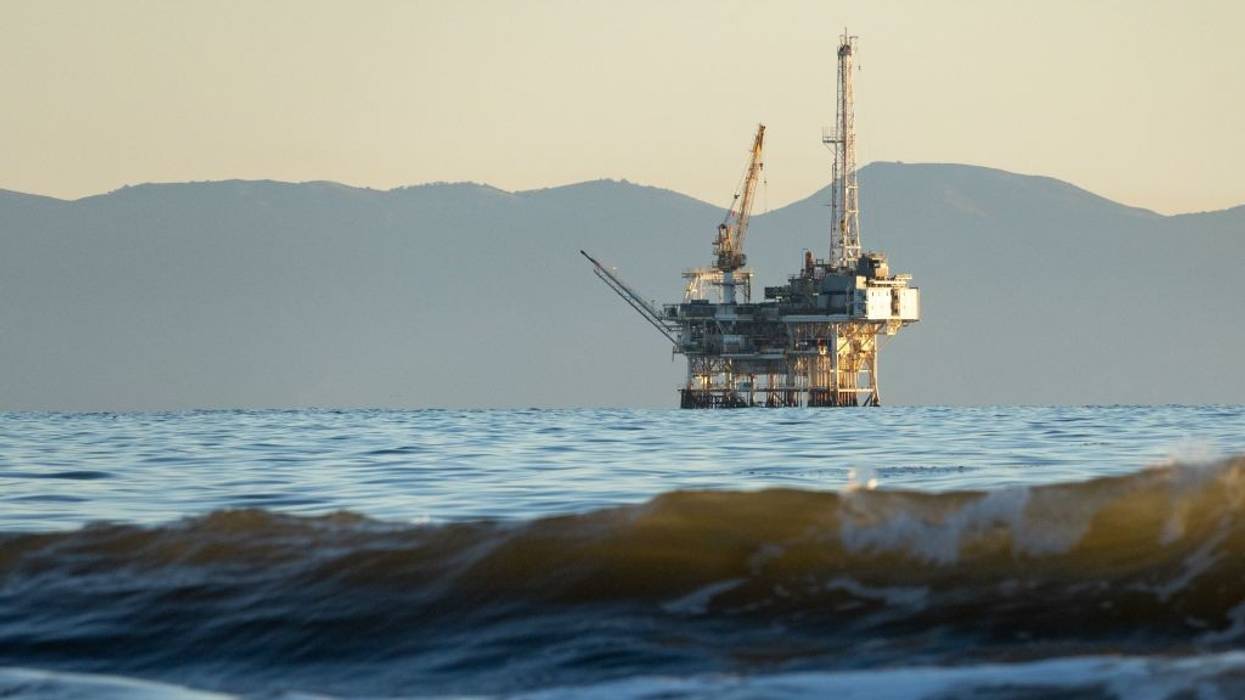
Yet the findings come at a time when emissions look set only to increase, as the US launches an oil-fueled war on Iran that risks drawing other major military powers into a greater conflict.
"The outbreak of any war is bad news for the climate, just as the election of politicians hostile to climate action is," Mark Hertsgaard, Covering Climate Now executive director and co-founder, and Giles Trendle, former managing director of Al Jazeera English, wrote in a newsletter on Thursday. "The climate implications of this new war are not the center of attention at the moment, but they are essential context for understanding what’s at stake. At a time when civilization is hurtling toward irreversible climate breakdown, to overlook the climate consequences of three of the deadliest militaries on Earth going to war would be journalistic malpractice."
War itself increases greenhouse gas emissions. Studies have found that Russia's invasion of Ukraine emitted as much in its first two years as the annual emissions of the Netherlands, while Israel's genocide in Gaza emitted as much in its first four months as each of the 135 lowest-emitting nations in a year.
The Conflict and Environment Observatory observed 120 incidents of environmental harm during the first three days of the Iran conflict, and noted that attacks on oil and gas infrastructure had global implications:
There are also consequences for the global environment through changes in greenhouse gas emissions. Attacks on oil and gas sites will release methane, carbon dioxide, and other greenhouse gasses, but the curtailment of production—as has occurred with Qatari LNG [liquefied natural gas], oil production in Iraqi Kurdistan, and Israeli offshore gas—does not necessarily reduce emissions. Instead energy price signals can lead to short term substitution, as well as more complex downstream energy supply changes over longer timeframes.
Fossil fuels are also required to power the machinery that makes war possible.
"What’s beyond dispute is that this war could not be fought without oil," Hertsgaard and Trendle wrote. "The aircraft carriers, jet planes, and the myriad support systems they require gobble immense quantities of fossil fuels. Which helps explain why the US Department of Defense is the largest institutional emitter of greenhouse gases globally."
There is also the speculation that control of fossil fuels is one motivation for the war itself, given that Iran has the world's third-largest reserve of oil. While Trump has not included oil in his incoherent word salad of war aims, as he did when he kidnapped Venezuelan President Nicolás Maduro in January, climate advocate Bill McKibben pointed out that members of US oil industry have said that they would rather develop Iran's oil than Venezuela's, as its industry is more "structurally sound."
"Europe, Asia, and other regions whose energy costs skyrocket because of this reckless escalation by the Trump administration are reminded, yet again, that fossil fuels are volatile, insecure, and expensive."
"The military attacks on Iran are not about peace and democracy, but rather about sowing fear, bloodshed, and despair as the US attempts to further destabilize the region and secure access to profitable natural resources that it wants to control," the Climate Justice Alliance said in a statement. "This is not surprising given recent foreign policy actions taken by the Trump administration in Venezuela and Cuba, and our ongoing history of engaging in coups, occupations, and endless wars to control resource-rich countries, especially for oil and gas."
Yet, at the same time, the war is already offering an object lesson in the dangers of relying on fossil fuels—for everyone except fossil fuel CEOs. The war could disrupt markets such that profits soar for Big Oil and liquefied natural gas companies while ordinary people suddenly find themselves struggling to pay gas or heating bills.
"Iran is in the middle of one of the world’s most important energy corridors," Lorne Stockman, Oil Change International research director, told Common Dreams. "Roughly 20% of global petroleum flows through the Strait of Hormuz, so when military escalation disrupts that route, global energy markets are immediately impacted."
Stockman continued: "That instability means higher energy bills for people around the world while communities in the region suffer the devastation of war. Europe, Asia, and other regions whose energy costs skyrocket because of this reckless escalation by the Trump administration are reminded, yet again, that fossil fuels are volatile, insecure, and expensive. The only question is whether governments will heed that signal and make a fair fossil fuel phase out a priority.”
Chair of the Fossil Fuel Non-Proliferation Treaty Tzeporah Berman made a similar point on social media: "Drones hitting Saudi oil fields, Qatar halting LNG production, Iran putting a squeeze on the Strait of Hormuz, and US attack on Iran’s Kharg Island oil terminals—all of it should be a wake-up call that fossil fuel phaseout is a national and energy security priority."
Yet Berman noted that the energy landscape is different today than it has been during previous periods of war.
"Unlike previous oil wars renewable energy is now available at scale," Berman continued. "It's distributed, diversified, and resilient. Most importantly, solar panels don’t blow up and once they are in place you don’t need ships to constantly feed them to make energy. The sun is looking like a pretty stable energy source right about now."