SUBSCRIBE TO OUR FREE NEWSLETTER
Daily news & progressive opinion—funded by the people, not the corporations—delivered straight to your inbox.
5
#000000
#FFFFFF
To donate by check, phone, or other method, see our More Ways to Give page.
Daily news & progressive opinion—funded by the people, not the corporations—delivered straight to your inbox.
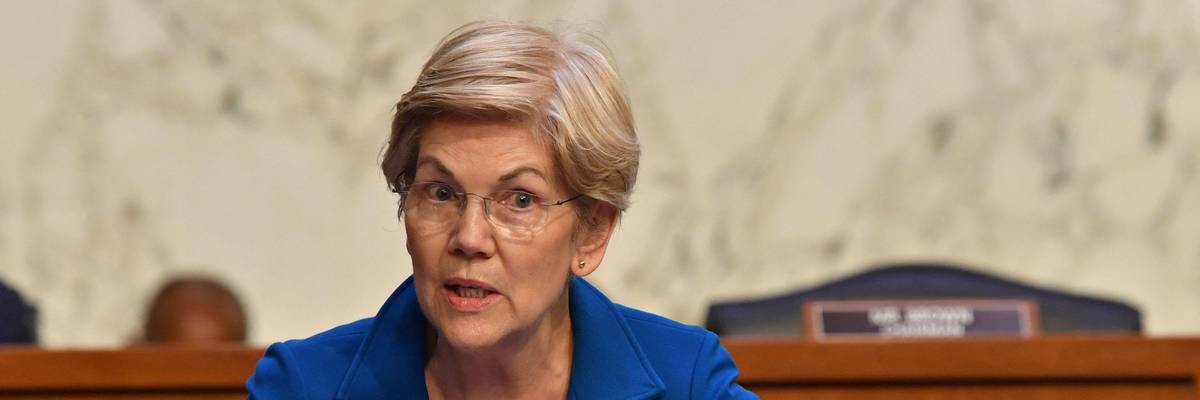
The Office of Strategic Capital appears to be giving its consultants "an opportunity to refresh their rolodexes without having appropriate guardrails in place to protect the public interest," said the senator.
Warning that a U.S. Department of Defense office created by Defense Secretary Lloyd Austin has created "clear conflicts" of interest as the agency works to finance technological advances, Sen. Elizabeth Warren on Sunday evening wrote to the department with a number of questions about how the Office of Strategic Capital operates and what officials are doing to ensure a separation between the Pentagon and investment firms vying to capitalize on the agency's work.
Austin announced the creation of the Office of Strategic Capital (OSC) in 2022, saying it would help the U.S. win "a global competition for leadership in critical technologies...and build enduring national security advantages."
As Warren noted on Sunday, the office provides "investment priorities in the form of an investment prospectus" to the Strategic Capital Advisory Council, which includes Under Secretary of Defense for Research and Engineering Heidi Shyu, to whom the Massachusetts Democrat addressed her letter.
The senator warned that at least two advisers at the OSC have maintained their senior positions at their consulting and venture capital firms, creating the appearance of multiple conflicts of interest.
"While some experts see this office supporting the development of key national security capacities, others have called it merely 'good innovation theater.' I am concerned that this office is already too cozy with private investment firms."
OSC consultant Linda Lourie works as a senior adviser for WestExec Advisors, which has helped technology startups with defense contracts, while OSC policy adviser Kirsten Bartok Touw has remained in her role as a managing partner at venture capital firm New Vista Capital.
Both Lourie and Touk were hired as special government employees (SGEs), exempting them from many of the ethics rules that apply to most federal employees.
SGEs are prohibited from "participating personally and substantially in any particular matter that has a direct and predictable effect on their own financial interests" and are subject to fines or imprisonment if they violate those rules, but, Warren noted, they are "not barred from lobbying on behalf of or representing outside entities to federal agencies in all cases, and may continue to receive outcome income."
While the DOD has said consultants including Lourie and Touk are only involved in "broad policy discussions" and not decisions about investments the OSC becomes involved in, Warren cited a Government Accountability Office report that said the employees can access "non-public political intelligence information" via "briefings, meetings, committee hearings, public or non-public documents, personal conversations, and other communications" at the Pentagon or on Capitol Hill.
"The OSC appears to be providing these consultants an opportunity to refresh their rolodexes without having appropriate guardrails in place to protect the public interest. As one of the consultants has observed, winning defense contracts is 'about relationships and connectivity,'" wrote Warren, quoting a comment Touk made in 2022.
The senator further noted that SGEs who serve for less than 60 days are not subject to a typical one-year "cooling-off period" during which they are barred from contacting their former agency regarding official matters.
The OSC and its reliance on SGEs seems "perfectly designed to generate conflicts of interest," said Jonathan Cohn of the advocacy group Progressive Massachusetts.
Warren wrote that the creation of the OSC by Austin—a former board member of defense contractor Raytheon—serves as an argument for the passage of her proposed legislation, the Anti-Corruption and Public Integrity Act. The bill would require all federal ethics laws to apply to SGEs and would require such employees to recuse themselves from "matters that might financially benefit themselves, a previous employer, or client from the preceding four years."
As it stands, Jeff Hauser of the Revolving Door Project told Vox in April, "it would take Herculean firewalls in one's brain—that human beings are not capable of—to ignore the fact that you continue to be employed at an entity that has ongoing interest in certain outcomes on decisions you're working on in government."
In her letter, Warren also pointed to reporting in The Intercept in April which said that as Silicon Valley Bank (SVB), which served as a lender to several tech startups, neared collapse in March, the OSC sent an internal email saying it was "assessing impacts to national security" that could arise from the bank's failure.
Because the OSC has "moved to provide loans, guarantees, and other financial instruments to technology companies it considers crucial to national security," reported The Intercept, "the defense agency advocated for government intervention to insure the investments. The Pentagon had even scrambled to prepare multiple plans to get cash to affected companies if necessary."
Warren on Sunday called on Shyu to disclose which companies contacted OSC about SVB's collapse and asked if "any of the companies that contacted OSC about SVB's collapse [were] current or former employers or clients of OSC personnel."
"While some experts see this office supporting the development of key national security capacities, others have called it merely 'good innovation theater,'" said Warren. "I am concerned that this office is already too cozy with private investment firms."
Dear Common Dreams reader, It’s been nearly 30 years since I co-founded Common Dreams with my late wife, Lina Newhouser. We had the radical notion that journalism should serve the public good, not corporate profits. It was clear to us from the outset what it would take to build such a project. No paid advertisements. No corporate sponsors. No millionaire publisher telling us what to think or do. Many people said we wouldn't last a year, but we proved those doubters wrong. Together with a tremendous team of journalists and dedicated staff, we built an independent media outlet free from the constraints of profits and corporate control. Our mission has always been simple: To inform. To inspire. To ignite change for the common good. Building Common Dreams was not easy. Our survival was never guaranteed. When you take on the most powerful forces—Wall Street greed, fossil fuel industry destruction, Big Tech lobbyists, and uber-rich oligarchs who have spent billions upon billions rigging the economy and democracy in their favor—the only bulwark you have is supporters who believe in your work. But here’s the urgent message from me today. It's never been this bad out there. And it's never been this hard to keep us going. At the very moment Common Dreams is most needed, the threats we face are intensifying. We need your support now more than ever. We don't accept corporate advertising and never will. We don't have a paywall because we don't think people should be blocked from critical news based on their ability to pay. Everything we do is funded by the donations of readers like you. When everyone does the little they can afford, we are strong. But if that support retreats or dries up, so do we. Will you donate now to make sure Common Dreams not only survives but thrives? —Craig Brown, Co-founder |
Warning that a U.S. Department of Defense office created by Defense Secretary Lloyd Austin has created "clear conflicts" of interest as the agency works to finance technological advances, Sen. Elizabeth Warren on Sunday evening wrote to the department with a number of questions about how the Office of Strategic Capital operates and what officials are doing to ensure a separation between the Pentagon and investment firms vying to capitalize on the agency's work.
Austin announced the creation of the Office of Strategic Capital (OSC) in 2022, saying it would help the U.S. win "a global competition for leadership in critical technologies...and build enduring national security advantages."
As Warren noted on Sunday, the office provides "investment priorities in the form of an investment prospectus" to the Strategic Capital Advisory Council, which includes Under Secretary of Defense for Research and Engineering Heidi Shyu, to whom the Massachusetts Democrat addressed her letter.
The senator warned that at least two advisers at the OSC have maintained their senior positions at their consulting and venture capital firms, creating the appearance of multiple conflicts of interest.
"While some experts see this office supporting the development of key national security capacities, others have called it merely 'good innovation theater.' I am concerned that this office is already too cozy with private investment firms."
OSC consultant Linda Lourie works as a senior adviser for WestExec Advisors, which has helped technology startups with defense contracts, while OSC policy adviser Kirsten Bartok Touw has remained in her role as a managing partner at venture capital firm New Vista Capital.
Both Lourie and Touk were hired as special government employees (SGEs), exempting them from many of the ethics rules that apply to most federal employees.
SGEs are prohibited from "participating personally and substantially in any particular matter that has a direct and predictable effect on their own financial interests" and are subject to fines or imprisonment if they violate those rules, but, Warren noted, they are "not barred from lobbying on behalf of or representing outside entities to federal agencies in all cases, and may continue to receive outcome income."
While the DOD has said consultants including Lourie and Touk are only involved in "broad policy discussions" and not decisions about investments the OSC becomes involved in, Warren cited a Government Accountability Office report that said the employees can access "non-public political intelligence information" via "briefings, meetings, committee hearings, public or non-public documents, personal conversations, and other communications" at the Pentagon or on Capitol Hill.
"The OSC appears to be providing these consultants an opportunity to refresh their rolodexes without having appropriate guardrails in place to protect the public interest. As one of the consultants has observed, winning defense contracts is 'about relationships and connectivity,'" wrote Warren, quoting a comment Touk made in 2022.
The senator further noted that SGEs who serve for less than 60 days are not subject to a typical one-year "cooling-off period" during which they are barred from contacting their former agency regarding official matters.
The OSC and its reliance on SGEs seems "perfectly designed to generate conflicts of interest," said Jonathan Cohn of the advocacy group Progressive Massachusetts.
Warren wrote that the creation of the OSC by Austin—a former board member of defense contractor Raytheon—serves as an argument for the passage of her proposed legislation, the Anti-Corruption and Public Integrity Act. The bill would require all federal ethics laws to apply to SGEs and would require such employees to recuse themselves from "matters that might financially benefit themselves, a previous employer, or client from the preceding four years."
As it stands, Jeff Hauser of the Revolving Door Project told Vox in April, "it would take Herculean firewalls in one's brain—that human beings are not capable of—to ignore the fact that you continue to be employed at an entity that has ongoing interest in certain outcomes on decisions you're working on in government."
In her letter, Warren also pointed to reporting in The Intercept in April which said that as Silicon Valley Bank (SVB), which served as a lender to several tech startups, neared collapse in March, the OSC sent an internal email saying it was "assessing impacts to national security" that could arise from the bank's failure.
Because the OSC has "moved to provide loans, guarantees, and other financial instruments to technology companies it considers crucial to national security," reported The Intercept, "the defense agency advocated for government intervention to insure the investments. The Pentagon had even scrambled to prepare multiple plans to get cash to affected companies if necessary."
Warren on Sunday called on Shyu to disclose which companies contacted OSC about SVB's collapse and asked if "any of the companies that contacted OSC about SVB's collapse [were] current or former employers or clients of OSC personnel."
"While some experts see this office supporting the development of key national security capacities, others have called it merely 'good innovation theater,'" said Warren. "I am concerned that this office is already too cozy with private investment firms."
Warning that a U.S. Department of Defense office created by Defense Secretary Lloyd Austin has created "clear conflicts" of interest as the agency works to finance technological advances, Sen. Elizabeth Warren on Sunday evening wrote to the department with a number of questions about how the Office of Strategic Capital operates and what officials are doing to ensure a separation between the Pentagon and investment firms vying to capitalize on the agency's work.
Austin announced the creation of the Office of Strategic Capital (OSC) in 2022, saying it would help the U.S. win "a global competition for leadership in critical technologies...and build enduring national security advantages."
As Warren noted on Sunday, the office provides "investment priorities in the form of an investment prospectus" to the Strategic Capital Advisory Council, which includes Under Secretary of Defense for Research and Engineering Heidi Shyu, to whom the Massachusetts Democrat addressed her letter.
The senator warned that at least two advisers at the OSC have maintained their senior positions at their consulting and venture capital firms, creating the appearance of multiple conflicts of interest.
"While some experts see this office supporting the development of key national security capacities, others have called it merely 'good innovation theater.' I am concerned that this office is already too cozy with private investment firms."
OSC consultant Linda Lourie works as a senior adviser for WestExec Advisors, which has helped technology startups with defense contracts, while OSC policy adviser Kirsten Bartok Touw has remained in her role as a managing partner at venture capital firm New Vista Capital.
Both Lourie and Touk were hired as special government employees (SGEs), exempting them from many of the ethics rules that apply to most federal employees.
SGEs are prohibited from "participating personally and substantially in any particular matter that has a direct and predictable effect on their own financial interests" and are subject to fines or imprisonment if they violate those rules, but, Warren noted, they are "not barred from lobbying on behalf of or representing outside entities to federal agencies in all cases, and may continue to receive outcome income."
While the DOD has said consultants including Lourie and Touk are only involved in "broad policy discussions" and not decisions about investments the OSC becomes involved in, Warren cited a Government Accountability Office report that said the employees can access "non-public political intelligence information" via "briefings, meetings, committee hearings, public or non-public documents, personal conversations, and other communications" at the Pentagon or on Capitol Hill.
"The OSC appears to be providing these consultants an opportunity to refresh their rolodexes without having appropriate guardrails in place to protect the public interest. As one of the consultants has observed, winning defense contracts is 'about relationships and connectivity,'" wrote Warren, quoting a comment Touk made in 2022.
The senator further noted that SGEs who serve for less than 60 days are not subject to a typical one-year "cooling-off period" during which they are barred from contacting their former agency regarding official matters.
The OSC and its reliance on SGEs seems "perfectly designed to generate conflicts of interest," said Jonathan Cohn of the advocacy group Progressive Massachusetts.
Warren wrote that the creation of the OSC by Austin—a former board member of defense contractor Raytheon—serves as an argument for the passage of her proposed legislation, the Anti-Corruption and Public Integrity Act. The bill would require all federal ethics laws to apply to SGEs and would require such employees to recuse themselves from "matters that might financially benefit themselves, a previous employer, or client from the preceding four years."
As it stands, Jeff Hauser of the Revolving Door Project told Vox in April, "it would take Herculean firewalls in one's brain—that human beings are not capable of—to ignore the fact that you continue to be employed at an entity that has ongoing interest in certain outcomes on decisions you're working on in government."
In her letter, Warren also pointed to reporting in The Intercept in April which said that as Silicon Valley Bank (SVB), which served as a lender to several tech startups, neared collapse in March, the OSC sent an internal email saying it was "assessing impacts to national security" that could arise from the bank's failure.
Because the OSC has "moved to provide loans, guarantees, and other financial instruments to technology companies it considers crucial to national security," reported The Intercept, "the defense agency advocated for government intervention to insure the investments. The Pentagon had even scrambled to prepare multiple plans to get cash to affected companies if necessary."
Warren on Sunday called on Shyu to disclose which companies contacted OSC about SVB's collapse and asked if "any of the companies that contacted OSC about SVB's collapse [were] current or former employers or clients of OSC personnel."
"While some experts see this office supporting the development of key national security capacities, others have called it merely 'good innovation theater,'" said Warren. "I am concerned that this office is already too cozy with private investment firms."