SUBSCRIBE TO OUR FREE NEWSLETTER
Daily news & progressive opinion—funded by the people, not the corporations—delivered straight to your inbox.
5
#000000
#FFFFFF
To donate by check, phone, or other method, see our More Ways to Give page.
Daily news & progressive opinion—funded by the people, not the corporations—delivered straight to your inbox.
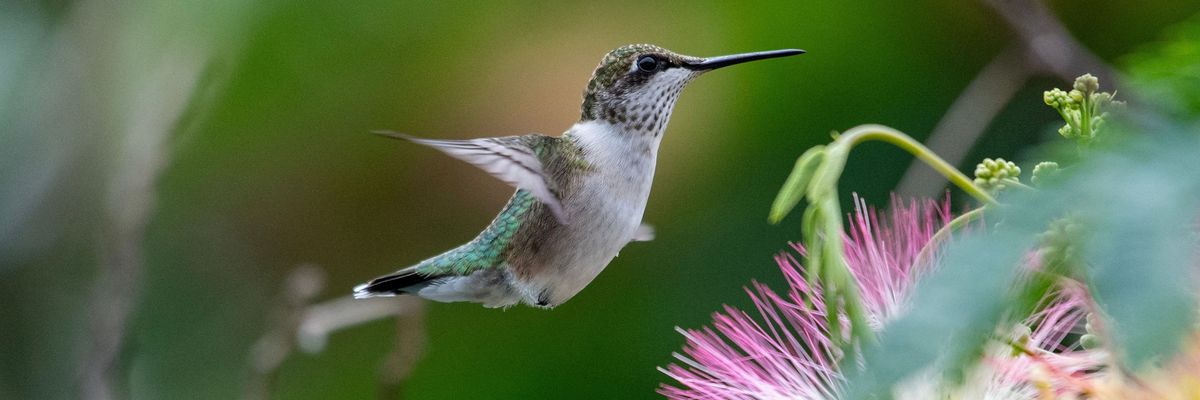
A ruby-throated hummingbird flies over a mimosa tree in Saugus, Massachusetts, on July 22, 2023.
"Trump is breaking the law and flouting a court order by handing the fossil fuel industry and polluters this blank check to kill millions of migratory birds," one advocate said.
The Trump administration moved on Friday to weaken protections for migratory birds threatened by industrial activities, including oil and gas operations.
Acting Solicitor of the U.S. Department of the Interior (DOI) Gregory Zerzan restored an opinion from the first Trump administration that the Migratory Bird Treaty Act (MBTA) "does not apply to the accidental or incidental taking or killing of migratory birds," despite the fact that this opinion was already ruled illegal in federal court.
"Trump is breaking the law and flouting a court order by handing the fossil fuel industry and polluters this blank check to kill millions of migratory birds," said Tara Zuardo, a senior campaigner at the Center for Biological Diversity. "The United States has lost billions of birds over the past 50 years, and that decline will accelerate horrifically because of this callous, anti-wildlife directive. No one voted to slaughter hummingbirds, cranes, and raptors, but this is the reality of Trump's illegal actions today."
"We're not going to succeed in addressing the crisis facing birds and other wildlife if we let this and other historic rollbacks stand."
The new directive comes as birds in the U.S. are under threat, with their numbers falling by around 30% since 1970. A number of factors are responsible for this decline, among them the climate emergency, habitat loss, falling insect populations, window strikes, and outdoor cats. However, conservationists told The New York Times that industrial activities would be a greater threat if not for the protection the law provides.
For example, Zuardo told the Times that if U.S. President Donald Trump's interpretation of the law had been in effect following BP's Deepwater Horizon oil spill in 2010—which likely killed over 1 million birds—the company would not have been charged the around $100 million in fines that went to support bird conservation after the disaster.
Friday's directive is part of an ongoing effort over the course of both Trump administrations to weaken the MBTA so that it only targets the purposeful killing of birds, dropping enforcement against accidents such as as oil spills, drownings in uncovered oil pits, trappings in open mining pipes, and collisions with power lines or communication towers.
In 2017, lead Interior Department lawyer Daniel Jorjani issued an initial legal opinion claiming the MBTA only covered purposeful killings. This interpretation was struck down by a federal court in 2020, which argued that the act's "clear language" put it in "direct conflict" with the Trump opinion.
This didn't stop the Trump administration from issuing a final rule attempting to enshrine its interpretation of the MBTA at the end of Trump's first term, which was widely decried by bird advocates.
"We're not going to succeed in addressing the crisis facing birds and other wildlife if we let this and other historic rollbacks stand," Erik Schneider, policy manager for the National Audubon Society, said at the time.
However, months into the presidency of Joe Biden, DOI principal deputy solicitor Robert T. Anderson withdrew the initial 2017 Trump administration opinion after an appeals court, following the request of the U.S. government, dismissed the Trump administration's earlier appeal of the 2020 court decision.
"The lower court decision is consistent with the Department of the Interior's long-standing interpretation of the MBTA," Anderson wrote.
Later, the Biden administration also reversed the formal Trump-era rule weakening the MBTA.
Now, in his second term, Trump is coming for the birds again. The Biden-era withdrawal was one of 20 Biden-era opinions that the Trump DOI suspended in March. It was then officially revoked and withdrawn on Friday.
In justifying its decision, Trump's DOI cited the president's January 20 executive order "Unleashing American Energy," which calls on federal agencies to "suspend, revise, or rescind all agency actions identified as unduly burdensome," making it clear the weakening of protections is largely intended to benefit the fossil fuel and mining industries.
This country and this world are at a monumental crossroads. US voters have an opportunity to beat back the forces of fascism and confront the billionaires who are rigging the economy, our media system, and our democracy, making it increasingly impossible for ordinary people to get by. We’re not just talking about the election. We’re talking about what must be done once these fascist elements are vanquished from power. We need a bolder set of solutions than what either major party has so far been willing to offer and a working-class movement ready to fight like hell for it. Trump didn't emerge from nowhere. The conditions that fueled MAGA authoritarianism were created by decades of radical neoliberal economic policies and a corrupt political system dominated by corporate interests. They slashed taxes on the super-rich, promising that the benefits would trickle down. They said giveaways to the corporate titans would make life more affordable for the rest of us. It was all bullshit. And when a bitter, betrayed populace searches for someone to blame, right-wing demagogues have little trouble finding scapegoats. People know when they're being lied to, but you won't hear any of this from the corporate media. Only independent journalism—powered and funded by people who believe in building a better world—can deliver truly trustworthy daily news. If you share our vision, please contribute whatever you can to sustain our work. |
The Trump administration moved on Friday to weaken protections for migratory birds threatened by industrial activities, including oil and gas operations.
Acting Solicitor of the U.S. Department of the Interior (DOI) Gregory Zerzan restored an opinion from the first Trump administration that the Migratory Bird Treaty Act (MBTA) "does not apply to the accidental or incidental taking or killing of migratory birds," despite the fact that this opinion was already ruled illegal in federal court.
"Trump is breaking the law and flouting a court order by handing the fossil fuel industry and polluters this blank check to kill millions of migratory birds," said Tara Zuardo, a senior campaigner at the Center for Biological Diversity. "The United States has lost billions of birds over the past 50 years, and that decline will accelerate horrifically because of this callous, anti-wildlife directive. No one voted to slaughter hummingbirds, cranes, and raptors, but this is the reality of Trump's illegal actions today."
"We're not going to succeed in addressing the crisis facing birds and other wildlife if we let this and other historic rollbacks stand."
The new directive comes as birds in the U.S. are under threat, with their numbers falling by around 30% since 1970. A number of factors are responsible for this decline, among them the climate emergency, habitat loss, falling insect populations, window strikes, and outdoor cats. However, conservationists told The New York Times that industrial activities would be a greater threat if not for the protection the law provides.
For example, Zuardo told the Times that if U.S. President Donald Trump's interpretation of the law had been in effect following BP's Deepwater Horizon oil spill in 2010—which likely killed over 1 million birds—the company would not have been charged the around $100 million in fines that went to support bird conservation after the disaster.
Friday's directive is part of an ongoing effort over the course of both Trump administrations to weaken the MBTA so that it only targets the purposeful killing of birds, dropping enforcement against accidents such as as oil spills, drownings in uncovered oil pits, trappings in open mining pipes, and collisions with power lines or communication towers.
In 2017, lead Interior Department lawyer Daniel Jorjani issued an initial legal opinion claiming the MBTA only covered purposeful killings. This interpretation was struck down by a federal court in 2020, which argued that the act's "clear language" put it in "direct conflict" with the Trump opinion.
This didn't stop the Trump administration from issuing a final rule attempting to enshrine its interpretation of the MBTA at the end of Trump's first term, which was widely decried by bird advocates.
"We're not going to succeed in addressing the crisis facing birds and other wildlife if we let this and other historic rollbacks stand," Erik Schneider, policy manager for the National Audubon Society, said at the time.
However, months into the presidency of Joe Biden, DOI principal deputy solicitor Robert T. Anderson withdrew the initial 2017 Trump administration opinion after an appeals court, following the request of the U.S. government, dismissed the Trump administration's earlier appeal of the 2020 court decision.
"The lower court decision is consistent with the Department of the Interior's long-standing interpretation of the MBTA," Anderson wrote.
Later, the Biden administration also reversed the formal Trump-era rule weakening the MBTA.
Now, in his second term, Trump is coming for the birds again. The Biden-era withdrawal was one of 20 Biden-era opinions that the Trump DOI suspended in March. It was then officially revoked and withdrawn on Friday.
In justifying its decision, Trump's DOI cited the president's January 20 executive order "Unleashing American Energy," which calls on federal agencies to "suspend, revise, or rescind all agency actions identified as unduly burdensome," making it clear the weakening of protections is largely intended to benefit the fossil fuel and mining industries.