5
#000000
#FFFFFF
To donate by check, phone, or other method, see our More Ways to Give page.
Daily news & progressive opinion—funded by the people, not the corporations—delivered straight to your inbox.

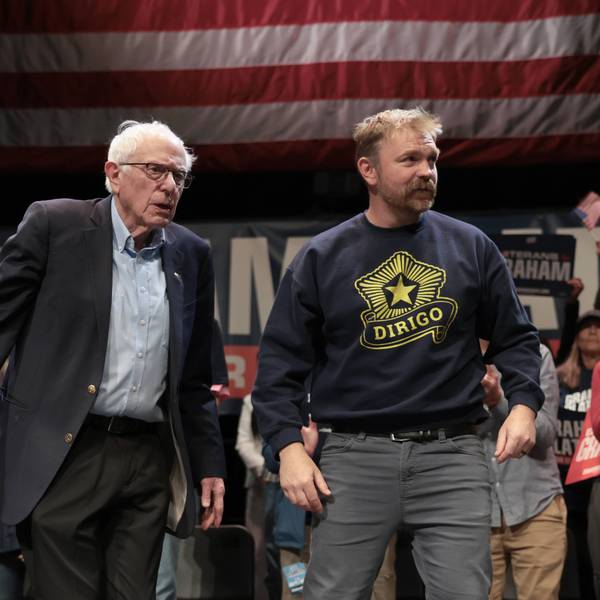
Democratic US Senate candidate Graham Platner speaks at a “Fighting Oligarchy” tour stop held by Sen. Bernie Sanders (I-Vt.) at the Collins Center for the Arts on the University of Maine campus on May 24, 2026 in Orono, Maine.
"People in Maine are tired of establishment status quo politics," said Sen. Bernie Sanders. "They want to take on the billionaire class and fight for REAL change."
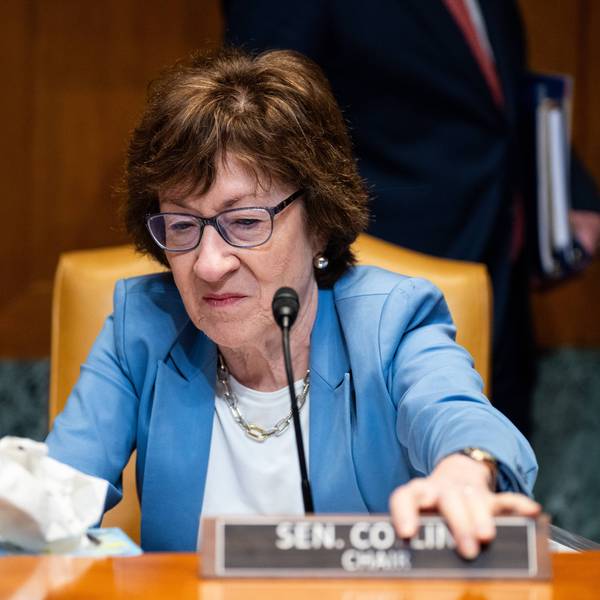
"Republicans are worried," said US Sen. Bernie Sanders on Monday, referring to Democratic Senate candidate Graham Platner's historic primary victory in Maine last week, as local reports in the state pointed to a spending blitz as five-term GOP Sen. Susan Collins tries to hold on to her seat in the high-stakes election.
The Senate race in Maine could determine the balance of power in the Senate, and with primary voters showing clear enthusiasm for political newcomer Platner—who won the most votes in a Democratic primary in the state's history—overall spending in the race could reach an estimated $384 million, with the majority spent by pro-Collins groups, according to the media tracking company AdImpact.
If the firm's projections are accurate, the Maine Senate race could be the fourth-most expensive in the country this election cycle, after far more populous states including Texas, Michigan, and Georgia.
In response to the report, Platner said he plans to "defeat" the pro-Collins groups—and then end the campaign finance system that allows billionaires to buy elections.
One political writer based in Maine, Anthony Emerson, reported that the spending blitz was already evident over the weekend during the World Cup and Stanley Finals Cup games.
"Every single ad break had an attack ad on Platner or a Collins ad," said Emerson. "Saw only a handful of pro-Platner/anti-Collins."
Maine is home to just 1.4 million people, meaning that an election spending total of nearly $400 million would be equivalent to about $400 per registered voter, said journalist Alex Seitz-Wald of The Midcoast Villager.
Collins-aligned groups have already booked about $100 million in ads through Election Day, including dark money groups such as One Nation and Pine Tree Results Political Action Committee (PAC).
Those groups have booked more than $46 million combined in advertisements like a Pine Tree Results-funded attack ad against Platner that aired in April, seizing on comments the Democratic candidate made in 2013 on Reddit about sexual assault.
Along with Wall Street CEOs Stephen Schwarzman and Paul Singer and Palantir executive Alex Karp, the pro-Collins super PAC counts among its donors Republican legal activist Leonard Leo and hedge fund billionaire Ken Griffin. Leo gave at least $1 million to Pine Tree Results PAC, while Griffin, who recently criticized New York City Mayor Zohran Mamdani over his tax on second homes, donated $2.5 million to the group.
According to The Maine Monitor, nearly 100 billionaires and their spouses have donated nearly $10 million total to pro-Collins groups since the beginning of 2025.
The spending blitz by outside groups comes as Platner has proven to be a formidable fundraiser, bringing in about $16 million as of May compared with about $12 million for Collins.
Platner's campaign has nearly $350,000 in ads booked through Election Day, while Collins is so far largely relying on the PACs that are aligned with her to run attack ads against her opponent.
Groups including Majority Forward, Unrig Our Economy, and Duty and Honor have spent about $11 million combined on ads promoting Platner's campaign, which is focusing on his support of Medicare for All; his demand that the government invest money in schools, healthcare, and communities instead of pouring hundreds of billions of dollars into the military each year; and his call for a billionaires' minimum tax.
Platner's platform also includes a call to "ban billionaires buying elections," by passing a constitutional amendment to overturn the US Supreme Court's Citizens United v. Federal Election Commission ruling, which struck down a centuries-old ban on corporate "independent" spending on elections—money that doesn't go directly to a candidate or party—allowing corporations and super PACs to spend unlimited amounts to help their preferred candidates.
"We have individuals spending tens and even hundreds of millions of dollars on political campaigns, a scheme of legalized bribery and vote-buying that drowns out the voices of regular people, effectively replacing what we used to call democracy," reads Platner's website. "Under this system, the prospects for any meaningful reform are grim. We must throw out of Washington any politician who will not commit to passing a constitutional amendment to ban billionaires buying elections!"
Journalist Zaid Jilani concurred with Sanders (I-Vt.) that Republicans appear concerned about Platner's momentum, saying their plan to pour hundreds of millions of dollars into a small state does not seem like the strategy of a party that thinks "they have it in the bag."
Sanders expressed confidence that the money flowing into Maine will be no match for Platner's engagement with voters and his focus on issues that affect working people in the state.
"People in Maine are tired of establishment status quo politics," said Sanders. "They want to take on the billionaire class and fight for REAL change."
Dear Common Dreams reader, It’s been nearly 30 years since I co-founded Common Dreams with my late wife, Lina Newhouser. We had the radical notion that journalism should serve the public good, not corporate profits. It was clear to us from the outset what it would take to build such a project. No paid advertisements. No corporate sponsors. No millionaire publisher telling us what to think or do. Many people said we wouldn't last a year, but we proved those doubters wrong. Together with a tremendous team of journalists and dedicated staff, we built an independent media outlet free from the constraints of profits and corporate control. Our mission has always been simple: To inform. To inspire. To ignite change for the common good. Building Common Dreams was not easy. Our survival was never guaranteed. When you take on the most powerful forces—Wall Street greed, fossil fuel industry destruction, Big Tech lobbyists, and uber-rich oligarchs who have spent billions upon billions rigging the economy and democracy in their favor—the only bulwark you have is supporters who believe in your work. But here’s the urgent message from me today. It's never been this bad out there. And it's never been this hard to keep us going. At the very moment Common Dreams is most needed, the threats we face are intensifying. We need your support now more than ever. We don't accept corporate advertising and never will. We don't have a paywall because we don't think people should be blocked from critical news based on their ability to pay. Everything we do is funded by the donations of readers like you. When everyone does the little they can afford, we are strong. But if that support retreats or dries up, so do we. Will you donate now to make sure Common Dreams not only survives but thrives? —Craig Brown, Co-founder |
"Republicans are worried," said US Sen. Bernie Sanders on Monday, referring to Democratic Senate candidate Graham Platner's historic primary victory in Maine last week, as local reports in the state pointed to a spending blitz as five-term GOP Sen. Susan Collins tries to hold on to her seat in the high-stakes election.
The Senate race in Maine could determine the balance of power in the Senate, and with primary voters showing clear enthusiasm for political newcomer Platner—who won the most votes in a Democratic primary in the state's history—overall spending in the race could reach an estimated $384 million, with the majority spent by pro-Collins groups, according to the media tracking company AdImpact.
If the firm's projections are accurate, the Maine Senate race could be the fourth-most expensive in the country this election cycle, after far more populous states including Texas, Michigan, and Georgia.
In response to the report, Platner said he plans to "defeat" the pro-Collins groups—and then end the campaign finance system that allows billionaires to buy elections.
One political writer based in Maine, Anthony Emerson, reported that the spending blitz was already evident over the weekend during the World Cup and Stanley Finals Cup games.
"Every single ad break had an attack ad on Platner or a Collins ad," said Emerson. "Saw only a handful of pro-Platner/anti-Collins."
Maine is home to just 1.4 million people, meaning that an election spending total of nearly $400 million would be equivalent to about $400 per registered voter, said journalist Alex Seitz-Wald of The Midcoast Villager.
Collins-aligned groups have already booked about $100 million in ads through Election Day, including dark money groups such as One Nation and Pine Tree Results Political Action Committee (PAC).
Those groups have booked more than $46 million combined in advertisements like a Pine Tree Results-funded attack ad against Platner that aired in April, seizing on comments the Democratic candidate made in 2013 on Reddit about sexual assault.
Along with Wall Street CEOs Stephen Schwarzman and Paul Singer and Palantir executive Alex Karp, the pro-Collins super PAC counts among its donors Republican legal activist Leonard Leo and hedge fund billionaire Ken Griffin. Leo gave at least $1 million to Pine Tree Results PAC, while Griffin, who recently criticized New York City Mayor Zohran Mamdani over his tax on second homes, donated $2.5 million to the group.
According to The Maine Monitor, nearly 100 billionaires and their spouses have donated nearly $10 million total to pro-Collins groups since the beginning of 2025.
The spending blitz by outside groups comes as Platner has proven to be a formidable fundraiser, bringing in about $16 million as of May compared with about $12 million for Collins.
Platner's campaign has nearly $350,000 in ads booked through Election Day, while Collins is so far largely relying on the PACs that are aligned with her to run attack ads against her opponent.
Groups including Majority Forward, Unrig Our Economy, and Duty and Honor have spent about $11 million combined on ads promoting Platner's campaign, which is focusing on his support of Medicare for All; his demand that the government invest money in schools, healthcare, and communities instead of pouring hundreds of billions of dollars into the military each year; and his call for a billionaires' minimum tax.
Platner's platform also includes a call to "ban billionaires buying elections," by passing a constitutional amendment to overturn the US Supreme Court's Citizens United v. Federal Election Commission ruling, which struck down a centuries-old ban on corporate "independent" spending on elections—money that doesn't go directly to a candidate or party—allowing corporations and super PACs to spend unlimited amounts to help their preferred candidates.
"We have individuals spending tens and even hundreds of millions of dollars on political campaigns, a scheme of legalized bribery and vote-buying that drowns out the voices of regular people, effectively replacing what we used to call democracy," reads Platner's website. "Under this system, the prospects for any meaningful reform are grim. We must throw out of Washington any politician who will not commit to passing a constitutional amendment to ban billionaires buying elections!"
Journalist Zaid Jilani concurred with Sanders (I-Vt.) that Republicans appear concerned about Platner's momentum, saying their plan to pour hundreds of millions of dollars into a small state does not seem like the strategy of a party that thinks "they have it in the bag."
Sanders expressed confidence that the money flowing into Maine will be no match for Platner's engagement with voters and his focus on issues that affect working people in the state.
"People in Maine are tired of establishment status quo politics," said Sanders. "They want to take on the billionaire class and fight for REAL change."
"Republicans are worried," said US Sen. Bernie Sanders on Monday, referring to Democratic Senate candidate Graham Platner's historic primary victory in Maine last week, as local reports in the state pointed to a spending blitz as five-term GOP Sen. Susan Collins tries to hold on to her seat in the high-stakes election.
The Senate race in Maine could determine the balance of power in the Senate, and with primary voters showing clear enthusiasm for political newcomer Platner—who won the most votes in a Democratic primary in the state's history—overall spending in the race could reach an estimated $384 million, with the majority spent by pro-Collins groups, according to the media tracking company AdImpact.
If the firm's projections are accurate, the Maine Senate race could be the fourth-most expensive in the country this election cycle, after far more populous states including Texas, Michigan, and Georgia.
In response to the report, Platner said he plans to "defeat" the pro-Collins groups—and then end the campaign finance system that allows billionaires to buy elections.
One political writer based in Maine, Anthony Emerson, reported that the spending blitz was already evident over the weekend during the World Cup and Stanley Finals Cup games.
"Every single ad break had an attack ad on Platner or a Collins ad," said Emerson. "Saw only a handful of pro-Platner/anti-Collins."
Maine is home to just 1.4 million people, meaning that an election spending total of nearly $400 million would be equivalent to about $400 per registered voter, said journalist Alex Seitz-Wald of The Midcoast Villager.
Collins-aligned groups have already booked about $100 million in ads through Election Day, including dark money groups such as One Nation and Pine Tree Results Political Action Committee (PAC).
Those groups have booked more than $46 million combined in advertisements like a Pine Tree Results-funded attack ad against Platner that aired in April, seizing on comments the Democratic candidate made in 2013 on Reddit about sexual assault.
Along with Wall Street CEOs Stephen Schwarzman and Paul Singer and Palantir executive Alex Karp, the pro-Collins super PAC counts among its donors Republican legal activist Leonard Leo and hedge fund billionaire Ken Griffin. Leo gave at least $1 million to Pine Tree Results PAC, while Griffin, who recently criticized New York City Mayor Zohran Mamdani over his tax on second homes, donated $2.5 million to the group.
According to The Maine Monitor, nearly 100 billionaires and their spouses have donated nearly $10 million total to pro-Collins groups since the beginning of 2025.
The spending blitz by outside groups comes as Platner has proven to be a formidable fundraiser, bringing in about $16 million as of May compared with about $12 million for Collins.
Platner's campaign has nearly $350,000 in ads booked through Election Day, while Collins is so far largely relying on the PACs that are aligned with her to run attack ads against her opponent.
Groups including Majority Forward, Unrig Our Economy, and Duty and Honor have spent about $11 million combined on ads promoting Platner's campaign, which is focusing on his support of Medicare for All; his demand that the government invest money in schools, healthcare, and communities instead of pouring hundreds of billions of dollars into the military each year; and his call for a billionaires' minimum tax.
Platner's platform also includes a call to "ban billionaires buying elections," by passing a constitutional amendment to overturn the US Supreme Court's Citizens United v. Federal Election Commission ruling, which struck down a centuries-old ban on corporate "independent" spending on elections—money that doesn't go directly to a candidate or party—allowing corporations and super PACs to spend unlimited amounts to help their preferred candidates.
"We have individuals spending tens and even hundreds of millions of dollars on political campaigns, a scheme of legalized bribery and vote-buying that drowns out the voices of regular people, effectively replacing what we used to call democracy," reads Platner's website. "Under this system, the prospects for any meaningful reform are grim. We must throw out of Washington any politician who will not commit to passing a constitutional amendment to ban billionaires buying elections!"
Journalist Zaid Jilani concurred with Sanders (I-Vt.) that Republicans appear concerned about Platner's momentum, saying their plan to pour hundreds of millions of dollars into a small state does not seem like the strategy of a party that thinks "they have it in the bag."
Sanders expressed confidence that the money flowing into Maine will be no match for Platner's engagement with voters and his focus on issues that affect working people in the state.
"People in Maine are tired of establishment status quo politics," said Sanders. "They want to take on the billionaire class and fight for REAL change."