
Israel's gradual advancement of its "yellow line" to occupy more territory in the Gaza Strip is fueling concerns that it is seeking to effectively annex and colonize the majority of the territory without any formal agreement.
The Guardian reported on Wednesday that Israel has been steadily pushing the truce line to take control of more Palestinian territory in the six months since a "ceasefire" was reached in October.
The yellow line drawn on the ceasefire maps had Israeli troops in control of about 53% of Gaza's territory, cramming nearly 2 million displaced Palestinians into a territory less than half the size of the one they inhabited before.
But an analysis by Forensic Architecture shows Israel has unilaterally shifted the line westward over the past six months to the point where it controlled about 58% of the strip by December in an occupation zone that continues to grow.
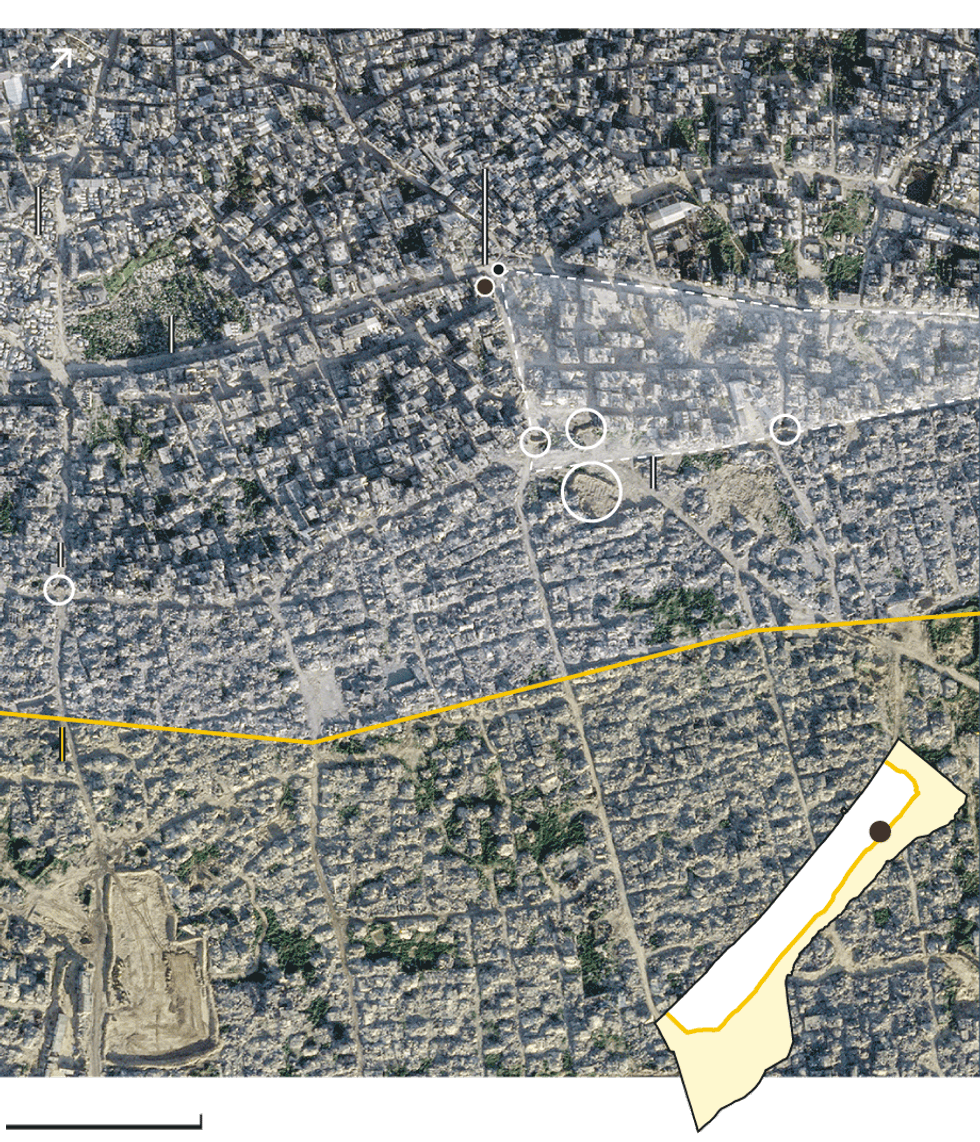 (Graphic by The Guardian. Source: Planet Labs PBC, March 6, 2026.)
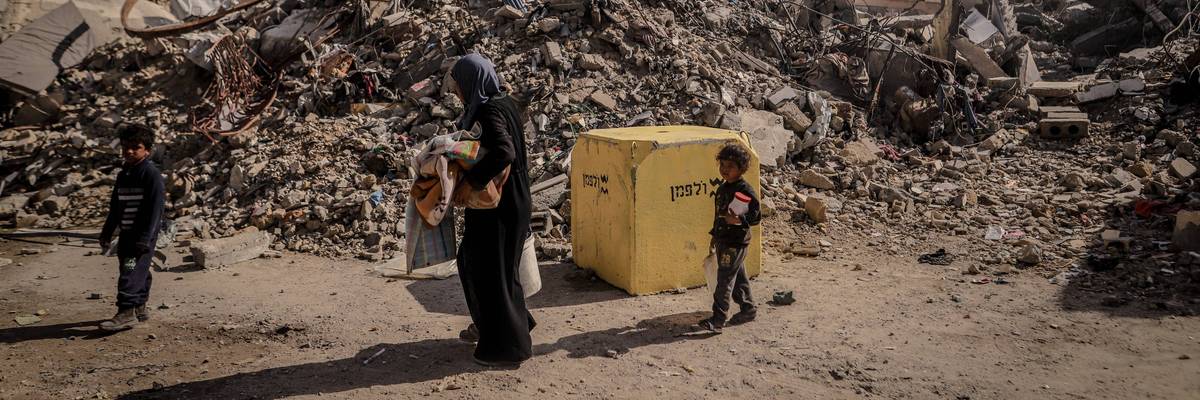
Palestinians living in Gaza reportedly woke up to learn that large yellow concrete blocks denoting the ceasefire line had suddenly moved and that they were now living in a free-fire area, where the Israeli military considers any Palestinian person or vehicle a legitimate target.
The Associated Press found in January that at least 77 Palestinians have been shot on sight when they've found themselves on the wrong side of the yellow line or even just near it, even though the line's boundaries are ill-defined and fluid.
They are among more than 730 Palestinians who have been killed since the "ceasefire" began in October, according to the Gaza Health Ministry, which has accused Israel of thousands of violations.
According to The Guardian, some displaced people, such as those who lived near the Salah al-Din road, which spans the length of Gaza from north to south, suddenly found themselves targeted by Israeli forces, who also began demolishing homes and other buildings and constructing new ones.
Though the yellow line was supposed to be set up as a temporary measure under US President Donald Trump's "peace plan" for Gaza before control of the strip is transferred back to Palestinians, Israel Defense Forces (IDF) chief of staff Eyal Zamir described it as a "new border" with Gaza back in December, around the time it reportedly began to move.
Eyal Weizman, an Israeli architect and the head of Forensic Architecture’s research agency, recently wrote that the IDF appears to be turning this portion of Gaza into a permanent occupation zone.
The group found that seven new military outposts have been built along the yellow line, including one on what was once a cemetery.
While these areas began as "piles of earth and rubble" organized into crude enclosures, Weizman said that in recent months the roads leading to them have been asphalted, electricity poles have been erected, and buildings and communications towers have gone up inside the bases.
"The bases no longer appear to be the provisional arrangements that Trump’s ceasefire plan claims them to be, but permanent instruments of occupation," he wrote. "The newly paved roads connect the bases to a matrix of control that is linked to Israel’s road network and communications grid."
He noted that Israel's illegal settler movement, which has several powerful representatives in the government of Prime Minister Benjamin Netanyahu, has been "lobbying hard for the Israeli government to start constructing settlements within the vastly expanded buffer zone."
Defense Minister Israel Katz said in December that Israel would "never leave Gaza" and spoke of plans to turn IDF military outposts into civilian settlements similar to those that have gradually taken over the West Bank through the violent displacement of Palestinian residents.
Ahmad Ibsais, Palestinian American law student and author of the newsletter State of Siege, wrote for the Al-Shabaka Palestinian Policy Network that by drawing a yellow line, Israel is seeking to consolidate its control over Palestinian land without formally annexing it—in other words, "annexation without legal burden."
"Borders are typically established through bilateral agreements, adjudication, or mutual recognition under international law," he wrote. "By contrast, the so-called Yellow Line in Gaza functions as a de facto military demarcation associated with ceasefire arrangements and enforced through Israeli operational control."
"It shapes civilian movement and territorial control without constituting a formally delimited boundary," he continued. "In effect, it constitutes territorial theft with better branding, operationalizing US President Donald Trump’s plan for the continued colonization of Gaza."
Israel declared a similar yellow line about 5-10 kilometers into Lebanese territory, giving the IDF effective control over around 55 towns and villages. The military has reduced many homes and entire villages south of this line to rubble in what Katz has described as a "Gaza model" being applied to Lebanon.
Assistant editor Maya Rosen recently wrote for Jewish Currents that the policy of conquering and settling Lebanon has become "mainstream" in Israeli politics and enjoys broad public support.
Ahmad Baydoun, an architect and open-source intelligence researcher at Delft University of Technology in the Netherlands, has warned that with this land grab, Israel was seeking to take control of the valuable Qana Gas Field, which is estimated to be capable of producing between $20 billion-$40 billion worth of natural gas exports for Israel. In 2022, a maritime agreement brokered by the US established that control of the field belonged to Lebanon.
Like in Gaza, the Israeli military has forbidden the more than 600,000 Lebanese inhabitants of villages below the line or within a newly established "buffer zone" from returning indefinitely. Katz has said they'll be allowed to return once the "safety and security of the residents of the north [of Israel] is ensured."
Given that Israeli settler groups have already begun mapping out new settlements and advertising plots of land for sale in southern Lebanon, Weizman said Katz was making what is by design "an impossible demand" meant to entrench the land grab.
"This exemplifies the circular logic of Zionist settler-colonialism: settlements are built to mark and protect the state’s border, but that makes them vulnerable to attack, and so a buffer zone is established to protect them," he said. "Afterward, this buffer zone is itself settled to mark and protect the newly expanded borders, at which point another buffer zone becomes necessary."
Israel's gradual advancement of its "yellow line" to occupy more territory in the Gaza Strip is fueling concerns that it is seeking to effectively annex and colonize the majority of the territory without any formal agreement.
The Guardian reported on Wednesday that Israel has been steadily pushing the truce line to take control of more Palestinian territory in the six months since a "ceasefire" was reached in October.
The yellow line drawn on the ceasefire maps had Israeli troops in control of about 53% of Gaza's territory, cramming nearly 2 million displaced Palestinians into a territory less than half the size of the one they inhabited before.
But an analysis by Forensic Architecture shows Israel has unilaterally shifted the line westward over the past six months to the point where it controlled about 58% of the strip by December in an occupation zone that continues to grow.
(Graphic by The Guardian. Source: Planet Labs PBC, March 6, 2026.)
Palestinians living in Gaza reportedly woke up to learn that large yellow concrete blocks denoting the ceasefire line had suddenly moved and that they were now living in a free-fire area, where the Israeli military considers any Palestinian person or vehicle a legitimate target.
The Associated Press found in January that at least 77 Palestinians have been shot on sight when they've found themselves on the wrong side of the yellow line or even just near it, even though the line's boundaries are ill-defined and fluid.
They are among more than 730 Palestinians who have been killed since the "ceasefire" began in October, according to the Gaza Health Ministry, which has accused Israel of thousands of violations.
According to The Guardian, some displaced people, such as those who lived near the Salah al-Din road, which spans the length of Gaza from north to south, suddenly found themselves targeted by Israeli forces, who also began demolishing homes and other buildings and constructing new ones.
Though the yellow line was supposed to be set up as a temporary measure under US President Donald Trump's "peace plan" for Gaza before control of the strip is transferred back to Palestinians, Israel Defense Forces (IDF) chief of staff Eyal Zamir described it as a "new border" with Gaza back in December, around the time it reportedly began to move.
Eyal Weizman, an Israeli architect and the head of Forensic Architecture’s research agency, recently wrote that the IDF appears to be turning this portion of Gaza into a permanent occupation zone.
The group found that seven new military outposts have been built along the yellow line, including one on what was once a cemetery.
While these areas began as "piles of earth and rubble" organized into crude enclosures, Weizman said that in recent months the roads leading to them have been asphalted, electricity poles have been erected, and buildings and communications towers have gone up inside the bases.
"The bases no longer appear to be the provisional arrangements that Trump’s ceasefire plan claims them to be, but permanent instruments of occupation," he wrote. "The newly paved roads connect the bases to a matrix of control that is linked to Israel’s road network and communications grid."
He noted that Israel's illegal settler movement, which has several powerful representatives in the government of Prime Minister Benjamin Netanyahu, has been "lobbying hard for the Israeli government to start constructing settlements within the vastly expanded buffer zone."
Defense Minister Israel Katz said in December that Israel would "never leave Gaza" and spoke of plans to turn IDF military outposts into civilian settlements similar to those that have gradually taken over the West Bank through the violent displacement of Palestinian residents.
Ahmad Ibsais, Palestinian American law student and author of the newsletter State of Siege, wrote for the Al-Shabaka Palestinian Policy Network that by drawing a yellow line, Israel is seeking to consolidate its control over Palestinian land without formally annexing it—in other words, "annexation without legal burden."
"Borders are typically established through bilateral agreements, adjudication, or mutual recognition under international law," he wrote. "By contrast, the so-called Yellow Line in Gaza functions as a de facto military demarcation associated with ceasefire arrangements and enforced through Israeli operational control."
"It shapes civilian movement and territorial control without constituting a formally delimited boundary," he continued. "In effect, it constitutes territorial theft with better branding, operationalizing US President Donald Trump’s plan for the continued colonization of Gaza."
Israel declared a similar yellow line about 5-10 kilometers into Lebanese territory, giving the IDF effective control over around 55 towns and villages. The military has reduced many homes and entire villages south of this line to rubble in what Katz has described as a "Gaza model" being applied to Lebanon.
Assistant editor Maya Rosen recently wrote for Jewish Currents that the policy of conquering and settling Lebanon has become "mainstream" in Israeli politics and enjoys broad public support.
Ahmad Baydoun, an architect and open-source intelligence researcher at Delft University of Technology in the Netherlands, has warned that with this land grab, Israel was seeking to take control of the valuable Qana Gas Field, which is estimated to be capable of producing between $20 billion-$40 billion worth of natural gas exports for Israel. In 2022, a maritime agreement brokered by the US established that control of the field belonged to Lebanon.
Like in Gaza, the Israeli military has forbidden the more than 600,000 Lebanese inhabitants of villages below the line or within a newly established "buffer zone" from returning indefinitely. Katz has said they'll be allowed to return once the "safety and security of the residents of the north [of Israel] is ensured."
Given that Israeli settler groups have already begun mapping out new settlements and advertising plots of land for sale in southern Lebanon, Weizman said Katz was making what is by design "an impossible demand" meant to entrench the land grab.
"This exemplifies the circular logic of Zionist settler-colonialism: settlements are built to mark and protect the state’s border, but that makes them vulnerable to attack, and so a buffer zone is established to protect them," he said. "Afterward, this buffer zone is itself settled to mark and protect the newly expanded borders, at which point another buffer zone becomes necessary."
- IDF Soldiers Say Commanders Turning Blind Eye to Lebanon Looting 'On a Crazy Scale' | Common Dreams ›
- Satellite Analysis Shows 'Overt Territorial Ambitions' of Israel in Gaza | Common Dreams ›
- Opinion | The Not-So-Secret Israeli Plan for Gaza: Never Leaving | Common Dreams ›
- MSF Says Israel Is 'Asphyxiating' Gaza, With Palestinians Pushed Into 'Smaller and Smaller Area' | Common Dreams ›