SUBSCRIBE TO OUR FREE NEWSLETTER
Daily news & progressive opinion—funded by the people, not the corporations—delivered straight to your inbox.
5
#000000
#FFFFFF
To donate by check, phone, or other method, see our More Ways to Give page.
Daily news & progressive opinion—funded by the people, not the corporations—delivered straight to your inbox.
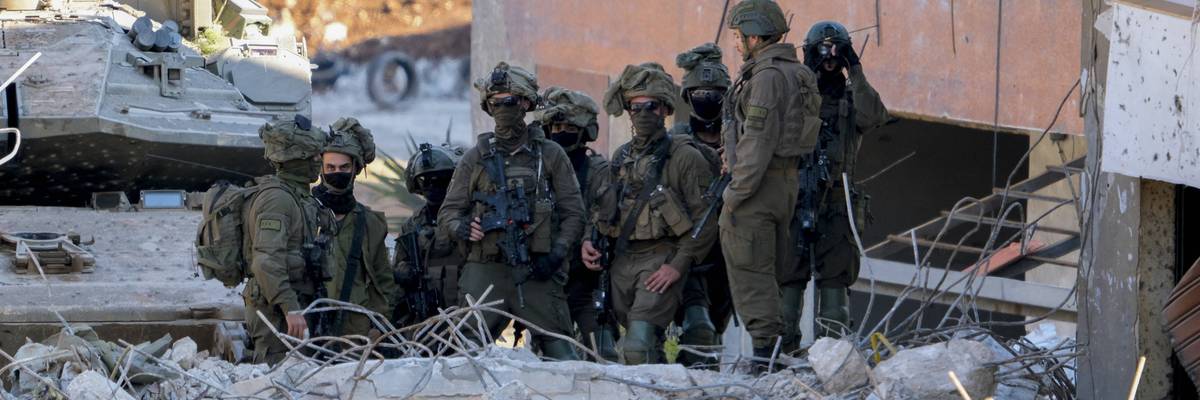
Israeli soldiers stand near a damaged building in Aitaroun, Lebanon, on January 29, 2025.
"It's not hidden," said one Israeli soldier. "Everyone sees it and understands."
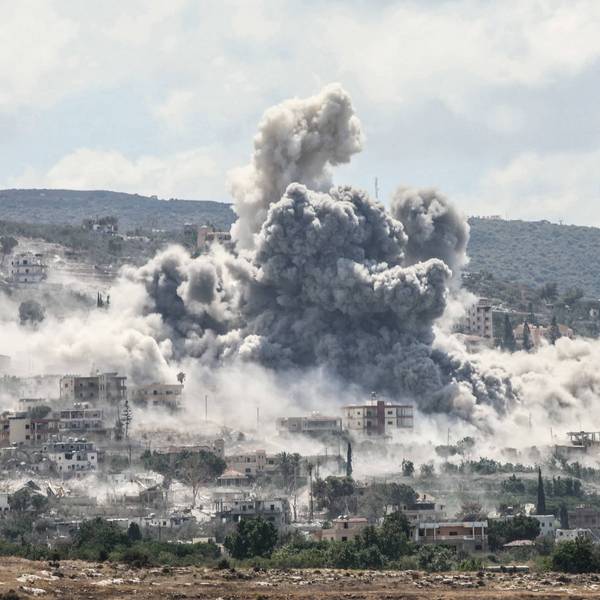
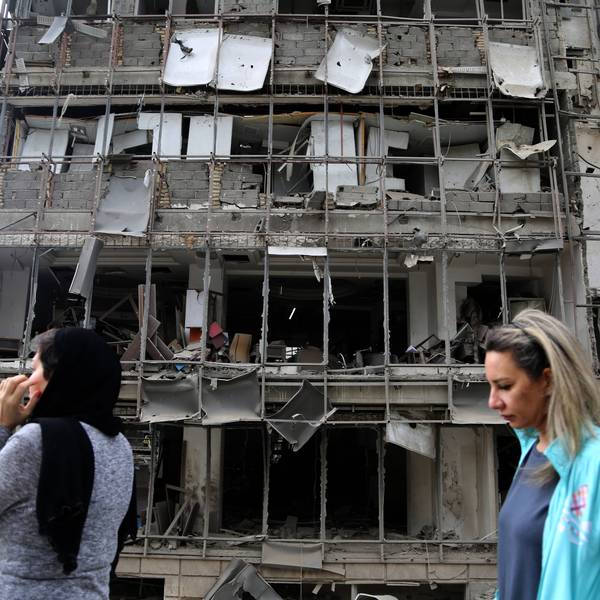
While media coverage of Israel's war on Lebanon mainly focuses on the slaughter of hundreds of Lebanese civilians and destruction of entire villages, Israel Defense Forces commanders are tacitly condoning widespread looting by their troops in Lebanon, according to reporting Thursday.
Haaretz, Israel's oldest daily newspaper, interviewed a number of IDF personnel who described routine theft of items including motorcycles, televisions, paintings, sofas, and rugs from the homes and businesses of some of the more than 1 million Lebanese forcibly displaced by Israel's assault on its northern neighbor.
Israel has seized control of more than 50 villages in southern Lebanon as part of its expanding so-called “Yellow Line,” with residents who cross it risking their lives. Their absence offers IDF troops the opportunity to loot with no Lebanese resistance.
The looting of civilian homes and businesses is formally known as "pillage" and is strictly prohibited under numerous Israeli and international laws and conventions. However, according to the IDF soldiers and officers interviewed by Haaretz, senior and junior commanders know about the pillaging but are not punishing offending soldiers.
"It's on a crazy scale," one soldier said. "Anyone who takes something—televisions, cigarettes, tools, whatever—immediately puts it in their vehicle or leaves it off to the side, not inside the army base, but it's not hidden. Everyone sees it and understands."
Soldiers interviewed said commanders' responses range from turning a blind eye to prohibiting looting but not punishing offenders.
"In our unit, they don't even comment or get angry," one soldier claimed. "The battalion and brigade commanders know everything."
Another said that "battalion and brigade commanders do speak up and get angry, but without action, those are empty words."
Some IDF soldiers have even posted videos of their looting on social media—usually with no consequences.
🇮🇱🇱🇧IDF soldiers reportedly filmed looting homes in southern Lebanon.
The video shows troops taking belongings from civilian houses during the ground operations.
Israel’s campaign has displaced over 1 million Lebanese in under three weeks…pic.twitter.com/RRgjX8T9Rb https://t.co/iGcjA9NbXt
— Mario Nawfal (@MarioNawfal) March 20, 2026
Responding to the Haartez report, the IDF claimed:
The military views any harm to civilian property and acts of looting with utmost severity and unequivocally prohibits them. Any allegation or suspicion of such acts is thoroughly examined and addressed with the full weight of the law. In cases where sufficient evidence is established, disciplinary and criminal measures are taken, including prosecution. The Military Police Corps conducts inspections at the northern border crossing as forces exit Lebanon.
However, some military police checkpoints along the border have been removed, and in some locations there have never been any checkpoints at all.
Widespread looting by IDF soldiers has previously been documented in Gaza and the illegally occupied West Bank, sometimes by the perpetrators themselves.
IDF looting has also been reported in Syria, where Israel has seized as many as 200 square miles of additional territory in 2024, including dozens of border villages, under cover of the Gaza genocide. Israel already conquered and occupied much of the Syrian Golan Heights in 1967.
Israeli forces also allegedly backed Palestinians who looted Gaza aid convoys in order to boost the narrative that it's Hamas, not Israel, thatof is preventing humanitarian aid from reaching starving Gazans.
Looting of Palestinian property was particularly rampant during the Nakba, or "catastrophe," when more than 750,000 Palestinian Arabs were ethnically cleansed to make way for the establishment of Israel.
The systematic theft of Palestinian land, homes, and property—which continued with the occupation of the West Bank, Gaza, and Golan Heights in 1967—is accelerating today, and can be witnessed in videos of settler pogroms in the West Bank and infamous footage of an American-born settler colonist telling a Palestinian family whose home he's trying to steal that "if I don't steal it, someone else is going to."
The ongoing apartheid in Jerusalem.
“Even if i get out of the house, it won’t be returned to u” pic.twitter.com/5sELdmClH5
— Abed 🕊️ (@tiredpali) May 1, 2021
Such unchecked usurpation emboldens further thievery. One soldier interviewed by Haaretz for Thursday's article said the pillage would effectively end if there were serious consequences for offenders, pointing to units in which commanders took a tough stance against looting, resulting in negligible levels of the crime.
"Lenient enforcement sends a clear message. If someone were dismissed or jailed, or if military police were stationed at the border, it would stop almost immediately," they said. "But when there is no punishment, the message is obvious."
Dear Common Dreams reader, It’s been nearly 30 years since I co-founded Common Dreams with my late wife, Lina Newhouser. We had the radical notion that journalism should serve the public good, not corporate profits. It was clear to us from the outset what it would take to build such a project. No paid advertisements. No corporate sponsors. No millionaire publisher telling us what to think or do. Many people said we wouldn't last a year, but we proved those doubters wrong. Together with a tremendous team of journalists and dedicated staff, we built an independent media outlet free from the constraints of profits and corporate control. Our mission has always been simple: To inform. To inspire. To ignite change for the common good. Building Common Dreams was not easy. Our survival was never guaranteed. When you take on the most powerful forces—Wall Street greed, fossil fuel industry destruction, Big Tech lobbyists, and uber-rich oligarchs who have spent billions upon billions rigging the economy and democracy in their favor—the only bulwark you have is supporters who believe in your work. But here’s the urgent message from me today. It's never been this bad out there. And it's never been this hard to keep us going. At the very moment Common Dreams is most needed, the threats we face are intensifying. We need your support now more than ever. We don't accept corporate advertising and never will. We don't have a paywall because we don't think people should be blocked from critical news based on their ability to pay. Everything we do is funded by the donations of readers like you. When everyone does the little they can afford, we are strong. But if that support retreats or dries up, so do we. Will you donate now to make sure Common Dreams not only survives but thrives? —Craig Brown, Co-founder |
While media coverage of Israel's war on Lebanon mainly focuses on the slaughter of hundreds of Lebanese civilians and destruction of entire villages, Israel Defense Forces commanders are tacitly condoning widespread looting by their troops in Lebanon, according to reporting Thursday.
Haaretz, Israel's oldest daily newspaper, interviewed a number of IDF personnel who described routine theft of items including motorcycles, televisions, paintings, sofas, and rugs from the homes and businesses of some of the more than 1 million Lebanese forcibly displaced by Israel's assault on its northern neighbor.
Israel has seized control of more than 50 villages in southern Lebanon as part of its expanding so-called “Yellow Line,” with residents who cross it risking their lives. Their absence offers IDF troops the opportunity to loot with no Lebanese resistance.
The looting of civilian homes and businesses is formally known as "pillage" and is strictly prohibited under numerous Israeli and international laws and conventions. However, according to the IDF soldiers and officers interviewed by Haaretz, senior and junior commanders know about the pillaging but are not punishing offending soldiers.
"It's on a crazy scale," one soldier said. "Anyone who takes something—televisions, cigarettes, tools, whatever—immediately puts it in their vehicle or leaves it off to the side, not inside the army base, but it's not hidden. Everyone sees it and understands."
Soldiers interviewed said commanders' responses range from turning a blind eye to prohibiting looting but not punishing offenders.
"In our unit, they don't even comment or get angry," one soldier claimed. "The battalion and brigade commanders know everything."
Another said that "battalion and brigade commanders do speak up and get angry, but without action, those are empty words."
Some IDF soldiers have even posted videos of their looting on social media—usually with no consequences.
🇮🇱🇱🇧IDF soldiers reportedly filmed looting homes in southern Lebanon.
The video shows troops taking belongings from civilian houses during the ground operations.
Israel’s campaign has displaced over 1 million Lebanese in under three weeks…pic.twitter.com/RRgjX8T9Rb https://t.co/iGcjA9NbXt
— Mario Nawfal (@MarioNawfal) March 20, 2026
Responding to the Haartez report, the IDF claimed:
The military views any harm to civilian property and acts of looting with utmost severity and unequivocally prohibits them. Any allegation or suspicion of such acts is thoroughly examined and addressed with the full weight of the law. In cases where sufficient evidence is established, disciplinary and criminal measures are taken, including prosecution. The Military Police Corps conducts inspections at the northern border crossing as forces exit Lebanon.
However, some military police checkpoints along the border have been removed, and in some locations there have never been any checkpoints at all.
Widespread looting by IDF soldiers has previously been documented in Gaza and the illegally occupied West Bank, sometimes by the perpetrators themselves.
IDF looting has also been reported in Syria, where Israel has seized as many as 200 square miles of additional territory in 2024, including dozens of border villages, under cover of the Gaza genocide. Israel already conquered and occupied much of the Syrian Golan Heights in 1967.
Israeli forces also allegedly backed Palestinians who looted Gaza aid convoys in order to boost the narrative that it's Hamas, not Israel, thatof is preventing humanitarian aid from reaching starving Gazans.
Looting of Palestinian property was particularly rampant during the Nakba, or "catastrophe," when more than 750,000 Palestinian Arabs were ethnically cleansed to make way for the establishment of Israel.
The systematic theft of Palestinian land, homes, and property—which continued with the occupation of the West Bank, Gaza, and Golan Heights in 1967—is accelerating today, and can be witnessed in videos of settler pogroms in the West Bank and infamous footage of an American-born settler colonist telling a Palestinian family whose home he's trying to steal that "if I don't steal it, someone else is going to."
The ongoing apartheid in Jerusalem.
“Even if i get out of the house, it won’t be returned to u” pic.twitter.com/5sELdmClH5
— Abed 🕊️ (@tiredpali) May 1, 2021
Such unchecked usurpation emboldens further thievery. One soldier interviewed by Haaretz for Thursday's article said the pillage would effectively end if there were serious consequences for offenders, pointing to units in which commanders took a tough stance against looting, resulting in negligible levels of the crime.
"Lenient enforcement sends a clear message. If someone were dismissed or jailed, or if military police were stationed at the border, it would stop almost immediately," they said. "But when there is no punishment, the message is obvious."
While media coverage of Israel's war on Lebanon mainly focuses on the slaughter of hundreds of Lebanese civilians and destruction of entire villages, Israel Defense Forces commanders are tacitly condoning widespread looting by their troops in Lebanon, according to reporting Thursday.
Haaretz, Israel's oldest daily newspaper, interviewed a number of IDF personnel who described routine theft of items including motorcycles, televisions, paintings, sofas, and rugs from the homes and businesses of some of the more than 1 million Lebanese forcibly displaced by Israel's assault on its northern neighbor.
Israel has seized control of more than 50 villages in southern Lebanon as part of its expanding so-called “Yellow Line,” with residents who cross it risking their lives. Their absence offers IDF troops the opportunity to loot with no Lebanese resistance.
The looting of civilian homes and businesses is formally known as "pillage" and is strictly prohibited under numerous Israeli and international laws and conventions. However, according to the IDF soldiers and officers interviewed by Haaretz, senior and junior commanders know about the pillaging but are not punishing offending soldiers.
"It's on a crazy scale," one soldier said. "Anyone who takes something—televisions, cigarettes, tools, whatever—immediately puts it in their vehicle or leaves it off to the side, not inside the army base, but it's not hidden. Everyone sees it and understands."
Soldiers interviewed said commanders' responses range from turning a blind eye to prohibiting looting but not punishing offenders.
"In our unit, they don't even comment or get angry," one soldier claimed. "The battalion and brigade commanders know everything."
Another said that "battalion and brigade commanders do speak up and get angry, but without action, those are empty words."
Some IDF soldiers have even posted videos of their looting on social media—usually with no consequences.
🇮🇱🇱🇧IDF soldiers reportedly filmed looting homes in southern Lebanon.
The video shows troops taking belongings from civilian houses during the ground operations.
Israel’s campaign has displaced over 1 million Lebanese in under three weeks…pic.twitter.com/RRgjX8T9Rb https://t.co/iGcjA9NbXt
— Mario Nawfal (@MarioNawfal) March 20, 2026
Responding to the Haartez report, the IDF claimed:
The military views any harm to civilian property and acts of looting with utmost severity and unequivocally prohibits them. Any allegation or suspicion of such acts is thoroughly examined and addressed with the full weight of the law. In cases where sufficient evidence is established, disciplinary and criminal measures are taken, including prosecution. The Military Police Corps conducts inspections at the northern border crossing as forces exit Lebanon.
However, some military police checkpoints along the border have been removed, and in some locations there have never been any checkpoints at all.
Widespread looting by IDF soldiers has previously been documented in Gaza and the illegally occupied West Bank, sometimes by the perpetrators themselves.
IDF looting has also been reported in Syria, where Israel has seized as many as 200 square miles of additional territory in 2024, including dozens of border villages, under cover of the Gaza genocide. Israel already conquered and occupied much of the Syrian Golan Heights in 1967.
Israeli forces also allegedly backed Palestinians who looted Gaza aid convoys in order to boost the narrative that it's Hamas, not Israel, thatof is preventing humanitarian aid from reaching starving Gazans.
Looting of Palestinian property was particularly rampant during the Nakba, or "catastrophe," when more than 750,000 Palestinian Arabs were ethnically cleansed to make way for the establishment of Israel.
The systematic theft of Palestinian land, homes, and property—which continued with the occupation of the West Bank, Gaza, and Golan Heights in 1967—is accelerating today, and can be witnessed in videos of settler pogroms in the West Bank and infamous footage of an American-born settler colonist telling a Palestinian family whose home he's trying to steal that "if I don't steal it, someone else is going to."
The ongoing apartheid in Jerusalem.
“Even if i get out of the house, it won’t be returned to u” pic.twitter.com/5sELdmClH5
— Abed 🕊️ (@tiredpali) May 1, 2021
Such unchecked usurpation emboldens further thievery. One soldier interviewed by Haaretz for Thursday's article said the pillage would effectively end if there were serious consequences for offenders, pointing to units in which commanders took a tough stance against looting, resulting in negligible levels of the crime.
"Lenient enforcement sends a clear message. If someone were dismissed or jailed, or if military police were stationed at the border, it would stop almost immediately," they said. "But when there is no punishment, the message is obvious."