SUBSCRIBE TO OUR FREE NEWSLETTER
Daily news & progressive opinion—funded by the people, not the corporations—delivered straight to your inbox.
5
#000000
#FFFFFF
To donate by check, phone, or other method, see our More Ways to Give page.
Daily news & progressive opinion—funded by the people, not the corporations—delivered straight to your inbox.
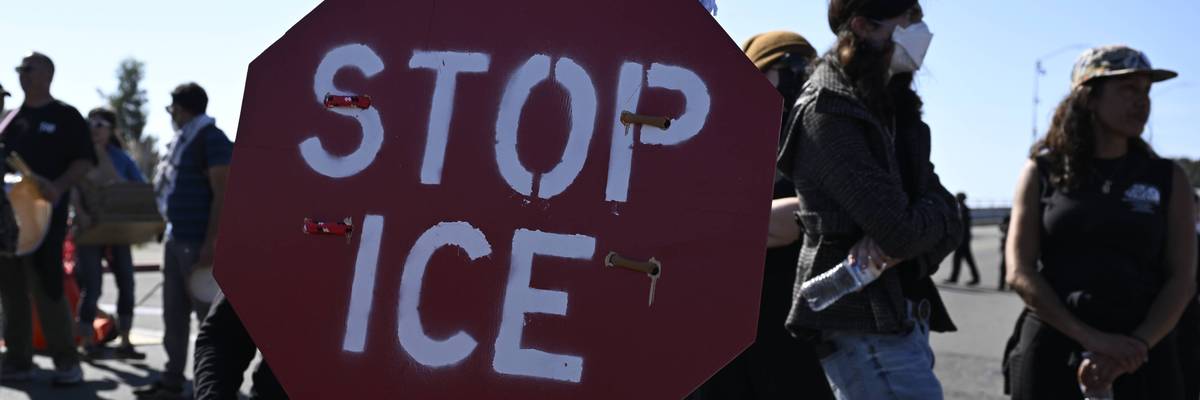
Hundreds of California Highway Patrol officers showed up as protesters against US Immigration and Customs Enforcement operations block the entrance to Alameda's Coast Guard Island on October 23, 2025.
Carlos Jimenez claims the FBI drove him from the hospital to the scene for an interrogation, "while the bullet and fragments remained lodged in his body," even as he "kept bleeding and vomiting in the agents' van."
Carlos Jimenez, a US citizen and father of three who still has bullet fragments lodged near his lung after being shot by a US Immigration and Customs Enforcement officer in California last year, is suing the Trump administration, San Bernardino County, and various agents for over $25 million in damages.
Jimenez, who is from Ontario, east of Los Angeles, filed his complaint against the United States, the county, ICE Enforcement and Removal Operations officer Eusebio Ortiz, two US Customs and Border Protection (CBP) officers, a Federal Bureau of Investigation (FBI) special agent, and 20 unnamed defendants on Friday.
While Jimenez was driving to work on the morning of October 30, 2025, he approached agents conducting an immigration operation to let them know they were near a bus stop for schoolchildren. Ortiz ultimately shot him, but it was Jimenez, not the officer, who then faced charges that have since been dropped.
As with some other people ICE or CBP agents have shot—sometimes fatally—the US Department of Homeland Security (DHS), which oversees both agencies, has claimed Jimenez "attempted to run officers over" federal agents "by reversing directly at them without stopping," but his lawyers have disputed that account.
After the shooting, at a local hospital, FBI agents "interfered with his medical care," according to a complaint. They allegedly prevented Jimenez from talking to healthcare providers, removed him from the hospital bed, and "handcuffed him with a leather waist restraint."
As the FBI drove Jimenez back to the scene for an interrogation, "while the bullet and fragments remained lodged in his body," he "kept bleeding and vomiting in the agents' van," and they told him not to "ruin their vehicle," the filing claims. He was taken to West Valley Detention Center, where he was also denied adequate medical care.
A few weeks later, a grand jury indicted Jimenez, whom federal prosecutors charged with assaulting a federal officer using a deadly or dangerous weapon, but "the criminal case later became the subject of a dispute over evidence," Newsweek reported Monday.
As the outlet detailed:
On May 5, US District Judge Kenly Kiya Kato ordered the government to turn over communications and operational records sought by the defense; this included responsive communications on government-issued and personal phones. The order also required a declaration under penalty of perjury from Ortiz if no responsive messages from him existed.
Jimenez entered into a diversion agreement shortly afterward. After he completed its conditions, Kato dismissed the indictment with prejudice on November 2, meaning the charge cannot be refiled. The dismissal order did not make a finding that federal officers used excessive force or otherwise acted unlawfully.
The Guardian highlighted that in addition to calling the criminal charges against Jimenez "fabricated," the complaint "alleges that the FBI falsely claimed that two neighbors witnessed the incident and told an agent that Jimenez's vehicle had enough room to pull forward without reversing. When Jimenez’s legal team interviewed those witnesses, both denied making those statements and said they were unaware there had been a shooting until they saw news reports."
While the FBI declined to comment and DHS referred questions to the US Department of Justice, Ciaran McEvoy, a spokesperson for the DOJ in Los Angeles, said in an email to the newspaper that Jimenez "could have exercised his right to take the case to trial, but he instead requested that our office agree to resolve the case through a diversion agreement."
Jimenez is among at least 32 people fired upon by federal immigration agents as part of Republican President Donald Trump's mass detention and deportation campaign. Others include Renee Good and Alex Pretti, US citizens killed early this year in Minneapolis, Minnesota, and Silverio Villegas González, a Mexican man fatally shot last year near Chicago, Illinois.
At the beginning of October, Good's family filed a pair of lawsuits against the federal government and immigration officials over her death and an alleged conspiracy to interfere with civil rights in Minnesota's Twin Cities. A week later, Villegas González's relatives filed a legal claim against the administration over his "execution-style killing." Pretti's family hasn't yet sued, but his parents demanded justice at a press conference late last month.
This country and this world are at a monumental crossroads. US voters have an opportunity to beat back the forces of fascism and confront the billionaires who are rigging the economy, our media system, and our democracy, making it increasingly impossible for ordinary people to get by. We’re not just talking about the election. We’re talking about what must be done once these fascist elements are vanquished from power. We need a bolder set of solutions than what either major party has so far been willing to offer and a working-class movement ready to fight like hell for it. Trump didn't emerge from nowhere. The conditions that fueled MAGA authoritarianism were created by decades of radical neoliberal economic policies and a corrupt political system dominated by corporate interests. They slashed taxes on the super-rich, promising that the benefits would trickle down. They said giveaways to the corporate titans would make life more affordable for the rest of us. It was all bullshit. And when a bitter, betrayed populace searches for someone to blame, right-wing demagogues have little trouble finding scapegoats. People know when they're being lied to, but you won't hear any of this from the corporate media. Only independent journalism—powered and funded by people who believe in building a better world—can deliver truly trustworthy daily news. If you share our vision, please contribute whatever you can to sustain our work. |
Carlos Jimenez, a US citizen and father of three who still has bullet fragments lodged near his lung after being shot by a US Immigration and Customs Enforcement officer in California last year, is suing the Trump administration, San Bernardino County, and various agents for over $25 million in damages.
Jimenez, who is from Ontario, east of Los Angeles, filed his complaint against the United States, the county, ICE Enforcement and Removal Operations officer Eusebio Ortiz, two US Customs and Border Protection (CBP) officers, a Federal Bureau of Investigation (FBI) special agent, and 20 unnamed defendants on Friday.
While Jimenez was driving to work on the morning of October 30, 2025, he approached agents conducting an immigration operation to let them know they were near a bus stop for schoolchildren. Ortiz ultimately shot him, but it was Jimenez, not the officer, who then faced charges that have since been dropped.
As with some other people ICE or CBP agents have shot—sometimes fatally—the US Department of Homeland Security (DHS), which oversees both agencies, has claimed Jimenez "attempted to run officers over" federal agents "by reversing directly at them without stopping," but his lawyers have disputed that account.
After the shooting, at a local hospital, FBI agents "interfered with his medical care," according to a complaint. They allegedly prevented Jimenez from talking to healthcare providers, removed him from the hospital bed, and "handcuffed him with a leather waist restraint."
As the FBI drove Jimenez back to the scene for an interrogation, "while the bullet and fragments remained lodged in his body," he "kept bleeding and vomiting in the agents' van," and they told him not to "ruin their vehicle," the filing claims. He was taken to West Valley Detention Center, where he was also denied adequate medical care.
A few weeks later, a grand jury indicted Jimenez, whom federal prosecutors charged with assaulting a federal officer using a deadly or dangerous weapon, but "the criminal case later became the subject of a dispute over evidence," Newsweek reported Monday.
As the outlet detailed:
On May 5, US District Judge Kenly Kiya Kato ordered the government to turn over communications and operational records sought by the defense; this included responsive communications on government-issued and personal phones. The order also required a declaration under penalty of perjury from Ortiz if no responsive messages from him existed.
Jimenez entered into a diversion agreement shortly afterward. After he completed its conditions, Kato dismissed the indictment with prejudice on November 2, meaning the charge cannot be refiled. The dismissal order did not make a finding that federal officers used excessive force or otherwise acted unlawfully.
The Guardian highlighted that in addition to calling the criminal charges against Jimenez "fabricated," the complaint "alleges that the FBI falsely claimed that two neighbors witnessed the incident and told an agent that Jimenez's vehicle had enough room to pull forward without reversing. When Jimenez’s legal team interviewed those witnesses, both denied making those statements and said they were unaware there had been a shooting until they saw news reports."
While the FBI declined to comment and DHS referred questions to the US Department of Justice, Ciaran McEvoy, a spokesperson for the DOJ in Los Angeles, said in an email to the newspaper that Jimenez "could have exercised his right to take the case to trial, but he instead requested that our office agree to resolve the case through a diversion agreement."
Jimenez is among at least 32 people fired upon by federal immigration agents as part of Republican President Donald Trump's mass detention and deportation campaign. Others include Renee Good and Alex Pretti, US citizens killed early this year in Minneapolis, Minnesota, and Silverio Villegas González, a Mexican man fatally shot last year near Chicago, Illinois.
At the beginning of October, Good's family filed a pair of lawsuits against the federal government and immigration officials over her death and an alleged conspiracy to interfere with civil rights in Minnesota's Twin Cities. A week later, Villegas González's relatives filed a legal claim against the administration over his "execution-style killing." Pretti's family hasn't yet sued, but his parents demanded justice at a press conference late last month.