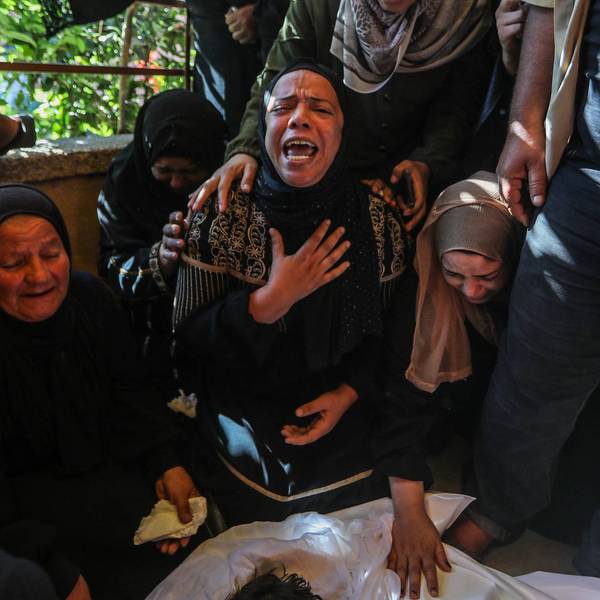
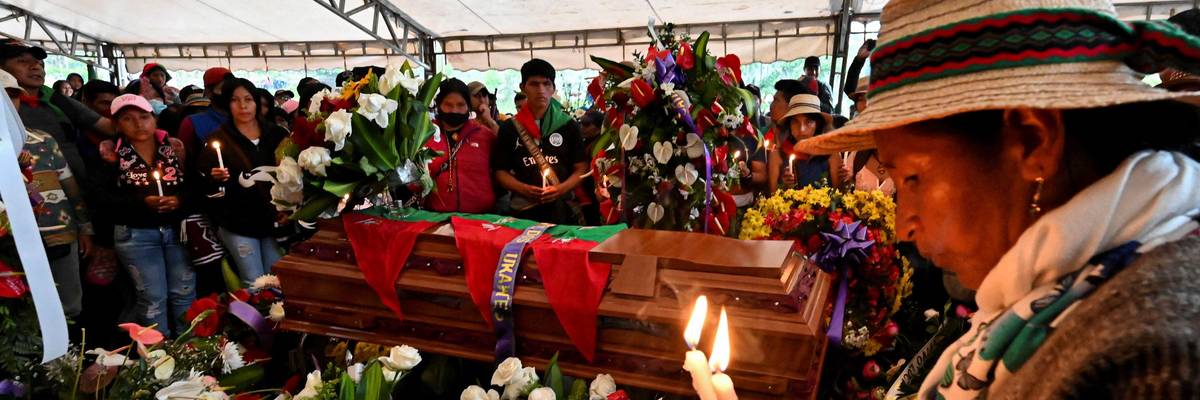
The advocacy group Global Witness on Thursday marked 10 years of collecting data on slain environmental defenders by publishing a new report revealing that at least 1,733 people have been killed over the past decade--a rate of one murder every two days.
"Our data on killings is likely to be an underestimate, given that many murders go unreported."
The report--entitled Decade of Defiance: Ten Years of Reporting Land and Environmental Activism Worldwide--underscores how land inequality and efforts by governments, corporations, and wealthy individuals to own and control land drives deadly violence against activists.
"All over the world, Indigenous peoples and environmental defenders risk their lives for the fight against climate change and biodiversity loss," Global Witness CEO Mike Davis said in a statement. "Activists and communities play a crucial role as a first line of defense against ecological collapse, as well as being frontrunners in the campaign to prevent it."
As the climate emergency worsens, so does the killing, violence, and other repression that come with the capitalistic pursuit of land and the natural resources above and below the soil.
"Driven by the rising demand for food, fuel, and commodities, the last decade has seen an upsurge in land grabs for industries like mining, logging, agribusiness, and infrastructure projects, with local communities rarely consulted or compensated," the report states.
"The actors colluding to grab land tend to be corporations, foreign investment funds, national and local state officials, and the governments of wealthy yet resource-poor nations looking to cheaply acquire land, harming local populations in the process," the publication continues.
Global Witness said around 200 activists were murdered around the world in 2021 alone, a decrease from the 227 recorded killings in 2020. Although they make up only around 5% of the world's population, more than 40% of the deadly attacks on environmental defenders targeted Indigenous people last year.
Mexico suffered 54 slain environmental defenders in 2021, the most of any nation and a marked spike from 30 killings reported there in 2020. Colombia (33), Brazil (26), the Philippines (19), Nicaragua (15), and India (14) all experienced more than 10 reported activist killings last year.
Of the 10 activist murders reported across Africa last year, eight were rangers killed in Congo's Virunga National Park, where militant groups are fighting for control of resource-rich lands that are also home to some of the world's last remaining mountain gorillas.
Global Witness cautioned that "our data on killings is likely to be an underestimate, given that many murders go unreported, particularly in rural areas and in particular countries."
Indian scholar and activist Vandana Shiva said in an introduction to the report that "these numbers are not made real until you hear some of the names of those who died."
Related Content

14-Year-Old Indigenous Land Defender Killed in Colombia
"Marcelo Chaves Ferreira. Sidinei Floriano Da Silva. Jose Santos Lopez. Each of them a person loved by their family, their community," Shiva continued. "Jair Adan Roldan Morales. Efren Espana. Eric Kibanja Bashekere. Each of them considered expendable for the sake of profit."
"Regilson Choc Cac. Ursa Bhima. Angel Rivas," she added. "Each killed defending not only their own treasured places, but the health of the planet which we all share."
The advocacy group Global Witness on Thursday marked 10 years of collecting data on slain environmental defenders by publishing a new report revealing that at least 1,733 people have been killed over the past decade--a rate of one murder every two days.
"Our data on killings is likely to be an underestimate, given that many murders go unreported."
The report--entitled Decade of Defiance: Ten Years of Reporting Land and Environmental Activism Worldwide--underscores how land inequality and efforts by governments, corporations, and wealthy individuals to own and control land drives deadly violence against activists.
"All over the world, Indigenous peoples and environmental defenders risk their lives for the fight against climate change and biodiversity loss," Global Witness CEO Mike Davis said in a statement. "Activists and communities play a crucial role as a first line of defense against ecological collapse, as well as being frontrunners in the campaign to prevent it."
As the climate emergency worsens, so does the killing, violence, and other repression that come with the capitalistic pursuit of land and the natural resources above and below the soil.
"Driven by the rising demand for food, fuel, and commodities, the last decade has seen an upsurge in land grabs for industries like mining, logging, agribusiness, and infrastructure projects, with local communities rarely consulted or compensated," the report states.
"The actors colluding to grab land tend to be corporations, foreign investment funds, national and local state officials, and the governments of wealthy yet resource-poor nations looking to cheaply acquire land, harming local populations in the process," the publication continues.
Global Witness said around 200 activists were murdered around the world in 2021 alone, a decrease from the 227 recorded killings in 2020. Although they make up only around 5% of the world's population, more than 40% of the deadly attacks on environmental defenders targeted Indigenous people last year.
Mexico suffered 54 slain environmental defenders in 2021, the most of any nation and a marked spike from 30 killings reported there in 2020. Colombia (33), Brazil (26), the Philippines (19), Nicaragua (15), and India (14) all experienced more than 10 reported activist killings last year.
Of the 10 activist murders reported across Africa last year, eight were rangers killed in Congo's Virunga National Park, where militant groups are fighting for control of resource-rich lands that are also home to some of the world's last remaining mountain gorillas.
Global Witness cautioned that "our data on killings is likely to be an underestimate, given that many murders go unreported, particularly in rural areas and in particular countries."
Indian scholar and activist Vandana Shiva said in an introduction to the report that "these numbers are not made real until you hear some of the names of those who died."
Related Content
14-Year-Old Indigenous Land Defender Killed in Colombia
"Marcelo Chaves Ferreira. Sidinei Floriano Da Silva. Jose Santos Lopez. Each of them a person loved by their family, their community," Shiva continued. "Jair Adan Roldan Morales. Efren Espana. Eric Kibanja Bashekere. Each of them considered expendable for the sake of profit."
"Regilson Choc Cac. Ursa Bhima. Angel Rivas," she added. "Each killed defending not only their own treasured places, but the health of the planet which we all share."
The advocacy group Global Witness on Thursday marked 10 years of collecting data on slain environmental defenders by publishing a new report revealing that at least 1,733 people have been killed over the past decade--a rate of one murder every two days.
"Our data on killings is likely to be an underestimate, given that many murders go unreported."
The report--entitled Decade of Defiance: Ten Years of Reporting Land and Environmental Activism Worldwide--underscores how land inequality and efforts by governments, corporations, and wealthy individuals to own and control land drives deadly violence against activists.
"All over the world, Indigenous peoples and environmental defenders risk their lives for the fight against climate change and biodiversity loss," Global Witness CEO Mike Davis said in a statement. "Activists and communities play a crucial role as a first line of defense against ecological collapse, as well as being frontrunners in the campaign to prevent it."
As the climate emergency worsens, so does the killing, violence, and other repression that come with the capitalistic pursuit of land and the natural resources above and below the soil.
"Driven by the rising demand for food, fuel, and commodities, the last decade has seen an upsurge in land grabs for industries like mining, logging, agribusiness, and infrastructure projects, with local communities rarely consulted or compensated," the report states.
"The actors colluding to grab land tend to be corporations, foreign investment funds, national and local state officials, and the governments of wealthy yet resource-poor nations looking to cheaply acquire land, harming local populations in the process," the publication continues.
Global Witness said around 200 activists were murdered around the world in 2021 alone, a decrease from the 227 recorded killings in 2020. Although they make up only around 5% of the world's population, more than 40% of the deadly attacks on environmental defenders targeted Indigenous people last year.
Mexico suffered 54 slain environmental defenders in 2021, the most of any nation and a marked spike from 30 killings reported there in 2020. Colombia (33), Brazil (26), the Philippines (19), Nicaragua (15), and India (14) all experienced more than 10 reported activist killings last year.
Of the 10 activist murders reported across Africa last year, eight were rangers killed in Congo's Virunga National Park, where militant groups are fighting for control of resource-rich lands that are also home to some of the world's last remaining mountain gorillas.
Global Witness cautioned that "our data on killings is likely to be an underestimate, given that many murders go unreported, particularly in rural areas and in particular countries."
Indian scholar and activist Vandana Shiva said in an introduction to the report that "these numbers are not made real until you hear some of the names of those who died."
Related Content
14-Year-Old Indigenous Land Defender Killed in Colombia
"Marcelo Chaves Ferreira. Sidinei Floriano Da Silva. Jose Santos Lopez. Each of them a person loved by their family, their community," Shiva continued. "Jair Adan Roldan Morales. Efren Espana. Eric Kibanja Bashekere. Each of them considered expendable for the sake of profit."
"Regilson Choc Cac. Ursa Bhima. Angel Rivas," she added. "Each killed defending not only their own treasured places, but the health of the planet which we all share."