

SUBSCRIBE TO OUR FREE NEWSLETTER
Daily news & progressive opinion—funded by the people, not the corporations—delivered straight to your inbox.
5
#000000
#FFFFFF
To donate by check, phone, or other method, see our More Ways to Give page.
Daily news & progressive opinion—funded by the people, not the corporations—delivered straight to your inbox.
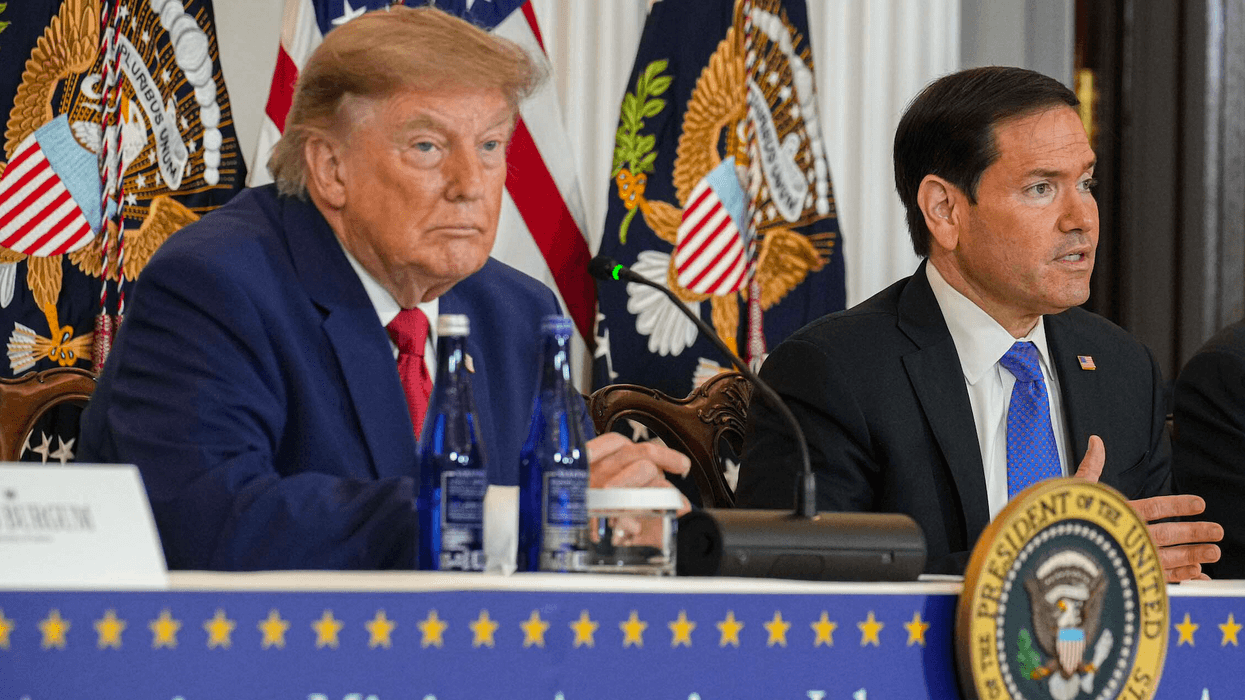
Selective concern for "democracy" suggest that the real target is not simply its political system but the survival of a socialist government that continues to defy US regional dominance.
After Venezuela and Cuba, will the Trump administration turn its spotlight onto Nicaragua? Secretary of State Rubio has just finished a tour of three Latin American countries now allied with Trump—Colombia, Ecuador and Peru—and was asked about US policy towards Cuba and Nicaragua, and what he would do “to finally bring those dictatorships to an end.” Accusing left-wing governments of “destroying” their countries and bringing “misery” to their citizens, and in some cases of posing a security threat to the United States, Rubio said that the problem can now be addressed “in partnership with other presidents and other leaders in this region that feel the same way.”
Back in July, after media claims that Nicaragua’s Sandinista government plans to abolish elections completely, Rubio said that Nicaragua was “thwarting the basic tenets of our democratic hemisphere.” In September he added that its government had “indefinitely deprive[d] Nicaraguans of free and fair elections.” Yet Rubio, of course, said nothing in Ecuador about its president Noboa imposing a complete ban on the main, leftist opposition party, which ran him close in last year’s elections.
Washington’s selective concern for “democracy,” together with the measures now being considered against Nicaragua, suggest that the real target is not simply its political system but the survival of a socialist government that continues to defy US regional dominance.
Rubio has been pushing members of the Organization of American States to take action and stop “business as usual” with Nicaragua’s government. A meeting of OAS foreign ministers to discuss new sanctions was planned for September 15. It has been postponed, but of all OAS members, only Mexico and Brazil failed to support it.
The new OAS secretary, Albert Ramdin, enthusiastically urges its members to back US threats. Asked whether the OAS will break the rules in its own charter of “non-intervention” in the domestic affairs of countries, he was forced to equivocate. He claimed (as the OAS has on many previous occasions) that its plans aren’t interventionist, saying nevertheless that it must “actively respond” to what he calls “a political disaster.”
In a Washington meeting organized by the Nicaraguan government’s opponents, Ramdin called for a “critical mass” of countries to exert pressure because Nicaragua’s actions, he claims, have “repercussions that extend beyond the country's borders.” He openly admits to “speaking with opposition leaders who are living in Washington DC” as if that were normal behavior for a supposedly independent diplomat.
Naturally, these moves have excited the various Nicaraguan opposition groups, based in the US and Costa Rica. The little-known, Miami-based “Nicaraguan Exiles Unit” demanded US military intervention. The most violent opposition group, the Costa Rica-based Campesino Movement, which in 2018 launched fatal attacks on several Nicaraguan police stations, joined the call for armed intervention. This prompted a formal protest from Nicaragua to the Costa Rican government for permitting groups to act in this way, even using children in a video to incite such violence.
The feasibility of successful military action was examined this month by academic experts writing in War on the Rocks. They conclude that the conditions that allowed the kidnapping of Venezuela’s president do not exist in Nicaragua and it is far from clear that military force would leave the country with a viable administration in place.
By the time he reached Colombia, a note of realism had crept into Rubio’s comments. Asked again what he would do to “end authoritarian governments,” he replied that the "first responsibility to change a system belongs to the people of those countries.” Similarly, OAS Secretary Ramdin, in an interview full of contradictions, also balks at intervening in Nicaragua’s “domestic affairs.”
If both Rubio and Ramdin reject military intervention, what might be on the agenda either in the State Department or when regional foreign ministers eventually convene? Inevitably, there will be lengthy condemnations of Nicaragua linked to calls for “free, credible and accessible elections.” By implication, these would only be “free” if the opposition parties funded by Washington, which (with US assistance) carried out the coup attempt in 2018 in which over 200 Nicaraguans died, were able to stand.
Based on Washington's previous interventions in Nicaraguan elections, it would release a fresh wave of financial support, media manipulation, social media domination and bribes and threats from Trump, aimed at getting Nicaraguans to vote for Washington’s favored candidate, just as occurred in Honduras in its recent election. It is precisely to avoid this interference that Nicaragua is changing its electoral rules to exclude candidates who receive US money or who directed the 2018 insurrection.
Opposition journalist Wilfredo Miranda believes that countries are divided in their response and that “concrete” steps will emerge from the proposed meeting of foreign ministers only if Rubio himself attends. Even so, the range of measures under discussion look like more of the same, given that Nicaragua is already subject to sanctions on more than 60 individual ministers and other functionaries and two dozen state institutions and businesses, while more than 2,000 individuals are denied US visas. Nicaragua has also been deprived of funding by multilateral bodies such as the IMF and World Bank and is subject to higher tariffs on its exports than apply to its neighbors.
Ramdin is proposing coordinated action by all OAS member countries, not just the US, to “punish” Nicaragua. This might involve diplomatic isolation, targeted sanctions, new visa restrictions, limits on international flights and possibly broader trade restrictions of uncertain severity.
However, reaching consensus on tougher measures will be problematic. Nicaragua’s immediate neighbors—El Salvador, Honduras and Costa Rica—have close economic ties with it. They depend heavily on transport routes and the inter-regional electricity grid through the country. They were all damaged economically by the 2018 coup attempt, when its protagonists blocked the Panamerican highway and held over 400 international truckers hostage.
Nicaragua’s neighbors must be aware that Rubio’s rhetoric about its citizens living in “misery” has no basis in reality. The country has had the region’s fastest growth in GDP over the past decade, has the largest hospital network and the best roads. Indeed, a prosperous Nicaragua is key to regional stability: it receives 28% of its imports from Central America and contributes 16% of its exports. Nicaragua’s economy “weathers multiple shocks” according to the IMF, including US attacks.
Nicaragua is also a recognized “containment wall” against regional organized crime and drug trafficking. The country is far safer than neighboring Honduras and Costa Rica, which have both seen explosions in violent crime.
Ramdin drew attention to the potential regional impact of a major disaster or deteriorating economic conditions in Nicaragua, but its neighbors know that the Sandinista government has invested heavily in disaster prevention and its economy is buoyant.
While Ramdin focuses on “restoring democracy,” Rubio focuses more on Nicaragua’s socialist government which, in reality, has raised its people from “misery” and successfully challenged the imperialist model. His problem is that while Nicaragua’s opposition leaders are committed to the return of neoliberalism, which Nicaraguans experienced and rejected two decades ago, they only offer vague plans for political transition. In reality, they admit that they are “not yet unified or [have] built the institutional base needed to present a credible alternative.”
The groups also have little currency among Trump’s Florida base, fixated on regime change in Venezuela and Cuba. As Juan Gonzalez, a former Latin America aide to President Biden, told Politico: “The lesson from Nicaragua is: Don’t matter too much, don’t embarrass Washington and don’t become a domestic political issue.”
So the likelihood, if indeed Latin American foreign ministers can agree on anything, and if Rubio fits their meeting into his schedule, is more rhetoric about “democracy” along with additional sanctions. They’ll be deciding whether they should threaten Nicaraguans with the “misery” that Rubio claims they are already suffering.
"If our government can close off channels of exchange and the free flow of ideas, it is no more than a dictatorship."
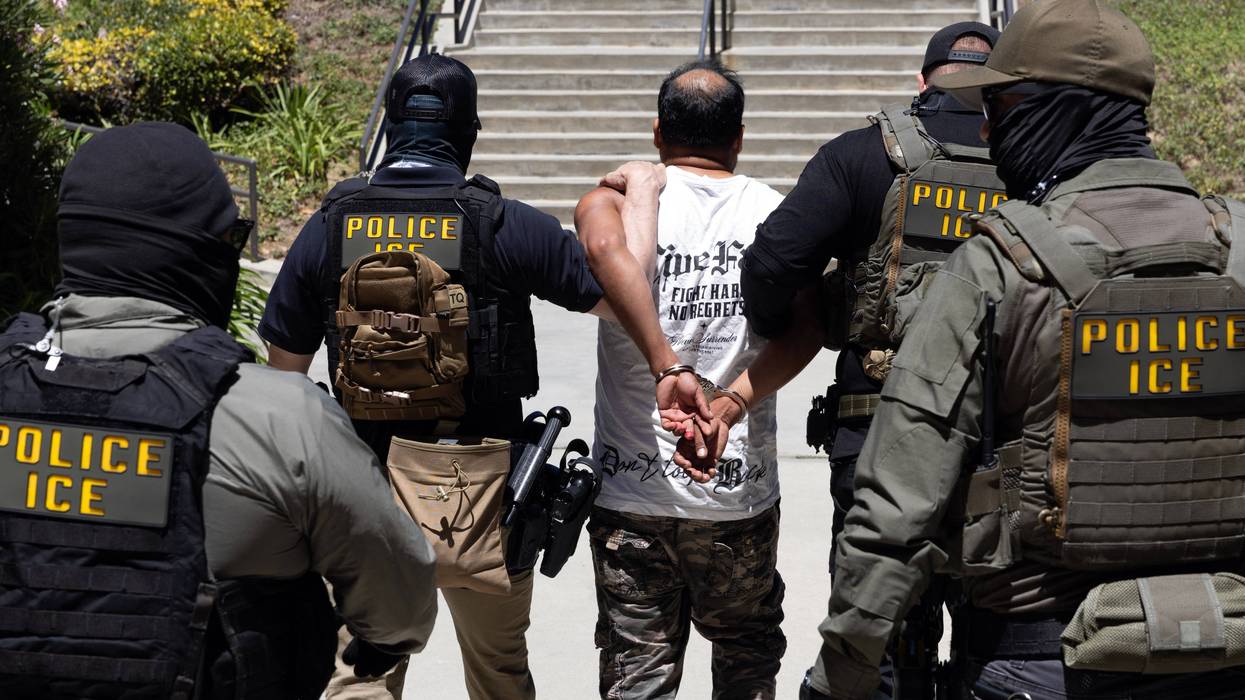
A coalition of 15 press freedom advocacy organizations on Friday demanded the release of Nicaraguan journalist Luis Galeano, who was arrested by federal immigration enforcement officials earlier this week.
The groups—which include Free Press, the Committee to Protect Journalists, the Freedom of the Press Foundation, the National Association of Hispanic Journalists, and Reporters Without Borders (RSF)—released a letter decrying Galeano's detention at the hands of US Immigration and Customs Enforcement (ICE) agents on Monday.
The organizations expressed concern about Galeano being potentially deported back to Nicaragua, where he could face imprisonment for his past work exposing that government's human rights abuses. According to a Wednesday report in The Guardian, Galeano fled his home country eight years ago shortly after police raided the news outlet where he worked.
The groups also said Galeano's detention marked "a troubling escalation of attacks on journalists and media workers, particularly immigrant journalists, who consistently provide much-needed journalism and civic information for their communities."
Galeano was taken into custody despite entering the US legally in 2018 and having a pending asylum case. The Nicaraguan journalist also has a work permit and a Social Security number.
Nora Benavidez, senior counsel at Free Press, called Galeano's arrest "horrifying," while noting that the Nicaraguan is "the latest in a long line of journalists who came to the United States to report on issues of the day and instead face deportation."
"These cases aren’t just about cracking down on immigration," said Benavidez. "They are about cutting off community access to vital coverage and scaring reporters from holding those in power accountable. If our government can close off channels of exchange and the free flow of ideas, it is no more than a dictatorship."
Edith Rodríguez Cachera, vice president of RSF Spain, pointed out that Galeano was also a citizen of Spain, and urged the Spanish government to secure his freedom.
"Spain cannot stand by while one of its citizens, a journalist persecuted for doing his job, is detained in the United States and faces the risk of being sent back to a country he fled because of severe repression," said Rodríguez Cachera, "where his safety could be seriously endangered if he is deported. Spain must use every diplomatic and consular instrument at its disposal to safeguard his security and prevent his return to a country where he will likely be targeted due to his journalistic work."
Galeano's wife, Deykell Santamaría, said in an interview with El País published Thursday that she has been able to contact her husband during his detention, but she still fears "for his safety, his freedom, and his integrity if he were to be sent to Nicaragua."
Javier Melendez, a longtime friend of the detained journalist, was even blunter about what would happen to Galeano were he to be deported, describing it as nothing less than a "death sentence" in an interview with The Guardian.
The El País report noted that US Reps. María Elvira Salazar (R-Fla.) and Mario Díaz-Balart (R-Fla.) have expressed concerns about Galeano's detention, with Salazar saying that the US government should "always know how to distinguish between a criminal and a political exile."
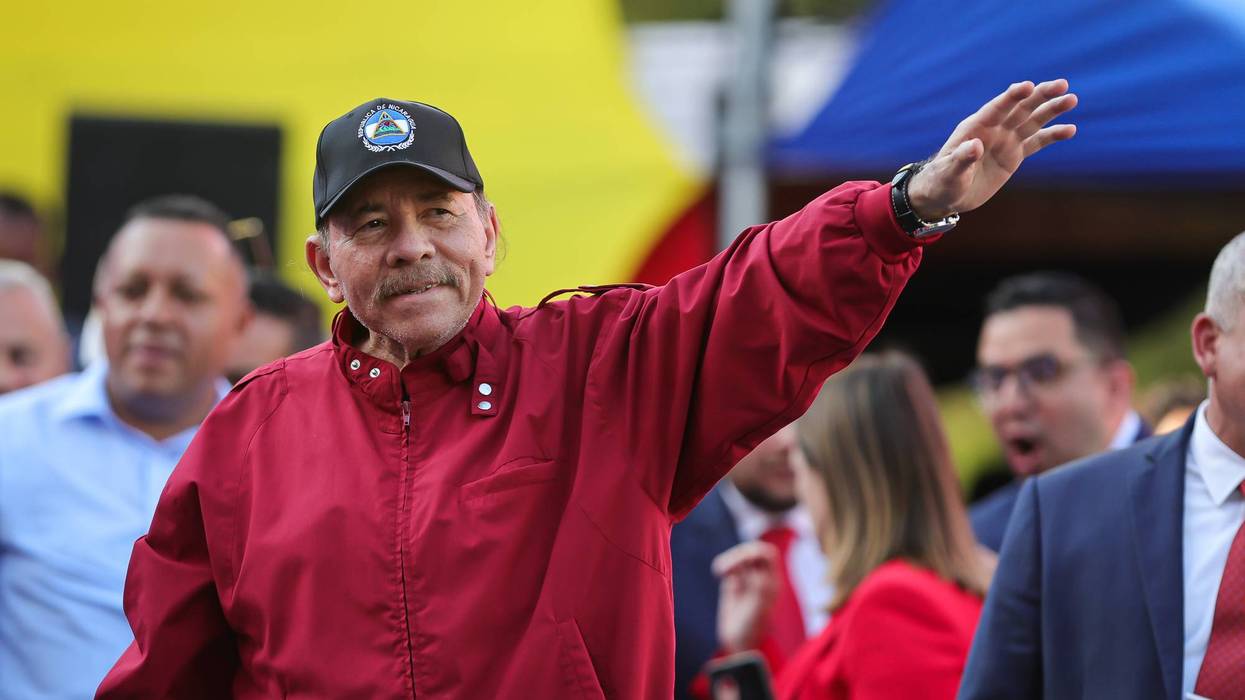
In his national address on July 19, Nicaraguan President Daniel Ortega stated that when the country’s next elections take place, none who promoted a violent anti-government insurrection in 2018 will be allowed to stand for office. Western media outlets reported this as a total ban on voting.
July 19 is a key date in Nicaragua’s calendar—the anniversary of the victory of its Sandinista revolution in 1979 and the overthrow of the vicious US-backed Somoza dictatorship that terrorized Nicaraguans for 43 years prior. Every year, huge crowds gather in celebrations across the country, culminating in a nationally broadcast speech by President Daniel Ortega. In recent years, Ortega has used the moment to discuss the country’s successes in the year prior, and lay out the agenda for the following year, while lauding not just the Sandinista Revolution’s triumph in 1979 but also the country’s resistance to the 2018 coup attempt—and lamenting the death and destruction it caused before peace was restored.
This July 19, while discussing that violence, Ortega proposed a blanket electoral ban on candidates who participated in fomenting the riots which plagued Nicaragua for months in a violent, US government-sponsored coup attempt that left hundreds dead:
There will be no elections like that again here—no more elections through which they can try cheating their way to government or cheat their way to taking power. We need to create laws that will put up a wall, a barrier, against the coup-plotters, against those who are traitors to their country. And no matter how much money the Yankees give them, they won’t succeed!
Even for casual observers, it was clear that the head of the Nicaraguan government was proposing restrictions on candidates funded and directed by a hostile foreign power situated in the US. But in corporate newsrooms across the country, editors pounced on the phrase “there will be no elections.”
Only days before Ortega’s speech, Trump railed against foreign interference in US elections, promising measures to protect their integrity.
Quoting the president’s statement completely out of context, The New York Times shrieked that Daniel Ortega planned to abolish elections completely, strengthening his “authoritarian grip” on the country. A headline in business journal Bloomberg blared: “Nicaragua’s Dictatorship Should Be Marco Rubio’s Next Problem.” Right on cue, Rubio issued a statement accusing the Nicaraguan government of “thwarting the basic tenets of our democratic hemisphere.”
At US legacy media outlets, clarification was sought not from the government or its supporters, but from right-wing apparatchiks financed and directed by Washington. The Times went to Felix Maradiaga, leader of an opposition group which “operates in secret in Nicaragua,” who claimed that “Ortega buried Nicaraguan democracy a long time ago.” Unmentioned by the NY Times was that Maradiaga is aligned with the far-right Atlas Network and was a key actor in the 2018 coup attempt, for which he received copious US funding.
As Max Blumenthal revealed in The Grayzone in 2018, the Yale-trained Maradiaga’s Institute for Strategic Studies and Public Policy (IEEPP) had received at least $260,000 from the US government’s National Endowment for Democracy since 2014.
The BBC, falsely asserting that Nicaragua’s next elections were now “cancelled,” rolled out another opposition activist, Juan Sebastián Chamorro, who labelled Nicaragua “the North Korea of Latin America.” Chamorro and his oligarchic family have historically been the biggest recipients of US funding directed at regime change in Nicaragua and almost certainly still are.
During the 2018 coup, Juan Sebastián Chamorro promoted the strategy of erecting tranques, or roadblocks, where opposition hooligans kidnapped, brutalized, raped, and even killed common Nicaraguan citizens in a failed bid to strangle the country’s economy and ultimately take over its cities.
It’s no secret that Maradiaga and Chamorro are competing to be Washington’s favored candidate if regime change were to ever occur. Reuters described Maradiaga as a “presidential hopeful,” while Chamorro is joint author of a new Atlantic Council report calling for Washington to back his “transition plan” for Nicaragua. Opposition media put this pair at the top of a list of eight potential candidates.
Washington’s plans for regime change in Nicaragua are hardly a secret, either. The National Endowment for Democracy’s president, Damon Wilson, bragged to a House committee in February that his organization is funding media in Nicaragua with an eye to undermining its Sandinista government. Commenting on latest developments, he said: “The Ortega-Murillo regime may seek to abolish elections, but it cannot abolish the Nicaraguan people’s desire for democracy. We will stand with them until that right is restored.”
The NED, a CIA cutout, currently spends over $2 million annually on Nicaraguan opposition groups—its highest funding level for any country in the region. And of course, the NED is only one source of US regime-change support for political groups who failed to overthrow Nicaragua’s government in 2018 and intend to try again.
In Nicaragua itself, figures such as Maradiaga and Chamorro have little credibility. Opinion polls consistently show that the government has significant popular support. For example, its approval levels ranged from 40-60% in Argentina’s CB Global Data polls over the course of 2026. This is hardly surprising in a country which now has the most modern and extensive public health system in Central America, the region’s best highways, and is building over 7,000 homes each year for those on the lowest incomes, all the product of 19 years of Sandinista rule.
Most Nicaraguans are well aware of what a government headed by the likes of Maradiaga or Chamorro would entail. Not only do they recall the violence and destruction of the coup attempt, but many remember that the last US regime-change operation—a heavily manipulated election in 1990—resulted in 16 years of neoliberal government which left the country with barely functioning schools, potholed highways, and only intermittent electricity supply. Ortega’s call for elections that bar the golpistas (coup mongers) from taking part was therefore met with cheers from the July 19 crowds.
Next-door Honduras provides a lesson of US electoral interference. Not only did President Donald Trump threaten Hondurans with aid cuts if they failed to vote as he wanted in last December’s poll, he also freed the convicted, narco-trafficking former president, Juan Orlando Hernández. To the horror of most Hondurans, he is returning to the country as I write this.
Now, Secretary of State Marco Rubio is being pushed by Florida Republicans such as Reps. María Elvira Salazar and Carlos Giménez to ensure that “after Cuba, Nicaragua is next.” Yet he must be aware the opposition has virtually no support in Nicaragua itself. This week, one of Ortega’s most prominent critics, Manuel Orozco of the Inter-American Dialogue, admitted to CNN, “Nobody is thinking about what it would mean for the United States to remove these people from power when there is no opposition, the public does not know who the leaders in exile are, and there is economic stability.”
While proclaiming “the statement by Daniel Ortega that under his family’s dictatorship Nicaragua will never again hold elections lays bare their true authoritarian nature,” Rubio threatened, “The Trump Administration and the international community will not stand by as the Murillo-Ortega dictatorship deepens repression at home and manufactures instability that threatens US national security.”
Nicaragua has already been included in a fresh round of US tariffs, and economic sanctions and attacks on its trade with the US will certainly continue. However, the political focus is likely to stay on electoral interference, now that Nicaragua’s National Assembly president has repeated earlier assurances that elections will indeed take place.
This brings us back to Daniel Ortega’s declaration during the celebrations in Managua. His government has the sovereign right to fight foreign interference in its electoral process. The US exercises the same right itself: Only days before Ortega’s speech, Trump railed against foreign interference in US elections, promising measures to protect their integrity.
Rubio’s statement supporting Trump’s address seems especially ironic in light of his escalation against Nicaragua. “Under @POTUS,” Rubio declared, “the Trump Administration will rout out foreign interference in our elections and safeguard our democracy. America’s future belongs to Americans.” Change the wording to refer to Nicaragua rather than the US, and you have a summary of what Daniel Ortega promised to Nicaraguans just two days afterward.
The original version of this piece appeared in The Grayzone.
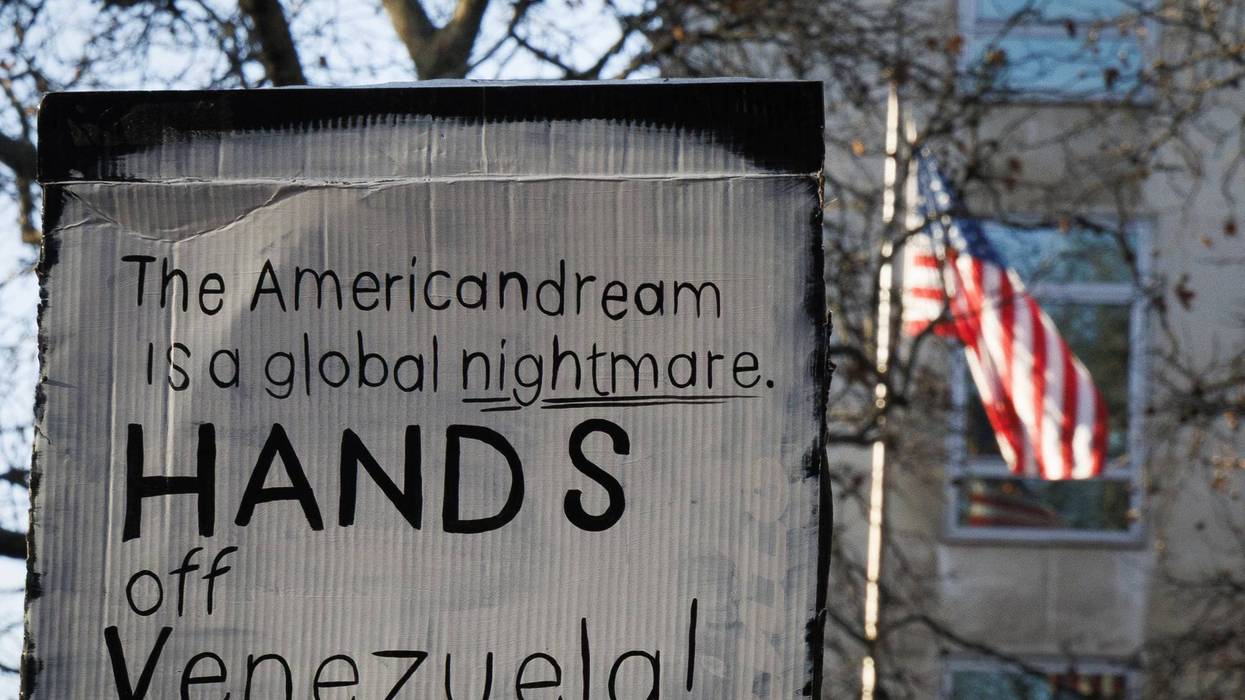
In Venezuela, Cuba, and Nicaragua, both parties agree with the assumption that Washington has the right to shape the political future of other nations.
Donald Trump’s second term has precipitated a tsunami of criticism from Democrats over his foreign policy. Yet when it comes to Washington's efforts to dominate Latin America and the Caribbean, the substantive dispute—if there is any substance remaining, once stripped of partisan bickering—is less about ends than means.
Beneath the rhetoric of inter-party conflict lies a broad bipartisan consensus in favor of promoting US hemispheric hegemony and crushing governments that resist it—with Venezuela, Cuba, and Nicaragua at the forefront. While Democrats frequently portray Trump as reckless, they generally accept the underlying premises of economic coercion, political intervention, and regime-change pressure. Their objections mainly focus on the execution of policy rather than its legitimacy.
Under Democratic administrations, the US forged and institutionalized what may be its most effective instrument of hegemony. Coercive economic measures, commonly called “sanctions,” were first deployed by Franklin D. Roosevelt against Mexico in the 1930s. They were used by Dwight D. Eisenhower to pressure Guatemala in 1954 and then—most drastically—against Cuba by both Eisenhower and John F. Kennedy in 1960. Today, one-third of the world’s nations are under US sanctions.
Sanctions—a form of collective punishment—are held by legal experts to be contrary to international law. Paradoxically, not only does Washington disregard international law in imposing sanctions, but the US then behaves as if they are applying the law when, for example, they pirate a ship delivering humanitarian supplies to a sanctioned country.
The shared strategic objective of the bipartisan Washington consensus is the projection of US hemispheric dominance.
Use of sanctions has accelerated because successive administrations have seen their unique advantages. Compared with “forever wars,” they are more easily justified to US voters as cost free and as not imperiling US lives. If sanctions are the precursor to military intervention—as in Guatemala in 1954, Cuba in 1961, Grenada in 1983, Panama in 1989 and, of course, Venezuela in 2026—the interventions have usually been limited, with few US casualties.
Yet sanctions are very potent: Between 2010 and 2021, they caused around 560,000 deaths globally each year—more than five times the number of people killed annually in direct armed combat.
While sanctions are made more palatable by being described as “targeted” at governments or individuals seen as undesirable by Washington, in practice the “targeting” is deliberately far wider. Sanctions do most damage to the poorest sectors of societies—the sectors most likely to support progressive governments. The barely veiled message is that only by withdrawing this support will such communities be able to prosper and avoid the threat of even greater US intervention.
The frequent description of sanctions as “targeted” carries another implication—that they are intended to have a precise and conclusive effect. However, while sanctions cause severe economic damage, there is little evidence that they achieve intended regime change. Even so, sanctions on countries which refuse to change are maintained and—very frequently—intensified. Democrats are as guilty of this folly as Republicans.
Indeed, US sanctions have imperial utility through their “demonstration effect”: attempting to cripple progressive alternatives to the neoliberal world order. Recently subjected to draconian sanctions, Cuban President Miguel Díaz-Canel proclaimed, “Cuba is not a failed state; Cuba is a besieged state.” Still, infant mortality in Cuba is lower than among African Americans.
In the case of Venezuela, the Democrats have criticized the Republicans from the right, complaining that the cudgel of imperial power against essentially defenseless small states has not been wielded with sufficient malice.
Washington has imposed illegal unilateral coercive measures on Venezuela since 2015 in efforts to asphyxiate its Bolivarian Revolution. The transparently false rationale for continuing sanctions is that Venezuela poses an “extraordinary threat” to the national security of the US. Although the threat is obviously the other way around, mainstream Democrats have not exposed this lie. How could they, when it originated with President Barack Obama and was subsequently echoed by President Joe Biden and then Trump?
Despite the horrific toll of an estimated 100,000 excess deaths attributed to US-imposed sanctions, Venezuela has resisted and maintained an unbroken continuity of leadership from Hugo Chávez to Nicolás Maduro and to now Delcy Rodríguez. And that’s the rub for the Democrats.
Ranking Democrat members of the House and Senate foreign affairs committees, Rep. Gregory W. Meeks (D-NY) and Senator Jeanne Shaheen (D-NH), issued a “request [for] a clear explanation” of Trump’s Venezuela policy. Their meek missive came a full five months after the abduction of the Venezuelan president, an operation that resulted in more than 100 collateral deaths. Meanwhile, more than 200 occupants of small boats in the Caribbean and eastern Pacific have been subjected to extrajudicial murder by the Trump administration.
Yet these inconvenient facts are absent from the June 8 Democratic Party congressional foreign-policy leadership’s statement on Venezuela. Their complaint is that Trump’s White House has failed to sufficiently “exercise its leverage.” As they put it, “As of today, the [state] department has yet to provide any evidence the Trump administration is doing any of this hard work.”
The contradiction of kidnapping a lawful head of state in the name of restoring democracy does not trouble the Democrats. Rather, they “strongly support the Venezuelan people’s right to choose their leaders”… after the US abducts their president.
These Democrat leaders are also troubled that Venezuelan authorities were allowed to appoint a new attorney general and defense minister without apparent US interference. In addition, they express impatience with Trump’s lethargy in not yet overhauling Venezuela’s supreme court and electoral council.
To the extent that they make any concrete demand, the putative opposition party wants Trump to impose an “electoral timeline” on Venezuela. Yet, the same party has no problem with Volodymyr Zelenskyy in Ukraine who suspended elections after his legal term in office expired two years ago, banned opposition parties, shuttered critical media, and arrested political opponents.
Democratic Party policy toward Cuba is perhaps best exemplified by Biden’s retention of the State Sponsor of Terrorism designation, which he inherited from Trump. Then, just six days before leaving office, Biden rescinded the designation with full certainty that the incoming Republican would—and did—reverse his decision.
Former National Security Council officer Ricardo Zúñiga was Obama’s adviser for the Americas and Biden’s special envoy for the Northern Triangle. He writes in Foreign Affairs offering advice on, rather than criticism of, Trump’s Cuba policy.
Republicans may be more inclined toward overt confrontation, selective military assaults, and maximal pressure; Democrats typically prefer a combination of inhumane sanctions, diplomatic isolation, and multilateral coercion.
Zúñiga advocates achieving regime change in Cuba through “diplomacy” rather than “force.” Scare quotes are used because, for this Democrat, brute economic strangulation is regarded as diplomacy. Zúñiga would “forswear military action,” but only if Cuba submits to US dictates. And so long as “pro-market reforms” are adopted, “democracy” can wait.
Without a hint of opprobrium, Zúñiga casually references the US invasion of Iran and the kidnapping of the Venezuelan president as policy options that would not be effective in Cuba. Given these examples, he then complains that Cubans remain resistant to “American views on democracy and human rights.”
He acknowledges that even if Trump wished to selectively roll back the murderous sanctions currently imposed on Cuba, he would face opposition not only from Republicans but also from Democrats. Where this Democrat differs from Republicans is in his supremely hypocritical conclusion: “It is ultimately Cuban citizens who will determine their country’s future”… after the US overthrows their government.
Tiny Nicaragua is also labelled an “extraordinary threat” to the US. While the harshest and most successful sanctions against it were applied during the Reagan administrations, when an economic blockade and the US-financed Contra war eventually unseated the Sandinista government in 1990, economic pressure quickly resumed once the Sandinistas returned to power in 2007. Both the Bush and then Obama administrations made cuts in aid, and it was under Obama that Democrats joined with Republicans to launch the NICA Act, eventually implemented (under Trump) in 2018.
While Trump signed the NICA Act and sanctioned various Nicaraguan functionaries, Democrat senators took the lead in formulating stronger measures in the RENACER Act, signed by Biden in 2021. This led to an estimated loss of $500 million annually in development finance that would have been directed at Nicaragua’s poorest communities. Sen. Tim Kaine (D-Va.), with Marco Rubio, put forward new legislation in 2023 that was intended to strengthen the RENACER Act and ensure even greater damage.
Biden officials were consistently aggressive toward Nicaragua. In 2022, his nominee for ambassador to Managua, Hugo Rodríguez, promised the US Congress that he would “support using all economic and diplomatic tools to bring about a change in direction in Nicaragua.” As a result, Rodríguez was never accepted as ambassador and the post remains unfilled.
In 2024, Biden’s trade representative launched a hostile investigation clearly aimed at disrupting trade with Nicaragua and possibly at excluding it from the regional trade treaty, CAFTA. When it eventually reported in late 2025 it recommended punitive tariffs, but only relatively mild penalties were actually implemented by Trump.
Marco Rubio regularly imposes sanctions on individual Nicaraguans, including 100 more just this month. More than 2,300 have now been sanctioned by successive administrations. Nevertheless, hard-line Democrats, as well as Republicans, are pushing Rubio to do far more.
The shared strategic objective of the bipartisan Washington consensus is the projection of US hemispheric dominance. The two major parties differ mainly in messaging and, to a lesser extent, on tactics. Their theatrical contention is neither between intervention and nonintervention, nor between coercion and diplomacy. More often, it is between competing methods for achieving the same strategic objective.
Republicans may be more inclined toward overt confrontation, selective military assaults, and maximal pressure; Democrats typically prefer a combination of inhumane sanctions, diplomatic isolation, and multilateral coercion. But both approaches rest on the assumption that Washington has the right to shape the political future of other nations.
Despite differences in tone and tactics, the supposed opposition party offers not an articulated alternative to the Trump Corollary to the Monroe Doctrine but, at the very most, a variation of it.
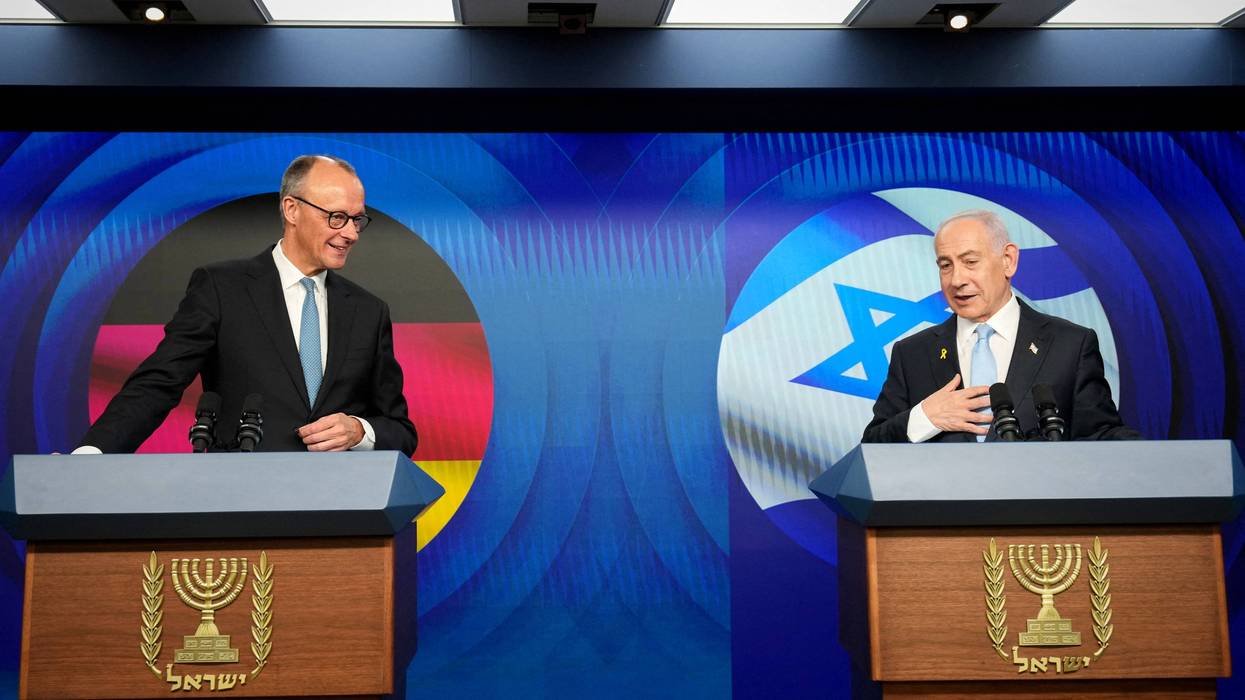
Berlin says it needs to focus on its defense in a separate ICJ case in which Nicaragua accuses Germany of supporting Israel's genocidal war on Gaza.
Germany said Wednesday that it will drop its planned intervention in the International Court of Justice genocide against Israel so that it can better focus on its own defense in a separate ICJ case filed by Nicaragua accusing Berlin of enabling Israel's genocidal assault on Gaza via arms sales.
Deputy German Foreign Minister Josef Hinterseher said during a press conference in Berlin that his country "will not intervene" on Israel's side in the South Africa v. Israel genocide case filed at the Hague-based tribunal in December 2023.
This is a marked departure from Germany's January 2024 announcement that it would intervene on behalf of Israel in the case, arguing that the genocide allegation made by South Africa had "no basis whatsoever."
Nearly two dozen nations, most recently the Netherlands, Namibia, and Iceland, have either formally intervened on the side of South Africa or announced their intent to do so. The Herero and Nama peoples of modern-day Namibia suffered a genocide during the region's colonization by Germany in the late 19th and early 20th centuries.
A handful of countries including the United States, Hungary, and Fiji have also intervened on behalf of Israel.
In 2024, Nicaragua filed a case against Germany at the ICJ, arguing that the European nation “has not only failed to fulfill its obligation to prevent the genocide committed and being committed against the Palestinian people... but has contributed to the commission of genocide in violation" of the Genocide Convention.
Germany has provided financial, military, diplomatic, and political support to Israel. It also temporarily halted financial contributions to the United Nations Relief and Works Agency for Palestine Refugees in the Near East (UNRWA) based on unsubstantiated Israeli claims that a dozen of its worjers were involved in the Hamas-led attack of October 7, 2023.
Unlike Germany, the US and Israel are not members of the ICJ. The US quit the tribunal after it ruled against the Reagan administration in Nicaragua v. United States, a 1984 ruling that determined the US illegally supported Contra terrorists and mined Nicaraguan harbors.
However, under the court's territorial jurisdiction powers, countries that are not members of the court can still be brought before it for crimes committed in member states.
Further complicating matters, Germany is one of numerous countries which have intervened in Gambia v. Myanmar, which the African nation filed at the ICJ in 2019 amid the Burmese junta's ongoing genocide against Rohingya Muslims.
The ICJ has issued several provisional orders in South Africa v. Israel, including directives to prevent genocidal acts and allow aid into the besieged Gaza Strip amid a burgeoning famine. Israel has been accused of ignoring these orders.
The US under the Biden and Trump administrations pressured ICJ members to refrain from intervening on behalf of South Africa. The Trump administration has also sanctioned members of the International Criminal Court (ICC)‚ which in 2024 issued arrest warrants for Israeli Prime Minister Benjamin Netanyahu and former Defense Minister Yoav Gallant for alleged crimes against humanity and war crimes in Gaza.
In Germany, as in several other Western nations, authorities have cracked down on pro-Palestine protests, free expression of support for Palestinian rights, and criticism of Israel. Critics say the persistent framing of German national identity around enduring guilt for the Nazis' wholesale slaughter of 6 million Jews during the Holocaust is driving overzealous policing of dissent and conflation of pro-Palestinian activism with antisemitism.
This perceived moral burden, say observers, risks stifling legitimate political debate, curtailing free speech, and criminalizing solidarity with Palestinians under the pretext of historical responsibility. This has driven German actions from secretly funding Israel's development of nuclear weapons over half a century ago to brutally assaulting and arresting pro-Palestine protesters—including women, elders, minors, and people with disabilities—after the October 2023 attack.
German police punch an anti-genocide woman in front of the cameras.
[image or embed]
— Antifa_Ultras (@antifa-ultras.bsky.social) October 7, 2025 at 2:20 PM
Amnesty International's latest annual human rights report on Germany notes "excessive use of force by police during peaceful protests by climate activists and supporters of Palestinians’ rights," as well as Berlin's "irresponsible arms transfers" to not only Israel but also Saudi Arabia.
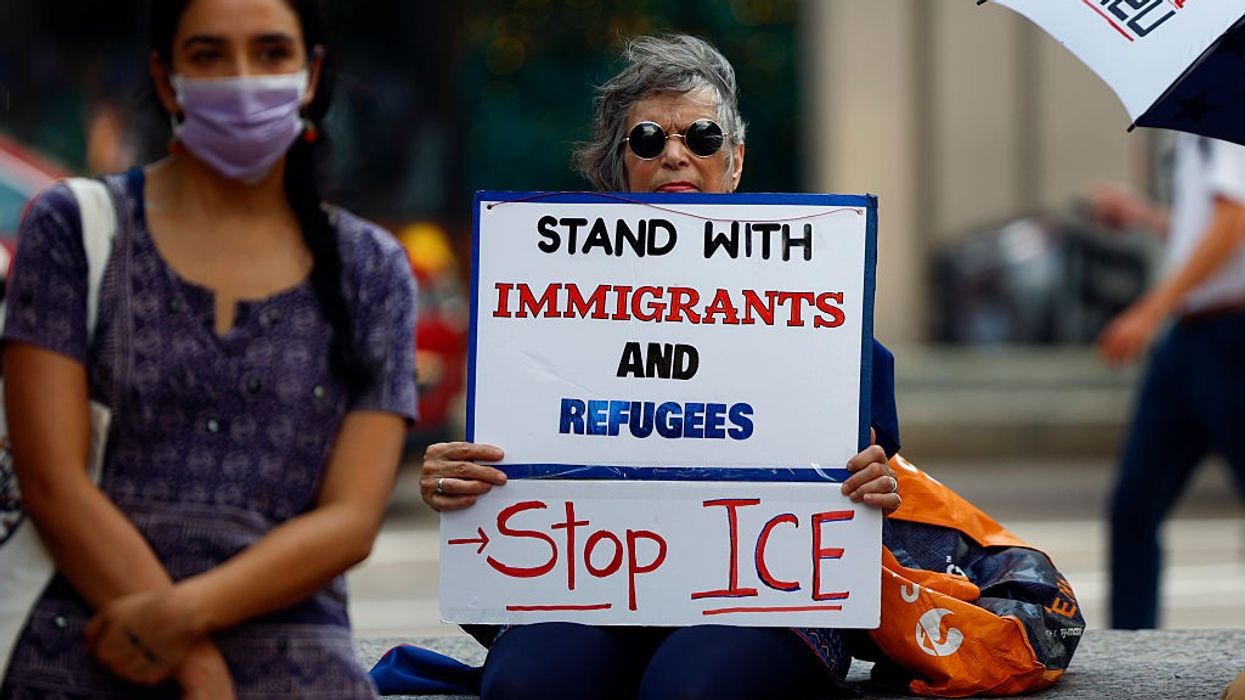
"Secretary Noem's statements perpetuate the discriminatory belief that certain immigrant populations will replace the white population," the judge wrote, stressing that "color is neither a poison nor a crime."
"The freedom to live fearlessly, the opportunity of liberty, and the American dream. That is all plaintiffs seek. Instead, they are told to atone for their race, leave because of their names, and purify their blood. The court disagrees."
That's how U.S. District Judge Trina Thompson began a Thursday order postponing recent moves by President Donald Trump's administration to end Temporary Protected Status (TPS) for around 60,000 migrants from Honduras, Nepal, and Nicaragua.
The U.S. Department of Homeland Security (DHS) issues TPS designations for countries impacted by war, environmental disasters, or other extraordinary conditions, allowing migrants from those nations to legally live and work in the United States.
Homeland Security Secretary Kristi Noem announced in June and July that the administration would end TPS for people from Honduras, Nepal, and Nicaragua this summer. The decisions followed similar attempts to terminate those designations during Trump's first term—efforts blocked by U.S. courts and then ended under former President Joe Biden.
"As a TPS holder and mother, this victory means safety, hope, and the chance to keep building our lives here."
When Trump returned to power in January, he issued an executive order titled "Protecting the American People Against Invasion," which was "cited in later decisions vacating or terminating TPS designations," Thompson pointed out. The judge, who was appointed to the Northern District of California by Biden, also highlighted "repeated rhetoric by administration officials that associated immigrants and TPS holders with criminal activity or other undesirable traits."
The 37-page order details some of Noem's comments during her confirmation hearing and news interviews. Thompson wrote that "these statements reflect the secretary's animus against immigrants and the TPS program even though individuals with TPS hold lawful status—a protected status that was expressly conferred by Congress with the purpose of providing humanitarian relief."
"Their presence is not a crime. Rather, TPS holders already live in the United States and have contributed billions to the economy by legally working in jobs, paying taxes, and paying contributions into Medicare and Social Security," she noted. "By stereotyping the TPS program and immigrants as invaders that are criminal, and by highlighting the need for migration management, Secretary Noem's statements perpetuate the discriminatory belief that certain immigrant populations will replace the white population."
"Color is neither a poison nor a crime," stressed the judge, who is Black. She concluded that the various TPS holders who are the plaintiffs provided "sufficient evidence to demonstrate that the secretary's TPS Nepal, Honduras, and Nicaragua terminations were based on a preordained determination to end the TPS program, rather than an objective review of the country conditions."
Thompson ordered the TPS terminations for the three countries postponed until a November 18 hearing on the merits of the case, at which point her decision will be subject to extension.
🚨 JUST IN: A district court has ruled that TPS for Nepal, Honduras, and Nicaragua cannot be terminated at this time — protections will remain in place through at least November 18, 2025 as the case continues.
[image or embed]
— Haitian Bridge Alliance (@haitianbridge.bsky.social) July 31, 2025 at 11:57 PM
"Judge Thompson's decision renews hope for our immigrant communities—especially for the tens of thousands of TPS holders from Honduras, Nicaragua, and Nepal who have lived here for decades and are part of the National TPS Alliance," said Teofilo Martinez, a Honduran TPS holder, plaintiff, and an alliance leader, in a statement.
"This ruling gives us strength, affirms the power of organizing, and reminds us what's at stake: the right to stay in the only home many of us have ever known," Martinez added. "We will keep fighting for permanent protections and to stop the cruel separation of our families."
Sandhya Lama, another plaintiff and TPS holder from Nepal, described the judge's order as "a powerful affirmation of our humanity and our right to live without fear."
"As a TPS holder and mother, this victory means safety, hope, and the chance to keep building our lives here," she said. "We stand united, grateful, and determined to continue the fight for a permanent future in the country we call home."
The plaintiffs are represented by the ACLU Foundations of Northern California and Southern California, Haitian Bridge Alliance, National Day Laborer Organizing Network (NDLON), and Center for Immigration Law and Policy at the University of California, Los Angeles School of Law.
"The Trump administration is aggressively, and illegally, seeking to dismantle TPS. But they will not do so without a fight," said ACLU of Northern California attorney Emi MacLean. "Today is a good day. Sixty60,000 long-term residents of the U.S., who have followed all the rules, will be allowed to remain in the U.S. and continue to defend their rights inside and outside of court."
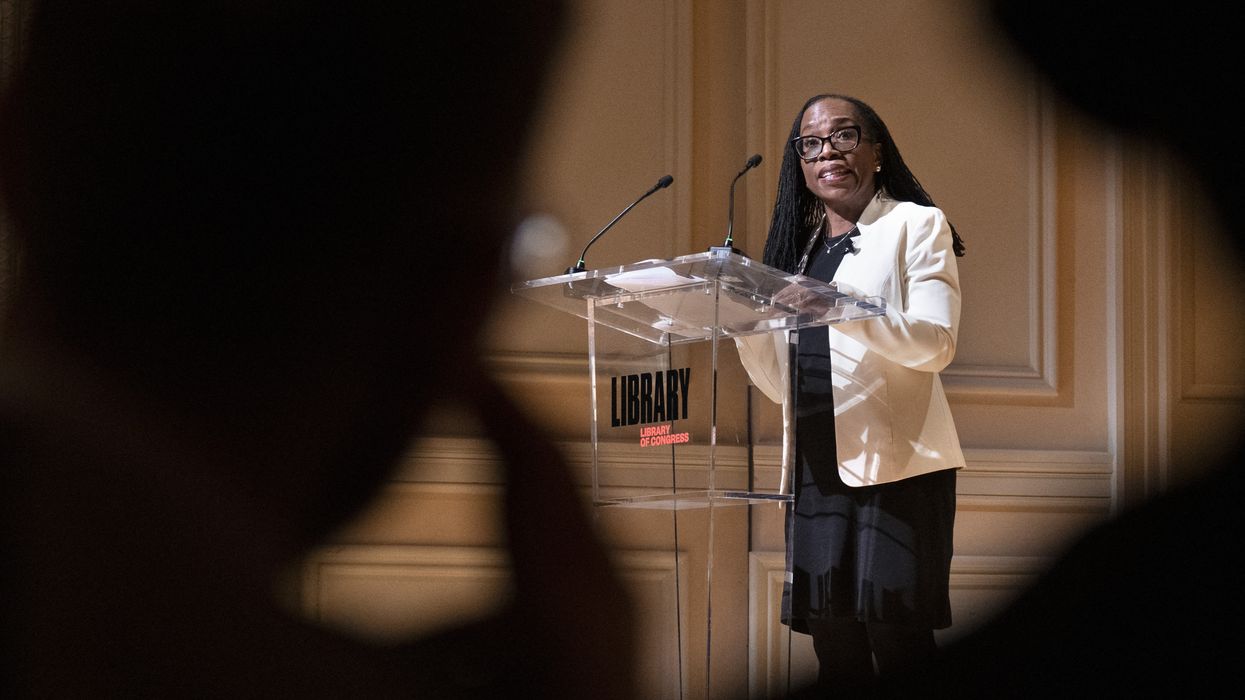
One immigration lawyer wrote that the order "simply ignores the human costs and blesses the Trump admin's stripping of status of hundreds of thousands of people who entered the country legally."
The U.S. Supreme Court on Friday cleared the way for the Trump administration to end, for now, legal protections for more than 500,000 Haitian, Cuban, Nicaraguan, and Venezuelan migrants with a ruling that liberal Supreme Court Justice Ketanji Brown Jackson blasted in a dissent as deeply harmful.
The decision puts on hold a ruling from U.S. District Judge Indira Talwani, who in April issued a stay on the Trump administration's move to end a humanitarian program extended to this group under former U.S. President Joe Biden. The ruling means the immigrants are at risk of being deported under President Donald Trump's mass deportation effort, even as the core legal issues in the case continue to play out in lower courts.
The unsigned order from the Supreme Court focuses on the so-called CHNV parole program, which allows certain individuals from those four nations to apply for entry into the U.S. for a temporary stay, so long as they have a U.S.-based sponsor, go through security vetting, and meet other conditions. In some cases, beneficiaries of the program work in the U.S.
On his first day in office, Trump issued an executive instructing the U.S. Secretary of Homeland Security to "[t]erminate all categorical parole programs," including CHNV.
"The court has plainly botched this assessment today. It requires next to nothing from the government with respect to irreparable harm" wrote Jackson in her dissent, joined by Justice Sonia Sotomayor. "And it undervalues the devastating consequences of allowing the government to precipitously upend the lives of and livelihoods of nearly half a million noncitizens while their legal claims are pending."
Friday's ruling is the second time this month that the Supreme Court has permitted the Trump administration to halt a program aimed at protecting immigrants who leave their home countries for humanitarian reasons. Earlier in May, the court issued an unsigned order allowing Trump to cancel Temporary Protected Status protections specifically extended to 350,000 Venezuelans immigrants while the legal case winds its way through lower courts.
The court's decision on Friday is a temporary order and litigation is still playing out, but it signals that a majority of the justices think the Trump administration is likely to prevail in the case, according to The New York Times.
"Respondents now face two unbearable options," according to Jackson's dissent. Jackson wrote that immigrants in the program could either chose to leave the U.S. and potentially confront dangers in their home countries, and other adverse outcomes, or "risk imminent removal at the hands of government agents, along with its serious attendant consequences."
"The court allows the government to do what it wants to do regardless, rendering constraints of law irrelevant and unleashing devastation in the process," she concludes in the dissent.
Aaron Reichlin-Melnick, senior fellow at the American Immigration Council, wrote: "an incredibly devastating decision which simply ignores the human costs and blesses the Trump admin's stripping of status of hundreds of thousands of people who entered the country legally."
Josh Gerstein, a legal reporter at Politico, wrote that the ruling "may spell trouble for Ukrainians/Afghans with similar status."
"It was never about 'legal' immigration, but always about upholding white supremacy," said one human rights lawyer.
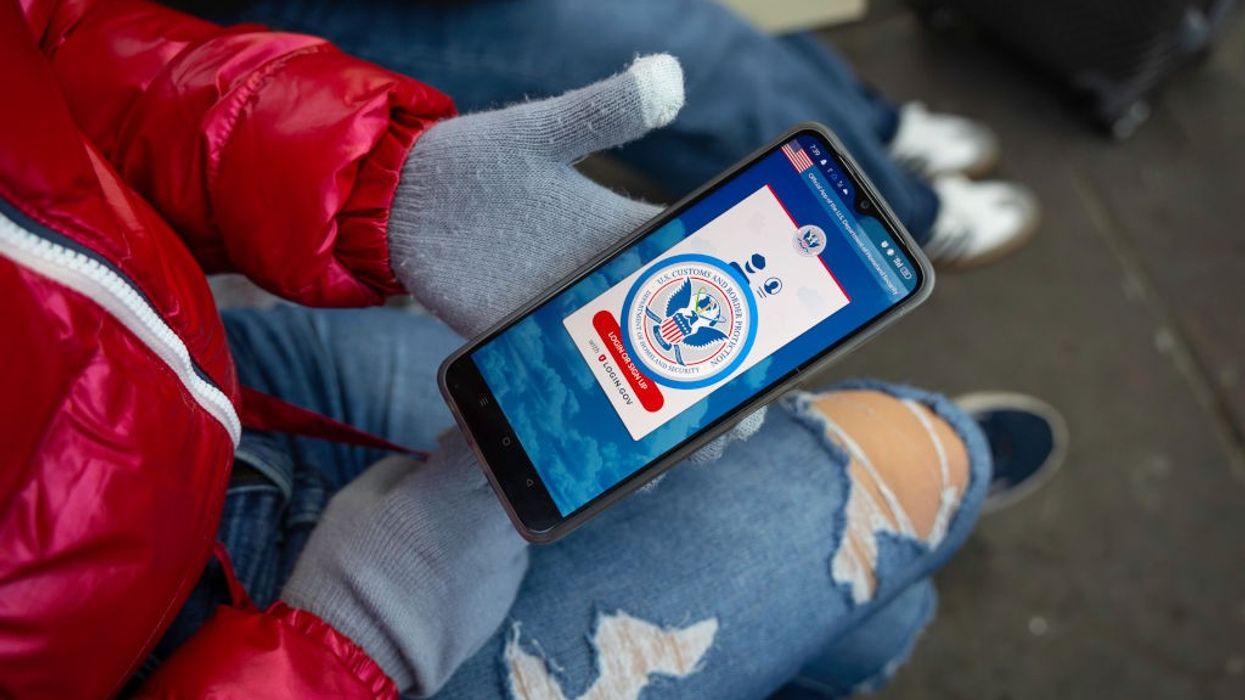
In yet another Trump administration attack on migrants, the U.S. Department of Homeland Security on Monday announced that nearly 1 million migrants who entered the country legally using a Customs and Border Protection mobile application must leave "immediately" or face consequences including potential criminal prosecution.
DHS notified migrants who were granted temporary parole protection after entering the country using the CBP One app—which was launched by the Biden administration in 2020 and upgraded in 2023—that "it is time for you to leave the United States."
The department "mis now exercising its discretion to terminate your parole," the agency said in an email to affected—and more than 200,000 unaffected—migrants. "Unless it expires sooner, your parole will terminate seven days from the date of this notice."
"If you do not deport from the United States immediately you will be subject to potential law enforcement actions that will result in your removal," the notice continues. "You will be subject to potential criminal prosecution, civil fines, and penalties, and any other lawful options available to the federal government."
"DHS encourages you to leave immediately on your own," the notice stresses, providing a link to a new app—called CBP Home—containing "a self-deportation reporting feature for aliens illegally in the country."
"Do not attempt to remain in the United States. The federal government will find you," DHS ominously added.
Approximately 985,000 migrants used the problem-plagued CBP One app to schedule appointments with U.S. immigration officials when arriving at ports of entry and were generally permitted to remain in the country for two years with work authorization.
However, DHS claimed Monday that "the Biden administration abused the parole authority to allow millions of illegal aliens into the U.S. which further fueled the worst border crisis in U.S. history."
"Canceling these paroles is a promise kept to the American people to secure our borders and protect national security," the agency added.
President Donald Trumpended new CBP One entries on January 20, his first day in office, via executive order, a move that left thousands of vulnerable migrants stranded in Mexico after their immigration appointments were canceled.
Monday's announcement does not affect people who entered the U.S. under Operation Allies Welcome for Afghans or the Uniting for Ukraine program—although more than 200,000 Ukrainian beneficiaries last week received a separate jarring email mistakenly informing them that their status had been revoked.
The new policy also "should not immediately affect migrants who entered via CBP One and applied for asylum and have pending cases in immigration court," according to CBS News immigration and politics reporter Camilo Montoya-Galvez, who noted that "the government generally has to wait for those cases to be adjudicated or terminated before moving to deport."
More than 500,000 Cuban, Haitian, Nicaraguan, and Venezuelan migrants who entered the country via the CBP One app with U.S.-based financial sponsors are also bracing for the loss of their protected status on April 24. Additionally, the Trump administration announced the revocation of Temporary Protected Status (TPS) for over 1 million Haitian and Venezuelan migrants.
However, on March 31 a federal judge in San Francisco blocked the administration's effort to expel 350,000 Venezuelan TPS recipients, finding that the deportations were "motivated by unconstitutional animus" and would "inflict irreparable harm" upon affected migrants.
Critics have accused the Trump administration and its supporters of reveling in the cruelty inherent in forcibly removing migrants.
Proponents, meanwhile, say Trump is keeping his promise to carry out the largest mass deportation campaign in U.S. history—even as statistics show that the Biden administration deported people at a faster rate last year.
Migrants and other immigrants, including those who legally sought asylum in the United States—at least one of whom was wrongfully expelled—are being sent by the Trump administration to destinations including a camp in the Panamanian jungle and an ultra-high security prison in El Salvador.
Advocacy groups argue that such deportations are unlawful and violate deportees' rights. Human Rights Watch has documented cases of "torture, ill-treatment, incommunicado detention, severe violations of due process, and inhumane conditions, such as lack of access to adequate healthcare and food" in Salvadoran prisons.
Responding to Monday's DHS announcement, U.S. human rights attorney Qasim Rashid noted on social media that "985K migrants entered [the] USA through legal means during the previous administration."
"Trump just unilaterally revoked their legal status," Rashid added. "It was never about 'legal' immigration, but always about upholding white supremacy. This man is a fascist."
Allen Orr Jr., a Washington, D.C.-based immigration lawyer, lamented Tuesday that "migrants who followed the rules and entered legally through CBP One are now being punished."
"Not because they broke the law, but because of who granted them the benefit," he added. "This isn't about security; it's about revenge."
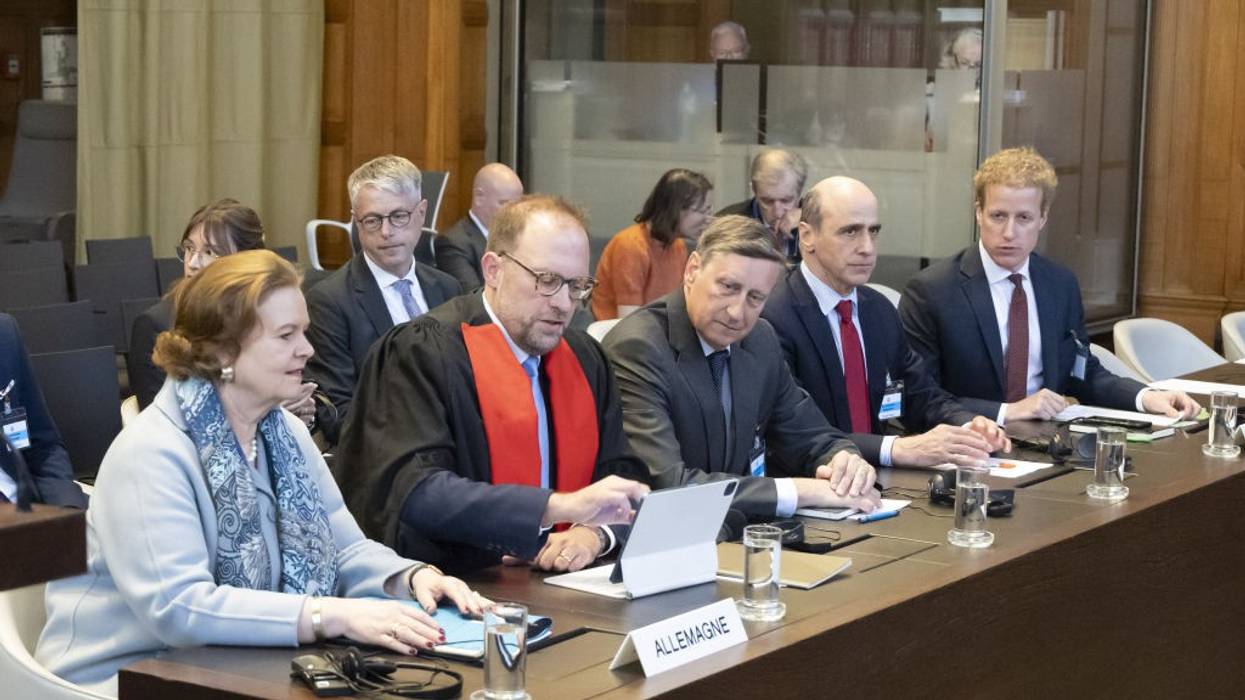
However, the World Court did not grant Germany's request to dismiss the case‚ in which Nicaragua accuses Berlin of enabling Israeli genocide in Gaza.
The top United Nations court on Tuesday overwhelmingly rejected Nicaragua's request for an emergency order directing Germany to halt arms sales to Israel as it wages what the tribunal previously called a "plausibly" genocidal war against Palestinians in Gaza.
International Court of Justice (ICJ) judges voted 15-1 against the Nicaraguan motion, finding an absence of legal conditions for issuing an order blocking Germany from selling arms to Israel.
"Based on the factual information and legal arguments presented by the parties, the court concludes that, at present, the circumstances are not such as to require the exercise of its power... to indicate provisional measures," ICJ President Nawaf Salam wrote in the ruling.
However, the court did not grant Germany's request for an outright dismissal and will hear arguments on the merits of the Nicaraguan case, a process expected to take months to complete.
Carlos José Argüello Gómez, the head of Nicaragua's legal team and its ambassador to the Netherlands, said after the ruling that the court's decision "doesn't mean that Germany hasn't violated... international law."
"Germany has—from our point of view—violated international law" by providing weapons for Israel, Argüello contended.
Nicaragua’s representative Carlos Jose Arguello Gomez says ICJ ruling doesn't mean that Germany has not violated international law by providing military aid to Israel.
🟠 LIVE updates: https://t.co/FqbkLyF2ZA pic.twitter.com/3cnPizIXps
— Al Jazeera English (@AJEnglish) April 30, 2024
Nicaragua asserts that Germany—which provided nearly 30% of Israel's exported arms last year—is complicit in Israeli war crimes and is enabling genocide against Palestinians in Gaza. Palestinian and international officials say that more than 123,000 Palestinians have been killed, maimed, or left missing by Israel's relentless 207-day onslaught and siege, which has also displaced around 90% of Gaza's 2.3 million people and driven at least hundreds of thousands of people to the brink of starvation. The majority of those killed have been women and children.
"Germany is failing to honor its own obligation to prevent genocide or to ensure respect of international humanitarian law," Argüello argued during case hearings earlier this month.
According to the Lawyers' Collective—a Berlin-based group that is suing to stop German arms sales to Israel—Germany's government issued €326.5 million ($348.7 million) worth of weapons export licenses for Israel last year, the majority of which were approved after October 7, 2023. That's a tenfold increase from 2022. The group says these transfers violate Germany's obligations under the War Weapons Control Act, which requires arms exports to comply with international humanitarian law.
Germany counters that its weapons sales to Israel have decreased since the October 7 attack and emphasizes what it says are the defensive nature of recent arms transfers. Berlin also says it has robust internal mechanisms and processes to consider the human rights implications of German arms sales.
Top German diplomat Tania von Uslar-Gleichen, who is leading Germany's legal team at the ICJ, said during hearings that Nicaragua's allegations "have no basis in fact or law."
Reacting to the ICJ ruling, the German Foreign Office said that "Germany is not a party to the conflict in the Middle East. On the contrary, we are working day and night for a two-state solution."
"We are the largest donor of humanitarian aid to the Palestinians," the ministry added. "We are working to ensure that aid reaches the people in Gaza."
The German government has been intensely criticized for its stauch support for Israel and for violently cracking down on pro-Palestinian protests since October. Numerous observers contend that Germany's actions are driven by historical guilt over the Holocaust, with some critics claiming the German government is weaponizing that guilt in order to demonize Palestinians and their defenders.
Israel—which is not a party to the case—vehemently denies genocide charges, arguing it is defending itself in the wake of the Hamas-led attacks that left more than 1,100 people dead and around 240 others taken hostage. Israeli forces are believed to have killed numerous Israelis on October 7 and an unknown number of hostages since then during the bombardment and invasion of Gaza.
In addition to Nicaragua's motion, the ICJ is considering a case brought by South Africa and supported by over 30 nations asserting that Israel's Gaza assault is genocidal because it is "intended to bring about the destruction of a substantial part of the Palestinian national, racial, and ethnical group."
On January 26, the tribunal issued a provisional ruling that found Israel is "plausibly" committing genocide in Gaza and ordered the country to prevent genocidal acts. Critics accuse Israel of ignoring the order by continuing to block humanitarian aid from reaching Gazans as children and other vulnerable people starve to death.
Citing "the worsening conditions of life faced by Palestinians in Gaza, in particular the spread of famine and starvation," the ICJ last month issued another provisional order directing Israel to allow desperately needed aid into the embattled enclave and reiterating its earlier order to prevent genocidal acts.
Also last month, the U.N. Human Rights Council
published a draft report that found "reasonable grounds to believe" that Israel is committing genocide in Gaza.

The Israeli brutality in Gaza, but also the Palestinian sumud, resilience and resistance, are inspiring the Global South to reclaim its centrality in anti-colonial liberation struggles.
The distance between Gaza and Namibia is measured in the thousands of kilometers. But the historical distance is much closer. This is precisely why Namibia was one of the first countries to take a
strong stance against the Israeli genocide in Gaza.
Namibia was colonized by the Germans in 1884, while the British colonized Palestine in the 1920s, handing the territory to the Zionist colonizers in 1948.
Though the ethnic and religious fabric of both Palestine and Namibia are different, the historical experiences are similar.
Though intersectionality is a much-celebrated notion in Western academia, no academic theory is needed for oppressed, colonized nations in the Global South to exhibit solidarity with one another.
It is easy, however, to assume that the history which unifies many countries in the Global South is only that of Western exploitation and victimization. It is also a history of collective struggle and resistance.
Namibia has been inhabited since prehistoric times. This long-rooted history has allowed Namibians, over the course of thousands of years, to establish a sense of belonging to the land and to one another, something that the Germans did not understand or appreciate.
When the Germans colonized Namibia, giving it the name of “German Southwest Africa,” they did what all other Western colonialists have done, from Palestine to South Africa to Algeria, to virtually all Global South countries. They attempted to divide the people, exploited their resources, and butchered those who resisted.
Although a country with a small population, Namibians resisted their colonizers, resulting in the German decision to simply exterminate the natives, literally killing the majority of the population.
Since the start of the Israeli genocide in Gaza, Namibia answered the call of solidarity with the Palestinians, along with many African and South American countries, including Colombia, Nicaragua, Cuba, South Africa, Brazil, China, and many others.
Though intersectionality is a much-celebrated notion in Western academia, no academic theory is needed for oppressed, colonized nations in the Global South to exhibit solidarity with one another.
So when Namibia took a strong stance against Israel’s largest military supporter in Europe—Germany—it did so based on Namibia’s total awareness of its history.
The German genocide of the Nama and Herero people (1904-1907), is known as the “first genocide of the 20th century.” The ongoing Israeli genocide in Gaza is the first genocide of the 21st century. The unity between Palestine and Namibia is now cemented through mutual suffering.
But it is not Namibia that has launched the legal case against Germany at the International Court of Justice (ICJ) but, rather, Nicaragua, a Central American country that is also thousands of miles away from both Palestine and Namibia.
The Nicaraguan case accuses Germany of violating the Convention on the Prevention and Punishment of the Crime of Genocide. It rightly sees Germany as a partner in the ongoing genocide of the Palestinians.
This accusation alone should terrify the German people, in fact the whole world, as Germany is affiliated with genocides from its early days as a colonial power. The horrific crime of the Holocaust, and other mass killings carried out by the German government against Jews and other minority groups in Europe during WWII, is a continuation of other German crimes committed against Africans, decades earlier.
The typical analysis of why Germany continues to support Israel is explained on the basis of German guilt over the Holocaust. This explanation, however, is partly illogical and partly erroneous.
Illogical, because, if Germany has, indeed, internalized any guilt from its previous mass killings, it would make no sense for Berlin to add yet more guilt by allowing Palestinians to be butchered, en masse. If guilt indeed exists, it is not genuine.
And erroneous, because it completely overlooks the German genocide in Namibia. In fact, it took the German government until 2021 to acknowledge the horrific butchery in that poor African country, ultimately agreeing to pay merely 1 billion euros in “community aid,” which will be allocated over the course of three decades.
The German government’s support of the Israeli war on Gaza is not motivated by guilt, but by a power paradigm that governs the relations among colonial countries. Many countries in the Global South understand this logic very well, thus the growing solidarity with Palestine.
The Israeli brutality in Gaza, but also the Palestinian sumud, resilience and resistance, are inspiring the Global South to reclaim its centrality in anti-colonial liberation struggles.
The revolution in the Global South outlook—culminating in South Africa’s case at the ICJ, and also the Nicaraguan lawsuit against Germany—indicates that the change is not the outcome of a collective emotional reaction. Instead, it is part and parcel of the shifting relationship between the Global South and the Global North.
Africa has been undergoing a process of geopolitical restructuring for years. The anti-French rebellions in West Africa, demanding true independence from the continent’s former colonial masters, in addition to the intense geopolitical competition—involving Russia, China and others—are all signs of changing times.
And, with this rapid rearrangement, a new political discourse and popular rhetoric are emerging, often expressed in the revolutionary language emanating from Niger, Burkina Faso, Mali, and others.
But the shift is not happening on the rhetorical front only. The rise of BRICS as a powerful new platform for economic integration between Asia and the rest of the Global South has opened up the possibility that alternatives to Western financial and political institutions are very much possible.
In 2023, it was revealed that BRICS countries are now holding 32% of the world’s total GDP, compared to 30% held by the G7 countries. There is much political value to this as four of the five original founders of BRICS are strong and unapologetic supporters of the Palestinians.
While South Africa has been championing the legal front against Israel, Russia and China are battling the U.S. at the United Nations Security Council to institute a cease-fire. Beijing’s ambassador to The Hague went as far as defending the Palestinian armed struggle as legitimate under international law.
Now that global dynamics are working in favor of Palestinians, it is time for the Palestinian struggle to return to the embrace of the Global South, where common histories will always serve as a foundation for a meaningful solidarity.