

SUBSCRIBE TO OUR FREE NEWSLETTER
Daily news & progressive opinion—funded by the people, not the corporations—delivered straight to your inbox.
5
#000000
#FFFFFF
To donate by check, phone, or other method, see our More Ways to Give page.
Daily news & progressive opinion—funded by the people, not the corporations—delivered straight to your inbox.

The leading Australian clean energy association warned Tuesday that modern-day slavery plagues global renewable energy supply chains, and that the industry must take "urgent action" to ensure human and worker rights are respected as nations decarbonize.
"Renewable energy technologies can have long supply chains that are linked at various points to modern slavery."
The report--entitled Addressing Modern Slavery in the Clean Energy Sector--notes examples of worker enslavement and other abuse, including of children, from the Ecuadorean Amazon to China, where 2.6 million Uighurs and Kazakhs allegedly face forced or coerced labor, so-called "reeducation" programs, and imprisonment in concentration camps.
The report also highlights the child labor running rampant in manganese and cobalt mining in Zambia and Congo, respectively, as well as in nickel production in the Philippines. Those three metals are critical to the manufacture of batteries.
Australia's "purchasing patterns alone will not influence global supply chains, but we still have a responsibility to play our role to eliminate modern slavery from our own supply chains and to contribute to global efforts," the report states.
Nicholas Aberle, Clean Energy Council's policy director of energy generation and storage, said in a statement that "Australia is on a trajectory to produce the vast majority of our electricity from solar, wind, hydro, and batteries by 2030, but it's important that this shift happens in a way that is fair and equitable."
"As with many other modern products ubiquitous in everyday life, renewable energy technologies can have long supply chains that are linked at various points to modern slavery," Aberle added.
James Cockayne, the anti-slavery commissioner of New South Wales, asserted that "urgent action is needed to address the severe modern slavery risks in Australian renewable energy supply chains and investments."
"In NSW, government entities and local councils are legally required to take reasonable steps not to procure products of modern slavery," he continued. "This may include some solar panels, lithium-ion batteries, wind turbines, and renewable energy."
"This report is an important and welcome acknowledgment by industry of this problem and a first step towards addressing it," Cockayne added. "But we need to see industry, government, the financial sector, and civil society working together to provide access to competitively costed, slavery-free renewable energy. If we don't, modern slavery risks significantly complicating the just transition to a decarbonized economy."
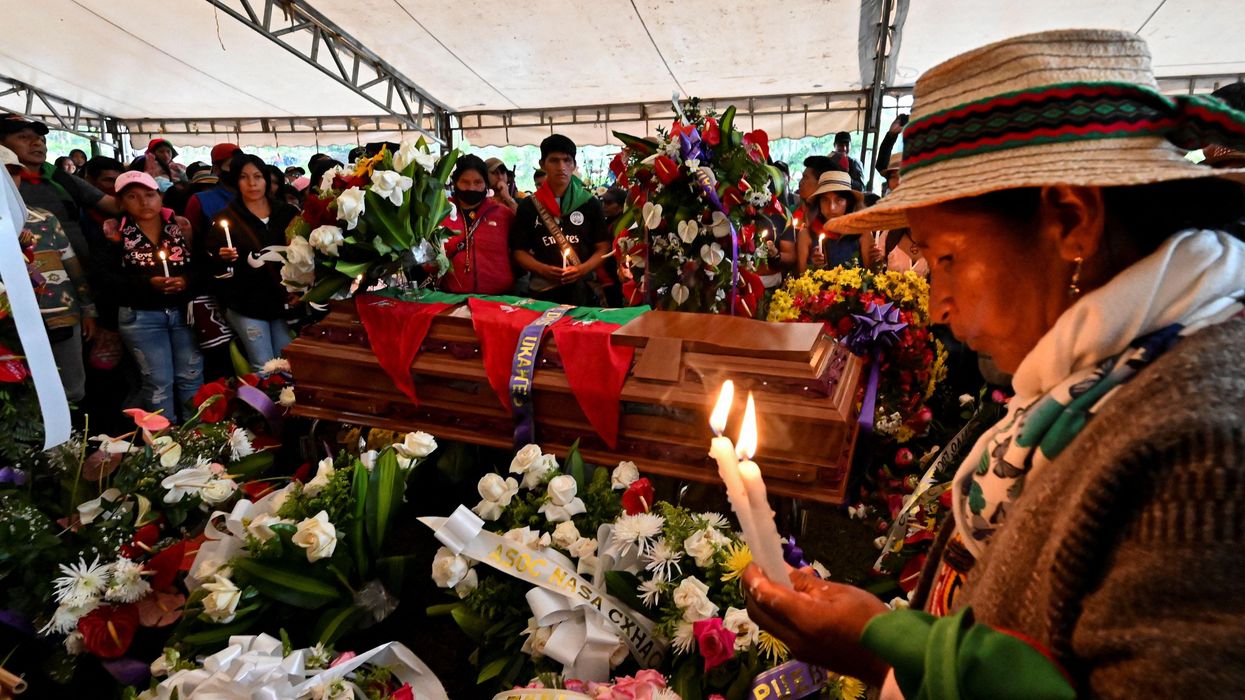
The advocacy group Global Witness on Thursday marked 10 years of collecting data on slain environmental defenders by publishing a new report revealing that at least 1,733 people have been killed over the past decade--a rate of one murder every two days.
"Our data on killings is likely to be an underestimate, given that many murders go unreported."
The report--entitled Decade of Defiance: Ten Years of Reporting Land and Environmental Activism Worldwide--underscores how land inequality and efforts by governments, corporations, and wealthy individuals to own and control land drives deadly violence against activists.
"All over the world, Indigenous peoples and environmental defenders risk their lives for the fight against climate change and biodiversity loss," Global Witness CEO Mike Davis said in a statement. "Activists and communities play a crucial role as a first line of defense against ecological collapse, as well as being frontrunners in the campaign to prevent it."
As the climate emergency worsens, so does the killing, violence, and other repression that come with the capitalistic pursuit of land and the natural resources above and below the soil.
"Driven by the rising demand for food, fuel, and commodities, the last decade has seen an upsurge in land grabs for industries like mining, logging, agribusiness, and infrastructure projects, with local communities rarely consulted or compensated," the report states.
"The actors colluding to grab land tend to be corporations, foreign investment funds, national and local state officials, and the governments of wealthy yet resource-poor nations looking to cheaply acquire land, harming local populations in the process," the publication continues.
Global Witness said around 200 activists were murdered around the world in 2021 alone, a decrease from the 227 recorded killings in 2020. Although they make up only around 5% of the world's population, more than 40% of the deadly attacks on environmental defenders targeted Indigenous people last year.
Mexico suffered 54 slain environmental defenders in 2021, the most of any nation and a marked spike from 30 killings reported there in 2020. Colombia (33), Brazil (26), the Philippines (19), Nicaragua (15), and India (14) all experienced more than 10 reported activist killings last year.
Of the 10 activist murders reported across Africa last year, eight were rangers killed in Congo's Virunga National Park, where militant groups are fighting for control of resource-rich lands that are also home to some of the world's last remaining mountain gorillas.
Global Witness cautioned that "our data on killings is likely to be an underestimate, given that many murders go unreported, particularly in rural areas and in particular countries."
Indian scholar and activist Vandana Shiva said in an introduction to the report that "these numbers are not made real until you hear some of the names of those who died."
Related Content

"Marcelo Chaves Ferreira. Sidinei Floriano Da Silva. Jose Santos Lopez. Each of them a person loved by their family, their community," Shiva continued. "Jair Adan Roldan Morales. Efren Espana. Eric Kibanja Bashekere. Each of them considered expendable for the sake of profit."
"Regilson Choc Cac. Ursa Bhima. Angel Rivas," she added. "Each killed defending not only their own treasured places, but the health of the planet which we all share."

The Democratic Republic of Congo is set to begin selling huge tracts of land to oil and gas giants later this week--a move that is being decried by environmental justice campaigners and local communities because it would enable new fossil fuel extraction in the second-largest old-growth rainforest on Earth, further endangering the world's chances of staving off the worst impacts of the climate crisis.
"There is little to suggest that oil and gas revenues would be used for the public good rather than the personal enrichment of political elites."
Twenty-seven oil and three gas blocks are scheduled to be auctioned off to the highest bidding corporations on July 28 and 29. The roughly 11 million hectares of land up for grabs in the Congo Basin--whose rainforest trails only the Amazon in size and is more intact--include parts of Virunga National Park, home to a key gorilla sanctuary, as well as tropical peatlands that prevent massive amounts of planet-heating carbon from reaching the atmosphere.
"If oil exploitation takes place in these areas, we must expect a global climate catastrophe, and we will all just have to watch helplessly," Irene Wabiwa, international project leader for Greenpeace Africa's Congo Basin forest campaign in Kinshasa, told the New York Times on Monday.
Greenpeace Africa on Monday submitted a petition with more than 100,000 signatures urging DRC President Felix Tshisekedi to halt the sale of land--"home to thousands of local and indigenous communities and countless animal and plant species"--to Big Oil.
"Sacrificing peatlands and protected areas in the Congo Basin forest," the group tweeted, would be "a death blow to the Paris agreement," which seeks to limit global warming to 1.5oC over preindustrial levels. "It's madness. These plans must be scrapped immediately."
The DRC's approval of new oil and gas drilling in the region comes eight months after Tshisekedi endorsed a 10-year agreement to protect the country's rainforest--a major repository of biodiversity and the world's largest terrestrial carbon sink--at the United Nations' COP26 climate summit in Glasgow last December.
The deal to curb deforestation included pledges of $500 million for the DRC over the first five years. But since Russia's invasion of Ukraine and the ensuing sanctions threw global energy markets into chaos, the DRC has watched as Norway--a leading proponent of forest conservation--advanced plans to expand offshore oil drilling and U.S. President Joe Biden, a self-styled climate leader, begged Saudi Arabia to boost oil production.
The DRC "has taken note of each of these global events," the Times reported, citing Tosi Mpanu Mpanu, the nation's top representative on climate issues and an adviser to the minister of hydrocarbons. "Congo's sole goal for the auction, he said, is to earn enough revenue to help the struggling nation finance programs to reduce poverty and generate badly needed economic growth."
"That's our priority," Mpanu told the newspaper in an interview last week. "Our priority is not to save the planet."
As the Times noted:
The auction highlights a double standard that many political leaders across the African continent have called out: How can Western countries, which built their prosperity on fossil fuels that emit poisonous, planet-warming fumes, demand that Africa forgo their reserves of coal, oil, and gas in order to protect everyone else?
And it raises a question asked by many communities whose very survival is based on cutting trees for sale or for cooking fires: If they protect carbon stocks of incalculable value to the whole world, what do they get in return?
"Maybe it's time we get a level playing field and be compensated," Mr. Mpanu said.
Many Congolese officials believe that after decades of colonialism and political mismanagement, their country's needs should be prioritized against those of the world.
"There are no words that can adequately describe this catastrophe," researcher Joey Ayoub lamented, referring to the impending auction--first approved in April and nearly doubled in size last week to 30 blocks, up from the initially proposed 16.
"The polluting Global North countries are refusing to transition away from fossil fuels and countries like the DRC are left to fend for themselves," Ayoub wrote on Twitter.
Mpanu contended that the refusal of rich nations to adequately compensate poor countries for not exploiting natural resources leaves policymakers in the Global South with few good options for economic development.
That argument was echoed by others on social media, who highlighted the case of Ecuador. In 2007, then-President Rafael Correa "set up a trust fund that the international community could finance to stop the country from exploring an oil block in the Yasuni National Park, one of the most biodiverse regions in the world," the Times reported. "The goal was to raise around $3.6 billion. Years later, it had only raised $13 million. So in 2013, the government decided to allow oil exploration. Drilling began three years later."
The estimated monetary value of the DRC's buried fossil fuels won't be known until highly destructive seismic surveys are conducted. But hydrocarbons minister Didier Budimbu said in May that the DRC has the potential to expand its oil production from the present level of 25,000 barrels per day to 1 million, the Times noted. At current prices that would amount to $32 billion per year, more than half of the impoverished nation's GDP.
"We have a primary responsibility toward Congolese taxpayers who, for the most part, live in conditions of extreme precariousness and poverty, and aspire to a socio-economic wellbeing that oil exploitation is likely to provide for them," Budimbu told The Guardian this past weekend.
Budimbu has spoken with some of Africa's major oil producers, including Angola, Nigeria, and Equatorial Guinea, "so that the DRC can take the same path," according to a recent statement on the ministry's website.
"The oil must be kept in the ground around the world, including in DRC."
History has shown that the overwhelming majority of people in the DRC are unlikely to benefit from increased fossil fuel production, as the working-class residents of neighboring nations have borne almost all of the costs of extraction while multinational corporations and a small minority of local elites capture the profits.
Already, the mining of cobalt and lithium--minerals that are crucial to the green energy industry--has failed to improve living conditions in the DRC, as Faustin Nyebone from AICED (Support for Community Initiatives for Environmental Conservation and Sustainable Development) pointed out on Monday.
"The DRC lacks no resources to boost its economy and improve the living conditions of Congolese people," Nyebone said in a statement. "The country is ranked 182 in good governance, while its population lives on less than $1 a day even in the town of Walikale, where cobalt is mined."
Justin Mutabesha of the Association des Jeunes Visionnaires RDC echoed that sentiment.
"With the auction of oil blocks, local communities are taken hostage by politico-economic elites," said Mutabesha. "Congolese oil will mean the disappearance of immense parts of the biodiversity which 100 million people depend on for fishing, agriculture, and other traditional practices. It also means the ongoing neglect of alternatives to renewable energies. We say no to this sale."
Joe Eisen, executive director of Rainforest Foundation U.K., said that "while DRC's development needs are very real, there is little to suggest that oil and gas revenues would be used for the public good rather than the personal enrichment of political elites. Instead, we urge the government and its international partners to keep fossil fuels in the ground and trees standing by working with local and indigenous communities who depend on these areas."
Last week, a team of forest campaigners from Greenpeace Africa collected testimonies from people living in four of the proposed oil blocks.
They "were all shocked about the prospective auction of their lands to oil companies," according to Greenpeace. "Some communities, such as those living around the Upemba National Park, see the prospective oil exploration as a direct threat to the lake they rely on for generations and are planning to resist it."
As corporations move ahead with plans to expand oil and gas production across Africa--despite warnings that doing so is "not compatible with a safe climate future"--environmental justice advocates have sought to break down the false narrative that economic development depends on fossil fuel extraction, arguing that it is possible to build more prosperous and egalitarian societies powered by renewable energy.
"Look for money elsewhere and don't pollute our planet."
"The international community and the Congolese government must end the neocolonial scramble for African fossil fuels by restricting oil companies' access to the DRC, focusing instead on ending energy poverty through supporting clean, decentralized renewable energies," Wabiwa said last week.
Marianne Klute, chairwoman of Rettet den Regenwald/Rainforest Rescue called the DRC's plans "shocking."
"As the world is facing a mass extinction of animal and plant species and a climate emergency, DRC's government is about to trigger an environmental bomb that also threatens the livelihood of millions of people who depend on Congo's forests," she said on Monday. "The oil must be kept in the ground around the world, including in DRC."
Isaac Mumbere of the Reseau CREF RDC emphasized that "nothing can justify this environmental crime."
"Look for money elsewhere and don't pollute our planet," Mumbere added.
In March, Eve Bazaiba, the DRC's minister of environment, told the Times that officials were still considering their options. "Should we protect peatland because it's a carbon sink or should we dig for oil for our economy?" she asked.
Last week, Bazaiba indicated a willingness to stop the auction.
"If we have an alternative to the oil exploitation, we'll keep them," she tweeted, alluding to the peatlands that store three years' worth of global carbon emissions.
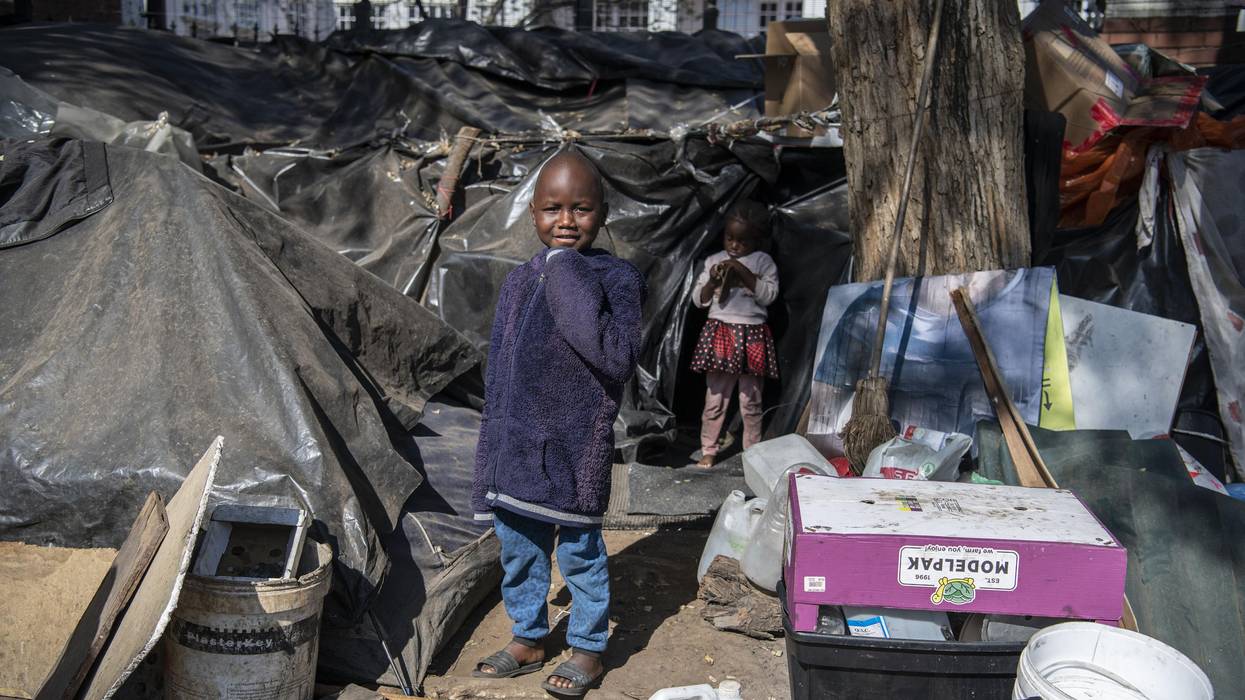
Most refugees do not want to leave their homes.
In my family's case, a volcano erupted just 8km (5 miles) away from the only house they ever knew. Black smoke rolled above Lake Kivu, filling our streets, choking us. Conflict from the civil war forced my family to flee again. We then sought safety in Uganda.
According to a recent United Nations report, the number of people forced to flee conflict, violence and persecution has now crossed a staggering milestone--more than 100 million. Of these refugees, nearly half are children.
My father described the Ugandan refugee camp as a boundless desert, with scant supplies and little water. Our family remained there for two and a half years on the brink of starvation. Yet, we persisted. We survived and by some miracle, were granted asylum in the United States.
To this day, the smell of rotisserie chicken draws me back to my first meal in the United States. I remember the plastic container, the warmth of the chicken creating condensation on the lid, juices seeping out of the moist meat, and the pattern of the hotel bedspread upon which my family of 10 sat in Salt Lake City, Utah--a world away from our beloved home in Africa.
This modest meal exemplified joy and possibility after such strife. Sitting together, enjoying this bounty, we did not have much other than the clothes on our backs, but we felt like the richest people in the world. Our wealth was not measured in monetary value. We were rich within our hearts because we were no longer afraid. We were no longer hungry. We were safe.
My family and I are the lucky ones. According to a recent United Nations report, the number of people forced to flee conflict, violence and persecution has now crossed a staggering milestone--more than 100 million. Of these refugees, nearly half are children.
Millions are exploited. Their journeys are often deadly and when they do arrive at a place of safety, they are denied access to basic rights such as education and healthcare.
The conflict in Ukraine has brought unfathomable heartbreak. But I would argue that it has also shown humanity at its best. More than 7.6 million people have fled Ukraine. People opened their homes and offered warm meals. Neighbouring countries have opened schools for Ukrainian children and are providing healthcare to families fleeing violence. The European Union offered temporary protection to migrants. Organisations like the Red Cross and Red Crescent have offered mental health support to help heal the invisible wounds of war. The response has been nothing short of incredible.
While Ukraine has dominated the headlines, I implore you to make this the moment where you open your hearts to the plight of refugees from around the world. My message to people, governments and world leaders is simple: please keep this spirit of generosity alive. Violence and conflict continue around the globe. Migrants from all over the world need your compassion.
Today, I am a sophomore at the University of Utah. I plan to go to law school and am committed to helping others. Migrant voices like mine need to be at the heart of the policy process in this country and on the global stage.
Last month, I visited the UN, where global leaders gathered to propose solutions to the complex problems of migration. While there, I had the opportunity to meet with Francesco Rocca, president of the International Federation of Red Cross and Red Crescent Societies (IFRC). He said, "Ethnicity and nationality should not become deciding factors in saving lives." I agree. Protecting people forced to flee their homes, no matter where they are from, is our shared responsibility.
I firmly believe that if you have the knowledge, it is within your power to help change the world. The solutions to the challenges of global migration are complex and varied but our response to the conflict in Ukraine demonstrates that we can work together to find tangible solutions at the local, regional and global levels to help those who need it most. We have more work to do to help migrants around the world but I know we can do it together. There are families still waiting to share their first meal together in a safe place. Let us help them do so.

The destruction of tens of thousands of square miles of Earth's tropical forests in 2021 underscores the challenge of fulfilling a pledge made by nations at last year's United Nations Climate Conference to halt deforestation by the end of the decade, a report published Thursday asserted.
"We have to dramatically reduce emissions from all sources."
According to the World Resources Institute's (WRI) Global Forest Review, the planet's tropical regions lost 11.1 million hectares, or 42,857 square miles, of primary old-growth forest in 2021, a total area roughly the size of the country of Bulgaria or the U.S. state of Virginia.
WRI senior fellow Frances Seymour told The Guardian that "such losses are a disaster for the climate. They're a disaster for biodiversity. They're a disaster for Indigenous peoples and local communities."
The WRI figure includes 3.75 million hectares of tropical primary rainforest loss--described by the report as "areas of critical importance for carbon storage and biodiversity"--or the equivalent of 10 soccer fields per minute. Last year's tropical primary forest loss resulted in the release of 2.5 billion tons of carbon dioxide, the equivalent of India's total annual fossil fuel emissions.
With more than 1.5 million hectares destroyed, Brazil lost the most tropical primary forest by far last year, followed by Congo (499,059 hectares), Bolivia (291,379 hectares), and Indonesia (202,905 hectares). In terms of percentage of tropical primary forest lost, Cambodia led the world with 1.5%, followed by Laos (1%) and Bolivia (0.7%).
The report also notes record losses of boreal forests, mainly in Russia, which suffered the worst wildfire season in recorded history.
In addition to fueling the climate emergency by releasing greenhouse gases into the atmosphere, deforestation degrades land, increases flooding, alters weather patterns, and harms biodiversity through habitat destruction.
According to the World Wildlife Fund, clearing trees for cattle grazing is by far the leading driver of deforestation, with scientists attributing 80% of Brazilian Amazon rainforest loss to the beef industry.
The report says the world has made little progress toward fulfilling a pledge by more than 140 countries attending COP26--last year's U.N. summit in Glasgow, Scotland--to "halt and reverse forest loss and land degradation by 2030," a goal that "will require a consistent decline in forest loss every year for the rest of the decade--a decline that is not yet happening in the tropics as a whole."
However, the publication does highlight some success stories. Primary forest loss has declined significantly in Indonesia and Malaysia, while countries including Gabon and Guyana have lost 1% or less of their primary forests over the past two decades.
The WRI report follows research published last month warning that the ability of the Amazon rainforest to recover from droughts and wildfires has been declining over the past two decades, driving the crucial ecosystem toward what authors called a "critical transformation" from forest to grassland, a shift that would have "profound" consequences.
"That would release enough carbon into the atmosphere to blow the Paris agreement goals right out of the water," said Seymour.
"We have to dramatically reduce emissions from all sources," she added. "No one should even think anymore about planting trees instead of reducing emissions from fossil fuels. It's got to be both and it's got to be now before it's too late."
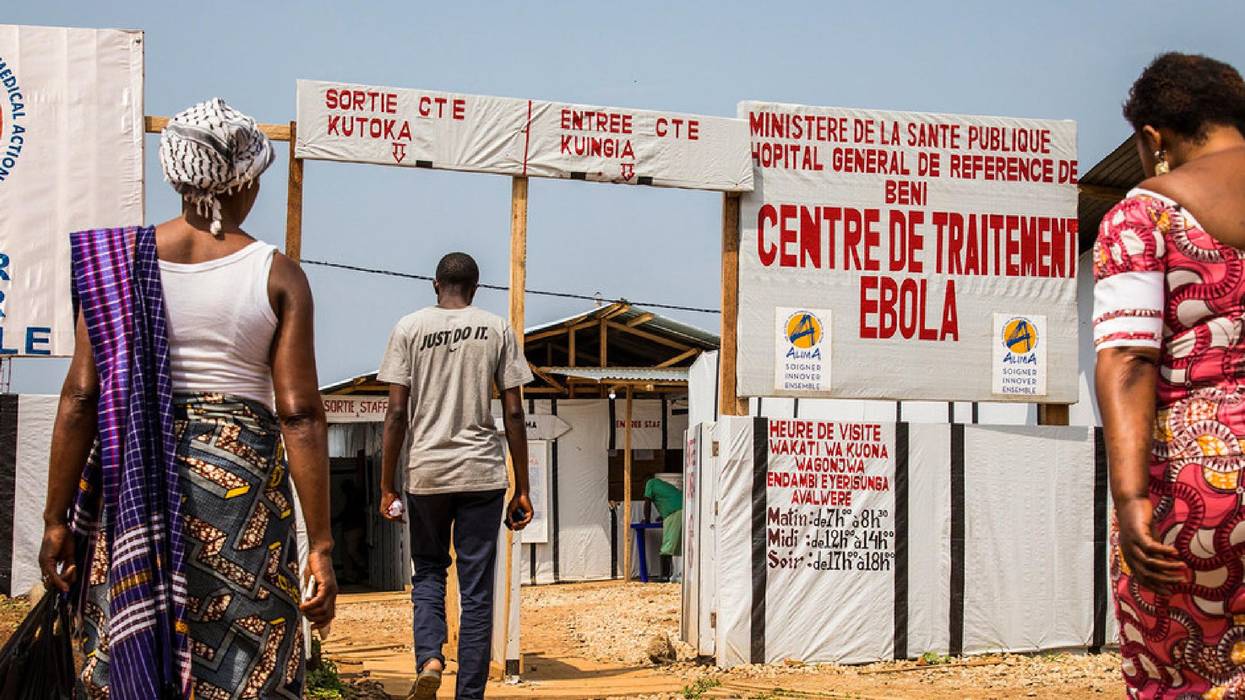
An investigation into sexual abuse related to United Nations efforts to contain the Ebola outbreak in Congo found over 80 alleged perpetrators, a quarter of whom were employed by the U.N.'s public health agency, according to a report released Tuesday.
The findings come from a panel commissioned by the World Health Organization (WHO) in response to media reports about abuse claims during the 2018-2020 mission in the African country.
"This is the biggest finding of sexual abuse perpetrated during a single U.N. initiative in one area or one country during the time-bound period of a U.N. response effort," Paula Donovan, co-director of the Code Blue Campaign, which works to end sexual exploitation by U.N. peacekeepers, told the Associated Press. The AP previously reported on some allegations.
According to the panel:
The review team was able to obtain the identity of 83 alleged perpetrators. In 21 cases, the review team was able to establish with certainty that the alleged perpetrators were WHO employees during the response... The alleged perpetrators include both Congolese nationals and foreigners. The majority of the alleged perpetrators were Congolese staff hired on a temporary basis who took advantage of their apparent authority to obtain sexual favors.
Investigators documented nine allegations of rape. The youngest victim was believed to be only 13 years old. Some survivors reported that no protection was used. Six said they experienced miscarriages. Others shared accounts of alleged abusers coercing them into having an abortion.
Allegations of sexual abuse, exploitation, and harassment "were made against WHO doctors, consultants, and senior staff, some national and some international, as well as other medical staff who were deployed by the Ministry of Health and others," the report says.
The report notes allegations were also made against staff in the immunization and risk communication team, people working in human resources, drivers, and security staff. It adds that despite detailed accounts from victims, "the majority of alleged and identified perpetrators have simply denied the facts, even in the presence of corroborating evidence, when they have not simply taken refuge behind the argument of a 'consensual relationship.'"
Sophie Harman, a professor of international politics at Queen Mary University of London, warned that the panel's revelations may be just the beginning, telling the AP that "more cases are bound to come forward across the world."
Harman also called for a shift to focus on helping survivors, which she said requires not only prosecution of perpetrators but also "full accountability on the part of WHO leadership who knew about the rumors and reports, and yet took years to act on this issue."
WHO Director-General Tedros Adhanom Ghebreyesus addressed the findings during a Tuesday press conference to unveil the report, which he said "makes for harrowing reading."
"The first thing I want to say is to the victims and survivors of the sexual exploitation and abuse described in the commission's report," Tedros said. "I'm sorry. I'm sorry for what was done to you by people who were employed by WHO to serve and protect you."
"I'm sorry for the ongoing suffering that these events must cause," he continued. "I'm sorry that you have had to relive them in talking to the commission about your experiences. Thank you for your courage in doing so. What happened to you should never happen to anyone. It is inexcusable."
Tedros said that "as the director-general, I take ultimate responsibility for the behavior of the people we employ, and for any failings in our systems that allowed this behavior," adding that "it is my top priority to ensure that the perpetrators are not excused, but are held to account."
The agency leader pledged that the WHO will take steps to support, protect, and ensure justice for the survivors; address management and staff failures; and reform structures and culture.
Some of those actions include banning identified perpetrators from future employment with the WHO, as well as notifying the broader U.N. system; terminating the contracts of four people identified as perpetrators who were still employed by the agency; and referring allegations of rape to authorities in Congo and, if applicable, the alleged perpetrators' countries.
The conduct described in the report "is a sickening betrayal of the people we serve," said Tedros. "But it's also a betrayal of our colleagues who put themselves in harm's way to serve others, including those who paid the ultimate price, killed by armed groups in North Kivu, while working to protect the health of vulnerable communities from Ebola."
Thanking the commission as well as journalists who previously reported on the abuse, he added that "this is a dark day for WHO--but by shining a light on the failures of individuals and the organization, we hope that the victims feel that their voices have been heard and acted on."
The National Sexual Assault Online Hotline is 1-800-656-HOPE (4673) and a live chat service is available at www.rainn.org. Both offer 24/7, free, and confidential support.

Thanks to its very name--renewable energy--we can picture a time in the not-too-distant future when our need for non-renewable fuels like oil, natural gas, and coal will vanish. Indeed, the Biden administration has announced a breakthrough target of 2035 for fully eliminating U.S. reliance on those non-renewable fuels for the generation of electricity. That would be accomplished by "deploying carbon-pollution-free electricity-generating resources," primarily the everlasting power of the wind and sun.
With other nations moving in a similar direction, it's tempting to conclude that the days when competition over finite supplies of energy was a recurring source of conflict will soon draw to a close. Unfortunately, think again: while the sun and wind are indeed infinitely renewable, the materials needed to convert those resources into electricity--minerals like cobalt, copper, lithium, nickel, and the rare-earth elements, or REEs--are anything but. Some of them, in fact, are far scarcer than petroleum, suggesting that global strife over vital resources may not, in fact, disappear in the Age of Renewables.
To appreciate this unexpected paradox, it's necessary to explore how wind and solar power are converted into usable forms of electricity and propulsion. Solar power is largely collected by photovoltaic cells, often deployed in vast arrays, while the wind is harvested by giant turbines, typically deployed in extensive wind farms. To use electricity in transportation, cars and trucks must be equipped with advanced batteries capable of holding a charge over long distances. Each one of these devices uses substantial amounts of copper for electrical transmission, as well as a variety of other non-renewable minerals. Those wind turbines, for instance, require manganese, molybdenum, nickel, zinc, and rare-earth elements for their electrical generators, while electric vehicles (EVs) need cobalt, graphite, lithium, manganese, and rare earths for their engines and batteries.
For a number of the most critical materials, including lithium, cobalt, and those rare-earth elements, production is highly concentrated in just a few countries, a reality that could lead to the sort of geopolitical struggles that accompanied the world's dependence on a few major sources of oil.
At present, with wind and solar power accounting for only about 7% of global electricity generation and electric vehicles making up less than 1% of the cars on the road, the production of those minerals is roughly adequate to meet global demand. If, however, the U.S. and other countries really do move toward a green-energy future of the kind envisioned by President Biden, the demand for them will skyrocket and global output will fall far short of anticipated needs.
According to a recent study by the International Energy Agency (IEA), "The Role of Critical Minerals in Clean Energy Transitions," the demand for lithium in 2040 could be 50 times greater than today and for cobalt and graphite 30 times greater if the world moves swiftly to replace oil-driven vehicles with EVs. Such rising demand will, of course, incentivize industry to develop new supplies of such minerals, but potential sources of them are limited and the process of bringing them online will be costly and complicated. In other words, the world could face significant shortages of critical materials. ("As clean energy transitions accelerate globally," the IEA report noted ominously, "and solar panels, wind turbines, and electric cars are deployed on a growing scale, these rapidly growing markets for key minerals could be subject to price volatility, geopolitical influence, and even disruptions to supply.")
And here's a further complication: for a number of the most critical materials, including lithium, cobalt, and those rare-earth elements, production is highly concentrated in just a few countries, a reality that could lead to the sort of geopolitical struggles that accompanied the world's dependence on a few major sources of oil. According to the IEA, just one country, the Democratic Republic of the Congo (DRC), currently supplies more than 80% of the world's cobalt, and another--China--70% of its rare-earth elements. Similarly, lithium production is largely in two countries, Argentina and Chile, which jointly account for nearly 80% of world supply, while four countries--Argentina, Chile, the DRC, and Peru--provide most of our copper. In other words, such future supplies are far more concentrated in far fewer lands than petroleum and natural gas, leading IEA analysts to worry about future struggles over the world's access to them.
From Oil to Lithium: the Geopolitical Implications of the Electric-Car Revolution
The role of petroleum in shaping global geopolitics is well understood. Ever since oil became essential to world transportation--and so to the effective functioning of the world's economy--it has been viewed for obvious reasons as a "strategic" resource. Because the largest concentrations of petroleum were located in the Middle East, an area historically far removed from the principal centers of industrial activity in Europe and North America and regularly subject to political convulsions, the major importing nations long sought to exercise some control over that region's oil production and export. This, of course, led to resource imperialism of a high order, beginning after World War I when Britain and the other European powers contended for colonial control of the oil-producing parts of the Persian Gulf region. It continued after World War II, when the United States entered that competition in a big way.
For the United States, ensuring access to Middle Eastern oil became a strategic priority after the "oil shocks" of 1973 and 1979--the first caused by an Arab oil embargo that was a reprisal for Washington's support of Israel in that year's October War; the second by a disruption of supplies caused by the Islamic Revolution in Iran. In response to endless lines at American gas stations and the subsequent recessions, successive presidents pledged to protect oil imports by "any means necessary," including the use of armed force. And that very stance led President George H.W. Bush to wage the first Gulf War against Saddam Hussein's Iraq in 1991 and his son to invade that same country in 2003.
In 2021, the United States is no longer as dependent on Middle Eastern oil, given how extensively domestic deposits of petroleum-laden shale and other sedimentary rocks are being exploited by fracking technology. Still, the connection between oil use and geopolitical conflict has hardly disappeared. Most analysts believe that petroleum will continue to supply a major share of global energy for decades to come, and that's certain to generate political and military struggles over the remaining supplies. Already, for instance, conflict has broken out over disputed offshore supplies in the South and East China Seas, and some analysts predict a struggle for the control of untapped oil and mineral deposits in the Arctic region as well.
Here, then, is the question of the hour: Will an explosion in electric-car ownership change all this? EV market share is already growing rapidly and projected to reach 15% of worldwide sales by 2030. The major automakers are investing heavily in such vehicles, anticipating a surge in demand. There were around 370 EV models available for sale worldwide in 2020--a 40% increase from 2019--and major automakers have revealed plans to make an additional 450 models available by 2022. In addition, General Motors has announced its intention to completely phase out conventional gasoline and diesel vehicles by 2035, while Volvo's CEO has indicated that the company would only sell EVs by 2030.
It's reasonable to assume that this shift will only gain momentum, with profound consequences for the global trade in resources. According to the IEA, a typical electric car requires six times the mineral inputs of a conventional oil-powered vehicle. These include the copper for electrical wiring plus the cobalt, graphite, lithium, and nickel needed to ensure battery performance, longevity, and energy density (the energy output per unit of weight). In addition, rare-earth elements will be essential for the permanent magnets installed in EV motors.
Lithium, a primary component of lithium-ion batteries used in most EVs, is the lightest known metal. Although present both in clay deposits and ore composites, it's rarely found in easily mineable concentrations, though it can also be extracted from brine in areas like Bolivia's Salar de Uyuni, the world's largest salt flat. At present, approximately 58% of the world's lithium comes from Australia, another 20% from Chile, 11% from China, 6% from Argentina, and smaller percentages from elsewhere. A U.S. firm, Lithium Americas, is about to undertake the extraction of significant amounts of lithium from a clay deposit in northern Nevada, but is meeting resistance from local ranchers and Native Americans, who fear the contamination of their water supplies.
Cobalt is another key component of lithium-ion batteries. It's rarely found in unique deposits and most often acquired as a byproduct of copper and nickel mining. Today, it's almost entirely produced thanks to copper mining in the violent, chaotic Democratic Republic of the Congo, mostly in what's known as the copper belt of Katanga Province, a region which once sought to break away from the rest of the country and still harbors secessionist impulses.
Rare-earth elements encompass a group of 17 metallic substances scattered across the Earth's surface but rarely found in mineable concentrations. Among them, several are essential for future green-energy solutions, including dysprosium, lanthanum, neodymium, and terbium. When used as alloys with other minerals, they help perpetuate the magnetization of electrical motors under high-temperature conditions, a key requirement for electric vehicles and wind turbines. At present, approximately 70% of REEs come from China, perhaps 12% from Australia, and 8% from the U.S.
A mere glance at the location of such concentrations suggests that the green-energy transition envisioned by President Biden and other world leaders may encounter severe geopolitical problems, not unlike those generated in the past by reliance on oil. As a start, the most militarily powerful nation on the planet, the United States, can supply itself with only tiny percentages of REEs, as well as other critical minerals like nickel and zinc needed for advanced green technologies. While Australia, a close ally, will undoubtedly be an important supplier of some of them, China, already increasingly viewed as an adversary, is crucial when it comes to REEs, and the Congo, one of the most conflict-plagued nations on the planet, is the leading producer of cobalt. So don't for a second imagine that the transition to a renewable-energy future will either be easy or conflict-free.
The Crunch to Come
Faced with the prospect of inadequate or hard-to-access supplies of such critical materials, energy strategists are already calling for major efforts to develop new sources in as many locations as possible. "Today's supply and investment plans for many critical minerals fall well short of what is needed to support an accelerated deployment of solar panels, wind turbines and electric vehicles," said Fatih Birol, executive director of the International Energy Agency. "These hazards are real, but they are surmountable. The response from policymakers and companies will determine whether critical minerals remain a vital enabler for clean energy transitions or become a bottleneck in the process."
To put the matter simply, there is no way the United States or other countries can undertake a massive transition from fossil fuels to a renewables-based economy without engaging economically with China.
As Birol and his associates at the IEA have made all too clear, however, surmounting the obstacles to increased mineral production will be anything but easy. To begin with, launching new mining ventures can be extraordinarily expensive and entail numerous risks. Mining firms may be willing to invest billions of dollars in a country like Australia, where the legal framework is welcoming and where they can expect protection against future expropriation or war, but many promising ore sources lie in countries like the DRC, Myanmar, Peru, and Russia where such conditions hardly apply. For example, the current turmoil in Myanmar, a major producer of certain rare-earth elements, has already led to worries about their future availability and sparked a rise in prices.
Declining ore quality is also a concern. When it comes to mineral sites, this planet has been thoroughly scavenged for them, sometimes since the early Bronze Age, and many of the best deposits have long since been discovered and exploited. "In recent years, ore quality has continued to fall across a range of commodities," the IEA noted in its report on critical minerals and green technology. "For example, the average copper ore grade in Chile declined by 30% over the past 15 years. Extracting metal content from lower-grade ores requires more energy, exerting upward pressure on production costs, greenhouse gas emissions, and waste volumes."
In addition, extracting minerals from underground rock formations often entails the use of acids and other toxic substances and typically requires vast amounts of water, which are contaminated after use. This has become ever more of a problem since the enactment of environmental-protection legislation and the mobilization of local communities. In many parts of the world, as in Nevada when it comes to lithium, new mining and ore-processing efforts are going to encounter increasingly fierce local opposition. When, for example, the Lynas Corporation, an Australian firm, sought to evade Australia's environmental laws by shipping ores from its Mount Weld rare-earths mine to Malaysia for processing, local activists there mounted a protracted campaign to prevent it from doing so.
For Washington, perhaps no problem is more challenging, when it comes to the availability of critical materials for a green revolution, than this country's deteriorating relationship with Beijing. After all, China currently provides 70% of the world's rare-earth supplies and harbors significant deposits of other key minerals as well. No less significant, that country is responsible for the refining and processing of many key materials mined elsewhere. In fact, when it comes to mineral processing, the figures are astonishing. China may not produce significant amounts of cobalt or nickel, but it does account for approximately 65% of the world's processed cobalt and 35% of its processed nickel. And while China produces 11% of the world's lithium, it's responsible for nearly 60% of processed lithium. When it comes to rare-earth elements, however, China is dominant in a staggering way. Not only does it provide 60% of the world's raw materials, but nearly 90% of processed REEs.
To put the matter simply, there is no way the United States or other countries can undertake a massive transition from fossil fuels to a renewables-based economy without engaging economically with China. Undoubtedly, efforts will be made to reduce the degree of that reliance, but there's no realistic prospect of eliminating dependence on China for rare earths, lithium, and other key materials in the foreseeable future. If, in other words, the U.S. were to move from a modestly Cold-War-like stance toward Beijing to an even more hostile one, and if it were to engage in further Trumpian-style attempts to "decouple" its economy from that of the People's Republic, as advocated by many "China hawks" in Congress, there's no question about it: the Biden administration would have to abandon its plans for a green-energy future.
It's possible, of course, to imagine a future in which nations begin fighting over the world's supplies of critical minerals, just as they once fought over oil. At the same time, it's perfectly possible to conceive of a world in which countries like ours simply abandoned their plans for a green-energy future for lack of adequate raw materials and reverted to the oil wars of the past. On an already overheating planet, however, that would lead to a civilizational fate worse than death.
In truth, there's little choice but for Washington and Beijing to collaborate with each other and so many other countries in accelerating the green energy transition by establishing new mines and processing facilities for critical minerals, developing substitutes for materials in short supply, improving mining techniques to reduce environmental hazards, and dramatically increasing the recycling of vital minerals from discarded batteries and other products. Any alternative is guaranteed to prove a disaster of the first order--or beyond.

The convergence of socio-environmental "disasters, economic shocks, and public health crises, all compounded by the Covid-19 pandemic," has magnified the risks of famine, "endangering the lives of millions" of people living in Yemen, South Sudan, northeast Nigeria, and the Democratic Republic of the Congo, the United Nations' top humanitarian official warned in a statement obtained by the New York Times over the weekend.
"It is critical we come together as one united global community to defeat this disease, and protect the most vulnerable nations and communities from its potentially devastating effects."
David Beasley, World Food Program
In a letter to members of the U.N. Security Council, Mark Lowcock, under-secretary general for humanitarian affairs and emergency relief coordinator, warned of the looming intensification of malnutrition, starvation, and death in all four areas--encompassing some of the world's most destitute regions, each one further hampered by years of armed conflicts that diminish the ability of humanitarian relief workers to safely distribute aid.
Lowcock's recent letter, which has not yet been made public, fulfills a requirement of a 2018 Security Council resolution to report "the risk of conflict-induced famine and widespread food insecurity"--but in many ways, the impending arrival of what the Times called "the first famines of the coronavirus era" is a catastrophe foretold.
In April, David Beasley, executive director of the U.N. World Food Program (WFP), explained that while the world was confronting the Covid-19 pandemic, "we are also on the brink of a hunger pandemic."
Beasley stressed that "we are not only facing a global health pandemic but also a global humanitarian catastrophe. Millions of civilians living in conflict-scarred nations, including many women and children, face being pushed to the brink of starvation, with the specter of famine a very real and dangerous possibility."
The WFP leader estimated that, due to coronavirus, the number of people on the brink of starvation could nearly double from 135 million to 265 million people by the end of 2020. He warned of a worst-case scenario in which "about three dozen countries" could be contending with famine and pointed out that in 10 countries, there are already "more than one million people per country who are on the verge of starvation."
"There are no famines yet," Beasley said. "But I must warn you that if we don't prepare and act now--to secure access, avoid funding shortfalls and disruptions to trade--we could be facing multiple famines of biblical proportions within a short few months," particularly in countries in Africa as well as the Middle East where many communities were already vulnerable to hunger prior to the pandemic due to a combination of factors such as poverty, armed conflict, and climate change.
Reflecting the conclusions reached in the U.N.'s "Policy Brief on Covid-19 in an Urban World," Ken Crossley, head of cash assistance at the WFP, recommended bolstering cash transfers to support millions of slum-dwellers whose livelihoods were upended by pandemic-induced lockdowns and whose incomes--and with it, capacity to send remittances to family members--have decreased while the risks of acute food insecurity have increased.
The Times characterized the recent letter to the Security Council, wherein Lowcock described how "a lack of funding for emergency relief and the complications created by the coronavirus scourge have now pushed some of the world's neediest populations closer to famine conditions," as an escalation of the WFP warning issued by Beasley in April.
The grim numbers conveyed by U.N. officials and others suggest that not nearly enough has been done between spring and fall to prevent a global humanitarian catastrophe from unfolding.
In Yemen--the poorest country in the Arab region and "ravaged for more than five years by a civil war between Houthi rebels and a Saudi-backed military coalition"--roughly 80% of the country is "dependent on outside aid," the Times reported.
On social media, journalist Sarah Lazare took issue with the Times' omission of U.S. support for Saudi Arabia, which she argued "has been using starvation as a weapon of war."
The International Committee of the Red Cross warned that "two thirds of people in Yemen have almost nothing to eat. That's over 20 million people."
On Twitter, Beasley shared a WFP video explaining why so many Yemenis are reliant on "food assistance to survive," adding that "we cannot let them face this alone."
In the eastern part of the Democratic Republic of Congo, where decades-long conflicts have been exacerbated this year, 21 million people are suffering from "crisis or worse levels of food insecurity," noted the Times. Prisoners in the country are reportedly already dying from hunger.
"More than 10 million people--four of five--now require humanitarian assistance and protection" in northeast Nigeria, the Times added. In his letter to the Security Council, Lowcock said more than 1.2 million in the region "remain largely inaccessible to aid agencies due to conflict and deliberate obstruction by nonstate armed groups."
A recent increase in violence, followed by destructive flash floods, in civil war-torn South Sudan has left more than 1.4 million people to endure "crisis or worse levels of food insecurity," the newspaper continued.
The catastrophic problem is not limited to the areas highlighted in the recent letter. For example, the UN Children's Fund revealed Tuesday that in Burkina Faso, more than 535,000 children under the age of five are contending with acute malnutrition.
Ahead of that revelation, Lazare said Saturday, "I'm really worried about the overlap between countries the U.N. says will be first hit by coronavirus era famines and countries that are already being hit hit hardest by climate crisis."
"The way the U.S. is responding to these impending famines--utter callousness, making things worse, hyper-nationalism--is an indicator," Lazare added, "of how the U.S. will respond to the far greater climate crisis to come, unless things change dramatically."
In April, Beasley argued, "It is critical we come together as one united global community to defeat this disease, and protect the most vulnerable nations and communities from its potentially devastating effects."
He echoed that sentiment in September, saying, "We must act together, or fall together."
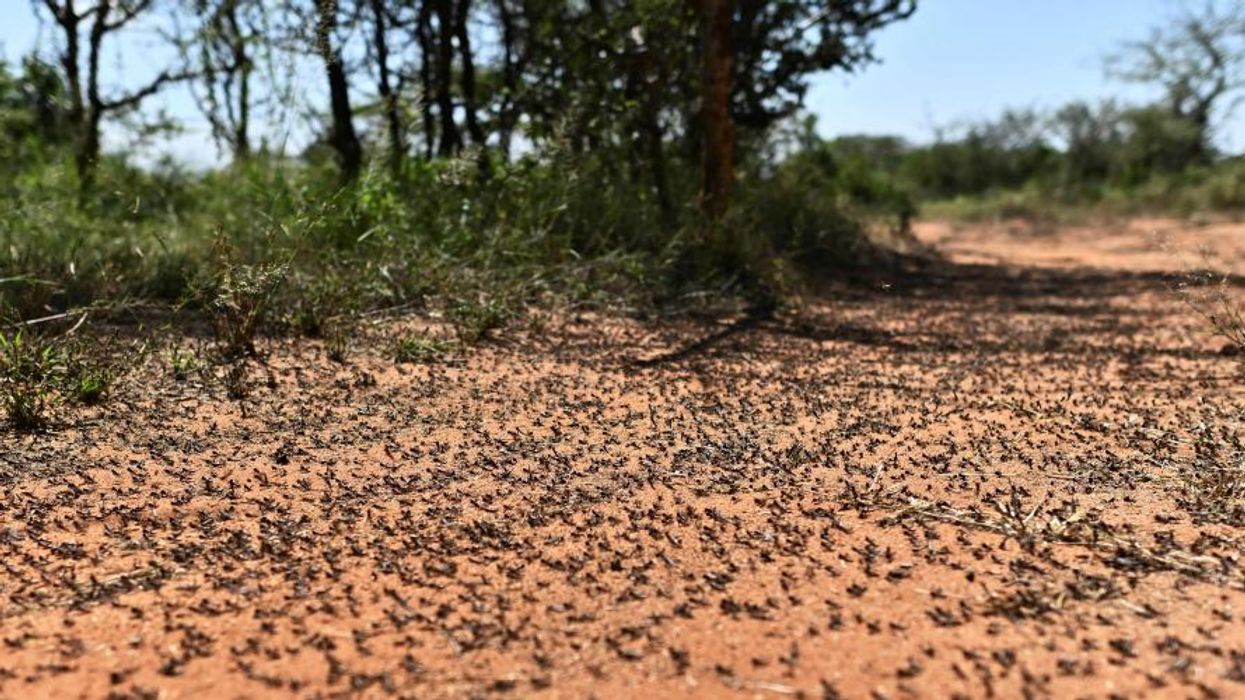
While much of the world focuses on the coronavirus pandemic that has infected over 1.6 million people across the globe, East Africa is battling the worst invasion of desert locusts in decades--a monthslong "scourge of biblical proportions" that experts warn could get worse with a larger second wave already arriving in parts of the region.
The Food and Agriculture Organization (FAO) of the United Nations, which is shepherding the global response to the region's locust crisis, "estimates that locust numbers could grow another 20 times during the upcoming rainy season unless control activities are stepped up," U.N. News reported Thursday.
A Wednesday update from FAO's Locust Watch service warned:
The current situation in East Africa remains extremely alarming as hopper bands and an increasing number of new swarms form in northern and central Kenya, southern Ethiopia, and Somalia. This represents an unprecedented threat to food security and livelihoods because it coincides with the beginning of the long rains and the planting season. Although ground and aerial control operations are in progress, widespread rains that fell in late March will allow the new swarms to mostly remain, mature and lay eggs while a few swarms could move from Kenya to Uganda, South Sudan and Ethiopia. During May, the eggs will hatch into hopper bands that will form new swarms in late June and July, which coincides with the start of the harvest.
The massive swarms, as Common Dreams has reported, are partly fueled by the climate crisis and have affected Djibouti, the Democratic Republic of Congo, Eritrea, Kenya, Ethiopia, Somalia, South Sudan, Tanzania, and Uganda. The pests have also been spotted in Yemen, Saudi Arabia, Qatar, Bahrain, Kuwait, Iran, Pakistan, and India.
The main method of battling locust swarms--which each can devour enough food to feed 35,000 people in a day--is the spraying of pesticides. Concerns are mounting that locust eradication efforts in the region will be increasingly hampered by pandemic-related travel restrictions and supplies problems.
"Suppliers of motorized sprayers and pesticides are facing major challenges with limited airfreight options to facilitate delivery," Cyril Ferrand, FAO's resilience team leader for East Africa, told EARTHER on March 30. "Purchased orders were placed [a] few weeks ago and pesticides expected last week in Kenya have been delayed by 10 days."
Ferrand said in a statement Thursday that "there is no significant slowdown" in efforts to stop the swarms across the region so far "because all the affected countries working with FAO consider desert locusts a national priority."
"While lockdown is becoming a reality, people engaged in the fight against the upsurge are still allowed to conduct surveillance, and air and ground control operations," he said. "The biggest challenge we are facing at the moment is the supply of pesticides and we have delays because global air freight has been reduced significantly."
"Our absolute priority is to prevent a breakdown in pesticide stocks in each country," Ferrand added. "That would be dramatic for rural populations whose livelihoods and food security depend on the success of our control campaign."
FAO has secured about $111.1 million of the $153.2 million it has requested to tackle the locust crisis and is supporting surveillance and pesticide application in 10 nations.
The U.N. agency continues to raise concerns about how locusts could impact the collective 20 million people already enduring food insecurity in Ethiopia, Kenya, Somalia, South Sudan, Uganda, and Tanzania--as well as an additional 15 million people in war-torn Yemen.
This is the worst locust invasion that Kenya has seen in 70 years. Quartz Africa reported Friday on current conditions in the country, where hoppers have been maturing into adults over the past month after hatching in February and early March:
These swarms are still immature, and take up to four weeks before they are ready to lay eggs. Kenya is more than halfway through this maturation cycle, and the new generation of locust swarms are expected to begin laying eggs within the week.
In Kenya, the locust maturation is coinciding with the onset of the rainy season. Farmers have been sowing crops of maize, beans, sorghum, barley, and millet during March and April, in hopes that a favorable rainy season will allow for abundant growth during late April and May. With the locust swarms gaining size and strength, experts fear that up to 100% of farmers' budding crops could be consumed, leaving some communities with nothing to harvest.
"The concern at the moment is that the desert locust will eat under-emerging plants," Ferrand told Quartz. "This very soft, green material, biomass leaves, rangeland, is, of course, the favorite food for the desert locusts."
As for the coronavirus pandemic that first emerged in China late last year, Africa has reported 562 deaths and nearly 11,000 COVID-19 cases, according to Al Jazeera, which are relatively low figures compared with other affected regions. However, the U.N.'s World Health Organization (WHO) is warning that some African nations could see a significant spike in cases in the coming weeks.
"During the last four days, we can see that the numbers have already doubled," Michel Yao, the WHO Africa program manager for emergency response, said Thursday. "If the trend continues, and also learning from what happened in China and in Europe, some countries may face a huge peak very soon."
As Ferrand said in his March conversation with EARTHER: "How do we respond to the needs of the European countries and North American countries as well as the humanitarian and development assistance that is still so necessary in the continent of Africa? ...This is the challenge that we will have to face in 2020."
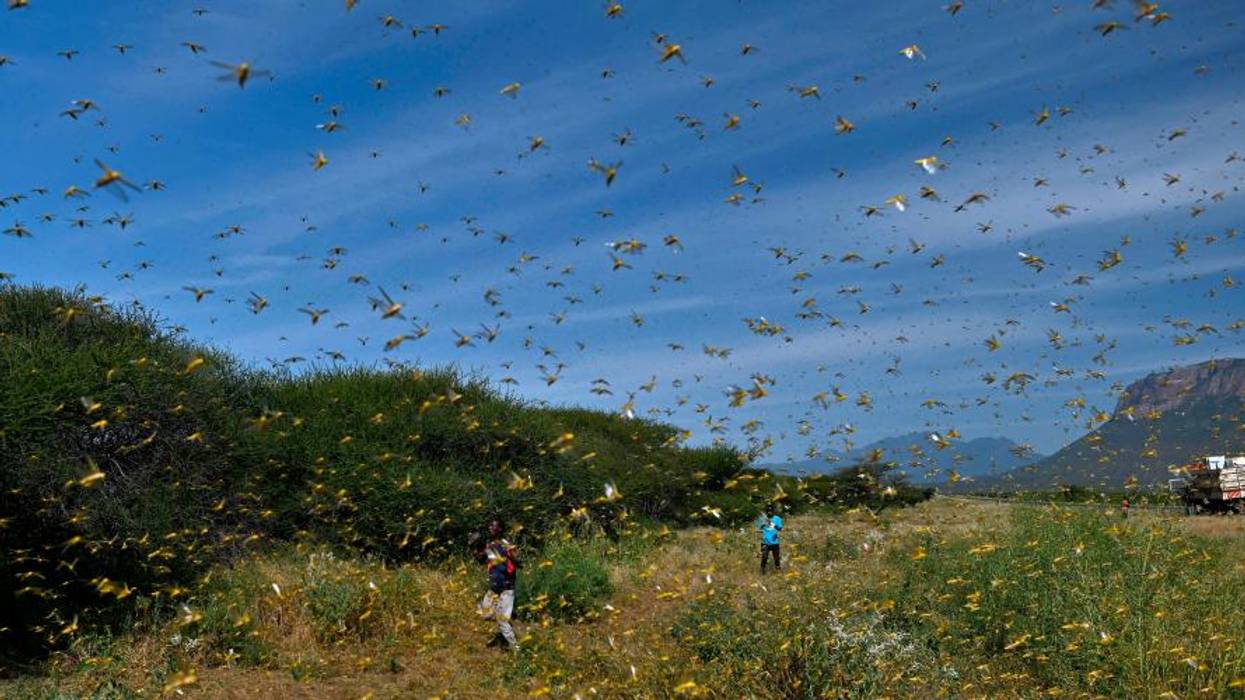
Top United Nations relief officials warned Tuesday that millions more in funding is needed to combat East Africa's worst outbreak of desert locusts in decades, arguing that "acting now to avert a food crisis is a more humane, effective, and cost efficient approach than responding to the aftermath of disaster."
"The locust upsurge affecting East Africa is a graphic and shocking reminder of this region's vulnerability."
--U.N. relief leaders
The call for international action came in a joint statement from Qu Dongyu, director-general of the Food and Agriculture Organization (FAO); Mark Lowcock, U.N. undersecretary-general for humanitarian affairs and emergency relief coordinator; and David Beasley, executive director of the World Food Program (WFP).
The U.N. leaders are especially concerned about the impact on East Africa, which they noted is "a region beset by climate- and conflict-related shocks. Millions of people are already acutely food insecure. Now they face another major hunger threat in the form of desert locusts."
"The locust upsurge affecting East Africa is a graphic and shocking reminder of this region's vulnerability," they said. "This is a scourge of biblical proportions. Yet as ancient as this scourge is, its scale today is unprecedented in modern times."
The swarms--at least partly fueled by the climate crisis--have affected Djibouti, the Democratic Republic of Congo, Eritrea, Kenya, Ethiopia, Somalia, South Sudan, Tanzania, and Uganda. Beyond the African continent, locusts have also been spotted in Yemen, Saudi Arabia, Qatar, Bahrain, Kuwait, Iran, Pakistan, and India.
While the FAO requested $76 million in funding for the crisis last month, only $33 million has been received or committed. According to the trio of U.N. officials, "As the locusts continue their invasion throughout eastern Africa, and more details emerge about the scale of need in affected areas, the cost of action has already doubled, to $138 million."
"We need to do more. WFP has estimated the cost of responding to the impact of locusts on food security alone to be at least 15 times higher than the cost of preventing the spread now," the statement said. "It is time for the international community to act more decisively. The math is clear, as is our moral obligation. Pay a little now, or pay a lot more later."
Crystal Wells, Africa spokesperson for the International Committee of the Red Cross, told The Lancet last week that "the locusts are coming on the heels of what has been a very tumultuous year for East Africa. Last year, the region swung between conditions that were either too hot and dry, or too wet."
"At the same time, people in Somalia and parts of Ethiopia continued to suffer from violence," Wells added. "In real terms, this means that thousands of people who are already on the run from clashes were uprooted once again by droughts and floods--and today risk losing whatever is left to locusts. There is only so much people can withstand."
Desert locusts have a reproduction cycle of about three months, and mature swarms are currently laying eggs across the Horn of Africa. The Lancet pointed out that "rains starting in March and April are expected to boost the breeding and spread of locusts."
With $138 million funding, the U.N. agencies hope to both provide relief to communities where crops have already been devoured by locusts and prevent new swarms from emerging. According to the FAO, a swarm contains as many as 150 million desert locusts per square kilometer (0.39 square miles) and can consume the same amount of food per day as 35,000 people.
BBC News reported Wednesday on the difficulties of addressing the crisis in the hardest hit countries:
The FAO has told us that in three of the worst affected countries, Kenya, Ethiopia, and Somalia, they estimate that at least 100,000 hectares in each one needs to be sprayed with insecticide.
By the end of January, they were substantially short of this target in those countries in East Africa.
- Ethiopia 22,550 hectares
- Kenya 20,000 hectares (estimated)
- Somalia 15,000 hectares (estimated)
Given that the aerial spraying of pesticides is the primary method of battling locust swarms, "vehicles, planes, personal safety equipment, radios, GPS units, and camping equipment are badly needed" to help contain the current outbreak, BBC reported.
Stephen Njoka, head of the Desert Locust Control Organization for Eastern Africa, the regional body coordinating the fight against the locusts, told BBC: "We have a challenge in the number of aircraft available--there are not enough. Pesticides are also in short supply."