

SUBSCRIBE TO OUR FREE NEWSLETTER
Daily news & progressive opinion—funded by the people, not the corporations—delivered straight to your inbox.
5
#000000
#FFFFFF
To donate by check, phone, or other method, see our More Ways to Give page.
Daily news & progressive opinion—funded by the people, not the corporations—delivered straight to your inbox.
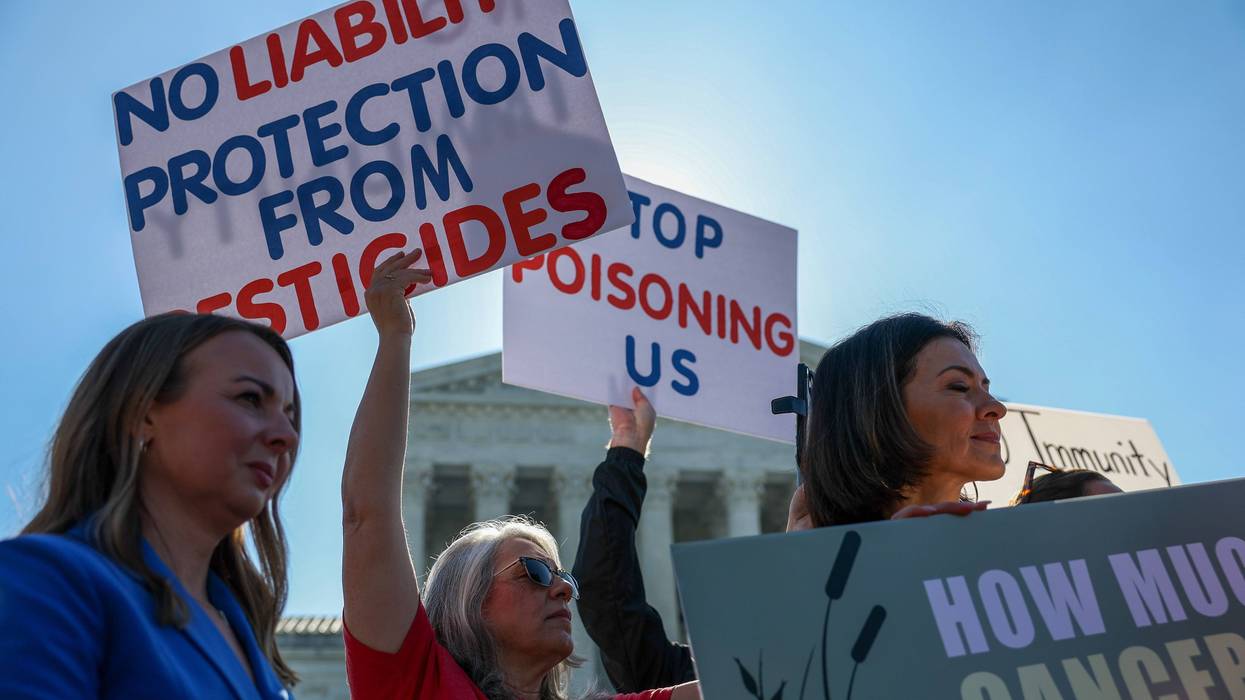
In a time with few points of consensus on the left and right, most Americans—a whopping 84% of adults—are worried about their exposure to harmful chemicals. Let's build on that for a safer country.
The Supreme Court recently ruled 7-2 that Monsanto, now owned by Bayer, could not be sued because the label of its product, the weed killer Roundup, didn’t mention that the herbicide could cause cancer. The ruling blocked thousands of lawsuits by cancer patients—protecting Bayer-Monsanto from liability for health consequences of exposure to agricultural chemicals—and led to headlines like “MAHA Rattled” and “MAHA Be Damned.”
After the Supreme Court decision and the Trump administration’s approval of two more “forever chemical” pesticides last month, it seems like the Make America Healthy Again agenda is being dropped. Despite what some on the left may think, this is not cause for celebration.
In a time with few points of consensus on the left and right, most Americans—a whopping 84% of adults—are worried about their exposure to harmful chemicals. Nearly as many want the government to do more to identify and regulate harmful chemicals. Regulating Roundup and other pesticides can bring together a new coalition of people across political lines. The left needs to be open to forming new alliances with people we don’t agree with on everything, including MAHA.
Reforming laws so that chemical manufacturers have to accept liability when their products cause harm is one space for bipartisan work. Most Americans don’t want companies like Monsanto-Bayer to be protected from lawsuits when they manufacture hazardous products that result in illnesses. Yet the Supreme Court’s decision does just that: It protects pesticide makers from bearing any consequences when people use their products, unaware of possible dangers of doing so, and later develop illnesses connected to pesticide use, like cancer.
Partnering on one topic while disagreeing on others is part of what politics is about.
Tobacco companies can be sued for the harms of lung cancer and addiction, an achievement after decades when companies were shielded from lawsuits. Pesticide companies should similarly be liable for the harms they knowingly create.
Corporate accountability should be something everyone can agree on. There are already moves toward collaboration in response to the Supreme Court decision. This spring, Democrats joined House Republicans Anna Paulina Luna (Fla.) and Thomas Massie (Ky.) in their push against pesticide liability shields. Then in June, two members of Congress from different political parties—Massie and Democrat Rep. Chellie Pingree (Maine)—proposed the People Over Poison Act, which restores the ability of consumers to hold pesticide makers accountable when they don’t warn us about the harms associated with their products, effectively undoing the Supreme Court decision.
Another possibility for collaboration is how chemicals like Roundup are assessed by the Environmental Protection Agency. When the EPA regulates pesticides, the approach requires scientific proof of harm in order to restrict a particular chemical. But we should shift the burden of proof onto chemical companies, as they do in Europe, by asking, “Has this chemical been proven safe?” instead of “has this chemical been proven harmful?”
In the EU, chemicals are regulated according to this approach, also known as the precautionary principle. Perhaps that explains why the US currently allows the use of 72 pesticides and herbicides banned in Europe (more than a quarter of all US pesticide use). A recent Newsweek poll found 89% of Americans (including 87% of Republicans) in favor of a ban on pesticides already banned in Europe. If Bayer-Monsanto wants to keep selling Roundup, they should have to meet this stronger burden of proof.
Those who want to limit Roundup face an uphill battle. Even in the EU, Glyphosate is licensed for use until 2033, and recent reporting shows how powerful lobbyists are putting pressure on the European Commission to delay EU targets to cut pesticide use. Just as in the US, a revolving door between industry and regulators, the influence of lobbyists, and ghostwritten and industry-funded science impact what chemicals get approved. Now, these same lobbyists—who also work for Bayer-Monsanto—want to dismantle Europe’s chemical license renewal process altogether, so new scientific evidence about health risks wouldn’t apply to these decisions. That similar dynamics keep glyphosate on the market in Europe is less a counterargument than another loophole that should be tightened.
Some are already seeing the usefulness of finding allies in unexpected places. For example, Indian eco-feminist Vandana Shiva does not align with MAHA moms in several respects, but she has been a longtime advocate of food sovereignty and a critic of chemical and seed companies that impact farmers in South Asia. Before the Supreme Court decision, Vandana Shiva protested alongside Robert F. Kennedy Jr. and MAHA activist “Glyphosate Girl.” She also co-founded a group called Mothers Across the World with Zen Honeycutt, a MAHA mom and fan of Turning Point USA. They might disagree about many things, but Shiva and Honeycutt have a shared cause in regulating chemicals like glyphosate.
Partnering on one topic while disagreeing on others is part of what politics is about. We would do well to embrace even strange bedfellows.
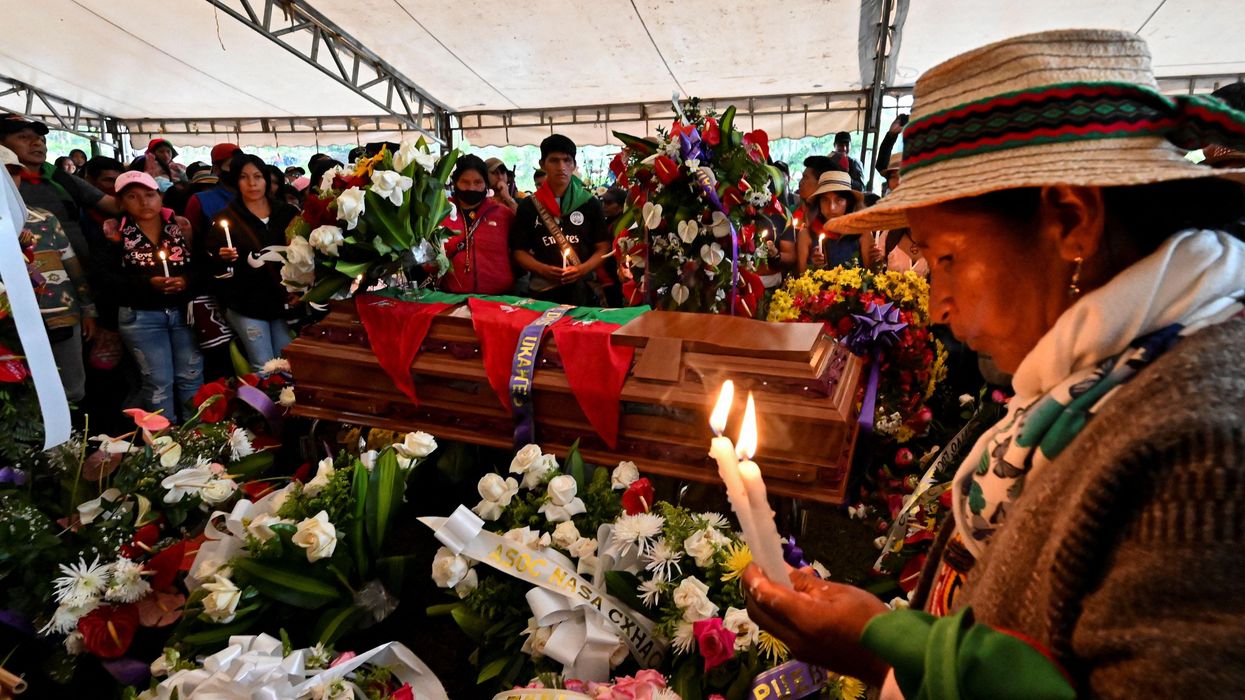
The advocacy group Global Witness on Thursday marked 10 years of collecting data on slain environmental defenders by publishing a new report revealing that at least 1,733 people have been killed over the past decade--a rate of one murder every two days.
"Our data on killings is likely to be an underestimate, given that many murders go unreported."
The report--entitled Decade of Defiance: Ten Years of Reporting Land and Environmental Activism Worldwide--underscores how land inequality and efforts by governments, corporations, and wealthy individuals to own and control land drives deadly violence against activists.
"All over the world, Indigenous peoples and environmental defenders risk their lives for the fight against climate change and biodiversity loss," Global Witness CEO Mike Davis said in a statement. "Activists and communities play a crucial role as a first line of defense against ecological collapse, as well as being frontrunners in the campaign to prevent it."
As the climate emergency worsens, so does the killing, violence, and other repression that come with the capitalistic pursuit of land and the natural resources above and below the soil.
"Driven by the rising demand for food, fuel, and commodities, the last decade has seen an upsurge in land grabs for industries like mining, logging, agribusiness, and infrastructure projects, with local communities rarely consulted or compensated," the report states.
"The actors colluding to grab land tend to be corporations, foreign investment funds, national and local state officials, and the governments of wealthy yet resource-poor nations looking to cheaply acquire land, harming local populations in the process," the publication continues.
Global Witness said around 200 activists were murdered around the world in 2021 alone, a decrease from the 227 recorded killings in 2020. Although they make up only around 5% of the world's population, more than 40% of the deadly attacks on environmental defenders targeted Indigenous people last year.
Mexico suffered 54 slain environmental defenders in 2021, the most of any nation and a marked spike from 30 killings reported there in 2020. Colombia (33), Brazil (26), the Philippines (19), Nicaragua (15), and India (14) all experienced more than 10 reported activist killings last year.
Of the 10 activist murders reported across Africa last year, eight were rangers killed in Congo's Virunga National Park, where militant groups are fighting for control of resource-rich lands that are also home to some of the world's last remaining mountain gorillas.
Global Witness cautioned that "our data on killings is likely to be an underestimate, given that many murders go unreported, particularly in rural areas and in particular countries."
Indian scholar and activist Vandana Shiva said in an introduction to the report that "these numbers are not made real until you hear some of the names of those who died."
Related Content

"Marcelo Chaves Ferreira. Sidinei Floriano Da Silva. Jose Santos Lopez. Each of them a person loved by their family, their community," Shiva continued. "Jair Adan Roldan Morales. Efren Espana. Eric Kibanja Bashekere. Each of them considered expendable for the sake of profit."
"Regilson Choc Cac. Ursa Bhima. Angel Rivas," she added. "Each killed defending not only their own treasured places, but the health of the planet which we all share."
"If the bee disappeared off the face of the earth, man would only have four years left to live." -- Maurice Maeterlinck, The Life of the Bee
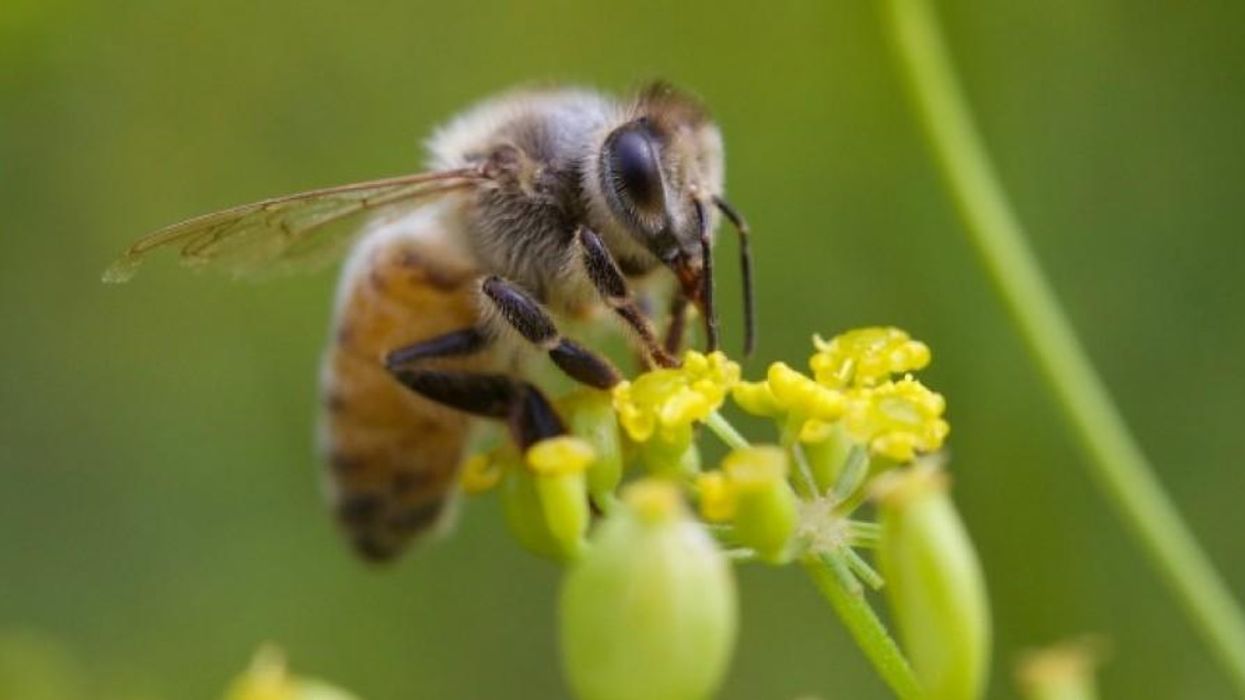
In the last 50 years agrotoxins have spread and are pushing bees to extinction.
The choices before humanity are clear, a Poison Free Future to save bees, farmers, our food and humanity. Or continue to use poisons, threatening our common future by walking blindly to extinction through the arrogance that we can substitute bees with artificial intelligence and robots.
"Robotic bees could pollinate plants in case of insect apocalypse," ran a recent Guardian headline reporting how Dutch scientists, "believe they will be able to create swarms of bee-like drones to pollinate plants when the real-life insects have died away."
"We see a crisis in 15 years where we don't have enough insects in the world to actually do pollination and most of our vitamins and fruits are gone," said Eylam Ran, CEO of Edete Precision Technologies for Agriculture. His company says its artificial pollinator can augment the labours of--and eventually replace--bees. Its system mirrors the work of the honey bee, beginning with a mechanical harvest of pollen from flowers and ending with a targeted distribution using LIDAR sensors, the same technology used in some self-driving cars."
There is no substitute for the amazing biodiversity and gifts of bees.
Every culture, every faith has seen the bees as teachers--of giving, of creating abundance, of creating the future of plants through pollination, and contributing to our food security and welfare. The next generation of seed is transformed into the next generation of seed only through the gift of the pollinator.
Navdanya's research has shown that more than 30% of the food we eat is produced by bees and pollinators.
Nature's economy is the gift economy. In every tradition the bee has been exemplified as a teacher in giving.
Buddhist texts note that from a multitude of living things, bees and other pollinating animals take what they need to survive without harming the beauty and vitality of their source of sustenance. For humans, to act in the manner of bees is an enactment of compassionate and conscious living.
St. John Chrysostom of the Catholic Church wrote, "The bee is more honored than other animals, not because she labors, but because she labors for others." (12th Homily)
In the Islamic tradition, the Quran's 16th chapter is titled 'The Bee.' This chapter is known to be the revelation of God.
In the Hindu tradition, there is a wonderful quote in the scripture Srimad Mahabhagavatam which reads, "Like a honey bee gathering honey from all type of flowers the wise men search everywhere for truth and see only good in all religions."
Let us together as diverse species and diverse cultures and through poison free organic food and farming, rejuvenate the biodiversity of our pollinators and restore their sacredness. We have the creative power to stop the sixth mass extinction and climate catastrophe without the need for these false technocratic solutions.
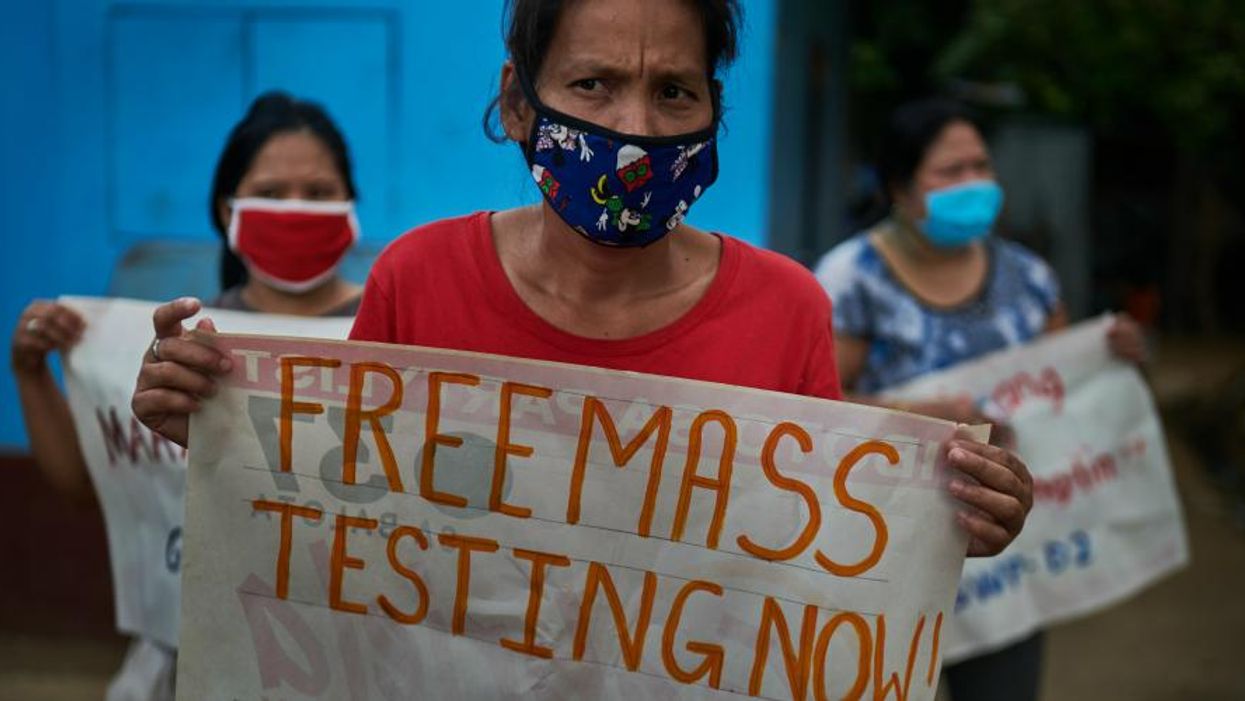
On this May Day, the world is witnessing 3 pandemics simultaneously. The first is the Coronavirus Pandemic. The second is the Hunger Pandemic. The third is Pandemic of Destruction of Livelihoods.
Thus far, he coronavirus pandemic has infected 3.19 million and killed 228,000. The World Food Programme has warned the world community of the looming "hunger pandemic," which has the potential to engulf over a quarter of a billion people whose lives and livelihoods will be plunged into immediate danger.
According to the world food programme more than a million people who are on the verge of starvation, and 300,000 could starve to death every single day for the next three months.
There is also a pandemic of loss of livelihoods. According to the ILO "as a result of the economic crisis created by the pandemic, almost 1.6 billion informal economy workers (representing the most vulnerable in the labour market), out of a worldwide total of two billion and a global workforce of 3.3 billion, have suffered massive damage to their capacity to earn a living. This is due to lockdown measures and/or because they work in the hardest-hit sectors." As pointed out by Guy Ryder, ILO Director-General: "For millions of workers, no income means no food, no security and no future. [...] As the pandemic and the jobs crisis evolve, the need to protect the most vulnerable becomes even more urgent."
All three pandemics have their roots in an economic model based on profits, greed and extractivism, which has accelerated ecological destruction, aggravated loss of livelihoods, increased economic inequality, and polarised and divided society into the 1% and 99%. On this May Day in times of the Corona Crisis let us imagine and create new economies based on Earth Democracy and economic democracy to protect the earth and humanity. Let us address all three crisis through democratic participation and solidarity. Through compassion let us ensure no one goes hungry. Through solidarity and democracy let us participate in shaping future economies to ensure no hands are without work , no person is without a voice.
"On this May Day in times of the Corona Crisis let us imagine and create new economies based on Earth Democracy and economic democracy to protect the earth and humanity."
The multiple crises are a wake up call that the economy run by the 1% is not working for people and nature. The 1% is talking of 99% being "useless people" in their idea of the future based on digital agriculture and farming without farmers, automated factories and production without workers. We have an obligation to create economies that do not destroy nature, do not destroy livelihoods and the rights of workers, economies that do not destroy our health by spreading disease and pandemics , do not destroy livelihoods and the freedom, dignity and right to work , and do not create hunger. Let us create #ZeroHunger economies by protecting livelihoods of small farmers who provide 80% of the food. Let us shift to Poison Free organic farming to protect human health and biodiversity. Let us create local circular solidarity economies that support livelihoods of hawkers and small retailers, create community while reducing the ecological footprint.
Post Covid-19, let us regenerate the economy with the consciousness all lives are equal and that we are part of the Earth. Let us acnkowledge and embrace that we are ecological, biological beings; that working is our right and is at the heart of being human; and that care for the Earth and each other is the most important work.
There are no disposable or useless people. We are One Humanity on One Planet. Autonomy--meaning dignity, work, freedom, and democracy--are our birth-right.

Despite India's law barring genetically modified (GM) foods from being produced or sold in the country without government approval, a study by the New Delhi-based Centre for Science and Environment (CSE) found that thanks to lax enforcement, a deeply flawed labeling system, and corporate deception, Indian supermarkets are inundated with GM foods.
"Most GM foods in the study did not disclose GM on their labels and 15 percent made false claims saying they were GM-free."
-- Sunita Narain, Centre for Science and Environment
After conducting tests on "domestically produced and imported edible oils, processed and packaged foods, and infant foods," CSE researchers found that 32 percent of the samples tested contained genetically modified organisms (GMOs), and 80 percent of the GMO-positive foods were imported from the United States, Canada, the Netherlands, Thailand, and the United Arab Emirates.
"Most GM foods in the study did not disclose GM on their labels and 15 percent made false claims saying they were GM-free," Sunita Narain, CSE's director general, said in a statement.
CSE's results expose "large-scale illegal presence and sale of genetically modified (GM) processed foods in the country," researchers wrote in a summary of their findings. "GM contamination was found in infant food, sold for children with medical ailments, including allergies. Two products by Abbott Laboratories, the American healthcare company, were found to be GM-positive--one was for lactose-intolerant infants and the other was a hypoallergenic (for minimizing the possibility of an allergic reaction). Neither product has any label warning parents that this food has GM ingredients."
"We had been hearing about the presence of illegal GM food in India, and decided to do a reality check by testing processed foods," CSE deputy director general Chandra Bhushan said. "We were shocked to know the scale in which GM foods have penetrated the Indian market. The regulatory authorities are to blame here."
"Indians deserve to grow, produce, distribute good food for all, instead of bad food and fake food imposed by the unscientific, undemocratic, anti-national labelling rules for the profits of the GMO and junk food industry at the cost of people's health."
--Vandana Shiva
As noted author and food sovereignty activist Vandana Shiva observed in a recent column, the labeling system established by the Food Safety and Standards Authority's (FSSAI)--the body responsible for food regulation and safety in India--was flawed from the start.
"The FSSAI rules are undemocratic because the FSSAI is advised by the same corporations that have spread unhealthy food across the industrial world, and now want to impose it on India--Coke, Pepsi and Nestle," Shiva wrote. "This translates into corporate food fascism."
She added, "Indians deserve to grow, produce, distribute good food for all, instead of bad food and fake food imposed by the unscientific, undemocratic, anti-national labeling rules for the profits of the GMO and junk food industry at the cost of people's health and our national food and health sovereignty."
For more than a century, a poison cartel has experimented with and developed chemicals to kill people, first in Hitler's concentration camps and the war, later by selling these chemicals as inputs for industrial agriculture.
In a little over half a century, small farmers have been uprooted everywhere, by design, further expanding the toxic fields of the industrial agriculture.
In India, a country of small farmers, the assault of the poison cartel has driven millions off the land and pushed 300,000 farmers to suicide due to debt for costly seeds and chemicals. The GMO seeds have failed to control pests and weeds. Instead they are creating super-pests and super-weeds, trapping farmers deeper in debt.
And it is not just farmers who are dying. Our soil organisms and pollinators are dying. Our soils are dying. Our societies are dying. Our children are dying--because of diseases caused by food loaded with toxics.
The introduction of GMOs, by the Poison Cartel, has accelerated the crisis of disease and death. The only reason GMOs are forcibly introduced is to claim patents on seeds - to collect royalties from every farmer, every season, every year. In India more than Rs 50 Billion has illegally been collected by Monsanto, from the cotton farmers of India. Within a few years of illegally entering India, Monsanto started to control 95% of the cotton seed supply. Most of the 300,000 farmers suicides are in the cotton belt.
"Our soil organisms and pollinators are dying. Our soils are dying. Our societies are dying. Our children are dying--because of diseases caused by food loaded with toxics."
A patent of life and on seeds is a crime against farmers--who are trapped in debt for costly patented seed.
It is also a crime against nature. The claim, that by adding a gene Monsanto is "making" life, violates the self organising, self-renewing capacity of seed. The crime is further aggravating by pushing out bio-diversity, and spreading genetic pollution through the introduction of GMOs.
These issues are in courts everywhere.
We are now organizing a Monsanto Tribunal, and People's Assemblies across the world, to put the Poison Cartel on trial at the Hague (14th to 16th October). Alongside the Tribunal People's Assemblies are being self organised by local communities everywhere.
The Tribunal will both synthesize the existing crimes and violations for which Monsanto+Bayer is in courts across the world-- in India, Europe, US, Mexico, Argentina, as well as expand the scope of criminal activity to include the crime of ecocide, the violation of the rights of nature.
Crimes against nature are connected to crimes against humanity.
Corporate crimes have become visible everywhere, the corporations become bigger, claiming absolute power, absolute rights, absolute immunity, deploying more violent tools against nature and people. The People's Assembly will not just take stock of the past and present crimes. It will look at future crimes with the aim of preventing them. Monsanto is now becoming Monsanto Bayer. Syngenta is merging with Chem China. Dow has merged with Dupont. Movements from India, China, Germany, Switzerland challenging these mergers will be addressing the People's Assembly and planning future actions.
"Crimes against nature are connected to crimes against humanity."
The process of holding the Poison Cartel accountable is the culmination of 30 years of scientific, legal, social, political work by movements, and concerned citizens and scientists. This is the coalition that has got together to organize the Monsanto Tribunal and People's Assembly.
The chemical corporations had expected to take over all seed by the year 2000, through GMOs, patents, mergers and acquisitions. But most seed is not genetically modified, most countries do not recognize seeds and plants as corporate inventions, hence patentable. Monsanto's crimes have become so well known that it now wants to disappear itself through the Bayer acquisition. The Movements against Monsanto have already won. Now we need to shut down the poison cartel.
While GMOs fail, a new generation of genetic engineering based on CRISPR, gene editing, gene drives is being promoted to grab more patents and wreck the planet faster for the benefit of a few toxic billionaires.
And because we built movements to stop "free trade" through WTO--such as the mobilizations in Bangalore, Seattle, Cancun and Hong Kong--corporations are now pushing new free trade agreements, such as TTIP and TPP. The Investor State Dispute Settlement (ISDS) systems in the new agreements are aimed at dismantling our constitutions, our rights, and our democracies.
Corporate rule over the past two decades has led to an economy where 1% of the rich control as much wealth as 99% of humanity. More accumulation of wealth through corporations will lead to the extermination of most people, as their lands and livelihoods, their resources and democracies, are grabbed for profits and control.
"While courts can investigate crimes of the poison cartel, and this is important for justice, people have the power to change the way we grow our food."
The Monsanto Tribunal and People's Assemblies organised in the Hague are already having repercussions in the International Criminal Court. Since 2002 when the court was set up by the United Nations, it has largely investigated war crimes and genocide linked to conflicts. The court has jurisdiction over the 124 countries which have ratified the Rome statute. It is now widening its remit, to look at destruction of the environment and violation of people's rights to their resources. The court will also prioritize crimes that result in the "destruction of the environment," "exploitation of natural resources," and the "illegal dispossession" of land. It also included an explicit reference to land-grabbing.
The ICC's policy paper on case selection and prioritization declares: "The office [of the prosecutor] will give particular consideration to prosecuting Rome statute crimes that are committed by means of, or that result in, inter alia, the destruction of the environment, the illegal exploitation of natural resources or the illegal dispossession of land."
Patents on seeds are an illegal exploitation of natural resources which have pushes hundreds of thousands of Indian farmers to suicide. This is a crime worth investigating, and ending.
While courts can investigate crimes of the poison cartel, and this is important for justice, people have the power to change the way we grow our food. That is why hundreds of People's Assemblies, being organized everywhere, will make commitments to create a healthy future of food and of the planet. From the People's Assemblies we will launch a boycott campaign, to liberate our seeds and soils, our communities and societies, our planet and ourselves, from poisons and the rule of the poison cartel.
Monsanto accepted Bayer's $66 billion takeover offer--the largest all-cash deal ever--on Wednesday morning.
While anti-trust agencies around the world review the proposed mega-merger, environmental and consumer advocates roundly condemned the creation of what will be the largest pesticide and GMO corporation in the world.
"This new mega corporation would be the world's biggest seed maker and pesticide company, defying important antitrust protections and giving it unacceptable control over critical aspects of our food supply--undermining consumer choice and the freedom and stability of farmers worldwide," said Anne Isakowitsch, head of international corporate watchdog SumOfUs.
"[...] these megadeals are being made to benefit the corporate boardrooms at the expense of family farmers, ranchers, consumers and rural economies."
--Andrew Johnson, National Farmers Union
"The merger of Bayer and Monsanto should make the connection between Big Pharma, Big Biotech, and Big Food all the more apparent to consumers," said Ronnie Cummins, director of the Organic Consumers Association (OCA), in an email to Common Dreams.
"This may be a move to take pressure off the manufacturer of glyphosate, the most profitable pesticide in the world," Cummins added. "But it really doesn't matter who manufactures or sells glyphosate, or any other dangerous chemical. The damage to human health and the environment remains the same, as does our commitment to getting these chemicals out of our food system."
The merger between the two chemical behemoths has been long anticipated, and antitrust experts and environmental groups have been warning against the takeover for months.
A legal opinion by two former Justice Department officials released in August decried the merger as "a five-alarm threat to our food supply and to farmers around the world."
"[T]he antitrust enforcers must not allow this merger to proceed," the officials said.
Thanks to widespread protests and organizing from groups such as the National Farmers Union, next week the Senate Judiciary Committee is set to review the recent spate of consolidation--including deals such as Dow-Dupont and ChemChina-Syngenta--within the biotech industry.
"We are pleased that next week the Senate Judiciary Committee will be reviewing the alarming trend of consolidation in agriculture that has led to less competition, stifled innovation, higher prices and job loss in rural America," said National Farmers Union president Andrew Johnson. "We underscore the importance that all mergers, including this recent Bayer/Monsanto deal, be put under the magnifying glass of the committee and the U.S. Department of Justice."
"Wars were fought, lives lost, nations carved into holy lands [...] while Bayer and Monsanto sold chemicals as bombs and poisons and their brothers provided the loans to buy those bombs."
--Dr. Vandana Shiva
"We will continue to express concern that these megadeals are being made to benefit the corporate boardrooms at the expense of family farmers, ranchers, consumers, and rural economies," Johnson said.
Meanwhile, Sydney Peace Prize-winning environmental activist Dr. Vandana Shiva recently explored Bayer and Monsanto's longstanding relationship and dark history--pointing out that they worked together as chemical weapons manufacturers and war profiteers during several of the 20th century's bloodiest conflicts:
Monsanto and Bayer have a long history. They made explosives and lethally poisonous gases using shared technologies and sold them to both sides in the two world wars. The same war chemicals were bought by the Allied and Axis powers, from the same manufacturers, with money borrowed from the same bank.
MoBay [Monsanto and Bayer] supplied ingredients for Agent Orange in the Vietnam War. Around 20 million gallons of MoBay defoliants and herbicides were sprayed over South Vietnam. Children are still being born with birth defects, adults have chronic illnesses and cancers, due to their exposure to MoBay's chemicals. Monsanto and Bayer's cross-licensed Agent Orange resistance has also been cross-developed for decades. Wars were fought, lives lost, nations carved into holy lands--with artificial boundaries that suit colonization and resource grab--while Bayer and Monsanto sold chemicals as bombs and poisons and their brothers provided the loans to buy those bombs.
"The Farben family chemical cartel [that includes Bayer and Monsanto] was responsible for exterminating people in concentration camps," adds Shiva. "It embodies a century of ecocide and genocide, carried out in the name of scientific experimentation and innovation."
"Today, the poison cartel is wearing [genetic engineering] clothes and citing the mantra of 'innovation' ad nauseam. Hitler's concentration camps were an 'innovation' in killing," Shiva writes, "and almost a century later, the Farben family is carrying out the same extermination--silently, globally, and efficiently."
Monsanto is in the news again. The Competition Commission of India (CCI), the country's antitrust regulator, has recently said that it suspects a Monsanto joint venture abused its dominant position as a supplier of genetically modified (GM) cotton seeds in India and has issued an order citing prima facie violation of Sections 3(4) and 4 of the Competition Act, to be investigated by CCI's director-general.
Monsanto also faces cases brought by state governments and domestic seed manufacturers for the astronomical royalty it charges. In previous cases, Monsanto defended itself by saying that it was "trait fees" (for using its technology in cotton hybrids) and not royalty.
The fact is that Monsanto has viewed the laws of our land as mere hurdles in its way to swindle India and our farmers. On March 10, 1995, Mahyco (Monsanto-Mahyco) brought 100 grams of cotton seeds, containing the MON531-Bt gene, into India without the approval of the Genetic Engineering Appraisal Committee (GEAC).
Eager to establish a monopoly in India based on the smuggled MON531 gene, Monsanto-Mahyco started large-scale, multi-centric, open field trials of Bt cotton in 40 locations spread across nine states, again without GEAC approval.
Article (7) of the Environment Protection Act, 1986, states: "No person shall import, export, transport, manufacture, process, use or sell any hazardous microorganisms or genetically engineered organisms/substances or cells except with the approval of the GEAC." GMO traits, once released into the environment, cannot be contained or recalled.
Genetically engineered cotton from the trials was sold in open markets. In some states, the trial fields were replanted the very next season with wheat, turmeric and groundnut, violating Para-9 of the Biosafety Guidelines (1994) on "post-harvest handling of the transgenic plants" according to which the fields on which GMO trials were conducted should have been left fallow for at least one year.
In face of these blatant violations of Indian laws and the risks of genetic pollution India faced, the Research Foundation for Science, Technology and Ecology (RFSTE) filed a petition in the Supreme Court of India against Monsanto and Mahyco in 1999, for their violations of the 1989 rules for the use of GMOs under the Environmental Protection Act.
India's laws, rightly, do not permit patents on seeds and in agriculture. This has always been a problem for Monsanto and, through the US administration, it has attempted to pressure India into changing her robust intellectual property regime since the World Trade Organisation came into existence, and continues to do so today.
Monsanto-Mahyco Biotech (MMB) Ltd collected royalties for Bt cotton by going outside the law and charging "technology fees" and "trait fee" to the tune of $900 million from marginal Indian farmers, crushing them with debt.
In 2006, out of the Rs 1,600 per 450 gram package of Bt cotton seed (Rs 3,555.55/kg), almost 80 per cent (Rs 1,250) was charged by MMB as "trait fee". In stark contrast, before Monsanto destroyed alternative sources of seed (including local hybrid seed supply) through unfair business practices, local seeds used to cost farmers Rs 5-9/kg.
In response to the unfair pricing, the government of Andhra Pradesh filed a complaint with the Monopolies and Restrictive Trade Practices Commission (MRTPC) against MMB, pointing out that Monsanto was charging Andhra Pradesh farmers nine times what it was charging US farmers for the same seeds. MMB said the royalty it charged reflected its research and development costs for Bt cotton, admitting that they were charging royalty to Indian farmers.
Monsanto's ruthlessness is central to the crisis Indian farmers are facing. Farmers leveraged their land holdings to buy Bt cotton seeds and the chemicals it demanded, but the golden promise of higher yield and reduced pesticide use failed to deliver.
Of the 300,000 farmer suicides in India since Monsanto smuggled the Bt gene into India in 1995, 84 percent, almost 252,000, are directly attributed to Monsanto's Bt cotton.
While the Government of India is suing Monsanto, the government of Maharashtra has signed an MoU with Monsanto to set up the biggest seed hub in the country in Buldana, announced at "Make in India Week". How can a corporation breaking India, taking the lives of Indian farmers, destroying our agriculture and food security, and violating our laws be rewarded with the "Make in India" label?
For arrogantly breaking Indian laws and corrupting our regulatory systems, Monsanto must be held accountable. For the failure of Bt cotton, Monsanto must be made to pay damages to the farmers and seed companies that have had to pay "technology fees" for a failed technology.
The land that our farmers have lost to the agents selling Monsanto seeds and chemicals must be returned to the farmers' families. All the illegal royalty collected from our farmers and India's seed companies must be returned to India.
With its flagship product failing across the country year after year, and the dimming prospects of the super-profits the company has become used to, why would Monsanto make a large investment in Vidarbha unless it is sure of continued monopoly?
The technical expert committee has recommended that Herbicide Tolerance (Ht) and GM varieties of crops for which India is the centre of diversity, not be allowed in India. Is Monsanto counting on the GEAC approving Bayer's herbicide-tolerant terminator mustard in contempt of the recommendations of the Technical Expert Committee? Allowing Bayer's Ht terminator mustard will open the floodgates for herbicide tolerant crops, worsening India's agrarian crisis and debilitating India's food security.
Herbicide tolerance, which goes hand in hand with Monsanto's Glyphosate based RoundUp herbicide, has failed across the world at controlling weeds, creating super weeds. Glyphosate, classified by the World Health Organisation as a carcinogen, is already being used across India and we are seeing an explosion of cancers in villages where Glyphosate is used. If we allow another failed technology and its associated poisons to further destroy India's rural economy, and allow extraction of profits from Indian farmers, we will fail our nation and India's future generations.
People across India are crying foul at Facebook CEO Mark Zuckerberg's scheme to bring internet "Free Basics" to the South Asian country, and the multi-billionaire is unhappy about it.
In an op-ed published Monday in the Times of India, Zuckerberg lashed out at those raising the alarm over an initiative they say violates the principles of net neutrality and allows the social networking giant to capture India's internet.
Striking a sanctimonious tone, Zuckerberg compared critics of Free Basics to opponents of "free, basic health care," libraries, and public education. "The data is clear. Free Basics is a bridge to the full internet and digital equality," Zuckerberg wrote. "If we accept that everyone deserves access to the internet, then we must surely support free basic internet services."
"In the ultimate Orwellian doublespeak, 'free' for Zuckerberg means 'privatized,' a far cry from privacy -- a word Zuckerberg does not believe in."
--Vandana Shiva, philosopher, environmental activist, eco-feminist
"Surprisingly, over the last year, there's been a big debate about this in India," the Facebook CEO continued. "What reason is there for denying people free access to vital services for communication, education, healthcare, employment, farming, and women's rights?"
But activists, regulators, and ordinary people across India say there are plenty of reasons to be skeptical of the program--which partners with mobile service providers to allow access to some websites without payment for data, but only through the Facebook system.
Nikhil Pahwa, an organizer with Save the Internet-India, raised the question earlier this week in the Times of India: "Why has Facebook chosen the current model for Free Basics, which gives users a selection of around a hundred sites (including a personal blog and a real estate company homepage), while rejecting the option of giving the poor free access to the open, plural and diverse web?"
According to Save the Internet, the program allows Facebook to capture India's market, which is already Facebook's second-largest worldwide. "Facebook doesn't pay for Free Basics; telecom operators do," the advocacy group wrote earlier this week. Where do they make money from? From users who pay."
But according to Vandana Shiva--a philosopher, environmental activist, and eco-feminist--the reality is even more sinister. Reliance Communications, the Indian company partnering with Facebook on the program, "obtained land for its rural cell phone towers from the government of India and grabbed land from farmers for [special economic zones] through violence and deceit," Shiva wrote earlier this week. "As a result and at no cost, Reliance has a huge rural, semi-urban, and suburban user base -- especially farmers."
"In the ultimate Orwellian doublespeak, 'free' for Zuckerberg means 'privatized,' a far cry from privacy -- a word Zuckerberg does not believe in," Shiva continued. "And like corporate-written 'free' trade agreements, Free Basics is anything but free for citizens. It is an enclosure of the commons, which are 'commons' because they guarantee access to the commoner, whether it be seed, water, information or internet."
According to Save the Internet, "Free Basics isn't about bringing people online. It's about keeping Facebook and its partners free while everything else remains paid. Users who pay for Internet access can still access Free Basics for free, giving Facebook and its partners an advantage. Free Basics is a violation of net neutrality."
In a country where hundreds of thousands of people have mobilized to protect net neutrality, the Telecom Regulatory Authority of India (TRAI) recently ordered Reliance to halt services. At the same time, the body is investigating potential net neutrality violations. The regulator is nearing the end of a public consultation period that began in March.
"Why has Facebook chosen the current model for Free Basics, which gives users a selection of around a hundred sites (including a personal blog and a real estate company homepage), while rejecting the option of giving the poor free access to the open, plural and diverse web?"
--Nikhil Pahwa, Save the Internet-India
In his op-ed, Zuckerberg directly appealed to Indians to pressure the TRAI to abandon its concerns.
Criticism, however, will not be easy to quell as it spans the globe. As Jeremy Gillula of the U.S.-based Electronic Frontier Foundation recently pointed out, this set-up puts Facebook "in a privileged position to monitor its users' traffic, and allows it to act as gatekeeper (or, depending on the situation, censor)."
While Facebook has taken small steps to address concerns over privacy and application criteria for websites to participate, Gillula argues that, effectively, Free Basics is "still a walled garden."
Zuckerberg, who has visited India twice and was recently photographed embracing Indian Prime Minister Narendra Modi, appears poised to continue his fight to promote--and spread--Free Basics.
The outcome of the coming battle has global implications, as the Facebook moves to spread the program--initially dubbed Internet.org--across the globe despite widespread concerns. According to Zuckerberg, Facebook has already partnered on the program with over 35 mobile operators in more than 30 countries.
"India is expected to have 500 million Internet users by the end of 2017, and what kind of Internet they get access to is important for our country," wrote Pahwa of Save the Internet. "The battle for Net Neutrality, with the last and current TRAI consultations included, is the battle for our internet freedom."
Humanity stands at a precipice. Merely 200 years of the age of fossil fuel has driven species and biodiversity to extinction, destroyed our soils, depleted and polluted our water and destabilised our entire climate system. Five hundred years of colonialism have driven cultures, languages, peoples to extinction and left a legacy of violence as the basis of production and governance.
The November 13 Paris attacks have led to an escalation of violence in our way of speaking and thinking while dealing with a conflict. Paris has emerged as the epicentre of the planetary ecological crisis and the global cultural crisis. From November 30 to December 11, movements and governments are converging in Paris for COP21 -- 21st Conference of Parties on the UN Framework Convention on Climate Change. COP21 is not just about climate change; it is about our modes of production and consumption which are destroying the ecosystems that support life on this planet.
There is a deep and intimate connection between the events of November 13 and the ecological devastation unleashed by the fossil fuel era of human history. The same processes that contribute to climate change also contribute towards growing violence amongst people. Both are results of a war against the Earth.
"For me, COP21 is a pilgrimage of peace -- to remember all the innocent victims of the wars against the land and people; to develop the capacity to reimagine that we are one and refuse to be divided by race and religion; to see the connections between ecological destruction, growing violence and wars that are engulfing our societies."
Industrial agriculture is a fossil fuel-based system which contributes more than 40 per cent of the greenhouse gases leading to climate change. Along with the globalised food system, industrial agriculture is to be blamed for at least 50 percent of the global warming.
Synthetic nitrogen fertilisers are based on fossil fuels and use the same chemical processes used to make explosives and ammunition. Manufacturing one kilogram of nitrogen fertiliser requires the energy equivalent to two litres of diesel. Energy used during fertiliser manufacture was equivalent to 191 billion litres of diesel in 2000 and is projected to rise to 277 billion in 2030. Synthetic fertiliser, used for industrial agriculture, is a major contributor to climate change -- it starts destroying the planet long before it reaches a field. Yet the dominant narrative is that synthetic fertilisers feed us and without them people will starve. The fertiliser industry says that "they produce bread from air". This is incorrect.
Nature and humans have evolved many non-violent, effective and sustainable ways to provide nitrogen to soil and plants. For example, pulses and beans are nitrogen-fixing crops. Bacteria named rhizobia, which exists in the nodules of their roots, converts atmospheric nitrogen into ammonia and then into organic compounds to be used by the plant for growth.
Intercropping or rotating pulses with cereals has been an ancient practice in India. We also use green manures which can fix nitrogen.
Returning organic matter to the soil builds up soil nitrogen. Organic farming can increase nitrogen content of soil between 44-144 per cent, depending on the crops that are grown. Organic farming not only avoids the emissions that come from industrial agriculture, it transforms carbon in the air through photosynthesis and builds it up in the soil, thus contributing to higher soil fertility, higher food production and nutrition and a sustainable, zero-cost technology for addressing climate change.
Ecologically non-sustainable models of agriculture, dependent on fossil fuels, have been imposed through "aid" and "development" projects in the name of Green Revolution. As soil and water are destroyed, ecosystems that produced food and supported livelihoods can no longer sustain societies. As a result, there's anger, discontent, frustration, protests and conflicts. However, land, water and agriculture-related conflicts are repeatedly and deliberately mutated into religious conflicts to protect the militarised agriculture model, which has unleashed a global war against the earth and people.
I witnessed this in Punjab while I was doing research for my book, The Violence of the Green Revolution, on the violence of 1984. We are witnessing this today, as conflicts which begin because of land degradation and water crises -- induced by non-sustainable farming systems -- are given the colour of religious conflicts.
Since 2009, we heard of Boko Haram while we missed the news about the disappearance of Lake Chad. Lake Chad supported 30 million people in four countries -- Nigeria, Chad, Cameroon and Niger. Intensive irrigation for industrial agriculture increased four-fold from 1983 to 1994. Fifty per cent of the disappearance of Lake Chad is attributed to the building of dams and intensive irrigation for industrial agriculture.
As the water disappeared, conflicts between Muslim pastoralists and settled Christian farmers over the dwindling water resources led to unrest. As Luc Gnacadja, the former secretary-general of the UN Convention to Combat Desertification, states about the violence in Nigeria, "The so-called religious fight is actually about access to vital resources".
The story of Syria is similar. In 2009, a severe drought uprooted a million farmers who were forced to move into the city for livelihood. Structural adjustment measures, imposed by global financial institutions and trade rules, prevented the government from responding to the plight of Syria's farmers. The farmers' protests intensified. By 2011, the world's military powers were in Syria, selling more arms and diverting the narrative from the story of the soil and farmers to religion. Today, half of Syria is in refugee camps, the war is escalating and the root causes of the violence continue to be actively disguised as religion.
Haber, the inventor of Zyklon B -- a poisonous gas used in 1915 to kill more than a million Jews in concentration camps -- was given a Nobel Prize in chemistry. American biologist Norman Borlaug received a Nobel Prize for Peace for the chemical-based Green Revolution that has only left a legacy of violence.
For me, COP21 is a pilgrimage of peace -- to remember all the innocent victims of the wars against the land and people; to develop the capacity to reimagine that we are one and refuse to be divided by race and religion; to see the connections between ecological destruction, growing violence and wars that are engulfing our societies. We must remember that there will be no peace between people if we do not make peace with the Earth.