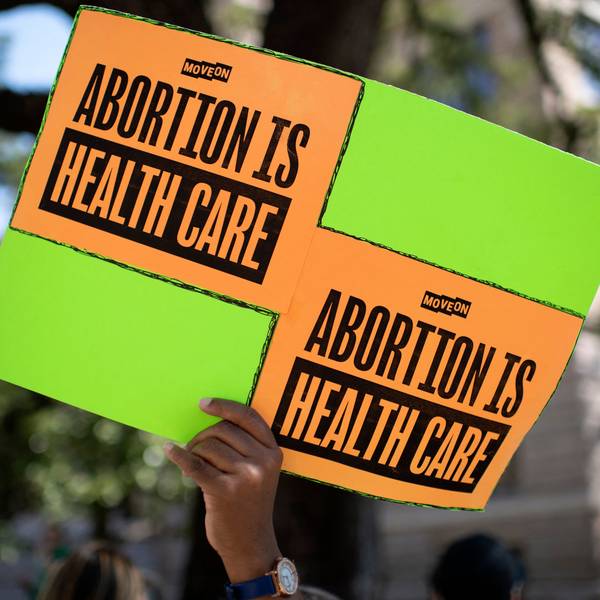


Protesters gathered in Washington, D.C. in June 2016 to demonstrate against restrictions on abortion access in Texas. (Photo: Pete Marovich/Getty Images)
Austin, Texas Becomes First US City to Fund Travel Expenses for Patients Obtaining Abortion Care
"Every day, anti-abortion extremists at the Texas legislature wake up and think about how to restrict access to abortion. Today, the Austin City Council fought back."
Pro-choice groups in Texas this week were hopeful that thousands of women in the state could better obtain abortion care despite state restrictions after Austin's city council approved a new public fund to support access for those in need of reproductive care.
The state capital's city council on Tuesday night voted 10-1 in favor of a $150,000 fund which people will be able to draw from to pay for childcare, travel expenses, and lodging when they obtain abortion care.
The fund is the country's first to be allocated specifically for these types of logistical expenses, which serve as barriers to care for many women--especially in states like Texas where dozens of reproductive health clinics have been shut down in recent years.
The City Council's decision was "a direct response to the combination of abortion bans that have been passed throughout the year and the abortion bans sweeping the country," Aimee Arrambide, executive director of NARAL Pro-Choice Texas, told the Texas Tribune.
The fund was approved days after state legislators passed S.B. 22, a law prohibiting governments in Texas from giving state and local funds and public resources to reproductive health clinics.
Amanda Williams, executive director of the Lilith Fund, which helps finance women's abortions in Texas, praised the city council for finding a "really creative way to meet some very serious unmet needs."
The Lilith Fund joined with NARAL Pro-Choice Texas to advocate for public assistance for transportation, childcare, and lodging for women seeking abortion care, lobbying the council members for weeks amid state lawmakers' latest attack on access to the medical procedure.
According to the National Network of Abortion Funds, a third of women calling the group's hotline ask for help paying for transportation to get to an abortion clinic.
A 2013 study by the Guttmacher Institute found that women obtaining abortion care paid an average of more than $240 for childcare, travel, and lodging expenses, on top of the cost of the procedure the wages they lose when obtaining care.
Less than a decade after Texas lawmakers slashed funding for reproductive health clinics in 2011, forcing dozens of facilities to close, about 900,000 women in the state live more than 150 miles from a clinic.
Austin City Council member Gregorio Casar said that lawmakers who support abortion rights must be as committed to finding ways to help women obtain care as anti-choice groups and politicians are to limiting access through statewide bans, mandatory waiting periods and other medically unnecessary requirements for patients, and restrictions on providers designed to make them unable to operate.
"Every day, anti-abortion extremists at the Texas legislature wake up and think about how to restrict access to abortion," Casar tweeted. "Today, the Austin City Council fought back and made a major investment to expand abortion care access, showing the way for other cities to act!"
We are at a crossroads
This country and this world are at a monumental crossroads. In a few short weeks, US voters will have an opportunity to beat back the forces of fascism and confront the billionaires who are rigging the economy, our media system, and our democracy, making it increasingly impossible for ordinary people to get by. We’re not just talking about the election. We’re talking about what must be done once these fascist elements are vanquished from power. We need a bolder set of solutions than what either major party has so far been willing to offer and a working-class movement ready to fight like hell for it. Trump didn't emerge from nowhere. The conditions that fueled MAGA authoritarianism were created by decades of radical neoliberal economic policies and a corrupt political system dominated by corporate interests. They slashed taxes on the super-rich, promising that the benefits would trickle down. They said giveaways to the corporate titans would make life more affordable for the rest of us. It was all bullshit. And when a bitter, betrayed populace searches for someone to blame, right-wing demagogues have little trouble finding scapegoats. People know when they're being lied to, but you won't hear any of this from the corporate media. Only independent journalism—powered and funded by people who believe in building a better world—can deliver truly trustworthy daily news. Our Fall Campaign is underway, and we need your help. To power our newsroom through the rest of the year, we need to raise $125,000 by midnight on October 31. So if you share our vision, please contribute whatever you can to sustain our work. |
Pro-choice groups in Texas this week were hopeful that thousands of women in the state could better obtain abortion care despite state restrictions after Austin's city council approved a new public fund to support access for those in need of reproductive care.
The state capital's city council on Tuesday night voted 10-1 in favor of a $150,000 fund which people will be able to draw from to pay for childcare, travel expenses, and lodging when they obtain abortion care.
The fund is the country's first to be allocated specifically for these types of logistical expenses, which serve as barriers to care for many women--especially in states like Texas where dozens of reproductive health clinics have been shut down in recent years.
The City Council's decision was "a direct response to the combination of abortion bans that have been passed throughout the year and the abortion bans sweeping the country," Aimee Arrambide, executive director of NARAL Pro-Choice Texas, told the Texas Tribune.
The fund was approved days after state legislators passed S.B. 22, a law prohibiting governments in Texas from giving state and local funds and public resources to reproductive health clinics.
Amanda Williams, executive director of the Lilith Fund, which helps finance women's abortions in Texas, praised the city council for finding a "really creative way to meet some very serious unmet needs."
The Lilith Fund joined with NARAL Pro-Choice Texas to advocate for public assistance for transportation, childcare, and lodging for women seeking abortion care, lobbying the council members for weeks amid state lawmakers' latest attack on access to the medical procedure.
According to the National Network of Abortion Funds, a third of women calling the group's hotline ask for help paying for transportation to get to an abortion clinic.
A 2013 study by the Guttmacher Institute found that women obtaining abortion care paid an average of more than $240 for childcare, travel, and lodging expenses, on top of the cost of the procedure the wages they lose when obtaining care.
Less than a decade after Texas lawmakers slashed funding for reproductive health clinics in 2011, forcing dozens of facilities to close, about 900,000 women in the state live more than 150 miles from a clinic.
Austin City Council member Gregorio Casar said that lawmakers who support abortion rights must be as committed to finding ways to help women obtain care as anti-choice groups and politicians are to limiting access through statewide bans, mandatory waiting periods and other medically unnecessary requirements for patients, and restrictions on providers designed to make them unable to operate.
"Every day, anti-abortion extremists at the Texas legislature wake up and think about how to restrict access to abortion," Casar tweeted. "Today, the Austin City Council fought back and made a major investment to expand abortion care access, showing the way for other cities to act!"